Category: News

  • Maritime traders raises concern on Ghana’s customs management system

    Maritime traders raises concern on Ghana’s customs management system

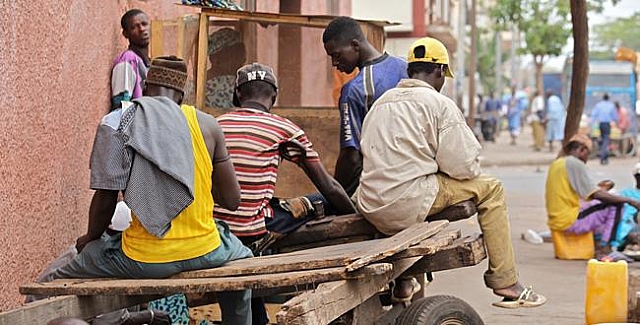
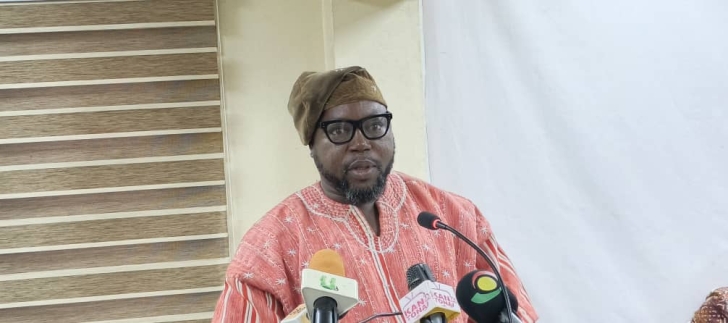
    The Importers and Exporters Association of Ghana has raised concerns over growing inefficiencies in the Integrated Customs Management System (ICUMS), citing system slowdowns and frequent downtimes as more institutions are added to the platform.

    According to the Association’s Executive Secretary, Mr Sampson Asaki Awingobit, ICUMS performed smoothly when it was introduced in 2018 with around 68 institutions, helping to streamline cargo clearance and reduce delays at the ports.

    Today, however, the system serves more than 200 institutions, a scale-up that has coincided with recurring disruptions.

    “These breakdowns are creating unnecessary pressure on importers and exporters,” Mr Awingobit cautioned, warning that persistent inefficiencies would be unacceptable in an election year when traders are already under heightened pressure.

    The Association argues that the expanded participation in ICUMS is directly slowing clearance processes, with financial losses and supply chain risks looming for businesses.

    It has therefore urged Customs and IT service providers to act quickly to strengthen the platform and ensure its reliability.

    Mr Awingobit further encouraged trade facilitators to optimise system use during nighttime operations in order to ease congestion and prevent additional costs.

    Meanwhile, Ghana Link Network Services Ltd, operators of the Integrated Customs Management System (ICUMS), has extended its deep appreciation to all stakeholders for their unwavering commitment, patience, and support as it continues to strengthen Ghana’s trade facilitation infrastructure. Its statement reads:

    “Over the past weeks, we have noted and fully acknowledged concerns regarding intermittent downtimes on the ICUMS platform.

    “As a company dedicated to excellence, we assure all stakeholders that these issues have received the highest priority and are being addressed decisively.

    “Working hand-in-hand with key stakeholders, our technical teams have identified the root causes of the challenges. In response, a major upgrade of the ICUMS infrastructure is currently underway.

    “This upgrade is specifically designed to expand the system’s capacity and resilience to handle the exponential surge in data traffic that comes with Ghana’s growing trade volumes.

    “Furthermore, Ghana Link is collaborating closely with Internet Service Providers to guarantee a more reliable and stable internet backbone for the ICUMS platform. This joint effort will ensure that all users experience smoother, faster, and uninterrupted service.

    “All things being equal, we anticipate that the comprehensive improvements being executed around the clock will be completed by the end of the 3rd quarter of 2025.

    “Once finalised, they will significantly enhance performance and eliminate the recurring issues experienced by stakeholders.

    “We humbly appeal to our cherished stakeholders, importers, exporters, freight forwarders, shipping lines, and all partners in Ghana’s trade ecosystem to continue to bear with us during this crucial period.

    “Your confidence in ICUMS has been the bedrock of its success, and with these upgrades, we are confident that the system will deliver a solid, stable and fast user experience with reliability, efficiency, and transparency.

    “Ghana Link remains fully committed to providing a world-class trade facilitation system that empowers businesses, strengthens government revenue, and supports the growth of Ghana’s economy”.
     

  • Hon. Thomas Yao Atidefe attends the relunch of the National Sanitation Day

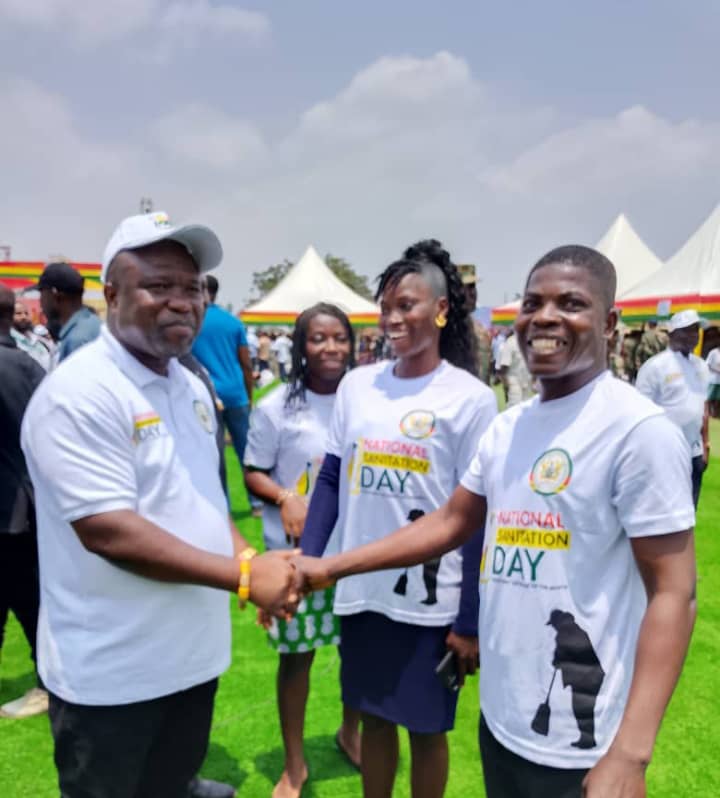
    Hon. Thomas Yao Atidefe attends the relunch of the National Sanitation Day

    The Chairman and Founder of Atidefe Foundation, Hon. Thomas Yao Atidefe officially attended the relaunch of the National Sanitation Day (NSD) as part of his effort to contribute to Nationalism and Patriotism.

    According to him, the relaunch of the National Sanitation Day which is aimed at keeping Ghana Clean by restoring discipline and empowering local and traditional authorities, is a good call by the government. “We must all respond and support this national call by the President”.

    The government has encouraged all MMDAs to prioritize desilting of drains, removal of refuse heaps, cleaning of markets, lorry parks, schools, and major roads and routes in their jurisdictions.

    In an address by His Excellency the President John Dramani Mahama during the event, the National Sanitation Day would be used as a Key Performance Indicator (KPI) for all Metropolitan, Municipal and District Chief Executives (MMDCEs), and foster citizen participation and accountability.

    “I have ordered eighty percent (80%) release of the District Assemblies Common Fund (DACF) to all MMDAs to enable them function properly and therefore no MMDCE should give an excuse for lack of funds to carry out such activities” the President said.

    To sustain compliance, Assemblies were to mobilise environmental health officers, waste management contractors, and community volunteers as well as submit monthly sanitation reports to their Regional Coordinating Councils for onward submission to the Ministry of Local Government, Chieftaincy and Religious Affairs.

    MMDCE who do not comply with sanitation bylaws and even allow construction of structures on water ways and unapproved areas would be sanctioned severely. Such punishment could be removal from office as the MMDCE.

    Those MMDAs who would maintain cleanest environment in their jurisdictions shall be awarded from next year.

    “Sanitation will now be a key performance indicator (KPI) for all MMDCEs and their performance as District Chief Executives will be judged directly on their results in cleanliness”, the Minister for Local Government Chieftaincy and Religious Affairs (Hon. Ahmed Ibrahim) said.

    He pointed out that the NSD, when complied with could lead to transformation of communities.

    According to Hon. Ahmed Ibrahim, Minister for LGCRA, the relaunch of the National Sanitation Day is a renewed social contract between government and citizens, anchored on enforcement, accountability and sustainability.

    In an interview with Hon. Thomas Yao Atidefe, “We must make Ghana clean, a dirty environment means we would always send people to the hospital. We should put in much effort to make our environment clean”.

    In short statement by Madam Happy Darrah, Secretary to the Atidefe Foundation, we must uphold virtues of cleanliness. Modernization does not mean leaving our environment dirty; as cleanliness is next to Godliness.

    Some dignitaries present at the event were the Minister for Youth Development and Empowerment, Hon. Lawyer George Opare Addo, Hon. Gizzella Tetteh Agbotui, Deputy Minister for Works, Housing and Water Resources, Hon. James Gunu, Volta Regional Minister, Hon. Linda Obenewaa Akweley Ocloo, Greater Accra Regional Minister, Nana Ogyeahoho Yaw Gyebi II, President of National House of Chiefs, Nii Takie Teiko Tsuru II, President of the Ga Traditional Council, Madam Akosua Agyepong and many others.

  • Draft report on review of Constitution to be ready by October – CRC

    Draft report on review of Constitution to be ready by October – CRC

    The Constitution Review Committee (CRC) says it is on track to deliver its draft report on the review of Ghana’s 1992 Constitution to President John Dramani Mahama within the next month.

    “We are working hard to finalise the draft report, and we expect to present it to the President by the end of September or early October,” the CRC’s Secretary, Dr Rainer Akumperigya, confirmed in an interview with Daily Graphic.

    The draft follows months of consultations with key stakeholders, including the Council of State and the Trades Union Congress (TUC).

    Issues raised during the process included limiting presidential terms, reducing the powers of the Presidency, electing MMDCEs, and revising the rule that ministers must be appointed from Parliament.

    Dr Akumperigya stressed that the submission of the report would not mark the end of the committee’s work, as it would still be required to provide clarifications to Parliament and support the implementation phase.


  • Kofi Akpaloo linked to $6mn Agenda 111 hospitals scandal in EOCO arrest

    Kofi Akpaloo linked to $6mn Agenda 111 hospitals scandal in EOCO arrest

    Unofficial information going round indicates that Kofi Akpaloo, the 2024 presidential candidate and leader of the Liberal Party of Ghana (LPG), was being interrogated by the Economic and Organised Crime Office (EOCO) in relation to a scandal related to Agenda 111 hospitals.

    According to information gathered, Mr Akpaloo took US$6 million from the previous NPP government as mobilization fees to build four of the Agenda 111 hospitals in Ashanti region.

    Unfortunately, the ‘businessman’ failed to deliver the projects as intended.

    As of Wednesday, September 3, the family had confirmed the arrest but said the reasons for his detention remain unclear.

    They disclosed that Mr Akpaloo was taken from his home in Kumasi, adding that his current whereabouts are unknown.

    EOCO is yet to issue an official statement, leaving the circumstances of the arrest shrouded in uncertainty.

    Mr Akpaloo, who contested in the 2024 general elections, is a familiar figure in Ghana’s political landscape. He has campaigned on policies aimed at appealing to young voters, and although his party is relatively small, it has steadily gained visibility in national politics.


  • Hajj Management: Ghanaian muslims petition Mahama for a ‘reset’

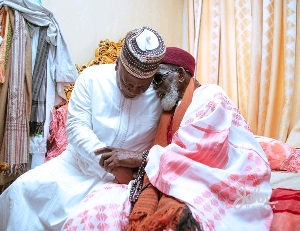
    Chief Imam and President John Dramani Mahama in a tit-a-tit


    By Adnan Adams Mohammed


    The Muslims community in Ghana has petitioned the President, H.E. John Dramani Mahama, as part of the ‘Reset Ghana Agenda’ to establish a permanent Authority or Management team to handle Hajj pilgrimage.


    The petition, presented under the auspices of His Eminence, the National Chief Imam, Sheikh Dr. Nuhu Sharubutu, called for the need to “reset” Hajj operations to ensure transparency, accountability, inclusivity, and the dignity of Ghanaian pilgrims.


    Signed by major sects and Muslim organisations in the country, including: Ahlussuna Wal Jama’a, the Shia Muslim Community in Ghana, Tijjaniya Muslim Movement of Ghana, Faidhatul Tijjanniya Brahimiya Council, the National Council of Zongo Chiefs, Muslim Ummah Associations in Ghana, Jama’at Tabligh, the Conference of Regional Chief Imams, and other allied groups, the petition called for legal recognition and inclusivity.


    They acknowledged that, while President Mahama has demonstrated goodwill towards the Muslim community through initiatives such as the introduction of Islamic finance, Islamic banking, and the declaration of an extra holiday for Muslims, the administration of Hajj remains one of the most troubled areas of public concern.


    “For over 14 operational years (2009–2024, excluding two COVID-19 years), Hajj bodies in Ghana have collected an aggregated amount of about USD 282,565,000 in fares. Yet, successive management bodies have failed to provide annual audited reports. This lack of transparency has not only burdened pilgrims economically but also tarnished the image of Ghanaian Muslims,” the petition underscored.


    A call for legal recognition and inclusivity


    Central to the petition is the demand for a legally recognised and incorporated Hajj body, capable of suing and being sued, unlike the ad-hoc committees that have dominated Hajj administration in recent years. Stakeholders pointed to the example of the National Hajj Council, established in 2005 under the leadership of the National Chief Imam, which was a limited-by-guarantee body that produced publicly available audit reports.


    “The lives of thousands of Ghanaians and millions of US dollars cannot be entrusted to a body without legal status,” the petition read, adding that the absence of such recognition undermines accountability and effective governance.


    The groups also criticised the lack of inclusivity, arguing that major Muslim stakeholders have been sidelined in recent Hajj management arrangements. They called for a reconstituted Hajj body that includes broad representation from Ghana’s diverse Islamic traditions and leadership structures.


    Concerns over politicisation and subsidy narrative


    The petition lamented what it described as the “excessive politicisation” of Hajj operations, where appointments and decisions are often influenced by partisan considerations. “We must depoliticise Hajj operations to focus solely on the welfare of pilgrims. The Hajj body should be autonomous and non-governmental, operating in the best interest of the Muslim Ummah,” it emphasised.


    The groups also objected to the widespread perception that the government subsidises Hajj fares, arguing that this notion damages the image of Muslims in Ghana. “The system should be transparent enough to make it clear that Hajj is funded solely by pilgrims, without any government subsidy,” they urged.


    Proposals for reforms


    Beyond legal reforms and depoliticisation, the petition outlined nine critical areas for restructuring, including:


    Establishing a permanent, legally recognised Hajj body.


    Ensuring the body is autonomous and non-governmental.


    Enforcing transparency and accountability through audited financial reports.


    Guaranteeing the inclusivity of major Muslim stakeholders.


    Ending partisan interference in Hajj administration.


    Managing the Hajj package in a way that removes the perception of government subsidies.


    Introducing different service packages and development levies to improve affordability while supporting community projects.


    Allocating part of Ghana’s national Hajj quota to qualified private operators to encourage competition and better services.


    Implementing strict measures to curb unapproved routes to Saudi Arabia, which in the past two years have resulted in tragic loss of lives and damaged Ghana’s reputation.


    In particular, the petition cited the 2024 Hajj season in which 17 Ghanaian pilgrims lost their lives, and the 2025 season where over seven more deaths occurred. It also condemned the rise in Ghanaians attempting to perform Hajj using tourist visas, describing it as “an embarrassment to the nation.”


    Stakeholders appeal to President Mahama’s legacy


    The Muslim leaders expressed confidence in President Mahama’s “bold decision-making record” and appealed to him to establish a lasting, depoliticised, and accountable Hajj structure as part of his legacy.


    “As a pillar of Islam that demands the highest standards, Hajj management must reflect best governance practices. We appeal to His Excellency to help us reset this critical institution so that Ghanaian pilgrims can perform their sacred duties with dignity and peace of mind,” the petition concluded.


    If implemented, stakeholders argue, the reforms would restore confidence in Ghana’s Hajj system, improve the welfare of thousands of pilgrims, and leave a historic legacy of fairness and accountability in Muslim affairs.


  • ADB’s MSMEs Coordinator promotes retail banking to patrons at Fetu Afahye 

    ADB’s MSMEs Coordinator interacting with a prospective customer


    Agricultural Development Bank’s (ADB) Coordinator in Charge of Micro Small Medium Enterprises (MSMEs), is currently leading a team to promote retail banking at the Fetu Afahye festival in Cape Coast.


    Joseph Mensah Abakah, has been drumming home the need for Ghanaian traders and businesses to do business with the ADB Plc Ghana for greater access to funding and other loan services.


    As part of the customer outreach, the MSMEs Coordinator educated patrons at this year’s Fetu festival on the range of retail banking products tailored to meet the financial needs of individuals, businesses, and organizations.


    Some of the key products include: Loans and Credit Facilities, Savings Accounts, Current Accounts, Fixed Deposits and Digital Banking Services.


    Mr Abakah, as part of his role, works closely with customers to understand their financial needs and provide tailored solutions to help them achieve their goals. He plays a crucial role in helping increase customer satisfaction, loyalty, and retention, ultimately driving business growth and profitability for the bank.


    “Any business person or petty trader can reach out to me anytime for personal consultation and advisory service to tailor their needs to a product and services ADB offers”, Mr Abakah intimated.


    Joseph Abakah can be reached through his dedicated contact on 0242313417.


  • Mahama charges on Ofankor-Nsawam road contractors …expects handing-over by June 2026 amid call for use of quality materials 


    By Adnan Adams Mohammed


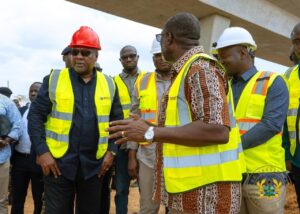
    Following thundering anger from users of the Ofankor-Nsawam Road, President John Dramani Mahama has paid a working visit to the project site yesterday, September 3, 2025.


    The President charged the contractors to beat the delayed time and complete works on schedule by the end of the second quarter of 2026.


    “I can see that drivers are happy now, and I hope that from now till you finish the project, you will maintain a smooth flow of traffic even as you are working so that you don’t impede the flow of traffic,” President Mahama, while addressing the contractors and motorists, in the company of Road Minister cautioned.


    “So we will hold you to your work. You say by the end of the second quarter next year you should be finished.”


    Mr. Mahama’s remarks come amid growing public concern over the state of major highways and traffic congestion, especially along key commuter routes like Ofankor-Nsawam.


    The Ofankor road construction officially began in July 2022, under the previous Akufo-Addo government, with an initial completion target set for July 2024.


    However, the completion target has been postponed several times due to funding challenges, sparking protests by drivers and residents over the heavy traffic congestion and environmental pollution caused by the ongoing construction.


  • Ghana, Singapore push cross-border SME ties as Mahama hails stabilizing economy

    Ghana, Singapore push cross-border SME ties as Mahama hails stabilizing economy

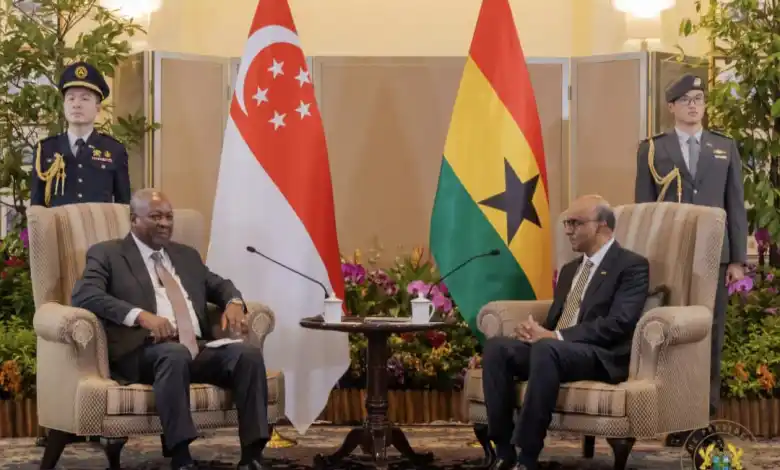
    On the second day of his three-day state visit to Singapore, President John Dramani Mahama emphasized the importance of closer financial and technological cooperation, noting that Ghana is positioning itself as a continental gateway under the African Continental Free Trade Area (AfCFTA) while working to restore macroeconomic stability.

    “Ghana provides a good gateway and push for Africa into the world,” Mahama said during bilateral talks with President Tharman Shanmugaratnam, pointing to AfCFTA, a youthful population and an untapped market in West Africa and Africa.

    He noted that inflation “is down to about 13%” and the government is “targeting a single digit by the end of the year,” alongside “prioritizing expenditure” and “ensuring fiscal discipline.”

    A central theme of the bilateral talks was the interoperability of payments to unlock trade across African borders.

    “It is not enough to sign protocols on free movement of people and goods… we must be able to pay for the goods across borders,” Mahama said.

    He added that Ghana is backing continent-wide solutions, “including the start of the PAPSS,” the Pan-African Payment and Settlement System, and wants to draw on Singapore’s expertise.

    “Singapore has a comparative advantage over Africa when it comes to payment systems, and we are looking to learn from you,” he said.

    President Tharman praised Ghana’s reform efforts.

    “Ghana must succeed for West Africa and Africa to succeed, and I see that you… are dealing with the country’s issues, including the debt challenge, admiringly,” he said, calling Mahama’s address at the Africa Singapore Business Forum “a strong reflection of the bilateral relations between our two countries.”

    Both leaders also flagged fintech, cross-border payments and SME development as near-term priorities.

    “Other areas of interest are Fintech and payment systems, cross-border payments, development of SMEs… and we are ready and glad to pursue them together,” Tharman said.

    Mahama congratulated Singapore on the city-state’s 60th anniversary of independence and noted that Ghana will mark its 70th anniversary in 2027, framing the partnership as one that can accelerate Africa–Asia commerce through practical financial connectivity as well as trade protocols.

  • Africa’s best governments revealed in 2025 Chandler Good Government Index

    Africa’s best governments revealed in 2025 Chandler Good Government Index

    The 2025 Chandler Good Government Index (CGGI) has identified Mauritius as the leading government in Africa, followed by Rwanda and Botswana.

    The average score for countries in Africa was the lowest amongst all regions, although there has been a modest improvement between 2024 and 2025.

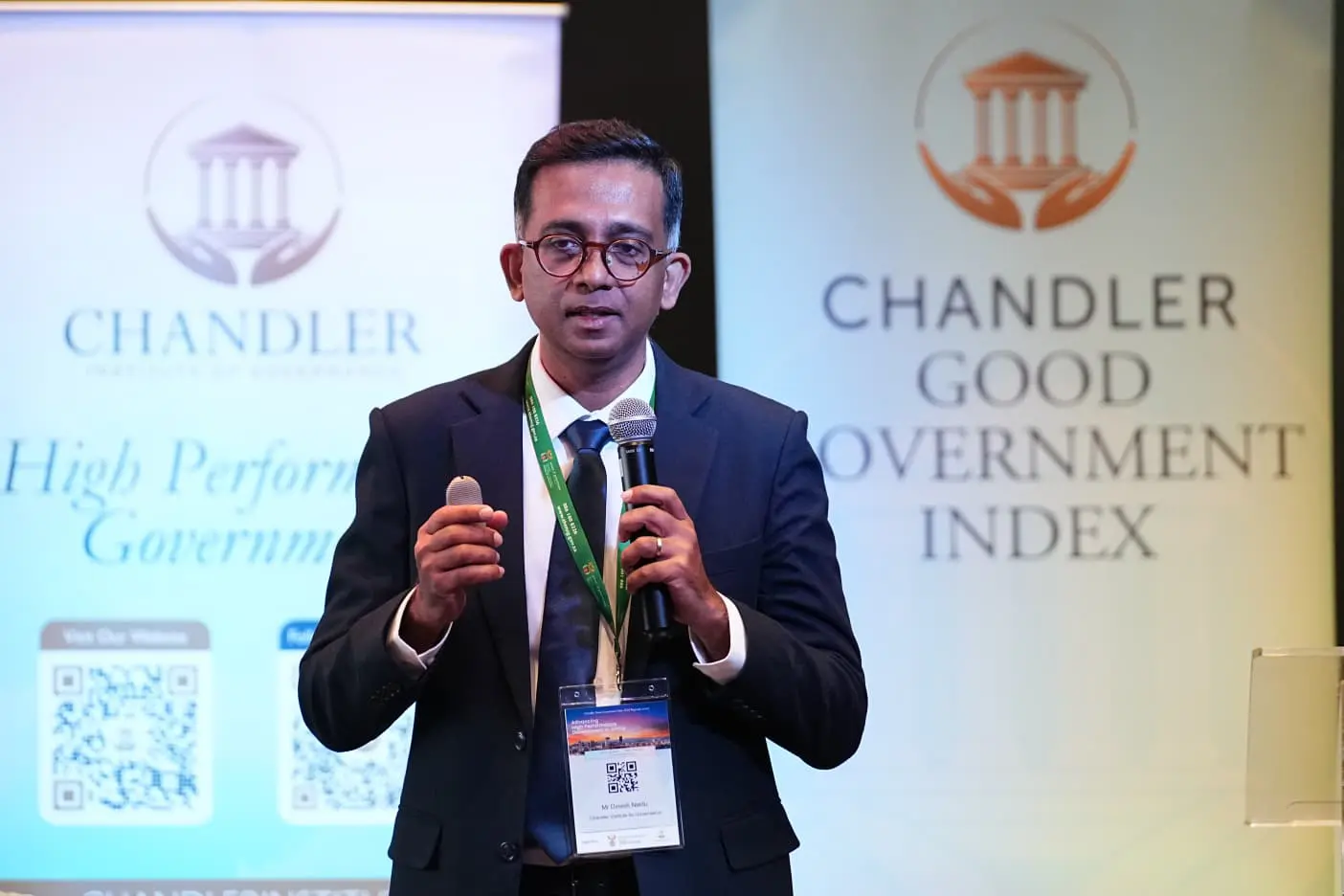
    This is according to Dinesh Naidu, Director (Knowledge) at the Chandler Institute of Governance, who was speaking at a recent regional launch of the Index in Pretoria.

    The event brought together policymakers, academics, and practitioners to reflect on Africa’s governance journey and the lessons emerging from the latest findings.

    Now in its fifth year, the CGGI provides one of the most comprehensive global measures of government capabilities and effectiveness.

    For Africa, the 2025 edition of the Index presents a mixed but forward-looking picture.

    “As a region, Africa still has significant work to do in improving the quality of governance,” notes Naidu.

    “However, the recent progress recorded suggests an upward trajectory. Even in a challenging global environment, high performance African countries are making governance advances that can inspire peers across the continent.”

    Covering 120 countries across seven pillars of capabilities and outcomes, the Index offers governments’ practical benchmarks to track progress, identify gaps, and strengthen public institutions.

    While many of Africa’s 28 CGGI‑ranked countries face fiscal and institutional challenges, several stand out for progress and resilience.

    Africa’s top performers

    In the 2025 rankings, Mauritius (51), Rwanda (59), Botswana (61), Morocco (75), and South Africa (77) emerged as the top five regional performers.

    While Mauritius remains the continent’s highest-ranked country for a fifth consecutive year, Rwanda stood out as the world’s best-performing low-income country, showing that national wealth is not necessarily a pre-requisite for effective government.

    Botswana has improved its judiciary quality through digitalization reforms in recent years, while Morrocco has made notable strides in data transparency and digital infrastructure.

    South Africa, despite fiscal pressures, remains one of the continent’s stronger performers and a key reference point for institutional capacity.

    Tanzania: Most improved over five years

    Although outside the continental top five, Tanzania has recorded the most improvement of any African country since the Index was first published in 2021, rising from 82nd to 78th globally.

    In recent years, Tanzania’s government has expanded digital governance initiatives and introduced structural reforms to improve administrative efficiency and service delivery.

    The government’s Digital Tanzania Project is laying a foundation for technology‑driven governance solutions, while new regulatory frameworks, such as the Data Protection Act, seek to enhance security in the digital space.

    “Good government is built over decades, but every step forward matters. The achievements we see in these African countries today – from digitalization to reforms in public institutions – are building blocks for long-term transformation,” says Naidu.

    A region of contrasts

    The CGGI shows that Africa’s average governance score remains the lowest out of all regions worldwide. Only two countries – Tanzania and Rwanda – improved their rankings between 2021 and 2025.

    Financial Stewardship continues to be a major area of concern, as fiscal envelopes tighten and government debt burdens weigh heavily across the region.

    At the same time, the continent’s strong demographic momentum offers promising opportunities. With 70% of Sub-Saharan Africa’s population under 30, governments that can deliver on jobs, education, and inclusive growth stand to unlock a powerful dividend.

    “What is encouraging is the progress in areas such as strong institutions and digital governance,” notes Naidu. “Across Africa, we are seeing examples of governments innovating to improve service delivery and strengthen accountability. These reforms show that even in a tough global environment, progress is possible.”

    A practical tool for governments

    With governments under pressure to deliver better services and governance outcomes, the CGGI provides actionable benchmarks across seven pillars: Leadership and Foresight, Robust Laws and Policies, Strong Institutions, Financial Stewardship, Attractive Marketplace, Global Influence and Reputation, and Helping People rise. Built by practitioners for practitioners, the Index provides a diagnostic tool that governments can use to identify opportunities for improvement and adopt good practices from peers.

    “The Chandler Good Government Index is about recognizing progress, fostering peer-to-peer learning, and inspiring improvements. We see it as a practical guide for governments committed to building long-term capabilities and improving service delivery,” says Naidu.

    “The Chandler Institute of Governance remains committed to working alongside African governments, sharing insights, and strengthening public institutions to build a more resilient and inclusive future,” he concludes.

    About the Chandler Institute of Governance (CIG)

    The Chandler Institute of Governance (CIG) is a non-profit organization that works with governments worldwide to build a strong and efficient public sector.

    It is a team of seasoned government practitioners grounded in real-world experience, focusing on the critical ‘how’ of governance in our partnerships with governments to strengthen institutions and systems, equip leaders, and share knowledge.

    Drawing on proven practices from Singapore and around the world, it tailors its solutions to each country’s unique needs – because context matters in governance. It is not affiliated with any national government or political party, and it does not represent any partisan or commercial interests.

    The Chandler Good Government Index (CGGI) is an annual index that measures the capabilities and effectiveness of 120 governments around the world.

    Built by practitioners for practitioners, the Index is designed to serve as a practical, diagnostic tool to support governments in benchmarking their performance and identifying areas for capability development.


  • Ghana’s unemployment rate eases to 13.6%, youth joblessness still high

    Ghana’s unemployment rate eases to 13.6%, youth joblessness still high

    Ghana’s unemployment rate eased to 13.6% by the end of 2024, down from 14.6% in 2023, reflecting a modest one-percentage point improvement.

    The figures are contained in the latest Annual Household Income and Expenditure Survey (Fourth Quarter Labour Statistics 2024) released by the Ghana Statistical Service.

    The data reveals that the challenge remains most pronounced among the youth, with 22.5% of Ghanaians aged 15 to 35 currently unemployed underscoring persistent pressures on first-time jobseekers and graduates despite the broader gains in employment.

    In the 4th quarter of 2024, the data paints a mixed but instructive picture: total employment rose to 12.73 million an increase of 1.15 million year-on-year while the number of unemployed persons also climbed by roughly 200,000 compared with the 4th quarter of 2023, signaling rapid labour-force growth that outpaced absorption.

    This combination suggests expanding opportunity but continued weaknesses in job quality and the economy’s ability to absorb new entrants quickly.

    Gender dynamics in the 4th quarter are notable as female employment has consistently exceeded male employment through 2024’s 4th quarter, and the employment gap widened from about 632,000 in the 1st quarter of 2022 to roughly 1.12 million in the 4th quarter of 2024 a sign that female labour participation and job creation for women have been strong in absolute terms.

    At the same time, the survey highlights persistent disparities in unemployment and underemployment measured by gender and locality, which point to uneven job quality and differing access to stable, formal work.

    The GSS also flags high levels of NEET (youth not in employment, education or training) across age cohorts, calling out NEET as a major contributor to youth exclusion and long-term labour underutilization.