Category: News

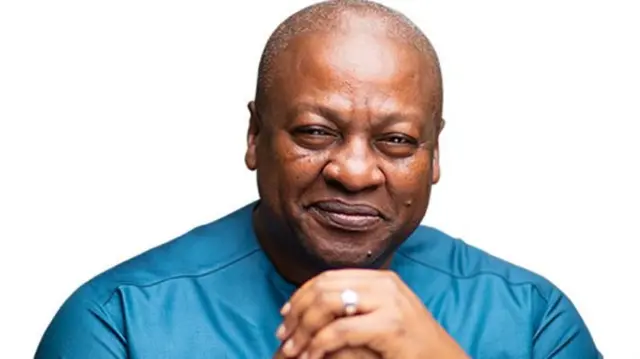
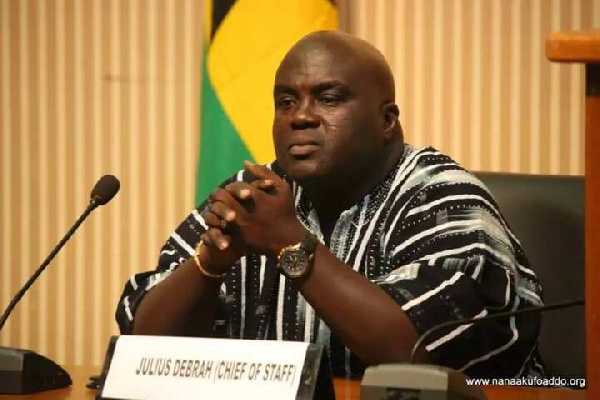
  • ‘Have Faith in the Reset’ – Julius Debrah calls for patience for Mahama

    ‘Have Faith in the Reset’ – Julius Debrah calls for patience for Mahama

    Chief of Staff, Hon Julius Debrah has thrown his full weight behind President John Dramani Mahama urging Ghanaians and the NDC grassroots to place blind trust in the President’s ability to “RESET” the country.

    In his latest pitch, Hon Debrah painted President Mahama as a visionary leader armed with unmatched experience – claims that sounded more like campaign jingles than serious governance talk.

    According to the CoS, President Mahama understands Ghana’s problems better than anyone and has a clear plan to fix them.

    The irony, of course, is that these problems have only deepened under the same leadership he now glorifies. If “understanding” challenges were the key to progress, Ghana would have long been an economic powerhouse.

    He assured the NDC grassroots they would “never be neglected,” echoing the familiar political lullaby that usually precedes exactly that neglect. His central plea was for patience an endless virtue politicians demand from citizens while delivering little in return.

    The CoS, Hon Julius Debrah crowned his endorsement with grand declarations about a “new era” for Ghana, conveniently ignoring that such promises have been recycled for decades with little to show.

    In reality, his sermon sounded less like a roadmap for progress and more like a call for Ghanaians to lower expectations and clap harder.


  • WAPCA Highlights Mangabey Awareness, Renewing Calls to Protect Endangered Primates


    As the world marks International Primates Day on September 1st, West African Primate Conservation Action (WAPCA) reflects on the importance of primate conservation, as 60% of the species worldwide are at risk of extinction.


    Primates are some of the most intelligent and social animals on the planet, from playful monkeys to majestic great apes, they share many traits with humans and are vital seed dispersers for the health of their ecosystems. Sadly, however many primate species face threats like habitat loss, poaching, and the illegal pet trade.

    WAPCA is a local NGO working in Ghana and Côte d’Ivoire to protect threatened primates and their habitats in West Africa through a ‘One Plan Approach’ to species conservation. The organization focuses on the Critically Endangered Miss Waldron’s red colobus (Piliocolobus waldroni), white-thighed colobus (Colobus vellerosus), Roloway monkey (Cercopithecus roloway), and the Endangered white-naped mangabey (Cercocebus lunulatus). Through reserved breeding, research, community engagement, and conservation education, WAPCA works to safeguard biodiversity while promoting sustainable livelihoods for local communities.

    In line with primate conservation initiatives, WAPCA successfully celebrated Mangabey Awareness Day (MAD 2025) on August 1st, 2025, at the Accra Zoo under the auspices of the Wildlife Division of the Forestry Commission, with over 200 participants, including conservation practitioners, private sector partners, sports organisations, government stakeholders, representatives from the Spanish and Netherlands embassies, the European Union, and university students representing the younger generation. The MAD 2025 was held under the theme “Sustainable Consumption for Primate Conservation: Connecting Everyday Choices with Biodiversity Protection” and the day was dedicated to highlighting the vital connection between human lifestyles and the survival of the white-naped mangabey (Cercocebus lunulatus). The celebration of MAD 2025 was made possible through the generous support of sponsors and the unwavering dedication of conservation allies who recognize that the future of primate species and forest ecosystems is deeply interlinked with the choices we make every day, from the products we buy to the policies we support.


    Partners and participants, whose presence and sponsorship highlighted the growing role of collaboration and partnership in championing environmental awareness included; Decathlon, Print Lounge, Centre for Biodiversity Conservation Research, the Spanish Embassy, Heidelberg Zoo A Rocha Ghana, Challenges Ghana, University of Environment and Sustainable Development (UESD), University of Ghana, HELP Foundation Africa, Hen Mpoano, KASA Ghana, Wildlife Division, Cape Three Points – Princess Town CREMA, Ankasa-Tano CREMA, Amokwaw CREMA, Noé, and Ridge City Football Club.

    Special appreciation also goes to the following speakers at the MAD 2025:

    • Dr. Godfred Bempah, from the Operations Unit of the Wildlife Division of the Forestry Commission.

    • Mr Foster Poasangma, Exsitu Projects Coordinator of WAPCA.

    • Professor Edward Wiafe Debrah, Acting Pro-Vice-Chancellor of the University of Environment and Sustainable Development (UESD) and the Chair of the WAPCA Ghana Advisory Board of Directors.

    • Mr Paul Addah, the Accra Zoo Manager.

    • Mr. Daryl Bosu, Deputy National Director at Arocha Ghana.

    • Paulina Różycka from Head of sustainable development and infrastructure section from the European Union Delegation in Ghana, reaffirming the EU’s support for biodiversity initiatives in the country.

    As biodiversity continues to decline at an alarming rate across West Africa, events like Mangabey Awareness Day and International Primates Day play a vital role in education, mobilisation, and fostering a shared sense of responsibility. They serve as powerful reminders that sustainable consumption is not a passing trend, but a necessity for the future of primates, people, and the planet.


    WAPCA’s vision aligns closely with International Primates Day, highlighting that the plight of the white-naped mangabey reflects a much larger global challenge: the protection of all primate species worldwide. As we celebrate International Primates Day, WAPCA and its partners have pledged to expand community outreach in forest-edge communities across the Eastern, Central, and Bono Regions. These efforts aim to raise awareness about primate conservation and reduce threats such as illegal logging, hunting and other activities leading to habitat loss and degradation.


    By fostering awareness and encouraging behavioral change, WAPCA and its partners aim to build a future generation committed to conservation and sustainable environmental practices in Ghana. The organization calls for stronger collaboration among communities, researchers, government agencies, and civil society, emphasizing that protecting primates means protecting our shared future.


  • Akwatia Bye-Election: Asanka transcends beyond political-maturity  …leads campaign for NDC PC

    Erasmus Ali Koney (Asanka Poyoyo) on campaign rounds appealing to voters


    As part of the ongoing campaign drive for victory in the Akwatia by-election, Hon. Erasmus Ali Konneh (popularly known as Asanka Poyoyo) has proved beyond imagination in the political landscape as he leads a campaign team to ensure Lawyer Bernard Bediako’ victory.


    He has been in the forefront of the campaigns right after the primary’s fully engaged with the voters and contributing to the strength of the party’s grassroots machinery.

    Yesterday, in the morning, Hon. Erasmus joined Dr. Kwabena Duffuor and hon Jowak for a house-to-house campaign. The team moved through the communities, interacting directly with households, listening to their concerns, and assuring them of the NDC’s readiness to deliver development, progress, and responsive leadership.

    The morning’s activities climaxed with a mass durbar, where Hon. Erasmus and the campaign team addressed enthusiastic community members. The gathering echoed strong support for the NDC, as the message of unity, empowerment, and transformation was boldly reaffirmed.


    In the afternoon, Hon. Erasmus joined forces with the General Secretary of the NDC, Hon. Fiifi Fiavi Kwetey, alongside leading comrades including Mr. Ako Gunn, the National Deputy Communications Officer, Dr. Amoakohene, the Ashanti Regional Minister, and other senior party figures. This collaboration showcased the party’s solid front, united leadership, and unstoppable momentum as we march toward victory in the Akwatia by-election.

    Erasmus Ali Koney stands behind Hon Fifi Kwetey as they appeal to voters

    Hon. Erasmus Ali Konneh’s active participation in today’s campaign underscores his unwavering dedication to the NDC and the people of Akwatia. His presence on the ground is a testament to the party’s commitment to the grassroots, and his energy continues to inspire confidence among our supporters.


    Together, under the leadership of the NDC, the message is clear: Unity, Development, and Victory for Akwatia!


  • NDC’s PC, other attacked at Ernest Kumi’s one week mourning; NDC calls arrest 


    The National Democratic Congress (NDC) has made an official complaint to the Ghana police service to cause the arrest of some 20 persons captured on videos making the rounds on social media before Monday the 1st of september 2025.


    In a statement issued by Ako Gunn, Deputy Communications Officer, noted that failure to do that, the police can trust us to arrest them ourselves and present them to the police on or before the 2nd of September 2025.


    The NDC was officially invited to the one week comemoration on Friday with a gold plated card. The national chairman, Hon Johnson Asiedu Nketia, led a delegation of national, regional, members of parliament, constituency, branch,and the parliamentary candidates for Akwatia, Hon Bernard Bediako to represent the party at the event, only to be attacked by a mob insisting that the candidate would not be allowed to enter the funeral grounds.


    This unfortunate incident by the NPP caused the widow of Ernest Kumi to break down in tears, seeing such distasteful things at her husbands funeral. Those who knew Ernest Kumi would understand the emotional trauma her husbands party placed her.


    The NDC demands a speedy action from the police. Else, they may have incidents to deal with on or before the day of the election.


    The people captured by the lenses of the media are known in the communities of Boadua, wenchi, Akwatia, and its surrounding villages.


    The police can not be seen speeding up arrest and prosecutions when it comes to the NDC and being lackadaisical when it comes to NPP. We are ready to cooperate with the police from this evening till the evening of Sunday if they call on us. Anything less than this will see us helping them in their duties on monday and Tuesday.


  • ADB MSMEs Coordinator promoting saving culture among Ghanaians


    The Coordinator in Charge of Micro, Small and Medium Enterprises (MSMEs) at the Agricultural Development Bank (ADB), Mr. Joseph Mensah Abakah, has encouraged Ghanaians to cultivate the habit of saving with ADB for their future financial security.


    Speaking on behalf of the Managing Director of ADB, Mr. Edward Ato Sarpong, at the ongoing Central Expo 2025 at the Adisadel College Park in Cape Coast, Mr. Abakah highlighted that the bank has introduced a range of innovative financial services tailored to meet the diverse needs of customers.


    He emphasized that saving with ADB not only secures individual financial stability but also supports the growth of businesses, particularly among Micro, Small and Medium Enterprises (MSMEs).


    Mr. Abakah reaffirmed the bank’s commitment to deepening financial inclusion and strengthening its role in driving economic development across Ghana.


  • A look at likely AU leadership under Mahama

    A look at likely AU leadership under Mahama

    The African Union (AU) officially announced in the Sirte Declaration in Libya on September 9,1999, has witnessed leadership of several Presidents and Head of States.

    The current Chairperson is H.E. João Manuel Gonçalves Lourenço, the President of Angola, serving from February 2025 to February 2026. This position is a rotating role, held for a one-year term by a Head of State from one of the AU’s five regions namely: North, South, East, West, and Central Africa.

    The Chairperson of the African Union is the ceremonial head of the African Union (AU) elected by the Assembly of Heads of State and Government for a one-year term. He or she is selected by consensus or a majority vote of the Heads of State at the AU Summit.

    In the likely event that, information being gathered materialise, President John Dramani Mahama, Ghana’s recording setting President will be aspiring to serve the continental bloc as Chairperson.

    Ghana’s Foreign Affairs and Regional Integration minister, Samuel Okudzeto Ablakwa, speaking to the unofficial information expressed optimism that President Mahama could be elected as Chairman of the African Union (AU) in 2027.

    He noted that President Mahama’s experience and leadership credentials place him in a strong position to spearhead the continent’s vision of unity and development.

    President Mahama has already indicated he will not seek a third term in Ghana, but with three years remaining in his mandate, many African leaders are looking to him to chart a path of prosperity and stability.

    Africa, with its population of over 1.4 billion people and the African Continental Free Trade Area (AfCFTA) Secretariat headquartered in Accra, Ghana, is strategically positioned to shape global trade.

    Ablakwa believes Mahama’s leadership at the AU would strengthen Africa’s voice in global economic and political affairs, particularly in building stronger partnerships with Asia, Europe, and the Americas.

    President Mahama is no stranger to continental leadership. During his first term in office, he served as Chairman of the Economic Community of West African States (ECOWAS) from March 2014 to May 2015.

    Under his chairmanship, he coordinated West Africa’s collective response to the Ebola epidemic in Liberia, Sierra Leone, and Guinea. He also mediated political crises in Burkina Faso and Mali, earning respect as a consensus-builder and statesman.

    In addition, Mahama has worked with the African Union on peace and security initiatives and supported AU and UN peacekeeping missions with Ghanaian troops.

    His advocacy for regional integration and infrastructural development has often aligned with the AU’s Agenda 2063, which envisions a prosperous and politically united Africa.

    Given Mahama’s stature as a former ECOWAS Chairman and his renewed mandate in Ghana, many analysts believe he will be strongly considered when West Africa’s turn to lead the AU arises.

    Ablakwa stressed that Mahama’s leadership would bring renewed transformation and deepen Africa’s engagement with global partners. He said the prospect of Mahama at the helm of the AU inspires confidence across the continent.

    Many Africans who have commented on circulating information sees President Mahama’s chances of becoming AU chair as promising, considering his recent involvement in high-level African Union (AU) meetings.

    While it’s difficult to predict the outcome of the AU chair election, Mahama’s experience, advocacy, and commitment to African development make him a potential contender.


    By Adnan Adams Mohammed

  • GRA sets records straight on ‘Auction of Perishable Goods’ as maritime traders cry foul


    The Ghana Revenue Authority (GRA) set the record straight defusing claims by the Importers and Exporters Association of Ghana (IEAG) in regards to auction of perishable goods at the country’s ports.


    The Authority, in a statement issued by the Communication & Public Affairs Department, clarified that its actions are in line with the Customs Act, 2015 (Act 891), which contains specific provisions for both perishable and non-perishable goods.


    The statement explained that, perishable goods left unclaimed for over 21 days can be legally disposed of through public auction by a “Proper Officer,” as stipulated in Section 53(3)(a) of the Act. Motor vehicles, on the other hand, are given a longer window of 60 days for clearance.


    Emphasizing that, it is misleading for importers to claim that they have 60 days to clear perishable goods. Instead, importers are urged to use pre-cargo arrival clearance processes to settle duties early and avoid delays. However, GRA reiterated its commitment to fairness, integrity, and strict adherence to customs laws, assuring the public and stakeholders of its continued transparency and service.


    Meanwhile, IEAG has accused politically connected cartels of hijacking the auctioning of perishable goods at the country’s ports, warning the practice is crippling businesses and eroding investor confidence.Travel deals


    In a strongly worded statement, the Association linked the development to Ghana’s persistent foreign exchange shortages, which it says have left importers unable to access dollars quickly enough to clear shipments.


    According to the Association, under existing law, goods on the Uncleared Cargo List (UCL) are meant to enjoy a 60-day grace period before being auctioned. But the IEAG says this window has been slashed to just 21 days without explanation, a loophole it claims is being exploited by politically connected businessmen who scoop up consignments at cut-rate prices, often without any proper gazetting or legal process.


    Even more galling for traders, according to the group, is that while importers lose their goods and still face heavy demurrage charges, the beneficiaries of these auctions pay little more than a service fee of GH₵6,000 to GH₵10,000.


    “This fraudulent system not only robs importers of their hard-earned capital but also denies the state valuable revenue at a time when Ghana desperately needs every pesewa,” the Association said.


    The IEAG is demanding the immediate restoration of the 60-day grace period, a first-time clearance option for importers struggling with forex, and a full investigation by the Customs Division and security agencies into what it calls a “political cabal” profiting from the system. It is also calling on the Bank of Ghana to ensure that commercial banks make forex available at fair rates.


    The Association has warned it could mount mass action if authorities fail to intervene swiftly.


  • Energy Is Development: Women Miners Lead Africa’s Just Transition


    At the Future of Energy Conference (FEC) spearheaded by the Africa Center for Energy Policy (ACEP) and partners, women miners, industry leaders, and governance experts gathered for a powerful side event moderated by Faith Mutete a small scale miner, Founder & CEO of Women in Mining Zimbabwe (WIM Zimbabwe) and Resource Governance Ambassadors under ACEP.

    The session explored how energy, mining, and women’s leadership intersect to drive Africa’s just transition.

    From Kenya, Michelle Mwambela of AWEIK (Association of Women in Extractives in Kenya) showcased an inspiring innovation: a solar-powered water pumping system developed through a hackathon. She explained how clean, off-grid energy improves safety, increases productivity, and creates opportunities for value addition and green skilling for women miners.

    Georgette Banzi, CEO of Women in Mining Ghana (WIM Ghana), shared success stories of gender-smart financing models that enabled women miners to grow from small-scale operations into sustainable businesses. She stressed that financing women in mining is a pathway to strengthening entire communities.

    From Tanzania, Lightness Mushi of TWIMMI (Tanzania Women in Mining and Mineral Industry) lifted grassroots voices. She described how women miners often face barriers such as limited financial literacy, poor access to equipment, and cultural biases. Yet, she highlighted creative resilience, like women repurposing traditional stoves into stools, showing how local innovation can transform livelihoods.

    Mahumuza Diders of Uganda focused on governance, emphasizing the need for policies and partnerships that hold both government and industry accountable to ensure equitable access to energy for women miners.

    Joelle from Madagascar, representing Transparency International, underscored the importance of accountability and anti-corruption measures in extractives. She warned of exploitative foreign investment models and argued that women’s inclusion is essential to safeguard community benefits.

    As the discussion wrapped up, Faith Mutete shared her closing message:

    👉 “Energy is not just power. Energy is a proxy indicator of development. When women miners access energy, communities thrive, productivity increases, and Africa takes a bold step toward a just energy transition.”

    Speaking in her capacity as ACEP Resource Governance Ambassador, she added: “I have a lot to do back home in Zimbabwe to continue supporting women miners in renewable energy, governance, and innovation. This is only the beginning—and many thanks to the Africa Center for Energy Policy (ACEP) for making this a reality.”

    Faith also serves as a Technical Advisor at the Investing in African Mining Indaba under the Just Energy Transition Committee, where she continues to amplify the voices of women miners in shaping Africa’s extractive and energy future.

    The session concluded with a united call to action: scale innovation, finance women miners, and embed accountability—placing women at the center of Africa’s mining and energy transition.

  • Africa Faces $500bn Bill to Close Energy Poverty Gap and Transition to Sustainable Energy – NRGI President warns


    Suneeta Kaimal, President and CEO of NRGI


    By Adnan Adams


    Sub-Saharan Africa is staring at a staggering $500 billion bill to bridge the energy poverty gap and transition to a sustainable energy system, according to Suneeta Kaimal, President and CEO of the Natural Resource Governance Institute (NRGI).


    Speaking at the Future of Energy Conference 2025 in Accra, Kaimal highlighted the enormous financing gap, noting that in 2023, financing for clean and renewable energy in all developing countries reached only $22 billion.


    The stark reality is that over 600 million Africans lack access to electricity, and nearly a billion rely on traditional biomass for cooking, perpetuating cycles of poverty and environmental degradation.


    Kaimal emphasized that innovative financing solutions are necessary to address this challenge, citing the potential for taxing premium air travel to raise new revenue streams for sustainable development


    Among some of the key challenges she noted included mounting debt burden, financing gap and unsustainable lending.


    According to available statistics, African governments spend nearly 17% of their revenues on debt service, the highest of any developing region, with over half of Africans living in countries that spend more on debt than on health or education.


    It is required that $500 billion is needed for sub-Saharan Africa’s energy transition, a significant challenge, with current financing models falling short. To avert this, new lending models are needed to mobilize private capital at fair interest rates, avoiding overburdening public budgets.


    The NRGI Chief proffered that, to remedy the current situation; strategic, inclusive transitions are needed. Emphasising that, context-specific solutions aligned with development ambitions and public priorities are essential for successful energy transitions.


    Also, leveraging Africa’s immense resources, including 30% of the world’s transition mineral reserves, can help increase public resources and drive sustainable development and exploring new financing mechanisms, such as the tax on premium air travel, can provide predictable revenue streams for sustainable development.


  • Jinapor Calls for Collective Action at Future of Energy Conference 2025

    John Jinapor interacting with keynote speakers at the Future of Energy Conference 2025


    The Minister for Energy, Hon. John Abdulai Jinapor, has emphasized the need for collaborative efforts to address Africa’s energy challenges and unlock the continent’s economic potential.


    Speaking at the Future of Energy Conference 2025, held at the Labadi Beach Hotel in Accra, Minister Jinapor highlighted the critical role energy plays in driving industrialization, digital transformation, and social development.


    Among major concerns the Minister amplified in his speech are staggering statistics that over 600 million Africans lack access to electricity, and more than one billion rely on traditional biomass for cooking, hindering economic growth and perpetuating inequality. Thereby stressing on the importance of cooperation between governments, the private sector, and development institutions to transform Africa’s energy sector.


    The Minister advised Africa’s path to a green transition must be carefully calibrated to ensure energy affordability, industrial growth, and job creation, with regional value chain development and local processing of critical minerals being crucial.


    In the case of Ghana’s Energy Transition Framework, which aims to decarbonize the power and petroleum sectors while maintaining energy security, with initiatives such as scaling up renewables, clean cooking solutions, and green hydrogen studies.


    Minister’s Call to Action:


    Hon Jinapor in ending his speech made a critical call to participants to move beyond brainstorming ideas to commitment and actions. Setting the stage, he indicated that competitive and sustainable financing mechanisms, including bonds markets, carbon trading, and green funds, are essential for Africa’s energy future.


    He noted that, sovereign guarantees, policy predictability, and transparent regulation can help mitigate risks associated with energy investments as well as scaling up innovation and research in clean technologies adapted to Africa’s realities is vital for a sustainable energy future.


    The Minister urged governments, businesses, investors, and civil society to work together, make commitments, and act decisively to transform Africa’s energy sector.