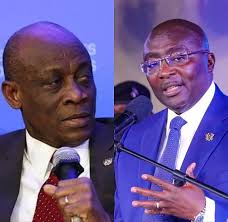
A former Finance Minister is advocating for a holistic tax system reforms to reflect transparency, efficiency, and the long-term financial health of Ghana.
The former minister believes that, an improved tax collection mechanism; such as, automation and integration of income tax and VAT files, could result in an increased in revenue.
Speaking in an interview after a presentation on Ghana’s International Monetary Fund in Accra last week, he questioned the delay in implementing the tax system digitisation, stressing the need for an efficient domestic Information Technology (IT) system for the Ghana Revenue Authority (GRA).
Seth Terkper, further revealed the complexities of Ghana’s tax system and proposed reforms for a more efficient and transparent structure. According to him, Ghana has four tax regimes namely: Income Tax, Excise Duty, Petroleum Tax and Import Duties.
He emphasised the importance of focusing on the four core taxes – income tax include: personal income tax, corporate income tax, and VAT, adding these are the pillars of the country’s revenue regime due to their broad tax base.
Petroleum taxes are the levies put on products, adding that excise duties are punitive and usually put on products such alcohol and cigarettes, among others.
On the concerns of increasing number of levies, he asserted that they contribute less than 6% to overall revenue and distort the primary tax system.
He thereby called for transparency in the introduction of new taxes and urged a return to the core pillars for the tax regime indicating that, certain levies are distorting the tax regime and encouraging tax evasion and avoidance.
Mr Terkper recommended clearing unnecessary levies and focusing on the fundamental tax pillars for sustainable revenue generation
Sale of fuel provided by Sentuo Oil Refinery has been suspended by the regulator of the downstream petroleum sector.
The National Petroleum Authority (NPA), directive comes against the Chinese-owned refinery company, over concerns of alleged substandard quality of the product.
The decision to suspend operations was in response to appeals from the Chamber of Petroleum Consumers (COPEC) and the Institute for Energy Security (IES) to halt Sentuo Oil Refinery’s activities due to purported illicit practices. In their joint statement, COPEC and IES raised alarm over the refinery’s operation without the requisite permit from the NPA, as well as allegations of supplying inferior fuel to the Ghanaian populace.
Highlighting the regulatory framework established by the NPA Act 2005, which mandates all entities involved in downstream sector commerce to obtain board approval prior to commencing operations, the statement emphasized that Sentuo Oil Refinery purportedly failed to obtain the necessary permits for oil processing and trading.
Despite ongoing discussions, Sentuo Oil Refinery remains under scrutiny for its compliance with regulatory standards and the quality of its fuel supply to consumers in Ghana.
Before NPA’s suspension, COPEC and IES in a statement last week, raised concerns about the refinery operating without the appropriate permit from the NPA and also supplying alleged substandard fuel to Ghanaians.
The institutions, in the statement, explained that in line with the provisions of the NPA Act 2005, all individuals engaging in business or commercial activity in the downstream sector of the industry must acquire a permit from the board before operating.
However, IES and COPEC insist that Sentuo has not acquired the necessary permits for oil processing and trading.
“These worrying developments by the Sentuo Oil Refinery in pumping sub-standard products unto the Ghanaian market, if left to continue could see a surge in malfunctioning engines, particularly in the Greater Accra, Ashanti, and the three Northern regions as a larger bulk of these bad products are believed to have been trucked to these regions.”
The energy watchdogs also called on the Special Prosecutor to investigate the refinery’s activities.
They also warn that they will take legal action against the Ghana Standards Authority and the National Petroleum Authority if the situation is not addressed.
The Electronic Transactions levy (E-levy) collections for the year 2023 stood at GH¢1.19 billion.
This reflects remarkable increase in the collections compared to the previous year’s collection of GH¢106.79million, although, the 2022 collections was affected by other factors.
However, the revenue line witnessed a decline at the beginning of 2023 due to a reduction in its rate from 1.5 percent to 1 percent. During the first quarter of 2023, the E-levy generated GH¢246.9million. Implementation of E-levy took effect on 1 May 2022. The E-levy charge covers mobile money payments, bank transfers, merchant payments, and inward remittances (Ghana Revenue Authority, 2022).
“Last year, E-levy generated GH¢1.19 billion and as part of dealing with the job situation… unemployment situation, the government has committed funds through YouStart from this E-levy sources…to GEA and NEIP to address the unemployment situation in the country”, Dr. John Kumah, Deputy Minister of Finance, revealed last week.
“I am happy to announce that institutions like Wealth and Jobs Expo and all private groups that are willing to help create jobs in the private sector will also be supported to help create jobs and businesses in the private sector.”
The Ghana Statistical Service last week announced that about 1.5 million Ghanaian youth are unemployed.
Dr. John Kumah in response to the latest figures from the Ghana Statistical Service on the unemployment indicated that, to help ameliorate the situation, government allocated funds from the E-levy collection to the YouStart Programme, the Ghana Enterprise Agency, and the National Entrepreneurship and Innovation Programme to combat unemployment in the country.
He further highlighted the government’s efforts in attracting investments into the country while spurring job creation, emphasizing the need for belief in entrepreneurship to address the unemployment rate.
“In the medium term, the government aims to intensify efforts to attract domestic investments and FDIs [Foreign Direct Investments] in strategic centres with emphasis on creating jobs anchored on the government’s growth strategy. The strategy is projected to contribute to the creation of approximately 500,000 jobs.
“We are not saying 1.5 million [unemployed youth], every one of them should create jobs. No. Even if we get it, we get 10% of them, it’s 150,000 who will become entrepreneurs. If they do an average of let’s say 100 jobs….150,000 x 100, you have almost solved the unemployment problem,” the Deputy Minister of Finance added.
The Government of Ghana has been advised to provide more affordable funds to private sector players to help stimulate the country’s economy.
This approach, a Banking Consultant believes would enhance the Gross Domestic Product (GDP) and promote economic stability.
The consultant argues that, the current trend of government’s continued borrowing was risky, especially when the private sector was not competitive. This path would not guarantee the country’s economic recovery and could potentially lead to an increase in the unemployment rate.
“The governor said recently that credit in the private sector has declined in real terms by 10%”, Dr. Richmond Atuahene said in a radio discussion last week. “The government is just like a snake, this snake, I don’t know its name, it only swallows, swallows. He is taking money. What does he take the money for?”
“Let the private sector have cheaper funds to turn the economy. That is when the GDPs or you are talking about the economy, the stability, and everything will come. But you see if the government is borrowing and the private sector cannot compete then we are crowding out the business.
“And it is a very dangerous thing. There will be no recovery. And if the economy does not recover, unemployment will be very high. There will be no job creation…The reality is that there is so much unemployment and non-job creation in the country at the moment.”
The Ghanaian public including finance experts has acclaimed that, not much should be expected from the newly appointed Finance Minister, Dr. Mohammed Amin Adam.
They explained that, the Ghanaian economy, which is currently under International Monetary Fund (IMF) has ‘no room’ for any miracle to turn the economy around. Most experts believe his appointment came a little too late.
In his first reshuffle of ministers in the past seven years of governance, President Nana Addo Dankwa Akufo-Addo replaced Ken Ofori-Atta with Dr. Mohammed Amin Adam as Finance Minister. There were other eight ministers and more than 10 deputies ministers also reshuffled. A Former Finance Minister is one of the skeptics who do not foresee any miracle coming in the economic management.
“The change comes at a critical time when the country is under an IMF programme, it might be too late for Dr. Adam to make a substantial impact on the economic policy of the president and government”, Seth Terkper posited in an interview last week while reacting to the reshuffle.
Mr. Terkper pointed out that the budget and economic policy are ultimately under the President’s authority, and with the limited timeframe until the next general elections. He expressed concerns that Dr. Adam may face challenges in implementing significant policy changes.
“We are a country where we could not do a turnaround of the economy, and we were preemptive, with everybody blaming it on COVID-19 and the Ukraine war, where some $6 billion flowed into the economy without the ability to turn it around.”
“This administration is not the only one that has suffered global or domestic setbacks, from droughts or floods to the global financial crisis, and so I think the situation is dire, and so we have to ask ourselves if nine months is enough time to do a turnaround.”
However, Dr. Mohammed Amin Adam, in an interview after his reassignment, has pledged to prioritize revenue mobilization efforts to bolster the nation’s finances and achieve its expenditure goals.
He has also assured the IMF of the government’s commitment to the ongoing program, promising not to stray from the government’s policies and programs as outlined in the 2024 budget.
Dr Amin Adam highlighted the pro-poor initiatives outlined in the recent budget, expressing his commitment to maintaining and advancing those initiatives.
He stated, “I do not intend to depart from those pro-poor initiatives, and I will ensure that business follows as usual as it should.
“We will make sure that we move faster to implement the tax reliefs that were made in the budget, and I am going to make sure the poor are insulated.”
Ensakai, says though today offers Vice-President Mahamudu Bawumia a golden opportunity to state his stance on LGBTQ+, his loud silence after all these while and then coming out to state his stance only after Mahama publicly repudiated LGBTQ+ last week will only amount to trying to score cheap political points.
In a statement signed yesterday by its Convener, Adel Umar Ibrahim, Ensakai says no true Muslim will tolerate LGBTQ+ sexual orientation for even a second. It is therefore embarrassing to the Muslim community that Vice-President Mahamudu Bawumia has kept quiet on the issue since it began raging in Ghana over ten years ago.
The group is a Muslim youth organization interested in the promotion of good morals in Zongo communities in Ghana
“As a Muslim, we expected you, Mr. Vice-President, to without let or hindrance swiftly condemn LGBTQ+ when your boss, President Akufo-Addo, told Al Jazeera IN 2018 that with a little push by the LGBTQ+ Community, homosexuality will become legal in Ghana” the statement said.
According to the Muslim group, it was disturbing to note that the Vice-President further kept quiet when attempts were made to introduce Ghanaian school children to homosexuality through the curriculum of basic schools in the country.
By keeping a loud silence then, our Vice-President, a Muslim, was giving his support for children to be taught that it is okay for a man to marry a man and a woman to marry a woman.
“On the other hand, John Mahama has made Christians, and indeed Muslims proud by declaring once again just last week that he is against LGBTQ+ because his faith is against t and the culture of the people he is seeking to lead is against it. That Bawumia is coming on the heels of this to state his stance after this long period of silence can only be an attempt to score cheap political points seeing that Mahama is being applauded by Muslims, Christians, traditionalist and adherents of other religions for his bold stance against LGBTQ+. With that, should Bawumia take a stance against LGBTQ+ today, it can only an unwilling act, a dishonest one, forced out of him for the sake of political expediency. However, we are looking forward to hear his stance on this perverse sexual orientation, especially, on why he has kept silence all these while” Ensakai said.
The group applauded Former President Mahama for coming out boldly against LGBTQ+.
“This is the mark of a true leader. A true leader must be unwavering. He must be bold and principled. Above all,he must put the interest of the people he is seeking to lead above his personal gains”
Dr Mahmud Bawumia has admitted the claims by former Finance Minister, Seth Terkper, that Ghana is witnessing “the worst” tax system ever.
Mr Terkper described the current tax regime under the Akuffo Addo/Dr Bawumia government as the ‘most punitive’ and ‘worst tax structure’ that the country has ever had.
Further indicating that, such punitive tax regime ends deprive the nation of the needed revenue as taxpayers find ways and means of evading and avoiding the tax. However, Dr Mahamudu Bawumia has prmised a new, “friendly” flat tax regime when he is elected President.
“So, if you have a simplified tax regime it is better and compliance increases”, Terkper said in an interview last week. “And the evidence is that if you look at our tax-to-GDP ratio, well, until recently as GRA is claiming — the highest point at which revenue was collected was 2015 per the percentage of GDP, not nominal terms.”
Consequently, in admittance to Terkper’s argument, the Vice President and Flagbearer of the NPP in his national address to outline his vision and priorities for Ghana, last week, there is the need to reform the tax system to the advantage of businesses, especially small and medium enterprises, (SMEs), which constitute the majority of the Ghanaian business community, while also encouraging the payment of the new friendly taxes,.
“My administration will introduce a very simple, citizen and business-friendly flat tax regime. A flat tax of a percentage of income for individuals and SMEs, which constitute 98% of all businesses in Ghana, with appropriate exemption thresholds set to protect the poor,” Dr Bawumia declared.
“With the new tax regime, the tax return should be completed in minutes! We will also simplify our complicated corporate tax system and VAT regime.”
Dr Bawumia also stated that, to start the new tax system on a clean slate, “My government will provide a tax amnesty, i.e. a complete exemption from the payment of taxes for a specified period and the waiving of interest and penalties, up to a certain year to individuals and businesses for failures to file taxes in previous years so that everyone will start afresh.”
“Tax digitalisation will be implemented across all aspects of tax administration. Everyone will be required to file a very simple tax return electronically through their mobile phone or computer. There will be no manual or paper filing of taxes from 2025. Faceless assessments will provide transparency and accountability,” he added.
In the past two months, the government has tried to implement two new taxes, thus, a 15 percent VAT on electricity and and emission tax. Although, it has suspended implemetation of the VAT on electricity tax after organised Labour threatened a nationwide demonstration.
Apparently, during the debate of the 2024 Budget Statement, the minority caucus, accused the Akufo-Addo government of having introduced some 50 new taxes since 2017.
“Mr. Speaker, you recall in 2017 this same Finance Minister told this House that they were removing so-called ‘nuisance taxes.’ That was a hoax! Today, we are witnessing an epidemic of nuisance taxes, taxes, and more taxes”, Minority Leader Cassiel Ato Forson told parliament in his concluding remarks on the 2024 budget debate on the floor of Parliament on Wednesday, 29 November 2023.
“This government has burdened Ghanaians with over 50 taxes despite their promise ‘to shift the economy from taxation to production.’ Mr. Speaker, notwithstanding the over 50 taxes imposed by this government since 2017, this 2024 budget is introducing additional taxes worth GH¢11 billion,” Dr Forson added.
“Mr. Speaker, any additional tax will worsen the extreme poverty in our dear country. We cannot support these new taxes because they will put an extra burden on businesses. Already, businesses are collapsing because of the high cost of doing business in Ghana.”
“We cannot support these new taxes because currently, tax exemptions pending before the Finance Committee amounts to GH¢5.5 billion, equivalent to USD449 million”, Dr Forson emphasised.
Government has officially suspended the 15 percent Value Added Tax (VAT) on domestic consumption of electricity.
Power distribution companies in the country; that is, the Electricity Company of Ghana (ECG) and the Northern Electricity Distribution Company (NEDCO), were directed by the Ministry of Finance to implement the policy which has been unpopular and strongly opposed by stakeholders in the country, notable among them are the trade unions and business associations.
The notice of suspension of the implementation of the VAT on electricity policy was contained in a press statement issued by the Ministry of Finance last week. The suspension, according to the Ministry was to allow for extensive dialogue and also to get the buy-in of industry players and labour unions following the grave concerns raised about its impact on consumers and businesses.
“On behalf of the government, the Ministry would like to inform ECG and NEDCO to suspend the implementation of the VAT directive pending further engagements with key stakeholders including organized labour”, the statement noted.
Beginning of the year, government directed the imposition of VAT on electricity customers above the maximum consumption level specified for block charges for lifeline units, to support the country’s Medium-Term Revenue Strategy and the IMF-Supported Post-COVID-19 Program for Economic Growth (PC-PEG) with the aim to mobilize revenue.
But this was opposed by the various interest groups that viewed it as not only punitive but a poorly-thought-through directive.
Earlier reports suggested that government was considering engagements with the IMF for a consensus on the anticipated revenue shortfall for a suspension of the VAT on electricity.
“The Ministry expects that these engagements will birth innovative, robust, and inclusive approaches to bridging the existing fiscal gap, while bolstering economic resilience”, the Ministry’s release concluded.
Organized Labour had planned a nationwide demonstration on February 13, 2024, urging the government to withdraw the directive to implement the 15% VAT on residential electricity consumption.
KEY POLICIES ANNOUNCED BY H.E JOHN DRAMANI MAHAMA (THE NATION BUILDER) TOWARDS THE 2024 GENERAL ELECTIONS
NB: UPDATED AS AT 6TH FEBRUARY, 2024
1. Implement a 24-hour economy strategy with three (3) shifts of eight (8) hours each to; maximize productivity and efficiency; transform Ghana into an import substitution and export-led economy; enhance access to public services and create more well-paying jobs for unemployed Ghanaians.
2. Stop the economic decline and restore stability and inclusive growth to the economy.
3. Reform the Bank of Ghana and rejuvenate the almost collapsed banking and financial sector.
*We will also give opportunity for experienced banking hands who were laid off, to secure their careers once more and move from the menial jobs they were forced into.
* As far as practicable, banking licenses that were unjustly cancelled by this Government will be restored.
4. Prioritize local participation in the banking, financial, telecommunications, mining, oil and gas, agriculture, manufacturing, and construction sectors to generate more jobs for the youth.
5. Actively attract viable and serious private sector investors to partner government to invest in productive sectors for job creation.
* This will involve an emphasis on agriculture and agribusiness and will have a strong focus on making Ghanaians own their own micro enterprises.
6. Lead a process to set a standardized limit for borrowing and ensure that Ghana never suffers such a deadly debt management programme that threatens to send elderly people holding government bonds to their early graves and wipe out the investments of the Ghanaian middle class.
7. Complete abandoned and ongoing projects instead of rushing to start new ones.
* We will carry out an inventory of all hospitals, schools, electrification, water, and road projects which have stalled or been abandoned and make annual budgetary allocation for completing them.
8. Establish a Governance Advisory Council to help improve political governance, curb corruption, and ensure respect for human rights.
* The Council will include representatives of Civil Society Organizations, religious leaders, traditional leaders, and ordinary Ghanaians, among others. They will be empowered to release a State of Governance in Ghana report every year.
9. Run the leanest but most efficient government under the fourth republic by appointing not more than 60 ministers and deputy ministers in our bid to cut down on government expenditure.
* We shall combine certain Ministries and eliminate government agencies that are duplicating each other.
10. Abolish the payment of Ex-gratia and cut out waste and ostentation in Government.
11. Work with Parliament and all stakeholders to complete the constitution review process and strengthen separation of powers.
12. Government procurement is recognized as a major source of corruption and misappropriation of public funds. We will among other measures, set up an Independent Value for Money office to scrutinize all government procurements above a $5 million threshold or as shall be recommended by Parliament.
13. Give anti-corruption state institutions unfettered space to operate – The days of the Clearing Agent must come to an end on January 07, 2025.
• We shall wage a strong fight against corruption to reduce waste and save money for reinvestment in the economy.
* The sword of the fight against corruption will cut both ways – against past government officials, officials of the incumbent administration, civil and public servants, businesses, government suppliers, etc. if they fall foul of the law.
14. The Fourth Estate of the realm – the media – will also be given the conducive and collaborative atmosphere to operate as the fourth power that they ought to be, without threats, harassments and assassinations.
15. Set up a Commission of Enquiry to investigate the matter of looted State Lands and make recommendations for resolving the vexed issue of expropriated Ga-Dangbe lands.
16. Stop collateralizing statutory funds for the purpose of taking on more loans.
17. Reconsider the tax exemption regime and ensure that any exemptions are beneficial to the Ghanaian people.
18. Ensure that the extractive sector operates within a mutually beneficial tax environment for the stability of the exchange rate.
19. We will seek to make Ghana benefit more from its finite natural resources and encourage indigenous Ghanaian businesses that have the technology and capacity to operate their own productive mining concessions by themselves or in partnership.
* Also, we will resource the geological survey department and review the laws governing the extractive industry so that Ghana can increase its share and local participation in the exploitation of the nation’s natural resources.
20. From January 2025, the next NDC administration will transform the economy, diversify our exports, and ensure value addition to create more jobs.
* We will add value to our cocoa by increasing domestic processing, refining our gold before export, and pursuing the dream of an integrated bauxite and alumina industry.
* VALCO, TOR and other strategic industries that can serve as extra pillars for our economy will be brought on stream.
21. Building a modernized agricultural economy driven by technology and digitalization and the establishment of agribusiness shall be one of the key anchors of our economic transformation plan;
* We will launch a programme akin to the “Operation Feed Yourself and Industries” of the early 70’s to make Ghana self-sufficient in basic staples and curb unnecessary imports;
* We shall also establish and deploy farmers’ service centers nationwide in all districts to boost production and output;
* We shall revive the concept of school farms so that the produce from the farms will be used to feed the students.
* By introducing well established farmer cooperatives, advanced farming techniques, embracing digital tools and promoting agribusinesses, we shall create opportunities for farmers, improve food security and bolster economic growth.
22. We shall apply the Price Stabilization Levy for its intended purpose to cushion petroleum consumers.
23. As a matter of urgency, we shall revamp the Tema Oil Refinery and ensure that the refinery processes domestic crude oil (as was started under our administration).
24. We shall facilitate an affordable housing scheme for teachers by collaborating and supporting teacher unions.
25. We will introduce an additional holiday to the celebration of Eid-ul-Fitr. We will, however, ensure that this does not affect productivity by modifying the Public Holidays Act so that Ghana continues to have the same number of public holidays per year.
26. We shall cancel the obnoxious licensure examination for Teacher Trainee graduates.
27. We shall establish a western industrial enclave to expand industries in the Western Enclave for job creation.
28. We shall pay assemblymen a monthly allowance.
29. We shall pay a 20% allowance to rural-based teachers
30. In April 2025, the new NDC government shall introduce a new budget to support small and medium scale businesses and adjust taxes as an incentive for job creation.
31. Complete the Tamne Irrigation project, support rice processing factories, provide fish storage facilities and prepare the Komenda Sugar Factory for take-off.
32. Improve the implementation of the Free SHS program and abolish the dreaded double-track system.
33. The next NDC government will build Cocoa Processing factories in Cocoa growing areas so that Ghana will not only export raw cocoa.
34. We shall abolish the obnoxious E-levy and review the levy imposed on bet winnings.
* With improved revenues from the savings made from a reduced size of government, anti-corruption fight, fast-tracked operationalization of new oil and gas wells, increased investment in the mining sector and a revamped cocoa sector, we can ease the heavy burden of tax that has been placed on Ghanaian households and businesses.”
35. We shall revive the construction of Cocoa roads in cocoa growing communities.
36. We shall build Tomato Processing Plants in the Bono Regions.
37. We shall build a Cashew Processing Plant in the Bono Region.
38. Farmer Co-operatives will be established in every region which will receive support to improve their businesses.
39. We shall continue the National Apprenticeship Program.
40. We shall scrap the quota system for admissions into Nursing and Teacher Training Colleges to expand students enrollment.
41. We shall ensure the prompt posting of trained health professionals.
42. Build Teachers accommodation in basic schools and start a policy of adding teacher accommodation to every basic school to be constructed.
43. We shall establish factories in every region based on their comparative advantage.
44. We shall open district mining offices and decentralize regulatory and licensing processes for artisanal miners.
45. We shall decentralize recruitment into the security agencies and ensure that recruitments are done on regional basis.
46. We shall complete the Eastern Corridor Road.
47. We shall build the Cargo service Center at the Tamale Airport to enhance exportation of agricultural produce through the airport.
48. We shall revive the cotton industry and give support to our farmers to grow cotton.
49. We shall revive the Pwualugu tomato factory.
50. We shall revive the Wulugu livestock station.
51. We shall revive the Zuarungu meat factory.
52. We shall complete the Pwualugu dam to absorb the spillage from the Bagre dam.
53. We shall start a tree growing policy where young people will plant trees and nurture the trees till they grow.
54. We shall establish a modern dialysis center in the Upper East region.
55. Phase 2 of the Tamne irrigation dam project will be completed to boost agriculture in the Upper East region. We shall continue the irrigation projects that we started in the Upper East region.
56. We shall build an airport in the Upper East Region.
57. We shall reverse the names of Public Universities re-named by the NPP to reflect the core mandate of those universities.
58. We shall build a referral hospital in Bawku.
59. We shall construct a potable water system for the people of Yendi and upgrade the Yendi Hospital to improve healthcare services and reduce long distance travel for medical care.
60. We shall remove taxes on essential medical supplies for dialysis. We shall also establish a Cancer and Kidney disease Trust Fund to support afflicted Ghanaians who need assistance to treat such conditions.
COMPILED BY: THE NATIONAL COMMUNICATIONS BUREAU OF THE NDC
Ken Ofori-Atta, Dr Ernest Addison with IMF official
Adnan Adams Mohammed
In the wake of unsustainable debt levels, high inflation resulting in Eurobond market blackout and high policy rate stiffling business growth, some actors of the Ghanaian economy are confident in the recovery efforts.
Their confidence is dependent on the continuous downwards trend in inflation, positive Gross Domestic Product (GDP) growth, the IMF approval of first review of Ghana’s economy in the Extended Credit Facility program.
In a Facebook post last week, a deputy finance minister jubilated the unanimous approval of Ghana’s request for debt treatment under the G-20 Common Framework, viewing it as a foundational step for the nation’s economic outlook. To this, the minister indicated confidence in Ghana’s economic recovery, highlighting recent positive developments concerning the receipt of the second tranche of the International Monetary Fund’s bailout.
“I commended Ghanaians for their steadfast support of government measures and policies, particularly in addressing challenges posed by the COVID-19 pandemic and the Russia-Ukraine war”, Dr John Kumah has expressed. “I acknowledge the role played by Ghanaians in mitigating adverse impacts, expressing optimism for a brighter future.”
Also, the Bank of Ghana Governor, Dr. Ernest Addison, while acknowledging the challenges ahead, expressed confidence in the ongoing economic recovery process. Stressing the importance of executing necessary structural reforms to support a more efficient functioning of the economy, ensuring long-term sustainability.
Hailing the effectiveness of its efforts, the Central Bank anticipates a further easing of inflation in 2024, supported by the continued implementation of sound policies until inflation expectations are firmly anchored towards the single-digit objective. A notable improvement has been observed over the past year, with inflation dropping from around 54 percent to 23 percent by the end of 2023.
In a brief statement following the completion of the First Review of the Extended Credit Facility (ECF) Programme with the International Monetary Fund (IMF) last week, Dr Addison emphasised the central bank’s commitment to monitoring domestic and external developments.
Commenting on the banking sector, he reassured that, the sector remains sound, liquid, and profitable. He said the Bank of Ghana will closely monitor banks’ efforts for capital restoration, particularly in light of the impact of the Domestic Debt Exchange Programme (DDEP).
Dr. Addison expects early recapitalisation to enhance banking sector resilience and facilitate effective financial intermediation, contributing to macroeconomic recovery.
Consequently, the Deputy Finance Minister in his post further indicated that, the approved debt treatment sets the stage for sustained economic progress, anticipating benefits for the citizens of Ghana.
He mentioned the importance of the debt treatment in confirming Ghana’s public debt on a sustainable trajectory, paving the way for further fiscal prudence and debt restructuring measures.
Dr Kumah cautioned that while the decision of the Official Creditor Committee (OCC) to support the government’s efforts is commendable, more work needs to be done going forward.
He outlined the next steps, including the signing of a Memorandum of Understanding (MoU) between the Government of Ghana and the OCC and ongoing negotiations on commercial debt (Eurobonds).
Looking ahead, Dr Addison urged the country to prepare for the second review of the program and emphasised the critical role of structural reforms in achieving a well-functioning and sustainable economy.