The Economist Intelligence Unit is forecasting that oil prices will remain above $80 per barrel until late 2025.
This, it said, will lift inflationary pressures in many countries at a time when their currencies are losing ground against the dollar.
Based on recent data from the International Energy Agency, the global oil market fell into deficit (with demand outstripping production) in the first quarter of 2024. Due to this evolving supply-demand dynamic and rising geopolitical pressures, we revised up our oil price forecasts, with dated Brent Blend to remain above US$80/barrel until late 2025. This will lift inflationary pressures in many countries at a time when their currencies are losing ground against the dollar.
Oil
EIU also projected that oil prices will continue to trade at nearly $90 per barrel for at least the next few months. Besides the market deficit, higher prices will also be supported by rising tensions in the Middle East as the Israel-Hamas war threatens to widen into a broader regional conflict.
“Even if disruption to oil shipments from the region remains minimal and traders shrug off concerns about military escalation, prices are set to remain high as the global market remains in deficit until late in the year [2024]. We expect that OPEC+ will strictly observe reduced output quotas and that Saudi Arabia will continue to adhere to additional, sharp voluntary cuts until at least mid-2024 and only slowly lift production towards the end of 2024 at the earliest”, it pointed out.
The EIU added that “We continue to expect US production to increase moderately in 2024 before stabilising in 2025, but the recent rise in prices is not enough to elicit a stronger supply response. The US oil rig count, at 508, is actually down by 14% from a year ago, according to Baker Hughes, an oilfield services firm, as US oil companies continue to prioritise dividends for shareholders”.
It still forecasted that global oil demand will hit record highs in 2024 and 2025, adding, demand in developed economies will decline, although North America will remain an exception to this trend.
The World Bank’s food price index eased in early April 2024 after falling by about 4.0% in the first quarter of 2024, 9.0% lower than a year earlier.
Subcomponent indexes for grains, oils, meals, and other foods fell between 2.0% and 5.0%. Maize prices tumbled by about 11% and wheat prices declined by 4% in 2024 quarter one, together driving the 4.0% reduction in the overall grains index.
Both wheat and maize prices hit three-year lows during the quarter, with the downtrend continuing in early April 2024.
The decline in maize prices was attributed to competitively priced offers from the Black Sea region, larger production in major exporters, and favorable prospects for the next harvest, with global maize production in the 2023-24 season expected to increase by 6.0% to an all-time high.
“Downward pressure on wheat prices derived from robust exports from Russia and Ukraine and the second-highest global production on record in 2023-24. The collapse of the Black Sea Grain Initiative had minimal fallout, as Ukraine has so far been able to continue exporting via seaborne corridors and new overland routes”, the World Bank pointed out.
Rice prices increased by about 4.0% in the first quarter of 2021, standing 28.0% higher than a year earlier, reflecting supply concerns in major exporting countries related to El Niño and continued export restrictions from India.
However, the prices retreated in February, March, and early April, reflecting the depreciation of Thailand’s baht and Viet Nam’s dong against the U.S. dollar, sluggish global rice demand amid increased prices, a seasonal supply increase from the harvest in Viet Nam, and ongoing offseason harvests of irrigated fields in India and Thailand.
The oils and meals price index also declined by 5.0% in 2024 quarter one, reaching a level 17.0% lower than a year earlier.
This decline was driven by a 14.0 fall in soybean oil prices, a 13.0% drop in soybean meal prices, and a 5.0% decrease in soybean prices, partly offset by an 8.0% increase in palm oil prices.
Downward pressures on soybean prices stemmed from near-record production in Brazil, a near doubling of production in Argentina, and subdued Chinese demand. Global soybean production in 2023-24 is projected to increase by 5.0%, to a new record.
The International Labour Organisation has warned that, the Social Security and National Insurance Trust (SSNIT) faces looming financial crisis, with its reserves projected to dry up by 2036.
This has alarmed many pensioners and active SSNIT contributors in the country.
SSNIT, since its transformation into a Social Insurance Pension Scheme governed by the PNDC law 247 in 1991, is challenged with increasing administrative expenses, which now threaten the sustainability of the scheme. It initially functioned as a Provident Fund, but later expanded its services to include accident, old age, disability, and death coverage, becoming a vital support system for emigration.
Despite serving 1.6 million Ghanaians, roughly 16% of the country’s workforce, SSNIT struggles with rising operational costs, diverting resources from beneficiaries.
The report reveals that from 2008 to 2020, the scheme’s average return on assets was a mere 0.9% after adjusting for inflation, contrasting starkly with the 17.5% average return on Ghana’s 91-Day Treasury Bills over the same period.
Actuarial projections paint a grim picture, indicating that an increase in contribution rates is imperative for the scheme’s longevity.
The PAYE rate, representing the contribution needed to cover all scheme expenditures, is expected to rise from 11.5% in 2020 to 29.5% by 2095, further straining future generations.
Notably, the report highlights that annual contributions alone will not suffice to cover expenditures, necessitating the use of investment income until 2028.
However, by 2029, the scheme will face a deficit, depleting reserves entirely by 2036.
This dire situation underscores the urgent need for government intervention, with the International Labour Organisation recommending increased government contributions to mitigate the risk of reserve depletion.
In summary, SSNIT’s financial woes require immediate action to safeguard the welfare of retirees and ensure the scheme’s sustainability for future generations.
The Ghana Association of Forex Bureaux has claimed that the Ghana Cedi can only gain stability through miracle, if things remain as it is.
This assertion is stemmed from the current downward trajectory of the Ghana cedi and the cyclical election-year trends, where governments loose control of the economy.
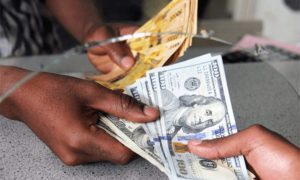
The cedi has so far lost 12 percent of its value to the US dollar in the first four months of this year. It is currently one of the worst-performing currencies in the world.
“We are not doing things right, which is affecting the cedi”, Vice President for the Association, Dr. Alex Akpabli explained that while the tottering economy will not help matters, election-year spending would even make the case worse.
“Looking at the trends, and this year also being an election year, the government would have to spend a lot to be retained. I am not politicising, but that is the case.”
“From my experiences over the years, I don’t see any appreciation going forward unless something dramatically or miraculously happens,” he said.
For Fitch’s projection that the cedi will gain about 1.0% against the US dollar in 2024, Dr.Akpabli told Joy News: “We are not doing things that will bring foreign currencies into the country. We need to be innovative. otherwise, we will always see ourselves in a vicious cycle”.
In the face of Ghana’s cyclical economic woes, a Chartered Accountant and Information System Auditor has called on the government actors and private players to ensure long-term macroeconomic stability for the country.
The accountant believes, such is very critical for planning, forecasting, and overall building of a vibrant economy that would not only creates jobs but also boosts the per capita income of the people and accelerates poverty reduction.
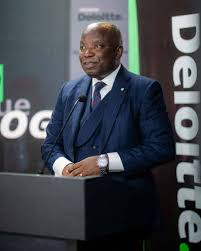
The Country Managing Partner of Deloitte Ghana opines that, Ghana has reached a stage where all must chart a common course toward building hope and confidence in the economy and position it for a brighter future.
“Indeed, the International Monetary Fund has assured us that the economic outlook for Sub-Saharan Africa including Ghana is gradually improving, indicating that growth will rise from 3.4% in 2023 to 3.8% in 2024″, Daniel Kwadwo Owusu said while speaking at the launch of the 8th Ghana CEO Network Summit and the Ghana Excellence Awards last week.
“For us, it is a welcome news as inflation and other macroeconomic indicators are expected to improve this year. However, we need to do more as a country to achieve long-term macroeconomic stability.
“Long-term macroeconomic stability is very critical for planning, forecasting, and overall building a strong and vibrant economy that would not only creates jobs but also boosts the per capita income of the people and accelerates poverty reduction”, he stated.
Emphasising on Deloitte’s brand positioning statement “Embarking on a Transformational Business Journey” he added that, “As Knowledge Partner of this summit, we will continue to collaborate with industry leaders, policymakers, and other stakeholders to build a robust, inclusive, and sustainable future for all. We are excited to bring our expertise in these areas to the table”.
“At Deloitte, it is all about making an impact that matters, setting high standards of excellence and achieving them, and helping our clients realise their ambitions. We also create connections with our clients, the communities, and the leaders far and wide to make an impact that matters the most, a reason we see the Ghana CEO Summit as an important tool to share our projects and programmes with a wider and larger audience.
Deloitte launched the Technology, Media, and Telecom Predictions for 2024, which hinged on four pillars – Generative Artificial Intelligence; Sustainability; Media, Entertainment and Sports as well as Technology and Telecom.
The Country Managing Partner said this is an insightful and educative piece that talks about the evolution of these spaces and the need for us to reposition our brands in line with the changing trends.
He noted that Deloitte is committed to sharing insights and best practices that can help Ghana and the broader region navigate complex issues and achieve their growth objectives.
KIC and Mastercard Foundation have organised a First Pitch for the 2023 cohort of the Agritech Challenge Pro ahead of the Final Pitch event to take place this month.
The First Pitch took place at Kosmos Innovation Center in Accra, where the AgriTech Challenge Pro participants received feedback from Ideation Team members, a team of business experts across the agribusiness and agri-MSMEs sectors.
AgriTech Challenge Pro was introduced by KIC to provide young people with entrepreneurial skills within the agricultural sector. Through the 5-month program, young people are trained to grow their businesses, develop skills and capacity to scale up and become investor ready. The teams receive capacity building and training on business development, business diagnostics, design thinking, marketing, legal documentation, business team formation, among others.
Through KIC’s partnership with the Mastercard Foundation, the AgriTech Challenge Pro expects to train young people across the partner universities in the next two years, collaborating with regional academic partners such as universities and technical schools. The participating universities for this year’s Challenge include University of Ghana (UG), Kwame Nkrumah University of Science and Technology (KNUST), University of Cape Coast (UCC), Bolgatanga Technical University (BTU), Takoradi Technical University (TTU), Ho Technical University (HTU), Koforidua Technical University (KTU), University of Development Studies (UDS), SD Dombo University of Business & Integrated Development Studies (UBIDS), and University of Energy and Natural Resource (UENR).
Since 2022, the participants to the KIC AgriTech Challenge Pro join from the KIC AgriTech Challenge Classic, where KIC supports young people with a business idea, to develop these into agri-startups . At the Pro stage of the competition , these businesses already exist as registered legal entities. Other participants also join the program from already existing start-ups.
Speaking about the impact of the KIC AgriTech Challenge Pro, Benjamin Gyan-Kesse, Executive Director, highlighted the important role of the training and capacity building in providing the young people with practical training on agribusiness management.
“Every year, young people from the participating universities and colleges develop business solutions tailor made to address some of the critical challenges facing the agricultural sector. Particularly, this year, many of the businesses are focusing on sustainability, green businesses, and circular economies, cutting across different agro-related industries,” he said.
This year 40 teams are pitching from ten universities across the country, with a strong focus on climate related interventions and technology focusing on bio-degradable innovations from waste agricultural produce, carbon reduction innovations, Agric manufacturing implements among others. From climate smart agricultural practices to eco-friendly packaging, the ideas from these young people are contributing to environmental responsibility and reducing the impact of agricultural activities on the environment.
For example, as a start-up, Cas-Tech Glue (Takoradi Technical University) harnesses cassava byproducts and process it into biodegradable, user friendly and multipurpose adhesive (glue) for wood and wallpaper industries. Sunify Solardry Technology (University for Development Studies) is a company that is developing an affordable and portable mobile solar dryer to address post-harvest losses among rural grain farmers. This innovative solution harnesses solar energy to efficiently dry grains, reducing losses and improving income for farmers. For a start-up like Agricem innovations (UBIDS), the need for sustainable construction practices led to the introduction of Rango Cement from rice husk, a renewable agricultural byproduct. This innovative approach significantly reduces the carbon footprint of cement production, addressing environmental concerns.
Greenwood company (University of Ghana) helps reduce carbon footprint to the barest minimum by the production and processing of sanitary tissues, charcoal, plywood and bamboo tea using a very sustainable wood option, Bamboo. On their part, Hyfe Bee (Ho Technical University) is dedicated to sustainable beekeeping practices and the production of high-quality honey, wax, and propolis.
Harvest Ease Innovators (University of Energy and Natural Resources) is a company which focuses on agricultural mechanization in Ghana. Starting with maize, the company builds small harvesters which harvest and de-husk maize from its stalk. Their method is efficient and cost effective compared to traditional way of harvesting maize. Farmercy Technologies Ltd. (KNUST) solves the problem of post-harvest losses for small-scale farmers in Ghana, by preventing farm waste through an innovative solar-powered micro cold storage network.
Out of the 40 teams participating in the competition, some teams will be selected to receive funding support of up to USD50,000, to scale up their operations.
KIC remains committed to developing young entrepreneurs.
The National Democratic Congress (NDC) has announced plans to create women entrepreneurs and millionaires through the strategic establishment of a Women Development Bank.
This comes as a welcome news to womenfolks in the operating Small and Medium Scales businesses and agribusinesses.
Over the years many efforts have been made by government, private actors and NGOs to provide and streamline financial support to women led businesses in helping boost financial status and empowerment of women and also to reduce poverty levels.
The announcement by NDC’s Professor Jane Naana Opoku-Agyemang, running mate to John Dramani Mahama has received wide applause.
“We will actively pursue the establishment of a Women Development Bank to nurture and grow women-owned, women-led businesses”, She stated.
“Women must become millionaires too, through hard work, as the men do. Women do not need handouts. We need a hand up. Women of Ghana are capable of managing the bank 100%,” She said during her acceptance speech as running mate in Accra last week.
The proposed bank by John Mahama and the NDC is expected to provide small-scale businesswomen, such as those hawking or running small businesses, access to capital to boost their enterprises.
It is planned that, a board for the bank would be inclusive of trading associations and cooperatives to represent and make decisions on behalf of its members.
Referencing notable women entrepreneurs like Esther Ocloo, Prof. Jane Opoku-Agyemang called for the revival of the dream and actions of hero and heroine entrepreneurs as models while emphasizing the importance of supporting private sector participants and warned against hindering successful entrepreneurs’ efforts.
In addition, she outlined plans for modernizing markets, which are central to many women’s economic activities. “Market women deserve the benefits of a clean, modernized marketplace. It must not end with the beautiful Kejetia or attractive Kotokoraba and allied markets,” she stated.
The editorial team of Economy Times welcomes the plan for the establishment of such bank that will help close the gender disparity and empowerment gap in the country.
by: Yaw Appiah Lartey, George Anang & Emmanuel Opoku-Bona
In Ghana, the housing deficit is significant. According to the Ghana Statistical Service (GSS), it stood at 2 million units in 2022.
This suggests a need for 200,000 units annually over the next ten years, assuming steady population growth and constant supply at prevailing rates.
Increasing permanent income, graduate education, and a growing expatriate population are some major factors affecting the demand for houses in Ghana.
Expatriates inject cash into the economy, increasing the need for modern housing, especially in prime locations and countryside destinations, potentially, pricing out locals.
Affordable housing model
Ghanaians, prior to recent global and national economic challenges, had been enjoying increased financial stability and rising income levels with a general rise in the middle-income class, leading to aspirations for better living spaces and improved living standards.
Changing family preferences for smaller sizes deepen also the demand for houses. This rise in demand is transforming the landscape of Ghana’s housing market.
While the pricing of homes varies significantly with factors such as location, size, style, and amenities, typical homes in the country are priced between GH¢200,000 (US$ 16,703) and GH¢ 800,000 (US$ 66,811) for a standard two-bedroom home.
The median price of a 2-bedroom house in Greater Accra and Ashanti Region as of January 2024 stood at GH¢ 1,034,482 (US$ 86,394) and GH¢ 230,000 (US$ 19,208) respectively.
Homes in the Greater Accra Region are relatively more expensive than those in the Ashanti Region. The trend is common for other regions as well with even less expensive homes further away from regional capitals.
The pricing of homes generally is influenced by demand, additional costs linked to features such as quality of material used, finishing, extra architectural features and miscellaneous development costs contributing to price escalations and explain the variation in pricing across regions in Ghana.
Mortgage finance is one typical option for home purchases globally. Mortgages allow for flexible expending on home purchases, spreading payment over a period of ten (10) to twenty-five (25) years.
Mortgage interest rates in Ghana range between 20% and 27% on cedi facilities, depending on the lender, the borrower’s source of income, and the loan tenure.
In Ghana, the mortgage to GDP ratio of 1% indicates low levels of patronage compared to South Africa, Namibia and Cabo Verde, which have mortgage to GDP ratios between 3% to 10% of GDP.
While qualification for mortgage facilities remains a major barrier, the perception of the masses on debt also acts as an inhibiting factor for patronage of mortgages.
Majority of home purchase transactions are funded by equity typically through self-development over an extended period or savings in hard currency.
Other home purchase options include the rent-to-own programme: a structure for civil servants in Ghana which allows buyers to make monthly payments towards the purchase of a home while living in it for a set period and offered an option to buy at the balance of the outstanding value.
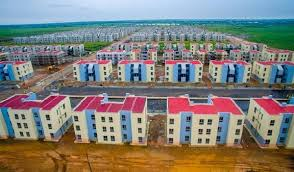
Affordability is pricing that caters for the masses. As of 2023 in Ghana, there were about nine (9) Affordable Housing Projects (AHP) at various stages of completion including; The Asokore Mampong Affordable Housing Project (Completed) the Borteyman Affordable Housing Project (Completed), the Community 26 Kpone Affordable Housing Project (In-progress), the Saglemi Affordable Housing Project (In-progress), the Amasaman Affordable Housing Project (In-progress), the Shai Hills Affordable Housing Project (In-progress), the Gbetsile Affordable Housing Project (In-progress) and the most recent 8,000 Unit Pokuase Affordable Housing Project.
Other private developments seeking to enter AHP space include the Appolonia Bijou Homes Project and Adom City Phases.
The AHPs projects above listed are priced between GH¢ 159,768.40 (US$ 13,343) for studio units and GH¢ 492,619.23 (US$ 41,141) for 3-bedroom homes.
According to the GSS, over 80% of public sector workers earn less than GH¢3,000 (US$ 251) per month as of February 2023.
Extrapolating this statistic for the average income of Ghanaians, we will for the purpose of this analysis, peg average earnings from all sources at GH¢ 3,000 (US$ 251).
Affordability of housing is best considered on a household basis, using the average household size of 3.6.
According to the United Nations, a household is a small group of persons who share the same living accommodation, pool some or all of their income and wealth, and consume certain types of goods and services collectively, mainly housing and food.
Thus, assuming a minimum household of two (husband and wife) in the working class, the average annual household income using the same base individual income of GH¢3,000 (US$ 251) is estimated at GH¢72,000.00 (US$ 6,013) per annum.
For this analysis, we employ the popular 50/30/20 rule indicating that 50% of household income is spent on essential expenses such as rent, utilities, and groceries, 30% caters for non-essential purchases and wants, and 20% put into a savings account.
Referencing this general rule of thumb, using GH¢72,000 (US$ 6,013) as the average annual household income, it may be implied that the average household can save at most GH¢ 1,200 (US$ 100) monthly and GH¢14,400 (1,203) annually towards acquiring a home, assuming all savings are channeled toward home purchase.
As an analytical safety net of prudence favoring affordability, we assume a further 30% scale-up of annual savings/ disposable incomes per annum for home purchase to GH¢ 18,720 (US$ 1,563).
Thus, keeping inflation and other price and wage adjustments constant, the total save-up period to purchase a standard 2-bedroom valued at GHS 500,000 (US$ 41,757) is estimated at approximately 27 years through the equity purchase route.
Generally, most lenders prefer a borrower’s mortgage payment be less than or equal to 40% of their gross income.
Further to the previous example of a standard 2-bedroom valued at GH¢500,000 (US$ 41,757), a cedi mortgage facility with a tenure of 20 years assuming an average interest rate of 21.5% implies a monthly repayment of GH¢9,086 (US$ 759) per month.
Compared to the maximum debt burden of GH¢3,120 (US$ 261), the average household falls short of repayment obligations by 65.7%, rendering them unqualified for mortgage facilities, or overstretched by allocating substantial portions of income towards debt obligations.
For a house to qualify as affordable for the category of citizens, with an annual income of GH¢72,000 (US$ 6,013), given a mortgage tenure of 20 years for cedi-denominated mortgages at an average interest rate of 21.5% the price of the house should fall within the bracket of GH¢ 120,180 (US$ 10,037) and GH¢171,685 (US$ 14,338). This would be the definition of affordable housing in Ghana.
In light of the concerns raised, questioning the true affordability of affordable housing is important. While commercial institutions in Ghana may not find long-term project investments appealing, the government could consider perpetual mortgages. This would enable extended repayment periods which, coupled with favorable interest rates, reduce financial burdens, making home purchases more feasible. Another option could be exploring affordable renting, providing stable rental prices to investors indefinitely.
The International Monetary Fund has projected a 4.4 percent growth rate for Ghana by the end of 2025.
The forecast was disclosed during the release of the IMF’s Global Economic Outlook at the Annual World Bank/IMF Spring Meetings in Washington DC last week.
The IMF’s report also indicated a growth rate of 2.8 percent for Ghana by the close of 2024, aligning with the government’s forecast outlined in the 2024 budget.
Conversely, the World Bank anticipates a slightly higher growth rate of 2.9 per cent for the same period.
Insiders at the IMF attribute Ghana’s projected growth to ongoing reforms under the three-year $3-billion IMF programme, suggesting that adherence to programme conditions could expedite the nation’s recovery.
While the IMF’s optimism surpasses that of the World Bank for Ghana’s economic rebound, the latter forecasts a growth rate exceeding 5 per cent by 2026, heralding a return to pre-pandemic levels.
However, geopolitical tensions in the Middle East and election-related spending are cited as potential obstacles to Ghana and other developing countries’ economic recovery, as expressed by Pierre-Oliver Gourinchas, Director of Research at the IMF, during the Global Economic Outlook launch in Washington DC.
Also, in March this year, IMF Managing Director Kristalina Georgieva said excessive spending during the 2020 election was a contributory factor to Ghana’s economic crisis.
In an interview, last week, she said although the COVID-19 pandemic “brought so much hardship on people”, the “excessive spending during the general elections period” also played a role.
“Learn lessons from the past, apply for the future,” she advised.
The IMF MD earlier met with President Akufo-Addo and praised Ghana’s economic recovery journey.
“Your growth is better than expected, your inflation is lower than expected, the progress in debt restructuring has been faster than expected and now the task is to cement what has been achieved and do it with the unity of this country”.
She added: “It is the year to bring confidence in Ghana domestically and internationally at the level it was before.”
“It is possible because we are seeing a world slightly better, so the economic attributes are better, and the critical resource of money will go where confidence in the capacity to perform is highest”, she explained.
“So, Ghana can be in this place, as it was before. We need to stay the course, Ghana has achieved in a short time of the programme – good indicators,” she noted.
For his part, President Akufo-Addo said the IMF programme has yielded dividends.
Nana Otwasuom Osae Nyampong VI, the Board Chairman of Genser Energy, has raised alarm over illegal mining activities posing a grave threat to newly installed gas pipelines in Ghana’s Ashanti region.
Nana Nyampong highlighted the urgent need for intervention, urging local chiefs to educate their communities about the perilous consequences of such practices.
He cautioned against the perilous combination of illicit mining beneath the gas pipelines and the presence of combustible gas, underscoring the potential for catastrophic explosions.
The chief stressed the paramount importance of prioritising safety over the pursuit of uncertain riches, emphasising the grave risks posed to both miners and the integrity of the pipeline project.
“Those on the right of way have begun prospecting for minerals along our gas pipelines. Simply put, galamseyers have begun digging under our pipelines to see if they can strike it rich overnight. It is a very dangerous enterprise because when you are digging, you are using some force and a little spark of fire may touch the gas and you will lose your life with the explosion that will happen”, the chief warned.
“We will appeal to the chiefs who own these lands on the right of way to educate their citizenry that there is no gainsaying that you are going to look for gold and you may not come back home. You shouldn’t exchange your life for wealth which you may not even get,” he urged in an interview with Accra-based Citi FM.
Meanwhile, Genser Energy, a Ghanaian-owned independent power producer, expressed profound gratitude to all stakeholders involved in the successful completion of a critical 110-kilometre natural gas pipeline.
This vital infrastructure is poised to supply power to the 250-megawatt Kumasi 1 Thermal Power Plant (K1TPP) and future facilities, representing a significant stride in Ghana’s energy landscape.
Constructed with 12,000 steel pipes imported from the US, the Anwomaso Gas Pipeline, spearheaded by Genser Energy, aims to bolster the nation’s power sector by delivering natural gas from the Western Region.
Comprising three phases covering a span of 420km across strategic regions, this network promises to fortify Ghana’s energy sector and facilitate access to affordable energy for regional industries





 IMF boss and Ghana President