Government indebtedness to the Ghana National Petroleum Corporation (GNPC) stands at a staggering US$1.14 billion as at 2022, posing an imminent threat to the Corporation.
A Public Interest and Accountability Committee (PIAC) report indicates that as of the end of 2022, the government owed GNPC a staggering $1.14 billion.
This comprises of payments made on behalf of the government, state-owned enterprises (SOEs), national and local projects, as well as gas supplied to the Ghana National Gas Company (GNGC).
PIAC raises concerns about GNPC’s expenditure, which extends beyond its core mandate, hindering its ability to function as an autonomous commercial entity in the petroleum sector.
Substantial sums, such as $124.66 million, were spent on Gas Enclave roads in the Western region, often at the behest of the government and other entities, diverting resources from GNPC’s primary responsibilities.
PIAC warned that GNPC faces a precarious future post-2026 when it will cease to receive funding from the Petroleum Holding Fund as per the Petroleum Revenue Management Act (PRMA).
The Corporation may struggle to survive without this financial support, given its existing challenges.
Political influence poses another significant risk to GNPC, compelling it to engage in quasi-fiscal expenditures and extend advances to other state-owned entities, encroaching upon central government prerogatives.
To mitigate these issues and ensure GNPC’s sustainability, PIAC recommends several measures. Firstly, GNPC should prioritize its mandate and development by refraining from making payments on behalf of the government and retrieving owed funds expeditiously.
Additionally, the Corporation should cease funding external programmes and projects at the request of other agencies.
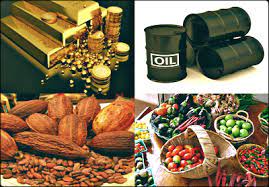
The Bank of Ghana has indicated that, the Gold for Oil (Gold4Oil) programme may be reintroduced, if the need be, to help strengthen the local currency.
This comes at a time when the Ghana Cedi is depreciating sharply against the U.S Dollar, Euro, and Pounds Sterling on the Forex Market. Beginning of January to April, as at last week, the cedi has experienced a continuous blip depreciation, resulting in a year-to-date depreciation of approximately 9.37%.
Data from the Bank of Ghana indicates a consistent depreciation trend, with rates of 1.69%, 0.98%, and 1.77% for January, February, and March 2024, respectively, despite efforts such as fresh dollar inflows and forex auctions to Bulk Oil Distribution Companies (BDCs). Although, there is huge improvement in the depreciation trend on year-on-year basis compared to the 22.73% depreciation recorded as of April 2023.
However, the Central bank Governor, Dr Ernest Addison appearing at the Public Accounts Committee (PAC), last week, reiterated the pivotal role the Gold4OIL policy played amid the economic turmoil in 2022 and 2023 in managing the exchange rate and pump prices of fuel. Thereby, proposing that, the government could continue relying on the policy if oil prices surge at the pumps, opposing any potential discontinuation.
“This is an intervention which was very critical in the heat of the crisis. Yes, the foreign exchange market is functioning better than it was in 2022. Oil prices have come down much better than they were in 2022″.
“The situation is much better now than it was in 2022 when the Gold4Oil policy was introduced,” he acknowledged.
“However, we think that it’s still an important programme for the government to have that option and to be able to empower commercial banks to undertake their activities”.
“Should market sentiments change, which do every day; we don’t know what will happen tomorrow, and we will wake up and if we find ourselves in a situation where the prices are driving the pumps to where they were again, the government has the option to fall on. It’s a very innovative instrument”.
He also projected “a big jump in gold holdings for Ghana”.
Meanwhile, in real terms, commercial banks are reporting an all-time high exchange rate of GHS 13.455 to a dollar, compared to GHS 11.55 during the same period last year.
While some analysts project a potential reversal of the cedi’s fall in the first half of the year, others fear its impact on inflation.
To stabilise the cedi, the Bank of Ghana plans to auction $120 million to BDCs in the second quarter of 2024, although persistent demand for dollars by businesses may pose challenges.
Concerns persist regarding currency volatility, despite maintaining the policy rate at 29% and lending rates averaging over 32%. However, Governor of the Bank of Ghana, Dr. Ernest Addison, expressed optimism at the last Monetary Policy Committee meeting, citing strong reserves from improved remittance inflows as a buffer for the local currency in the upcoming months.
Ndc To Officially Out-door Its Running Mate For The 2024 General Election
The National Democratic Congress (NDC), announces for the information of its rank and file and the general public, that the party shall hold a ceremony to out-door its Running Mate for the 2024 General Election in Accra next week.
The event is scheduled to take place on Wednesday, 24th April, 2024 at the Kofi Ohene Konadu Auditorium at the University of Professional Studies (UPSA).
The event will commence at 4:00pm prompt, by which time all invited guests and attendees must be seated.
The event will be graced by the NDC’s Flag-bearer for the 2024 General Election, His Excellency John Dramani Mahama, members of the Functional Executive Committee and members of the Council of Elders of the party. Also in attendance will be members of Parliament and an array of distinguished guests from the Diplomatic Corps, the Clergy, Nananom, Women Groups, academia, representatives of Civil Society Organizations, Labour Organizations, Creative Arts, among others.
The Running Mate, Professor Naana Jane Opoku-Agyemang will address the nation on the NDC’s vision for a progressive, inclusive and prosperous Ghana, as well as the live-transforming policies of our visionary Flag-bearer for the 2024 general elections.
This address will be preceded by a number of activities, between 4:00pm and 4:55pm before the official commencement of the main program of the day at 5pm prompt.
For emphasis, all attendees to the event must be seated by 4:00pm prompt.
All media houses who intend to deploy reporters to cover the event are entreated to contact the National Communication Bureau of the NDC for necessary accreditation.
Increased private consumption and declining inflation are supporting an economic rebound in Sub-Saharan Africa.
However, the recovery remains fragile due to uncertain global economic conditions, growing debt service obligations, frequent natural disasters, and escalating conflict and violence, according to the World Bank’s latest Africa’s Pulse report.
Transformative policies are needed to address deep-rooted inequality to sustain long-term growth and effectively reduce poverty.
Africa economy growth
The report projects that growth will rebound in 2024, rising from a low of 2.6 percent in 2023 to 3.4 percent in 2024, and 3.8 percent in 2025. However, this recovery remains tenuous. While inflation is cooling across most economies, falling from a median of 7.1 to 5.1 percent in 2024, it remains high compared to pre-COVID-19 pandemic levels. Additionally, while growth of public debt is slowing, more than half of African governments grapple with external liquidity problems, and face unsustainable debt burdens.
Overall, the report underscores that despite the projected boost in growth, the pace of economic expansion in the region remains below the growth rate of the previous decade (2000-2014) and is insufficient to have a significant effect on poverty reduction. Moreover, due to multiple factors including structural inequality, economic growth reduces poverty in Sub-Saharan Africa less than in other regions.
“Per capita GDP growth of 1 percent is associated with a reduction in the extreme poverty rate of only about 1 percent in the region, compared to 2.5 percent on average in the rest of the world,” said Andrew Dabalen, World Bank Chief Economist for Africa. “In a context of constrained government budgets, faster poverty reduction will not be achieved through fiscal policy alone. It needs to be supported by policies that expand the productive capacity of the private sector to create more and better jobs for all segments of society.”
The report highlights that external resources to meet gross financing needs of African governments are shrinking and those available are costlier than they were prior to the pandemic. Political instability and geopolitical tensions weigh on economic activity and may constrain access to food for an estimated 105 million people at risk of food insecurity due to conflict and climate shocks. African governments’ fiscal positions remain vulnerable to global economic disruptions, necessitating policy actions to build buffers to prevent or cope with future shocks.
What’s more, inequality in Sub-Saharan Africa remains one of the highest in the world, second only to the Latin America and Caribbean region, as measured by the region’s average Gini coefficient. Access to basic services, such as schooling or healthcare, remains highly unequal despite recent improvements. Disparities also exist in access to markets and income-generating activities, irrespective of people’s skills. Taxes and poorly targeted subsidies may also have an outsized impact on the poor.
“Inequality in Africa is largely due to the circumstances in which a child is born and accentuated later in life by obstacles to participating productively in markets and regressive fiscal policies,” said Gabriela Inchauste co-author of a forthcoming World Bank report on tackling inequality in Sub-Saharan Africa. “Identifying and better addressing these structural constraints across the economy offers a road map for a more prosperous future.”
Africa’s Pulse calls for several policy actions to foster stronger and more equitable growth. These include restoring macro-economic stability, promoting inter-generational mobility, supporting market access, and ensuring that fiscal policies do not overburden the poor.
A recent survey report indicates that about half of African businesses are not aware of the existence of the Pan African Payment and Settlement System (PAPSS).
The report by Future of Trade acknowledges that PAPSS holds immense potential to transform intra-African trade by streamlining payments, reducing costs, and boosting efficiency, achieving widespread adoption across the continent requires overcoming several challenges.
“A significant hurdle lies in the diverse regulatory landscapes, financial infrastructures, and oversight systems across African nations. Central banks need to find ways to reconcile these differences to ensure PAPSS functions smoothly”, the report pointed out.
Establishing a system for settling transactions and determining exchange rates for currencies with fluctuating values presents another challenge. This, it added will be crucial for smooth cross-border transactions.
The report called for comprehensive campaigns to educate businesses about PAPSS and its advantages could significantly accelerate adoption.
Pan African Payment and Settlement System (PAPSS)
“Africa’s business leaders aware of PAPSS are strongly positive about its ability to boost intra-African trade,” the report stated.
Furthermore, a resounding 98% of business leaders acknowledge PAPSS’ potential to positively impact intra-African trade.
The survey also revealed that 98% of business leaders across Africa believe their central banks should expedite participation in the PAPSS network. This strong support highlights the business community’s confidence in PAPSS and their desire to see it implemented widely.
The Report concludes that, PAPSS offered a promising solution for simplifying and enhancing intra-African trade, stating, that by addressing the challenges of regulatory differences, volatile exchange rates, and low business awareness, PAPSS can unlock the full potential of this innovative payment system.
Our editorial team are in awe wondering whose job it is to create the awareness and publicity of the PAPSS. The team are very capable of handling any media publicity campaign and do not mind if contracted with such job for immense results.
MINORITY IN PARLIAMENT DEMANDS IMMEDIATE INCREASE IN FARM-GATE PRICE OF COCOA
The Minority in Ghana’s Parliament has taken notice of recent developments on the international market relative to the prices of cocoa.
We have observed that global cocoa prices have been soaring in recent time, hitting an all-time high of $10,000 USD per ton.
The recent increase in cocoa prices on the world market has been occasioned by the global shortage of cocoa owing to a significant decline in cocoa output in Ghana and Cote D’Ivoire, who contribute approximately 70 percent of the total volume of cocoa produced globally.
The NDC is deeply concerned about the sharp decline in Ghana’s cocoa production volumes under the Akufo-Addo/Bawumia NPP government. This situation is set to get even worse, as Ghana’s cocoa production for the 2023/2024 crop season is reported to be about 450,000mt; the lowest in the past two decades.
This sad situation is fast-eroding the incomes and purchasing power of our already-impoverished cocoa farmers. As a matter of fact, the living conditions of Ghanaian cocoa farmers keep worsening by the day due to the sharp decline in cocoa output.
Clearly, this negative trend will persist if the farm-gate price of cocoa is not significantly increased, to compensate for the loss in income of farmers.
It is instructive to note, that the average international market price of cocoa currently stands at Ten Thousand United States Dollars ($10,000) per ton (16 bags) of cocoa. This is equivalent to GHS130,000 per ton, at a conservative exchange rate of $1 to GHS13. This means that a bag of cocoa is currently being sold on the world market at about GHS8,125, while the Ghanaian farmer is being paid a paltry GHS1,308 by the insensitive and corrupt Akufo-Addo/Bawumia/NPP government.
This is a clear rip-off of our hard-working cocoa farmers by the Akufo-Addo/Bawumia NPP government who continue to mismanage the cocoa sector.
The NDC caucus in Parliament therefore demands that the government immediately increases the farm-gate price of cocoa to reflect the recent unprecedented hike in the world market prices of cocoa.
We are appalled by the continuous mismanagement of the cocoa sector and the shortchanging of our hard working Ghanaian cocoa farmers by the ruling NPP government.
Last year, Ghana lost about 150,000mt of cocoa valued at almost $400,000,000 to smuggling. This was occasioned by the fact that, our hardworking cocoa farmers were not offered competitive prices by the insensitive Akufo-Addo/Bawumia/NPP government.
The reoccurrence of this situation this year, will have dire consequences for the cocoa industry which is on the verge of collapse due to gross mismanagement and corruption.
It is sad to note, that while our hard working cocoa farmers continue to be shortchanged, COCOBOD’s administrative expenses which stood at less than GHS500 million in 2016, increased to GHS1.7 billion in 2020, and ballooned further to GHS2.5 billion in 2021.
Only this week, we sighted an official document in which the Management of COCOBOD has granted approval for the purchase of fifteen (15) ipad keyboards for its Board of Directors at a staggering cost of GHS4,500.00 per unit.
This is the clearest evidence yet, that the management of COCOBOD have prioritized waste and the comfort of their offices at the expense of hard working cocoa farmers. Also, it is symptomatic of the recklessness and mismanagement that have plagued COCOBOD for the past seven years which accounts for the cumulative losses of GHS13.62 billion, recorded by COCOBOD since 2017.
It is the considered view of the Minority Caucus, that urgent steps be taken to save our dying cocoa sector now. It is therefore imperative, that government significantly increases the farm-gate price of cocoa, in consonance with the current world market price of cocoa.
This we believe will incentivise our farmers and discourage the smuggling of cocoa beans amid all the challenges bedevilling the industry.
***END***
SIGNED.
ERIC OPOKU (MP)
(Ranking Member on the Parliamentary Select Committee on Food, Agric & Cocoa Affairs and Member of Parliament for Asunafo South).
Ghana’s current Gross Domestic Product in value terms stood at GH¢841.63 billion in 2023, according to Ghana Statistical Services data.
This shows a significant jump in the economic activities when compared to the GH¢614.33 billion recorded in 2022.
Although, the 2024 value include net indirect taxes estimated at GH¢58.74 billion.
The services sector emerged as the largest contributor, accounting for GH¢357.34 billion or 45.6% of GDP, followed by industry with GH¢247.941 billion (31.7% of GDP), and agriculture at GH¢177.606 billion (22.7% of GDP).
Sub-sectors by share of GDP included Crops (19.4%), Trade and Repair of Vehicles, Household Goods (18.3%), Mining and Quarrying (12.9%), Manufacturing (12.1%), and Transport and Storage (6.0%).
The last quarter of 2023 saw the highest real GDP growth rate at 3.8%, with the industry sector shifting from contraction to expansion by 1.6%.
Gross National Income per capita in local currency doubled since 2018, reaching GH25,349.
However, from a US dollar perspective, income per head has remained relatively steady, ranging from $2,126 to $2,453 in the last six years.
The Ghanaian economy expanded by 2.9% in 2023, surpassing the Finance Ministry’s revised forecast of 1.5% but falling slightly short of the 3.1% growth recorded in 2022.
However, this growth rate represents a slight deceleration from the 3.1% recorded in 2022.
The GSS reported further indicated that the industry sector contracted by -1.2% in 2023, compared to a 0.6% GDP growth in 2022, despite remaining the largest segment of the economy.
The Electricity and Construction subsectors experienced significant contractions of 10.9% and 9.9% respectively, contributing to the overall decline.
Only the Mining and Quarrying subsector saw growth, at a rate of 2.5%.
Government Statistician, Professor Samuel Kobina Annim, noted a higher growth rate of 3.8% in the last quarter of 2023, driven by the oil and gas subsector.
This marks the first time in over a year that Ghana has seen an increase in oil GDP growth.
Over the past 11 years, four subsectors (Crops; Trade, Repair of Vehicles and Household Goods; Mining and Quarrying; and Manufacturing) have consistently contributed over 50.0% to Ghana’s GDP. Recent years have seen this share increase to over 60.0%, indicating a shifting economic landscape.
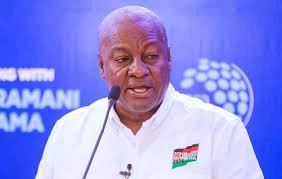
The Flagbearer of the National Democratic Congress (NDC), John Dramani Mahama for election 2024 has reecho the surge in the unemployment rate in the country.
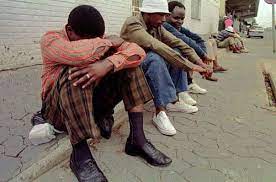
The situation, he lamented was alarming and ought to be addressed. But, he wants, the menace gradually transiting into a catastrophe, to be addressed by providing sustainable employment opportunities.
Assuring that, the next NDC government will prioritize the implementation of policies aimed at fostering genuine and sustainable job creation.
According to him, the current administration has failed in addressing the challenge while downplaying current initiatives such as; NABCo, which he believe failed to provide a lasting solution to unemployment.
John Dramani Mahama said, “To have that 14.7% unemployment rate, tertiary-trained graduates are a bigger chunk than those below secondary and basic education, and so it is something that we need to look at.
“And so the next government’s major focus must be putting in policies that will create jobs, jobs, and jobs. And these should not be artificial jobs like we normally do; you do NABCo and you know that you have no sustainable place to put them after the three years when they graduate from NABCo, and yet, it is just done to win political points.
“[Government claims it has] given 100,000 young people jobs, and now when they finish the NABCo and you owe them nine months’ allowance arrears, and the government is refusing to pay them.
“And so we must aim more at sustainable jobs. And we can’t get those sustainable jobs in many places, including the agricultural value chain,” he added.
Economy Times editorial board buy into the idea of providing sustainable decent jobs to the teeming youth and unemployed graduates.
Information gathered indicates that, works on the Ameri power plant relocation to Ashanti region is almost completed with the gas pipelines ready.
The installation of six units of the plant is also near completion.
Although, the technical aspect of the project is almost done, the administrative aspects are yet to be concluded. The agreement to govern the interconnection and use of the pipeline is yet to be finalized.
“Volta River Authority (VRA) and Genser Energy Ghana (GEGL) is negotiating an interconnection agreement to govern”, sources close to the project told this news medium.
“Also, GNPC and VRA are yet to finalise the amendment to the GSA which allows for gas delivery to Kumasi.”
“With the information I have, the Genser constructed pipeline is ready and even packed with gas. However that of the power plant is still pending. 6 units of Ameri have been transported.
“Installation of the units started in August of last year”, the source further noted.
The gas pipelines laid from Dawusaso to Kumasi is 105km.
This project was initially met with hostility from some stakeholders and players in the energy sector. The Minority in Parliament raised concerns about the estimated cost of the project.
According to the Minority, they noticed the anomaly when the Committee on Mines and Energy met with a number of Agencies in the Mines and Energy sector, as part of Parliament’s supervisory role.
A Member on the Committee of Mines and Energy, Edward Bawa disclosed in a statement that when the Committee pushed further for details on the total cost for the relocation of the Plant, “answers were not forthcoming.”
“One of the questions I put to the Volta River Authority was how much the relocation of the Ameri Plant from Tarkoradi to Kumasi was going to cost the Tax payer and which company was awarded the contract to execute this. You will recall that Government took the decision to relocate the Ameri Plant to Kumasi as part of efforts to stabilize the power in Kumasi and its environs,”.
“To my outmost shock, the committee was told it was going to cost 35 million United States dollars. This is about 270 million Ghana Cedis,” Mr. Bawa disclosed.
He continued: “The company contracted to carry out the relocation of the plant is MYTILINEOUS INTERNATIONAL TRADING COMPANY, the same company that was involved in the notations and amendment of the Ameri contract that almost swindled Ghanaians but for the vigilance of the Minority. You will also recall that this was what cost Minister Boakye Agarko his Job as Energy Minister.”
“As a Minority we demand the breakdown of this cost particularly at a time when the country is having difficulties paying salaries and servicing our debt.
“The Energy sector is under serious challenges and therefore such opaque transactions must be halted in the supreme interest of every Ghanaian,” the MP for Bongo stated.
The remarkable impact of Tony Elumelu Foundation (TEF) on businesses across the African continent has attained the recognition of Harvard Business School
HBS acclaimed the exceptional philanthropic achievements of TEF through a groundbreaking case study.
At the launching event last week in the presence of graduate students in Boston, Massachusetts, the case study marked the first of its kind on any philanthropic organization in Africa. It will delve into TEF’s unique approaches and transformative initiatives, showcasing how strategic philanthropy is driving positive change and uplifting countries and communities.
Tony Elumelu at Harvard Business School
Harvard’s move underscores TEF’s pivotal role in empowering young African entrepreneurs across all 54 African countries and positions the Foundation at the forefront of global discussions on transformative philanthropy.
The event will also highlight TEF Founder Tony Elumelu’s economic philosophy of Africapitalism, which prioritizes the private sector and entrepreneurs as catalysts for Africa’s social and economic development.
The Tony Elumelu Foundation stands as a leading philanthropy, empowering a new generation of African entrepreneurs, driving poverty eradication, catalyzing job creation, and promoting inclusive economic empowerment.
Since the launch of the Tony Elumelu Foundation Entrepreneurship Programme in 2015, over 1.5 million young Africans have been trained on TEFConnect, the Foundation’s digital hub. Additionally, over USD$100 million has been disbursed in direct funding to 20,000 young African women and men, resulting in the creation of over 400,000 direct and indirect jobs.
Tony Elumelu emphasized the impact of the Tony Elumelu Foundation on African youth, stating, “TEF is creating economic hope and opportunity for African Entrepreneurs. We know that entrepreneurship is the antidote to poverty, youth unemployment, and insecurity.” He highlighted the Foundation’s role in encouraging and supporting young people, providing seed capital, training, mentoring, and setting them up to create successful businesses that generate more jobs and address challenges on the continent.