Category: News

  • EIU expresses doubt over negotiation with creditors

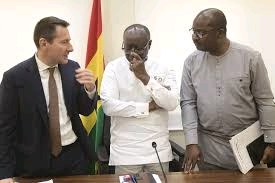
    Ken Ofori-Atta, Dr Ernest Addison with IMF official


    Adnan Adams Mohammed


    The Economist Intelligence Unit (EIU) has expressed doubt with Government of Ghana’s ability to conclude negotiations with private creditors by the mid-year of 2024, thereby, advising the government to be cautious with the negotiations with private creditors or Eurobond holders. 


    The Unit indicated that, these creditors are likely to demand distinct and intricate restructuring terms compared to bilateral creditors. This comes after Ghana’s Finance Ministry announced the government’s intention to initiate negotiations with Eurobond holders and commercial creditors, seeking a 40% haircut on coupons.


    “I am expecting that we negotiate in good faith to ensure the country comes back quicker than later”, Mr Ken Ofori-Atta expresses high hopes despite experts’ doubts.


    However, Mr Benedict Craven, a Principal Economist with the EIU, who spoke on Africa Outlook 2024, highlighted the challenges of negotiating with private creditors, particularly in countries like Ghana and Zambia, who have complex creditor profiles.


    “Countries with a more complex creditor profile like Ghana and Zambia, they’ve had setbacks in pretty much every stage of the restructuring, and it doesn’t seem like any of the countries would be able to conclude talks before mid-year”, he predicted.


    “Our new concern here is the optics: the oldest delays sent to other sovereigns with high-risk effects”, he pointed out, noting: “Perhaps, you need to conceal the impending default rather than pursuing early debt treatment.”


    Mr Craven suggested that Zambia and Ghana could set a precedent if they accelerate early-stage negotiations but emphasised fundamental disagreements among creditor groups and official creditors themselves.


    “One of the issues that have cropped up in the G20 framework is that even if you get the deal among the official creditors who get classified, there’s no guarantee that there’ll be a compatibility of treatment that’s acceptable to private creditors and vice versa. So, in Zambia’s case, the private creditors can come up with a deal and can be rejected by official creditors”.


    “It’s issues like this that are really going to contribute to the slow process every time creditors are confronted with a different debt profile from a different sovereign,” he added.


    Mr Ofori-Atta aims to build on the momentum following the recent deal with bilateral creditors to restructure around $5.3 billion.


    Meanwhile, President Alassane Ouattara, last week, officially announced a Eurobond issuance confirming earlier speculation of an imminent eurobond, positioning Côte d’Ivoire as the first sub-Saharan African nation to rejoin international markets post-Covid-19. 


    It aims to return to the markets, seeking to raise $2.5 billion.


    President Ouattara directed Finance Minister Adama Coulibaly to expedite the process, with indications pointing to a $2.5 billion eurobond issuance.


    Leading the financial efforts are Rothschild, Standard Bank, and Deutsche Bank.


    “This involves repurchasing bonds issued a few years ago, with anticipated proceeds [from those bonds] insufficient,” says a source. Côte d’Ivoire aims to tackle the approaching maturities of its external debt, with Rothschild serving as the financial advisor. A team from the French bank visited Abidjan at the close of the previous year.


    While global eurobond rates hover at 4%, Côte d’Ivoire is expected to close around 5% to 6%. Standard Chartered Bank and Deutsche Bank will assist in this operation.


    In the 2024 Ivorian budget, exceeding 13,720 billion CFA francs (nearly 21 billion euros), treasury operations total 5,851 billion CFA francs. Of this, 3,447 billion CFA francs are slated for procurement from local and international financial markets.


    In 2023, Côte d’Ivoire launched a syndicated loan, again with Standard Chartered, backed by the World Bank, IMF, and other partners. Globally, the bond market is still dominated by the United States and China, constituting over 55% of issuances.

     

  • Fitch hopes Ghana could escape foreign-currency debt default


    Adnan Adams Mohammed


    Ghana is likely to escape from defaulting on its foreign-currency debt this year, according to Fitch Ratings.


    Fitch also anticipate same for Zambia due to gradual fiscal consolidation in these nations, attributing it to financing constraints and ongoing fiscal reform efforts, often linked to International Monetary Fund (IMF) programs.


    This consolidation is projected to contribute to the stabilisation of government debt/GDP ratios. But, Fitch underscores the reliance on IMF programmes, noting that, the debt restructuring processes under the Common Framework for both Ghana and Zambia are susceptible to potential delays.


    “Challenges may persist in securing affordable access to international capital markets without credit enhancements for most Sub-Saharan African sovereigns”, Fitch indicated in its 2024 Regional Sub-Saharan African Sovereigns Outlook.


    Multilateral funding is identified as a crucial support for the region, with Fitch acknowledging that risks continue to lean towards the downside.


    Looking at the broader macroeconomic landscape in Sub-Saharan Africa for 2024, Fitch envisions stable median real GDP growth and a decrease in average inflation, albeit noting that inflation remains elevated in several sovereigns.


    The agency emphasised the persistent financing challenges faced by the region, reinforcing the significance of multilateral funding while acknowledging the existence of potential risks in the economic outlook.


    “We forecast gradual fiscal consolidation due to financing constraints and fiscal reform efforts, which, in many cases, are linked to IMF [International Monetary Fund] programmes. This consolidation will help government debt/GDP to broadly stabilise”.


    “We expect Ghana and Zambia to emerge from default on their foreign-currency debt in 2024, although, in both cases, the debt restructuring process under the Common Framework is vulnerable to further delays”, it added.

  • Mahama to deal with all corrupt officials justly 

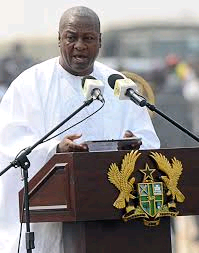
    John Mahama giving a speech

    Fomer President John Dramani Mahama has issued a serious caution to members of the National Democratic Congress (NDC) that he will deal with all corrupt individuals ruthlessly regardlessly.


    He warned that all officials who will serve in the next NDC administration will be held accountable by anti-corruption bodies for probe and prosecution if they involve themselves in any corrupt practices when given opportunity to serve.

    Mr Mahama also reiterated his readiness to hold officials of the governing NPP who are on the list of engaging in corrupt practices to account for their deeds if NDC wins the next elections.

    Mr Mahama made these comments while addressing party supporters and fanatics at the Volta Regional House of Chiefs on Wednesday, January 17.

    “If we do not establish fairness in our system in fighting corruption, it will overwhelm this country, A lot of times, lip service is paid to it.

    “The anti-corruption institutions are fettered and are not able to dispense their mandate independently and unhindered,” John Mahama said.

    “We will hold people in this government who have misconducted themselves accountable, but same time as we hold them accountable, people who misconduct themselves in our administration will face the full rigours of the law, the anti-corruption institutions will come after them, and I am not going to interfere in the work of these institutions if they are investigating you.” he added

    By Lawrence Odoom

    (0272626466)


  • Goldfields-Anglogold joint venture in limbo – former CEO hints 

    Goldfields Ghana


    Adnan Adams Mohammed 


    Chris Griffith, former Chief Executive Officer of Goldfields, has hinted that, the joint venture proposal between Goldfields Tarkwa and Anglogold Iduaprim he started before quitting has failed. 


    Gold Fields in 2022 announced joint ventures with AngloGold Ashanti in Ghana and another with Osisko Metals in Canada. 


    “All those things didn’t happen one or two months after I left. They were started well into my time,” he said in a recent interview published in the Financial Mail.


    Implementation of the proposed joint venture (JV) between Gold Fields and AngloGold Ashanti, aimed to create Africa’s largest gold mine in Ghana, was to start by the end of 2023 or at least early 2024.


    This is subject to agreement with the Government of Ghana, conclusion of all due diligence processes, and requisite regulatory approvals.


    However, according to Economy Times investigation, Goldfields had stayed back from the deal because the government is demanding an upfront tax payment for five years period. Several phone calls to the Goldfields Ghana Head Office based in Accra to speak to get confirmation on the matter through the official telephone number was not successful. 


    The JV, was to combine Gold Fields’ Tarkwa Mine and AngloGold Ashanti’s Iduapriem Mine, to be incorporated within Gold Fields Ghana. This would be supported by a substantial mineral endowment and an initial life span of almost two decades.


    The Tarkwa Mine is currently 90 percent owned by Gold Fields Ghana, with the Government of Ghana holding the remaining 10 percent. The Iduapriem Mine, meanwhile, is 100 percent owned by AngloGold Ashanti.


    “It’s hard to offer an exact timeline, given that this will involve detailed discussions with the government and requires regulatory approvals, but we hope to be able to implement the transaction by the end of 2023 or early next year at the latest,” a statement issued by the two parties said in part.


    The Executive Vice President and Head of Gold Fields West Africa, Joshua Mortoti, during a press briefing in Accra, said the proposed JV would improve life of mine, ensure business efficiency and operational synergy through combining respective ore bodies and infrastructure for the benefit of shareholders and stakeholders.


    “We are extremely excited about the opportunity to create a mining entity with the potential to become the largest gold mine in Africa, delivering safe, sustainable and profitable production over the long term by combining two parts of the same world-class ore body,” Mr. Mortoti stated.


    “We will do this by leveraging the operating efficiency advantage at Tarkwa, due to its scale, to unlock higher gold grades at lduapriem and maximising production across both processing plants,” he added.


    Excluding the interest held by the Government of Ghana, Gold Fields would have a 66.7 percent interest in the joint venture. AngloGold Ashanti would have a 33.3 percent interest. However, it is proposed that once the requisite approvals are received, the Government of Ghana will have a stake of around 10 percent in the JV, Gold Fields will have 60 percent, and AngloGold will have 30 percent.


    It is not expected that any material additional capital injection will be required by either company to establish the proposed JV as the new venture is anticipated to materially improve its capital intensity once operational.


    The new entity is estimated to have a life of at least 18 years, with an estimated average annual production of almost 900koz over the first five years and average annual production in excess of 600koz over the estimated life of the operation. 


    The ore reserves for the proposed joint venture are expected to exceed the sum of the ore reserves for the stand-alone operations due to anticipated operational synergies and the declaration of additional mineral resources and ore reserves.


    “Gold Fields and AngloGold Ashanti share a long history in Ghana and are committed to working collaboratively to operate a world-class gold mine. This creates a platform to develop the substantial mineral endowment at Tarkwa and lduapriem,” Mr. Mortoti highlighted.


    Also, the Managing Director of AngloGold Ashanti Ghana, Eric Asubonteng, believd through the creation of one of the world’s largest gold operations on the back of the proposed JV – in a pre-eminent mining jurisdiction – there will be a creation of a longer-term value not only for AngloGold Ashanti and Gold Fields, but for the combined stakeholders.


    “This proposed joint venture manages to capture true synergies in a commercially sensible way, by removing the fence between two halves of the same deposit and managing their operations and infrastructure under a single structure,” Mr. Asubonteng said.


    “We expect that reserves of the proposed joint venture will exceed the sum of the reserves for the stand-alone operations, given the extent of the anticipated operational synergies,” he added.


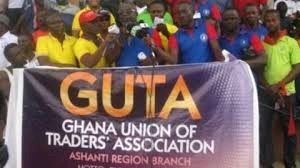
  • GUTA wants govt to reduce cost of doing business 

    Ghana Union of Traders Association – GUTA


    Adnan Adams Mohammed 


    The Ghana Union of Traders Association (GUTA) has accused the Minister of Trade and Industry, KT Hammond, for not doing enough to alleviate the challenges associated with the high cost of doing business in the country.


    GUTA contends that instead of the minister taking proactive measures and implementing policies to reduce business costs at entry points like ports, he has rather resorted to making contentious remarks on the streets about traders.


    GUTA indicated that the country is not in a price control regime, hence no instruction or direction is followed in the determination of prices of goods and services in the country. This comes on the back of recent complaints by Trades Minister, K.T Hammond about the prices of goods, particularly the price of cement in the country.


    “We’re not in a price control regime; therefore, businesses do not take instructions or directions from any quarter in determining prices of goods and services,” the association noted in a statement issued, last week, signed by its President, Joseph Obeng.


    GUTA emphatically stated that the business community does not take “delight in arbitrary increase in prices of goods and services, and that prices are actually determined by accumulation of cost of doing business in the country, which members of the business community have been complaining bitterly all these years”.


    It noted that the “surest way to reduce and stabilise prices of goods and services is for the policy makers to prune cost of doing business in the country, in terms of the duty we pay, fees and charges, including shipping line charges, transportation cost, the increasing utility tariff regime” among others.


    It added that this was the more reason, the minister should have met with “the cement producers to find out the cost of the increase in their prices”.


    Also, Clement Boateng, the Vice President of GUTA, criticised the minister for a lack of vision in facilitating a decrease in the overall cost of doing business in the country.


    He urged the minister to step out of his office and personally acquaint himself with the cost of duties paid by importers at entry points.


    Mr Boateng emphasised that the exorbitant duty fees at Ghana’s ports necessitate traders passing on the costs to the end consumers.


    Mr Boateng disputed the perception that Ghanaian traders are intentionally increasing prices, pointing out that duty costs in neighboring Togo are 1 per cent, and it is 2 per cent in Ivory Coast, whereas Ghana’s duty rate stands at 5 per cent.


    He questioned whose actions were contributing to the elevated prices of commodities in the country.


    Furthermore, Mr Boateng highlighted that GUTA had submitted suggestions to the government during the 2024 budget presentation, advocating for a reduction in the costs associated with doing business in Ghana.


    However, he lamented that none of these proposals were incorporated into the final budget statement presented by the Finance Minister to Parliament.


    Mr Boateng raised the question of accountability, asking who should be held responsible for the persistently high costs in the country.


  • Businesses demand load shedding timetable

    Electricity supply lines


    Adnan Adams Mohammed 


    Business operators and residential consumers are demanding from the Electricity Company of Ghana (ECG) to publish a load-shedding timetable as the erratic power supply situation continues to worsen in recent times.


    This follows after many Ghanaians expressed dissatisfaction with the ECG and the Energy Ministry for such a situation, which is a disturbing development and affecting businesses


    Key players in the industry, including the IES, have raised concerns over the situation, attributing it to financial challenges. But, the energy ministry has pleaded with Ghanaians to be a little patient as it works to resolve the challenge.


    “What has happened over the past few days is that some obligation owed by GNPC to WAPCo was an issue”, Deputy Energy Minister, Andrew Egyapa Mercer, has noted. “WAPCo threatened GNPC and it has made some initial payments, but it wasn’t satisfactory. We requested the Ministry of Finance to top up. We had to go through some approval processes.”  


    “As of yesterday [last week Wednesday] evening, the Ministry of Finance had approved a sum of US$10 million to pay for a part of that debt. So that was the hiccup that we encountered that led to the power outages we experienced in the past few days. But that has been resolved.”


    However, the Deputy Minority Leader, Emmanuel Armah-Kofi Buah has indicated that Ghana is currently grappling with “a severe case of load shedding, commonly known as ‘dumsor’”. 


    The situation, the former energy minister noted, “is evidently clear, with 500 MW of load being shed as of tonight, January 9, 2024”.


    The Ellembelle MP observed that “Numerous areas have been plunged into darkness due to the unavailability of gas to fuel thermal plants within the Tema enclave, which can be attributed to financial constraints”.


    Specifically, Mr Buah mentioned that the Ghana National Petroleum Corporation (GNPC) “is currently unable to fulfil its payment obligations to the West African Gas Pipeline, which is responsible for transporting gas from Takoradi to Tema for power generation”.


    “You can also track the ultimate problem to the weakest link in the value chain –ECG’s inability to pay off-takers”, he explained.


    “Compounding” the situation, Mr Buah added, “is the absence of a load-shedding timetable, which hampers households and businesses from planning accordingly”.


    To him, the “lack of transparency and communication regarding the power outage schedule only adds to the frustration and inconvenience experienced by the affected population”.


    “It is worth highlighting that even during the worst periods of dumsor in the past, the power outage never reached the 500-megawatts threshold currently being shed. Yet, the media associated with the NPP interestingly see this as no ‘dumsor’.”


    “Their loud silence on the current situation is deafening”, the lawmaker criticised.


    The Ghana Grid Company must, as a matter of urgency, come out with a load-shedding timetable to allow households and businesses to plan better”, he demanded.


    Some Ghanaians have been complaining about the power situation on Facebook for the past three days.

  • VAT on electricity: Ghanaians go after government amidst silent load-shedding 

    Ken Ofori-Atta


    Adnan Adams Mohammed 


    Ghanaians have reacted negatively to the government’s directive requesting the Electricity Company of Ghana (ECG) and the Northern Electricity Distribution Company (NEDCO) to liaise with the Ghana Revenue Authority (GRA) “to ensure that the implementation of VAT for residential customers of electricity”. 


    This applies to domestic consumers above the maximum consumption level specified for block charges for lifeline units which took effect on January 1, 2024.


    The directive, the ministry said is in line with Sections 35 and 37 and the First Schedule (9) of Act 870 and aligns with the relevant sections of the Value Added Tax Act of 2013 and is part of the Government’s Medium-Term Revenue Strategy and the IMF-Supported Post-COVID-19 Programme for Economic Growth (PC-PEG).


    This directive has been met with strong opposition from Ghanaians with the former Board Chair of the Ghana Revenue Authority (GRA), Prof Stephen Adei, noting that, “There’s no doubt at all people will be worse off” when the government starts taxing them for power consumption.


    He believes the government has misdirected its tax policy while speaking in an interview on the development. 


    “You’ll first focus on things that increase production and then that, in turn, will feed into your taxes”, the economist noted.


    In his view, the government “should be going after the billions of uncollected property taxes” as well as all the exemptions given to some sectors such as mining.


    “The mines have millions of exemptions and these are the ones we should go after rather than going after the ordinary producer and consumer when it comes to electricity”, he noted.


    Also, the Executive Director of the Institute for Energy Security (IES), Nana Amoasi VII, has raised concerns that the increment will exacerbate the existing issue of power outages and will drive investors away from the sector.


    “If any other sector player or investor is looking at this situation, they will advise themselves to the extent that they won’t invest in the sector because when you increase the tariff, you are increasing the burden of consumers. They may be compelled to either shy away from that power system or bypass that system by way of theft as well.”


    He added, “When they bypass the system and probably resort to generated or probably renewable energy, then, of course, you are going to get excess capacity, which will come at the cost that I mentioned. You have to pay for the same. So what the government is doing is rather going to worsen the situation that we have today.”


    Meanwhile, power supply is currently erratic across the country, a situation that has led Deputy Minority Leader Emmanuel Armah-Kofi Buah to say the country is grappling with “a severe case of load shedding, commonly known as ‘dumsor’”.


    The situation, the former energy minister noted, “is evidently clear, with 500 MW of load being shed as of tonight, January 9, 2024”.


    The Ellembelle MP observed in a statement, last week, that “Numerous areas have been plunged into darkness due to the unavailability of gas to fuel thermal plants within the Tema enclave, which can be attributed to financial constraints”.


    Specifically, Mr Buah mentioned that the Ghana National Petroleum Corporation (GNPC) “is currently unable to fulfil its payment obligations to the West African Gas Pipeline, which is responsible for transporting gas from Takoradi to Tema for power generation”.


    “You can also track the ultimate problem to the weakest link in the value chain – ECG’s inability to pay off-takers”, he explained.


    “Compounding” the situation, Mr Buah added, “is the absence of a load-shedding timetable, which hampers households and businesses from planning accordingly”.


    To him, the “lack of transparency and communication regarding the power outage schedule only adds to the frustration and inconvenience experienced by the affected population”.


    “It is worth highlighting that even during the worst periods of dumsor in the past, the power outage never reached the 500-megawatts threshold currently being shed. Yet, the media associated with the NPP interestingly see this as no ‘dumsor’.”


    “Their loud silence on the current situation is deafening”, the lawmaker criticised.


    “The Ghana Grid Company must, as a matter of urgency, come out with a load-shedding timetable to allow households and businesses to plan better”, he demanded.


    Some Ghanaians have been complaining about the power situation on Facebook for the past three days.


  • BoG tight monetary stance drops inflation 


    Inflation


    Adnan Adams Mohammed


    The Governor of the Bank of Ghana (BoG) has said the downward trend in inflation is a positive sign to restore macro-economic stability.


    Dr. Ernest Addison, expressing confidence that as the progress continues, noted that, interest rates will correct and move in a favorable direction. He stressed the readiness to discuss the evolving numbers, including the projected year-end outlook of 29%, with the International Monetary Fund (IMF).


    The Central Bank claimed that, the sustained reduction in inflation since August 2023 can be credited to the proactive efforts and measures it took to address hyper inflationary and restore macro-economic stability.


    Ghana’s inflation rate has experienced a notable decline, surpassing the year-end target set by the Bank of Ghana (BoG).


    The Ghana Statistical Service (GSS) reported that the country’s inflation rate dropped to 23.2% in December last year, marking the fifth consecutive decrease since August 2023. This achievement comes as a result of effective measures implemented by the BoG.


    The BoG had initially set a year-end inflation target of 29% for 2023. However, the GSS data revealed a considerable drop, with food inflation decreasing to 28.7% in December 2023, compared to the 32.2% recorded in November. Non-food inflation also saw a decline, dropping to 18.7% in December from 21.7% in November.


    Prof Samuel Kobina Annin, the government statistician, said the decrease in inflation was primarily attributed to declining rates in both food and non-food sectors. Specifically, food inflation decreased by 3.5 percentage points to 28.7%, and non-food inflation declined by 3.0 percentage points to 18.7% in December, compared to the previous month.


  • Local Rice Farmers record low patronage amidst influx of foreign varieties and importation restrictions 

    Ghanaian rice farmer struggling with storage
    Ghanaian rice farmer


    Adnan Adams Mohammed


    Local rice farmers are lamenting low patronage for their harvest as imported varieties have dominated the market.


    A session of the rice farmer from Gbdembilisi community, located in the Builsa South District of the Upper East Region, are calling for government’s intervention to boost their sales so they can recover their cost of cultivation. 


    Gbdembilisi, known for its fertile lands and dedicated rice cultivation, faces a crisis as the farmers report a shortage of buyers for their abundant rice harvest.


    “This year, a lot of our buyers and companies are complaining that the government has imported a lot of rice into the country, and because of that, we are not getting buyers”, John Amobil shared the rice farmers concerns in an interview. 


    “Last year, for instance, Nigerians and other countries were in to buy our rice, but the government has stopped them from entering the country to buy rice. The government is also importing foreign rice, and all the buyers are complaining that when they buy our rice and mill, they don’t get buyers.” 


    The Chairman of the Builsa South Rice Farmers Association, Cezar Akinkang, in a separate interview also pointed out that, cheaper foreign options divert consumers from locally produced grains, resulting in a surplus that local markets struggle to absorb.


    “What we heard is that the buyers are complaining that our rice is more expensive than the foreign rice, and the reason why our rice is more expensive than the foreign rice is that the inputs are costly. So, we are appealing that the government should reduce the prices of inputs, and if there is a subsidy, it will help us farmers. So that our price too will come down to meet the needs of buyers and consumers,” Mr. Akinkang appealed.


    The farmers also advocated for measures such as a potential ban on imported rice to level the playing field and provide local producers with a fair chance to sell their harvest.


    This call is in line with the opposed government’s plan to pass a Legislative Instrument to restrict import of some listed food items which faced strong opposition in parliament and from some major stakeholders. This forced the government to later shelve the plan. The opposers wanted the government to embark on wider consultation to restructure the bill.  


    As it stands now, no one knows when the Import Restriction Bill will be back to parliament.


    Briefing media men in Parliament about the Bill, the Minister of Trade and Industry, K.T Hammond said, “Stomach of animals, bladder and the chunk of intestines (yemuadie), the country had had to put in an amount of about $164 million towards the importation of these items. We are taking steps to ensure that in terms of rice, there’s no poverty of rice in the country.”


    He emphasized, “By these restrictions, we are not going to ensure that there’s no food in the country at all; that is not the point at all. There have to be some efforts by the government to ensure that we go back to Acheampong’s operation feed yourself. There are about 22 items on the list, one of them, I think, is diapers.”


    Also, a major challenege complicating the farmers situation is the lack of enough warehouses leading to high cost of storing the harvest as well as exposing the harvest to insects and pests attacks. 


    The farmers mostly resort to storing their harvest at home and in drinking bars, underscoring the urgent need for additional storage facilities to handle the bountiful yield.


    Amidst the challenges, farmers highlight the high cost of inputs, machinery services, and a deficient road network contributing to post-harvest losses.


    Ali Gafaru, a farmer, says the downturn in rice sales does not only affect them economically but also prompts lenders to pursue repayment of loans taken for farming ventures.


    “You go for a loan, and the agreement is that you will pay for a timeframe. Now, how are we going to pay for the loan if we are unable to sell our produce?” he asked.


    Ghana currently consumes about 1.5 million metric tonnes of rice annually, with approximately 50% being imported due to unpredictable quality and quantity of yields. This is largely due to climate change affecting rainfall patterns in a region where most smallholder farmers practice rain-fed agriculture.


    While total rice consumption stood at 1.4 million metric tonnes in 2022, imports valued at US$560 million accounted for 800,000 metric tonnes (mt) of the consumption figure, with domestic production catering for the remaining demand – according to data from IDH Sustainable Trade.


    Also, according to the Observatory of Economic Complexity, Ghana imported US$552 million worth of rice in 2021, becoming the 13th largest importer of Rice in the world. At the same year, rice was the 3rd most imported product in Ghana. Ghana imports rice primarily from: Vietnam ($394M), Thailand ($53.3M), India ($50.9M), China ($21.7M), and Pakistan ($21.2M).


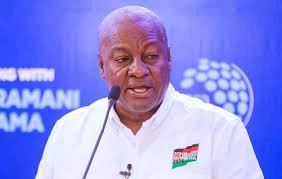
  • Mahama to restore Ghana’s ‘recklessly destroyed’ economy

    John Mahama giving a speech


    Adnan Adams Mohammed


    John Dramani Mahama express his commitment to restore Ghana’s economy when he wins the 2024 elections. 


    The flagbearer of the National Democratic Congress (NDC) made the commitment after he accused the current NPP-led administration for recklessly damaging Ghana’s economy that has brought untold hardship to the people. 


    To draw quick attention to his commitment, the former president retorted to the populace that drastic action is needed to reset our nation on the right path and indicated that, the process must start in earnest with the 2024 polls.


    “I feel your pain, your despair. The NPP has brought economic calamity upon us. We all know that drastic action is needed to reset our nation on the right path”, Mr. Mahama empathised in his New Year message delivered last week in a live broadcast. “That process must start in earnest with the 2024 polls. I’m happy to present myself as the man with the experience Ghana needs today to take us out of the doldrums that we have been plunged into. I’m here to offer hope to you all, and I’m committed to repairing the damage done to our economy and creating a brighter future for all Ghanaians.” 


    The flagbearer of the NDC pledged to lead the charge by creating new opportunities for Ghanaians, alleviating them from their unbearable hardships while highlighting the lack of socio-economic and infrastructural development in the current government’s management of the economy.


    “The ultimate measure of leadership is not personal, and familiar gain, but selfless service to all, regardless of their background or political affiliations. This, sadly, is what we the people of Ghana have lacked over the last few years. We all lived painfully through the challenges that the failed Akufo-Addo-Bawumia administration has inflicted on us.”


    He stressed, “Through their reckless mismanagement of the economy, poor governance, bare-faced corruption, and profligate expenditure, at the expense of socio-economic and infrastructural development, 2023 has been nothing but a continuation of hardships, a high cost of living, and worsening poverty for Ghanaians. The 2024 budget provides no hope for an improvement in our circumstances. They sought to squeeze the last blood from Ghanaians through taxes.”


    Mr. Mahama also highlighted some of the key interventions he seeks to embark on to propel the economy including the facilitation of the 24hour economy.