Ken Ofori-Atta, Dr Ernest Addison with IMF official
Adnan Adams Mohammed
The Official Creditors Committee (OCC) are meeting on Monday January 8, 2024 to discuss the “cut-off date” for the restructuring of about US$5.4 billion of Ghana’s loans.
A successful completion of the meeting is a key step needed by Ghana to secure its next tranche of funding from the International Monetary Fund. In preparation for the the meeting, the Paris Club of major creditor nations, which does not count China among its permanent members, were scheduled to convene on Friday, January 5, 2024.
The meeting is again expected to focus on an agreement about a “cut-off date” – the date after which new loans from bilateral creditors will not be restructured, the sources with knowledge of the matter said. Defining this date has emerged as a stumbling block for Ghana in its debt rework.
“Ghana is still about cut-off date, but creditors haven’t agreed yet,” a Reuter report quoted sources anonymously. “If the cut-off date is agreed, that means an agreement on debt restructuring is close.”
However, the Reuter reported further indicated that, a spokesperson for the Paris Club declined to comment on meetings that have not yet taken place. Ghana’s finance ministry did not immediately respond to a request for comment.
The bilateral lenders, including the governments of China and France who co-chair the Official Creditor Committee (OCC), hold around a quarter of Ghana’s $20 billion external debt earmarked for restructuring.
Some creditors are said to prefer Dec. 31, 2022, as a cut-off date with Ghana having defaulted earlier that month, according to sources.
However, others pushed for March 24, 2020, because that was when the Group of 20 introduced its debt service suspension initiative (DSSI) to help the world’s poorest countries cope with the fallout of the COVID crisis. Ghana did not participate in the DSSI.
The West African country, which produces gold, cocoa, and oil, needs to come to an agreement on a debt restructuring with its official creditors to secure the IMF executive board’s approval for the next $600 million payout from a $3 billion rescue loan.
This is because the Washington-based lender needs financing assurances that debt relief is being provided by bilateral creditors in accordance with the IMF programme.
Ghana, faced with a deep economic crisis has seen inflation and the government’s debt servicing costs spiral, asked a year ago for a bilateral debt restructuring under the Common Framework, a process set up during the COVID-19 pandemic by the G20 leading economies.
It is also in talks with overseas bondholders to restructure its more than $13 billion in international debt. Holders of the bonds include major global asset managers such as BlackRock, PIMCO, Vontobel, AllianceBernstein and Neuberger Berman.
Ghana’s fiat currency, the cedi has seen some time related stability on the forex market due to the inflows of the cocoa syndicated loan into the country.
The Bank of Ghana (BoG) received the first tranche of US$541million of the US$800 million Cocoa Syndicated Loan last week.
This has helped to stabilize the cedi which is now selling at GHC12.19 to the dollar. But any further delay in other expected inflows could change the narrative.
The current US$541 million cocoa syndicated loan would also help to improve the balance of payment as well as the country’s reserves.
According to the Bank of Ghana, the favourable external developments and tighter monetary policy stance have resulted in a relatively stable of the Ghana cedi in the year so far. Excluding the sharp depreciation of 20.6 percent in January, the Ghana cedi has cumulatively depreciated by 6.6 percent against the US dollar between February and November 20, 2023.
The relative stability in the foreign exchange market has largely been supported by inflows from the IMF ECF first tranche, the Ghana’s Domestic Gold Purchase Programme, as well as purchases of repatriated export proceeds from mining companies and oil and gas producers.
At the end of October 2023, the stock of Gross International Reserves (GIR) was US$5,150.2 million, enough to cover 2.4 months of imports of goods and services. This compares with GIR of US$6,252.7 (2.7 months) at the end of December 2022.
The level of reserves excluding pledged assets and petroleum funds, as defined under the IMF-supported programme, increased to US$2.5 billion (equivalent to 1.1 months of import cover) at the end of October 2023, from the December 2022 position of US$1.5 billion (0.6 month of import cover). This indicates a build-up of about US$1.0 billion, mainly driven by the Gold for Reserves programme.
The Bank of Ghana was expecting a total of US$1.650 billion by the end of this year which would help to improve the country’s balance of payment, support the stability of the cedi as well as the Gross International Reserves.
Gold Fields Limited has announced the divestment of its 45% shareholding in the Asanko gold mine in Ghana to TSX-listed joint venture partner Galiano Gold for a total consideration of $170m.
Gold Fields will also receive a 1% net smelter royalty on future production from the Nkran deposit, the main deposit at the mine.
Goldfields Ghana
The Asanko mine is currently owned 45% each by Gold Fields and Galiano Gold, with Galiano managing the mine. The Government of Ghana holds the remaining 10%.
The transaction will be settled by Galiano to Gold Fields through a combination of upfront, deferred and contingent consideration as follows:$85m which will be settled with US$65m in cash and US$20m in Galiano shares on completion of the transaction;
$25m to be paid on December 31,2025;
$30m to be paid on December 31, 2026; and
$30m plus a 1% net smelter royalty to be paid once more than 100koz of gold equivalent is produced from the Nkran deposit. The royalty is capped at a volume of 447koz.
Gold Fields currently has a 9.8% shareholding in Galiano and the share purchase agreement limits the shareholding that Gold Fields can raise this to 19.9%. Should the market value of Galiano shares be less than the requisite $20m, Galiano will make up the difference with an additional cash payment.
Martin Preece, Gold Fields Interim CEO, commenting on the divestment said “We are pleased to have concluded this agreement with Galiano. It is clear that the committed path forward for the Asanko mine requires consolidated ownership. Gold Fields is pleased to realise value for its holding now, while providing flexibility to Galiano in the recapitalisation of the mine and resuming mining to maximise its prospects of success”.
“Divestment of our interest in Asanko is part of our ongoing disciplined portfolio management process and releases capital for deployment by the Company in line with our other capital allocation priorities,” Mr. Preece added.
The current transaction, which is expected to be completed during quarter 1, 2024, is subject to several conditions, including regulatory approvals.
Gold Fields is a globally diversified gold producer with eight operating mines in Australia, South Africa, Ghana and Peru and two projects in Canada and Chile.
Car owners are expected to pay over 30 percent more on insurance premiums starting January 2024.
The expected increase is a resultant of the 21% rise in Value Added Tax (VAT) on non-life products and a 10% increase in Motor Insurance Premiums.
The 21% VAT on non-life products is contained in the Value Added Tax Amendment Bill 2023, which has been approved by Parliament. The amended VAT law will ensure insurance firms charges a 21% VAT on the supply of non-life products, impacting on various insurance categories, including Motor Insurance, Fire, Liability Insurance, Marine Insurance, and compulsory insurance.
“A VAT imposition might discourage individuals from availing themselves of various non-life insurance products, including motor insurance, as policyholders may find it challenging to afford increased premiums”, Dr Kwesi Kwabahson, Chief Executive of the Ghana Insurers Association, in an interview last week said.
He expressed concern about the potential negative impact on the growth of motor insurance in the country, emphasizing that the insurance industry is still recovering from the shocks of the Domestic Debt Exchange Programme.
Additionally, Dr Kwabahson highlighted ongoing engagements with regulatory bodies to address industry concerns.
The proposed increase has raised apprehensions within the insurance sector, particularly regarding its potential effect on policyholders and the overall growth of the industry.
The Chief Executive also touched on challenges related to the Minimum Capital Requirements (MCRs) and Capital Adequacy Ratio (CAR) for insurers.
While advocating an increase in the minimum capital requirement to fortify insurance firms’ operations, he underscored the need to avoid idle capital for the industry’s benefit.
Furthermore, Dr Kwabahson addressed reports of price undercutting within the insurance sector, emphasising that such practices are discouraged by the Insurance Act.
The Association is taking self-regulatory measures to ensure compliance and warned that violations could lead to severe sanctions.
He made this revelation during an interview on PM Express Business Edition on Accra-based Joy News on December 14, 2023.
The Ghana Union Traders Association (GUTA) has cautioned the government against complacency despite the recent decline in inflation.
Traders, who are hardly hit with inflation surges as it erodes working capital, have called for continued vigilance and proactive measures, although, acknowledging the positive progress of inflation from 54.1% in December 2022 to 26.4% in November 2023.
The call comes at the time the Finance Minister, Ken Ofori-Atta, is celebrating the collaboration between the Treasury and the Bank of Ghana which has led to the halving of inflation from a peak of 54.1% to 26.4%.
“We should not be complacent, especially when the second tranche of the IMF loan hasn’t come in. If it comes within time, we can sustain the gains we have gotten so far. We must be serious in managing our monetary business to maintain the current inflation rate,” the President of GUTA, Dr. Joseph Obeng, said in an interview last week.
“The inflation was at 54.1%, the exchange rate was very high. In the last quarter of 2022, we experienced large rates of depreciation. When the first tranche of the IMF loan of $600 million came, we experienced long-term stability of the cedi. I think that is what is doing the magic of pulling the money down. Inflation has been at 54.1%, and it’s seeing a current decline of 26.4%. Once inflation is declining, we should be seeing the effects of that in the market. Are we seeing that?”
He anticipated a lower monetary policy rate to help cushion businesses.
“We should expect the monetary policy rate to come down, along with inflation so that the cost of borrowing and other costs of doing business can come down too. Then inflation can come down to the barest minimum to help both the consuming and the trading public.”
Finance Minister Ken Ofori-Atta recently attributed the consistent decline in inflation to the government’s dedicated efforts in restoring macroeconomic stability.
At the Bank of Ghana’s End-of-Year Cocktail last week, Mr. Ofori-Atta said: “Together, we have strived to reset our financial architecture”.
“And despite the challenges over the last three years, I am proud that we have ‘turned the corner’ toward a more robust and transformed economy”, he added.
Mr Ofori-Atta said: “Indeed, amidst these trials, our united front in managing the Bank of Ghana’s balance sheet has been nothing short of heroic.”
“More importantly, the Ghana Statistical Services (GSS) reported that inflation has slowed down to 26.4% in November 2023 from 35.2% in October 2023”, he pointed out, adding: “In effect, the Bank and the Treasury’s collaborative efforts have halved inflation (from 54.1% in December 2022) in under 12 months”.
Mr Ofori-Atta said while it is a welcome news that prices are no longer rising as quickly, “We know many people continue to face severe cost of living pressures. So, we must stay the course to continue to get inflation back down to single digits as quickly as possible”.
He noted: “We must never forget that our work is vital not just for the present but also for the future of Ghana. And, so, though our journey is far from over, and the road ahead will require continued perseverance and unity, I am confident that we will not only prevail but also propel Ghana towards a more prosperous future”.
Mr Ofori-Atta said 2024 should be a period in which “we must continue to push boundaries, work with equanimity, and dispel any cloud of nihilism to guarantee economic freedom and social mobility for all”.
Also, the President, Nana Akufo-Addo commended the Bank of Ghana for its role as a reliable custodian of the nation’s finances, an efficient currency manager, and a vital lender of last resort.
President Akufo-Addo highlighted the BoG’s pivotal role during the COVID-19 pandemic, citing the institution’s collaboration with commercial banks to institute a GHS3 billion credit and stimulus package. This initiative aimed to rejuvenate industries, particularly in the pharmaceutical, hospitality, and manufacturing sectors, yielding positive effects on the country’s economic growth.
Recalling the challenges faced upon assuming office in 2017, President Akufo-Addo acknowledged the distressed state of the banking industry. He praised the BoG’s intervention under new leadership, emphasising the restoration of stability and sanity to prevent the collapse of the financial sector. The President noted the successful cleanup exercise, which safeguarded the funds of 4.6 million depositors and utilised GHS21 billion from government funds.
In addressing the economic impact of the COVID-19 pandemic and the Russia-Ukraine conflict, President Akufo-Addo credited the BoG for playing a crucial role in restoring macroeconomic stability. He highlighted a significant drop in inflation from 54% in December 2022 to 26.4% in November 2023, as well as sustained stability in the exchange rate.
Underscoring the BoG’s support for the government’s economic diversification and transformation process, its partnership with the International Monetary Fund (IMF) and the implementation of corporate governance measures to prevent future bank failures, ensuring a robust banking sector.
While acknowledging the BoG’s contribution to the digitisation of the economy, emphasising the transformation of the payment system, and enhanced financial inclusion, the President called for stronger partnerships and enhanced policy coordination between the BoG and the Ministry of Finance to address current economic challenges and facilitate the desired economic transformation.
The United Bank for Africa (UBA) Ghana last week cut sod for its new state-of-the-art head office building project located at West Cantonments in Accra.
The event was graced by esteemed dignitaries, including government officials, customers of the bank, project consultants, architects, engineers, religious leaders, and prominent figures within the banking sector.
Speaking at the ceremony, Abiola Bawuah, Executive Director & CEO, of UBA Africa, noted, “This building will be more than just bricks and mortar. It’s a symbol of our long-term commitment to the Ghanaian people, a commitment to growth and prosperity.
She further reiterated that “UBA Ghana is not just building a physical structure, we are laying the foundation for enhanced financial services, innovative solutions, and impactful partnerships that will contribute to the socio-economic development of Ghana and beyond.”
Addressing the gathering, he expressed his gratitude to all customers of the bank for their unwavering support over the years, saying, “Together, we are crafting a narrative of progress and success, and I am very confident that the new UBA Ghana Head Office will stand as a beacon of excellence.”
“As we embark on this architectural venture, let us keep in mind the core values that define UBA – Enterprise, Excellence, and Execution. Our mission to be a role model for African businesses is fortified by the determination we showcase today,” says Mr. Awotwi.
Chris Ofikulu, MD of UBA Ghana and Regional CEO of UBA West Africa commented that “This is a very important event in the history of UBA Ghana as it signifies the end of our long-trudged push to owning a head office building of our own. This journey, of actualizing our Head office building, has not been without hiccups, but we thank God that we have overcome all the challenges leading to this epic milestone.”
UBA remains dedicated to providing world-class banking solutions, leveraging technology to enhance customer experiences and drive financial inclusion across Ghana. The new head office signifies the bank’s unwavering commitment to serving its customers better and fostering economic development in the communities it operates in.
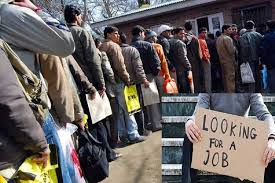
The Bank of Ghana data indicates declining rate of jobs availability as recorded in October 2023.
This is based an index of number of jobs advertised in the media, which partially gauges labour demand in the economy, decreased in October 2023 relative to what was observed in the corresponding period a year ago.
In total, 2,999 job adverts were recorded in October as compared with 3,055 for the same period in 2022, indicating a marginal decline of 1.8 percent (year-on-year).
On a month-on-month basis, the number of job vacancies remained largely unchanged from the 3,018 jobs advertised in September 2023.
Cumulatively, for the first ten months of 2023, the total number of advertised jobs went up by 6.5 percent to 28,320 from 26,595 recorded during the same period in 2022.
The total number of private-sector SSNIT contributors, which partially gauges employment conditions, improved by 3.1 percent to 964,015 in September 2023, compared with 934,683 for the same period in 2022.
On a month-on-month basis, total number of private-sector SSNIT contributors remained largely unchanged from the 971,030 individuals recorded in August 2023. Cumulatively, for the first three quarters of 2023, the total number of private sector contributors increased by 2.4 percent to 8,715,440 from 8,511,467 recorded over the corresponding period in 2022.
The total private sector workers’ contribution to the SSNIT Pension Scheme (Tier-1) increased by 31.9 percent in year-on-year terms to GH¢345.16 million in September 2023, from GH¢261.63 million collected during the corresponding period in 2022.
Cumulatively, for the first three quarters of 2023, the contribution grew by 27.9 percent to GH¢2,953.16 million, relative to GH¢2,308.85 million recorded in the same period in 2022.
Jobs creation and availability is a major area of the economy management that needs all the necessary attention and focus of every government, politicians and private sector players.
The editorial team is therefore urging the government to up its game on its efforts in job creation to help reduce the growing unemployment rate which could be described as a ‘national canker’.
The World Bank’s International Development Association is ready to disburse US$150 million loan for the West Africa Coastal Areas Resilience Investment Project 2.
The initiative aims to fortify the socio-economic resilience of coastal communities by implementing effective coastal management practices.
It aligns with the government’s commitment to diminishing the vulnerability of coastal regions and the well-being of local communities along Ghana’s coastlines.
Mr Kwaku Kwarteng, Chairman of the Finance Committee of Parliament, emphasised the loan’s crucial role in addressing challenges such as tidal waves, particularly in coastal areas like Keta in the Volta Region. Additionally, the house endorsed a separate $200 million loan from the World Bank Group to finance the Ghana Tree Crop Diversification Project.
Some weeks ago, the World Bank empathised with victims of the recent flood disaster in areas along the Volta River following the spillage of excess water from the Akosombo and Kpong dams.
About 30,000 residents were displaced and their farms decimated by the flood waters.
At the 3rd Conference on Fisheries and Coastal Environment in Accra, the Operations Manager of the World Bank in Ghana, Liberia, and Sierra Leone, Ms Michelle Keane, said: “We can’t speak about flooding today without conveying the World Bank’s sincere empathy and concern for the ten thousand of people who have been impacted by the recent floods along the Volta River”.
“The World Bank would want to express its readiness to support the government in its response to this crisis”, she said.
She added: “In the longer term, developing a sustainability and risk management strategy for the Volta River and Volta Delta among other areas will be crucial to determine where it is safe for people to live and how their livelihoods can be sustained and grow along the Volta River supported by a healthy ecosystem”.
“We hope that the government and its partners will take full advantage of the $150 million approved by the World Bank for Ghana under the West Africa Coastal Areas Management Programme (WACA)”, she noted.
She said the financing is expected to become available “very soon after parliamentary approval”.
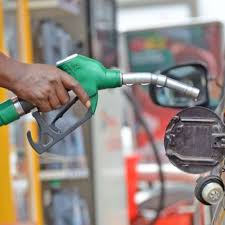
Effective next year, the National Petroleum Authority (NPA), will be rolling out a stringent grading and labeling control mechanisms to help address concerns about the quality of petrol in the country.
The labeling will be done in accordance with the level of octane contain in the bulk fuel tank at a station at all times.
Over the years there have been complaints from consumers about quality of fuel sold to them at the pumps. However, in most recent times, there have numerous reports of damaged spark plugs attributed to poor standard fuel at the pumps. It is in response to these that the NPA has decided to label pumps for petrol based on their octane grades.
“I can say that there is no tainted petrol on the market”, Ubeidalah Saeed, the Head of Quality Control at NPA said in an interview last week. “Vehicle owners may be purchasing the wrong fuel for their cars, leading to performance issues.”
Although, Mr Saeed shared that, he has also experienced vehicle troubles, emphasised the importance of considering the ‘octane level’ of the fuel when addressing problems such as car jerking.
He explained the NPA’s approach: “It costs about 500 dollars to test for octane, so we started testing for octane and realised that all the petrol we’re testing were meeting the octane levels.”
Mr Saeed highlighted that each vehicle has a minimum octane level requirement for optimal performance.
To provide clarity and prevent misconceptions, the NPA has decided to label petrol pumps based on octane levels starting next year.
Ghana will have two grades of petrol – RON 91 (red) and RON 95 (green), the latter being a high-grade petrol known as premium petrol suitable for high-performing vehicles.
Mr Saeed’s announcement aims to ensure consumers make informed choices and use the appropriate fuel for their vehicles.
He made this announcement while addressing the issue of contaminated fuel on Joy FM’s Super Morning Show on Monday, December 11, 2023.
It appears the overall purpose of the government’s Computerized School Selection and Placement System (CSSPS) which is to tackle corruption in the allocation of Junior High School (JHS) graduates into their preferred Senior High Schools (SHS) have been defeated.
Newsguideafrica’s investigations in selected SHSs across the country, have revealed how some officials at the CSSPS Secretariat, the Ministry of Education (MoE), the Ghana Education Services (GES) their National and District offices, and headteachers and teachers of Secondary Schools are taking monies from parents to facilitate the placement of their ‘unqualified’ wards into Category A and B Schools.
Our investigations revealed that, parents who are eager to see their children attending category A and B schools willingly paid these illegal monies through third parties some of whom have been identified as agents of the GES, MoE, CSSPS and the Head teachers).
These agents charge between Ghc5000 to Ghc20,000.
When these monies are paid, within two to three days, the JHS graduate is placed in his or her preferred choice of category A and B choices.
The deep-rooted corruption within the placement process has denied many students of their qualified or preferred choices in the category A or B schools, and this is because most of the slots have been reserved ‘for sale’ to parents who are willing to pay the illegal monies for their children who mostly do not qualify to be placed in such schools.
These corrupt acts are defeating the efforts of the Minister of Education in bringing discipline and a corrupt free placement system into the SHSs.
This portal will be mentioning names of some officials and schools entertaining such illegalities.
Newsguideafrica.com is also calling on the hardworking Minister of Education – Dr. Yaw Osei Adutwum to launch investigations into all re-placement of students into the Category A and B SHSs, in order to help end these annual events of placement which has become a ‘cash-cow’ for some government officials who are supposed to be working in line with the principles and objectives of the Minister and the nation at large.