
By Humu Salma Mahama
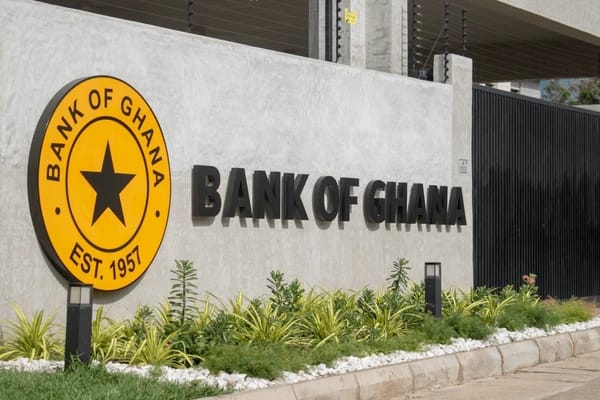
The Bank of Ghana has clarified misconceptions surrounding non-interest banking, affirming that the model is an inclusive, religiously neutral financial framework designed to serve all individuals and businesses regardless of background.
The assurance was contained in an address by the Governor of the Bank of Ghana, Dr. Johnson Pandit Asiama, which was delivered on his behalf by Bank Advisor Prof. John Gatsi at the 5th Non-Interest Finance International Conference held on November 7, 2026, at the Accra City Hall. Addressing the theme “Does Non-Interest Banking Belong to a Particular Group?”, the Central Bank dispelled the notion that non-interest banking targets specific social or religious demographics.
“The answer is clearly no. Non-interest banking is an inclusive banking model that serves customers without discrimination based on religion, ethnicity, culture, or any other social consideration,” Dr. Asiama stated in the delivered address. “Rather, it is founded on the shared objective of engaging in ethical and mutually beneficial financing arrangements that promote fairness, transparency, and sustainable economic growth.”
Regulatory Framework and Pending Licences
The Governor highlighted that the Bank of Ghana operationalized non-interest banking under section 18(1)(r) of the Banks and Specialised Deposit-Taking Institutions Act, 2016 (Act 930). Unlike jurisdictions that launched operations prior to establishing comprehensive guidelines, Ghana has put in place a forward-looking regulatory framework following extensive stakeholder consultations.
“As a result of sound regulatory framework, the Bank has received three licence applications, which are currently under rigorous review and consideration,” the Governor revealed.
To strengthen liquidity management and product offerings, the Bank of Ghana coordinated with the National Insurance Commission and the Securities and Exchange Commission (SEC) to create a complementary market for non-interest bonds (Sukuk) and insurance options.
Driving Inclusion and Sustainable Economic Growth
Addressing the commercial nature of the framework, the Bank clarified that non-interest banking operates strictly as a profit-making commercial structure rather than a social scheme.
“Non-interest banking is a commercial banking designed to serve its clientele to make profit. It is not a social scheme to manipulate clients for any religion,” the speech emphasized.
The central bank emphasized that the model offers a crucial alternative for small-scale enterprises, entrepreneurs, and individuals who remain excluded from conventional banking due to interest costs or personal preferences. By leveraging global opportunities such as the non-interest assets market projected to reach $10.5 trillion by 2030 and global Sukuk issuances that hit approximately $291.4 billion in 2025 Ghana aims to position itself as a regional financial hub.
“We firmly believe that, when properly implemented, non-interest banking can complement the conventional financial system, broaden access to financial services, mobilise productive investment, deepen financial inclusion, and contribute meaningfully to Ghana’s socio-economic transformation,” Dr. Asiama concluded.
