
By Humu Salma Mahama
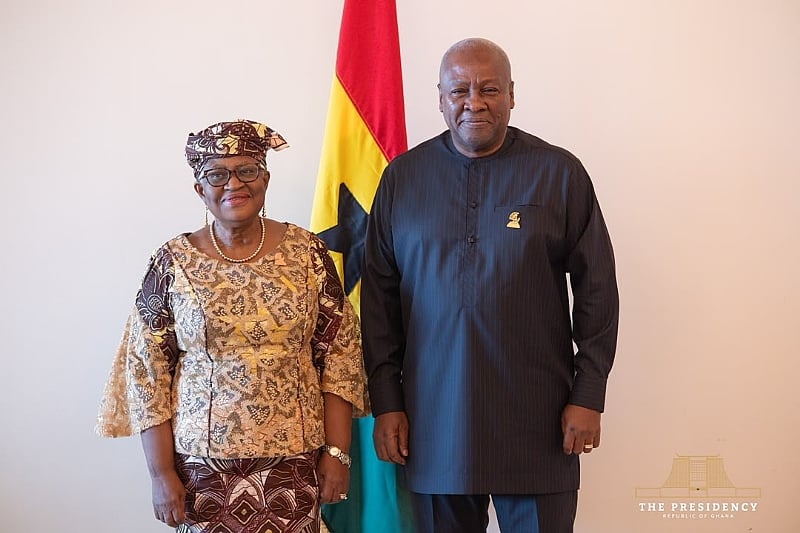
President John Dramani Mahama has reinforced Ghana’s commitment to international trade reform and export-led economic growth during high-level consultations with World Trade Organization (WTO) Director-General Dr. Ngozi Okonjo-Iweala at the organization’s headquarters in Geneva.
The dialogue centered on restructuring trade partnerships to support domestic industrialization, expanding export capacity for Ghanaian businesses, and optimizing the strategic advantages of the African Continental Free Trade Area (AfCFTA) framework.
Emphasizing the need for a shift in international trade relations, President Mahama highlighted that long-term national prosperity requires moving beyond raw material exports toward local processing and high-value manufacturing.
“To build an economy that works for every citizen, Ghana must transition from being a supplier of raw commodities to an active producer of finished goods,” President Mahama stated. “Our engagement with the WTO is aimed at securing fair access to international markets, ensuring that Ghanaian exporters can compete on a level playing field.”
The President also stressed the imperative of aligning multilateral trade policies with Africa’s regional economic ambitions to maximize value retention within the continent.
“Regional trade integration through the AfCFTA is key to unlocking Africa’s economic potential,” President Mahama added. “By collaborating closely with global institutions like the WTO, we can build the technical infrastructure and policy environment required to foster sustainable industrial growth and generate employment.”
WTO Director-General Dr. Ngozi Okonjo-Iweala commended Ghana’s leadership in advancing trade-led development across the sub-region, reassuring the Ghanaian delegation of the WTO’s continued technical backing.
“Ghana’s focus on industrial diversification and regional market development aligns directly with global economic priorities,” Dr. Okonjo-Iweala noted. “The WTO is committed to partnering with Ghana to strengthen trade logistics, enhance capacity building, and foster an equitable trading system that benefits emerging economies.”
The strategic session ended with both parties agreeing to maintain continuous technical collaboration to enhance export readiness and accelerate trade facilitation mechanisms for local industries.
