
By Adnan Adams Mohammed
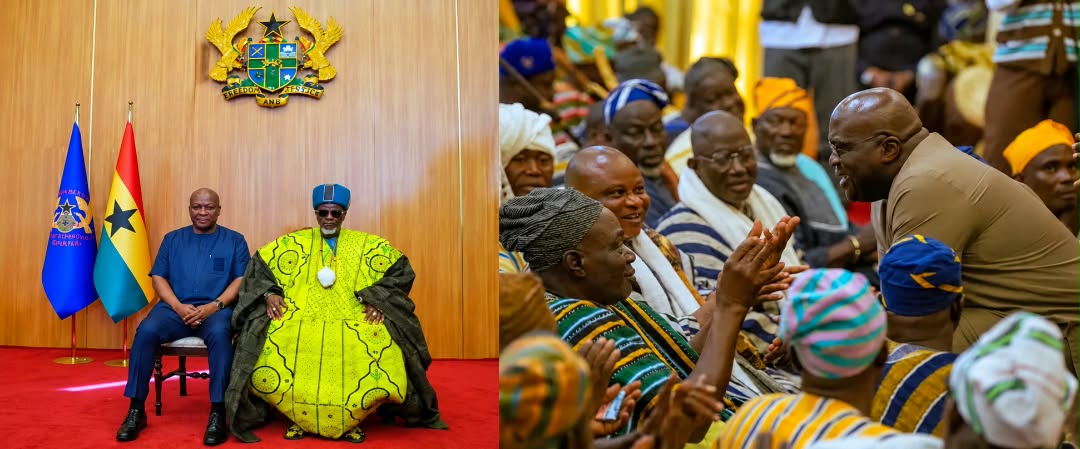
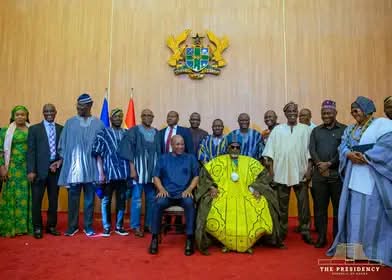
President John Dramani Mahama has hosted the Overlord of Dagbon, Ya-Na Abukari II, alongside traditional leaders and chiefs from the Dagbon Kingdom at the Jubilee House in Accra to discuss key national development priorities and outline target infrastructure projects aimed at transforming Ghana’s northern belt.
Joining President Mahama in the high-level engagement was his Chief of Staff, Dr. Julius Debrah, together with key government officials and cabinet members.
The strategic meeting underscored the administration’s commitment to bridging the infrastructure divide, enhancing agricultural modernization, and ensuring sustainable economic development across northern Ghana.
Focus on Northern Infrastructure Transformation
During the deliberations, President Mahama highlighted several major developmental initiatives targeted at boosting northern infrastructure, improving livelihoods, and expanding access to vital public services.
Key among the priority projects announced is the Northern Savannah Economic Transformation Programme, an initiative designed to develop over 10,000 hectares of irrigated land dedicated to commercial farming of rice, maize, and soya beans.
“Our goal is to unlock the immense agrarian potential of the northern region while creating direct employment for over 8,000 young farmers,” President Mahama stated during the engagement. “By combining infrastructural expansion with modern agricultural practices, we can build a self-sustaining economy that drives national growth.”
In addition to agricultural development, President Mahama addressed persistent municipal water delivery issues, highlighting the European Union-funded Yendi and Tamale water expansion projects, which also cover Damango and surrounding communities.
“These critical interventions will permanently resolve decades-long water shortages in the region, guaranteeing reliable access to clean water for thousands of households and businesses,” the President affirmed.
Traditional Leadership and National Unity
Welcoming the delegation, President Mahama commended Ya-Na Abukari II for his enduring leadership and active peacebuilding efforts across the country, citing his vital role in mediating local and regional disputes beyond Dagbon, including efforts in Mamprugu and Gonja communities.
“Your legacy stands as a beacon of unity and peace for all of Ghana,” President Mahama noted, reaffirming the state’s intent to collaborate closely with the traditional council on cultural and regional development milestones.
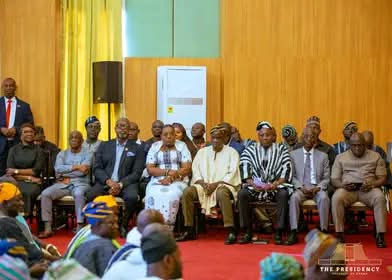
In his remarks, the Overlord of Dagbon, Ya-Na Abukari II, commended the government’s development policy direction, emphasising the essential role traditional leadership plays in fostering youth potential and safeguarding cultural heritage.
“Traditional leadership must remain a core partner in harnessing our cultural heritage and young people’s talents for national progress,” Ya-Na Abukari II stated. “We commend the government’s approach, which reflects the Sankofa principle reclaiming our traditional wisdom while innovating for sustainable future development.”
Strengthening Governance and Stakeholder Engagement
Chief of Staff Dr. Julius Debrah reiterated government’s dedication to maintaining open channels of communication with traditional authorities to ensure smooth execution and monitoring of state-funded projects across the region.
Dr. Debrah emphasized that institutional alignment between traditional governance structures and executive agencies remains critical to maximizing the impact of developmental infrastructure projects.
The high-level engagement concluded with commitments from both government leaders and the Dagbon traditional leadership to periodically review the implementation timeline of key infrastructure initiatives across the Northern Region.
