
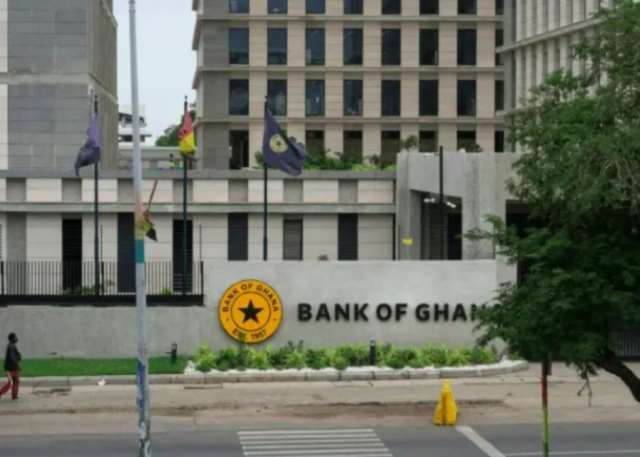
The Bank of Ghana’s Financial Stability Department released its 2025 Fraud Report, tracking fraud metrics across three regulated sub-sectors: Banks, Specialised Deposit-Taking Institutions (SDIs), and Payment Service Providers (PSPs).
The report reveals a macro-migration of fraudulent activity away from traditional banking institutions directly into the digital channels managed by PSPs. This shift strongly correlates with a massive boom in digital transaction volumes paired with lower levels of user digital literacy.
Macro Industry Performance (2024 vs. 2025)
● Total Fraud Cases: Jumped by 48%, rising from 16,733 cases in 2024 to 24,778 cases in 2025.
● Total Value at Risk: Rose slightly by 2%, increasing from GH¢99 million to GH¢101 million year-on-year.
● Long-Term Trend (2022–2025): Over a four-year window, baseline fraud incidents rose steadily from 15,164 to 24,778, while global value at risk crept from GH¢82 million to GH¢101 million.
Sub-Sector Breakdown
1. Payment Service Providers (PSPs) — The Primary Driver
● Case Count: Experienced a severe 54% spike, skyrocketing from 15,673 incidents in 2024 to 24,124 in 2025. Over a four-year period, total cases increased by 98%.
● Financial Impact: The value at risk nearly doubled, registering a 95% year-on-year surge from GH¢19 million to GH¢37 million. Over four years, its total value at risk climbed 42%.
2. Traditional Commercial Banks
● Case Count: Dropped 34%, falling from 716 cases in 2024 down to 472 in 2025.
● Financial Impact: Value at risk decreased by 24%, dropping from GH¢75 million to GH¢57 million.
● Top Typologies: ATM/POS fraud recorded the highest numerical count. However, Cash Suppression represented the highest value at risk at GH¢40.7 million (driven heavily by a single outlier incident of GH¢36 million). E-Money fraud (GH¢4.6 million) and Fraudulent Withdrawals (GH¢3.97 million) followed as key threats.
3. Specialised Deposit-Taking Institutions (SDIs)
● Case Count: Slashed by 47%, decreasing from 344 incidents down to 182.
● Financial Impact: Value at risk rose significantly by 77%, jumping from GH¢4.5 million to GH¢8.0 million.
● Top Typologies: Forgery and Manipulation of Documents caused the highest financial vulnerability at GH¢4.2 million (with GH¢4.1 million originating from just one institution). Cash Suppression remained the most frequent occurrence, with Rural and Community Banks (RCBs) suffering 90% of the sector’s total cash suppression losses.
Staff Involvement and Discipline
● Internal Collusion: The total number of banking and SDI employees implicated in fraud dropped by 40%, moving from 365 staff members down to 219.
● Theft Patterns: Inside positions were primarily connected to internal cash theft; 63% (139 individuals) of all fraudulent staff were tied directly to cash suppression schemes.
● Disciplinary Actions: Dismissals within Banks and SDIs decreased by 52%, dropping from 155 in 2024 to 75 in 2025. Out of the 219 compromised employees, only 34% (75 individuals) were officially terminated, with 59% of those firings tied directly to cash theft.
Recoveries and Financial Losses
For the combined Banks and SDIs sectors in 2025:
● Out of a total reported fraud value at risk of GH¢68.2 million, institutions managed to recover approximately GH¢3.7 million (roughly a 5% recovery rate).
● This left the banking and SDI sectors with an unrecovered, absolute loss total of GH¢64.5 million.
Bank of Ghana Directive: Moving forward, the central bank maintains that combating evolving digital fraud patterns requires continuous oversight, tighter internal institutional controls, and unified security collaborations between financial players, law enforcement agencies, and the public.
