
By Stephanie Nkrumah
In a major regulatory sweep designed to safeguard the future of Ghana’s multi-million dollar agricultural export commodities, the Tree Crops Development Authority (TCDA) has announced a total ban on the distribution, supply, and circulation of uncertified and unapproved tree crop planting materials.
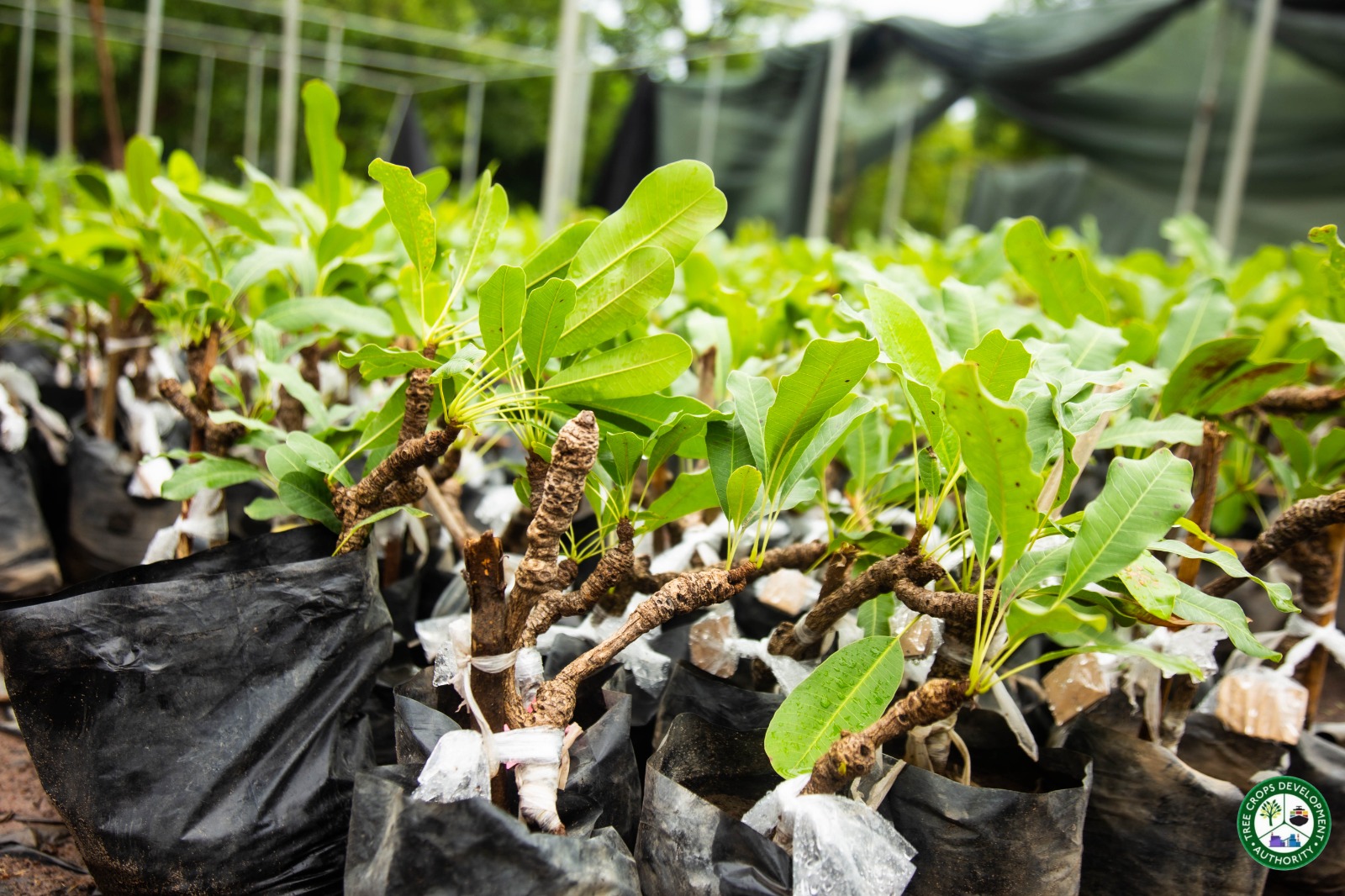
Beginning Friday, July 3, 2026, all actors within the value chain must source planting materials exclusively from TCDA-certified suppliers. The rigorous mandate targets six priority commodities crucial to the nation’s economic diversification strategy: cashew, coconut, oil palm, mango, rubber, and shea.
A Broad-Based Crackdown on Bad Seeds
The sweeping directive applies universally across the board. It leaves no room for exemptions, clamping down on development partners, government agencies, non-governmental organizations (NGOs), private business entities, and individual growers alike.
According to a formal statement issued by the Authority, the crackdown is a proactive step to prevent subpar, disease-prone, and low-yielding seedlings from compromising large-scale agricultural investments.
In an official public announcement, Dr. Andy Osei Okrah, Chief Executive Officer of the TCDA, explained that the measure is intended to overhaul standard operating procedures from the nursery phase right up to the commercial farm floor:
“The measure is intended to enhance quality assurance, traceability, sustainability, and productivity across the sector. All planting materials for cashew, coconut, oil palm, mango, rubber, and shea must be sourced from suppliers certified by the TCDA and comply with standards prescribed under Ghanaian law.”
Legal Teeth and Strict Record-Keeping Mandates
The intervention is not merely a soft warning; it carries heavy legal backing under Regulation 46 of the Tree Crops Regulations, 2023 (L.I. 2471), which explicitly empowers the state regulator to verify that all upstream planting inputs stem from legitimate, traceable stocks.
Under the new compliance regime, distributors and nursery operators are bound by strict corporate governance standards. They must procure inputs only from TCDA-approved pools, maintain comprehensive physical and digital records detailing the source and approval status of every batch, and present these ledgers to inspectors upon request. Furthermore, commercial batches must be physically submitted for inspection, verification, and official certification before they can legally leave distribution hubs.
The TCDA executive leadership warned that any supply operations bypassing these steps after July 3 will face severe, immediate consequences:
“The distribution, supply, or circulation of uncertified or unapproved planting materials will not be permitted after the directive takes effect. For the avoidance of doubt, no person or entity shall distribute, supply, or otherwise circulate uncertified or unapproved tree crop planting materials without approval from TCDA. Breaches of the directive will attract sanctions under the Tree Crops Regulations, 2023.”
Protecting the Farmer: A Call for Vigilance
While the legal onus falls on suppliers, the TCDA is also rallying smallholders and commercial farmers to act as the first line of defense in protecting their own livelihoods. Investing in perennial tree crops requires years of waiting before a farmer realizes a harvest; if a farmer mistakenly plants uncertified, low-yield varieties, the financial ruin is realized only years down the line.
The TCDA’s management corporate advisory directed a strong warning to the end-users of these inputs:
“The Authority advises farmers and other beneficiaries to verify that planting materials supplied to them originate from accredited and certified sources approved by the TCDA. This is necessary to ensure quality assurance, traceability, sustainability, and improved productivity within Ghana’s tree crops sector.”
By establishing a hard line on material quality, the TCDA aims to sanitize the nursery sector, protect massive agricultural investments from counterfeit seeds, and ultimately strengthen the long-term competitiveness of Ghana’s agricultural trade on the international market.
