
By Adnan Adams Mohammed
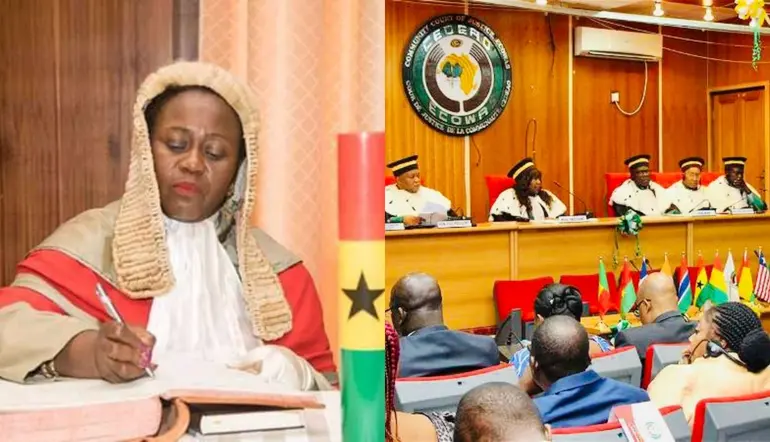
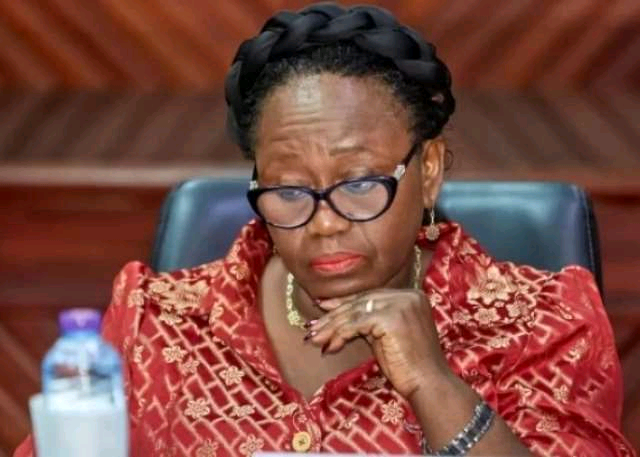
The Community Court of Justice, ECOWAS, has delivered a landmark ruling in favor of the Republic of Ghana, completely dismissing a lawsuit filed by the country’s former Chief Justice, Gertrude Torkonoo.
The former head of the judiciary had sought $10 million in damages, alleging severe violations of her human rights during her suspension and subsequent removal from office.
In a comprehensive judgment, the regional court found that no violations of rights had occurred, dealing a total defeat to the former Chief Justice on all claims.
The case brought together some of the West African sub-region’s finest legal minds. Ghana’s defense was pleaded and fiercely argued by the Deputy Attorney-General, Dr. Justice Sai. In contrast, the former Chief Justice was represented by the highly celebrated Senior Advocate of Nigeria (SAN) and human rights activist, Femi Falana.
Throughout the ruling, the ECOWAS Court noted that it was highly impressed with the submissions and legal arguments presented by Dr. Justice Sai, ultimately upholding every single one of his arguments in defense of the Ghanaian government.
The courtroom atmosphere grew tense following the delivery of the judgment. Unhappy with the outcome, Femi Falana, SAN, visibly lost his cool and made a scathing remark, suggesting that the judgment should be widely circulated so that “all judges in the sub-region would know that they cannot rule against their governments.”
The panel of judges took strong exception to the veteran lawyer’s outburst. In a sharp rebuke recorded in open court, the bench labeled the conduct and comments of Falana as “unacceptable,” adding that the tribunal “did not expect that from him” given his professional standing.
The Court’s Crucial Rulings
In dismissing the suit, the ECOWAS Court systematically dismantled all seven key reliefs sought by Torkonoo:
No Violation of the Right to Work: The Court rejected Torkonoo’s assertion that her initial suspension was arbitrary and driven by malice. The judges ruled that the suspension did not violate her fundamental right to work.
Due Process Was Observed: The bench cleared Ghana of arbitrary dismissal, affirming that the state strictly observed due process throughout her removal proceedings.
The “Absurd” Multi-Court Argument: Torkonoo had argued that because she was simultaneously a member of the Supreme Court, the Court of Appeal, and the High Court, she required separate removal proceedings for each court. The bench rejected this notion completely, calling the claim “absurd.” The Court ruled that her membership in those courts directly flowed from her position as Chief Justice; once she was removed from that central office, she could no longer claim membership in the separate courts.
Judicial Economy Upheld: Torkonoo challenged the lawfulness of her removal on the grounds that the investigative committee only confined itself to the first petition against her, ignoring a second and third petition. The Court disagreed, finding that the committee had acted prudently and in the interest of judicial economy.
Security Measures Were Proportionate: The former Chief Justice claimed she was subjected to undignified treatment, citing that she was searched, her husband and family were excluded from the proceedings, and that the choice of ‘Adu Lodge’ as a venue was a deliberate, malicious move connected to her uncle. The Court threw out these complaints, ruling that the measures taken to secure the proceedings were both lawful and proportionate.
No Halt to Proceedings Required: The court rejected the claim that the investigative committee violated her rights by continuing its work while an application for provisional measures to suspend the proceedings was still pending.
Failure to Prove Request for Information: Finally, regarding her claim that Ghana violated her right to receive information, the Court held that while Torkonoo was legally entitled to the full report and record of proceedings, she failed to provide any evidence that she had actually requested the documents before rushing to court.
With all claims dismissed, the verdict marks a resounding legal victory for Ghana’s Ministry of Justice and solidifies the legal framework surrounding the accountability of high-ranking judicial officers across the ECOWAS region.
