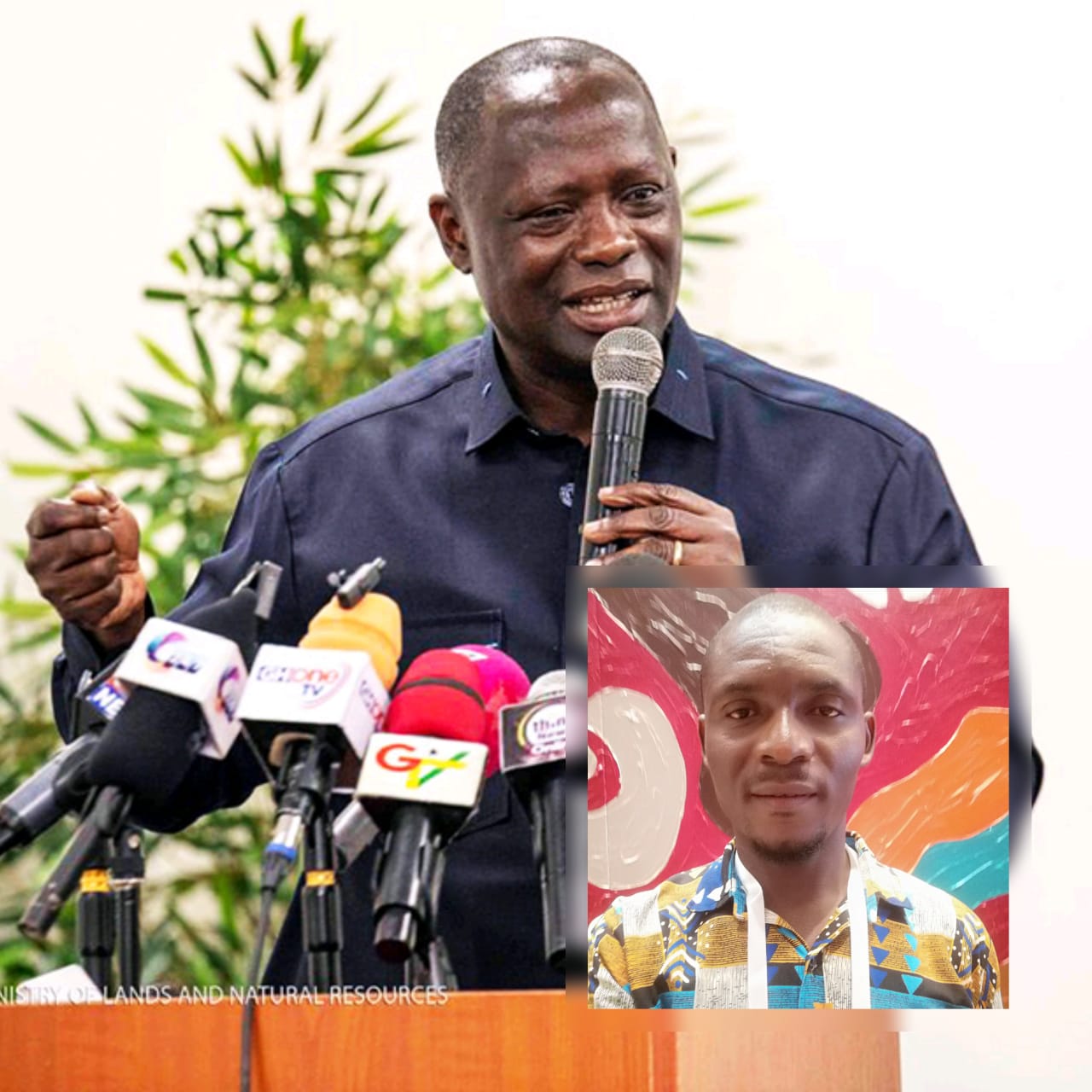
By Adnan Adams Mohammed
The government’s shifting stance on resource nationalism has sparked intense debate within the mining sector, following conflicting statements regarding the future of South Africa’s Gold Fields Tarkwa mine after its current lease expires in April 2027.
Mixed signaling from state officials has left investors and industry analysts questioning the administration’s long-term economic strategy, alternating between a populist push for local control and reassuring statements aimed at maintaining foreign investor confidence.
The Local Transfer Proposal
The controversy erupted following reports that the government is actively considering a complete transfer of the Tarkwa mine, Ghana’s second-largest gold producing asset, to indigenous firms once the current 30-year lease concludes.
The proposal mirrors a recent regulatory maneuver executed at the Damang gold mine, where the government declined a lease extension to Gold Fields and subsequently handed operations over to the local firm Engineers & Planners (E&P). Civil society organizations and policy institutes have aggressively lobbied for a repetition of this model at Tarkwa.
“Ghana must move beyond the automatic renewal of foreign-controlled mining concessions and begin building a mining sector that places Ghanaian ownership and prosperity at its center,” argued a representative advocating for a petition against the lease renewal. “Tarkwa was once proudly known as the State Gold Mine. This wealth must be retained to support our own development and create high-value engineering jobs for our youth.”
Warning Against the Localisation of Large Mines
However, the aggressive push for total local takeover has met sharp resistance from industry experts who caution that economic populism could destabilize Ghana’s primary source of foreign exchange.
Adnan Adams Mohammed, an award-winning financial and economic journalist and prominent mining advocate, has come out strongly against the complete localisation of the country’s Tier-1 large-scale mines. Speaking on the implications of the Tarkwa standoff, Mohammed warned that local entities currently lack the deep capital reserves and technical mechanisms required to sustain ultra-large-scale operations.
“We must separate economic patriotism from economic reality,” Mohammed stated. “Large-scale mining assets like Tarkwa require hundreds of millions of dollars in continuous capital expenditure, deep-level technical expertise, and global supply chain integrations. Forcing a sudden localisation policy on our premier mines risks devastating production levels, slashing government revenue, and signaling to the international market that capital is no longer safe in Ghana. Local content should be built through downstream value chains, not hostile takeovers of capital-intensive operations.”
A Swift Counter-Response to Markets
However, the prospect of losing a crown jewel asset that produced over 420,000 ounces of gold in 2025 sent shockwaves through international markets, prompting a swift rhetorical rollback from senior state officials desperate to contain the damage to Ghana’s investment profile.
Speaking to the press, Lands and Natural Resources Minister Emmanuel Armah Kofi Buah categorically rejected claims that the state was initiating a program of systemic expropriation.
“The government has not adopted a blanket nationalization policy to take advantage of the sector,” Minister Buah stated. “What we are seeking are partners that will leave behind deep expertise, empower Ghanaians in the downstream industry, and guarantee local value creation. Our relationship with international firms remains strong and collaborative.”
Adding a layer of fiscal complexity, Finance Minister Dr. Ato Forson addressed the situation during an interview with Bloomberg News. While confirming that the government is studying Gold Fields’ formal request for renewal, he clarified that no definitive verdicts have been passed.
“We have not come to an agreement with anyone, because the lease is still active as we speak,” Dr. Forson emphasized. However, he warned international mining conglomerates against treating extensions as short-term regulatory commodities, pointing to recent transactions where firms secured lease renewals only to sell the assets to foreign buyers a month later. “That fails to build mutual trust with the government on these developments,” the Finance Minister noted.
The Regulatory Middle Ground
Faced with accusations of internal contradiction, regulatory authorities are attempting to frame the shifting policy as a transition to stricter oversight rather than outright hostility to foreign capital.
Isaac Andrews Tandoh, the Chief Executive Officer of the Minerals Commission, firmly denied that the government was intentionally delaying negotiations or moving to nationalize assets without cause.
“It won’t be business as usual where we just automatically renew the lease,” Tandoh told reporters. He clarified that Gold Fields has been actively engaging with a technical committee to present a comprehensive, multi-decade development plan. “The company must present its technical development plans to a committee at the Minerals Commission, followed by a ministerial-level presentation, after which a decision on renewal will be made based on rigorous standards of local commitment.”
Community and Industry Fallout
While government entities trade mixed messages, local stakeholders are voicing deep anxieties over the lack of policy clarity. Traditional authorities in the Western Region have expressed open concern that an abrupt transition to local operators could disrupt vital social investments.
“Gold Fields has played a vital role in supporting development projects, infrastructure, healthcare, and education in our municipality,” stated a traditional leader from the Huniso community at a recent press conference. “Extending the lease under stable conditions is necessary to sustain these benefits and protect the livelihoods of our youth.”
Meanwhile, the Ghana Chamber of Mines has cautioned that the ongoing ambiguity and the precedent set by recent lease revocations risk creating a market perception that “security of tenure in Ghana is not guaranteed,” a development that could severely chill capital entry into the country’s extractive sectors.
As the 2027 deadline approaches, the state finds itself walking a thin wire trying to appease a domestic electorate hungry for resource sovereignty while assuring global markets that Ghana remains an orderly, safe haven for foreign direct investment.
Leave a Reply