
By Adnan Adams Mohammed
In a major policy shift aimed at dismantling Africa’s historic “extract and export” commodities model, the Government of Ghana has announced a strict, value-addition mandate for its emerging critical minerals sector.
Under the new directive, any future exploitation of the nation’s commercially viable lithium deposits must be legally bound to domestic refining, processing, and downstream industrial integration.
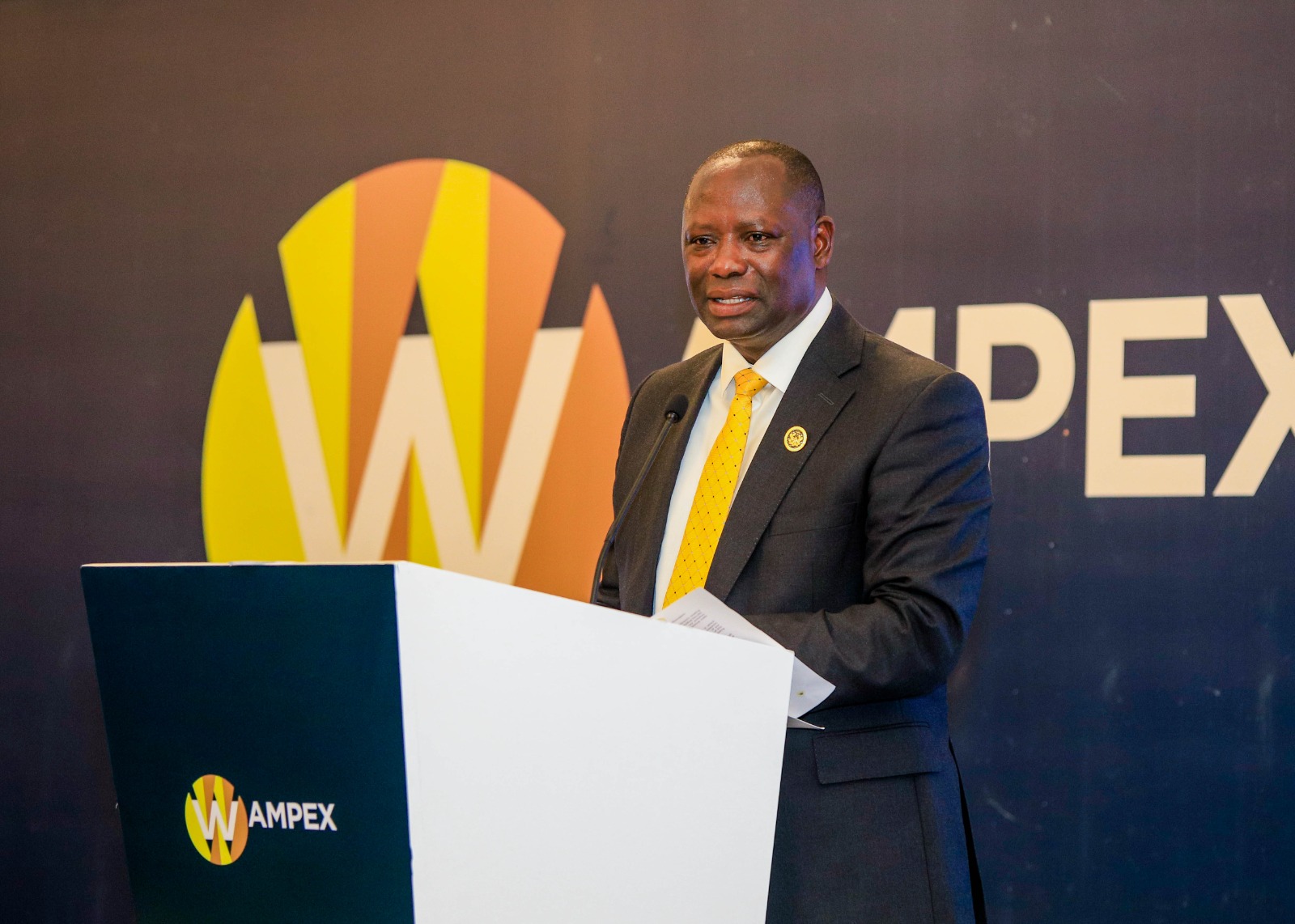
The announcement, delivered at the opening of the 19th edition of the West African Mining and Power Expo (WAMPEX) in Accra, marks a definitive line in the sand for international mining conglomerates. Rather than allowing raw lithium ores or basic concentrates to leave Ghanaian ports unchecked, the state is positioning itself to capture a significant share of the global electric vehicle (EV) supply chain, with an ultimate eye on establishing a full-scale domestic battery manufacturing industry.
Rewriting the Extractive Paradigm
Addressing an international assembly of mining executives, investors, and regional policymakers, Lands and Natural Resources Minister Emmanuel Armah-Kofi Buah outlined a comprehensive strategy designed to maximize the economic returns of Ghana’s sovereign mineral wealth.
“Ghana is taking deliberate steps to move up the mining value chain from extraction to refining, processing, and industrial use so that more of the value generated from our mineral resources is retained within the national economy,” Minister Armah-Kofi Buah stated.
The Minister emphasized that international demand for green transition minerals driven by global net-zero mandates presents African nations with a historic, time-sensitive window to industrialize. However, he warned that this opportunity would be entirely squandered if governments repeat the historical mistakes made with gold, timber, and raw bauxite.
“As global demand for lithium, a critical input for modern technologies, continues to rise, Ghana is committed to ensuring that its lithium resources are not simply extracted and exported as raw materials, but that value addition takes place here in Ghana,” Buah maintained.
No Lithium Without Batteries: A Direct Ultimatum to Investors
The government’s industrialization blueprint explicitly links resource access to technology transfer and secondary infrastructure development. Drawing parallels to ongoing state-backed initiatives like the Ghana Integrated Aluminium Development Corporation (GIADEC) and the Ghana Integrated Iron and Steel Development Corporation (GIISDEC) which seek to build integrated, domestic mine-to-smelter supply chains the Minister stated that the lithium strategy will follow an equally rigid value-retention framework.
The state’s ultimate objective is to feed processed lithium carbonate and hydroxide directly into local manufacturing hubs capable of supplying lithium-ion packs to the global automotive market.
“Lithium’s ultimate product is batteries that are needed for the vehicles of the future,” Minister Armah-Kofi Buah remarked during his keynote presentation.
Issuing a clear directive to foreign entities eyeing the country’s lithium tenements, including the world-class Ewoyaa Project in the Central Region, the Minister added: “Anybody who comes to talk about lithium should also be talking to us about how those batteries will ultimately be produced in Ghana.”
Navigating Volatility and Global Competition
The policy shift arrives at a critical juncture for the domestic mining ecosystem. Following a prolonged legislative debate over equity distributions and sliding-scale royalty formulas, Ghana’s Minerals Income Investment Fund (MIIF) has aggressively scaled up direct state participation in the lithium sector, securing enhanced carried interests to protect national revenue margins.
However, international commodity analysts warn that transitioning from a raw exporter to a high-tech processing hub requires substantial capital injections and highly reliable energy grids. Setting up advanced chemical refining facilities requires specialized infrastructure, consistent electricity pricing, and a highly skilled technical workforce.
Furthermore, global lithium markets have faced intense price volatility since 2023, exposing mining projects to significant financing pressures. Despite these global headwinds, Ghanaian officials maintain that domestic processing is the only viable path to economic sovereignty.
By enforcing local-content protocols and demanding downstream manufacturing pipelines, Ghana aims to set a new precedent for resource governance in West Africa transitioning from a traditional supplier of raw commodities into a self-sustaining hub for the global clean energy frontier.
