
Close Menu
News Guide Africa
    What's Hot

    BoG amends Cash Reserve Ratio to mop up GH¢16bn …and shield Cedi from market pressures

    June 1, 2026

    Economy surges past US$100bn as gov’t rules out future IMF bailouts

    June 1, 2026

    Foreign confidence rebounds as Ghana secures historic US$2.61bn in FDI Inflows

    June 1, 2026
    Facebook X (Twitter) Instagram
    Trending
    • BoG amends Cash Reserve Ratio to mop up GH¢16bn …and shield Cedi from market pressures
    • Economy surges past US$100bn as gov’t rules out future IMF bailouts
    • Foreign confidence rebounds as Ghana secures historic US$2.61bn in FDI Inflows
    • Experts urge policy shift as Ghana targets food self-sufficiency and global competitiveness
    • Ghana’s building inflation holds steady at 2.2% …as BoG tightens real estate controls
    • GRA rolls out ITAS to drive ‘digital tax’ transformation …tightens compliance, closes revenue leakages
    • DVLA’s ‘smart reforms’ drive 39% revenue growth …as awards rain on CEO, Julius Kotey
    • Toxic Waters, Empty Nets: How Light and Chemical Fishing Threaten Ghana’s Marine Ecosystem and Public Health
    Facebook X (Twitter) Instagram
    News Guide Africa
    • Home
    • News
    • Politics
    • Agric and Environment
    • Sports
    • Mining & Energy
    • Lifestyle
    News Guide Africa
    Home » Toxic Waters, Empty Nets: How Light and Chemical Fishing Threaten Ghana’s Marine Ecosystem and Public Health
    Agric and Environment

    Toxic Waters, Empty Nets: How Light and Chemical Fishing Threaten Ghana’s Marine Ecosystem and Public Health

    Adnan AdamsBy Adnan AdamsJune 1, 2026Updated:June 1, 2026No Comments13 Views
    Facebook Twitter Pinterest LinkedIn WhatsApp Reddit Tumblr Email
    Share
    Facebook Twitter LinkedIn Pinterest Email

    By Adnan Adams Mohammed, Financial and Resource Journalist

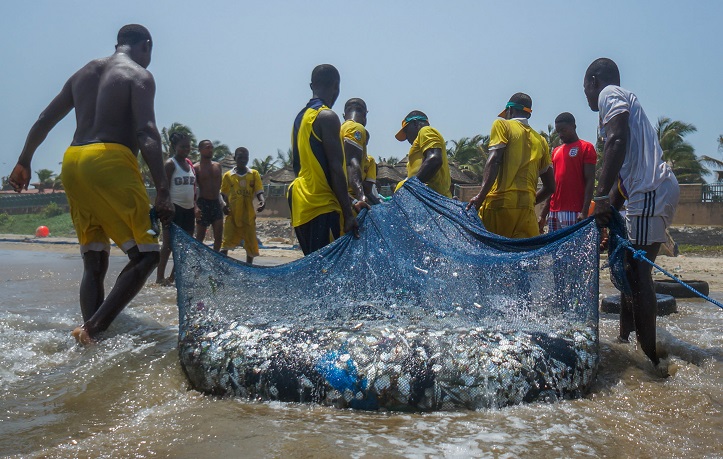
    Against the odds of strict legislative prohibitions and repeated government warnings, illegal, unreported, and unregulated (IUU) fishing practices are surging to catastrophic levels along Ghana’s coastline.

    Nowhere is this crisis more visible than in the coastal communities of Ada, where the illicit use of high-intensity light aggregates and highly toxic chemicals is decimating marine ecosystems, plunging local fishers into poverty, and triggering an unfolding public health emergency.

    Environmental advocates and marine experts are now calling on the government to declare the situation a national security crisis before the country’s marine fisheries collapse entirely.

    The blinding lights at Ada

    In Ada and surrounding fishing hubs, the ban on light fishing a destructive practice where fishermen lower high-powered generator-fueled bulbs into the water to attract massive schools of fish, including juveniles is being openly flouted.

    “We go out at night and the sea looks like a city on its own because of the bright lights from these illegal operators,” said Nii Koblah, a local artisanal fisherman who has spent three decades on the water. “They take everything. They catch the mothers, they catch the babies. When we go out with our traditional nets during the day, the ocean is empty. They are killing our future.”

    The practice completely disrupts the natural migratory and breeding patterns of marine species. By scooping up juvenile fish before they have a chance to reproduce, light fishers are effectively collapsing the foundation of Ghana’s small pelagic fish stocks, such as sardines and mackerel, which are vital for local food security.

    “The law bans it, but enforcement on the high seas is practically non-existent,” noted Joseph Ocansey, an investigative journalist documenting the ecological fallout in Ada. “What we are witnessing is a lawless free-for-all that leaves law-abiding, traditional fishermen completely helpless.”

    A deadly cocktail: The rise of chemical fishing

    While light fishing hollows Ghana’s fish populations, an even more insidious threat is poisoning the waters: chemical fishing. Desperate for catches in depleted waters, some rogue operators have resorted to dumping toxic substances, including DDT, dynamite, and highly concentrated chemicals, directly into the ocean to stun and kill fish en masse.

    Experts warn that this crosses the line from an environmental issue to a severe public health hazard and a threat to national human security.

    “Chemical fishing must be treated as a national emergency,” stressed an environmental policy analyst advocating for maritime reforms. “When a fish is harvested using toxic chemicals, those poisons don’t disappear. They enter the human food chain. Every time a citizen buys contaminated fish in the market, they are ingesting carcinogens and toxins that damage organs and jeopardize public health.”

    The economic toll is equally devastating. As catch rates plummet due to habitat destruction, local coastal economies are crumbling, driving higher rates of poverty and forcing young men to migrate or seek illicit livelihoods.

    A call for aggressive state intervention

    The Ministry of Fisheries and Aquaculture Development (MoFAD) and the Fisheries Commission have previously instituted closed seasons to allow stocks to replenish. However, critics argue these temporary bans are useless if destructive, illegal practices resume the moment the season reopens.

    Civil society organizations, local chiefs, and law-abiding fishing associations are demanding a centralized, militarized crackdown on both light and chemical fishing. They are calling for stricter naval patrols, severe judicial penalties for boat owners utilizing generators and chemical agents, and rigorous testing of fish at major landing beaches.

    “We are fighting for our survival,” warned Naa Ayorkor, a prominent fish processor and vendor at a local market. “If the government does not stop the chemical and light fishers today, tomorrow there will be no fish for our children, no jobs for our youths, and only sickness in our communities. The sea is our life, and it is dying.”

    As the degradation of Ghana’s maritime domain accelerates, the window for action is rapidly closing. Stakeholders agree that without immediate, uncompromising enforcement, the nation’s waters will soon be completely empty—leaving behind an ecological wasteland and a deeply compromised population.


    Ada Fisheries Commission marine ecosystems Ministry of Fisheries and Aquaculture Development (MoFAD)
    Share. Facebook Twitter Pinterest LinkedIn Tumblr Telegram Email
    Adnan Adams
    • Website

    Related Posts

    BoG amends Cash Reserve Ratio to mop up GH¢16bn …and shield Cedi from market pressures

    June 1, 2026

    Economy surges past US$100bn as gov’t rules out future IMF bailouts

    June 1, 2026

    Foreign confidence rebounds as Ghana secures historic US$2.61bn in FDI Inflows

    June 1, 2026
    Leave A Reply Cancel Reply

    Top Posts

    BREAKING: Another helicopter crashes in Kenya, Several Feared Dead

    August 7, 20251,869

    Alpha Energy to begin works on Namibia’s largest offshore diamond mines in October

    September 14, 2024870

    Prof. Yarhands Urges Mahama to Adopt Constituency-Based Presidential Staffing

    January 23, 2025743

    Exceptional client service: How two Kasoa GRA officials are redefining public relations

    May 22, 2026735
    Don't Miss
    Business, Small Business

    BoG amends Cash Reserve Ratio to mop up GH¢16bn …and shield Cedi from market pressures

    By Adnan AdamsJune 1, 2026

    By Adnan Adams Mohammed In a decisive regulatory intervention designed to insulate the domestic currency…

    Economy surges past US$100bn as gov’t rules out future IMF bailouts

    June 1, 2026

    Foreign confidence rebounds as Ghana secures historic US$2.61bn in FDI Inflows

    June 1, 2026

    Experts urge policy shift as Ghana targets food self-sufficiency and global competitiveness

    June 1, 2026
    About Us
    About Us

    Newsguide Africa is a digital news platform dedicated to providing accurate, timely, and insightful coverage of the African continent. From business and technology to lifestyle and cultural heritage, we go beyond the headlines to offer context and a positive, authentic narrative for the global African diaspora and local readers alike.

    Facebook X (Twitter) Pinterest YouTube WhatsApp
    Our Picks

    BoG amends Cash Reserve Ratio to mop up GH¢16bn …and shield Cedi from market pressures

    June 1, 2026

    Economy surges past US$100bn as gov’t rules out future IMF bailouts

    June 1, 2026

    Foreign confidence rebounds as Ghana secures historic US$2.61bn in FDI Inflows

    June 1, 2026
    Most Popular

    BREAKING: Another helicopter crashes in Kenya, Several Feared Dead

    August 7, 20251,869

    Alpha Energy to begin works on Namibia’s largest offshore diamond mines in October

    September 14, 2024870

    Prof. Yarhands Urges Mahama to Adopt Constituency-Based Presidential Staffing

    January 23, 2025743

    © 2026 Newsguide Africa. All rights reserved.

    • Home
    • Science

    Type above and press Enter to search. Press Esc to cancel.