

By Adnan Adams Mohammed
A new report from the World Bank signals a sobering reality as global cocoa prices are projected to plunge by more than 50% in 2026.
This reflects a damning reality of the sharp end of the ‘gold-standard’ era of cocoa pricing: after two years of record-breaking highs that offered a glimmer of hope for Ghana’s fiscal stability.
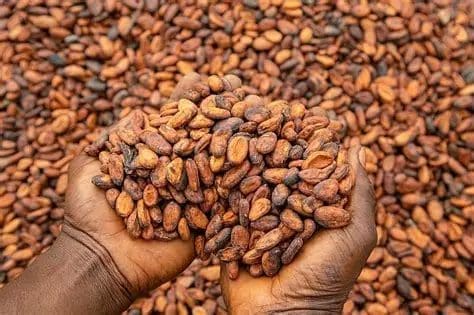
According to the April 2026 Commodity Markets Outlook, the valuation of “brown gold” is expected to collapse from US$7.80 per kilogram in 2025 to a mere US$3.80 per kilogram in 2026.
This 51.3% decline represents more than just a market correction; for Ghana, it is an impending economic shockwave that threatens to erode export earnings, destabilize the cedi, and push the nation’s farming heartlands further into poverty.
The supply-side trap
The irony of the current situation lies in the recovery itself. The historic price spikes of 2024 and 2025 were driven by extreme scarcity, largely caused by adverse weather and disease in West Africa.
The World Bank now attributes the projected price collapse to a “gradual recovery in global supply.” As production conditions improve and supply chains adjust, the very abundance that farmers have worked toward is set to devalue their harvest.
While a slight recovery to US$4.20 per kilogram is anticipated in 2027, the medium-term outlook remains grim. This trend is reflective of a broader “cooling” in the beverage commodity index, suggesting that the era of scarcity-driven windfalls is over.
A blow to the national purse
For the Ghanaian economy, which relies heavily on cocoa for foreign exchange, the timing could not be worse. The cocoa sector has long been a primary anchor for the national budget and a critical tool for managing the country’s debt-to-GDP ratio. A halving of global prices directly translates to a massive shortfall in the Cocoa Board’s (COCOBOD) ability to secure pre=financing from buyers and support the local currency.
Even if Ghana succeeds in rebounding its production volumes, the sheer magnitude of the price drop means that increased output is unlikely to bridge the revenue gap. This creates a “volume-value” paradox: farmers may work harder and produce more, only to see the nation’s total export earnings shrink.
The human cost: farmers at the brink
Beyond the macroeconomic indicators lies the damning reality for the rural producer. Cocoa farmers, who have struggled with the rising costs of fertilizers, labor, and the devastating impact of illegal mining (galamsey) on their lands, are now facing a significant reduction in their take-home pay.
If the farm gate price follows the global trajectory, the modest improvements in farmer living standards seen over the last two years could be wiped out. This creates a dangerous incentive for farmers to abandon cocoa cultivation entirely, potentially selling off their ancestral lands to unregulated miners; a move that would cause irreversible environmental damage to the nation’s agricultural belt.
The volatility factor
The World Bank warns that while prices are dropping, they will remain subject to “weather-related shocks” and “geopolitical developments.” For Ghana, this means the economy remains trapped in a cycle of uncertainty. Ghana is a “price taker” in a market that is increasingly volatile and unforgiving.
As the 2026 deadline approaches, the government and stakeholders must move beyond reactionary measures. Without aggressive diversification, increased local processing to add value, and a robust price-stabilization fund that actually protects the farmer, Ghana remains at the mercy of a global market that is currently signaling a very cold winter for the cocoa sector.
The “brown gold” that has built the nation is losing its luster, and without a strategic pivot, the economic consequences will be felt in every household across the country.
