

By Adnan Adams Mohammed
An exclusive, data-backed analysis of the financial operations of the National Lottery Authority (NLA) has clarified the true revenue contributions of private lotto operators in the country, correcting months of speculative public debate.
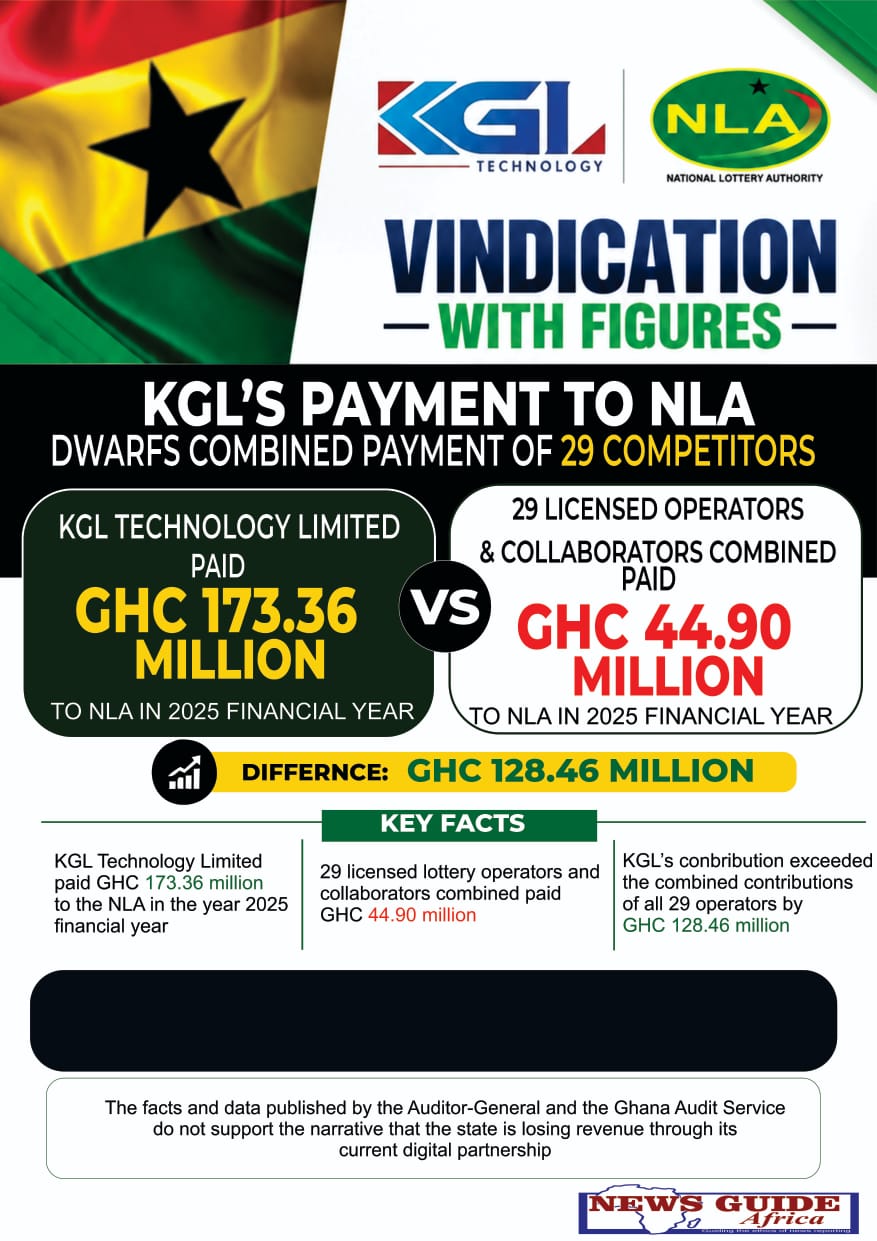
According to verified financial records for the 2025 financial year, 29 licensed private lottery companies and collaborators collectively paid a total sum of GH¢ 44,900,161.23 (approximately GH¢ 44.9 million) to the NLA. In sharp contrast, a single digital partner, KGL Technology Limited, paid GH¢ 173,360,000 (over GH¢ 173 million) to the state authority within the same period.
The revelation follows ongoing public campaigns and media reports that have repeatedly questioned KGL’s operational framework and its impact on state revenue.
Reacting to the heavily skewed financial figures, Mr. Foster Ayisah, a Ghanaian based journalist, criticized the targeted media commentary against the digital lottery operator, urging a more data-driven approach to industry reporting.
“The constant criticisms without proper financial data are misleading,” Mr. Ayisah stated during an editorial briefing. “A comprehensive assessment requires investigating the entire business operations, management, and administration of the NLA to ascertain the real structural challenges contributing to the authority’s revenue shortfalls.”
The Operational Landscape
The newly emerged data explicitly refutes claims that a single entity holds an exclusive monopoly over Ghana’s lottery ecosystem. Records show that the NLA, acting under its legal mandate in Act 722, has actively issued long-term operational licenses, mostly spanning 10 to 15 years, to over 30 private collaborators, creating a broad field of active operators.
Despite this level playing field, the vast majority of private operators fell significantly behind KGL’s revenue generation capacity.
Breakdown of Revenue Contributions (2025 Financial Year)
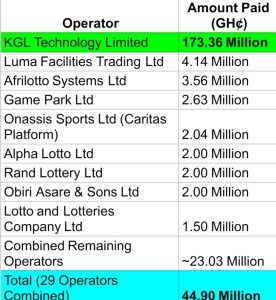
Note: The financial report further indicated that three registered operators—SB Business Ventures, Best Chance Lottery Company, and Diblo Lottery—did not remit any funds to the NLA for the 2025 financial year.
Executive Review and Next Steps
To address structural inefficiencies and ensure institutional stability, the executive arm of government has taken an analytical approach to the industry’s friction. Rather than altering existing valid contracts based on unverified public narratives, a specialized committee was instituted to review the NLA’s broader structural issues comprehensively.
Local financial analysts and industry stakeholders are now looking forward to the outcome of upcoming consensus financial re-negotiations between the state and its primary digital driver to optimize future state revenue.
”The facts and data published by the Auditor-General and the Ghana Audit Service do not support the narrative that the state is losing revenue through its current digital partnerships,” Mr. Ayisah concluded, emphasizing the need for commentators to rely on official economic data rather than speculation.
