Category: News

  • Mid-Year budget to clarify road contractor payments – Ampem Nyarko

    Deputy Minister of Finance, Thomas Ampem Nyarko, has announced that the government will provide detailed clarity on payments owed to road contractors in the upcoming mid-year budget review.

    The move is part of broader efforts to manage arrears and uphold fiscal discipline amid rising concerns in the construction sector over delayed payments.

    Speaking on the Citi Breakfast Show on Wednesday, July 2, Mr. Ampem Nyarko explained that a comprehensive audit of outstanding arrears has been completed by the Auditor-General in collaboration with top accounting firms. The findings, he said, revealed that some claims had been disallowed.

    “All these will be programmed in our budget. Now, the auditor general and the top accounting firms that did the auditing of the arrears have already brought some reports that have indicated that some of the amounts are being disallowed,” he said.

    He added, “So, in the mid-year budget review, Dr. Forson will report on that, and we will indicate what the audited arrears are. Then, we will also indicate the plans to clear them.”

    According to Mr. Nyarko, the government has already earmarked GHc 13 billion for arrears clearance in the 2025 fiscal year and is committed to pursuing it “religiously.”

    “Already, we have made plans for Gh¢13 billion, which we are religiously pursuing this year. In next year’s budget, we will announce another amount,” he noted.

    He further stated that allocations in the 2026 budget will support continued arrears payments, while stressing that the government is determined not to repeat past mistakes.

    “That is why we are managing the financing so well that we do not have arrears build-up, and we have given commitment authorisation so that we don’t spend above what has been budgeted for the year,” he said.

    Mr. Nyarko also criticised the previous New Patriotic Party (NPP) administration’s fiscal approach, which he claimed led to unsustainable debt accumulation.

    “Because if we go the way they [NPP] did, we will be clearing the arrears, and we will not be building up more arrears. That is not how to manage an economy,” he argued.


  • ECG’s Planned Maintenance: Affected Areas in Volta and Greater Accra Regions

    ECG’s Planned Maintenance: Affected Areas in Volta and Greater Accra Regions

    Story by Lawrence Odoom/ Phalonzy

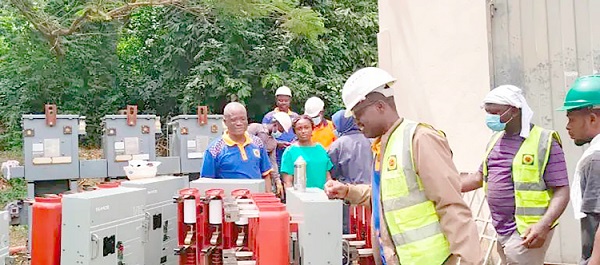
    The Electricity Company of Ghana (ECG) has announced a scheduled maintenance exercise slated for Thursday, July 10, 2025, in a selected areas of the Volta and Greater Accra regions.

    This crucial initiative aims to enhance power supply reliability and optimize service delivery.

    The maintenance work, scheduled to run from 9 am to 5 pm, will necessitate a temporary interruption in power supply to facilitate comprehensive upgrades to the transmission infrastructure.

    In the Volta Region, residents of Hodzo and its environs will be affected, while in the Greater Accra Region, a broader range of communities will experience disruptions, including Palace Mall, Airport Hills Estate, Mayfair Estate, Sowutuom, Israel, Race Course, Glefe, Wiaboman, Achimota Market, Achimota Old Station, and surrounding areas.

    The ECG acknowledges the potential inconvenience this may cause and assures customers that the exercise is essential to ensuring the long-term stability and efficiency of the power grid.

    “The Electricity Company of Ghana wishes to inform its cherished customers that the interruption in power supply is necessary to allow our engineers to carry out maintenance works on our transmission infrastructure. We regret the inconvenience that will arise out of this exercise,” the statement noted.

    In light of the scheduled maintenance, customers are advised to exercise caution and treat all electrical connections as live to ensure their safety. The ECG remains committed to delivering improved and stable power supply, and this exercise is a testament to its ongoing efforts to modernize and enhance its infrastructure.

    For updates on the maintenance schedule, customers can visit the ECG’s official website or follow its verified social media platforms.

  • ECG revenue hits GHC1.6bn in first half of 2025 – Jinapor

    The Minister for Energy and Green Transition, John Jinapor, has reported a notable improvement in revenue collection by the Electricity Company of Ghana (ECG).

    According to him, the company has accrued GHc1.6 billion in the first half of 2025, against a projected target of GHc2.5 billion

    Responding to questions on the floor of Parliament last week, John Jinapor described the development as a significant improvement.

    “At the end of the month [June 2025], ECG was able to raise about GHc1.6 billion, which is a remarkable improvement, even though the target ought to be GHc 2.5 billion. If you do a year-on-year comparison, this month [June] of 2025 as compared to the same month in 2024, there’s a remarkable improvement in terms of the revenue collection,” he said.

    The Minister for Energy and Green Transition also announced plans to present a legislative instrument to Parliament aimed at introducing stricter punitive measures against individuals who illegally install electricity meters for consumers.

    The Minister stated that although some offenders have already been arrested and prosecuted, the existing sanctions have not proven sufficiently deterrent.

    He stressed the need for stronger penalties to curb the practice.


  • Mahama is restoring credibility to governance – Goosie Tanoh

    The Presidential Advisor on the 24-Hour Economy and Accelerated Export Development Programmes, Mr. Augustus Goosie Tanoh, has expressed strong confidence in President John Dramani Mahama’s commitment to restoring credibility and legitimacy to governance.

    Mr. Goosie Tanoh highlighted the President’s achievements within his first 120 days in office, describing them as a clear signal of renewed purpose and dedication to national transformation.

    “I think that the social contract, the 120-day contract, and the fact that he has achieved all those milestones show a new, renewed determination and purpose.

    “And that sets the landscape for what is to come, and so, in that sense, yes, I think he has demonstrated clearly that he means business, he also means to promote, protect and expand business,” he noted.

    Mr. Tanoh clarified that the 24-Hour Economy goes beyond extended working hours, explaining that it represents a broader transformation in how the state interacts with citizens, businesses, and institutions.

    “One of the interesting things is that the reset [agenda] is also about the state and the way the state relates to the citizenry, relates to businesses and other institutions. Because without an efficient and friendly state, investors will run away, and it will also become a barrier and a bar to progress and development,” he stated.

    He also pointed to the President’s anti-corruption drive, highlighting the newly introduced Code of Conduct for public officials as a demonstration of the administration’s resolve to enhance transparency and accountability.

    “Some of the anti-corruption things he has done, such as the Code of Conduct, are to lead the way that this our dispensation we mean business and we will do it,” he added.

    Mr. Tanoh’s remarks follow the launch of the government’s flagship 24-Hour Economy policy, which seeks to create jobs, boost productivity, and promote inclusive economic growth by encouraging round-the-clock operations in critical sectors including healthcare, transport, retail, and manufacturing.


  • From Classroom to Banking Hall: The Journey of Joseph M. Abakah

    By Adnan Adams Mohammed

    As he assumes a new role at Agricultural Development Bank (ADB) as Coordinator (Head of Operations) in Charge of MSMEs Banking, Joseph Mensah Abakah’s story is a testament to the power of education and determination.

    From his early days as classroom teacher in Junior Secondary School to his current role in the banking industry, Mr Abakah has demonstrated a commitment to learning and professional growth.

    Early Education

    Abakah’s educational journey began at University Junior Secondary School from 1992 to 1994. He then proceeded to Adisadel College for his secondary education, where he developed a strong foundation in business accounting from 1995 to 1997.

    Tertiary Education

    Abakah pursued higher education at the University of Cape Coast, College of Distance Education (CODE) where he earned a Diploma in Basic Education from 2013 to 2015 and later obtained a Post-Diploma (Bachelor’s Degree) in Psychological Foundation of Education from 2015 to 2017.

    Professional Career Opportunities

    After completing his education, Abakah worked as a professional teacher from 2005 to 2011. He then transitioned to the Youth Employment Agency, where he served as the Municipal Director for the Awutu Senya East Municipal Assembly.

    Current Role

    Abakah’s current role as the Coordinator in Charge of MSMEs Banking at Agricultural Development Bank (ADB) PLC allows him to leverage his skills and experience in business accounting and human resources management to support micro, small, and medium-sized enterprises (MSMEs).

    Future Plans

    Abakah is set to start his MA in Human Resources Management at the University of Cape Coast in the 2025/2026 sandwich session. This further demonstrates his commitment to continuous learning and professional development.

    Joseph Mensah Abakah’s journey from the classroom to the banking hall is an inspiring example of how education and determination can lead to success. His story highlights the importance of lifelong learning and the value of applying theoretical knowledge to real-world problems. As he continues to grow in his career, Abakah’s experiences and insights will undoubtedly benefit the MSMEs and the banking industry as a whole.


  • VAT reforms: GRA targets September 2025 to finalise report ahead of 2026 budget

    The Ghana Revenue Authority (GRA) has announced that it is on course to complete work on the proposed Value Added Tax (VAT) reforms by September 2025.

    The reforms, which aim to address longstanding distortions in the VAT system, are expected to be incorporated into the government’s 2026 economic policy and national budget.

    Speaking after a stakeholder engagement in Accra, Commissioner of Domestic Revenue at the GRA, Edward Apenteng Gyamera, revealed that the authority is currently undertaking a nationwide consultation process to solicit feedback from key players in the trade and business sectors.

    “This is part of the process to get every stakeholder’s input on the upcoming VAT reform by the Ministry of Finance.

    In all, we have four engagements in Accra and others in Kumasi, Takoradi, and Tamale before releasing the final draft in the next few weeks,” he explained.

    “We should also bear in mind that these are just proposals and not final decisions.”

    The VAT reform was initiated by the Ministry of Finance in response to concerns about inefficiencies and complications in the current payment system, which has been in place for over a decade.

    Mr. Gyamera assured stakeholders that their contributions would be seriously considered and explained that, where specific proposals cannot be adopted, clear justifications will be provided.

    The overarching goal of the reform is to broaden the tax base and boost VAT’s share of domestic revenue by over 20%, enhancing Ghana’s fiscal stability and economic resilience.

    Earlier this year, the International Monetary Fund (IMF) provided technical assistance to the government and the Ministry of Finance to support the reform process.

    According to the GRA, the IMF’s recommendations will be thoroughly reviewed before any final decisions are made.


  • Ghana to achieve single digit inflation by Q3 amidst threat from utilities price hike

    Adnan Adams Mohammed

    Ghana’s inflation has taken a sharp nosedive in the past two months, falling from 21.2 % in April to 13.7 % in June, after recording 18.4 % in May.

    Base on the recent development, analysts predict that inflation rate could return to single digit by September 2025 beating the government’s own target of mid-2026.

    The 13.7% June inflation is the lowest since December 2021 and also is nearing the end-year target of 11.9%.

    The Head of Finance at Merban Capital attributes the downward trend to a combination of factors, including sustained cedi stability, a tight monetary policy stance by the Bank of Ghana and falling yields on the Treasury bill market, which continue to absorb excess liquidity from the system.

    “All these three factors actually contributed towards the disinflationary pressure. And this can continue even into the third quarter, where we may end up hitting single digit inflation”, Nelson Cudjoe Kuagbedzi noted in a radio interview last week.

    “As I did indicate, 11.9% is the target for the year. But having achieved 13.7% as at second quarter, we may end up hitting single digit by September 2025. And this is good news for businesses, good news for individuals, and good news for the government. This inflation rate is going to provoke a lot of activity within the money market”, he added.

    However, the Ghana Statistical Service is concerned about price pressures from rent, electricity, refuse disposal, charcoal, and yam which remain the top five price pressure points driving inflation.

    Unexpectedly, refuse disposal, despite its small weight of just 0.5% in the inflation basket, saw a staggering year-on-year price surge of 130.9%, making it one of the biggest contributors to the overall rate.

    Meanwhile, Government Statistician Dr. Alhassan Iddrisu, has noted that sustained disinflation presents a crucial opportunity to shift from reactive price controls to more structural solutions.

    He is urging businesses to rethink their sourcing models, noting that: “With inflation on locally produced goods declining faster than imported ones, businesses can reduce exposure to global supply shocks by increasing local sourcing, especially for food, packaging, and logistics inputs.”

    “Businesses could practice strategic pricing, not sharp increases, given the disinflation and even month-on-month deflation as consumers are more price-sensitive.”

    In the face of rising food prices — with staples like yam still among the top inflation drivers — GSS also recommends changes in household purchasing behavior:

    “Households should lean into bulk purchases of staples, buy local produce where possible, and favor in-season vegetables, cereals, and proteins, which are experiencing sharper price drops.”

    As regional disparities in inflation persist, Dr. Iddrisu emphasized that economic policy must become more targeted:

    “Tailor social protection and economic policy by Region as blanket policies will not be effective given wide regional disparities in inflation.”

    The Government Statistician, while addressing a press conference, attributed the decline to what he described as a significant reduction in inflationary pressures that have weighed on the economy in recent months.

    “For the first time in a while, we are recording a month-on-month deflation of 1.2 percent between May and June, suggesting a real and sustained shift in price levels,” Dr. Iddrisu.

    Food inflation fell by 6.5 percentage points to 16.3 percent, down from 22.8 percent in May, while non-food inflation also eased to 11.4 percent from the previous 14.4 percent.

    However, regional disparities remain stark.

    The Upper West Region recorded the highest inflation rate at 32.3 percent, largely driven by rising food and utility costs. In contrast, the Bono Region posted the lowest at 8.4 percent.

    Dr. Iddrisu called for the use of more localized, granular data in policy planning to help address these regional imbalances and sustain the national disinflationary trend.

    The consistent decline over the past six months offers a hopeful sign for policymakers and businesses alike, especially as government targets single-digit inflation by early 2026


  • Gov’t to receive $370million from IMF  … optimistic of Board approval

    Adnan Adams Mohammed

    The Government of Ghana is awaiting disbursement of US$370 million in the coming days, this being the fourth tranche of the ongoing three year International Monetary Fund External Credit Facility programme.

    The government has expressed optimism of the IMF Board’s approval, based on a successful staff level agreement last month and the current state of the Ghanaian economy which has been touted as an unprecedented recovery with almost all macroeconomic indicators showing positive results.

    This is crucial money which the government eagerly awaits as it paid almost the same amount to service its restructured Eurobond debt last week. Upon the Board’s approval for the disbursement of approximately US$370 million, total disbursement under the ECF will be around US$2.4 billion from the start of the Programme in May 2023.

    “The review is pivotal for the country”, Presidential Advisor on the economy, Seth Terkper said in an interview. “We came in as a new government with some experience to complete the fourth review of the IMF programme. It will be going to the board this July. All indications including the staff who came into the country are saying that we think things have gone well and various structural measures and benchmarks and things have been met which means you can be cautiously optimistic that the IMF board will pass the programme and get some injection into the economy.”

    The optimism follows the IMF’s confirmation that a staff-level agreement was reached with Ghanaian authorities on April 15 after the fourth programme review. IMF Communications Director Julie Kozack at an earlier press briefing stated that upon approval by its executive board, Ghana will be scheduled to receive about US$370 million, bringing total support under the ECF to US$2.4 billion since May 2023.

    Market watchers say the anticipated approval is a vote of confidence in Ghana’s fiscal reforms and structural adjustment efforts, which include domestic revenue mobilization, expenditure rationalization, and debt restructuring.

    Analysts add that a positive review would likely bolster investor confidence, stabilize the cedi, and further ease inflationary pressures.


  • The Economic Community of West African States, ECOWAS, this year is commemorating its landmark 50th anniversary.

    However, this year’s celebrations are somewhat muted. This is because over the past couple of years, ECOWAS has suffered key set backs that have brought its very credibility into question. These have happened on both the political and economic fronts.

    To be sure, the political affronts that the sub regional body has suffered are the most worrying because they present the spectre of perhaps irreversible change to the very structure and composition of ECOWAS. This has occurred in the roll back of democratic rule by military coups in three key member states – Mali, Burkina Faso and Niger who have signed a joint defence pact and gone on to actually withdraw their membership of ECOWAS.

    This situation has the potential to get worse rather than better. The unfortunate fact is that the quality of political governance across parts of West Africa appears to be declining as the memory of military intervention has faded from memory and this, combined with fiscal shortcomings have made for increasingly unsatisfied populaces, even as their respective military high commands look on with envy as political corruption enriches the political elite inordinately. ECOWAS leaders have failed to respond to the worst excesses among their ranks – most recently Togo – and the combination of their inadequate political credibility and declining fiscal fortunes is curbing their abilities to defend the vision of the sub regional vision with regards to democracy

    The other wave or reversals are economic. Perhaps its biggest challenge in this regard actually comes from the African Continental Free Trade Area, AfCFTA, which has the potential to change the fortunes of the over 50 African countries that have signed up to join it. But by providing duty free imports and exports of goods originating from all member countries, as well as preferential terms of investment between members, this new initiative threatens the attractiveness of ECOWAS older, and largely successful version of a regional preferential trade regime, known as the ECOWAS Trade Liberalization Scheme (ETLS). Besides, the withdrawal of three countries from ECOWAS has made the scheme’s reach even smaller.

    Secondly, the longest standing and most ambitious initiative – a common currency to be called the Eco – is still far from coming into being. None of the member countries have met all the convergence criteria for two successive years despite over two decades of trying. Besides this most ECOWAS members are already part of a sub regional common currency – the CFA franc – which is tied to the French franc, with that country’s central bank underwriting it to give it exchange rate stability that anglophone West African countries can only envy. This means they are not overly enthusiastic about transferring to a wider currency zone that may not get such stability.

    To be sure, ECOWAS in its current form has a much better chance to resolve its economic challenges than its political ones, because the former requires less political commitment and guarantees retained political independence.

    ECOWAS was never designed as a unified political grouping anyway. As its name suggests, its original objectives were economic. Recent reversals on the political front suggest that ECOWAS stays with its original calling. As an economic grouping, not a political one. This will help it avoid the recent political contentions that have afflicted the size of its membership, and at the same time will enable it concentrate on the economic integration that have proved far more successful and impactful.


  • Ghana to resume cedi bond issuance from September

    By Toma Imirhe

    Ghana is preparing to re-enter the domestic bond market for the first time since its 2022 debt default, aiming to take advantage of falling borrowing costs and signs of economic stabilization. The move comes as short-term interest rates have dropped to their lowest point in three years, signaling renewed investor confidence and easing financial conditions.

    According to a source within the Ministry of Finance, the government intends to raise GHc3 billion (about US$291 million) through medium-term bonds between September and December 2025. The primary goal of the fundraising is to replace costly short-term treasury bills with potentially cheaper, longer-term debt. The official, who spoke on condition of anonymity due to the sensitivity of the matter, claimed that full details will be revealed in the mid-year budget review scheduled for later this month.

    This anticipated issuance would mark Ghana’s return to the domestic debt market following a default triggered by unsustainable levels of borrowing under the country’s previous government. That financial crisis effectively shut Ghana out of both local and international credit markets.as it engaged on a comprehensive restructuring of both its domestic and foreign debt.

    Although Finance Minister Dr Ato Cassiel Forson did not specifically announce a return to the domestic bond market as a source of financing the projected 3.5% fiscal deficit for 2025 in his budget statement, he has hinted at an eventual return to the domestic bond market, a strategy confirmed by President John Dramani Mahama himself – but no specific timelines had been given.

    Cedi denominated domestic debt was restructured through a controversial Domestic Debt Restructuring Programme (DDEP) in 2023 which exchanged some GHc137 billion in already issued medium and long term bonds – including ESLA and Daakye bonds – for new ones with longer maturities and lower coupon rates. Despite widespread investor protests, especially from local bondholders, government stuck to its guns in order to meet the International Monetary Fund’s debt sustainability threshold and thus qualify for a US$3 billion financial bail-out spread over three years, which is still ongoing.

    Although government said the exchange was voluntary, fears of further defaults on servicing of unconverted bonds persuaded investors to exchange over 80% of their holdings under the programme, effectively killing off investor interest in any new issuances.

    But since taking office in December, the President Mahama administration – elected on a promise to restore economic order- has significantly reduced government borrowing, often rejecting bids for its short term treasury bills it deemed too high for its liking, in order to lower its debt servicing costs. This shift has contributed to a sharp decline in inflation from over 20% at the start of this year to 13.7% for June, and has halved the interest rates on short-term domestic debt from nearly 30% to between 14.70% for 91 day bills and 15.69% for 364 day bills, over the same period, creating a more favorable environment for longer-term financing.

    Since government has been restricted to issuances need exceeding one year tenor since the DDEP, government is now saddled with the need to constantly refinance much of its domestic debt regularly, creating major liquidity risk.

    Government is aiming for a public debt to Gross Domestic Product (GDP) ratio of 66.4% by the end of 2025, down from 70.5% as at the end of 2024.