Category: News

  • Invest with Confidence: MiDA CEO Champpmions 24-Hour Economy as Bankable and Transparent

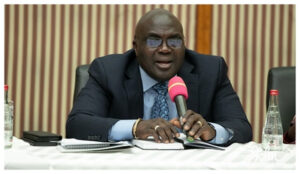
    Alexander Kofi-Mensah Mould, Chief Executive Officer of MiDA


    Mr. Alexander Kofi-Mensah Mould, Chief Executive Officer of the Millennium Development Authority (MiDA), has assured local and international investors that projects under Ghana’s 24-Hour Economy and Accelerated Export Development (24H+) initiative are not only viable but built on strong foundations of transparency and accountability.

    Speaking at the 24H+ Capital Market Operators Roundtable in Accra, Mr. Mould addressed concerns raised by capital market players about government-related investment risks.

    Participants cited challenges such as corruption in procurement processes, political interference in contract execution, and the historical pattern of discontinuing development projects after changes in government.

    Mr. Mould — a respected finance expert and former Executive Director at Standard Chartered Bank — responded with confidence, emphasizing that these 24-hour economy Programs will have projects that are “bankable.” He explained that each project under the 6 Programs will undergo thorough vetting, backed by feasibility studies, clear regulatory frameworks, and well-structured risk mitigation strategies.

    “Bankability means that investor capital is protected with expected yield on investments assured ,” Mr. Mould stated. “We’re not just offering ideas — we’re presenting executable, results-driven projects.”

    Highlighting MiDA’s strong execution history, Mr. Mould reminded the audience of the Authority’s successful delivery of over $1.1 billion worth of multi-sector projects across infrastructure, energy, and agriculture — all funded by the U.S. Millennium Challenge Corporation. “We did it under some of the world’s most rigorous governance standards,” he noted. “Now, we’re ready to do it again — faster, better, and smarter.”

    He emphasized that for Ghana to realize its economic ambitions, capable and transparent institutions must take the lead. “That’s what MiDA brings to the table — a proven track record, executional rigor, and the ability to turn policy into real-world impact,” he said.

    Adding further weight to the discussion, Mr. Augustus Obuadum Tanoh, Presidential Adviser on the 24-Hour Economy and Accelerated Export Development, outlined how the initiative intends to leverage capital markets to fund the country’s ambitious plans.

    He said the roundtable focused on key enablers such as mobilizing both domestic and foreign investments, managing risks associated with extended operational hours, and ensuring long-term sustainability of the policy.

    “The 24-hour economy isn’t just about more work — it’s about smarter economic structuring that fuels job creation, supports infrastructure, and drives export-oriented growth,” Mr. Tanoh explained.

    Highlighting the importance of accountability, Nana Dwemoh Benneh, Chief Executive of the Ghana Infrastructure Investment Fund (GIIF), emphasized that regular progress reports—covering project milestones, financial performance, and alignment with strategic goals—will be shared with stakeholders.

    He added that independent external auditors will review GIIF’s financial activities, alongside impact assessments to measure how investments are driving infrastructure development across the country.

    The event marks a significant step toward aligning Ghana’s financial sector with its bold vision for continuous, inclusive, and resilient economic growth — a vision under H.E. John Mahama’s 24Hour Economy, which policy is championed by the 24H+ Secretariat with its partners, including MiDA and GIFF that are determined to turn into reality.
  • ADB MD Lauds Government’s Feed Ghana Initiative


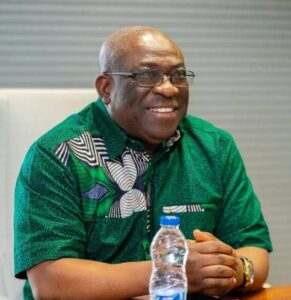
    Managing Director of the Agricultural Development Bank (ADB) PLC, Edward Ato Sarpong, has commended the government for its Feed Ghana initiative, describing it as a transformative intervention aimed at boosting agricultural productivity while creating employment opportunities across the country.

    The Feed Ghana Initiative, under the Ministry of Food and Agriculture (MoFA), is focused on expanding agricultural production and ensuring a stable supply of raw materials to support the growth of agro-industries. It is also designed to generate thousands of jobs for the youth and agripreneurs, and contributing to Ghana’s economic transformation.

    Mr. Ato Sarpong noted that the initiative resonates with ADB’s agenda of supporting national development through sustainable investment in agribusiness.

    “The initiative aligns with ADB’s new tagline; Beyond Banking…, which reflects the Bank’s unwavering commitment to delivering added value that reaches beyond traditional financial services,” he said.

    “Our purpose as a Bank is not only to finance agriculture but to be part of the broader transformation of lives and livelihoods. “Feed Ghana is precisely the type of initiative that will motivate us to innovate, make more deliberate investments, and accompany farmers, processors, and agri-SMEs on their path to growth and expansion,” he continued.

    Edward Ato Sarpong indicated the Bank will effectively collaborate with the government and MoFA to support projects under this initiative which covers areas such as Grains and Legumes Development, Smart Agriculture, Vegetable Development Project, Institutional Farming, the Poultry Sector Initiatives, Livestock Development, Cocoa Industry Project, Cotton Production Expansion, and Oil Palm Industry Development.

    “I strongly believe that the programme will strengthen the agric value chain by ensuring that agricultural produce is efficiently processed into food products and industrial inputs, help reduce post-harvest losses, and enhance food security in Ghana,” the MD stated.

    He further hinted at ADB’s readiness to serve as a key partner in actualizing these initiatives through tailor-made financing solutions, technical and advisory support, and capacity-building interventions.

    “We are already exploring new financing schemes and collaborations that will enable us meet the unique needs of agribusinesses under the Feed Ghana programme,” he said.

    The Agricultural Development Bank is repositioning to efficiently provide universal product offerings and digital banking solutions that best serve the evolving needs of our customers and the general public.

    The Bank recently launched its new corporate tagline called Beyond Banking… which is anchored on strategic partnerships and exceptional relationship management, customer experience, among others.


  • Eni Ghana and Partners upgrade gas processing system to 270 MMScf/day 


    Eni Gas Processing Plant


    Eni Ghana, together with its OCTP partners – Vitol Upstream Ghana Ltd (Vitol) and the Ghana National Petroleum Corporation (GNPC) – has completed a major upgrade of its Non-Associated Gas (NAG) system, boosting processing capacity from 246 to 270 million standard cubic feet per day (MMSCFD).


    Operational since August 2018, the Offshore Cape Three Points (OCTP) project has become a key contributor to Ghana’s domestic gas supply, providing around 70% of the total, mainly for electricity generation. Starting at 210 MMSCFD, OCTP has steadily increased output through phased optimizations and achieving its current milestone of 270 MMSCFD on July 13.


    This recent advancement not only increases gas supply but significantly reduces Ghana’s reliance on oil-fueled power generation to a cleaner energy source, delivering both economic and environmental benefits and reinforcing the country’s commitment to a cleaner, more sustainable energy future.


    Currently, natural gas from OCTP powers around 34% of Ghana’s electricity, providing homes, industries and businesses with a stable and cleaner energy source. The project’s progress highlights the value of strong partnerships and sustained investment in building a resilient, diverse energy sector for sustainable national development.


    Eni has been present in Ghana since 2009 with offshore hydrocarbon exploration and production activities, with an equity production of about 34,000 barrels of oil equivalent per day. The company is the operator of the OCTP project with a 44.4% share in partnership with Vitol (35.6%) and Ghana National Petroleum Corporation (20%). The joint venture’s portfolio of projects also includes initiatives in the areas of training, economic diversification, access to water and sanitation and access to energy.


  • MiDA Partners with IFC to Boost Agribusiness in Ghana


    The Millennium Development Authority (MiDA) is set to collaborate with the International Finance Corporation (IFC) to transform Ghana’s agricultural sector through a major boost in agribusiness investment and development.

    This was disclosed during a working visit by Kyle Kelhofer, IFC Senior Manager for Ghana, Liberia, and Sierra Leone, to the Chief Executive Officer of MiDA, Mr. Alexander Kofi-Mensah Mould.

    The meeting centered on strategic partnerships aimed at unlocking the potential of key agricultural enclaves across the country.

    Briefing the IFC official, Mr. Mould highlighted MiDA’s ongoing efforts in developing three major agricultural economic enclaves located in Kasunya, Oti, and Afram Plains.

    These areas collectively span nearly 50,000 acres of arable land earmarked for large-scale agribusiness development.

    According to Mr. Mould, MiDA is currently constructing critical infrastructure in these enclaves — including irrigation systems, electricity supply, road networks, and housing for anchor farmers. Once development is complete, the lands will be leased to private developers for commercial farming activities.

    However, Mr. Mould emphasized the need for robust feasibility studies to ensure the viability and cost-effectiveness of the planned infrastructure investments.

    “To attract the necessary funding, we need comprehensive feasibility studies done, especially regarding land use and infrastructure costs, including irrigation,” he said.

    He also mentioned that he had been traveling across the country to profile anchor farmers, understand their challenges, and gather insights that could help shape policies aimed at supporting President John Mahama’s administration in making informed decisions on agricultural enclave development.

    Highlighting government priorities, Mr. Mould reiterated the administration’s commitment to reducing the national import bill and achieving food self-sufficiency through targeted investments in agriculture.

    Mr. Mould, who is also a former Executive Director at Standard Chartered Bank responsible for Wholesale Banking, stated that he is collaborating with government policymakers to provide targeted subsidies for farmers.

    These subsidies focus on farm infrastructure development and agronomic inputs and tools—particularly machinery for land clearing and development, as well as irrigation equipment.

    In response, Mr. Kelhofer pledged IFC’s support in undertaking detailed feasibility assessments for the three agricultural enclaves. He also assured MiDA of IFC’s willingness to mobilize potential foreign direct investors for the project, drawing parallels with a similar initiative the IFC successfully implemented in Sierra Leone.

    The partnership marks a significant step toward transforming Ghana’s agricultural landscape and positioning the country as a key player in regional food production and agribusiness.

  • By Amma Gyampo,

    As the Government of Ghana, under the leadership of President John Mahama, prepares for the official launch of its flagship 24-hour economy policy on July 2, a powerful case is being made for domestic capital to take the lead in financing this transformative national agenda. With Presidential Advisor Goosie Tanoh outlining the policy’s ambitious scope, and the Finance Ministry under Dr. Cassiel Ato Forson signaling strong support, the conversation is rapidly shifting from “if” to “how” this vision will be funded. For local private-sector advocates, the answer must be found at home.

    The government’s policy aims to create a round-the-clock economy by encouraging businesses and public institutions to operate in three continuous eight-hour shifts. This initiative is designed to boost productivity, generate employment, and accelerate Ghana’s journey towards becoming an export-led economy. However, such a monumental undertaking requires substantial, patient capital to fund everything from infrastructure upgrades and industrial expansion to operational scaling, ecosystem and commercial talent development.

    While the allure of foreign direct investment is strong, a growing chorus within Ghana’s private capital investment and business community is cautioning against over-reliance on external funding. The concern is that a rush for foreign capital, driven by the government’s desire to secure quick wins, could lead to unfavorable concessions and sideline local investors, ultimately resulting in a 24-hour economy owned and dominated by foreign interests.

    In this context, a strategic partnership between the government and Ghana’s private institutional investors is being positioned as a critical component of the policy’s financing package. At the forefront of this push is the Ghana Venture Capital and Private Equity Association (GVCA), which argues that the nation’s own pension funds hold the key to unlocking sustainable, domestic-led growth.

    The GVCA has been championing its “5% Pension Industry Compact,” an initiative designed to encourage local pension funds to allocate a modest 5% of their assets to alternative investments like private equity and venture capital. This move, advocates argue, would not only diversify pension portfolios and open them up to better returns from growth sector industries but would also inject vital capital directly into the real economy, supporting the very Ghanaian businesses – from the most viable, robust SMEs to larger industrial players – that are essential to the success of the 24-hour economy.

    At the recent Africa Impact Summit, Amma Gyampo, CEO of the Ghana Venture Capital and Private Equity Association (GVCA), emphasized the industry’s readiness to collaborate with the government to ensure Ghanaians are the primary beneficiaries of this new economic policy:

    “The 24-hour economy represents a pivotal moment for Ghanaian industrialization and, in this global era of funding freezes, it’s got to be fueled by Ghanaian institutional investors and equity fund managers,” says Gyampo. “Our industry’s critical role is to unlock and manage the immense potential of domestic private capital. We can no longer rely of expensive debt and international funding in this day and age. The 5% Pension Industry Compact, which the GVCA continues to spearhead, is a pragmatic and powerful mechanism to unlock over GHc 5 billion from our own local institutional investors who sit on GHc 100 billion in assets under management by pension funds alone according to the NPRA (National Pensions Regulatory Authority). We stand ready to partner with the Government to ensure that local investors are owners and financiers- backing the rollout of the 24-hour economy from within. This is about building a resilient, self-sufficient industrial base, and that begins with us investing in ourselves.”

    The logic is compelling – pension funds themselves are under threat from a dwindling contributor base comprising a youthful demographic and largely informal nature of the economy. As such pension funds need to be strategic in how they allocate and invest in the real sector to create a robust base of demand-driven import substitution and export industries, as well as infrastructure investments and salaried employee contributors from which it can survive and thrive. A 5% allocation from Ghana’s pension funds could unleash an estimated US$500 million (over GHc 5 billion) in domestic investment capital. This initial injection would serve as a powerful catalyst, de-risking the landscape and attracting catalytic layers of co-investment from international development finance institutions and foundations already dedicated to transformative private sector growth through venture philanthropy and blended finance solutions to development finance and impact investments.

    For Ghana’s private sector, and given the global funding freeze, the time for passivity is over. Proactive engagement and strong advocacy are needed to ensure that domestic capital is the foundation upon which Ghana’s 24-hour economy is built. As the nation stands on the cusp of this bold new chapter, the focus must be on harnessing local resources to create a truly Ghanaian success story.


  • Govt inaugurates new GNPC Board to drive energy sector growth

    The Minister for Energy and Green Transition, John Abdulai Jinapor, has inaugurated the newly constituted Board of Directors of the Ghana National Petroleum Corporation (GNPC), urging them to revitalize the corporation and steer it to a more sustainable and productive future.

    Speaking at the ceremony, Jinapor underscored the pivotal role of GNPC in Ghana’s petroleum sector, describing it as a national asset critical to the country’s economic growth and energy security.

    “GNPC is not just another state-owned institution. It is the flagship entity in Ghana’s upstream oil and gas industry. Through prudent investments and partnerships, it contributes directly to national development and ensures the country’s energy security,” the Minister stated.

    He emphasized the need for visionary leadership and a proactive board capable of navigating the complex dynamics of the petroleum landscape. He challenged the board to uphold the principles of transparency, accountability, and strategic oversight in guiding GNPC through both its current challenges and emerging opportunities.

    “I urge you to provide strong, strategic leadership, support the government’s efforts to expand GNPC’s operational capacity, particularly through its subsidiary, Explorco,” he added. The Minister also announced the government’s intention to review the GNPC Act, which was passed in 1983, to reflect current industry realities and global best practices.

    “As a government, we want to comprehensively review and enhance the GNPC Act to meet modern standards. Oil production has declined in recent years, and our current reserves are a concern to us. However, we’ve received encouraging signals from supermajors, and this is a critical moment to reposition GNPC for the future.”

    Jinapor expressed confidence in the board’s ability to deliver transformative leadership and secure a brighter energy future for Ghana.

    Chairman of the new board, Prof. Joseph Oteng-Adjei, expressed gratitude to President John Dramani Mahama for the appointment and pledged to lead a results-driven board.

    “We thank His Excellency the President for the trust reposed in us to reset GNPC. This is a team of diverse professionals, and we are committed to addressing the challenges within the sector. We will seek guidance from the Ministry whenever necessary, and work together to move GNPC forward,” he said.

    Members of the GNPC Board are as follows:

    Prof. Joseph Oteng-Adjei – Chairman

    Mr. Kwame Ntow Amoah – Acting CEO

    Hon. Hajia Zuwera Mohammed Ibrahim – MP

    Hon. Seidu Alhassan Alajor – MP

    Mr. Mawutor Agbavitor

    Mr. Kwame Jantuah, Esq.

    Mr. Andani Yakubu Abdulai (Yoo-Naa)


  • Analysts urge GRA to review 3% flat tax rate for small businesses

    Some tax analysts are calling on the, Ghana Revenue Authority (GRA) to review the 3% flat rate applied to businesses with annual sales of GH¢20,000 and above, arguing that the threshold is too low.

    The call comes amid the rollout of several new tax policies, including the Modified Taxation Scheme, which took effect on July 1, 2025. The scheme targets informal sector workers across the country.

    Speaking to Citi Business News, tax analyst Francis Timore Boi acknowledged the GRA’s efforts in implementing the scheme but emphasized the need to revisit the flat rate threshold.

    “The threshold of GH¢20,000 is quite low. It should be increased slightly to exempt only very small businesses. Imagine 3% of GH¢20,000—that’s just GH¢600 for the entire year. That’s very little. A higher threshold would make more sense,” he said.

    Despite his concerns, he praised the broader initiative, noting its potential to expand the tax base and reduce the overall tax burden in the long term.

    “If we’re able to broaden the tax base, you’ll see that the current tax rates can actually come down. The reason government keeps introducing higher rates and consumption taxes is because too few people are in the tax net.”

    Mr. Timore Boi also expressed concern over the scheme’s mid-year rollout, highlighting the limited time available for businesses to adjust and comply.

    “We have just six months left in the year, and it seems there hasn’t been enough sensitization. Initially, we’re likely to see resistance from small businesses—especially since many of them are being taxed for the first time.”

    He stressed the need for more intensive public education campaigns and suggested that future rollouts begin at the start of the calendar year.

    “More sensitization is key. Ideally, implementation should begin in January to give government a full year to collect revenue and give businesses time to adapt. Still, it’s better late than never. If executed well, this scheme could significantly broaden the tax base and, over time, reduce rates on other tax categories.”

    The Modified Taxation Scheme applies to different categories of businesses based on their annual income:

    Small businesses earning less than GH¢20,000 a year

    → Will pay a fixed amount every quarter (up to GH¢45).

    Businesses earning between GH¢20,000 and GH¢500,000 a year

    → Will pay a flat tax rate of 3% on their total annual sales.

    Businesses earning above GH¢500,000 a year

    → Will be taxed using graduated rates and allowed to make deductions based on their expenses.

    Tax payments can be made through mobile money, USSD (*222#), or at the bank.

    Business owners can register for the scheme at any GRA office or through the GRA mobile app.


  • Food Suppliers Association praises President Mahama’s Initiative

    The Food Suppliers Association of Ghana has extended its heartfelt gratitude to President John Dramani Mahama for his commendable initiative to resupply food to Senior High Schools.

    This move, according to the Food Suppliers Association, is a significant step towards alleviating the challenges faced by headmasters and food suppliers in the education sector.

    According to Alhaji Iddrisu Zakari, spokesperson for the Association in the middle belt of Ghana and head of the post-harvest unit at the Association of Ghana Industries, the initiative will help address the difficulties encountered by food suppliers and ensure a stable food supply chain.

    The Food Suppliers Association had faced significant challenges after the government ordered headmasters of Senior High Schools to procure food directly, resulting in job losses and disruptions to the food supply chain.

    “However, with President Mahama’s initiative, we are optimistic about receiving contracts for the food supply, which will not only revive our businesses but also ensure that students receive quality food,” Alhaji Zakari said in an exclusive interview.

    Alhaji Zakari highlighted key challenges that the initiative aims to address, including delayed payments, which hinder food suppliers’ ability to maintain a continuous supply of food to schools.

    He also lamented that partisan politics had previously influenced the procurement process, leading to unfair treatment of some suppliers.

    Furthermore, the Association had observed that some schools were procuring non-quality food, which can have adverse effects on students’ health and well-being.

    “When the contract is awarded, we will ensure that only quality food is supplied to schools,” Alhaji Zakari emphasised.

    “I believe that President Mahama’s initiative will have a positive impact in ensuring that only quality food is supplied to schools,” he added.

    He stated that the initiative will also address the issue of delayed payments, enabling suppliers to provide better services.

    The Association is optimistic that receiving contracts for food supply will reflect the potential benefits of the initiative, including improved food quality and increased efficiency in the supply chain


  • Working group to draft new National Anti-Corruption Strategy inaugurated

    The Government of Ghana has inaugurated a working group to develop a new National Anti-Corruption Strategy, with a strong charge to deliver bold reforms aimed at reversing the country’s declining performance in the fight against corruption.

    Speaking at the inauguration ceremony in Accra, Chief of Staff Julius Debrah congratulated the members of the group on their appointment and reminded them of the critical responsibility entrusted to them.

    He noted that this next strategy comes at a pivotal moment in Ghana’s anti-corruption journey, and under the renewed leadership of President John Dramani Mahama.

    Mr. Debrah recalled that Ghana’s first National Anti-Corruption Action Plan (NACAP), passed in 2014 during President Mahama’s previous administration, helped raise awareness about corruption, encouraged whistleblowing, and drove the digitisation of key public services, including ports and financial systems.

    The period also saw an increase in operational activities from agencies like CHRAJ, the Office of the Special Prosecutor, and EOCO in investigations and asset recovery.

    However, he admitted that despite these strides, Ghana’s Corruption Perception Index (CPI) score had dropped from a high of 48% in 2014 to a record low of 42% in 2024, the final year of the NACAP’s implementation.

    “One could argue that NACAP has not performed too well when it comes to the actual reduction of corruption in our country. The evidence is out there for all Ghanaians to see,” he said.

    “We have to reverse this trend, and I charge this group to ensure that the strategy does precisely that.”

    The Chief of Staff emphasised that ethics and moral integrity must be central pillars in the new strategy.

    He urged the team to depart from past assumptions and deliver a framework that delivers measurable and sustainable outcomes, describing the effort as a “shock therapy” for Ghana’s anti-corruption drive.

    The strategy, which is expected to be delivered in draft form by August 31, 2025, will be coordinated by the Office of the Presidential Advisor on the National Anti-Corruption Programme (PANACP), in collaboration with the Chief of Staff’s office and principal partners such as the Attorney- General’s office, the OSP, and CHRAJ.

    Mr. Debrah assured the team of the government’s support, promising resource allocation despite the country’s ongoing fiscal challenges.

    However, he called for prudence and accountability from the team in managing resources.

    He also expressed gratitude to CHRAJ for its decade-long leadership in coordinating Ghana’s anti-corruption agenda, pledging continued collaboration to promote human rights and administrative justice.

    “We have confidence in the technical expertise of the team that has been assembled,” he said.

    “We expect your fullest commitment to the cause,” he concluded

    The formation of the working group marks the beginning of the second phase of Ghana’s national fight against corruption, with the government pledging a more robust, technology-driven, and ethical approach to tackling the canker.


  • Ghana assumes new gold trade licensing regime to curb illegal gold trade

    The Ghana Gold Board has officially commenced the full implementation of the new gold trading licensing regime, introducing sweeping reforms aimed at eliminating illegal gold trading and smuggling across the country.

    The enforcement of the Ghana Gold Board Act, 2025 (Act 1140) marks a major milestone in the government’s broader effort to restructure and formalise the gold trading industry to maximise revenue for the state.

    At a press conference in Accra, the Chief Executive Officer of the Ghana Gold Board, Sammy Gyamfi, emphasised that only individuals and entities duly licensed under the new framework are permitted to trade gold in Ghana.

    “The new gold board licensing regime has taken full effect,” he said.

    “Only Ghanaians who have gone through the approved process and obtained a valid license from the Ghana Gold Board can legally engage in gold trading.”

    Mr. Gyamfi clarified that the new law overrides all previous licenses issued by the defunct Precious Minerals Marketing Company (PMMC) and the Ministry of Lands and Natural Resources, rendering them null and void.

    “Operating under old licenses is no longer permitted. Those days are over,” he stressed.

    Quoting Section 63 of Act 1140, Mr. Gyamfi warned that unlicensed trading constitutes a criminal offence punishable by fines and jail terms.

    “Anyone found trading gold without a Gold Board license commits an offence and is liable, upon summary conviction, to a fine of not less than 50,000 and not more than 200,000 penalty units, or imprisonment for a term between five and ten years—or both,” he said.

    To reinforce compliance and crack down on illegal operations, President John Dramani Mahama will, on July 8, 2025, inaugurate the Gold Board Task Force at the National Security Secretariat (Blue Gate), Accra.

    The task force will possess police-level powers and operate in coordination with a nationwide intelligence network to detect and halt illegal gold trade, smuggling, and price manipulation.

    “This specialised unit is a critical part of efforts to protect Ghana’s mineral wealth and ensure fair pricing and accountability in the sector,” Mr. Gyamfi said.

    The CEO disclosed that by the application deadline of June 21, 2025, the Gold Board had received:

    Over 300 applications for Tier 1 Buyer Licenses

    About 200 applications for Tier 2 Buyer Licenses

    30 applications for Self-Financing Aggregator Licenses

    15 applications for Aggregator Licenses

    To date, more than 240 licenses have been approved after meeting eligibility requirements. Mr. Gyamfi confirmed that the application process remains open on a rolling basis, but unlicensed individuals and firms are barred from operating in the interim.

    In line with promoting transparency and efficiency, the licensing process has been fully digitised.

    Applicants are notified via email and online accounts, and payments are processed through the Ghana.gov portal.

    Mr. Gyamfi concluded by urging all stakeholders to comply with the new licensing regime and support efforts to build a responsible, transparent, and economically beneficial gold trading system in Ghana.