Category: News

  • ECOWAS President Dr Omar Alieu Touray addresses world leaders at the first Biennial summit for a sustainable, inclusive and resilient global  economy

    ECOWAS President Dr Omar Alieu Touray addresses world leaders at the first Biennial summit for a sustainable, inclusive and resilient global  economy

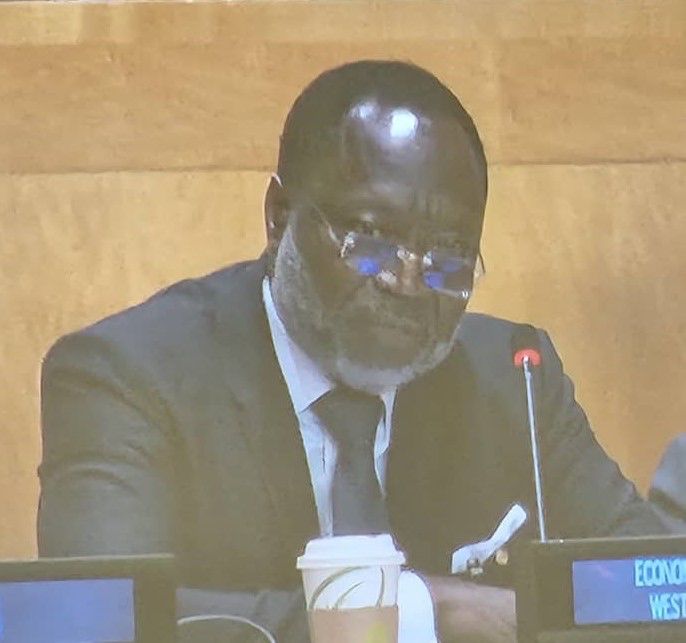
    The President of the ECOWAS Commission, Dr Omar Alieu Touray, took part in the first Biennial Summit for a Sustainable, Inclusive and Resilient Global Economy, held on the 24th of September 2025 on the sidelines of the 80th UN General Assembly.

    In his speech, he stressed that peace and stability are essential for development, calling for predictable funding for African peace support operations.

    He also highlighted the key role of regional economic communities in integration and growth, as well as the need to strengthen institutions, mobilise internal resources, involve the private sector and use innovative financing to ensure sustainable and inclusive development.

    ECOWAS thus reaffirmed its commitment to contributing to strong global partnerships and a people-centred international agenda.

  • Official installation of the ECOWAS Club at the  University of Parakou in Benin to strengthen youth engagement in regional integration

    Official installation of the ECOWAS Club at the University of Parakou in Benin to strengthen youth engagement in regional integration

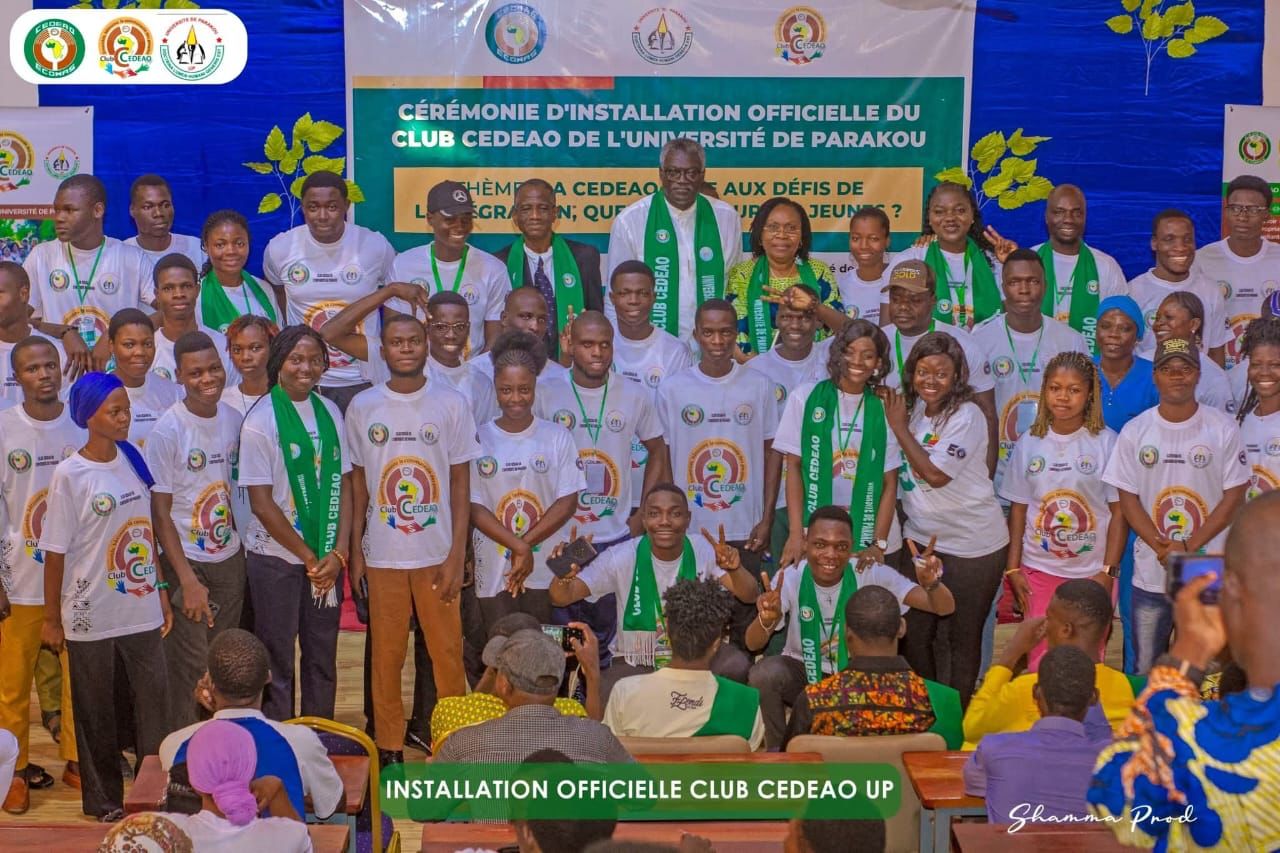
    On 25 September 2025, in Parakou, Benin, Ambassador Amadou DIONGUE, ECOWAS Resident Representative, presided over the installation ceremony of the ECOWAS Club at the University of Parakou under the theme “ECOWAS in the Face of Integration Challenges: What Role for Youth?”.

    The event brought together local authorities, academics, and several student and youth associations, reflecting a collective commitment to regional integration.

    In his remarks, the Ambassador stressed that youth are at the heart of West Africa’s future and must play a key role in the integration process.

    The Club, led by Ezékias BIAO, is positioned as a platform for reflection and action to promote the ideals of ECOWAS: solidarity, peace, integration, and sustainable development.

    This installation marks the official launch of its activities and the effort to bring ECOWAS institutions closer to young citizens.

  • YEA expands job modules to tackle youth unemployment nationwide – YEA PRO Jawando

    YEA expands job modules to tackle youth unemployment nationwide – YEA PRO Jawando

    The Youth Employment Agency (YEA) is intensifying efforts to tackle Ghana’s growing youth unemployment crisis, with new programmes and partnerships aimed at creating sustainable job opportunities across sectors. This was disclosed by the Public Relations Officer of YEA, Abdul Wahab Jawondo.

    According to the Ghana Statistical Service, the country’s overall unemployment rate stands at 13.1% as of 2024, with youth unemployment covering ages 15 to 35 hitting a staggering 22.5%.

    Each year, approximately 100,000 graduates emerge from tertiary institutions, yet only about 10% are absorbed into the public sector.

    Mr. Jawondo noted that experts cite several contributing factors to the unemployment situation, including population growth, economic constraints, and a mismatch between skills and market demand. A key concern, he explained, is the orientation of young people, many of whom “have too much desire for public sector jobs,” coupled with “inadequate capacity for creativity” and “skills mismatch.”

    To address these challenges, he stressed the need for a “re-orientation of youth” and a renewed focus on “improving skills and education.”

    The Youth Employment Agency, operating under the Ministry of Youth Development and Empowerment, is mandated “to create and coordinate employment opportunities for young people.” Established by the Youth Employment Agency Act, 2015 (Act 887), YEA replaced the former Ghana Youth Employment and Entrepreneurial Development Agency (GYEEDA).

    According to Mr. Jawondo, YEA works closely with private companies, NGOs, and development partners to deliver training, job placement, and entrepreneurship support. “YEA partners with private companies, NGOs and development agencies to provide training, job placement and entrepreneurship opportunities,” he confirmed.

    Eligible beneficiaries, he explained, include “Ghanaian youth between the ages of 15 and 35, including graduates, school leavers, women, persons with disabilities (PWDs), and vulnerable groups.”

    Sectors covered

    YEA’s interventions span multiple sectors such as education, health, security, environment, and corporate/private sector support. Programmes include:

    Education: Teaching assistants, school support

    Health: Community health workers, community first responders

    Security: Community protection assistants, fire assistants, prison assistants

    Environment: Sanitation, coastal cleanup, eco-friendly jobs

    Corporate and Private Sector Support: Job centre, opportunities for working abroad, artisan directory, corporate internships

    Achievements so far

    The Agency, through Mr. Jawondo, says it has already created tens of thousands of opportunities:

    12,000 youth have been engaged as Community Policing Assistants with the Ghana Police Service

    5,000 as Fire Assistants with the Ghana National Fire Service

    5,000 ongoing placements as Prison Office Assistants with the Ghana Prison Service

    6,000 ongoing as Community First Respondents with the Ghana Ambulance Service

    3,000 Arabic instructors currently engaged

    5,000 youth engaged through the Job Centre

    5,000 under the Work Abroad programme

    2,000 youth being registered for sustainable charcoal production under the YEA Waste to Wealth Project, in partnership with Zacoal Company Limited. The initiative promotes the use of agricultural waste such as coconut husk to produce clean, eco-friendly charcoal, reducing pollution from traditional methods.

    500 youth engaged as National Insurance Enforcers with the National Insurance Commission

    Mr. Jawondo also revealed that YEA will soon roll out additional modules including Community Health Workers, School Support Programme, and Community Education Teaching Assistants.

    Interested youth, he added, can apply through the official YEA website or visit any regional or district YEA office for assistance.
  • Cocoa Price Top-up: farmers to enjoy ¢400 more per a bag for 2025/2026 season 


    Ghanaian cocoa farmers are to enjoy GH¢400 increase in price per a bag of cocoa beans starting Friday, October 3, 2025, for the 2025/2026 season.


    This comes, as government at its Cocoa Price Review Committee meeting decided to increase the producer price of cocoa to GH¢3,625 per bag and GH¢58,000 per tonne, equivalent to a 12.27% rise over the price announced in August.


    A statement signed by the Finance Minister, Dr Cassiel Ato Forson, indicated that, margins, fees, and rates to all other stakeholders, including COCOBOD, remain unchanged.


    “COCOBOD will continue to implement interventions to support cocoa production and improve the welfare of cocoa farmers.


    “In particular, COCOBOD will intensify the supply of free cocoa fertilizers (liquid and granular), free insecticides, free spraying machines, free fungicides, and free flower inducers”, he intimated.


    “In addition, COCOBOD remains on track to implement the new Tertiary Education Scholarship Scheme for children of cocoa farmers in the 2026/27 academic year.”


  • ECOWAS engages youth and leaders in Senegal to shape national action plan on peace and security

    ECOWAS engages youth and leaders in Senegal to shape national action plan on peace and security

    The Economic Community of West African States (ECOWAS) Commission, in collaboration with its partners, has concluded a series of regional consultations to advance the Youth, Peace and Security (YPS) agenda. The consultations were held from 22nd to 27th September 2025 in Matam, Tambacounda, and Kédougou, Senegal.

    The sessions brought together government officials, youth representatives, civil society organisations, and community leaders to address key challenges including unemployment, irregular migration, cross-border insecurity, and limited youth participation in governance.

    According to organisers, the consultation process will “inform the development of Senegal’s National Youth Action Plan (NAP), supported by a National Task Force and Steering Committee, with technical backing from WANEP and funding through the ECOWAS Peace Fund.”

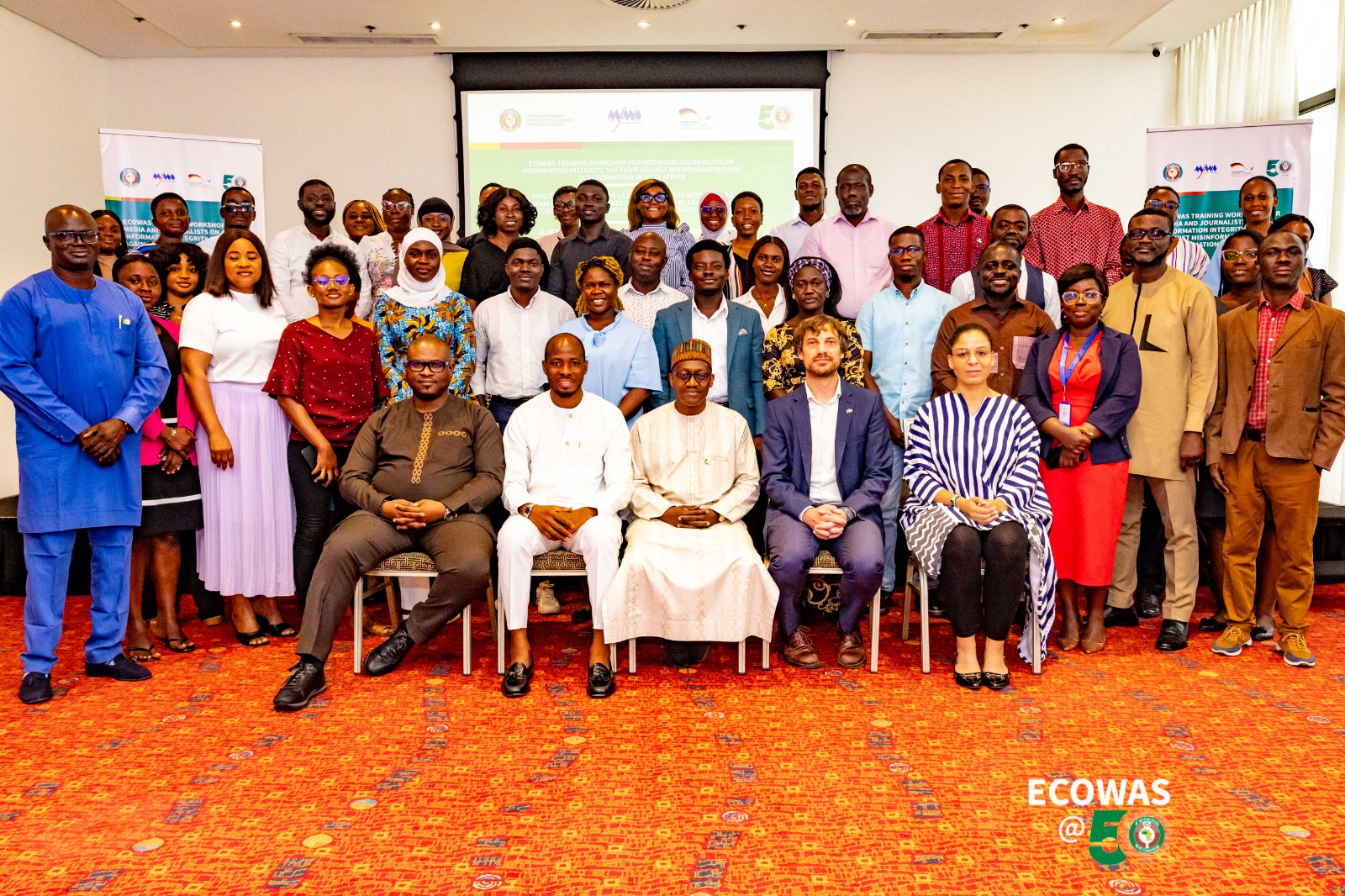
  • Strengthening Media Integrity: MFWA, ECOWAS train 45 journalists in Ghana on countering misinformation and digital safety

    Strengthening Media Integrity: MFWA, ECOWAS train 45 journalists in Ghana on countering misinformation and digital safety

    A two-day capacity-building programme aimed at strengthening information integrity in Ghana has ended, with 45 broadcast journalists trained in countering mis/disinformation, responsible reporting, and digital safety.

    The workshop was organised by the Media Foundation for West Africa (MFWA) in partnership with ECOWAS and GIZ, with support from the Government of Germany under the MFWA–ECOWAS 2023 Memorandum of Understanding. It forms part of a regional initiative already held in The Gambia and Sierra Leone, with upcoming editions scheduled for Benin and Togo.

    Opening the programme, ECOWAS Resident Representative in Ghana, H.E. Ambassador Mohammed Lawan Gana, emphasised the media’s critical role in promoting peace, democracy, and regional cohesion in line with ECOWAS Vision 2050. He noted that journalists are “not only informers of the public but also actors in shaping governance and security outcomes.”

    The training focused on equipping journalists to address growing threats of misinformation, polarisation, and anti-democratic narratives. Sessions included strategies for investigating human rights violations, countering propaganda, and managing conflict-sensitive reporting. Facilitators also engaged participants in discussions on peace journalism, collaboration with regional institutions, and the responsibility of the press in fostering informed and resilient societies.

    A major component of the programme was mastering fact-checking and open-source intelligence (OSINT) tools, along with enhancing digital security to safeguard both information and journalistic work. Participants took part in practical exercises and simulations to apply these tools to real-world challenges.

    Media and information literacy (MIL) was also highlighted, with calls for journalists to serve as educators who help citizens navigate misinformation and protect democratic values.

    The programme concluded with a call for stronger cooperation between the media, ECOWAS, member states, and civil society to combat disinformation and rebuild public trust. Certificates were awarded to participants at the closing ceremony.

    Organisers said the initiative is part of a broader effort to consolidate responsible journalism and strengthen governance across West Africa by empowering media professionals with the knowledge and tools to address evolving information threats.

  • ECOWAS Vice President reaffirms commitment to women’s leadership at AWLN forum in New York

    ECOWAS Vice President reaffirms commitment to women’s leadership at AWLN forum in New York

    The Economic Community of West African States (ECOWAS) has reaffirmed its commitment to inclusive governance at the High-Level Africa Women Leaders Network (AWLN) Forum held on September 24, 2025, in New York.

    The event was co-hosted by the African Union (AU), the United Nations Development Programme (UNDP), and AWLN.

    The forum, which took place on the margins of the 80th session of the UN General Assembly, brought together high-level dignitaries, senior UN officials led by Deputy Secretary General H.E. Madam Amina Mohammed, development partners, as well as women and youth leaders. The gathering focused on deepening partnerships and shaping collective action on “Advancing Women Political Participation in Africa.”

    Representing ECOWAS, Her Excellency Damtien Larbli Tchintchibidja, Vice President of the ECOWAS Commission, delivered a goodwill message in which she “underscored the centrality of inclusive governance to the regional integration and development agenda of the ECOWAS region.”

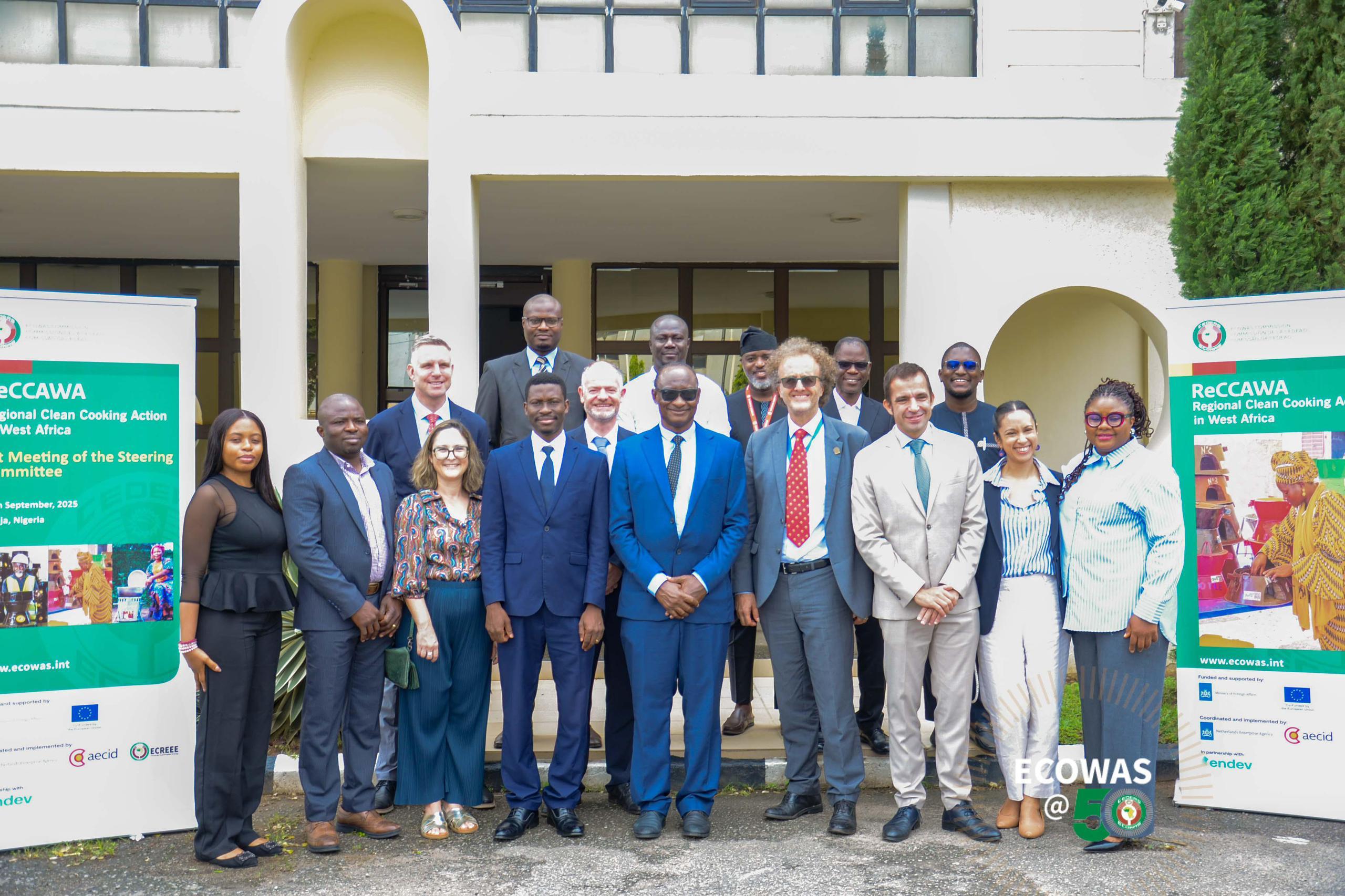
  • ECOWAS holds Steering Committee for Regional Clean Cooking Action in West Africa

    ECOWAS holds Steering Committee for Regional Clean Cooking Action in West Africa

    The Economic Community of West African States (ECOWAS) Commission, with support from the European Union (EU) and the Kingdom of the Netherlands, has convened a meeting of the Steering Committee for the Regional Clean Cooking Action in West Africa (ReCCAWA). The meeting took place on September 29, 2025, in Abuja, Nigeria.

    The ReCCAWA Programme, valued at €15.5 million, seeks to expand access to clean, efficient, and affordable cooking energy solutions across the ECOWAS region.

    Co-funded by the European Union and the Netherlands Ministry of Foreign Affairs, the programme is being implemented by the ECOWAS Centre for Renewable Energy and Energy Efficiency (ECREEE), the Netherlands Enterprise Agency (RVO), and the Spanish Cooperation (AECID), in partnership with Energising Development (EnDev).

    The initiative is set to run for four years.

  • The Accra Reset: anchored on sovereignty, workability, and shared value attracts global endorsements


    President John Mahama speaking at the launch of Accra Reset


    By Adnan Adams Mohammed


    Accra Reset, a bold framework aimed at re-engineering global development institutions, financing, and partnerships as the Sustainable Development Goals (SDGs) era nears its close, launched.


    During a side-event at 80th Session of the United Nations General Assembly (UNGA) in New York,co-convened by President John Dramani Mahama and former Nigerian President Olusegun Obasanjo, set the Accra Reset in motion.


    The event was heavily graced and witnessed by other heads of state, multilateral leaders, and private sector partners.


    President Mahama, the African Union Champion for African Financial Institutions, in his opening remarks called the attention of global intelligence leaders to the reality that the current global development architecture is “fraying.” Citing that, COVID-19 wiped out two decades of progress in less than two years, extreme climate shocks have left nearly 735 million people at risk of hunger, and many developing nations now spend more on servicing debt than on health and education. With fewer than half of the 169 SDG targets on track, he stressed that “development-as-usual must end.”

    “The world is only five years from 2030,” Mahama said. “The question is not simply what new targets should replace the SDGs, but how we design institutions and financing systems that actually work. ‘Workability’ is the name of the game now—innovative financing instruments, new business models, and smarter coalitions that multiply resources rather than ration them.”


    The Accra Reset is anchored on sovereignty, workability, and shared value.


    Health will serve as the entry point and proof of concept, shifting from aid dependency to health sovereignty, and building on commitments made at the Africa Health Sovereignty Summit in Accra in August 2025.


    A Club of Accra coalition is expected to initiate pilot financing innovations and “geostrategic dealrooms” for investments in health, climate resilience, food security, and job creation.


    The launch also unveiled the Global Presidential Council, a coalition of Heads of State and Government from Africa, Asia, Latin America, and beyond, tasked with providing political leadership and accountability. In parallel, a Global College of Advisors, comprising leading experts in health, finance, innovation, and business, will be established to design and oversee pilots and financing mechanisms.


    The event drew strong endorsements from political and institutional leaders:

    Olusegun Obasanjo, Co-Patron of AfroChampions, urged solidarity “fit for the new era” and a decisive shift away from aid dependency.


    Gordon Brown described the Reset as “a plan for the future” and endorsed the vision for building health sovereignty.


    President William Ruto (in remarks read on his behalf) emphasized financing national ambitions and holding the Global Presidential Council accountable for universal health coverage.


    Prime Minister Mia Mottley pledged alignment on skills and industrial policy to make pharmaceutical manufacturing viable.


    Aigboje Aig-Imoukhuede, Chairman of Access Bank, committed significant private sector leadership and financing.


    Dr Tedros Adhanom Ghebreyesus (WHO) and Dr Ngozi Okonjo-Iweala (WTO) expressed institutional support for “rewiring” global norms.


    Concluding the launch, President Mahama recalled the Monterrey Consensus of 2001, which paved the way for GAVI and the Global Fund, noting that the world now requires “a new vision of multilateralism—one that moves from wish lists to engines of sustainable value creation.”


  • Akuapem Rural Bank disburses almost half of credit to women …ADB MD commends the financial inclusion drive 

    Dr Ato Sarpong, ADB MD


    The Managing Director of the Agricultural Development Bank (ADB) PLC, Mr. Edward Ato Sarpong, has commended Akuapem Rural Bank PLC for its strong focus on empowering women through credit financing.

    This, he described as a key driver of financial inclusion and sustainable banking.

    In 2024 alone, the Rural Bank advanced GH¢60.33 million, representing 49.93 percent of total loan disbursements, to 5,267 women. This marked a 23 percent increase over the previous year, with an impressively low non-performing loan ratio of 0.13 percent. While speaking as the Guest of Honour at the Bank’s 43rd Annual General Meeting (AGM), Mr. Sarpong praised the institution’s Credit with Education (CwE) programme, which has consistently directed about 50 percent of annual loan disbursements to women.

    “This achievement is not only commendable but also aligns with the Sustainable Development Goal of poverty alleviation, given its direct impact on households and communities”, he mentioned.

    Mr. Sarpong encouraged the Bank to deepen its investment in the CwE programme while also strengthening risk management systems and incorporating technology to expand outreach and enhance financial inclusion.

    He further applauded the overall performance of the Rural Bank, attributing it to strong governance, quality leadership, and the support of shareholders. “The quality of your Board is evident in the results achieved, and I urge shareholders to continue backing them to ensure further growth,” he noted.

    The bank’s post-tax profit increased by 186% from GHS1.35million in 2023 to GHS3.85million in 2024 and total assets growing from GHS156million in 2023 to GHS208million in 2024.

    The Board Chairman of the bank, Dr. Ernest Obuobisa-Darko noted deposit growth of 30.77% (from 137.1million in 2023 to 179.3million in 2024), loan growth of 29.01% and investment growth of 33.15% which all contributed immensely to the overall growth in profitability and assets.

    He expressed gratitude to Management and staff for their hard work in achieving growth in all of its key financial indicators in 2024.

    The 43rd AGM brought together shareholders, board members, management, and invited guests.