Category: News

  • Hon. Japhet Gbede Appeals to Government and Telecom Providers to End Wute Zone’s Digital Isolation

    Hon. Japhet Gbede Appeals to Government and Telecom Providers to End Wute Zone’s Digital Isolation

    The Assembly Member for the Wuxor-Have-Sremanu Electoral Area in the Akatsi South Municipality, Hon. Japhet Festus Gbede, has made a passionate appeal to the government, the Ministry of Communications and Digitalisation, and key telecommunication providers to urgently address the long-standing challenge of poor mobile network connectivity in Wute Zone.

    In a statement posted on his official Facebook page, Hon. Gbede revealed that he had received “countless messages and social media appeals” from residents across Wute Zone; a community of more than 10,000 people lamenting how the persistent lack of reliable network access continues to affect their daily lives and hinder development.


    According to him, the absence of connectivity has far-reaching consequences on education, healthcare, trade, and social life in the area. Students are unable to participate in online learning, businesses struggle to access digital platforms, healthcare workers face challenges coordinating emergency services, and families remain cut off from timely communication.


    “In a digital age where communication drives progress, the people of Wute Zone deserve to be part of Ghana’s technological advancement,” he stated, describing the situation as a “developmental injustice” that must be urgently addressed.


    Hon. Gbede therefore appealed to His Excellency President John Dramani Mahama, the Minister for Communications and Digitalisation, Hon. Sam Nartey George, as well as MTN Ghana and other service providers, including Tanko Rashid-Computer, to make the extension of network infrastructure to Wute Zone a national priority.


    “This connectivity cannot be considered a luxury, it is a necessity for learning, trade, emergency response, and inclusive development,” he emphasised.


    Expressing optimism, the Assembly Member noted that with President Mahama’s renewed vision for inclusive digital transformation, the longstanding connectivity challenges in Wute Zone could soon be resolved.


    “I am confident that under President Mahama’s leadership, this long-standing challenge will soon become a success story,” he concluded.

  • ECOWAS and the WORLD BANK  strengthen their cooperation and working relationship

    ECOWAS and the WORLD BANK  strengthen their cooperation and working relationship

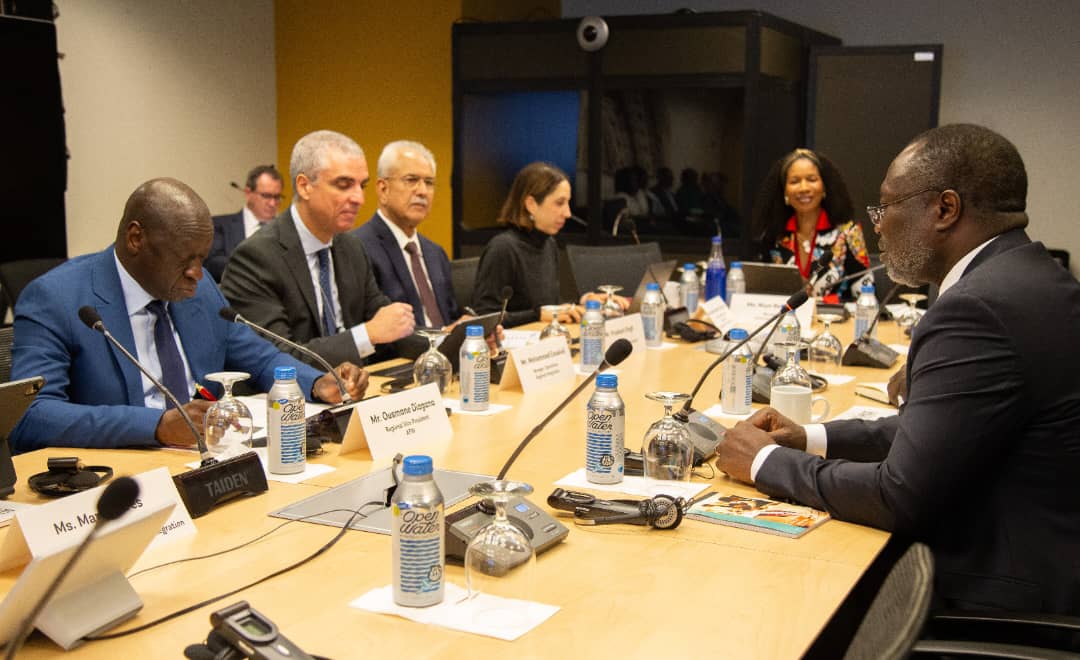
    As part of his engagements on the margins of the World Bank/IMF Annual Meetings in Washington DC, the President of the ECOWAS Commission, H.E. Dr. Omar Alieu TOURAY was on Tuesday 14th October 2025 received by Mr Ousmane Diagana, World Bank Regional Vice President for Western and Central Africa.


    The two leaders reviewed the World Bank-ECOWAS cooperation programme and also exchanged on the recent developments in the region, including regional integration, peace and security, and governance.


    On the cooperation programme, the two leaders reviewed the progress made in the implementation of the various programmes and projects, as well as the challenges encountered and measures to address them in order to enhance the portfolio.

    They concurred on the need to convene a deep-dive review of the portfolio and pipeline of projects during the first quarter of 2026.


  • Farmers Group Condemn False Allegations Against NPA CEO …Disown “Pseudo Farmer”  

    Lawyer Edudzi Tamakloe, NPA CEO, and Ibn Lukman Yameen, Executive Farmer Group CEO.


    The Farmer Cooperative Group of Ghana has strongly disassociated itself from a social media user known as “Farmer Wadwen” following what it describes as false and malicious allegations made against the Chief Executive Officer of the National Petroleum Authority (NPA), Mr. Edudzi K. Tamakloe.


    The individual, identified as Raymond Asare Addo, alleged in a Facebook post that the NPA CEO was employing his “girlfriends” at the Authority. The post, which quickly attracted public attention, read: “Your girlfriends you’re employing at NPA make them polling agents next time.”


    In response, Mr. Tamakloe issued a statement on his verified Facebook page firmly denying the claims and expressing disappointment in the actions of the individual. The CEO explained that he had never had any prior interaction with the man except for a message he received from him earlier that morning.


    “The occupational hazards associated with the work we do are grave and dangerous,” Mr. Tamakloe wrote. “My attention was drawn to these and many lies spewed out by Raymond Asare Addo, known by the pseudo account name ‘Farmer Wadwen’ on Facebook. I have never interacted with the said person. The only time he reached out to me is this morning. His reason for the lies against me is that he lost his job in 2024 and therefore is in need of a job.”


    Mr. Tamakloe went on to describe the behavior as an act of treachery and urged Ghanaians to be cautious of individuals who resort to lies and defamation for personal gain.


    “If you are in need of a job, you just decide to peddle falsehoods about me? The level of treachery is beyond my grasp,” he said. “May the good Lord protect us from seen and unseen threats. I pray he gets the job.”


    Following the CEO’s post, farmer groups across the country released a joint statement condemning the false accusations and reaffirming their support for Mr. Tamakloe. “We stand firmly behind Lawyer Edudzi K. Tamakloe,” the statement said. “The individual in question does not speak for farmers in Ghana. He is a pseudo farmer and an ingrate who acted on his own. We completely distance ourselves from his baseless allegations.” Speaking on behalf of the national farmer cooperative group, Farmer Yameen, the CEO of The Executive Farmer, also vehemently condemned the actions of the individual, describing them as disgraceful and a betrayal of the values of genuine farmers.


    “We, the real farmers, know and appreciate what Lawyer Edudzi K. Tamakloe has done quietly for many people,” Farmer Yameen said. “We urge him to remain unfazed and to continue his good work for the benefit of the nation.”


    The Farmer Cooperative Group praised the NPA CEO for his humility, fairness, and integrity in leadership, adding that the false allegations have only served to highlight his long record of service and compassion.


    “This unfortunate episode has become a springboard for your good works and silent service to be recognized,” the statement added. “Many of us continue to draw inspiration from your leadership and generosity.” Mr. Tamakloe’s calm and dignified handling of the matter has since earned him widespread commendation from the public, with many describing him as a model of integrity and restraint in public service.

  • Improving Ghana’s economic success: economists recommend diversification of production base amidst effective policy coordination

    Improving Ghana’s economic success: economists recommend diversification of production base amidst effective policy coordination

    Ghana’s economy in the first nine months of this year has chalked remarkable success within both the fiscal and monetary space.

    These successes realign the economy to pre-COVID key performance indicators, with the latest inflation figure pegged at 9.4 percent for September year-on-year, and for the first half-year of 2025 year on year Gross Domestic Product stood at 6.3% according to Ghana Statistical Service data. Ghana’s external and domestic debt significantly lowered to sustainable level, decreasing to 44.9% as at July 2025 showing a sharp decline from 61.8% as at December 2024, and much lower than initial IMF and Fitch forecasts.

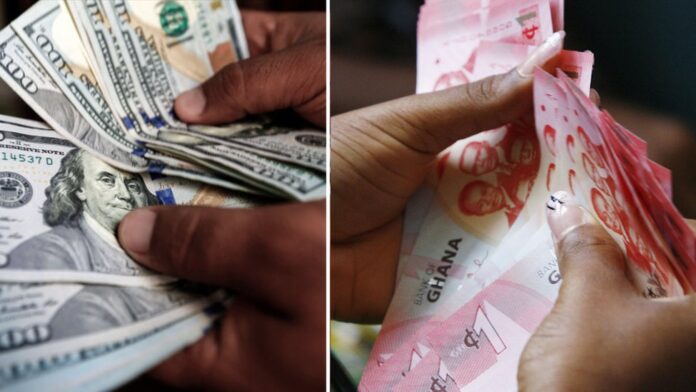
    On the monetary front, the Bank of Ghana’s policy rate is currently pegged at 21.50% and foreign exchange rates of the Ghana cedi to the major international trading currencies have significantly strengthened and stabilised with the cedi being adjudged as the strongest currency in Africa for the first eight months of 2025.

    However, to maintain these successes, an Associate Professor of Economics at the University of Ghana has strongly urged the government to diversify Ghana’s economic production base to project sustainable growth.

    “Our production base is too narrow. We import almost everything. And as the growing middle class comes up, we are becoming much more import dependent rather than self-sufficient”, Professor Festus Ebo Turkson said while speaking during a UK-Ghana Chamber of Commerce and Deloitte Ghana seminar last week, cautioning that, Ghana’s economy remains too dependent on imports and vulnerable to external shocks.

    Prof. Turkson argued that diversifying Ghana’s economy production base starts with supporting local farmers and driving deliberate demand for Ghanaian produce. This demand, he said, must not be left to market forces but should be intentionally cultivated through government policies.

    “Adding value to and demanding local produce will boost their productivity. Once we produce enough for export, we can then produce for import substitutes,” he noted.

    This falls directly in line with the call made by the Government Statistician on the government to expand local food production, maintaining effective policy coordination among others to anchor the current success in achieving single-digit inflation.

    Dr. Alhassan Iddrisu emphasised that the achievement, while significant, is only the beginning.

    “We can actually do this by continuing to do what we are doing, which is keeping the inflation down,” he said on Channel One TV’s The Point of View on Wednesday October 8, adding “This will include keeping public spending discipline, supporting local food production and also maintaining policy coordination.”

    He warned against complacency, noting that although inflation has fallen, prices are still rising just at a slower pace.

    “This is not the time to relax at all. In fact, inflation of 9.4% still means that on average, we are seeing the general price level increasing by 9.4% between September of last year and September of this year,” he explained.

    Dr. Iddrisu described the return to single-digit inflation as progress, but said the real challenge now is ensuring that it can be sustained over the long term.

    On the human capital, Prof Turkson explained that Ghana’s human resource quality has improved from a “low” to a “moderate” scale over the past two decades a good foundation for light manufacturing.

    “What we need now is to tailor education to the needs of industry,” he said, calling for investment into soft infrastructure to enhance youth training and promote the use of appropriate, labour-intensive technologies.

    Incentivizing firms to create jobs

    Prof Turkson further suggested that providing incentives for firms that adopt technology while creating jobs would guarantee a steady stream of revenue needed to fuel further growth.

    “This is the way we can develop. That is what we call transformation,” he concluded.

    Enhancing Ghana’s investment climate

    Meanwhile, Cheryl Otoo, a Senior Manager at Deloitte Ghana, highlighted Ghana’s regulatory complexity and infrastructure deficits as two of the biggest constraints to investment. To this, Wisdom Kpano, Partner at Deloitte Ghana, recommended that the government channel resources into agriculture and agro-processing, renewable energy, and oil and gas – sectors with high potential for inclusive growth.

    Also, Nicolas Jørgensen Gebara, CEO of the European Chamber of Commerce in Ghana, pointed to mining and digital transformation, especially in the context of the government’s 24-Hour Economy Policy, while Osman Aziz, Senior Investment Officer at Venture Capital Trust Fund, underscored the need to bridge the gap between education and industry needs.

    For Prof. Turkson, resolving these systemic bottlenecks and creating an enabling environment for private sector growth must be central to government policy.

    Investor Opportunity Mapping Project – a step forward

    The Government’s 24-Hour Economy Policy has prioritised agribusiness and agro-processing and is encouraging the youth to participate in farming to supply raw materials for industry.

    Through the Ghana Investment Promotions Centre (GIPC), the government is also pursuing the establishment of robust manufacturing, building and construction, and ICT sectors, and is currently identifying projects nationwide for targeted investment.

    Kwame Kesse Agyapong, the Head of the Investment Promotion and Business Development Division (IP&BD) at GIPC, shared that the recently launched Investor Opportunity Mapping Project will survey all districts in Ghana to identify viable projects aligned with the government’s priorities.

    “After mapping them out, we will host the international and domestic community next year to showcase these projects and attract capital,” Agyapong remarked.

    Mr Kpano commended the initiative, especially for its potential to generate valuable investment data. He, however, urged the GIPC to track the impact of actual investments, as well as track its expansion by focusing on investments existing local businesses are making, not just new foreign ones.

    “A lot of fully owned Ghanaian businesses do not know that you can be members of the GIPC. We should do more to raise awareness across regions so these existing businesses, whether Ghanaian owned or foreign owned, can understand these opportunities and access them,” he advised.


    By Adnan Adams Mohammed

     

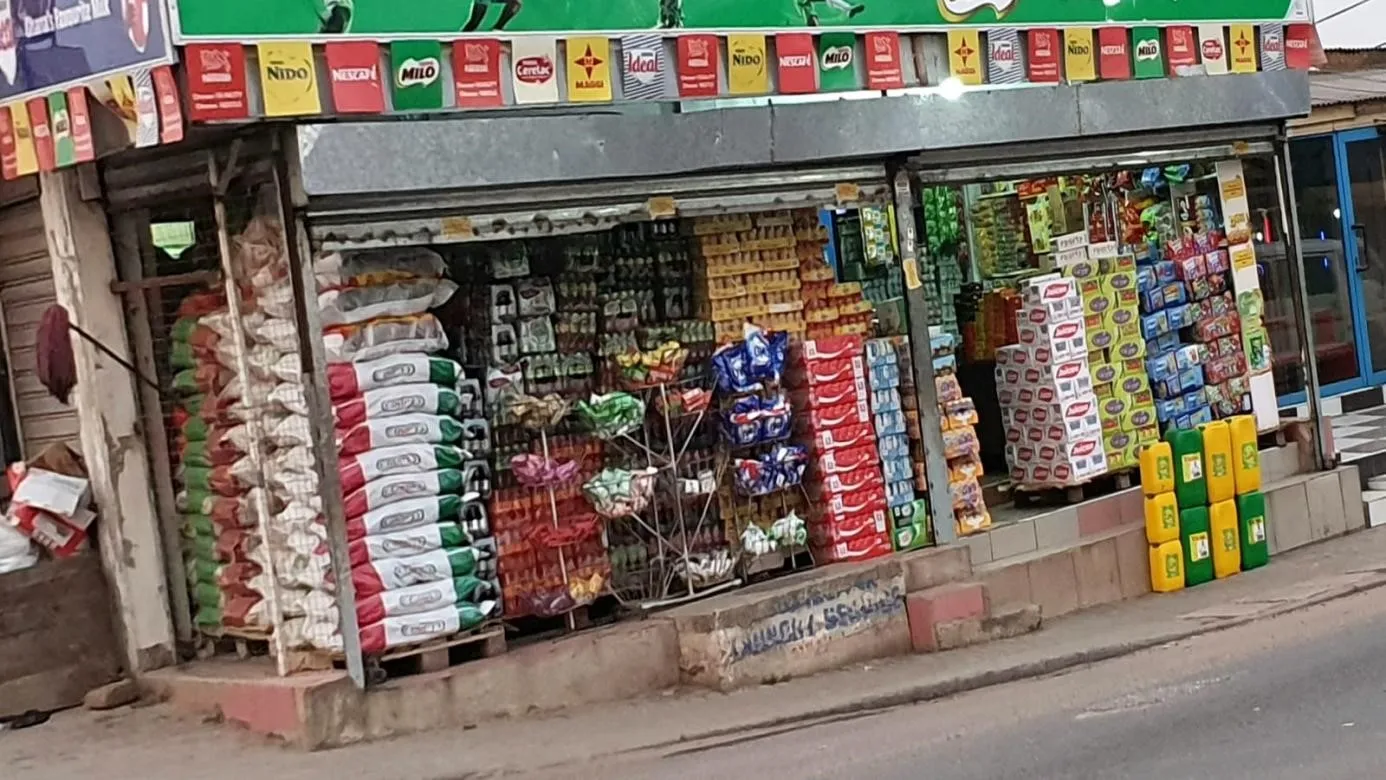
  • Retail sales, VAT collections jump over 30% in first five months of 2025

    Retail sales, VAT collections jump over 30% in first five months of 2025

    Domestic VAT collections for the first five months of 2025 rose by 33.6% to GH¢8.31 billion, compared to GH¢6.22 billion recorded during the same period in 2024

    That’s according to the Bank of Ghana’s July Monetary Policy Report, which also points to solid growth in retail sales over the same period.

    This signals stronger consumer demand and improved tax compliance.

    The report shows that retail sales increased by 35.7% cumulatively between January and May 2025, highlighting growing household spending and recovery in private consumption.

    On a year-on-year basis, sales for May alone rose 38.6% to GH¢277.62 million, from GH¢200.27 million in May 2024. Month-on-month, retail activity improved by 4.6 percent, moving from GH¢265.46 million in April to GH¢277.62 million in May.

    Domestic VAT collections also saw a robust performance in May, rising 30.1 percent year-on-year to GH¢1.77 billion. This can be attributed to the upward trend in both VAT and retail sales to enhanced economic activity, stronger consumer confidence, and improved tax administration.

    According to the data, the uptick in consumer spending reflects a gradual rebound in domestic demand, supported by stable prices and moderate growth in disposable incomes.

    However, market watchers believe that sustaining this positive momentum will depend on maintaining fiscal discipline, curbing inflationary pressures, and strengthening policy measures to support household purchasing power.

  • Private sector pensions rise slightly as job adverts dip

    Private sector pensions rise slightly as job adverts dip

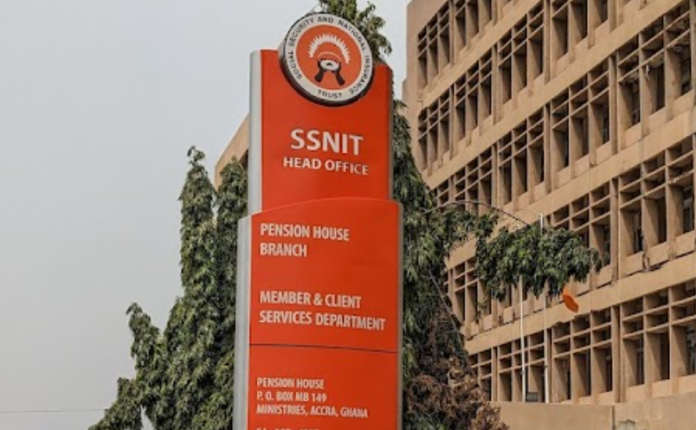
    Private sector contributions to the Social Security and National Insurance Trust (SSNIT) a key barometer of formal sector employment and pension security – rose modestly by 2.1% year-on-year to 1,065,925 contributors in May 2025.

    This is up from 1,044,111 recorded during the same period last year.

    The Bank of Ghana’s July 2025 Monetary Policy Report shows the figure remained broadly stable on a month-to-month basis compared to 1,067,531 contributors in April, suggesting a relatively steady pace of formal employment growth.

    However, labour market indicators painted a mixed picture.

    The number of jobs advertised in selected print and online media declined by 15.7% year-on-year to 2,502 vacancies in June 2025, down from 2,968 in June 2024.

    On a monthly basis, job openings also fell 18.4% from 3,066 recorded in May.

    Despite the slowdown in June, cumulative job adverts for the first half of 2025 increased by 7.7% to 18,604, reflecting continued recruitment momentum in parts of the private sector, particularly in services, ICT, and construction.

    Meanwhile, the broader economy showed signs of strengthening.

    The Bank of Ghana’s Composite Index of Economic Activity (CIEA) expanded by 4.4% in May 2025, compared to 3.4% in the same month a year earlier.

    The Central Bank attributes this improvement to robust trade activity, increased household and business consumption, growth in construction, and a rebound in tourist arrivals.

    The data reflects a gradual formalisation of employment and a cautiously optimistic economic outlook, though persistent weaknesses in the labour market signal the need for policies that stimulate job creation and sustain private sector confidence.

    The Bank of Ghana notes that sustaining these gains will require consistent policy execution, stable macroeconomic conditions and targeted support for sectors with strong employment potential.


  • Economic gains impressive, but borrowing costs remain a concern  – Kyei-Mensah-Bonsu

    Economic gains impressive, but borrowing costs remain a concern – Kyei-Mensah-Bonsu

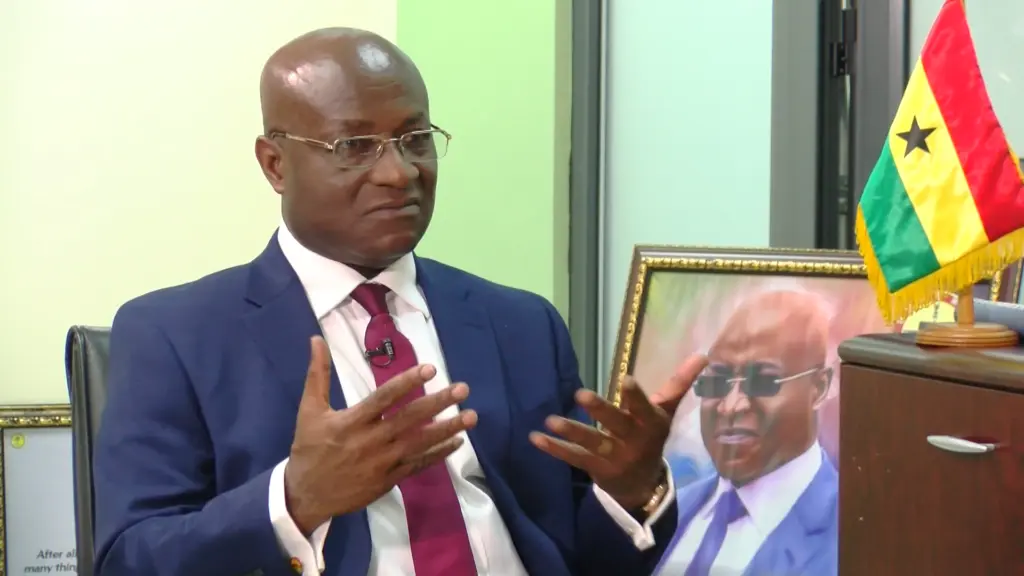
    Former Majority Leader Osei Kyei-Mensah-Bonsu has commended the government for the recent improvement in Ghana’s macroeconomic indicators, describing the strengthening of the Cedi against major currencies and the drop in inflation to 9.4% as a “stupendous achievement.”

    Speaking on Channel One TV’s The Point of View with Bernard Avle on Monday, October 6, 2025, Mr. Kyei-Mensah-Bonsu highlighted the significance of the economic gains but stressed that more work remains to ensure the benefits reach ordinary Ghanaians.

    “What should concern us now is the cost of borrowing because it is not reflecting in that. Is there anything wrong? Because necessarily it should translate into that. If the interest rate is still hanging up there it means some of the fundamentals are not talking to each other and we need to interrogate each other,” he said.

    The former lawmaker also credited part of the current economic stability to the international reserves left by the previous administration, noting that over US$9 billion in reserves helped buoy the country’s financial position.

    While he praised the government for steering the economy in a positive direction, Mr. Kyei-Mensah-Bonsu emphasised the need for continued vigilance and effective coordination between monetary and fiscal policies to sustain the gains.

    The Bank of Ghana’s latest Monetary Policy Report indicates a decline in average lending rates, which have eased from 26.6% to 24.2%.

    Yields on money market instruments are also showing a downward trend. For example, the 91-day Treasury bill rate fell from 13.4% at the end of July 2025 to 10.3% in August.

  • Bank of Ghana plans to sell up to US$1.15bn from October

    Bank of Ghana plans to sell up to US$1.15bn from October

    The Bank of Ghana (BoG) will commence foreign exchange (FX) intermediation under the Domestic Gold Purchase Programme, with plans to sell up to US$1.15 billion between October and the end of 2025

    These sales will be conducted on a spot basis through twice-weekly, price-competitive auctions open to all licensed banks.

    Dr Johnson Pandit Asiama, the Governor, made this known during a post-Monetary Policy Committee engagement with heads of banks.

    He disclosed that there will be no conditions or earmarking for allocations so as to ensure a level playing field and transparent access to the market.

    “Monthly auction volumes may be adjusted depending on evolving market conditions, but our overarching objective remains clear: to deepen the interbank FX market, enhance price discovery, and smooth volatility,” he said.

    He indicated that the central bank remained committed to transparency and would continue to disclose all foreign exchange market operations and outcomes in line with best international practice.

    He commended the banking industry for maintaining strong performance and resilience.

    “The Capital Adequacy Ratio has risen to 17.7%, while Non-Performing Loans have improved to 20.8%, though still elevated and requiring sustained vigilance.”

    To strengthen prudential oversight and risk management to sustain strong performance, he said, the BoG had introduced a number of new directives.

    These include the Bancassurance Directive, the Large Exposures Directive, and the Guidelines on Credit Concentration Risk Management.

    The Bank has also extended the transition period for the outsourcing Directive to the end of December 2025, following consultations with the Ghana Association of Banks.

    “I want to emphasise that this will be the final extension, and banks must ensure full compliance thereafter,” he added.


  • Gold hits US$4,000 an ounce for the first time

    Gold hits US$4,000 an ounce for the first time

    Gold prices hit US$4,000 per ounce on Tuesday for the very first time, driven by strong investment demand amid broader geopolitical and economic uncertainty, along with expectations of further interest rate cuts from America’s central bank, the Federal Reserve.

    Gold has climbed 51% so far this year on sizable central bank buying, increased demand for gold-backed exchange-traded funds, a weaker dollar and growing interest from retail investors seeking to hedge amid rising trade and geopolitical tensions. During the first quarter of the year, gold posted its strongest quarterly return since 1986.

    Gold thrives in a low-interest-rate environment and during economic uncertainty. It is considered a resilient investment and a hedge against inflation, with investors betting it will retain its value when prices rise.

    The government shutdown has left traders and policymakers without any federal data in the United States, including the crucial monthly jobs report. Key inflation figures for the month of September are due this week. That has forced investors to rely on secondary, non-government data to gauge the timing and extent of Fed rate cuts.

    Markets continue to price in a quarter-point cut at the Fed’s October 28-29 meeting and a similar-sized reduction at its December meeting.

    “I see gold reaching US$4,300 per ounce over the next six months as the US dollar is expected to continue to depreciate,” said Michael Langford, chief investment officer at Scorpion Minerals.

    Billionaire investor Ken Griffin said Monday the development of gold as a safer asset than the dollar is “really concerning.”

    “We’re seeing substantial asset inflation away from the dollar as people are looking for ways to effectively de-dollarize, or de-risk their portfolios vis-a-vis US sovereign risk,” he said in an interview with Bloomberg.

    Goldman Sachs on last week raised its December 2026 price forecast for gold to US$4,900 per ounce from US$4,300.

    China’s central bank added gold to its reserves in September for the 11th straight month, data from the People’s Bank of China showed.


  • Stakeholders propose reforms and efficiency of utilities sector against tariff adjustment

    Stakeholders propose reforms and efficiency of utilities sector against tariff adjustment

    Major stakeholders of the Ghanaian economy have continuously mounted pressure against utilities tariff adjustments as it has a negative impact on cost of doing business, cost of living and consequently influencing inflation and the general economy.
    Contrary to the recent proposal for utilities tariff increase by over 200% by Electricity Company of Ghana (ECG) and Ghana Water Company, a tax analyst is calling for broader stakeholder engagement to reform the utilities companies and boost their operational efficiency, rather than allowing the utility providers to proceed with their proposed tariff increase.
    Francis Timore Boi’s call adds to growing concerns from the Food and Beverages Association of Ghana (FABAG), which has issued a 30-day ultimatum to the government to establish a performance compact that will assess and improve the efficiency of both ECG and GWCL, stressing that, tariff increases should not be the go-to solution, urging a more balanced and consumer-friendly approach.
    “A balanced and phased approach is needed,” he explained. “If ECG truly needs more revenue, a sudden 225% increase is quite drastic for consumers. A better approach might involve a phased increase tied to clear milestones such as reducing losses, improving service reliability, and accelerating meter deployment. Many customers have applied for meters and still haven’t received them.
    “For example, the expanded lifeline ban for low-income households and also essential services if they can be exempted from the repeated increases to save them and that is why dialogue and stakeholder engagement is critical for me”, he noted.
    The tax expert further argued that any tariff review should be conditional and designed to protect the most vulnerable groups and critical sectors of the economy.
    “Tariff increases should be conditional,” he added. “We need to protect vulnerable groups and essential sectors. Any tariff adjustment must come with stronger safety nets.”
    The debate over ECG’s proposed tariff hike continues to intensify, with industry players calling for efficiency-driven reforms and accountability before any major adjustment in electricity prices.
    High utility tariffs hurting Ghana’s competitiveness under AfCFTA 
    Consequently, the Ghana Union of Traders Association (GUTA) has also raised concerns that Ghana’s current utility tariff regime is undermining the country’s competitiveness within the African Continental Free Trade Area (AfCFTA).
    It believes that the high cost of electricity and water is inflating production and operational expenses, which in turn affects the pricing of goods and services and discourages both local and foreign investment.
    “We all realise that we are participating in AfCFTA, yet Ghana is lagging behind. We are not competitive, and our goods cannot even compete with those from Togo. The reason is the high cost of doing business here, especially regarding utility tariffs. It has not helped us. The earlier we solve these issues, the better,” GUTA President, Dr. Joseph Obeng, stated at a press conference in Accra last week.
    He emphasised that the high cost of utilities continues to erode profit margins, force price increases, and threaten the survival of many small and medium sized enterprises.
    GUTA is urging government and regulatory authorities to work with the business community to develop a fair and sustainable tariff structure that supports industrial growth and enhances Ghana’s participation in the AfCFTA market.
    FABAG ultimatum 
    Meanwhile, the Ghana Food and Beverages Association (FABAG) also called on President John Dramani Mahama to implement urgent reforms at the Electricity Company of Ghana (ECG).
    According to the association, the persistent increase in utility tariffs, despite ECG’s recurring financial losses, must be addressed as a matter of priority.
    The Chairman of the association, John Awuni, stressed that the high cost of electricity is taking a heavy toll on businesses and Ghanaians at large.
    “There shouldn’t be any tariff increment. Because no amount of tariff increment can solve the problems of ECG. There must be a reform, and that reform is aimed at reducing the technical and commercial losses to reasonable standards,” he said.
    The association also gave the government a 30-day ultimatum to set up a performance compact that will measure and improve the performance of the Electricity Company of Ghana (ECG) and the Ghana Water Company Limited (GWCL).
    “There’s no effort VRA or GRIDCo will make that can be realised. The inefficiencies in ECG will eat up all those ones, so there’s a need for reforms. Respectfully, we recommend a presidential compact for ECG and GWL.
    “We call for a performance compact between the ECG, Ministry of Finance, PURC and the Energy Commission sites under H.E.(President Mahama). ECG and GWL reform is more than a utility issue; it is a matter of national security, economic survival and governance legacy,” he stated.