Category: News

  • Energy Minister storms NPA to engage staff on operations and industry Issues

    Energy Minister storms NPA to engage staff on operations and industry Issues

    The Minister for Energy, John Abdulai Jinapor, is paying a working visit to the National Petroleum Authority(NPA) as part of his ongoing stakeholder engagements within the energy sector.

    The visit provides an opportunity for the Minister to interact directly with management and staff on matters relating to the Authority’s operations, strategic priorities, and key industry developments.

    During the engagement, Mr. Jinapor would emphasise the government’s commitment to ensuring efficiency, transparency, and sustainability across the energy value chain.

    He would also listen to staff concerns, share insights on current policy directions, and reiterate the importance of collaboration in achieving national energy objectives.

    The meeting is at the NPA head office in Accra


  • Over 13 million Ghanaians faces food insecurity — GSS Report

    Over 13 million Ghanaians faces food insecurity — GSS Report

    The number of Ghanaians facing food insecurity rose by 7.3% between the first and last quarters of 2024, according to new data released by the Ghana Statistical Service (GSS).

    The report indicates that the population experiencing food insecurity defined as limited access to adequate and nutritious food increased from 12.4 million in the first quarter to 13.3 million by the end of 2024.

    The GSS said the trend underscores growing pressure on household food systems despite ongoing government and development interventions.

    Regional disparities persist

    The Volta Region recorded the highest incidence of food insecurity at 52% in the fourth quarter of 2024, up slightly from 51.5% earlier in the year.

    In Greater Accra, food insecurity rose sharply from 20.2% to 29% over the same period, highlighting the increasing vulnerability of urban households.

    Gender and child nutrition concerns

    The report also points to widening gender disparities in food access. Food insecurity among female-headed households rose from 40.4% to 44%, compared to 37.1% among male-headed households, maintaining a seven-point gap.

    The GSS further linked food insecurity to poor child nutrition and poverty, noting that the proportion of households with underweight children under five increased from 38% to 44.9%.

    Additionally, the number of Ghanaians who are both food insecure and multi-dimensionally poor grew by 400,000, reaching 4.1 million by the end of 2024.

    Call to action

    The GSS is urging coordinated, data-driven policies to combat hunger, promote climate-resilient agriculture, and ensure equitable access to nutritious food in line with Sustainable Development Goal 2 — Zero Hunger.


  • Cedi appreciation slowed remittances, we had to step in, says BoG Governor

    Cedi appreciation slowed remittances, we had to step in, says BoG Governor

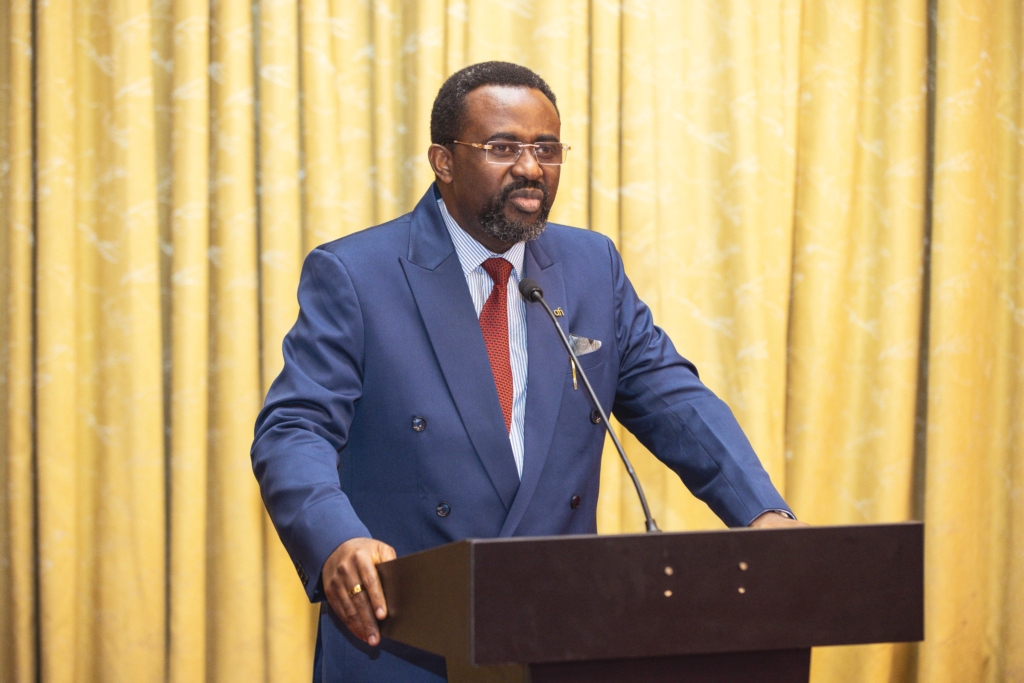
    Governor of the Bank of Ghana (BoG), Dr Johnson Asiama, says the central bank was compelled to support the foreign exchange market after the sharp appreciation of the cedi slowed remittance inflows.

    Speaking in Washington DC on the sidelines of the IMF/World Bank Spring Meetings, Dr Asiama said the appreciation, which was initially seen as a positive signal, unexpectedly reduced the volume of foreign transfers coming into the country.

    “Remittance inflows is another huge source of FX injection. You are looking at over US$6 billion per year in remittance inflows. However, immediately after the currency appreciated, we saw a decline,” he explained.

    He said this development came at a time when the central bank was making large external payments, creating pressure on the local market.

    “Between the second and the third quarter, we had to do a number of lumpy payments. There were all these large arrears in payments to some of the IPPs — billions of US dollars.

    “We also had domestic debt affected bondholders that wanted to exit because the currency had appreciated. We had to allow them to go,” Dr Asiama said.

    He noted that these “lumpy payments” between July and August coincided with a dry spell in the interbank foreign exchange market.

    “Because all these inflows accrue to the central bank, and it was happening at the time when we saw a decline in remittance inflows, the central bank needed to step in,” he said.

    “The interbank FX market had dried up during that time, and so the central bank needed to provide that support.”

    Dr Asiama rejected suggestions that the Bank of Ghana had intervened excessively in the foreign exchange market, insisting the move was necessary to maintain stability.

    “Yes, there were allegations about whether we were intervening in the market, but that was not exactly the case,” he said.

    “All we seek to do is to limit the volatilities in the markets, to ensure that we have that smooth dynamics in the market, and that’s the framework we’ll maintain going forward.”

    He disclosed that the situation has since improved, with increased activity in the interbank market.

    “We have written to the mining firms, for example, to take all their inflows through the commercial banks. We are beginning to see some pickup in activity in the interbank FX market,” he said.

    He explained that gold proceeds are an exception, as those go directly to the central bank’s reserves.

    Dr Pandit stressed that the Bank of Ghana does not “over support” the market but acts to smooth volatility and maintain balance.

    “With activity picking up in the interbank FX market, the central bank wouldn’t have to be that present,” he added.


  • Growth tracker: Ghana’s economy outperform forecasts as economist express optimism

    Growth tracker: Ghana’s economy outperform forecasts as economist express optimism

    Ghana’s economy has taken a sharp turn of remarkable growth in the first nine months of 2025, which has forced some Bretton Woods to revise upwards their forecasts.

    This, and other reasons have prompted economist Professor Peter Quartey to highlight that the economy could outperform growth projections by the International Monetary Fund (IMF) and the World Bank for 2025.

    The IMF, in its latest World Economic Outlook, projects a 4 percent GDP growth for Ghana by the end of 2025 slightly below the World Bank’s 4.3 percent forecast. Both institutions maintain a cautiously optimistic stance as Ghana continues to implement reforms under its economic recovery programme.

    However, according to data from the Ghana Statistical Service (GSS), which last week released the maiden edition of its Monthly Indicator of Economic Growth (MIEG), the index rose from 105.4 in July 2024 to 110.2 in July 2025 translating into about 4.5% year-on-year growth, indicating continued momentum in economic activity despite global and domestic headwinds.

    Consequently, Professor Quartey believes Ghana has the potential to exceed these targets if ongoing fiscal and structural reforms are sustained. Explaining that, while the Bretton Woods institutions often take a conservative approach to their forecasts, Ghana’s economic resilience and improving fundamentals could deliver stronger-than-expected growth outcomes.

    “Certainly the IMF and the World Bank are often cautiously optimistic; they don’t want to project such high numbers only for you not to achieve them” he said.

    “But as a country, oftentimes we have gone beyond their projections, all things being equal, and I believe we will go beyond the 4% they are projecting.”

    However, Prof. Quartey cautioned that Ghana’s pursuit of growth must not come at the cost of environmental sustainability, pointing to the growing threat of illegal mining, or galamsey.

    “Our environmental growth accounting has to be taken seriously. You can grow by 10% but if you destroy your environment, water bodies, and poison your food sources, it is not something to celebrate about.”

    The Monthly Growth Tracker

    At the release of the maiden Monthly Indicator of Economic Growth (MIEG) July edition, the Government Statistician, Dr. Alhassan Iddrisu, highlighted that the agriculture sector was the key driver of growth, expanding by 8.0%, supported by improved crop yields and increased productivity in food staples.

    The industrial sector, however, recorded a marginal growth of 0.1%, due to challenges in energy supply and manufacturing output, while the services sector maintained moderate gains.

    MIEG, a new analytical tool designed to provide a more frequent snapshot of the country’s economic performance between quarterly GDP releases, is to serve as an early indicator of shifts in economic activity, enabling policymakers, investors, and businesses to make more timely and informed decisions.

    World Bank’s revised projection

    A fortnight ago, the World Bank projected Ghana’s economy to expand by 4.3% in 2025, as contained in the October 2025 edition of Africa’s Pulse Report, released by the Bank in Washington, D.C.

    The projection is about 0.4% more than its earlier projection of 3.9%, showing a renewed optimism about the country’s recovery trajectory.

    The WB’s revised projection is 0.1% lower than the 4.4% projection by the Government of Ghana as captured in the 2025 Budget.

    Already, Ghana’s economy has expanded by 6.3% in the second quarter of 2025, influenced by the services sector, which grew by 9.9% and contributed the most to GDP.

    The World Bank projects growth to strengthen further to 4.6% in 2026 and 4.8% in 2027, underscoring a positive medium-term outlook.

    Across the continent, Sub-Saharan Africa’s economy is expected to grow by 3.8% in 2025, up from 3.5% in 2024.

    The Bank attributed the rebound to easing inflationary pressures and a modest recovery in investment, despite persistent global headwinds.

    It noted that the number of African countries with double-digit inflation has dropped sharply from 23 in October 2022 to 10 in July 2025 reflecting progress in price stabilization.

    However, the report cautioned that downside risks remain, including trade policy uncertainty, weak investor sentiment, and shrinking access to external finance and aid.

    The World Bank expects Ghana’s inflation to close 2025 at 15.4%, a projection that contrasts with the official rate of 9.4% in September 2025, down from 21.5% a year earlier.

    The Bank’s forecast appears conservative, given the country’s recent disinflation trend.

    Nonetheless, the report expressed optimism that inflation will continue easing, dropping to 9.4% in 2026.

    The Bank of Ghana, in its latest Monetary Policy Report, also reaffirmed expectations for inflation to remain within the single-digit range by year-end.


    By Adnan Adams Mohammed


  • Bank of Ghana targets end to dollarisation challenge in Ghana

    Bank of Ghana targets end to dollarisation challenge in Ghana

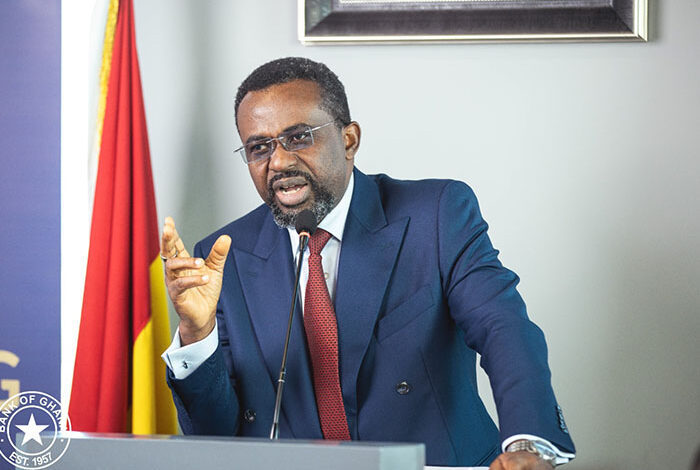
    Governor of the Bank of Ghana (BoG), Dr. Johnson Asiama, has renewed calls for stronger efforts to promote the exclusive use of the Ghana cedi in domestic transactions, describing dollarisation as one of the country’s most persistent economic challenges.

    Speaking at the IMF/World Bank Governor Talk Series in Washington, D.C., Dr. Asiama expressed concern over the continued use of foreign currencies particularly the US dollar in local trade, noting that it undermines the effectiveness of monetary policy.

    “A couple of things bother me. First of all is the issue of dollarisation. I have seen this for many years. I started central banking 30 years ago. The phenomenon has been there. So, we are tackling it,” he said.

    He added that ensuring the cedi becomes the sole legal tender in Ghana’s economy is a key priority for his administration at the central bank.

    “What can we do to make the local currency the sole legal tender? So on the 28th of this month, we are having a celebration. We call it the Cedi at 60. The local currency will be 60 years this year, and we want that to mark a new beginning,” Dr. Asiama announced.

    The BoG Governor said the upcoming anniversary celebration would serve as both a symbolic and practical step toward reinforcing confidence in the cedi and promoting its wider use across all sectors of the economy.

    “When we use the local currency in all transactions, this enhances the efficiency of monetary policy. It is at the core of most of our problems. It is one of the things I would want to be remembered for—that I came, I solved that problem, and I made the local currency the currency of choice,” he said.

    The Cedi at 60 celebration, scheduled for October 28, is expected to highlight the evolution of Ghana’s national currency and renew public commitment to its use as the sole medium of exchange within the country.


  • FX market works in reaction to prevailing conditions … BoG dismisses charges of manipulation

    FX market works in reaction to prevailing conditions … BoG dismisses charges of manipulation

    Bank of Ghana has denied allegations that it has manipulated the foreign exchange market, noting that, currently that market is controlled by commercial banks.

    It notes the Central bank only intervenes for general economic stability purposes, stressing that its actions fall squarely within a flexible exchange rate framework aimed only at curbing excessive volatility.

    The Governor of the Bank of Ghana, speaking at the IMF–World Bank Governor Talk Series in Washington, D.C., explained that while the Bank occasionally intervenes to stabilise the cedi, such actions are reserved for periods of exceptional market pressure.

    “The framework that we have is a flexible exchange rate management framework. Essentially, what we do is smoothen excessive volatilities,” Dr. Johnson Asiama explained.

    Addressing concerns about the scale of intervention, he said: “Yes, there were allegations about whether we were intervening in the market, but that was not exactly the case,” noting that significant foreign outflows had required short-term support from the central bank.

    According to Dr. Asiama, between the second and third quarters of 2025, Ghana undertook several “lumpy” foreign payments, including billions of U.S. dollars to Independent Power Producers (IPPs) and domestic bondholders who exited their holdings amid the cedi’s appreciation.

    At the same time, remittance inflows weakened, draining liquidity from the interbank foreign exchange market.

    “In the mix of that, the central bank had to step in. The interbank FX market had dried up, so the central bank had to provide that support,” he said.

    Dr. Asiama added that market conditions have since improved, thanks to directives requiring mining firms to channel all foreign exchange inflows through commercial banks — a measure that is already showing positive results.

    “We do not over-support the market at all. What we seek to do is limit volatility to ensure smooth dynamics in the market, and that is the framework we will maintain going forward,” he affirmed.

    Dr Asiama further noted that recent pressures on the foreign exchange market were triggered by large energy sector payments and investor exits, not by direct market intervention from the Central Bank. He emphasized that the Bank had to undertake a series of “lumpy” foreign exchange payments between July and August to clear long-standing energy debts and other domestic obligations.

    “Yes, there were allegations about whether we were intervening in the market. But that was not exactly the case,” he explained.

    The Governor’s remarks come amid renewed public scrutiny of the Bank of Ghana’s foreign exchange management practices and growing interest in the country’s energy sector debt, which continues to weigh heavily on fiscal stability.

    “Between the second and third quarter, we had to do a number of lumpy payments. There were all these large arrears in payments to some of the IPPs. These were billions of US dollars.”

    He revealed that the Central Bank also faced additional outflows from some domestic bondholders who decided to liquidate their investments after the cedi appreciated.

    “We also had some of the domestic debt-affected bondholders who wanted to exit. They felt that because the currency had appreciated, it was the right time to take up their investment. We had to allow them to go,” he said.

    The Bank of Ghana Governor said those combined pressures temporarily tightened liquidity in the foreign exchange market.

    “We did a lot of lumpy payments between July and August, and you might have seen some of that,” he noted.

    Dr. Asiama also disclosed that the situation coincided with a decline in remittance inflows, which typically provide over US$6 billion in annual forex injections.

    “Because all these inflows accrue to the central bank, and it was happening at a time when we saw some decline in remittance inflows, the central bank needed to step in to meet all those lumpy payments,” he said.

    According to him, the interbank foreign exchange market “had dried up” during that period, forcing the Bank of Ghana to provide temporary support.

    “The central bank needed to provide that support. But I’m happy to say that the interbank FX market has come back,” DrAsiama said.

    He explained that the central bank has since written to mining firms to route their inflows through commercial banks to improve liquidity in the FX market.

    “We are beginning to see some pick-up in interbank FX market activity,” he said, clarifying that the directive covers all commodities except gold.

    The Governor stressed that with improved market conditions, the central bank no longer needs to be heavily involved in supplying dollars.

    “As of yesterday, we had committed to make available US$150 million. This morning, when I checked, the market had picked up only US$90 million, so US$60 million automatically goes into our reserves,” he said.

    “Same thing Tuesday — we made available US$150 million, and the markets picked up less than half that. So automatically, it goes into our reserves.”

    He dismissed claims that the Bank was over-supporting the market.

    “We do not over-support the markets at all. All we seek to do is to limit volatility and ensure smooth market dynamics. That’s the framework we will maintain going forward,” Dr Asiama emphasized.


    By Adnan Adams Mohammed


  • Momentum builds up on digital credit as BoG set to open applications, early November

    Momentum builds up on digital credit as BoG set to open applications, early November

    As the Global Fintech market is projected to hit US$400 billion by 2028, stakeholders in Ghana’s digital economy space are building up momentum for full digital credit systems as they call for deeper collaboration between fintech firms and financial institutions to close existing gaps in Ghana’s financial sector.

    Bank of Ghana, has announced key regulatory measures aimed at strengthening innovation and aligning financial regulation with rapid market developments in the fintech space.

    Towards this, the central bank is expected to begin receiving applications for digital credit licenses starting November 3, encouraging interested players in the sector to take advantage of the opportunity.

    “The central bank will soon operationalise the Digital Credit Directive, roll out a virtual assets licensing regime, and expand financial literacy and consumer redress mechanisms nationwide”, Second Deputy Governor of the Bank of Ghana (BoG), Mrs. Matilda Asante-Asiedu said while speaking at the MoMo Fintech Stakeholder Forum, last week.

    The move, she noted, forms part of efforts to promote responsible innovation, enhance consumer protection, and build trust in Ghana’s growing digital financial ecosystem.

    She announced, “In the near term, what we intend to do is to operationalise the Digital Credit Directive and roll out our virtual assets licensing regime and expand financial literacy as well as the redress mechanism across the country.

    “We expect that from November 3, applications will now be received for Digital Credit. So, if that is an area you’re interested in, certainly that’s something to take note of.”

    Meanwhile, the Chief Products and Services Officer at Mobile Money Limited, Sylvia Otuo-Acheampong, has called for deeper collaboration between fintech firms and financial institutions to close existing gaps in Ghana’s financial sector.

    Also speaking at the MoMo Fintech Stakeholder Forum, Sylvia Otuo-Acheampong urged banks and other financial players to explore opportunities in digital credit and lending through fintech partnerships.

    “There are a lot of customers probably looking for an opportunity. I will appeal to our partners within the ecosystem, especially the financial institutions, to really look at credit in Fintech

    “I know they are traditionally looking within themselves,” she noted.

    She noted that while financial institutions traditionally focus on internal systems, greater openness to collaboration would expand access to financial services and innovation.

    Sylvia Otuo-Acheampong also encouraged fintech firms to strengthen partnerships and co-develop solutions that make credit collection more efficient.

    “Another appeal goes to Fintech, we co-create, we co-re-innovate, so I think we need to find very interesting ways to improve collection,” she urged.


    By Adnan Adams Mohammed


  • Ghana woos international investment, development support communities  …at IMF/World Bank joint meeting

    Ghana woos international investment, development support communities …at IMF/World Bank joint meeting

    Throughout last week, at the 2025 IMF–World Bank Annual Meetings convened in Washington from October 13–18, Ghana’s high-level delegation led by Finance Minister Dr. Cassiel Ato Forson and Bank of Ghana Governor Dr. Johnson Asiama aggressively courted international investors and development partners with a message of economic stabilization, renewed policy credibility and investment-ready opportunities

    In meetings on the sidelines of the Annual Meetings, officials underlined Ghana’s recent macroeconomic gains and a pipeline of projects seeking blended finance, private capital and technical partnerships.

    Delegation briefings highlighted the government’s priority areas: energy-sector investment to reduce supply shortfalls, road and port infrastructure upgrades, agribusiness value-chain financing, and digital infrastructure meant to turbocharge fintech and services exports. Ghana’s pitch, officials say, is that the country has moved from crisis management to consolidation and now needs patient capital and development finance to sustain growth.

    The Bank of Ghana Governor, Dr Johnson Asiama told reporters in Washington that the central bank has made tangible progress restoring foreign-exchange buffers and stabilising markets, crediting recent policy measures and initiatives that have channeled export proceeds into the formal banking system.

    Dr. Johnson Asiama, speaking at the IMF/World Bank Governors Talk Series in Washington D.C., under the theme “From Crisis to Confidence: Ghana’s Journey to Macroeconomic Stabilisation”, asserted that “growth has rebounded, inflation has cooled, and Ghana is now outperforming expectations under the IMF programme.

    “Inflation, which stood at 23.5 percent in January 2025, has since dropped to 9.4 percent in September the first single-digit rate in four years, beating the government’s 11.9 percent target.”

    Dr. Asiama reaffirmed the central bank’s commitment to sustaining macroeconomic stability through prudent policy management and market confidence restoration.

    Dr Asiama also flagged forthcoming regulatory frameworks including plans for virtual-asset oversight developed with IMF support as part of a broader effort to modernize Ghana’s financial architecture and reassure investors on transparency and risk management. He assured that Ghana is now positioned to exit the three year IMF’s Extended Credit Facility when it expires in May next year.

    Dr Forson, in his statement, speaking to a packed audience of investors in Washington, underscored that the country’s economic turnaround is already evident in declining debt vulnerabilities and stronger macroeconomic fundamentals, reflecting the effectiveness of government policy interventions and reforms.

    Consequently, Ghana’s economic growth is projected to rebound strongly in the final quarter of the year, as the second quarter grew 6.3% according to Ghana Statistical Service data, led by a revitalised real sector, while inflation, which has already seen significant declines, is expected to ease further and remain in single digits by year-end.

    “The government remains on course to achieve a positive primary balance of 1.5% of GDP by the close of the fiscal year, a milestone that will further consolidate the gains made under ongoing fiscal reforms.

    Dr. Forson reaffirmed the government’s dedication to implementing fiscal consolidation measures anchored on tight expenditure controls and prudent financial management.

    This comes as the ministry has revealed that, over 70 public sector entities, including several Metropolitan, Municipal and District Assemblies (MMDAs), have complied with the Public Financial Management (PFM) Commitment Control and Expenditure Management Measures issued by the Minister for Finance on May 2, 2025.

    The compliance update follows the submission of quarterly commitment control review reports to the Internal Audit Agency (IAA), in line with efforts to strengthen fiscal discipline and improve expenditure efficiency across government institutions.

    The Ministry’s guidelines were designed to ensure that public entities commit and spend within approved budgetary limits, prevent the accumulation of arrears, and enhance transparency in the management of public funds.

    Some of the institutions are GoldBod, Tema Oil Refinery, Ghana Enterprise Agency, Public Utilities and Regulatory Commission, Rent Control Department, State Interests and Governance Authority, Venture Capital Trust Fund and the Department of Parks and Gardens

    Others include, NaCCA, Office of the Head of Civil Service, Office of the Administrator of Stool Lands, some Ministries, some Colleges of Education and Metropolitan, Municipal, and District Assemblies.

    This high compliance rate signals increasing adherence to fiscal responsibility principles and improved coordination between internal auditors and spending officers.

    The next phase is expected to focus on deepening real-time expenditure monitoring, addressing non-compliant entities, and promoting greater accountability across the public financial management ecosystem.

    The move aligns with the government’s broader Public Financial Management (PFM) reform agenda, which seeks to consolidate gains in macroeconomic stability, control public spending, and strengthen the integrity of Ghana’s fiscal management framework.

    Ghana’s finance team also sought to translate macro improvements into project-level commitments. Dr. Forson held talks with World Bank President Ajay Banga and other multilateral leaders aimed at accelerating concessional lending and technical support for public-private partnerships, while exploring guarantees and blended-finance facilities to mobilise private-sector participation in infrastructure and social-service projects. The Ministry’s public release framed these discussions as a push to “unlock new opportunities for the country’s development agenda.”

    Dr. Forson said the renewed collaboration aims to channel World Bank resources toward sectors with the greatest impact on livelihoods and resilience. Ghana and the World Bank have agreed to deepen their partnership across five key sectors to accelerate the country’s economic transformation and strengthen long-term growth.

    The talks focused on education, health, energy, roads, and agriculture, areas both sides described as central to Ghana’s medium- and long-term development goals.

    “With this renewed collaboration, we are working together to accelerate Ghana’s journey toward a more resilient, inclusive, and sustainable economy,” he said.

    The engagement signals the government efforts to leverage stronger multilateral partnerships to consolidate post-crisis recovery gains and attract new investments.

    The World Bank currently finances several flagship projects in Ghana, ranging from education and social protection to infrastructure and agriculture. Strengthening this collaboration is expected to improve project implementation and expand access to concessional financing at a time when Ghana is implementing reforms under an International Monetary Fund–supported programme.

    Addressing global investors on the sidelines of the Annual Meetings Dr Forson reaffirmed that the country’s economic recovery programme is on a firm path, assuring international investors of continued stability and resilience in the months ahead.

    Dr. Forson said Ghana’s economic turnaround is already yielding measurable results, with declining debt vulnerabilities, improved fiscal discipline, and strengthened macroeconomic indicators.

    According to Dr. Forson, Ghana’s economic growth is expected to rebound significantly in the last quarter of the year, buoyed by the recovery of the real sector, strong agricultural performance, and increased industrial productivity.

    He stressed that the government’s fiscal strategy remains anchored on tight expenditure management, enhanced domestic revenue mobilisation, and transparent debt restructuring frameworks that support medium-term stability.

    The Minister also used the platform to engage investors on Ghana’s private sector investment opportunities, noting that the government’s policy reforms are designed to attract sustainable capital inflows into infrastructure, energy, manufacturing, and agribusiness.

    Dr. Forson expressed optimism that Ghana’s renewed fiscal discipline, coupled with a stable exchange rate and improved investor confidence, will accelerate the country’s transformation agenda and restore Ghana’s status as one of Africa’s most attractive investment destinations.

    Observers at the meetings say Ghana’s approach is well-timed but faces headwinds. The IMF has warned about risks when African governments rely heavily on domestic borrowing a theme that Ghana’s delegation addressed by stressing renewed access to international markets and improved debt management capacity.

    Delegates argued that a coordinated pipeline of bankable projects, backed by multilateral guarantees and anchored in strong governance, is the most viable route to draw long-term foreign capital without crowding out domestic credit.

    Private investors attending side events described the Ghana pitch as credible noting clarity on policy direction and willingness to use blended instruments but said they will be watching for concrete guarantees on currency risk, contract certainty, and the speed of procurement reforms.

    Development finance institutions, meanwhile, signaled openness to deepen engagement but emphasized the need for measurable progress on fiscal consolidation, debt transparency and financial sector reforms before scaling up cheaper, long-tenor financing.

    For Accra, the Annual Meetings were more than a charm offensive: they were a market test. By parading a united finance team, showcasing recent reserve gains and pitching a slate of bankable projects, Ghana is trying to convert hard-won macro stability into investment and concessional support that can anchor medium-term growth.

    Whether creditors and private investors respond with the scale and patience Ghana seeks will depend on follow-through at home fast implementation of reforms, clearer risk-mitigation instruments, and sustained engagement with multilateral partners.


    By Toma Imirhe & Adnan Adams Mohammed


  • ECOWAS trains journalists in Togo on information integrity and countering fake news, misinformation,  and disinformation in West Africa 

    ECOWAS trains journalists in Togo on information integrity and countering fake news, misinformation,  and disinformation in West Africa 

    The ECOWAS Commission, through its Directorate of Communication, has commended a two-day training workshop for journalists and media practitioners in Togo as part of the organisation’s renewed efforts to promote information integrity and counter misinformation, disinformation, fake news and anti-democratic narratives in West Africa.

    Organised by the ECOWAS Commission in collaboration with the Media Foundation for West Africa (MFWA), the training which holds on 16–17 October 2025, aims to build participants’ skills in media and information literacy, conflict-sensitive reporting, identifying and countering misinformation and disinformation actors, and promoting democracy, peace, security and good governance within the region.


    In his welcome remarks, the Acting Director of Communication at the ECOWAS Commission, Mr. Joel AHOFODJI, emphasized that the media training workshop aims to build the capacity of journalists and media practitioners to excel in responsible, investigative and fact-based journalism that promotes peace and democracy in the region.

    Declaring the workshop open on behalf of the ECOWAS President, H.E. Dr. Omar Alieu TOURAY, the Political Advisor/Focal Point for Early Warning Management, ECOWAS Permanent Representation in Togo, Mr. Wanyou Ouraga JEROME, underscored the media’s role in amplifying ECOWAS’ Vision 2050 goals on promoting regional integration, democracy, peace and security.


  • ADI Calls for Stronger Ghana–Germany–KfW Partnership to Drive 24-Hour Economy through Agriculture, Agro-Processing, and Renewable Energy

    ADI Calls for Stronger Ghana–Germany–KfW Partnership to Drive 24-Hour Economy through Agriculture, Agro-Processing, and Renewable Energy

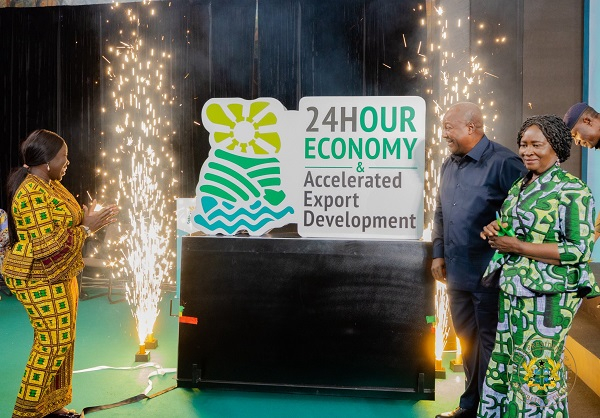
    The Alliance for Development and Industrialization (ADI) is urging the Government of Ghana to deepen collaboration with the Government of Germany and the KfW Development Bank, a member of the International Development Association (IDA), to accelerate the nation’s 24-Hour Economy through agriculture, agro-processing, and renewable power development.


    According to ADI, Ghana’s 24-Hour Economy concept designed to boost industrial productivity and job creation can only be achieved sustainably when backed by reliable, low-cost, and renewable energy sources such as solar and biofuels, and supported by robust agro-industrial value chains.


    “Germany and KfW have long been central to Ghana’s development story,” said Dr Richard Mensah, Convenor of ADI. “They have helped modernize our agricultural sector, strengthen technical and vocational education, and establish key institutions such as the Development Bank Ghana (DBG) and the Outgrower and Value Chain Fund (OVCF). These are the right partners to lead Ghana’s next growth phase under the 24-Hour Economy.”

    ADI is advocating for the expansion of Germany’s successful KfW OVCF programme, which has already provided innovative financing and support to smallholder farmers and agribusinesses. The organization proposes broadening this initiative to cover key high-potential commodities that can drive industrialization and export growth specifically:

    Palm and Coconut – for edible oils, cosmetics, and renewable biofuel production.

    Citrus and Tropical Fruits – for juices, concentrates, and processed exports.

    By-products and Waste – for organic fertilizers, feed, and bioenergy.

    The expansion, ADI says, should include value addition, processing, and export linkages, ensuring farmers and local processors can benefit directly from global markets while creating sustainable jobs.

    For Ghana to operate a 24-hour production and services system, renewable energy must form the base of industrial and rural power supply. ADI highlights that solar farms, distributed mini-grids, and biofuel systems can provide “free and clean” energy to agro-processing zones, cold-chain facilities, and rural industries reducing cost pressures and ensuring continuous operation.

    “The 24-Hour Economy must be powered by renewable and free energy sources that ensure factories, farms, and logistics hubs can operate round the clock,” he added. “This approach will make Ghana’s exports more competitive and environmentally sustainable.”

    Germany remains one of Ghana’s most consistent and effective development partners. Over the decades, German cooperation has spearheaded programs in:

    Agricultural modernization and value chain finance (via KfW and GIZ).

    Technical and vocational education and training (TVET), equipping youth with employable skills.

    Industrial financing through the establishment of the Development Bank Ghana (DBG).


    Renewable energy projects, supporting Ghana’s energy transition towards sustainable growth.

    ADI believes that building on this foundation through a formal Ghana–Germany–KfW partnership will create a unified framework to support agro-industrial zones, renewable energy infrastructure, and export-oriented manufacturing.

    ADI is therefore calling on policymakers to prioritize the creation of a Ghana–Germany–KfW 24-Hour Economy Initiative, which would integrate:

    Agriculture and value chain financing expansion through OVCF.

    Agro-processing industrial parks powered by renewable energy.

    Export facilitation for palm, coconut, citrus, and fruit-based products.

    Youth training and enterprise support through TVET-linked programs.

    “Germany and KfW have the expertise, capital, and technology to make Ghana’s 24-Hour Economy a reality,” ADI concluded. “With their partnership, Ghana can transition from raw commodity exports to a renewable-powered agro-industrial nation that operates efficiently, inclusively, and sustainably.”


    About ADI

    The Alliance for Development & Industries (ADI) is a policy and investment platform promoting agricultural transformation, renewable energy adoption, and inclusive economic growth across Africa. ADI is seeking to work with communities, governments, development agencies, and private investors to build sustainable value chains and job-creating enterprises.