Category: News

  • SWAG 50th Anniversary Committee Courts Support from Goldbod CEO Sammy Gyamfi

    SWAG 50th Anniversary Committee Courts Support from Goldbod CEO Sammy Gyamfi

    As preparations gather momentum for the 50th Sports Writers Association of Ghana (SWAG) Awards, the Planning Committee has paid a courtesy call on Lawyer Sammy Gyamfi, Chief Executive Officer of Goldbod, to seek collaboration and support for the upcoming Golden Jubilee celebration.


    The visit, held in Accra, was part of the Committee’s stakeholder engagement and sponsorship mobilization drive ahead of the grand awards ceremony scheduled for Saturday, 15th November 2025. The delegation was jointly led by the Chairman of the Planning Committee, Hon. Dickson Kyere-Duah, and the President of SWAG, Kwabena Yeboah.


    During the meeting, the delegation formally introduced the 50th Anniversary Awards programme to the Goldbod CEO and explored potential partnership opportunities aimed at ensuring a successful organization of the prestigious event.


    Mr. Sammy Gyamfi warmly welcomed the SWAG team and commended the Association for its long-standing contribution to the promotion of sports and professional sports journalism in Ghana. He pledged Goldbod’s readiness to support worthy initiatives that uplift Ghanaian talent and promote unity through sports.


    He remarked that Goldbod remains committed to supporting programmes “that celebrate Ghanaian achievement, especially in sports, which acts as a unifying force for national cohesion and youth empowerment.”


    The Planning Committee expressed its appreciation to Goldbod for the warm reception and assured continued engagement with the company and other corporate organizations to make the 50th Anniversary edition of the SWAG Awards a memorable success.


    Other members of the SWAG delegation included Charles Kwadwo Ntim and Kwadwo Baah Agyeman, both members of the Planning Committee.


    The SWAG Awards, recognized as Ghana’s longest-running national awards scheme, continues to honour excellence in sports while promoting the values of dedication, discipline, and patriotism among athletes and sports administrators nationwide.

  • 42 Accredited Agents Named for 2026 Hajj Pilgrimage – PAOG Cautions Public Against Fraudsters

    42 Accredited Agents Named for 2026 Hajj Pilgrimage – PAOG Cautions Public Against Fraudsters

    The Pilgrims Affairs Office of Ghana (PAOG) has confirmed the accreditation of 42 agents to assist in organizing a credible and well-coordinated 2026 Hajj pilgrimage for the Muslim Ummah in Ghana.


    According to PAOG, the list of accredited agents has been duly endorsed by the Hajj Agents Association of Ghana in collaboration with the office for the smooth execution of next year’s Hajj arrangements.


    In a statement issued and signed in Accra by the Director of Communications of PAOG, Alhaji Mohammed Amin Lamprey, he appealed to the general public to avoid dealing with unaccredited individuals posing as Hajj agents.


    “The general public is advised to desist from dealing with unaccredited agents,” the statement emphasized.

    The PAOG further cautioned that it “would deal with any unaccredited agents receiving money on behalf of PAOG and taking advantage of prospective pilgrims.”

    Alhaji Lamprey encouraged all interested pilgrims to verify any unclear information directly with their accredited agents or the Pilgrims Affairs Office to prevent any inconvenience.

    He concluded by reminding the public that only agents officially recognized by PAOG are authorized to conduct Hajj-related transactions for the 2026 pilgrimage.

  • We Must Never Repeat the Mistakes of the NPP That Provoked Their 38% in the Last Election — Ambassador Sinare Warns NDC Appointees

    We Must Never Repeat the Mistakes of the NPP That Provoked Their 38% in the Last Election — Ambassador Sinare Warns NDC Appointees

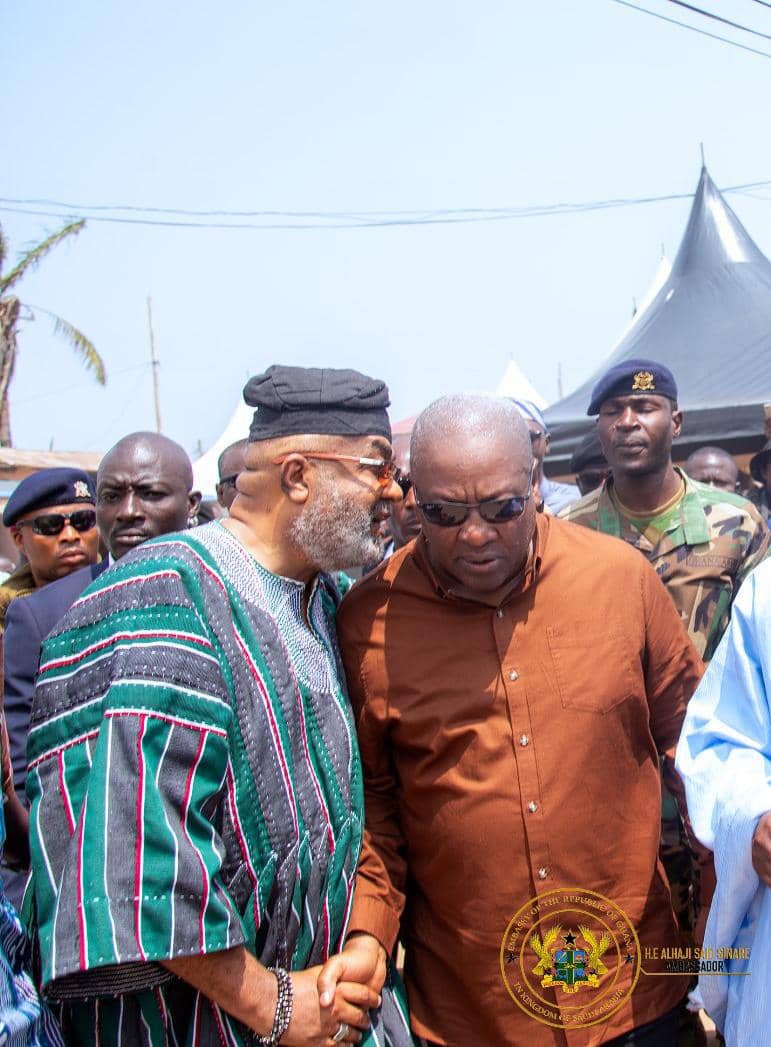
    Ghana’s Ambassador to the Kingdom of Saudi Arabia, H.E. Ambassador Said Sinare, has sent a strong caution to government appointees of the National Democratic Congress (NDC), urging them to stay connected to the party’s grassroots and treat them with respect and empathy as expectations for jobs and opportunities rise under the administration of President John Dramani Mahama.

    Addressing a gathering of party members and youth in Accra, Ambassador Sinare, a seasoned diplomat and politician who has served as former MP for Ayawaso Central, former National Vice Chairman of the NDC, former Ghana Ambassador to Egypt, and Founder of the Zongo for NDC Movement reminded appointees that power is not a trophy but a responsibility to uplift those who carried the party to victory.

    “The NDC’s future lies in recognizing and empowering the grassroots. Let’s give job opportunities to the boys who have sacrificed for the party and continue to keep our flag flying,” he stated.

    The respected envoy praised President John Dramani Mahama for his bold and visionary leadership, saying the country’s renewed sense of economic stability and confidence under his watch presents a golden opportunity for NDC appointees to create sustainable jobs for the youth and grassroots.

    “President Mahama has stabilized the economy and restored hope. This is the moment for our appointees to take advantage of that stability to create jobs for our party boys and the many young Ghanaians who stood with us through the storm,” Sinare said.
    “We cannot afford to disappoint them; we must translate this stability into opportunities.”

    He further cautioned that arrogance and neglect could spell danger for the party if appointees forget the very people who toiled to secure power for the NDC.

    “Tensions and expectations are high, so we must know how to talk to the grassroots if they approach us for jobs. We must never repeat the mistakes of the NPP that provoked their 38% in the last election,” Sinare declared.

    Ambassador Sinare described the NDC’s grassroots as “the living engine, the unseen warriors, and the unstoppable force that turns words into victory.”
    He stressed that the party’s true power lies not in elite boardrooms or political rhetoric, but in the loyalty, sweat, and courage of ordinary men and women across the country.

    “Our boys and girls at the base are the ones who risk everything during elections. They go house to house, rain or shine, defending the party’s colors and message. When power comes, they must not be forgotten,” he emphasized.

    The veteran politician, who is widely respected in Zongo communities and known for his inclusive leadership, urged ministers, MMDCEs, and government appointees to use their offices to build bridges of hope between the government and the people.

    “Political power is a trust, not a privilege,” he reminded. “If we empower our base today, we secure the NDC’s victory tomorrow.”


    Ambassador Sinare lauded President Mahama’s renewed focus on jobs, industrial expansion, and youth empowerment, describing him as “a leader with a heart for the people and a vision that listens to the grassroots.” He said the NDC must rally behind the President’s development drive by ensuring that every decision taken at the top reflects positively at the base.

    His message has resonated strongly among party activists and youth groups who believe it captures the mood of the grassroots, a call for inclusion, recognition, and real opportunity.

  • Distortions and Misinformation amplified in article written by Dr Atuahene Akwasi on Non-Interest Banking and Finance in Ghana

    Distortions and Misinformation amplified in article written by Dr Atuahene Akwasi on Non-Interest Banking and Finance in Ghana

    By Adnan Adams Mohammed

    (Certified Islamic Finance Professional and An Award-winning Finance Journalist)

    I am compelled to respond to a ‘purported’ academic article written by Dr Atuahene Akwasi Atuahene titled “Potential challenges, Issues that could hamper the establishment and operationalization of Islamic Banking System-: ‘A ahasase of Ghana’- Policy recommendations” and published in Accra-based newspaper on October 16, 2025.

    While it is trite knowledge that allegations leveled against Islamic banking are largely false , It is shocking at the article’s deliberate distortions and misinformation regarding the introduction of Non-Interest Banking and Finance in Ghana.

    Readers are aware that the Bank of Ghana’s team, led by Professor John John Gartchie Gatsi, has embarked on extensive stakeholder consultation towards drafting a framework for Non-Interest Banking and Finance (NIBF), which is a commendable effort towards financial inclusion and diversification.

    The initial process of stakeholders and religious bodies consultation as well as the jurisdictional tour were all efforts towards learning from the challenges and successes and the best practices globally of the non-interest banking and finance systems. Likewise, the Bank of Ghana acknowledging the earlier implementation challenges Nigerians and Kenyans faced.

    Addressing Potential Challenges and Issues

    Although, the article highlights potential challenges and issues that could hamper the establishment and operationalization of the Non-Interest Banking and Finance system in Ghana which include:

    – Constitutional and legal challenges
    – Religious and cultural differences
    – Shari’ah-related issues
    – Double taxation
    – Inadequate human resources
    – Disparity in accounting standards

    In my engagement with the Central Bank of Ghana as a certified Islamic finance professional and an award winning financial journalist, the Bank has not been oblivious of such issues in its processes. However, it has further harnessed welcoming concrete engagement outcomes which address the issues indicated in the article. It is as though the writer was rehashing very early challenges faced by the industry in Nigeria and Kenya. The industry in Nigeria in particular has moved on with so many innovations and development of liquidity management tools. Even conventional banking, liquidity management strategies have been evolving from time to time. Same will be the situation with Ghana.

    It is clear that those constitutional and legal matters raised do not arise. The Bank recognised that, the Constitution of Ghana, rather, promotes religious inclusivity and diversity for national development, as such, non-interest banking and finance is a tool to promote financial inclusivity for cohesive national development.

    Further to address the challenges highlighted in Dr Atuahene’s article; the Bank of Ghana is:

    – Developing an inclusive and comprehensive guideline that accommodates suggestions from all stakeholders of the Ghanaian economy, including major religious groups in Ghana to guide the introduction of the Non-Interest Banking and Finance system in Ghana.
    – Providing education and training for stakeholders, including bankers, regulators, and the public. This has been the focus of the bank till date.
    – Niching a unique governance structure approach in the Ghanaian context to allow inclusivity and diversity in the management of the Non-Interest Banking and Finance system that ensure compliance with best practices. The engagement which l attended has done just that.
    – Encouraging financial innovation and product development
    – Fostering collaboration between conventional and Non-interest banks. This is particularly interesting as the bank discussed about conventional window and fully fledged thus no discrimination.
    – Investing in human resource development and expertise in Non-Interest Banking and Finance .
    – Utilizing financial technology (FinTech) to enhance efficiency and accessibility.
    – Designing marketing strategies that leverage trust, social influence, knowledge, and government support.

    In view of these efforts, there is the need for all stakeholders to support the Bank’s efforts towards the introduction of Non-Interest Banking and Finance in Ghana and work towards creating a conducive environment for its success. The Bank in our engagements

    Together, we can harness the benefits of non-interest banking and promote economic growth and financial inclusion in Ghana.

    The Academics Clash

    Contrary to Dr Atuahene’s neo-Islamophobia position against the NIBF, A lecturer at the University of Ghana Business School and National Banking College, Norman Adu Bamfo, in an article titled “Islamic banking and non-interest finance: Strategic implications for treasury management and banking sector” and published on September 29, 2025, hailed the current government’s will to operationalise Non-Interest Banking And Finance despite it being captured in the current Banking Act.

    He notes “the introduction of Islamic banking under Ghana’s Non-Interest Banking (NIB) framework marks a transformative milestone for the country’s financial system. It is not merely about providing faith-based products, but about embedding an alternative model of finance that emphasizes fairness, transparency, and risk-sharing.

    “For treasury managers, this development reshapes liquidity structures, balance sheet dynamics, and hedging strategies. For the wider banking sector, it promises heightened competition, innovation, and access to new sources of international capital.”

    Implications for treasury and liquidity management

    The Finance expert explains that “For treasury management, the introduction of Islamic banking changes the very structure of balance sheet management. Conventional interest-bearing deposits are replaced by profit-sharing investment accounts such as mudarabah, compelling treasurers to rethink liability modelling and prepare for variability in returns rather than fixed obligations.

    “Liquidity management also becomes more complex, given the scarcity of Non-Interest compliant government securities. Without an active sukuk market, Non- interest banks face difficulties in meeting regulatory liquidity coverage requirements, although the development of a sovereign sukuk program could transform this challenge into an opportunity by providing high-quality liquid assets and establishing a Sharia-compliant yield curve.

    “Risk management practices equally require adaptation. Conventional derivatives often conflict with Sharia principles, limiting the use of widely deployed interest rate swaps or forward contracts.”

    Further noting that, “Treasurers will instead need to rely on Sharia-compliant alternatives such as wa’ad-based FX contracts and commodity murabaha structures to hedge currency and market risks. Moreover, the Bank of Ghana will need to provide Sharia-compliant liquidity windows to ensure that Islamic banks are not disadvantaged in times of stress, thereby guaranteeing a level playing field across the financial sector.”

    Sector-wide dynamics

    Mr Bamfo notes that, “The effects of Islamic banking are not confined to treasury operations. At the systemic level, non-interest finance could accelerate financial inclusion by offering alternatives to segments of the population and SMEs that are reluctant to engage with conventional banks due to interest-based products.

    “For the banking industry, the entry of Islamic banking will inevitably drive competition, with conventional banks likely to launch Islamic windows or ethical finance products of their own. This competition, if well managed, could spur innovation and improve product diversity.

    “The strategic implications extend beyond Ghana’s borders. With a credible Islamic finance framework, the country could attract investment flows from the Middle East and Southeast Asia, leveraging sukuk issuance and Sharia-compliant funds to finance infrastructure at lower costs. Regulatory credibility is therefore essential.”

    Strategic outlook

    Emphasising on the prospects and outlook, Mr Bamfo explained that non-interest finance represents more than a niche innovation; they are strategic levers for Ghana’s financial transformation. “For treasurers, this shift requires new tools, models, and mindsets. For the broader sector, it promises deeper financial inclusion, more diversified capital inflows, and heightened competition.

    “If complemented by regulatory innovation, sovereign sukuk issuance, and capacity building, Islamic banking under the NIB framework has the potential to become a cornerstone of Ghana’s financial future. Properly nurtured, it can anchor systemic stability, broaden participation in the financial system, and position Ghana as a regional hub for ethical and inclusive finance in West Africa.”

    Contextualisation

    Meanwhile, Dr Atuahene in his article could not accurately contextualise the concept and practice and the global integration of NIBF in the financial ecosystem.

    It is therefore imperative to look at the brief history and acknowledge that, Non-Interest Banking and Finance has come a long way, and its integration into the global financial ecosystem presents opportunities for growth, financial inclusion, and stability.

    Brief History

    Non-Interest Banking and Finance, also known as Islamic banking, has its roots in the early Islamic period. The concept of Islamic finance dates back to the 7th century, when Islamic principles prohibited the collection and payment of interest (riba).

    The modern era of Islamic banking began in the 1960s, with the establishment of the Mit Ghamr Savings Bank in Egypt (1963) and the Islamic Development Bank (IDB) in Jeddah, Saudi Arabia (1975).

    Global Expansion:

    Today, Islamic banking is a rapidly growing industry, with over 1,800 Islamic financial institutions operating in more than 80 countries worldwide. The global Islamic finance industry has grown significantly, with assets expected to reach $3.8 trillion by 2025.

    Integration in Global Financial Ecosystem:

    Non-Interest Banking and Finance has become an integral part of the global financial ecosystem, offering:

    1. Alternative funding sources: Islamic finance provides an alternative to conventional banking, catering to the needs of Muslims and non-Muslims alike.
    2. Diversification: Islamic finance instruments, such as sukuk (Islamic bonds), provide diversification opportunities for investors.
    3. Financial inclusion: Islamic finance promotes financial inclusion by offering Shariah-compliant products that cater to the needs of underserved communities.
    4. Stability: Islamic finance’s emphasis on risk-sharing and asset-backed financing can contribute to financial stability.

    Key Players:

    1. Central banks: Regulate and supervise Islamic financial institutions.
    2. Islamic financial institutions: Offer Shariah-compliant products and services.
    3. International organizations: Organizations like the Islamic Development Bank (IDB) and the Accounting and Auditing Organization for Islamic Financial Institutions (AAOIFI) promote Islamic finance development.

    Commendation

    I commend the Bank of Ghana for its extensive stakeholder consultation and efforts towards drafting a framework for Non-Interest Banking and Finance. This demonstrates the Bank’s commitment to financial inclusion and diversification. Non- interest banking is part of the global financial system as such the Bank of Ghana is right to expand the opportunities in the economy through non-interest banking and finance.

  • Gov’t pays GH₵994 per student to private schools under Free SHS – Min. of Education

    Gov’t pays GH₵994 per student to private schools under Free SHS – Min. of Education

    The Ministry of Education has pledged to pay GH₵994 per student annually to support private schools participating in this year’s Free Senior High School (SHS) programme.

    The commitment was announced during the signing of a Memorandum of Understanding (MoU) between the Ministry and the Conference of Heads of Private Second Cycle Schools, formalising the inclusion of selected private SHSs in the Free SHS policy.

    Education Minister Haruna Iddrisu explained that the support, which is expected to benefit about 25,000 students, forms part of the government’s efforts to eliminate the double-track system in public schools.

    “The government is committed to providing a stipend to support the transition of that category of students moving into private schools—that’s negotiable, we’ll still discuss as and when,” he said.

    “But for a start, that’s the commitment we make to the Ghana National Council of Private Schools for this pilot inclusion of selected private schools in the provision of Free Senior High School education, as part of the government’s effort to end double track.”

    President of the Conference of Heads of Private Second Cycle Schools, I.K. Mensah, commended the government for the initiative and clarified the terms of the pilot programme.

    “And the caveat is that, for now, during this pilot system, he’s going to place only day schools to us by the payment of 994 Cedis for a child in private second-cycle schools,” he explained.

    He further noted that parents who wish to have their wards as boarders can make up the difference between the government’s payment and the school’s boarding fees.

    “Now, what is happening is that we know some private schools have different payments, different plans, and different payments for boarders and all that. So, if you are placed as a day student and you think your child comes from far and wants to access boarding facilities at that school, then you sit with the school and pay the difference between what the school is charging,” he said.

    “For example, if it’s 2,000, it means the government has already paid or is going to pay 994 for that child who has come there. It’s up to you, the parent and the school, to pay the difference of, let’s say, 1,060 Cedi so that the child becomes a full-time boarding student.

    So, what the government is giving us now is for day students, and they are to pay, or the government is going to pay, 994 Cedi for this pilot program.”


  • Reforms to secure long-term macroeconomic stability – Ghana’s economy managers buzz int’l investors

    Reforms to secure long-term macroeconomic stability – Ghana’s economy managers buzz int’l investors

    Key managers of Ghana’s economy have buzzed international investors and development agencies with assurance of sustaining the current economic reforms and gains.

    In separate sessions of meetings with development partners, Ghana’s Minister of Finance and the Governor of Bank of Ghana exhumed confidence and optimism of putting the economy on a remarkable structural and fiscal reforms that will secure a long-term macroeconomic stability.

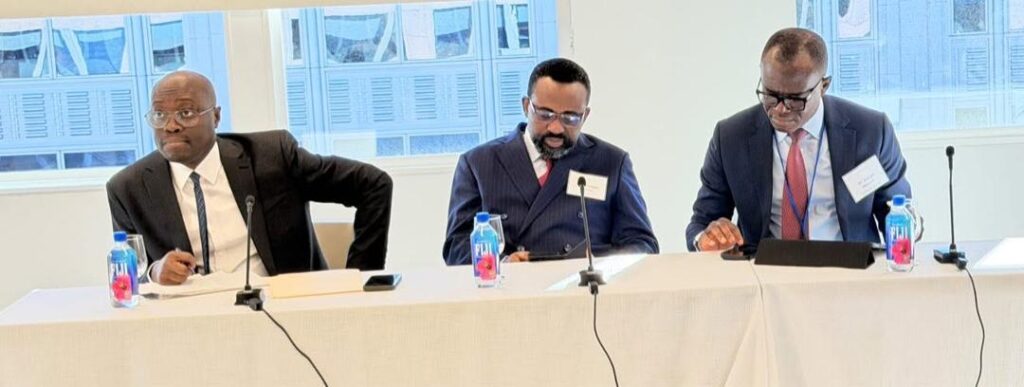
    During a sideline event of the 2025 IMF and World Bank Annual Meetings while speaking to a packed audience of investors in Washington, Minister for Finance, Dr. Cassiel Ato Forson, expressed strong optimism about the sustainability of the ongoing structural and fiscal reforms, which he said are designed to secure long-term macroeconomic stability.

    “Ghana is on track. We will sustain the gains”, Dr Forson said.

    Also, Governor of the Bank of Ghana, Dr. Johnson Asiama, speaking at the IMF/World Bank Governor Talk Series in Washington D.C., under the theme “From Crisis to Confidence: Ghana’s Journey to Macroeconomic Stabilisation”, boasted that “growth has rebounded, inflation has cooled, and Ghana is now outperforming expectations under the IMF programme.

    “Inflation, which stood at 23.5 percent in January 2025, has since dropped to 9.4 percent in September the first single-digit rate in four years, beating the government’s 11.9 percent target.”

    Dr. Asiama reaffirmed the central bank’s commitment to sustaining macroeconomic stability through prudent policy management and market confidence restoration.

    Improved indicators

    Dr Forson, in his statement underscored that, the country’s economic turnaround is already evident in declining debt vulnerabilities and stronger macroeconomic fundamentals, reflecting the effectiveness of government policy interventions and reforms.

    Consequently, Ghana’s economic growth is projected to rebound strongly in the final quarter of the year, as the second quarter grew 6.3% according to Ghana Statistical Service data, led by a revitalised real sector, while inflation, which has already seen significant declines, is expected to ease further and remain in single digits by year-end.

    “The government remains on course to achieve a positive primary balance of 1.5% of GDP by the close of the fiscal year, a milestone that will further consolidate the gains made under ongoing fiscal reforms.

    Ghana’s recovery

    Dr Asiama indicated that Ghana’s economy has made a firm recovery after years of instability, describing the country as being “back on track” following months of policy discipline and reform. While he reflected on the state of the economy when he assumed office.

    “We came to meet a challenged economy in the sense that remember we had a domestic debt issue in 2022, fiscal policy was highly expansionary. It led to us exiting the international financial market. There was resort to domestic financing.

    “We remember all the sovereign downgrades we had to suffer. We came into office with a lot of liquidity, high inflation, [and] an exchange rate that was depreciating widely,” he said.

    He disclosed that at the time, there were even discussions on whether Ghana should cancel its IMF-supported programme, as doubts loomed over the country’s ability to meet its targets.

    “And I remember when we came in there were talks about if we should cancel the programme altogether, there were doubts as to whether we will be able to carry on the programme.

    “But I am happy to say that eight months down the road we have turned the corner. Ghana is back,” Dr. Asiama declared.

    Fiscal consolidation

    Dr. Forson reaffirmed the government’s dedication to implementing fiscal consolidation measures anchored on tight expenditure controls and prudent financial management.

    This comes as the ministry has revealed that, over 70 public sector entities, including several Metropolitan, Municipal and District Assemblies (MMDAs), have complied with the Public Financial Management (PFM) Commitment Control and Expenditure Management Measures issued by the Minister for Finance on May 2, 2025.

    The compliance update follows the submission of quarterly commitment control review reports to the Internal Audit Agency (IAA), in line with efforts to strengthen fiscal discipline and improve expenditure efficiency across government institutions.

    The Ministry’s guidelines were designed to ensure that public entities commit and spend within approved budgetary limits, prevent the accumulation of arrears, and enhance transparency in the management of public funds.

    Some of the institutions are GoldBod, Tema Oil Refinery, Ghana Enterprise Agency, Public Utilities and Regulatory Commission, Rent Control Department, State Interests and Governance Authority, Venture Capital Trust Fund, Department of Parks and Gardens.Ghanaian Events Calendar

    Others include, NaCCA, Office of the Head of Civil Service, Office of the Administrator of Stool Lands, some Ministries, some Colleges of Education and MMDAs.

    This high compliance rate signals increasing adherence to fiscal responsibility principles and improved coordination between internal auditors and spending officers.

    The next phase is expected to focus on deepening real-time expenditure monitoring, addressing non-compliant entities, and promoting greater accountability across the public financial management ecosystem.

    The move aligns with the government’s broader PFM reform agenda, which seeks to consolidate gains in macroeconomic stability, control public spending, and strengthen the integrity of Ghana’s fiscal management framework.


    By Adnan Adams Mohammed

  • Garden Chat: Mahama courts Mitchell’s support for UN motion on slavery reparations

    Garden Chat: Mahama courts Mitchell’s support for UN motion on slavery reparations

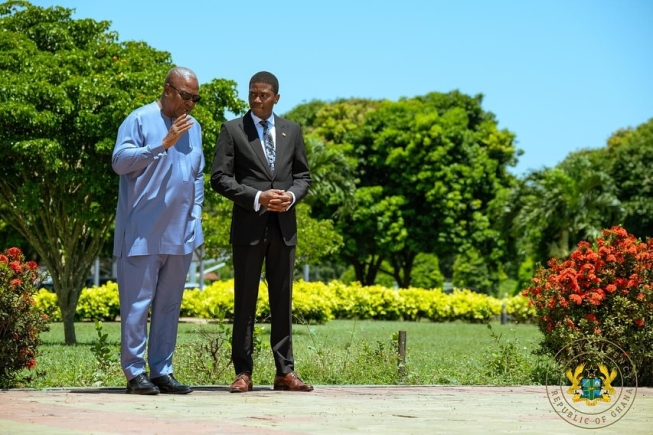
    President John Dramani Mahama has reaffirmed Ghana’s commitment to seeking justice for the historical atrocities of slavery, following a conversation with Prime Minister Dickon Mitchell of Grenada.

    In a statement shared after what he described as a “garden conversation” with the Grenadian leader on Facebook on Saturday, October 18, Mahama reiterated that during this year’s United Nations General Assembly, he announced Ghana’s intention to file a motion at the UN next year to formally recognise slavery as one of the greatest crimes against humanity.Ghanaian Events Calendar

    As the African Union’s Champion for Reparations, Mahama emphasised that the push for recognition and redress is not about seeking charity but demanding justice and restoration for the descendants of enslaved Africans.

    “This cause is not a plea for charity, but a demand for justice and restoration,” Mahama said.

    He expressed confidence in the support of Prime Minister Mitchell, as well as leaders across the Caribbean and the African Union, in backing the motion at the global forum.

  • Azumah Resources transfer full ownership of concessions to E&P … after receiving $100m payment

    Azumah Resources transfer full ownership of concessions to E&P … after receiving $100m payment

    Engineers & Planners Company Limited (E&P) has successfully completed the full payment of $100 million to former owners of Azumah Resources Ghana Limited to acquire the asset, making it a wholly Ghanaian-owned large-scale mining company.

    The transaction, which covers all rights and interests in the Black Volta Gold Project and the Sankofa Gold Project, marks the final phase of a long and complex equity transfer process that now places full ownership and operational control of Azumah Resources in Ghanaian hands.

    At a press briefing in Accra, the Board of Directors of Azumah Resources Ghana Ltd formally announced that the company is now under new ownership and management following the completion of negotiations and the full settlement of US$100 million by E&P, owned by Ghanaian businessman Mr. Ibrahim Mahama.

    The payment, made through the ECOWAS Bank for International Development (EBID), with Standard Chartered Bank, London, serving as the correspondent bank, completed the transfer of all shares and financial obligations owed to the company’s previous foreign shareholders — IGIC of Singapore and Cangol.

    Breakdown of $100m payment

    According to the company, $91.9 million ($91,923,963) was paid to IGIG and $8 million ($8,076,037) to Cangol, representing full settlement under the Loan Novation Agreement and Settlement Confirmation Agreement signed on September 23, 2025.

    The completion of these payments cements E&P’s position as the sole owner of Azumah Resources and its two major gold concessions.

    Following this milestone, the Board of Azumah Resources has been reconstituted to reflect the new ownership structure.

    All foreign directors have resigned, paving the way for a new Ghanaian management team to take charge of the company’s strategic and operational direction.

    The new board and management have pledged to immediately engage statutory regulators and relevant third-party entities to ensure a smooth transition in compliance with Ghanaian mining laws and corporate governance standards.

    Announcing the transition, Mr. Noel Nii Addo, Chief Executive Officer (CEO) of Azumah Resources, described the acquisition as “a defining moment” in Ghana’s mining history.

    He said the process had been “long and complex but ultimately successful,” crediting the perseverance of both E&P and Azumah teams for navigating the demanding negotiations and financing structure.

    “The journey began on July 7, 2025, when E&P entered into an agreement with EBID to secure a $100 million facility for the acquisition of Azumah Resources,” Mr. Addo recounted.

    He added that E&P officially took over Azumah on September 5, 2025, after fulfilling the terms of the shareholders’ agreement.

    “As we speak, the single beneficial owner of Azumah Resources is E&P, through its Executive Chairman, Mr. Ibrahim Mahama,” he declared to loud applause.

    Azumah Resources

    Mr. Addo explained that the transaction was executed in two key components an equity takeover and the settlement of Azumah’s outstanding loan facilities.

    “This transaction was about more than just money; it was about restoring ownership and control of Ghana’s mineral wealth to Ghanaian hands,” he emphasised.

    He further noted that the reconstituted board now reflects full Ghanaian ownership, with all former foreign directors having “gracefully exited” the company.

    “This transition gives us a fresh start a chance to build a mining company that reflects Ghanaian excellence, responsibility, and innovation,” he stated.

    “This is a new chapter for Azumah and for Ghana’s mining industry. We are excited about the future and committed to ensuring that this investment translates into real value for the country,” Mr. Addo added.

    From exploration to ownership

    Taking the audience through the detailed timelines, financing, and documentation of the acquisition, Executive Director of Sustainability and Finance at Azumah Resources Gh Ltd, Mr. Philemon Okyere Danquah traced the project’s 30-year journey from exploration to full Ghanaian ownership.

    He explained that exploratory work began as far back as 1990 when BHP conducted the first geological surveys in the Black Volta area.

    In 1998, Ashanti Iam-Gold made the initial discovery at Kunche, paving the way for Azumah Resources to acquire the concession and list it on the Australian Stock Exchange in 2006.

    By 2010, exploration data had confirmed about one million ounces of gold, but financial and ownership challenges persisted, leading to several changes in control.

    In 2017, Ibaera Capital, an Australian investment group, came in as an investor and took full control in 2020.

    However, by 2022, the Black Volta Project couldn’t progress to the development phase amidst outstanding regulatory breaches and cash flow constraints,” Mr. Danquah recounted.

    Faced with these difficulties, he said Ibaera and its partners reached out to E&P for potential acquisition.

    After preliminary discussions, desktop due diligence was conducted in 2023, culminating in an Acquisition and Development Framework Agreement signed in October 2023.

    “From that point, E&P began injecting an average of $500,000 per month to sustain the project and address pressing obligations,” Mr. Danquah revealed.

    In 2024, the company engaged financiers, including the ECOWAS Bank for International Development, Sprout Group, among other international finance houses, of which the Project received issued term sheets to support the financing structure.

    After extensive due diligence and final regulatory approvals in 2025, E&P completed the transaction.

    “This acquisition brings to a close a journey that began in 1990. We have moved from exploration to ownership, and now we stand at the threshold of full-scale development,” he said.

    Mr. Danquah further announced two major international partnerships going through the onboarding process: SGS Bateman to be confirmed and appointed as Owner’s Engineering firm, subject to all Board governance procedures.

    SGS joins this project with over 100 years of mine design and execution experience, while FLSmidth, a world leader with over 140 years of expertise in gold processing technology, has been contracted as the potential technology partner, subject to all Board governance procedures.

    “These world-class firms will ensure that the Black Volta Project meets the highest global standards in engineering, safety, and environmental management,” he said.

    He confirmed that all necessary permits have been secured, and the company has completed the onboarding of technical teams to commence full development of the mine.

    “All permits are in place, and the financing has been fully settled. We are now entering the development phase — a new era for Ghana’s gold mining industry, driven by local ownership and global best practices,” he concluded.

    A turning point in Ghana’s mining history

    Adding his voice, Nana Dwemoh Benneh, Non-Executive Director of Azumah Resources, described the acquisition as “a turning point in Ghana’s mining history,” celebrating it as a symbol of national pride and self-reliance.

    “For more than a century, the custodianship of Ghana’s gold has largely been in the hands of foreigners,” he said.

    “Today, we are proud to say we are turning that around. We now have a Ghanaian company taking full control of our gold resources and adding value for our country.”

    Azumah Resources

    He praised E&P for leading the way in local ownership and capacity building, describing the company as “a Ghanaian powerhouse with a proven record of excellence.”

    “It is not surprising that it is E&P leading this effort. They have the experience, the balance sheet, and the vision to make this work,” Mr. Benneh stated.

    He said the project is expected to open up one of Ghana’s largest untapped gold-rich zones in the Upper West Region, bringing jobs, infrastructure, and economic opportunities to local communities.

    “We will not let you down. All hands are on deck to ensure that the investments you have made yield the right returns. We aim to surprise you, Mr. Mahama,” he said confidently.

    Mr. Benneh also expressed appreciation to the project’s legal and technical advisors, singling out Mr. Bobby Banson, whose legal work he described as “worthy of a case study.”

    He commended the Ghanaian professionals involved in the deal for their discipline, tenacity, and professionalism.

    “The last three months have been a period of intense work and national pride. What we have achieved is proof that Ghanaians can structure and deliver world-class transactions in the extractive industry,” he added.

    He concluded by acknowledging the staff of Azumah Resources in both Wa and Accra, whose years of commitment had made the project possible.

    “The people of Wa have waited for this mine for nearly 30 years. What we are witnessing today is the beginning of a new chapter that will redefine Ghana’s mining story,” he said.

    Jobs, infrastructure, and sustainable growth

    With the transition now complete, Azumah Resources, under its new Ghanaian ownership, is set to begin full-scale development of the Black Volta and Sankofa Gold Projects.

    The company has pledged to focus on local employment, community infrastructure, and environmental stewardship as the three core pillars of its operational strategy.

    The Board reiterated its commitment to developing the project “in a responsible, transparent, and sustainable manner,” ensuring that the benefits of Ghana’s mineral wealth are shared broadly among citizens.

    Industry analysts say the transaction not only strengthens local participation but also serves as a model for future indigenous acquisitions in Ghana’s extractive sector aligning with the government’s policy of deepening local content and value addition.

    With E&P now firmly in control, the Black Volta Gold Project is poised to become Ghana’s next major indigenous mining success story, representing not just wealth but sovereignty, pride, and the power of Ghanaian enterprise.

    All the top executives of E&P and Azumah Resources graced the launch event, underscoring the strategic importance of the Black Volta and Sankofa Gold Projects to Ghana’s mining future.

    Adding prestige to the occasion was renowned mining magnate Sir Sam Jonah, who attended as the Special Guest.

    E&P executives

    The E&P delegation was led by its Founder and Chief Executive Officer, Ibrahim Mahama, alongside Sid Steyn, Managing Director and Executive Director; Majeed Abudu, Executive Director for Technical Services; Biliguo Adama, Director of Operations; Rev. Adi Ayitevie, Executive Director of Commercial Services; Emmanuel Kwaw Erskine, Business Development Director; and Philip Addai Mensah, Human Resource Director.

    Azumah Resources executives

    Representing Azumah Resources were Noel Nii Addo, Chief Executive Officer; Nana Benneh, Non-Executive Director; Hector Amponsah Nyinaku, Director of Administration and Human Resources; Philemon Okyere Danquah, Executive Director of Sustainability and Finance; and Owusu Ansah Anwere, Head of Human Resources.



  • Solo Kumordzi Laments to Asiedu Nketia, Demands Fair Share of Appointments for Loyal Ketu South Constituency

    Solo Kumordzi Laments to Asiedu Nketia, Demands Fair Share of Appointments for Loyal Ketu South Constituency

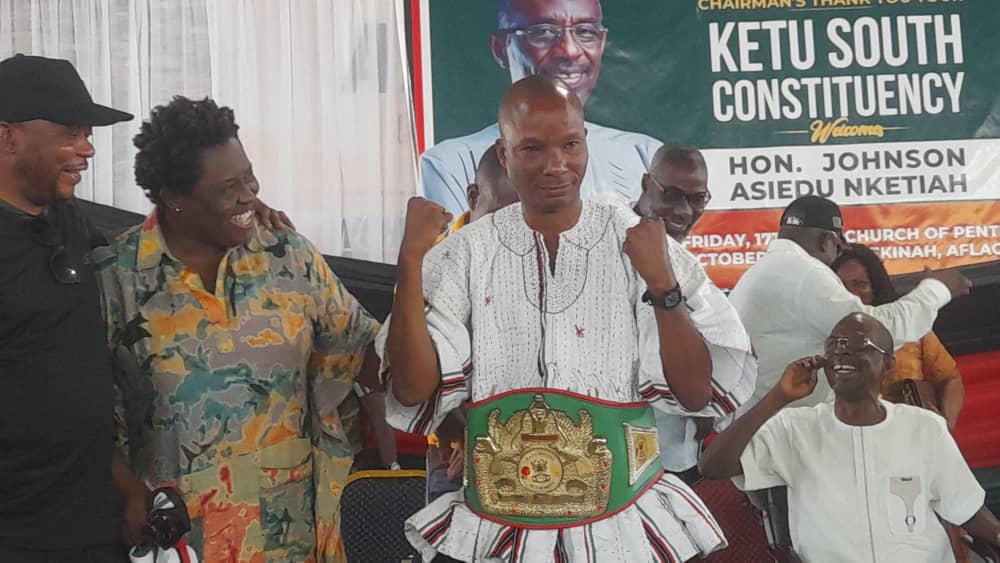
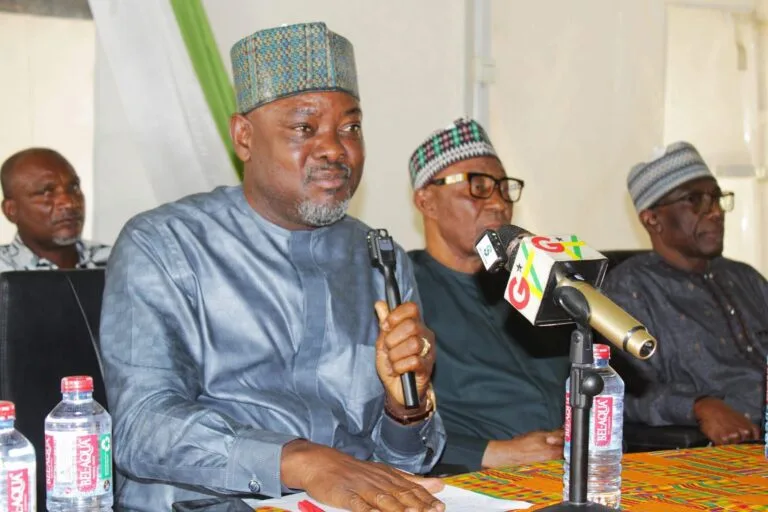
    The Constituency Chairman of the ruling National Democratic Congress (NDC) in Ketu South, Mr. Solo Kumordzi popularly known as Ghana Chairman has passionately appealed to the party’s national leadership to reward the constituency’s loyalty with meaningful appointments in the current government.


    Speaking during the “Thank You Tour” of NDC National Chairman, Hon. Johnson Asiedu Nketia, Mr. Kumordzi delivered a heartfelt and unapologetic plea, lamenting that despite Ketu South’s unmatched electoral loyalty and consistent delivery of massive votes for the party, the constituency continues to be overlooked when it comes to government positions and opportunities.


    “Mr. Chairman, we have done our part for the NDC, election after election. We have stood firm, we have sacrificed, and we have delivered votes in numbers no constituency can match. Yet, when it comes to appointments and opportunities, Ketu South is always left behind. This is not fair to our people,” he stated passionately.

    Mr. Kumordzi noted that Ketu South remains one of the most reliable pillars of the NDC’s electoral strength nationwide, often delivering some of the highest vote margins in every election cycle. However, this loyalty, he said, has not been met with the recognition and reward it deserves.


    “Our people are becoming discouraged. They are asking why their sacrifices are not reflected in government. We are not asking for too much — we only want to see our sons and daughters represented in positions of influence, from boards and agencies to deputy ministerial roles and ambassadorial appointments,” he added.

    The constituency chairman further stressed that the morale of the grassroots is tied to how the party treats its most committed supporters. He warned that neglecting such a crucial base could have long-term political consequences if not addressed swiftly and decisively.


    Responding to the concerns, National Chairman Asiedu Nketia acknowledged the pivotal role Ketu South has played in the party’s political successes and assured the people that their loyalty has not gone unnoticed. He pledged that the leadership of the NDC will work towards a more equitable distribution of opportunities to reflect the party’s diverse support base.


    The “Thank You Tour” forms part of the NDC’s broader efforts to reconnect with its grassroots, express gratitude for their support, and address concerns ahead of future political battles.

  • Shenmo Ghana Shines at African Shenmo Cup in Rwanda

    Shenmo Ghana Shines at African Shenmo Cup in Rwanda

    Ghana made a strong impression at the 2nd African Shenmo Cup International Abacus Mental Olympiad held at the Kigali Conference and Exhibition Village in Rwanda, as Shenmo Ghana swept top honours in a highly competitive event.

    Representing Ghana, Ridwan Mahmoud Jajah and Ummu Sulaim Abass of Al-Hikmah Islamic Montessori School emerged winners, clinching 1st and 3rd place respectively out of over 300 contestants drawn from 30 African countries including Kenya, Rwanda, Libya, Zambia, Mozambique, Mali, Namibia, Nigeria, Tanzania and Cameroon.

    Both Ridwan and Ummu also won two gold medals and two trophies for Ghana in the Level 1 category, following an impressive display of Abacus Mental Math skills.

    The Ghanaian contingent was led by Shenmo Ghana Principal, Mr. Musa Frimpong, and Abacus Instructor, Mr. Joseph Gyebi. The victorious team is expected to arrive back home on Wednesday, 22nd October 2025.

    Congratulations have poured in for Team Ghana, represented by Shenmo Ghana and Al-Hikmah Islamic Montessori School, for lifting the nation’s flag high and making the country proud on the international stage.