Category: News

  • About 30 Journalists undergoing training to strengthen capacity on accountability journalism

    About 30 Journalists undergoing training to strengthen capacity on accountability journalism

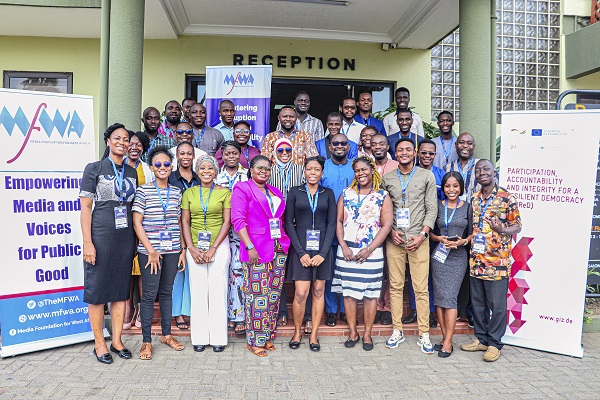
    The Media Foundation for West Africa (MFWA) has stepped up efforts to promote accountability in Ghana with a new training programme aimed at strengthening investigative reporting skills.

    About 30 journalists selected from the Greater Accra, Ashanti and Northern Regions, last week, took part in the first phase of the programme at the Sunlodge Hotel in Accra. The initiative will continue with sessions on the Right to Information (RTI) law, data journalism and fact-checking.

    Experts from Transparency International Ghana, Corruption Watch and the Fourth Estate led the opening sessions, which focused on tracking financial corruption, safeguarding sources and applying Ghana’s key anti-graft laws.

    “Our mission is to nurture a new generation of fearless and ethical investigative journalists dedicated to the public interest,” said Rosemond Aryeetey, MFWA’s senior manager for Media for Democracy and Good Governance. “Specifically for this training, we brought journalists together from selected regions in Ghana to upscale them and enhance their capacity when it comes to reporting on corruption issues, teaching them the skills and knowledge to expose corruption and promote transparency and accountability from duty-bearers.”

    The programme also tackled the mental strain of investigative reporting. Fourth Estate journalist Seth J. Bokpe stressed the need for resilience and professional support, warning that newsroom pressures and the intensity of corruption investigations “can be overwhelming and take a serious toll on mental health.”

    Kweku Lartey Obeng, component manager at GIZ Ghana, described the journalists as “unsung heroes of democracy” and cautioned that “corruption robs the nation of our very future… it steals opportunities from our children, drains resources meant for development, and dashes the hopes of our youth.” He challenged participants to put their new skills into action: “Our expectation is very simple: that the skills and tools you acquire here will translate into impactful stories; stories that inspire change, expose wrongdoing, and hold power to account.”

    Participants said the workshop sharpened their investigative skills, expanded their knowledge of legal frameworks and underscored the importance of mental health in journalism. One attendee summed up the call to action: the training “reinforced that every journalist must embrace investigative work to expose wrongdoing and demand accountability.”

    The programme, supported by the German Development Cooperation (GIZ) through the Participation, Accountability, Integrity for a Resilient Democracy (PAIReD) project and run in partnership with the Ministry of Finance, continues MFWA’s long record of promoting transparency, ethical reporting and citizen participation.
  • Efforts to remove taxes on goods in transit underway – GPHA boss

    Efforts to remove taxes on goods in transit underway – GPHA boss

    The acting Director-General of the Ghana Ports and Harbours Authority (GPHA), Brigadier-General Paul Seidu Tanye-Kulono, has revealed that efforts to scrap taxes on goods in transit are far advanced.

    Goods in transit refers to merchandise and other types of inventory that have left the shipping dock of the seller, but not yet reached the receiving dock of the buyer.

    Describing the move as a significant step towards easing the cost of doing business in Ghana’s ports, Brigadier-General Tanye-Kulono acknowledged the longstanding concerns raised by industry players regarding excessive levies and their impact on trade competitiveness. “We have certain taxes and levies imposed on goods and services that make the cost of doing business high,” he stated

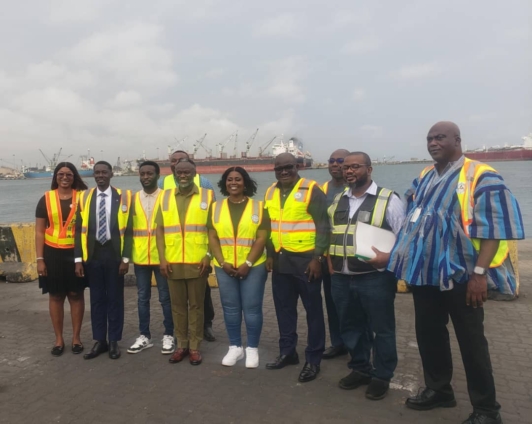
    Addressing the Deputy Minister for Transport, Dorcas Affo-Toffey while on a familiarization tour at the ports, Brigadier-General Tanye-Kulono stated that “we had a consultant who listened to us, and we have been able to resolve some of the issues. I know the taxes on transit goods are being worked on, so at the appropriate time, it will be cleared.”

    He also emphasized that the reduction in transit taxes is expected to boost Ghana’s appeal as a regional trade hub, particularly for landlocked neighboring countries that rely on Ghana’s ports.

    In addition to tax reforms, Brigadier-General Tanye-Kulono highlighted GPHA’s commitment to digital transformation in reducing the turn-around of operations at the ports. He noted that the Authority will roll-out a digital platform from next year in this regard.

    “We have also tried to reduce the human interface with digitalization. So hopefully next year, we will roll out some of these digital solutions to reduce human interface and quicken the clearing of goods at the port,” he said.

    Deputy Minister for Transport, Dorcas Affo-Toffey reiterated President Mahama’s vision of making Ghana’s ports attractive. She emphasized the need to clear nuisance taxes and charges at the ports which make operations costly.

    Her visit to the Tema Port forms part of a broader initiative to familiarize herself with the operations of agencies under the Ministry of Transport.

    She also visited the Regional Maritime University and the Tema Shipyard Limited.


  • Mahama demands reset of global financial architecture skewed against Africa

    Mahama demands reset of global financial architecture skewed against Africa

    President John Dramani Mahama is calling for Africa to have a stronger voice in the world’s multilateral financial institutions.

    He argues that the global financial architecture is skewed against the continent.

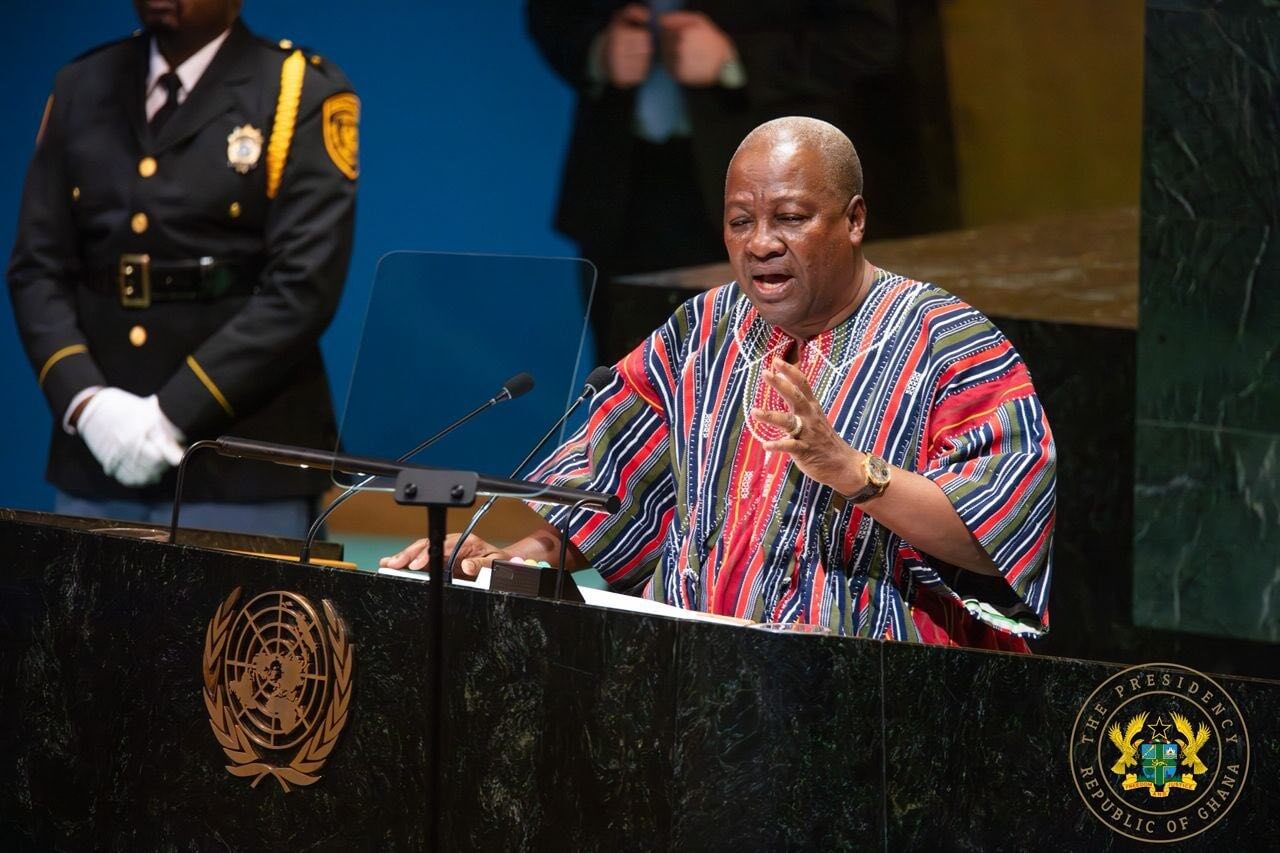
    President John Dramani Mahama made the remarks while delivering Ghana’s address at the 80th United Nations General Assembly.

    “We demand not only a reform of the Security Council, but also a reset of the global financial architecture, which is currently rigged against Africa. Africa must have a greater say in the world’s multilateral financial institutions,” he declared.

    President John Dramani Mahama has also been touting Ghana’s economic turnaround under his administration.

    He said his government has strengthened the cedi, reduced inflation to 11.5%, and restored price stability within eight months of assuming office.

    “In just eight months, we have achieved a significant reduction in inflation, from 23.8% in December 2024 to 11.5% in August 2025, restoring price stability for our citizens. Additionally, the Ghana cedi has appreciated considerably against other currencies, with Bloomberg reporting it as the best-performing currency in the world at one point. Our improved sovereign credit rating reflects increasing investor confidence. Our 24-Hour Economy Initiative promises to transform our economy,” the president remarked.


  • ADB posts GH₵35m net profit in 2024

    The Agriculture Development Bank (ADB) has declared a remarkable financial turnaround, bouncing back from a significant loss in 2023, to profit in 2024.


    At its Annual General Meeting (AGM) in Accra on September 24, 2025 the bank announced a net profit of GH₵35.06 million in 2024, reversing its GH₵828.8 million loss recorded the previous year.


    Board Chairman, Kenneth Kwamena Thompson, attributed the recovery to solid financial performance and strategic growth initiatives. He highlighted improvements in the bank’s capital adequacy ratio, though he admitted it still falls below regulatory requirements.


    “Key challenges persist in areas of loan book contraction and high non-performing loans, which continue to constrain credit growth and profitability potential,” Mr. Thompson told shareholders.


    The bank reported that its non-performing loans (NPL) ratio worsened, rising from 70.25% in 2023 to 75.26% in 2024. This, Mr. Thompson noted, underscores the difficulties in loan recovery and asset quality, which continue to weigh on profitability and capital.


    Despite these hurdles, ADB’s balance sheet showed strong growth. The bank’s total assets surged by 57%, from GH₵9.31 billion in 2023 to GH₵14.60 billion in 2024. Customer confidence was also reflected in deposit growth, with deposits increasing by 41%, from GH₵8.55 billion to GH₵12.05 billion.


    “On the deposit side, customer deposits also grew strongly highlighting improved customer confidence and stronger mobilization efforts,” Mr. Thompson assured.


    Looking ahead, ADB says it is committed to building a resilient, future-ready institution, with focus on innovation, digital transformation, and customer-centric solutions to sustain profitability and growth.


  • Include customer service in electrical wiring professional trainings – Prof Gatsi 

    Professor John Gartchie Gatsi, Board Chair of Energy Commission


    By Adnan Adams Mohammed


    The Energy Commission of Ghana has graduated 340 at its 23rd Electrical Wiring Certification & Awards Ceremony with a call for improved customer services.


    Clad in their graduation attire, the newly certified practitioners stood as a reflection of the hard work, training, and dedication required to meet the standards of professional electrical wiring in Ghana.

    Held under the theme “Empowering Certified Practitioners: Securing L.I. 2008 Through Professional Authentication,” the ceremony reinforced the importance of professionalism and safety in the country’s energy sector.


    The Board Chairman of the Commission, Professor John Gartchie Gatsi, in his remarks called for inclusion of customer service training as part of the soft skills training of the electrical wiring professionals to help them improve on customer service experience. Further indicating that, the Commission places high premium on the ceremony because it is one of the objective ways to ensure professionally skillful men and women involved in the electrical wiring industrial, commercial and domestic facilities are awarded and motivated.


    “We are happy to carry out one of our mandates as a Commission under the Electrical Wiring Regulations, 2011 (L.I. 2008), and related regulations. Electrical wiring of our domestic, commercial and industrial facilities should be done within the context of safety and professionalism to build lasting trust and credibility”, he noted.


    Prof Gatsi assured the Ghanaian public that the Commission will step up its regulatory efforts; including activating the sanctions regime to enhance the environment within which all actors in this industry operate in certifying more Electrical Wiring Professionals. Further indicating that, the Board had already directed management to review the curriculum to include customer relations and care which are key parts of the profession but with less attention being paid.


    “We encourage women to go through the certification process as only 233 females have been certified in the past 12 years representing only 1.3% as against over 17,000 men over the same period.


    “We will also ensure that the annual knowledge update (CPD)for those who have been certified is taken seriously before renewal of practicing licenses are granted.


    According to the Board Chair, over the past 12 years, the Commission certified about 18,000 electrical wiring practitioners. Out of the number, 11,040 focus on domestic facilities while 5,788 on commercial facilities and 827 on industrial facilities. With less than 700 inspectors. We encourage more to enroll to increase safety and credibility in the electrical wiring profession.


    “Regulatory sensitivity and reforms are needed to deliver professional electrical wiring and protect property and business assets. We will therefore strengthen regulatory collaboration and improve our public education. We will step up inspections at the ports of entry to ensure substandard electrical materials are cleared.”


    He called on the graduates, as expected of them in accordance with the ethics of their profession, to report substandard electrical wiring materials which find their way into the marketplace.


    “To our graduates, today’s gathering is not merely to celebrate your achievements, to serve professional ambassadors within the industry and also signal to the public to engage only professionals to undertake electrical wiring of their facilities.”


  • Mahama’s UN address gets a standing ovation  …goes blunt with Western powers on Gaza charade 


    By Adnan Adams Mohammed


    Characterised as one of the bravest speeches at the ongoing 80th United Nations General Assembly in New York, President John Dramani Mahama called the blunt of the reluctance of the global powers (Western powers) for the failure to end the Palestinians suffering.


    The speech, which earned global applauds made a strong call for an end to what he described as ‘crime’ against Palestinians in Gaza, urging world leaders not to shy away from naming the atrocities for what they are.


    “For nearly two years, and for the fear of reprisal, we here in this General Assembly have been playing hide-and-seek with language to find the right words to help us avoid or excuse what we all know is taking place there.


    “But here’s the thing, it doesn’t matter what you call it: if it looks like a duck, swims like a duck, and quacks like a duck, well then… It must be a duck. The crimes in Gaza must stop,” he declared.


    The Ghanaian leader said the suffering of Palestinians could no longer be ignored, stressing that “hundreds of thousands of innocent people” were enduring “collective punishment and forced starvation for no reason other than the fact that they are Palestinian.”


    Reaffirming Ghana’s recognition of Palestine since 1988, President Mahama reiterated his support for a two-state solution, rejecting claims that it would amount to rewarding Hamas.


    Instead, he argued, it offered the best chance of delivering justice and relief to civilians caught in the conflict.


    Mahama also condemned the recent decision to deny visas to Palestinian President Mahmoud Abbas and his delegation, describing it as a “bad precedent” and a direct threat to the integrity of the UN system.


    While he acknowledged broader global challenges—including rising nationalism, economic instability, and the erosion of multilateralism—President Mahama warned that Gaza remained a moral test for the world’s leaders.


  • YEA PRO calls on Zongo youth to embrace employment opportunities

    YEA PRO calls on Zongo youth to embrace employment opportunities

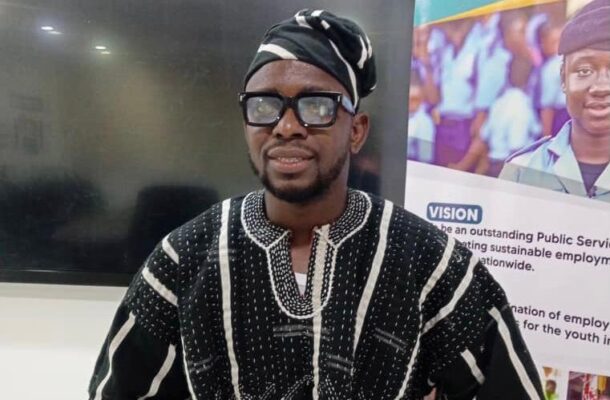
    The Public Relations Officer of the Youth Employment Agency (YEA), Abdul Wahab Jawondo, has urged young people in Zongo communities to take advantage of government employment initiatives.

    “I strongly encourage our Zongo youth to seize these valuable employment opportunities that can transform their lives,” Mr Jawondo said on the Alfijr Show, a morning programme on Marhaba 99.3FM, Accra’s first Hausa-speaking radio station.

    He explained that the initiative “offers pathways to meaningful employment across various sectors for thousands of eligible young Ghanaians” and specifically targets “youth aged between 15 and 35, including university graduates, school leavers, women, persons with disabilities, and members of vulnerable groups.”

    Employment Across Multiple Sectors

    Mr Jawondo outlined a wide range of job opportunities provided under the programme:

    Education: teaching assistants and school support roles.

    Health: community health workers and first responders.

    Security: community protection assistants, fire service assistants, and prison assistants.

    Environment: sanitation work, coastal cleanups, and eco-friendly employment.

    Corporate/private sector: job centres, overseas placements, artisan directories, and internships.


    He further announced the launch of an Arabic instructors module to meet the specific educational needs of certain communities.

    Warning Against Fraudulent Practices

    Mr Jawondo cautioned applicants to remain vigilant.

    “Anyone demanding payment for YEA registration should be reported immediately as this is completely fraudulent,” he warned, emphasising that all YEA programmes are free of charge.

    Track Record and Ongoing Programmes

    The YEA, in partnership with the Ghana Police Service, has already graduated 12,000 Community Protection Assistants nationwide, while 5,000 Fire Service Assistants have been trained with support from the Ghana Fire Service.

    Currently, training is underway for Prison Office Assistants in collaboration with the Ghana Prison Service, and for Community Medical First Responders working with the Ghana Ambulance Service.

    According to Mr Jawondo, these initiatives highlight the agency’s commitment to creating diverse employment opportunities for Ghanaian youth.


  • The Mangrove Effect: the threat of illegal mining and plastic wastes

    The Mangrove Effect: the threat of illegal mining and plastic wastes

    Mangroves are vital ecosystems that provide coastal protection against storms and erosion, filter water, store vast amounts of carbon to combat climate change, and serve as critical nurseries for marine life, supporting fisheries and biodiversity.

    They also offer significant economic benefits, including a source of food, medicine, and building materials for coastal communities.

    Despite the numerous benefits, Ghana’s illegal mining and uncontrolled plastic wastes are significantly impacting mangroves in Ghana’s marine ecosystem.

    The Illegal Mining Effect

    Illegal mining, also known as galamsey, is polluting water bodies and degrading mangrove ecosystems. This activity involves the use of hazardous chemicals like mercury and cyanide, which contaminate water sources and harm aquatic life.

    Such mining operations often lead to the destruction of mangrove habitats, causing loss of biodiversity and disrupting the ecosystem.
    Mercury levels in water bodies affected by illegal mining exceed safe thresholds, posing health risks to humans and marine life.

    Plastic Waste

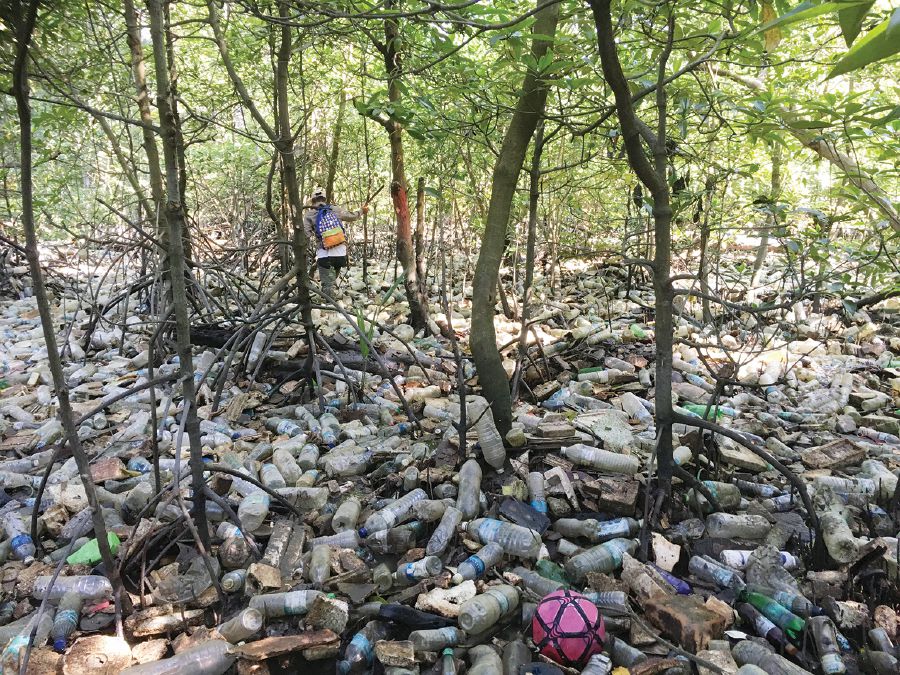
    In recent times, plastic waste is entering Ghana’s ecosystems, including mangrove habitats, causing harm to the environment and wildlife. Mangroves can trap plastics and sediments, but excessive plastic pollution can still harm the ecosystem.

    Plastic pollution, combined with overfishing and habitat destruction, is depleting fisheries and affecting the livelihoods of fishing communities

    Conservation Efforts

    Many non-governmental organizations and fragmented governmental initiatives are currently running to help in mangrove restoration. Initiatives like the Mangrove Blue Carbon Pilot Program aim to restore mangrove forests, promote sustainable livelihoods, and mitigate climate change.

    Among major actors in the mangrove restoration effort is ‘Hen Mpoano’ (meaning “Our Coast” in Akan) is a Ghanaian non-governmental organization dedicated to sustainable management of coastal and marine ecosystems. Based in Takoradi, Western Region, they’ve been working since 2013 to promote inclusive and integrated management of coastal resources.

    Hen Mpoano focuses on restoring degraded mangrove ecosystems, promoting vegetation, and marine life through education and community engagement. They’re currently working on planting 200,000 mangrove seedlings in Ghana’s Greater Amanzule Wetlands.

    The organization designs and implements sustainable livelihood interventions to reduce poverty and food insecurity in coastal communities.

    Hen Mpoano engages with policymakers to advocate for policies promoting sustainable use of coastal and marine resources.

    Hen Mpoano’s efforts aim to benefit approximately two million people in Ghana who depend on coastal ecosystems for their livelihood by promoting sustainable management of coastal resources; the organization contributes to Ghana’s commitment to restore 1.7 million hectares through tree planting by 2030.

    By Adnan Adams Mohammed

  • Govt reiterates commitment to science, innovation, and Public-Private Partnerships for sustainable development – Chief of Staff

    Govt reiterates commitment to science, innovation, and Public-Private Partnerships for sustainable development – Chief of Staff

    The Government of Ghana has reaffirmed its dedication to harnessing science, innovation, and robust Public-Private Partnerships (PPPs) as crucial drivers of the country’s sustainable development.

    In a keynote address delivered on behalf of the Chief of Staff, Julius Debrah, by Deputy Presidential Spokesperson, Shamima Muslim, at the 34th Biennial Conference of the Ghana Science Association (GSA), held at the University for Development Studies (UDS), Tamale, Julius Debrah emphasized the significance of aligning research and innovation with enterprise and governance.

    The conference, themed “Leveraging Innovative Science to Strengthen Public-Private Partnerships for Sustainable Development in Ghana,” resonated with the government’s Reset Agenda, which focuses on job creation, accountability, and shared prosperity.

    The Chief of Staff underscored the imperative of synergizing science, technology, industry scale, and government policy to tackle pressing challenges in food security, healthcare, environmental protection, and digital transformation.

    Notable examples of successful partnerships cited included the Cocoa Research Institute of Ghana’s collaboration with private entities to develop disease-resistant cocoa, the Noguchi Memorial Institute’s pivotal role in Ghana’s COVID-19 response, and innovative renewable energy projects such as the Bui Power Authority’s hydro-solar hybrid system, featuring West Africa’s first 5MW floating solar PV installation.

    The government’s Reset Agenda was highlighted, with key interventions in agriculture, healthcare, environment, and digital transformation. In agriculture, the Feed Ghana Programme is being expanded with a ₵1.5 billion allocation, complemented by Olam’s $200 million agro-industrial facilities expected to generate over 4,000 jobs. In healthcare, the establishment of a National Bio-Equivalence Centre and ₵50 million seed funding for the National Vaccine Institute aim to bolster local pharmaceutical production and vaccine self-sufficiency.

    Furthermore, initiatives such as the One Million Coders Programme, aimed at training youth in coding, AI, and data analytics, and the construction of 35 new STEM senior high schools and five STEM-focused universities, highlight the government’s commitment to digital transformation and STEM education.

    Chief of Staff emphasized the centrality of women, youth, and marginalized groups in national development, citing initiatives like the Women’s Development Bank and affirmative action policies.

    “Public-private partnerships are not mere additions, they are urgent pathways for unleashing the innovations Ghana urgently needs,” the statement stressed, urging scientists, industry leaders, and policymakers to deepen collaboration with government to drive sustainable growth.

    In conclusion, the government reaffirmed its commitment to science and innovation as the backbone of Ghana’s sustainable development, emphasizing the need for continued synergy between government, industry, and academia to build a prosperous future for all Ghanaians.

    The event was organized by the Ghana Science Association (GSA) in collaboration with the University for Development Studies (UDS).


    *Phalonzy🖊️*

    0272626466

  • Mahama’s reset agenda puts youth at the forefront of inclusive growth, building a sustainable future – Chief of Staff Julius Debrah

    Mahama’s reset agenda puts youth at the forefront of inclusive growth, building a sustainable future – Chief of Staff Julius Debrah

    Chief of Staff, Julius Debrah has indicated government’s unrelenting commitment to fostering an inclusive economy that guarantees equal opportunities for all citizens, with a strong emphasis on youth empowerment, job creation, and social justice.

    The address was delivered on his behalf by Deputy Presidential Spokesperson Shamima Muslim at the 2025 National Emerging Leaders Economic Forum, held at the esteemed University of Professional Studies, Accra (UPSA), under the auspices of VODEC Africa. The forum’s theme, “Building an Inclusive Economy: Ensuring Equal Opportunities for All Citizens,” which rings deeply with the spirit of this year’s Founders’ Day celebrations.

    With unyielding conviction, Debrah underscored the paramount importance of youth empowerment, citing stark statistics that reveal a staggering 1.9 million Ghanaian youth were not in employment, education, or training (NEET) last year.

    He stressed that an inclusive economy must deliberately create dignified jobs for young people, expand opportunities for women, protect the vulnerable, and ensure justice in the distribution of national resources.

    President Mahama’s Reset Agenda is anchored on the pillars of Jobs, Accountability, and Shared Prosperity, with visionary interventions including the newly established Youth Ministry.

    This ministry oversees key agencies such as the Youth Employment Agency, National Youth Authority, National Service Authority, and National Entrepreneurship and Innovation Programme.

    Flagship policies designed to equip young Ghanaians with skills, resources, and opportunities include the groundbreaking 24-Hour Economy, National Apprenticeship Programme, Adwumawura Programme, Youth Entrepreneurship Fund, and One Million Coders initiative.

    The Adwumawura Programme is also set to revolutionize youth entrepreneurship, supporting the creation of 10,000 youth-led enterprises annually through 200 hubs nationwide.

    Mr.Debrah highlighted the significance of Africa’s youthful population, noting that over 60% of the continent’s population is under 30. While this presents boundless opportunities, it also poses formidable risks if quality education, skills, and jobs are not prioritized.

    Mr. Debrah eloquently concluded, quoting the renowned anthropologist Margaret Mead, “Never doubt that a small group of thoughtful, concerned citizens can change the world. Indeed, it is the only thing that ever has.”

    This profound remark underscores the transformative role young leaders play in shaping Ghana’s future, inspiring a new generation of visionary leaders to drive meaningful change.

    *Phalonzy🖊️*
    0272626466