


Ghana’s policy rate of 19% is the second highest in Sub-Saharan Africa after Angola, Fitch Solutions tracking of 20 countries in the region has revealed.
This is coming after the recent adjustments of the key lending rate of many central banks in the region.
Ghana’s banking industry has been characterised by high lending rates, making cost of doing business expensive, compared to neighboring Côte d’Ivoire (policy rate of 4%) and Nigeria (policy rate of 11.50%).
However, this is due to largely weak fiscal economy, compelling the Bank of Ghana to increase its benchmark indicator- the policy rate – to help control the rising inflation as well as the volatility of the cedi.
The policy rate which is the key indicator that the Central Bank lends to commercial banks have gone up by 5.5% in the last nine months.
Though some have argued that the Bank of Ghana’s Inflation Targeting framework is not the best tool to fight inflation, the Central Bank has refuted that claim.
The policy rate is a key determinant of lending rates in the country, but that is not the only factor banks consider in pricing loans.
Banks will usually not lend below 91-day Treasury bill rate which is presently above 24%.
The financial intermediaries also prioritise inflation, cost of funds and non-performing loans as some key factors considered before lending.
Meanwhile, Equatorial Guinea, Cameroon and Gabon have the lowest policy rate of 3.50% each in Sub Saharan Africa.
COUNTRY POLICY RATE (%)
Cameroon 3.50
Guinea 3.50
Gabon 3.50
Congo Brazzaville 3.50
Coted’lvoire 4.00
Togo 4.00
South Africa 5.25
Botswana 5.50
Tanzania 6.00
Uganda 7.50
Congo DRC 7.50
Kenya 8.00
Zambia 10.00
Ethiopia 10.00
Nigeria 11.50
South Sudan 12.00
Malawi 12.00
Mozambique 15.75
Ghana 19.00
Angola 20.00

Adnan Adams Mohammed
Key stakeholders in the agricultural sector value chain want government to suspend indefinitely the benchmark value policy.
The members of Rice Millers Association of Ghana (RMAG), Peasant Farmers Association of Ghana (PFAG) and General Agricultural Workers Union (GAWU), last week, expressed their disappointment in the Government’s decision to halt indefinitely the implementation of the reversal policy.
This decision according to the groups has serious consequences on the survival of the local rice industry and are, thus, appealing to the government to reconsider the “indefinite suspension” decision and implement the policy as soon as possible. In a statement, PFAG and GAWU noted that the benefits that come with the implementation of the reversal of the benchmark value discount is not only limited to increased revenue for government, but also fulfillment of government’s own agenda of making Ghana self-sufficient in rice production by 2024 and the industrial transformation agenda as part of the One district One Factory and Planting for Food and Jobs programs.
“Why would Government make significant investments in rice mills some of which have been commissioned by the President of Ghana in 2021 and then make such a decision that stifles the growth of the rice industry? Reversal of this policy will increase the competitiveness of the Ghana rice industry, create jobs and position the Ghanaian farmers and millers to be able to participate in the Africa Continental Free Trade Area (AfCFTA) as exporters of rice,” the statement said.
It added that “The recent video flooding various social media platforms on success stories of Nigeria’s rice industry is partly due to Nigerian government’s policies that incentivized local rice farmers and commitment on the part of the government to protect the interest of the Nigerian farmer and make Nigeria self-sufficient in rice”.
On 13th January 2022, the Ghana Revenue Authority issued a communique citing a directive from the Office of the President for the indefinite suspension of implementation of the reversal of the benchmark value discount policy.
The directive according to the groups came as a huge surprise to rice farmers and millers because of the numerous engagements and consultations with all stakeholders for over two years after which the prudent decision to review the policy was reached and announced by the Minister of Finance in the 2022 budget presentation in Parliament.
The Peasant Farmers Association of Ghana and Rice Millers Association of Ghana are, thus, calling on Government of Ghana to emulate the Nigerian example and implement this policy immediately.
They said the benchmark value discount policy reversal is one good policy of government that has the tendency to raise revenue to help address the various challenges facing farmers and improve the quality of rice produced and at the same time, protect the local farmers and millers against dumping from highly subsidized rice from the imported nations.
They described the suspension of reversal of the benchmark discount policy as retrogressive and the fastest way of collapsing the local rice industry.
“The impact on rice millers in 2019 after the announcement in April 2019 was devastating because by June of 2019, prices of imported rice in Ghana went down by some 20% forcing local rice millers to take a 15% to 20% price hit and eroding all our margins that year. There was no respite for farmers and millers in the face of such economic impact even after we approached government to present our concerns about the imminent threat to our farms and rice mils,” the statement said.
It explained further that “Currently, the cost of imported white rice landed in Ghana after all taxes and charges is 25% cheaper than milled white rice produced in Ghana. The relatively low landing cost of imported rice in Ghana is partly due to the 50% discount enjoyed by rice importers and partly due to dumping strategies from the exporting countries. We have the strongest belief that implementation of the reversal of the benchmark value discount policy on rice and investing the accrued revenue in subsiding farming and milling activities will reduce production cost and position the Ghanaian farmer and miller to produce and sell at lower cost than imported rice over time.”
The farmers indicated that an estimated number of 100,000 persons who are directly engaged in rice value chain activities stand the risk of losing their livelihoods if the benchmark discount policy reversal is not implemented as planned.
“Let us also remember that Government through the Honorable Minister of Agriculture has set a reviewed target to make Ghana self-sufficient in rice production by 2024 from an original target of 2022. How do we stop the importation of rice into Ghana if benchmark value policy reversal is not implemented immediately”? the farmers quizzed.
“Such grand targets remain a mirage in the current paradigm where rice imports enjoy a 50% discount on import duties values as granted by this benchmark policy while local rice production faces high input costs and little or no support from government for millers. The one million metric tonnes of milled rice that must be produced locally to make Ghana self-sufficient in rice production is set to create over 500,000 jobs in the economy and save over about USD 500Million of foreign exchange annually.”
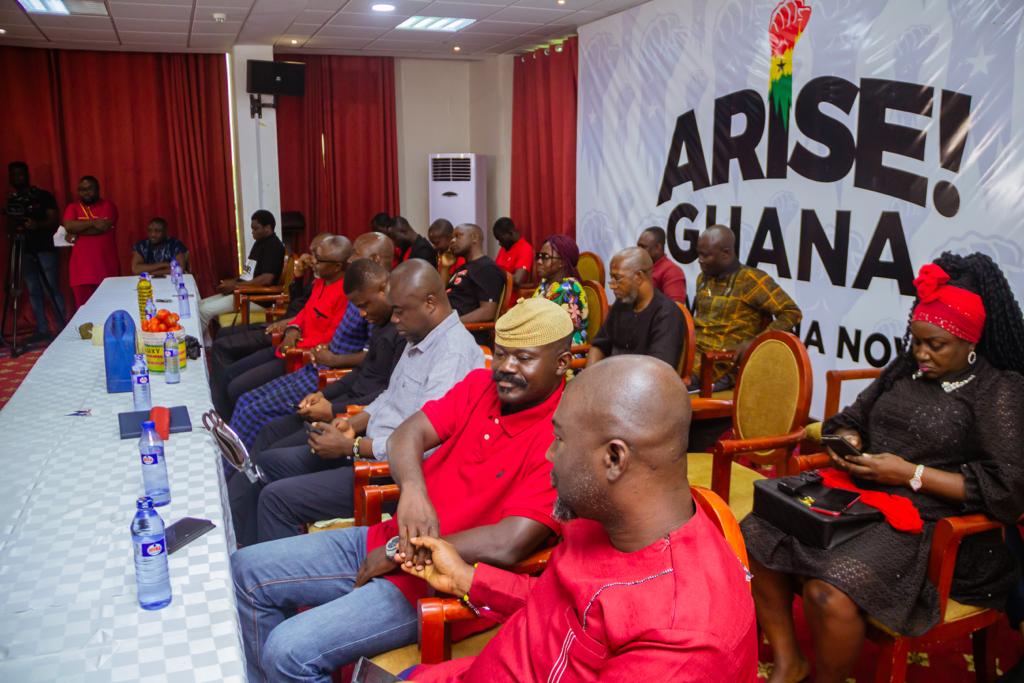
Leaders of the pressure group, Arise Ghana, have said their planned demonstration will come on as scheduled on Tuesday, June 28.
One of the leaders Bernard Mornah said this on the New Day show with Berla Mundi on TV3 Monday, June 27.
“The demonstration is coming on as planned,” he said.
Mr Mornah’s comments come after the Police filed a case in court against their action due to a disagreement on the time frame and also the location.
The Police explained in a statement issued on Sunday June 26 that in the interest of Public Order and safety, they entreated the organizers to reconsider the time frame and start the demonstration early in the day and end before night falls.
But “Due to the lack of agreement between the Police and the organizers on the time for demonstration and location for their planned picketing, the Police have had no option but to submit the process to the court for a determination. This was duly communicated to Arise Ghana in a letter on June 20, 2022.
The case has since been filed at the court and hearing is scheduled for today Monday, June 27, 2022.
The group’s planned to started the the series of demonstration on 28th June, 2022, starting from the Kwame Nkrumah Circle Interchange/ Obra Spot and end at the frontage of the seat of government.
“We shall move through the Nima Police Station street to the Arko-Agyei inter-change and end at the Frontage of the Jubilee House where we will picket until 10PM,” a statement issued by the group earlier said.
The purpose of the demonstration, they said, “is to protest against persistent and astronomical hikes in fuel prices by the Akufo-Addo/Bawumia government that has imposed excruciating economic hardships on Ghanaians; protest against the imposition of the obnoxious E-Levy on the already-burdened Ghanaian people by the insensitive Akufo-Addo/Bawumia government.
“Demand a full scale and bi-partisan parliamentary probe into COVID-19 expenditures; Protest against the grabbing of State lands by officials of the Akufo-Addo/Bawumia government, particularly the de-classification of huge portions of the Achimota Forest reserve.
“Protest against the increased rate of police brutalities and state-sponsored killing of innocent Ghanaians, as well as the growing culture of human rights abuses under the watch of President Akufo-Addo and Alhaji Bawumia.”

Adnan Adams Mohammed
A African Development Bank (AfDB) report has indicated that, access to electricity in Ghana rose from 56.5 percent in 2012 to 83.5percent in 2021, translating into a 27% in a period of about 10 years.
The current access rate of Ghana is estimated to be about two times of African Development Fund (ADF) beneficiary countries average rate.
According to an AfDB report on Ghana’s power development, it estimated that, in urban areas nearly 94% of the population has access to electricity, and in rural areas, the share is 70%. This is three times higher than ADF countries’ average.
“The share of the population with access to clean cooking solutions also increased markedly, growing from 16.4% in 2012 to 24.9% in 2021. This progress consolidated Ghana’s position as one of 10 countries in Africa whose access to electricity rate is the highest”, data contained in the report released, last week, noted.
Between 2012 and 2021, Ghana almost doubled its total installed electricity capacity, leaping from 2.9 GW to 5.1 GW and generating more than 15,000 GWh. This includes an increase of installed renewable capacity from 1.2 GW to 1.7 GW, with hydropower taking the lion’s share (99%).
The share of renewables in the energy mix declined, however, producing a fall in production efficiency, with more kilograms of CO2 emitted per dollar of Gross Domestic Product (GDP) in 2021 than in 2012.
The upsurge in capacity and skills, which resulted in part from a rise in independent power producers’ generation of electricity, the report stressed, has allowed Ghana to resolve the major energy crisis that hit the country from 2012 to 2016 as a result of erratic rainfall that crippled hydroelectricity production in the Lake Volta region.
The report however said electricity distribution remains a challenge in the country.
Starting in 2017, the increase of generation capacity supplied Ghana with more power than was in demand (demand peaked at about 2.5 GW between 2012 and 2020).
This absorption gap reflects pervasive shortfalls in the grid, which is hampered by inefficiencies in the distribution network and by skills gaps, especially in the installation and maintenance of energy equipment. Redressing these shortfalls, the report said, is critical to reducing the import of skills, which increases the cost of doing business in Ghana.
As electricity losses through transmission, distribution, and collection are concerned, Ghana’s performance increased from 21.5% in 2012 to 22.6% in 2021, which is worse than ADF countries as a whole.
To address this, the report said, government undertook certain governance-related actions, notably restructuring the legacy debts of the state-owned Electricity Company of Ghana (among other things, clearing its arrears) and reforming electricity tariffs to stimulate competition and encourage the private sector to participate in distribution.
The Bank also shaped a more efficient distribution system within the framework of its support for the energy sector.
AfDB said it will continue to support Ghana’s objective of supplying its citizens with universal access to energy by better generating and distributing electricity, among other things by increasing off-grid connections in the country’s northern regions.
The Bank is also standing with Ghana as the country manages climate risks, channels resources for adaptation, and transitions to green energy.
“To reach its goals in this area, Ghana needs more investments in renewable energy-not just from one funder, but from many”, it said.
In January 2022, the African Development Fund granted $27.4 million for the Ghana Scaling-Up Renewable Energy Programme. This contribution leveraged another $28.5 million in co-financing from the Climate Investment Funds and parallel financing of USD 13.3 million from Switzerland’s Secretariat for Economic Affairs.
The programme will generate an estimated 111 MWh of renewable energy each year, thus contributing 13.5% of renewable energy to Ghana’s energy mix (excluding hydropower) and mitigating greenhouse emissions of 0.7 million tons of CO2-equivalent.
The Bank’s ongoing Affirmative Finance Action for Women in Africa programme-to which the Green Climate Fund contributed $20 million-is another investment in clean energy.
The programme is expected to reduce emissions by replacing diesel, fuelwood, and charcoal with renewable fuels, used sustainably. This operation and others like it will help supply the efficient, affordable, and sustainable energy that Ghana needs.
Adnan Adams Mohammed
Management of the newly launched wholesale bank, Development Bank Ghana, has assured the business public that it will implement effective measures that will ensure they support key sectors of the economy.
The bank, launched last week, in the wake years of lamentation by business players in the agricultural and manufacturing sectors of the economy of inadequate access to funding to start and or expand their businesses that could create more jobs and help spur the economy to achieve the industrialization agenda of the governments. DBG is a non-deposit taking wholesale bank that is expected to provide funds to existing commercial banks and other qualifying financial institutions to provide long-term lending to businesses.
According to Bank of Ghana’s data, less than 15 percent of loans granted by banks and Specialised Deposit-taking Institutions (SDIs) are for 5 years or longer. This, according to finance experts has affected the structure of the country’s economy as the financial sector are not able to complement the industrial, agro-economy and infrastructural development agenda of the economy as those sectors mostly require long term investments. But, the managers of the DBG say they have put enough measures in place to ensure that funds it lends to banks are used as planned.
“We have specifically put in place certain measures that will ensure that funds that get to the Commercial Banks we are working through eventually get through to the SMEs”, Deputy CEO of the Bank, Michael Mensah-Baah, noted when speaking to the media on steps taken by the DBG to ensure it doesn’t repeat the mistakes of current national banks.
“First of all, we will select Commercial Banks that are already lending to SMEs. Number two, we’re going to make sure that the Commercial Banks do understand the credit risk of the SMEs, and finally, we have an agreement with the Commercial Banks that specifically ensures the funds we give them to go to specific sectors of the economy, i.e agriculture, manufacturing, ICT and high-value services sectors. These are all enshrined in the master lending agreement that we have with the Commercial Banks.
“Within that agreement, there’s a specific timeframe that the funds stay with the Commercial Banks. If the time (one month) elapses without the funds being given out, then the funds return to the DBG,” he added.
Corroborating the Bank of Ghana’s data, universal banks in the country, for some time now, have been accused of using a chunk of their funds to invest in less risky government securities instead of giving such funds out as credit to the private sector.
According to the May 2022 edition of the Bank of Ghana’s Monetary Policy Report, the asset and liability structure of the banking industry remained tilted towards less risky assets as of April 2022.
Investments continued to dominate the asset mix, but its share declined from 47.0 percent in April 2021 to 43.2 percent in April 2022 while the share of “Cash and Due from banks” increased from 18.6 percent to 21.7 percent during the same comparative period.
Loans and advances (net), however, remained the second-largest component of banks’ assets, recording a higher share of 27.4 percent in April 2022 from 26.5 percent in the previous year on account of the stronger growth in credit in April 2022.
Adnan Adams Mohammed
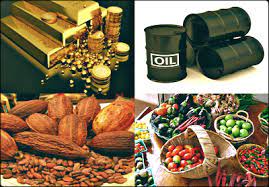
The Ghana Statistical Service has announced that the Ghanaian economy shrunk by 0.3 percent to record 3.3 percent in the first quarter of 2022 compared to the 3.6% recorded in the same period of 2021.
The 2022 first quarter growth is the second slowest growth rate the country recorded since 2020 after the -3.3 percent growth recorded in the third quarter of 2020.
Also, when seasonally adjusted, Ghana’s real GDP increased by 0.9% in quarter one of 2022; which is 1 percentage points lower than what was recorded in quarter four of 2021. However, Non-oil Gross Domestic product, which looks at economic growth without oil, also expanded by 3.7 percent.
“The services sector remains the largest sector of the economy with a 45 percent share of GDP while that of Industry was 32 percent and Agriculture 23 percent”, Professor Samuel Annim, the Government Statistician, indicated during a press briefing in Accra, Last week.
The information and communication sub sector was the major driver of this growth with one percent increase.
Followed by the Crops and Cocoa sub-sector (0.9%), Transport and Storage sub-sector (0.4%), Manufacturing sub-sector (0.3%) and Trade: Repair of Vehicles, Household goods sub-sector (0.3%).
Overall, the year-on-year quarterly GDP growth rate for Agriculture was 5.6 percent for the first quarter of 2022 with the fishing sub-sector recording the highest year-on-year growth rate of 26.1 percent while the Forestry & Logging sub-sector recorded the lowest, with a contraction of 0.5 percent.
The year-on-year quarterly GDP growth rate for the Industry sector is 1.3 percent for the first quarter of 2022.
The Water Supply, Sewerage, Waste Management & Remediation Activities sub-sector recorded the highest year-on-year quarterly GDP growth rate of 25.4 percent for 2022, while the Construction sub-sector recorded the lowest, with a contraction of negative 2.6 percent.
For the first quarter of 2022, the Services sector recorded a year-on-year quarterly GDP growth rate of 3.7 percent.
On a year-on-year basis, the Information & Communication sub-sector recorded the highest year-on-year quarterly GDP growth rate of 26.6 percent while the Professional, Administrative & Support Service activities sub-sector recorded the lowest growth of negative 12.8 percent.
The sub-sectors that contracted were Professional, Administrative & Support (-12.8), Public Administration & Defence, Social Security (-9.8%), Real Estate (-2.6%), Education (-2.0%) and Health & Social Work (-1.0%).

Adnan Adams Mohammed
A tweet of Gabby Okyere Darko, widely circulated on social media make a revelation that the Electronic Transaction Levy (E-levy) has so far generated only 10 percent revenue.
The controversial E-Levy which was implemented in April has since generated only 10% of the targeted about GHC5.4 billion revenue for the year.
Before the ‘schemed’ parliamentary approval of the most rejected tax policy in the fourth republic of Ghana’s democratic governance, some economists had advised the government to consider relief from the International Monetary Fund (IMF), but, the government ‘stubbornly’ refused to listen. So some policy analysts and journalists have described Gabby’s tweet as a mind game on Ghanaians to pave way for the government to announce an intent of going to the IMF since revenues are low.
“After 5 months of stalemate and bashing, the e-levy, after implementation, is delivering only 10% of estimated revenues”, Gabby Okyere Darko’s, as in the most cases described as ‘De-facto president or Prime minister’ by social commentators, tweet captured. “Our revenues remain low as compared to the rest of the world; debt levels dangerously high, cedi, like most currencies, struggling against the US dollar.”
A journalist with the Economy Times and www.newsguideafrica, Adnan Adams Mohammed, described the tweet as a mind-game on Ghanaians.
He asserts that at this juncture government’s last resort is for IMF program to restore investors’ confidence as the government’s debt issuance both foreign and domestic has been receiving a poor response for past months as the dollar keeps bullying the cedi.


Adnan Adams Mohammed
Chamber of Petroleum Consumers Ghana (COPEC) are predicting further price hikes on petroleum products at the pumps by about 12 percent in the next pricing window of June 2022, as commercial transport operators have scheduled a meeting to consider fare increment.
COPEC situated that, the 12% expected hike would translate to average price increase of about GH¢1.33 per litre. While petrol prices are projected to go up by GH¢1.24/litre which is an 11.41% increase, the price of diesel may increase by GH¢1.43/litre depicting a 12.93% increase.
This is expected to affect the business of commercial transport operators as fuel is one of their main raw materials. Already, transport fares have been increased more 40 percent in this year with the latest 20% increment in last month.
“Current Crude prices are at $124.96/barrel, resulting in processed Petroleum Products of $1,451.25/MT of petrol and $1,289.97/MT for diesel, coupled with further depreciation of the exchange rate of $1:GH¢8.0483 and the government’s applicable tax rebate of 15 pesewas per litre still in place till the end of June 2022”, COPEC press statement released last week explained.
Mr Richard Yaw Amankwah, Deputy General Secretary in Charge of Operations at GPRTU in an interview last week noted that, commercial drivers “have not seen any significant increase” in income and, thus, must shore up their fares to make up for loss revenue stemming from the consistent increase in fuel prices.
“It is not our doing”, Mr Amankwah said, explaining: “The situation demands it”.
“We are also consumers”, he noted.
“Whenever fuel prices go up, it affects our business and even though we are not happy to increase transport fares, it will go against our business if we don’t do so,” he said.
However, Head of Research at COPEC, Benjamin Nsiah has recommended that “Tema Oil Refinery must be retooled, recapitalised and equipped with efficient managers to make the entity start operations and be profitable. We also must diversify our imports within the short and medium-term. This means we need to begin to explore other countries, refineries and traders that will give us cheaper products compared to what we are getting now from the European and Arab areas”.
“The Ministry of Trade, finance and the Bank of Ghana need to implement a coordinated plan to help the cedi appreciate against the dollar. When these three measures are put together within the shortest possible time, we believe the price of fuel will reduce soon,” he added.
Even though petrol and diesel are expected to go up, the narrative might be different for LPG as it’s expected to experience a marginal decrease in price, the statement added.
“LPG is also likely to sell around GH¢10.024/kg showing a reduction of about 27 P/kg (-2.66%) over the previous window.”
Adnan Adams Mohammed
A Former Finance Minister has indicated his upbeat about unlikely situation where government could default in settling its maturing debts.
The finance and economic expert warned that the worst thing that could happen to Ghana at this point as the economy strives to rebound will be to default on debt repayments and therefore admonishing the government to take drastic measures to help tame any unlikely situation of such.
Bank of Ghana at the May MPC press briefing announced that, Ghana’s total public debt stock as of March 2022, was US$ 55.1 billion or GH¢391.9 billion. In Dollar terms, the debt dropped by over $3 billion in the first 3 months of the year, from $58.4 billion in January to $55.1 billion in March.
But, responding to a question on whether Ghana needs to go to the International Monetary Fund (IMF), the minister noted that the priority of government should be on ensuring that it doesn’t default on its debt repayment.
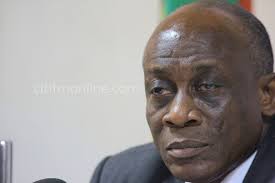
“I would sound a note of caution and it’s that the worst thing that could happen to us is to default. Given the fact that our turning to the domestic market to finance the budget is not working out as planned because of the auction shortfalls and the rest”, Seth Terkper, said during a dialogue session on the state of the Ghanaian economy hosted by the former Finance Minister, on the theme “Inflation, Exchange rate and budget challenge: which way out ?”.
Mr. Terpker posited that, government now needs to take drastic measures if it doesn’t want to return to the Bretton Woods institution.
“They need to come out with a homegrown policy. My only worry is that despite the mention of a homegrown policy by government agents I have not seen it. It may exist internally. If it exists in the budget then the markets don’t have any confidence in it. We, therefore, need to do something very drastic on our own, which will be laudable.”
The total debt stock within the first 3 months of this year increased by about GH¢40 billion, from GH¢351.7 billion in January 2022, to GH¢391.9 billion in March 2022 mainly due to the depreciation of the Cedi against the US Dollar.
The high debt levels, and high-interest payment realities of the country, coupled with other issues such as downgrades by rating agencies, have seen the country locked out of the Eurobond market. Some have charged government to go to the International Monetary Fund (IMF) to pave the way for Ghana to return to the markets.