Category: News

  • Heritage Fund for National Cathedral: Prof John Gatsi goes biblical in a message to Christian Council

    Heritage Fund for National Cathedral: Prof John Gatsi goes biblical in a message to Christian Council

    The Christian Council sparingly speaks on national interest issues and when the Council does, it is taken with seriousness and sometimes shapes the discourse. That is why alternative opinions should be expressed to generate a healthy debate on the use of the heritage fund.

    It is a time-tested principle that when engaging in the construction of extraordinary projects such as the National Cathedral, the principles of prior financial and other resource planning are considered to avoid inadequate resources and abandonment of projects as penned in the book of  Luke.

    Luke 14:28 “ For which of you, intending to build a tower, does not first sit down to count the cost, whether he has enough to finish “.

    I am not at this point discussing the appropriateness of the tower(the National Cathedral). I am also not even discussing the economic and tourism potential of the cathedral.  I am discussing whether or not the call by the Christian Council of Ghana, suggesting that the heritage fund should be used to finance the National Cathedral should be supported.

    The Christian Council should first of appreciate the fact that petroleum revenue is highly regulated in terms of disbursement and investment.  About 70% of petroleum revenue is expected to be spent to finance the budget annually and 21% as support for the economy (stabilization fund) and only 9% in heritage fund as endowment for the future. We  technically has at our disposal 91% of petroleum revenue if we decide to use the stabilization fund as done severally including 2020. Why join the call to use  the only 9% heritage fund? The Christian Council should actually be calling for consolidated accountability of the use of petroleum revenue since 2011.

    The other issue that the Christian Council should appreciate is that the Petroleum Revenue Management Act does not permit the use of the heritage fund until after fifteen (15)years from 2011. However, the law allows  for parliamentary resolution after 2026 to use part of the accumulated interest on the the heritage fund to finance development infrastructure. Any suggestion to use the heritage fund is illegal and  not acceptable. Act 815 simply does not allow such calls.

    The heritage fund and the stabilization fund serve as fiscal buffer for the economy and as part of the international reserve of the economy. The suggestion means depletion of the international reserves which may undermine the performance of the currency.

    It is however, important to start a healthy debate about splitting the investment of the heritage fund into investment in fixed income securities outside the country and investment in strategic self-financing infrastructure in Ghana.  It could be 40% investment in Ghana and 60% outside Ghana  which still preserves and contributes to the reserves .
  • COMOG accepts apology of Dr Opoku-Mensah

    COMOG accepts apology of Dr Opoku-Mensah

    The Coalition of Muslim Organisations Ghana has written to Dr Paul Opoku-Mensah to officially acknowledge his apology and subsequent acceptance of such.

    This was contained in a press release signed by the President, Hajj Abdul Rahman Abdul Manan.

    Attached is the full statement

  • Arise Ghana Demo: Momentum building up as they secure support of Dr Tamakloe

    Arise Ghana Demo: Momentum building up as they secure support of Dr Tamakloe

    PRESS RELEASE

    Friday, 17th June, 2022

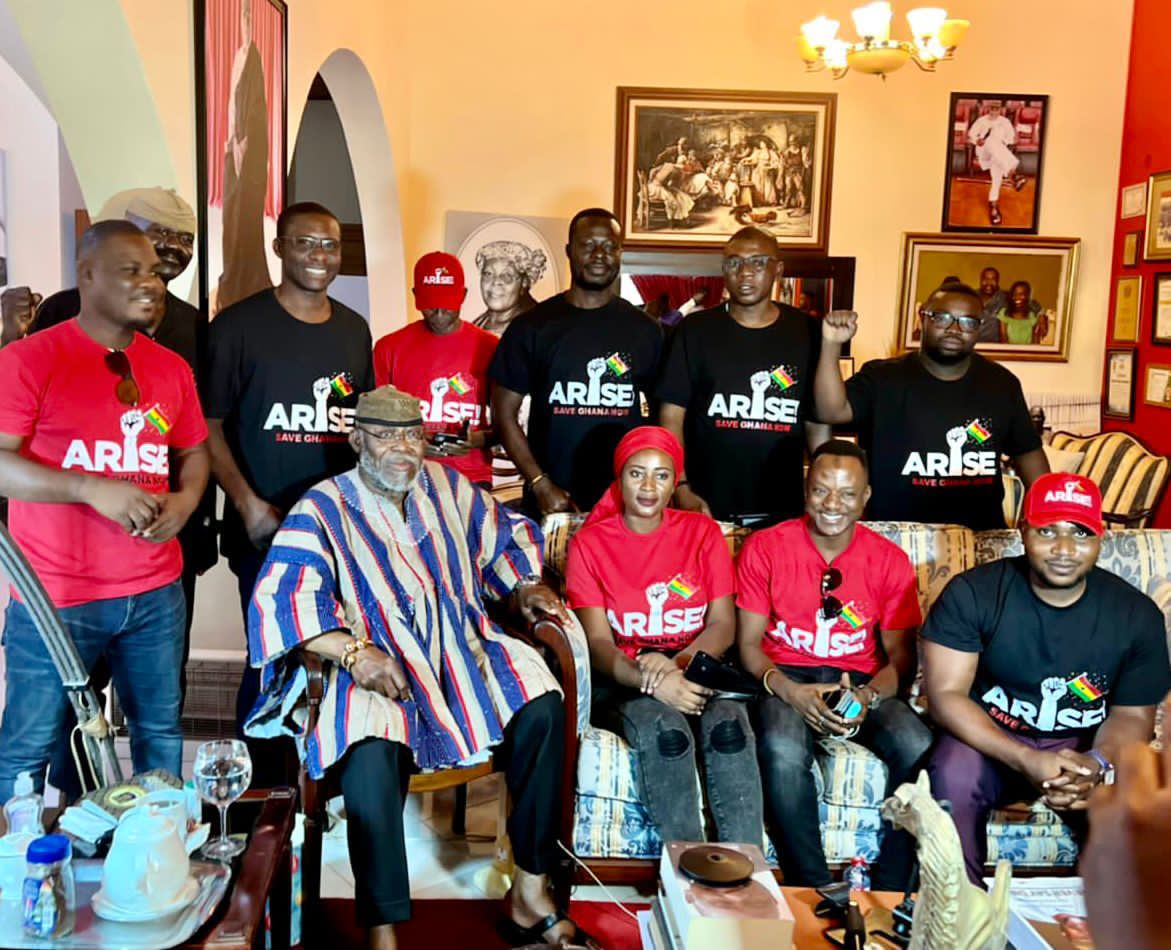
    ARISE GHANA PAYS COURTESY CALL ON DR NYAHO-NYAHO TAMAKLOE

    Arise Ghana, as part of its June 28th and 29th demonstration is paying courtesy calls on some Senior Citizens in the Country.

    Today the team visited Dr. Nyaho Nyaho Tamakloe, a leading member of the ruling New Patriotic Party at his residence to officially inform him of the objectives of the group and to formally invite him to attend our impending demonstration.

    Dr. Nyaho Nyaho Tamakloe on his part welcomed the group and counseled us to see the course we have chosen as service to the people and nothing more. He admonished us to be people of integrity and to remain resolute and united in the pursuit of the objectives of the group.

    Above all, the senior Citizen and Statesman assured Arise Ghana of his unflinching support and his presence at our upcoming demonstration scheduled for the 28th and 29th of June, 2022.

    The purpose of this Arise Ghana demonstration is to:

    I) protest against persistent and astronomical hikes in fuel prices by the Akufo-Addo/Bawumia government that has imposed excruciating economic hardships on Ghanaians.

    II) protest against the imposition of the obnoxious E-Levy on the already-burdened Ghanaian people by the insensitive Akufo-Addo/Bawumia government,

    III) demand a full scale and bi-partisan parliamentary probe into COVID-19 expenditures.

    IV) protest against the grabbing of State lands by officials of the Akufo-Addo/Bawumia government, particularly the de-classification of huge portions of the Achimota Forest reserve.

    V) protest against the increased rate of police brutalities and state-sponsored killing of innocent Ghanaians, as well as the growing culture of human rights abuses under the watch of President Akufo-Addo and Alhaji Bawumia.

    VI) demand the total cancelation of the fraudulent “Agyapa” deal.

    Signed,

    Listowel Nana Poku, NPP Member and Leading Member of Arise Ghana

    Comrade Mensah Thompson, Executive Director, ASEPA and  

    Leading Member of Arise Ghana

  • National Cathedral: Muslims Call on CEO To Correct Misinformation About National Mosque Construction

    National Cathedral: Muslims Call on CEO To Correct Misinformation About National Mosque Construction

    Read Full Statement Below:

    RE: THE STATE CONTRIBUTED TO THE CONSTRUCTION OF THE NATIONAL MOSQUE-NATIONAL CATHEDRAL CEO

    Our attention has been drawn to a statement as headlined above, made by the Chief Executive Officer of the National Cathedral, Dr. Paul Opoku-Mensah suggesting that the Government of Ghana spent state resources in the construction of the National Mosque, located at Kanda in Accra.

    HE made this spurious statement on the GTV Talking Point program aired in the evening of Sunday the 12th June 2022.

    We, the Coalition of Muslim Organizations, Ghana (COMOG), on behalf of all Muslim organizations in Ghana wish to state unequivocally, and without any fear or favor that, not a single pesewa from the state by any political regime was contributed to the construction of the Kanda National Mosque.

    The CEO of the National Cathedral made this statement in an attempt to justify the sum of over GHc25 million of state resources as seed money for the construction of the most controversial project in Ghana today, the National Cathedral.

    As a Muslim organization with the mandate to protect the image and sanctity of Islam and the reputation of the Ummah in Ghana, we can’t tolerate such a deliberate falsehood by a high-profile appointee of Dr. Opoku-Mensah’s stature when indeed, the facts do not support his claim. Contrary to his statement, we Muslims have rather been shortchanged in the matter of our Accra Central Mosque which was pulled down by the state, only for Government to compensate us with a bare land for that loss. Our magnanimity towards the state and our commitment to peaceful coexistence must not be misconstrued by some people to be a weakness.

    We therefore, by this statement wish to call on Dr. Paul Opoku-Mensah to come out and retract that deliberate falsehood and apologize to the entire Muslim Ummah in Ghana. We also demand that, this rejoinder be read in the next edition of GTV Talking Point program, to correct the falsehood.

    ……………………

    Hajj Abdel-Manan Abdel-Rahman

    (COMOG President)

     0244470505

  • Banks write-off ¢768.29m as bad debt

    Banks write-off ¢768.29m as bad debt

    Banks in Ghana has written off a little above ¢768.29 million as bad debt in the first four months of 2022, about 5.5% increase over the same period last year.

    According to the latest Monetary Policy report by the Bank of Ghana, the bad debt is made up of loan losses, depreciation, among others.

    Despite the increase in the provision of the bad debt, the banking industry’s asset quality improved year-on-year, evidenced by the decline in the Non-Performing Loans (NPLs) ratio from 15.5% in April 2021 to 14.3% in April 2022.

    The decline in the NPLs ratio was on the back of a higher growth in the stock of loans, from 7.0% to 25.8% during the review period.

    When adjusted for the fully provisioned loan loss category, the industry’s adjusted NPL ratio also declined sharply from 6.5% to 4.2%.

    On the other hand, the stock of NPLs, increased to ¢8.6 billion in April 2022, from ¢7.4 billion in April 2021, representing a growth of 15.8%.

    The increase in the NPL stock indicates that some asset quality risks still remain within the banking sector.

    Meanwhile, the extension of the loan repayment moratoria deadline by the Bank of Ghana to December 31st, 2022 is expected to provide relief to customers adversely impacted by the pandemic and help moderate the growth in non-performing loans within the banking sector.

    In terms of sectorial performance, all but three sectors recorded improvements in their NPL ratios during the period under review.

    These are electricity, water and gas (from 22.6% to 12.2%); manufacturing (from 18.3% to 10.9%); mining and quarrying (from 10.7 % to 6.5%); commerce and finance (from 21.9% to 18.9%) and the services sectors (from 9.1% to 8.7%).

    On the other hand, the sectors that recorded increases in their NPL ratio were construction (from 24.0% to 32.1%); transportation, storage and communication (from 10.4% to 12.4%) and the agriculture, forestry and fishing sectors (from 23.7% to 25.0%).

    The sector with the lowest NPL ratio was the mining and quarrying sector while the construction sector had the largest proportion of its loans impaired.

  • List on local stock exchanges – mining coys told

    List on local stock exchanges – mining coys told

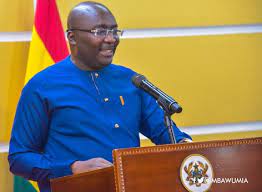
    Vice-President Mahamudu Bawumia has challenged mining companies operating in Ghana and the entire West African sub-region to work with governments and regulatory bodies to establish a mining index on local stock exchanges to allow both the owners and investors in the minerals to benefit from its exploitation.

    The benefits of a mining index on the local bourse are enormous, enabling both the State, Mining Companies, beneficiary communities and investors to attract the necessary capital and built-in incentives for all involved, Dr Bawumia indicated.

    Speaking at the opening session of the three-day West African Mining and Power Exhibition and Conference (WAMPOC/WAMPEX) in Accra, last week, Dr Bawumia urged African countries to hasten the development of the capacity to interact with the world’s natural resources banks, fund managers and the leading stock exchanges in the world to allow locals to benefit more from the minerals bequeathed to them by nature.

    “In this regard, let me sound a clarion call on the big mining companies operating here in Ghana and indeed, the West African sub-region, to work towards the emergence of a mining index on our Stock Exchanges and thereby accelerate their growth and significance in African mining.

    “This will require deep collaboration among the local stock exchanges, their regulators, as well as mining firms to incentivize Ghanaians to own listed greenfield exploration projects as the upside on such investments tend to be higher”, he noted.

    While acknowledging the enormous resources found on the African continent, the Vice President called for a careful balance between the profit-seeking needs of investors, and the sustainable living needs of the communities within which the minerals are found.

    “Yes, Africa is endowed with many mineral resources but while the availability of the resources is important, the over-riding aim for all parties should be the evolution of a carefully balanced mechanism to ensure that the resources of the state benefit the owners of the resource and at the same time extend benefits to investors to ensure that the State is able to sustainably attract the needed capital, investment and technical know-how from a world which has come to the realisation that Africa is the continent of the future.

    “Significantly, the African Union has been reassessing critically the real significance of mining to host country economies over the years. As a result of these efforts, the African Mining Vision (AMV) emerged as far back as 2009. In essence, the African Mining Vision seeks to ensure the transparent, responsible, equitable and optimal exploitation of Africa’s Mineral resources for broad-based sustainable socio-economic development for the host Governments and its citizenry,” he disclosed.

    He challenged African countries and mining companies to collaborate on a sub-regional and even regional basis to derive the most benefit from the exploitation of Africa’s mineral resources.

    “We need a strategy to enable us to pool the mineral resource-rich countries in West Africa and beyond together to assume the mantle in the transformation of our economies with a greater awareness of mining as a more comprehensive and transformational economic activity and as a key backbone for our country.

    “Given the paucity of the size of stand-alone countries, it is only proper that we consider regional dimensions to local content since individual African Country Markets may be too small to elicit the much-needed investments. Investors desire economies of scale to justify such investments and it is necessary that we consider the regional economic blocs in Africa as sub-markets which can then collectively constitute the building blocks of the African Continental Free Trade Area (AfCFTA).”

  • Fiscal deficit to widen further.. as gov’t plans to pay COLA to teachers 

    Fiscal deficit to widen further.. as gov’t plans to pay COLA to teachers 

    Adnan Adams Mohammed

    The government through the Fair Wages and Salaries Commission has planned to meet all stakeholders entitled to the 20 percent Cost of Living Allowance (COLA) demanded by teachers to determine the payment terms.

    Teacher unions including NAGRAT, GNAT, and others have given a June 30th deadline for the government to pay the allowance or face a series of industrial actions.

    According to NAGRAT, the current economic hardship has made teachers worse off, hence the demand for allowances to be paid. But the Fair Wages and Salaries Commission maintains that all relevant stakeholders must come on board for a final determination of the payment. If the government pays the 20% demanded by the teachers, it is likely to widen the fiscal deficit further and also miss the fiscal deficit target of 7.4 percent of Gross Domestic Product, (GDP) end year. But the government has banked it hopes on the collection of the Electronic Transaction Levy (E-Levy) which is estimated to rake in close to GHC5billion at the end of 2022.

    “It’s fair that stakeholders are able to propose the payment of COLA or any other allowance, but at the end of the day, we have to get to the table with organized labor, government and all other parties to determine whether COLA will be paid”, said Earl Ankrah, Head of Public Affairs at the Commission. “We are also yet to negotiate the base pay for 2023 so that it is factored into the budget. That is yet to be done to determine the minimum daily wage.”

    Already, Fitch Solutions is forecasting the country’s fiscal deficit to GDP ratio in 2022 at 9.8%. This is in line with the International Monetary Fund (IMF) forecast of 9.8% for this year, but far wider than the government’s target of 7.4% of GDP.

    “Looking into Ghana’s fiscal position following increased spending on health and household support due to COVID-19 pandemic, Ghana’s fiscal deficit widen to an estimated to 11.3% in 2021. This is well above historical level” said the Risk Analyst at Fitch Solutions, Ben Weaver.

    The International Monetary Fund in its April 2022 Fiscal Monitor Report, projected Ghana’s tax revenue to GDP ratio to increase in 2022 to 16.5%, from 14.7% in 2021. This will be a vast improvement compared to the rates registered during the last 10 years.  

    In 2023 and 2024, the country’s tax-to-GDP ratio will however fall to 16% and 16.2% respectively, it added.

    The Fund also said government expenditure will decline to 25.2% of GDP in 2022, from 26.3% recorded in 2021. This is expected to put the fiscal deficit to GDP ratio at 9.8%.

    However, in 2023 and 2024, the Fund is forecasting expenditure-to-GDP ratios of 25.2% and 23.9% respectively.

    Meanwhile, Vice President of NAGRAT, Jacob Annaba, explains that the ultimatum comes on the back of current economic conditions and the worsening plight of teachers, as well as the government’s failure to negotiate.

    “The President had earlier said, and I quote, “we (government) know how to bring the economy back to life. What we do not know is how to bring people back to life”. The question is what has changed? Mr. President, your people (workers) are dying; please attend to them now and do not prioritize the economy over the human resources. The worker can no longer bear the economic hardship.”

    The leadership of NAGRAT noted they would be pushed to embark on an industrial action if their demands are not met.

    “We, therefore, demand that, as a matter of urgency, the Government must grant workers a Cost Of Living Allowance (COLA) of 20% at the end of June 2022. Leadership would be left with no option than to declare a strike by the end of July 2022, if all the requests made are not adhered to. Leadership hereby yields to the demand of members for positive action, beginning with the wearing of red bands by the end of June 2022, if the demands made are not met”, he added.

  • Using monetary policy to control inflation: Economists look elsewhere for solution

    Using monetary policy to control inflation: Economists look elsewhere for solution

    Adnan Adams Mohammed

    Two renowned economists from the country’s leading universities have all flagged down the potency of using the monetary policies to control the recent leapfrogging inflation rate.

    They believe the Bank of Ghana’s measures put in place to curb the consistent rise in inflation are either not working or the situation is not being diagnosed properly. Both, are thereby calling on the government through the finance ministry to consider other factors such as the fiscal space.

    The Ghana Statistical Service last week announced that, increment in transport fares and unbearable food prices pushed  May inflation rate to 27.6%. This is against 23.6% recorded in April which was about 4% jump from March inflation of 19.4%. The inflationary trend pushed the Monetary Policy Committee (MPC) of the BoG to tighten the policy rate by 200 basis points from 17% in April to 19% in May. Yet, the according to Professor of Finance and Economics at University of Ghana, the monetary policy has proven to be inefficient and has therefore asked the government to adopt a fiscal policy approach toward mitigating inflation in the country.

    “If you look at the disparity between the inflation and the policy rate and the Treasury bill rate, it tells you there’s a lot more work to be done and we cannot look to the monetary policy because the problem is from the fiscal side”, Prof. Godfred Alufar Bokpin of the UG Business School. “The monetary policy is constrained in terms of how we can deploy that effectively to contain inflation and engineer growth.”

    Also, an economist at the University of Cape Coast has opined that the Central Bank maybe misdiagnosing the problem. He said, the increase in the BoG policy rate by 200 basis points to 19% is in response to risk to the economy; high inflation, weak financial inter-mediation and fiscal stress, which is expected to trigger lending rate hike.

    “The measures taken in an environment of volatile depreciation promises rather further inflation”, Professor John Gatsi, Dean of School of Business and Finance at UCC said in reaction to the MPC’s announcement, last week. “High inflation and upward lending rate will undermine government contracts execution and create new levels of arears due to cost implications for procurement of materials.”

    Prof Gatsi expatiated that, a number of projects maybe abandoned due to inflation, depreciation and cost of borrowing and warned that there maybe too much pressure on the banks as cost of mobilizing funds continue to increase with the possibility of distorted returns on placement of funds with the banks.

    According to the Government Statistician, Professor Kobina Annim, the rate of inflation for Transport (39.0%), Household Equipment and Maintenance (33.8%), Housing, Water, Gas and Electricity (32.3%) and Food and Non-Alcoholic Beverages (30.1.6%) were higher than the national average (27.6%).

    In May, 2022, 12 of the 13 divisions recorded inflation rates higher than the rolling average from June, 2021 to May, 2022.

    The data showed that Food inflation in May, 2022 was 30.1%, compared with 26.6% in April 2022. Non-food Inflation was however 25.7% in May, 2022, as against 21.3% the previous month.

    Meanwhile, Prof Bopkin has posited that, we cannot look to monetary policy to tackle this.

    “We must shift our attention to the fiscal side so that the fiscal side will respond appropriately with the discipline that it requires,” he stressed.

    “Once the source of the inflation is largely fiscal, then there’s a limit to how far you can deploy the monetary policy to bring down inflation and then engineer growth.

    “More so, because of the monetary policy framework that we are using under inflation targeting, because for one key requirement for inflation targeting to be effective, it is fiscal discipline. Once you deny the monetary side the fiscal discipline, then there’s no way they can use the monetary policy effectively to bring down inflation and engineer growth.

    At a press briefing, fortnight ago, the central bank said the growth prospects in the domestic economy remain positive and the Bank’s high-frequency indicators point to continued and increased momentum in economic activities with private sector credit showing some improvement in real terms, despite the increased price pressures.

    “All these are resulting in a closure of the negative output gap. The banking sector remains robust, with sustained growth in total assets, investments and deposits. However, business and consumer confidence have dipped, reflecting the sharp depreciation of the currency and the general high inflationary environment, which has resulted in higher input costs for businesses. A quick turnaround, with more confidence-building measures to counter these conditions, would provide further boost to the real economy”, it added.

    On fiscal policy implementation, the Committee observed that execution of the budget for the first quarter was broadly in line with targets although there was a minor deviation in the deficit target, stemming largely from low revenue receipts.

    It is the expectation of the Committee that fiscal consolidation will take hold gradually and the mid-year budget review will provide further fiscal fine-tuning to ensure that the fiscal consolidation efforts stay on track.

    The MPC said despite the improvement in the trade balance due to favourable commodity prices, the external sector has weakened somewhat due to developments in the capital and financial account.

  • PURC shot-down the rate of increment proposed by ECG and GWCL

    PURC shot-down the rate of increment proposed by ECG and GWCL

    Adnan Adams Mohammed

    The Public Utilities Regulatory Commission (PURC), has indicated that utility service providers won’t get anything close to their huge tariff demands.

    This latest pronouncement is a reveler to many as the Commission is yet to complete its ongoing nationwide public hearing on the proposed tariff reviews.

    The Electricity Company of Ghana (ECG) has proposed an increment in tariffs by 148% while the Ghana Water Company Limited is asking for its tariffs to go up by 343%. This ignited a heated debate with majority of consumers opposing the proposed increment.

    “Though PURC is still considering a number of things, the utility firms will not get the huge margins they had proposed”, the Technical Committee Chairman of PURC, Ishmael Edjekumhene, has said when speaking at the Takoradi Public Hearing on the proposed tariff review for 2022-2027.

    “We are now beginning the detailed analysis of the proposals to see how prudent their (utilities) cost are to see the extent to which they’ve complied with the guidelines that we provided to them and then ultimately, once we’ve looked at all the numbers provided, we will take a decision. That decision can either go up, stay the same or come down because in 2018 the commission looked at all the numbers and was able to tell Ghanaians or tell the utilities that even though you are asking for an increment we think that the tariff should come down.”

    “So once we are satisfied with the analysis, what Ghanaians should expect is an announcement. If you go and compare the history of tariffs setting in Ghana and you compare the proposals as submitted by the utilities to what is ultimately approved, you will see that there’s a vast difference. It is not going to be a straightforward matter in the sense that we are coming to look at the numbers and what I’m certain of is that there is nowhere some of the things they are talking about are going to end up being the cost that consumers are going to pay”, he said.

    The Executive Secretary of the PURC, Dr. Ishmael Ackah also speaking at the Takoradi organized public hearing on the tariff proposals said the utility companies could have done themselves good if their service provision had been better all this while and could have helped them from the resistance by consumers to pay more.

    “47% of about 851 respondents in a survey we conducted indicated that they are willing to expect some adjustments on the condition that services will improve. So this year, in September, PURC is launching a customer service clinic so that utilities will tell customers that you can apply for a meter even if you don’t know any big man and that it will take you three days for you to get the meter even if you don’t know any honourable member. If we are able to do these things, I think it will reduce the number of PowerPoint slides you present at these forums just to make a case for the increment to consumers”, he said.

    The Public Utilities Regulatory Commission’s Takoradi Public Hearing on the proposed Tariff Review for 2022-2027 is the third after Accra and Ho in series of nationwide public hearings to enable utilities explain to consumers the rationale for their huge tariffs increment proposals.

    Meanwhile, majority of consumers who spoke at the Takoradi hearing shot down the tariff increment proposal.

  • Government Must Intervene in the Plight of Muslim Pilgrims  – Zango Caucus

    Government Must Intervene in the Plight of Muslim Pilgrims  – Zango Caucus

    For Immediate Release

    Government Must Intervene in the Plight of Muslim Pilgrims  – Zango Caucus

    It has come to the notice of the National Zango Caucus of the Great National Democratic Congress, that, the Nana Addo/ Bawumia led NPP administration is without ignominy demanding a whopping Gh¢39,000.00 for the 2022 Hajj pilgrimage, and an additional Gh¢7,000.00 from the 2019 pilgrims,  who through no fault of theirs, could not participate in the said 2019 pilgrimage.

    It will be recalled that the erstwhile H.E John Dramani Mahama led NDC administration pegged the cost of Hajj at Gh¢11,900.00 per pilgrim before leaving office to enable more Muslims fulfil the Muslim religious rite.

    However, the NPP administration after taking over power in 2017 adjusted the fee from Gh¢11,900.00 in 2016 to an astronomical Gh¢19,500 by 2020 and are now demanding Gh 39,000.00 without recourse to the prevailing economic conditions.

    In a rather suprising turn of events, Pilgrims who through no fault of theirs were not airlifted to Mecca by the state after paying their monies in full in 2020 are made to pay an additional Gh¢7,000.00 in complete breach of the communique signed by the Ghana Hajj Board chairman and dated June 20th 2021. The content of the agreement sort to immune prospective pilgrims-who intend to keep their monies with the Hajj Board, should there be a future adjustment in future.

    The National Zango Caucus of the NDC is by this statement calling on the Vice President, H.E Alhaji Bawumia to with immediate effect, intervene and ensure Government subsidizes the unreasonably high cost of the annual Pilgrimage to Mecca, to enable the ordinary Muslim have an opportunity to fulfill his or her religious obligations.

    To the NDC Zango Caucus, the call for Government’s subsidies is not far fetched, as the Nana Addo/ Bawumia led NPP administration is unrepentant in dolling out scares resources of the state in funding religious activities including the National Cathedral.

    We in the NDC have no doubt to conclude that,  Ghanaian Pilgrims are paying more for a religious rite under the current NPP Govt due to the inefficiencies and mismanagement of the economy, waste of state resources through corrupt practices and the high exhange rates.

    As such, it came to us as no surprise when the  Presidency was recently forced to reprimand the chairman of the Hajj Board in a leaked letter dated 17th May, 2022 for what can best be described as perjury.

    Why will the Government wait until 6th June to announce the Hajj fees, when other countries have began airlifting their pilgrims to the Holy land?

    The Zango Caucus of the National Democratic Congress is further appealing to the Hajj Board to clear the doubt on the status of the many pilgrims above 60 years who have paid their monies in full since 2019,  but cannot  partake in this year’s Hajj, due to the measures put in place by the Saudi Government to protect the aged and venerable from the deadly effect of Covid-19 pandemic.

    Finally, we call on the Hajj board to do the needful by abiding with the agreement not to increase any fares for those who paid since 2020 and also subsidize the new fares as it was always done under the regime of former President Mahama.

    Thank you.

    Alhaj Mohammed Naziru

    National Communications officer, NDC Zango caucus.

    7/06/2022