Category: News

  • Pursue efficiency in spending – WB advises Ghana 

    Pursue efficiency in spending – WB advises Ghana 

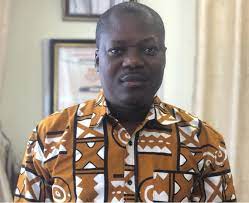
    Adnan Adams Mohammed

    The Economic Management Team and the finance ministry have been advised to ensure efficiency in spending amidst the current crisis that the country faces.

    A multilateral institution, the World Bank, has urged the government to restore fiscal sustainability going forward in order to facilitate debt reduction to a sustainable level.

    It also wants the country to pursue structural reforms, particularly in the energy sector, address economic imbalance and the financial issues that are putting lots of stress on the fiscal framework. Speaking at the 6th Ghana Economic Update, World Bank Country Director said, addressing these sectoral reforms is critical for Ghana, adding, managers of the economy must pursue efficiency in spending.

    “So addressing these sectoral reforms will be critical and at the same time expenditure side should be measured – that is pursuing efficiency in spending”, Pierre Laporte said.

    “Ghana also needs to pursue structural reforms particularly in the energy sector, the imbalance and the financial issues that are putting lots of stress on the fiscal framework.

    “But focusing on fiscal sustainability alone and too much of drastic adjustments may be harmful to Ghana. That is why the country needs to focus on other areas and in this case we have selected youth employment as a special theme”, Mr. Laporte pointed out.

    Today, Ghana’s youth population is estimated at 36%.

    Mr. Larpote said “over the last 30 years or so despite several policies introduced to address the youth employment issues, the challenges remain. What should be done is that policies should be introduced to provide opportunities for the youth through several means.”

    “One to increase access to financing which is a major constraint to development. Another one is to provide opportunities for SMEs to grow, for instance, the African Continental Free Trade Agreement is a better platform that will not only enable Ghanaians, but Africa youth, in general, to take advantage of the opportunities this initiative will bring.”

    Besides that, Mr. Laporte urged government to continue to look at other aspects of support for the youth including digitalisation.

  • Fiscal deficit to widen further.. as gov’t agrees on 15% COLA 

    Fiscal deficit to widen further.. as gov’t agrees on 15% COLA 

    Adnan Adams Mohammed

    Amidst risks to public finances remain high, the government has agreed with public sector labour unions on a 15 percent Cost Of Living Allowance (COLA) last week.

    After series of engagement and industrial actions, government agreed on 15% instead of the 20% demanded by the workers’ unions. It takes retrospective effect from July 1, 2022.

    This is additional unplanned expenditure to government which is expected to heavily increase public sector wage bill, thereby widening the fiscal deficit.

    “The Cost of Living Allowance (COLA) will be paid at a rate of 15 percent of base pay and the effective date of the payment of COLA is 1st July 2022, ” Employment and Labour Relations Minister, Ignatius Baffuor Awuah announced at a press briefing last week.

    Government’s projected fiscal deficit is pegged at 7.4 percent of Gross Domestic Product this year against 12.1% in 2021.

    Although, this year’s deficit is expected to improve with almost 5% difference, government promised to be fiscally disciplined this year through reduction in discretionary spending, lower salaries for top public servants and moratorium on imported vehicles for government employees.

    “These measures are expected to improve the macroeconomic indicators”, said the finance minister, Ken Ofori-Atta about three months ago. “This is to reassure investors that government is committed to fiscal discipline.”

    However, Fitch ratings report released in May, projects fiscal cash deficit of 9.1% of GDP, a massive improvement from 15.1% in 2020 and 12.5% in 2021 (including 3% of GDP in domestic arrears clearance and payments related to the state-owned energy sector).

    The 2022 deficit would still be more than twice the 2022 ‘B’ median of 4.6%.

    “Overall, risks to public finances remain high”, Fitch Rating noted.

  • Inflation rate rises to 29.8% in June

    Inflation rate rises to 29.8% in June

    The Year-on-Year inflation rate for June 2022 accelerated to 29.8 per cent, up from 27.6 per cent in May, the Ghana Statistical Service said last week

    The figure means that the Month-on-month inflation between May 2022 and June  2022 stood at 3.0 percent.

    Food inflation for the month of June 2022 was 30.7 per cent compared to 30.1 per cent in May 2022.

    Non-food inflation for June 2022 was 29.1 per cent, while May 2022 recorded a rate of 25.7 per cent.

    Inflation for locally produced items was 29.2 per cent while inflation for imported items was 31.3 per cent.

    At the regional level, the Eastern region recorded the highest inflation of 35.8 per cent while the Upper East Region registered the lowest rate of 21.0 per cent.

    The Consumer Price Index measures changes in the price of a fixed basket of goods and services purchased by households.

    Prices are collected for approximately 39,500 products every month with price collection done in 44 markets.

    Products are ordered in a hierarchy of 13 divisions, 44 groups, 98 classes, 156 subclasses and 307 items.

  • BoG likely to hike policy rate further

    BoG likely to hike policy rate further

    By Elorm Desewu

    With the recent price hike in the petroleum products couple with the rise in year on year inflation, the Bank of Ghana is likely to raise the policy rate further by 150 basis points to settle at 20.5 percent from the current 19 percent.

    Recent price developments indicate elevated pressures arising from the sharp increase in global energy and commodity prices, and the consequential effects on rising domestic ex-pump petroleum prices and transportation costs, food prices, as well as the pass-through effects of the recent exchange rate depreciation in the second quarter of 2022.

    The Monetary Policy Committee, (MPC) will from this week begin to review the health of the economy and also announce a new policy rate for the next couple of months. But there strong indication that the BoG would hike the policy rate further in attempt to anchor inflation.

    The policy rate is the rate at which universal banks borrow from the Bank of Ghana as their last resort and also serves as a benchmark in setting the Ghana Reference Rate.

    Figures released by the Ghana Statistical Service, (GSS), indicate that, year on year inflation measured by the Consumer Price Index, (CPI), has inched up to 29.8 percent for the 12 months period ended June 2022, from 27.6 percent recorded in May 2022.

    This represents a two percentage point increase in the inflation rate compared to the 27.6 percent recorded in May 2022.

    The trends suggest that price pressures were increasingly becoming broad-based, reflected in almost all components of the consumer basket, from both domestic and imported sources.

    Non-food inflation went up significantly from 25.7 percent in May to 29.1percent in June 2022, while food inflation also rose from 30.1 percent to 30.7 percent over the same comparative period.

    The upward adjustments in petroleum products and transport fares with attendant second-round effects on goods and services, have pushed up inflation and inflation expectations.

    The heightened uncertainty in energy prices, prolonged global supply chain holdups, the passthrough of the recent exchange rate depreciation, and upward adjustments in ex-pump petroleum prices and transportation costs, present significant upside risks and are expected to exert pressures on domestic prices in the near term.

    The continued uncertainties surrounding food prices is also likely to add to the upside risks to the inflation outlook. On the downside, it is expected that monetary policy tightening, in tandem with the announced fiscal consolidation efforts, would help moderate inflationary pressures in the outlook.

    The risks in the outlook for inflation emanating from both external and domestic sources, as well as triggered by both supply-side and demand-side shocks are clearly on the upside.

    At the May 2022 meeting, therefore, the MPC hiked the policy rate by 200 basis points to 19 percent with the view that it needed to decisively address the current inflationary pressures to re-anchor expectations and help foster macroeconomic stability.

  • Latest on Assin North elections’ case: ‘You lack jurisdiction’ – Quayson’s lawyers tell Supreme Court… ask Registrar to list case before vacation

    Latest on Assin North elections’ case: ‘You lack jurisdiction’ – Quayson’s lawyers tell Supreme Court… ask Registrar to list case before vacation

    Adnan Adams Mohammed

    Lawyers for the embattled Assin North Member of Parliament, James Gyakye Quayson, yesterday Wednesday, 13th July, 2022, filed a supplement to their statement of case in the Supreme Court

     following the order of the court on Tuesday.

    The Assin North MP had been given 14 days to file a supplement to his statement of case by the Supreme Court but filed the day after and have written to the Registrar to have the case listed before the legal vacation.

    His lawyers insist that the Supreme Court lacks jurisdiction to entertain the originating writ seeking to invalidate the Assin North 2020 Parliamentary elections.

    “The broad ground of the application to strike out the writ is that, this court lacks jurisdiction as determined by previous decisions of this court”, the Supplement Statement of Case filed for the embattled MP, Mr Quayson indicated.

    “The first aspect of this grounds, which is referred to in paragraph 5 and 6 of the affidavit in support of the application is that this court has previously decided that by virtue of article 99 of the Constitution and section 16 of the Representation of People Act (PNDCL 284), it has no jurisdiction to entertain a suit that involves invalidating the results of a parliamentary election. Even if dressed up as an invocation of the original jurisdiction of this court under article 130 or a suit for enforcement of the Constitution under article 2, this court does not have jurisdiction.” Relying on the case of Yeboah v JH Mensah, Bimpong-Buta vrs General Legal Council among others, Mr. Tsikata prayed the court to strike out the originating writ before them.

     The defendant has also prayed the court to list the case before vacation.

    “In view of the obvious urgency of this case, particularly its significance for the representation in Parliament of Ghanaians in the Assin North Constituency, we respectfully ask the case be listed before the vacation.”

    James Gyakye Quayson, NDC candidate got 17,498 votes representing (55.21%) and Abena Durowaa Mensah, NPP candidate had 14,193     representing (44.79%) in 2020 elections.

    However, the sworn in MP, Hon Quayson has been petitioned to anul his elections on grounds he holds dual citizenship, of which he has denied as factual.

    One Michael Ninfa, a teacher and resident of Yamoransa in the Central Region had filed an interlocutory motion and urged the Supreme Court to bar the lawmaker from holding himself out as MP.

    His application originated from the decision of the Cape Coast High Court dated July 21, 2021 that nullify the 2020 Assin North Parliamentary election because Mr Quayson, a Canadian citizen, failed to renounce his Canadian citizenship at the time he picked nomination forms to contest the election.

  • COMOG and partners distribute meat to needy Muslims for Eid-Ul-Adha celebration

    COMOG and partners distribute meat to needy Muslims for Eid-Ul-Adha celebration

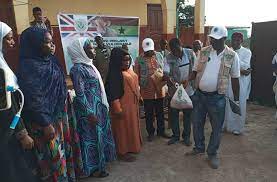
    The Coalition of Muslim Organisation in Ghana (COMOG), local partner of International Islamic Youth League and African Youth Development (IIYLAYD), an international non-governmental organisation (NGO), based in the United Kingdom, under its 2022 Qurbani project, has supported the vulnerable in Ghana with meat.

    In all, about two hundred and forty (240) cattle has been slaughtered and the beef distributed to needy Muslims across the country, during Eid-ul-Adha, festival of sacrifice feast.

    The Chief Executive Officer of the IIYLAYD, Prof. Hamid Ahmed Kanneh, when speaking at the sharing of meat at Accra Kanda said, the project was meant to put smiles on the faces of the needy during the Eid-ul-Adha festival.

    Prof. Kanneh appealed to Muslim youth to guard against being lured into terrorism, reminding them that terrorism was not part of the Jihad.

    He said the organisation was in the process of rolling out programmes to support youth development, to prevent them from going wayward.

    The president of COMOG, Hajj Abdel Manan Abdel-Rahman, observed that the gestures by the NGO would make an impact on both Muslim and non Muslim.

  • TUC against IMF deal

    TUC against IMF deal

    The Trades Union Congress (TUC) has described government’s decision to seek economic bailout from the International Monetary Fund (IMF) as a “tragic mistake and a sad one for Ghana.”

    According to the TUC, this will be the 18th time the country’s economy will be handed over to the IMF to manage and, thus, gives is a clear indication that “we cannot manage our own affairs.”

    President Akufo-Addo recently directed Finance Minister Ken Ofori-Atta to begin talks with the IMF for a bailout.

    A statement issued by Information Minister Kojo Oppong Nkrumah on Friday, 1 July 2022, said: “The President of the Republic, Nana Addo Dankwa Akufo-Addo, has authorised Finance Minister Ken Ofori-Atta to commence formal engagements with the International Monetary Fund (IMF), inviting the Fund to support an economic program put together by the Government of Ghana.”

    “This follows a telephone conversation between the President and the IMF Managing Director, Miss Kristalina Georgievs, conveying Ghana’s decision to engage with the Fund,” the statement said.

    “The engagement with the IMF will seek to provide a balance of payment support as part of a broader effort to quicken Ghana’s build back in the face of challenges induced by the Covid-19 pandemic and, recently, the Russia Ukraine crises

    The economy has been in rough waters for some time now.

    Fuel prices keep rising, the cedi keeps depreciating, inflation keeps soaring, and the cost of goods and services and keep rising.

    As of March 2022, Ghana’s total debt stock stood at GH¢391.9 billion.

    The TUC in a statement signed by its Secretary General, Dr Yaw Baah kicking against the IMF bailout said IMF programmes have only imposed unnecessary hardships on Ghanaians with practically nothing to show for them.

    “The solutions proffered by the Fund are not appropriate for our economy. They scratch the edges of the problem without tackling the fundamental issues facing the economy,” the statement noted.

    The TUC stated that instead of an IMF programme, the government can achieve sustainable economic growth and development “if we build consensus among the key stakeholders through a genuine social partnership.”

    Read details of the TUC statement below:

    COMMENCEMENT OF FORMAL ENGAGEMENTS WITH THE INTERNATIONAL MONETARY FUND (IMF)

    On July 1, 2022, the Minister for Information released an official statement to inform Ghanaians that President Akufo-Addo has directed the Minister for Finance to commence formal engagements with the International Monetary Fund (IMF), “inviting the Fund to support an economic program put together by the Government of Ghana”. The statement further underlined Cabinet’s endorsement of the decision by the President to seek IMF support.

    The Trades Union Congress (TUC) considers this decision by government a tragic mistake and a sad one for Ghana. This will be the eighteenth time our country’s economy will be handed over to the IMF to manage. It is very sad because it is a clear indication that we cannot manage our own affairs.

    We fully acknowledge the impact of global developments on Ghana’s economy. At the same time, the current state of the economy suggests that the robust economy government claimed to have built before the pandemic was not resilient enough. It must have been built on a “foundation of straw” but Ghanaians were told that our economy was strong and stable.

    It is now very obvious that the economy of Ghana is in a desperate situation. But we are of the firm view that handing over the management of the economy to the IMF is not the solution to our problems. In the Fourth Republic alone, we have implemented five IMF programmes. These IMF programmes have only imposed unnecessary hardships on Ghanaians with practically nothing to show for them. The solutions proffered by the Fund are not appropriate for our economy. They scratch the edges of the problem without tackling the fundamental issues facing the economy.

    1. The negative social implications of the religious manner in which IMF-sponsored programmes were implemented during the structural adjustment period are still very fresh in our memories. Tens of thousands of public sector workers lost their jobs, unnecessarily. For example, the last IMF-Extended Credit Facility programme (2015-2018) was conditioned on government freezing employment in the public service, among other conditionalities. This meant that while CHIP Compounds were without skilled medical personnel, trained nurses were picketing at the Ministry of Health and Ministry of Employment and Labour Relations for jobs. That IMF programme produced an association of unemployed graduates for the first time in the history of our country. The programme also led to a steep decline in real wages. The hardships all these IMF programmes brought on Ghanaians were enormous and needless. What we got in return was an economy still overly dependent on production and export of raw materials and import of manufactured products. Most of our productive sectors such as mining, petroleum and telecommunications are still being controlled by foreign companies.

    Our history of engagements with the IMF provides ample evidence that IMF-sponsored programmes and policies cannot change our economic circumstances. If we learn from history, we would know that countries that have succeeded economically such as South Korea, Singapore and China did not follow the neo-liberal policies based on the Washington Consensus which provide the basis for all IMF-sponsored programme.

    The only reason a government would want to seek IMF bailout is to look for short-term quick fix to our perennial economic challenges. Ghana has done this seventeen times and government has just announced the commencement of engagements for the eighteenth IMF-sponsored programme. One thing is very certain – the eighteenth IMF programme will not solve our problems. Therefore, we should be prepared for the nineteenth, twentieth and more programmes in the next few years, even though it is so obvious that IMF programmes pay practically no attention to the removal of structural constraints to sustainable growth and development.

    What we need now are measures that tackle the structural constraints to economic and social development. Those measures must include policies and programmes aimed at ending the domination of foreign companies in the most productive sectors of the economy, minimise our dependence on natural resources and build a robust manufacturing base. An economy which is dependent on few natural resources will continue to face fiscal challenges.

    We believe strongly that we can achieve sustainable economic growth and development if we build consensus among the key stakeholders through a genuine social partnership.

    In 2019, the Government of Ghana, represented by the Ministry of Finance and Ministry of Employment and Labour Relations and Organised Labour represented by the Trades Union Congress (TUC) and private sector employers represented by

    2. the Ghana Employers’ Association (GEA), collectively referred to as Social Partners, signed a Memorandum of Understanding (MoU) with the following objectives:

    a. Provide a mechanism for building a sense of cohesion, trust, self-management, and engage in frank and open discussions with mutual sacrifices and contributions from all stakeholders to champion the course of Ghana’s development;

    b. Provide a platform for reaching national consensus on transformation and development issues;

    c. Provide a post-IMF Extended Credit Facility local development partnership arrangement among Social Partners to ensure the irreversibility of macroeconomic gains;

    d. Undertake analysis on key development issues and advise government on same;

    e. Deliberate and make inputs on national development policy discourse, including the National Budget;

    f. Serve as an internal mechanism to foster accountability; and

    g. Inculcate a culture of social cooperation between workers, employers and government at all levels of the Ghanaian society.

    Our understanding of the unilateral decision by Government to commence engagements with IMF, without any consultation with the social partners, amounts to a declaration of the end of the social partnership initiated in 2019 with the above-mentioned objectives.

    We would like to remind government that, as part of the negotiations for the 2021 and 2022 base pay, we agreed to the four and seven percent pay increases respectively on condition that government will not declare redundancies in the public service and that government will continue to employ young people into the public service.

    We would like government to note that the working people of Ghana will do whatever it takes to prevent the imposition of needless hardships on them and the good people of Ghana.

    [SIGNED]

    DR. YAW BAAH

    SECRETARY GENERAL

    ACCRA, 3RD JULY 2022

  • Mid-year budget review to be presented this week

    Mid-year budget review to be presented this week

    Adnan Adams Mohammed

    The Finance Minister, this week present the mid-year budget review to Parliament.

    As government has initiated discussion with the International Monetary Fund (IMF), many Ghanaians and policy analyst expect tough economic policy changes, especially with cutting down on expenditure and possible cancellation of many social intervention programs as well as how to increase domestic revenue generation.  

    The government indicated it has started an engagement with the IMF to seek ‘balance of payment support’ as part of a broader effort to quicken Ghana’s build back in the face of challenges induced by the Covid-19 pandemic and, recently, the Russia Ukraine crises.” The Ghana Union of Traders’ Association (GUTA) has once again underscored the need for government to review the tax exemption regime to curtail revenue losses in the mid-year budget.

    According to the Association, there is a lack of urgency in the way the exemption bill is being treated despite indications that the government’s latest revenue generation strategy, the electronic transfer levy, is woefully failing to meet government targets.

    “We find it difficult to understand why they are still not being able to revise the tax exemption policy. It is not helping anybody, including the government. We need taxes to grow, and the tax exemption policy has not helped”,  President of GUTA, Dr. Joseph Obeng said in an interview last week.  “If anything, it has not helped to create employment. This tax exemption is going to help foreigners. What do we have to show if it doesn’t reflect on employment creation? It needs to be looked at as soon as possible, especially as government is going to the IMF program. They should rethink through and do something about it.”

    The call by GUTA follows calls by many stakeholders to government to put in place measures to ensure the State is not deprived of billions of cedis, through tax exemptions every year.

    The Tax Exemptions Bill was laid in Parliament in the first quarter of 2019 to, among other things, “rationalise the current exemptions regime on taxes, levies, fees and charges by varying, where necessary, and consolidating existing statutory provisions on tax and other exemptions and to provide for the administration of exemptions”.

    But since then, nothing has been done. In November last year, the Minister of State at the Ministry of Finance, Charles Adu Boahen, announced that plans were far advanced for the passage of the Tax Exemptions Bill.

    According to him, Cabinet is deliberating on the final draft of the Bill.

    Already, data from the Institute for Economic Affairs (IEA), shows that Ghana loses over GHC 5 billion every year through tax exemptions alone.

  • IMF Discussion: Govt’s fear is data reconciliation and disclosure – Economist

    IMF Discussion: Govt’s fear is data reconciliation and disclosure – Economist

    Adnan Adams Mohammed

    As Ghana has begun a crucial discussion with the International Monetary Fund (IMF) for debt management and policy credibility, an economist has intuited that, many government officials fear the aspect of data reconciliation and disclosures.

    The renowned economist with University of Cape Coast (UCC) urged government not to give in to the negative attitude of some fear government officials who fear the reconciliation and full disclosure of data, especially on procurement, and therefore advocating against the IMF program.

    Government of Ghana started IMF Program Discussion, last week, seeking ‘a balance of payment support’ as part of a broader effort to quicken Ghana’s build back in the face of challenges induced by the Covid-19 pandemic and, recently, the Russia Ukraine crises.

    But, speaking to an Accra based radio station, Top Fm, last week when the economist was asked about what could be some details about the IMF discussion with the government, he said, there will be economic and financial data reconciliation and full disclosures with the involvement of the Ghana Statistical Service, Ghana Revenue Authority and Bank of Ghana.

    “Given the pronouncement by some key government officials in the past, it suggests that not all of them may like the decision, especially when disclosures will be required on many issues”, Prof John Gatsi, Dean of the Department of Finance at UCC, posited when asked about how he sees the commitment and unity of purpose of government officials towards IMF program. “Data credibility and transparency will be the starting point  of the formal  discussion with the IMF.”

    He added that starting an engagement with the IMF  and discontinue can signal  more doubt about economic management leadership and package the economy as risky to associate with.

    He said  any divided commitment to the discussion will isolate Ghana as confidence and policy credibility  will diminish further.  

    As he indicated that a lot may unfold this week as there is no prior engagement with stakeholders before the announcement, it is difficult to conclude whether or not the purpose of going to the IMF is in line with the real problem.  

    Prof. Gatsi explained that the problem of the Ghanaian economy is more of debt distress with contagion effect hence debt restructuring maybe what is needed but the outcome of the engagement with the IMF team will conclude on that.

  • NDC releases timetable for Branch elections

    NDC releases timetable for Branch elections

    The National Democratic Congress (NDC) has released the timetable for its branch elections expected to last for more than a month.

    The elections process, which forms part of its internal restructuring and election of new leaders for the party across the country, is expected to begin from July 21 and ends on August 28, 2022, all things being equal.

    Find below the timetable: