

By Adnan Adams Mohammed
Regulator warns of severe sanctions and prosecution for selling contaminated products; public urged to stay clear of flooded retail outlets.
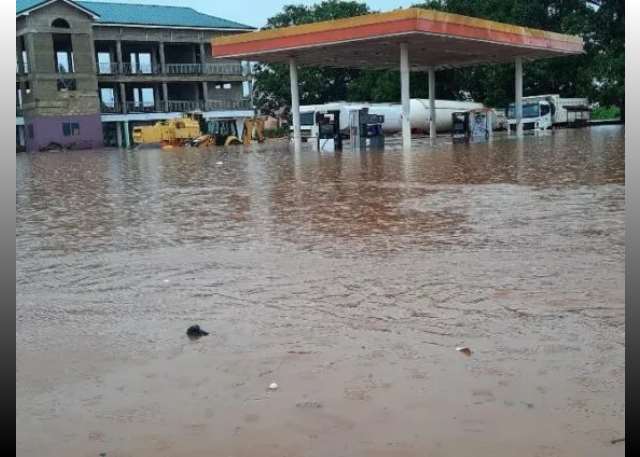
The National Petroleum Authority (NPA) has issued an emergency directive ordering all Oil Marketing Companies (OMCs), fuel station operators, dealers, and transporters to immediately shut down and suspend operations at facilities affected by the ongoing torrential rains.
The strict regulatory response follows severe flooding across the capital, raising fears of catastrophic fuel contamination, underground tank infiltration, hazardous environmental pollution, and potential fire outbreaks or explosions.
“Immediately cease all fuel dispensing, loading, and offloading activities where floodwater has inundated the forecourt, tank area, or entered tank manholes, fill points, or vent pipes,” the NPA ordered in a public safety notice issued late Monday evening.
Strict 100-Meter Exclusion Zones Enforced
To mitigate the threat of flammable vapors mixing with water or igniting, the regulator has demanded that operators set up strict physical boundaries around compromised premises.
“Remove all staff, customers, and vehicles from the station and establish a safety exclusion zone of preferably not less than 100 meters around the affected facility,” the directive stated. Within this designated safe zone, the NPA has prohibited all potential ignition triggers, explicitly banning “smoking, naked flames, welding, the use of spark-producing equipment, and any other activity capable of igniting flammable vapours.”
Where it is entirely safe to do so, station managers must immediately isolate electrical power to fuel dispensers, canopy lights, and underground pumps via main isolation switches before completely evacuating the property.
Reopening Contingent on Strict Safety Clearances
The authority stressed that affected retail outlets will not be permitted to resume commercial activities on a whim. Operations can only restart after floodwaters have completely receded, and a meticulous, multi-agency evaluation has been completed.
According to the NPA, stations must undergo “a joint safety inspection by the NPA and the Ghana National Fire Service (GNFS)” and receive official certification proving that underground storage tanks, pipelines, and dispensing equipment are structurally sound. Furthermore, any water-contaminated petroleum or toxic waste must be safely extracted and disposed of in total compliance with Environmental Protection Agency (EPA) standards.
The regulator warned that shortcuts will face aggressive legal pushback. “The sale or distribution of contaminated petroleum products constitutes a violation of applicable petroleum regulations and will attract severe sanctions,” the NPA statement noted, clarifying that penalties will include operational suspensions, heavy administrative fines, and criminal prosecution.
Public Advisory: Stay Away from Fuel Stations
The authority also directed a strong warning to the general public, urging motorists, pedestrians, and nearby residents to stay completely clear of flooded station forecourts.
“Refrain from coming into contact with floodwater in and around affected stations, as it may contain petroleum products or other hazardous contaminants,” the notice cautioned.
Members of the public are advised to remain vigilant and report any strong petroleum odors, visible fuel sheens reflecting on floodwaters, or open leaks directly to the Ghana National Fire Service or the nearest NPA regional office. Compliance monitoring teams have been dispatched nationwide to ensure the directives are carried out immediately.
