
By Adnan Adams Mohammed
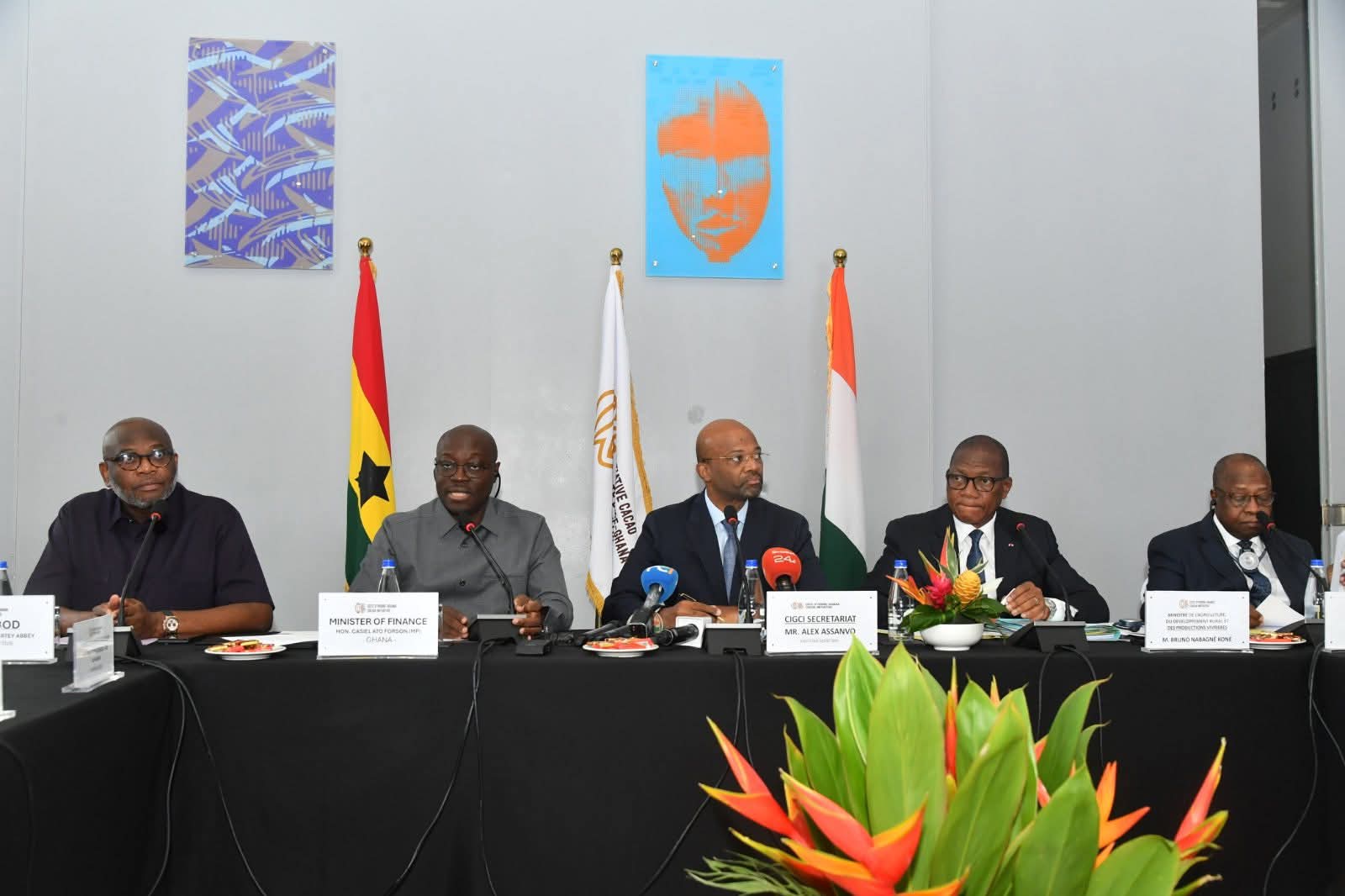
In a major push for regional economic solidarity, the Chief Executive of the Ghana Cocoa Board (COCOBOD), Dr. Abbey, has made a passionate call for Ghana and Côte d’Ivoire to deepen mutual confidence and maintain a common strategic direction on key industry issues, particularly cocoa pricing.
Speaking on the immense economic leverage held by the two West African neighbors, Dr. Abbey highlighted that closer alignment is the only sustainable pathway toward ensuring fair value for local producers on the international market and insulating them from the volatile swings of global commodities trading.
The strategy has received significant political backing, with the Finance Minister, Dr. Cassiel Ato Forson, stepping forward to publicly endorse the push for a unified framework.
Shaping the Global Cocoa Value Chain
Dr. Abbey emphasized that because the two nations collectively control more than sixty percent of global cocoa production, they possess unparalleled power to influence the market if they maintain a united front. However, he warned that fragmented market approaches would only erode this advantage, allowing multinational buyers to dictate terms and weaken national efforts to secure fair returns for cocoa exports.
”Ghana and Côte d’Ivoire have a unique opportunity to shape the future of the global cocoa industry. However, this can only be achieved if we continue to work together in a spirit of openness, honesty, and trust,” Dr. Abbey stated.
He further urged both nations to move beyond high-level dialogue and demonstrate an unwavering commitment to coordinated action that directly protects the livelihoods of smallholder cocoa farmers, who form the backbone of both economies.
”With one accord, the two countries can achieve a lot in terms of price on the international market,” he emphasized.
Legislative and Financial Backing for the Framework
Reinforcing the economic necessity of this cross-border alliance, Dr. Cassiel Ato Forson threw his weight behind the initiative, noting that a joint pricing policy is a matter of national interest that transcends daily politics.
Forson highlighted that a unified front is the most effective mechanism to safeguard national revenues and stabilize the cocoa sector against manipulative external market forces.
”A common pricing framework between Ghana and Côte d’Ivoire is not just optimal, it is non-negotiable if we want to protect our economies from global price volatility,” Dr. Ato Forson stated, backing the push for synchronized policy execution. “We must ensure our farmers are never left at the mercy of fragmented state strategies.”
Trust and Transparency as the Foundation
Dr. Abbey observed that successful partnerships are entirely dependent on accountability, stressing that agreements reached in conference rooms must be backed by enforceable practices on the ground. Historical precedents show that without a unified stance, unilateral policy changes by one country can inadvertently undermine the market positioning of the other.
”The discussions we hold must be matched by practical actions and mutual confidence. Without trust and transparency, it becomes difficult to achieve the common objectives we seek for our farmers and our economies,” he added.
The COCOBOD Chief Executive also highlighted the importance of sustaining cooperation on broader systemic challenges confronting the sector. Beyond pricing, these include enforcing ethical environmental standards, ensuring strict supply chain traceability, building climate resilience against changing weather patterns, and improving overall farmer welfare.
A Unified Front Against Stricter Global Regulations
The framework for this partnership remains anchored by the Côte d’Ivoire–Ghana Cocoa Initiative, an established strategic platform designed to promote policies that advance the livelihoods of cocoa farming households across West Africa. The initiative serves as a crucial defensive barrier against external economic pressures.
Industry stakeholders have consistently argued that closer coordination between the two leading cocoa producers is essential to strengthening their collective bargaining power within the global cocoa market. By improving value retention within the producing countries, West African nations can ensure that a fairer share of the wealth generated from the multi-billion-dollar global chocolate industry returns directly to local communities.
As global consumer demand for sustainably sourced cocoa continues to grow, and international regulatory requirements—particularly from the European Union—become increasingly stringent, observers believe that a stronger and more united Ghana–Côte d’Ivoire alliance will be pivotal. Only by presenting a harmonized front can West Africa successfully shape the future of the international cocoa trade and advance the socio-economic welfare of millions of agricultural households.
