By Adnan Adams Mohammed
Foreign institutional investors and alternative finance capital are positioning for major entry into Ghana’s financial sector following the Bank of Ghana’s (BoG) formal activation of the Non-Interest Financial Advisory Council (NIFAC).
The new regulatory framework signals a lucrative opening for global non-interest banks, private equity firms, and asset management funds seeking high-yield opportunities in West Africa’s expanding alternative finance market. By establishing clear oversight under Act 930, Ghana is clearing legal hurdles to attract long-term foreign direct investment into asset-backed infrastructure, leasing, and commercial trade projects.
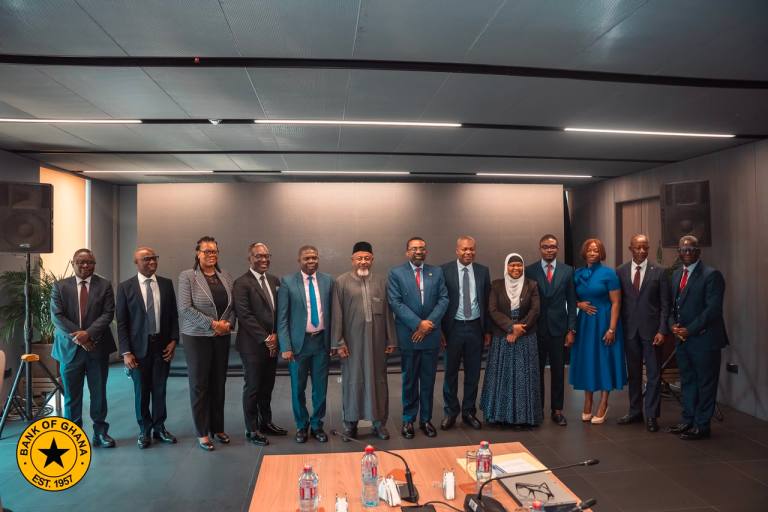
Inaugurating the advisory council at the central bank headquarters, Bank of Ghana Governor Dr. Johnson Pandit Asiama highlighted that the regulatory shift provides foreign and domestic investors with a reliable framework to deploy alternative capital models alongside conventional banking.
“Non-interest finance widens that choice. It is not free finance, but a complement to conventional banking based on trade, leasing, partnerships, and asset-backed transactions,” Dr. Asiama noted.
For international financial institutions, the newly released Guideline for the Regulation and Supervision of Non-Interest Banking creates two distinct market entry strategies: foreign banks can establish fully owned non-interest subsidiaries or license specialized windows through existing Ghanaian commercial entities.
Dr. Asiama reassured investors and market participants that regulatory approval for new financial products will prioritize structural clarity, consumer confidence, and systemic stability to protect capital deployments.
“The success of this initiative will not be measured by the number of new products introduced, but by whether those products are sound, useful, and worthy of public confidence,” Dr. Asiama asserted. “Products should not be accepted merely because they carry a non-interest label. Their structure, risks, costs, and obligations must be transparent.”
Chaired by renowned regulatory expert Prof. Bashir Aliyu Umar, the cross-border council is tasked with advising the BoG while extending technical support to the Securities and Exchange Commission (SEC) and the National Insurance Commission (NIC). This multi-agency alignment is expected to accelerate the issuance of alternative capital market instruments including sovereign and corporate Sukuk bonds opening direct channels for international portfolio investors seeking yield in West Africa.
Leave a Reply