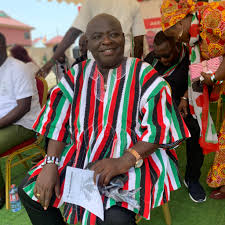
The Chairman of the ruling NDC of Awutu Senya East Constituency has called on the Narcotics Control Commission to partially decentralised their operations to help in tackling the drug menace from the district level for effective results.
Chairman Ofosu Agyare bemoans the increasingly drug trafficking syndicates spreading across the country which is fueling drug abuse menace that has eluded many of the Ghanaian youth.
In recent months, the effort of NACOC and other security agencies have helped busted many drug trafficking gangs which included suspected cocaine, Indian hemps and other pharmaceutical drugs smuggled into the country at ports of exits and mainland.
“I think if the NACOC people can decentralise their operations and establish offices within some districts, like Awutu Senya for instance, it will help a lot in fighting the drug menace eating our youth”, Chairman Agyare noted during a radio discussion.
The real estate business mogul expressed his worry at the alarming rate of drug abuse and addicts spreading across the country endangering the youth of the country.
“All what I can say is, sometimes as people trials and bad experience forces us to change from bad things, so I think if this drug dealers and addicts are arrested and putting behind bars it can help them change.”
The Narcotics Control Commission (NACOC) is a Ghanaian agency under the Ministry of Interior. It is the agency concerned with the formulation and enforcement of narcotics laws in the country. The Commission work is aimed at preventing the use, import, and export of narcotics.
It’s mission is to implement legislations and conventions on Narcotic Drugs, Precursor chemicals and Psychotropic substances through a motivated workforce and effective collaboration.
The current strengthening of Ghana’s economy evident by significant improvements in its key economic performance indicators strongly shows growing confidence in the fortunes of businesses and consumers.
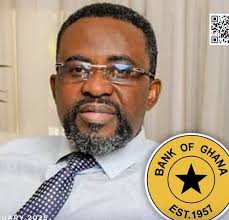
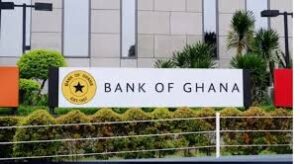
The Bank of Ghana data published last week, after the its Monetary Policy Committee, shows easing inflation, disciplined fiscal management, favourable external sector developments amidst tightening policy rate as key ingredients behind the country’s improving economic performance.
Headline inflation has declined consecutively in the first four months of the year by 2.6 percentage points to 21.2% in April 2025, driven by the lowering of both food and non-food inflation.
“A confluence of factors, including tight monetary policy stance, stepped-up liquidity sterilization efforts, downward revisions in ex-pump petroleum prices, and exchange rate stability have supported the gradual decline in inflation” BoG Governor, Dr Johnson Asiama explained last week when delivering the decision of the Monetary Policy Committee to retain its benchmark Monetary Policy Rate at 28%.
“The Bank’s core inflation measure, which excludes energy and utility prices, as well as inflation expectations of consumers, businesses, and the banking sector point to easing inflationary pressures.”
Similarly, the recently installed President John Dramani Mahama administration has reigned in the fiscal slippages that its predecessor government often fell prey to.
“Fiscal policy implementation so far has been broadly aligned with the 2025 Budget. In the first quarter of 2025, provisional data on budget execution indicated that although revenues fell below target, some expenditure rationalisation took place to accommodate the revenue shortfall” affirmed Dr Asiama.
“The primary fiscal balance (on commitment basis) has also improved in the first quarter. Continued maintenance of a strict fiscal consolidation for the 2025 Fiscal Year will further strengthen the ongoing recovery process and firm up macroeconomic stability.”
Key to the ongoing turnaround has been the external sector which has continued to improve, with a record provisional current account surplus of US$2.1 billion in the first quarter of 2025, driven mainly by higher prices and increased production volumes of gold and cocoa, and strong remittance inflows.
The current account surplus, together with net outflows in the capital and financial account, resulted in an overall Balance of Payments surplus of US$1.1 billion. The strong external performance resulted in significant reserve accumulation. Gross International Reserves (GIR) amounted to US$10.7 billion in April 2025, equivalent to 4.7 months of import of goods and services.
“Broadly, the external sector outlook remains favourable, largely anchored on expectations of increased gold and cocoa export receipts, as well as inflows from remittances” enthused Dr Asiama last week.
“The cedi has rebounded strongly against the major trading currencies driven by a combination of factors, including tight monetary policy stance, ongoing fiscal consolidation, record reserve accumulation, strict enforcement of foreign exchange market rules, and improved market sentiment.”
Indeed in the year to May 21, 2025, the cedi had appreciated against all the major currencies – 24.1 percent against the US dollar, 16.2 percent against the British pound, and 14.1 percent against the euro.
“The latest forecast points to continued easing of inflationary pressures on the back of tight monetary policy stance, exchange rate stability, and fiscal consolidation” the BoG Governor enthused.
“Inflation is expected to ease faster towards the medium-term target in the first quarter of 2026 as opposed to the second quarter as earlier envisaged, barring unanticipated shocks.”
This looks set to deliver palpable rewards. The BoG’s high frequency real sector indicators point to a sustained pickup in economic activity. The updated Composite Index of Economic Activity increased by 2.3 % year-on-year in March 2025, compared with 1.0% over the same period last year, mainly driven by exports, credit to the private sector, and construction activities.
In addition, the Ghana Purchasing Managers’ Index rose above the 50-benchmark as output and new orders increased, signaling improved growth prospects. Based on easing inflationary pressures and optimism about macroeconomic conditions, the latest confidence surveys conducted by the BoG showed significant improvement in consumer and business expectations going forwards, the highest in the last seven years.
The Bank of Ghana’s Monetary Policy Committee (MPC) in the past two months tightened the monetary policy rate to 28 percent for the months of March and April.
The central bank’s Governor, Dr Johnson Asiama, last week, announced that the benchmark MPR was being maintained at 28%, for the next two months. This is the rate it had been hiked to at the end of March when the MPC voted for a 100 basis point increase from the previous 27% it had inherited from the previous BoG administration.
The position of MPC to keep the MPR was expected by most monetary economists despite some positive adjustments in the country’s macroeconomic indicators.
While borrowers will be disappointed that the recent strong gains in Ghana’s key performance indicators did not translate into a cut in the benchmark MPR, Dr Asiama correctly pointed out that, the restoration of macroeconomic stability is already driving down interest rates across board, despite the central bank’s continued tight monetary policy to squeeze out stubbornly high headline inflation, the Ghana Reference Rate – which is set by the Ghana Association of Banks and serves as the base lending rate for the industry – fell from 29.31% at the start of this year, to 23.99% by April.
Similarly, the average lending rate charged by banks, fell from 30.25% to 27.40% over the same period. This is despite the 100 basis points increase in the benchmark MPR in late March.
Pending the release of data for May, it is safe to assume that this trend of falling interest rates is continuing. Between January and April, the 91 day treasury bill rate fell much more sharply than lending rates, from 27.73% to 15.47%, while the 182 day bill declined from 28.43% to 16.23% and the 264 day bill fell from 29.95% to 18.62%. Instructively, at the most recent weekly tender of government treasury bills – concluded at the same time the MPC was deciding to retain the MPR at 28% – the 91 treasury bill interest rate reached a new low of 14.93%, with the 182 day bill rate having fallen to 15.55% and the 364 day bill having declined to 16.00%.
Based on interest rate trends over the previous couple of months this suggests that lending rates are likely to have fallen further during current month of May and look set to continue declining over the coming weeks, despite the MPR having been retained at 28%.
It is instructive that despite the ongoing decline in interest rates, lending rates remain positive in real, inflation adjusted terms, and the negative gap between treasury bill rates and inflation, although inordinate, looks set to dissipate as inflation edges lower towards the central bank’s target for end of 2025 of 11.9%.
Meanwhile, explaining the decision to maintain the MPR at 28%, Dr Asiama noted that “The latest forecast points to continued easing of inflationary pressures on the back of tight monetary policy stance, exchange rate stability, and fiscal consolidation. Inflation is expected to ease faster towards the medium-term target in the first quarter of 2026 as opposed to the second quarter as earlier envisaged, barring unanticipated shocks.
“Despite these positive developments, the Committee observed that the current level of inflation remains high relative to the medium-term target and will require maintaining the tight stance to reinforce the disinflation process. Under the circumstances, the Committee, by a unanimous decision, maintained the policy rate at 28.0%.”
The BoG now expects inflation to end the year at 11.9%, down from 21.4% currently, and fall further into its medium term target range of between 6% and 10% by the first quarter of 2026.
BoG data signals improved macroeconomic indicators, boosting business and consumer confidence.
By TomaImirhe
Ghana’s ongoing macro-economic turnaround is finally being rewarded by significant improvements in its key economic performance indicators and this in turn is engendering strongly growing confidence in the fortunes of businesses and consumers alike, going forward.
Data released by the Bank of Ghana last week, following the latest meetings of its Monetary Policy Committee, points to lowering inflation, fiscal discipline, the tight monetary policy stance and favourable external sector developments as key ingredients behind the country’s improving economic performance.
Headline inflation has declined consecutively in the first four months of the year by 2.6 percentage points to 21.2% in April 2025, driven by the lowering of both food and non-food inflation. “A confluence of factors, including tight monetary policy stance, stepped-up liquidity sterilizationefforts, downward revisions in ex-pump petroleum prices, and exchange rate stability havesupported the gradual decline in inflation” BoG Governor, DrJohnson Asiama explained last week when delivering the decision of the Monetary Policy Committee to retain its benchmark Monetary Policy Rate at 28%.“The Bank’s core inflation measure, which excludesenergy and utility prices, as well as inflation expectations of consumers, businesses, and the banking sector point to easing inflationary pressures.” Similarly, the recently installed President John DramaniMahama administration has reigned in the fiscal slippages that its predecessor government often fell prey to.
“Fiscal policy implementation so far has been broadly aligned with the 2025 Budget. In the first quarter of 2025, provisional data on budget execution indicated that although revenues fell belowtarget, some expenditure rationalisation took place to accommodate the revenue shortfall” affirmed DrAsiama.“Theprimary fiscal balance (on commitment basis) has also improved in the first quarter. Continued maintenance of a strictfiscal consolidation for the 2025 Fiscal Year will further strengthen the ongoing recovery processand firm up macroeconomic stability.” Key to the ongoing turnaround has been the external sectorwhich has continued to improve, with a record provisional current account surplusof US$2.1 billion in the first quarter of 2025, driven mainly by higher prices and increasedproduction volumes of gold and cocoa, and strong remittance inflows. The current accountsurplus, together with net outflows in the capital and financial account, resulted in an overallBalance of Payments surplus of US$1.1 billion. The strong external performance resulted insignificant reserve accumulation. Gross International Reserves (GIR) amounted to US$10.7billion in April 2025, equivalent to 4.7 months of import of goods and services.
“ Broadly, theexternal sector outlook remains favourable, largely anchored on expectations of increased goldand cocoa export receipts, as well as inflows from remittances” enthused DrAsiama last week. “The cedi has rebounded strongly against the major trading currencies driven by a combinationof factors, including tight monetary policy stance, ongoing fiscal consolidation, record reserveaccumulation, strict enforcement of foreign exchange market rules, and improved marketsentiment.”
Indeed in the year to May 21, 2025, the cedi had appreciated against all the major currencies – 24.1 percent against the US dollar, 16.2 percent against the British pound, and 14.1 percent against the euro. “The latest forecast points to continued easing of inflationary pressures on the back of tight monetary policy stance, exchange rate stability, and fiscal consolidation” the BoG Governor enthused.“Inflation is expected toease faster towards the medium-term target in the first quarter of 2026 as opposed to the secondquarter as earlier envisaged, barring unanticipated shocks.”
This looks set to deliver palpable rewards. The BoG’s high frequency real sector indicators point to a sustainedpickup in economic activity. The updated Composite Index of Economic Activity increased by2.3 % year-on-year in March 2025, compared with 1.0% over the same period last year, mainly driven by exports, credit to the private sector, and construction activities. In addition,the Ghana Purchasing Managers’ Index rose above the 50-benchmark as output and new ordersincreased, signaling improved growth prospects. Based on easing inflationary pressures andoptimism about macroeconomic conditions, the latest confidence surveys conducted by the BoG showed significantimprovement in consumer and business expectations going forwards, the highest in the last seven years.
BoG maintains policy rate, but market lending and treasury rates continue to decline.
By TomaImirhe
At the end of last week the Bank of Ghana’s Monetary Policy Committee (MPC) kept to the script expected by most monetary economists, when the central bank’s Governor, Dr Johnson Asiama, announced that the benchmark Monetary Policy Rate(MPR) was being maintained at 28%, for the next two months. This is the rate it had been hiked to at the end of March when the MPC voted for a 100 basis point increase from the erstwhile 27% it had inherited from the previous BoG administration.
Explaining the decision, DrAsiama noted that “The latest forecast points to continued easing of inflationary pressures on the back of tightmonetary policy stance, exchange rate stability, and fiscal consolidation. Inflation is expected toease faster towards the medium-term target in the first quarter of 2026 as opposed to the secondquarter as earlier envisaged, barring unanticipated shocks. “Despite these positive developments, the Committee observed that the current level of inflationremains high relative to the medium-term target and will require maintaining the tight stance toreinforce the disinflation process. Under the circumstances, the Committee, by a unanimousdecision, maintained the policy rate at 28.0%.”
The BoG now expects inflation to end the year at 11.9%, downfrom 21.4% currently, and fall further into its medium term target range of between 6% and 10% by the first quarter of 2026.
While borrowers will be disappointed that the recent strong gains in Ghana’s key performance indicators did not translate into a cut in the benchmark MPR, DrAsiama correctly pointed out that the restoration of macro-economic stability is already driving down interest rates across board, despite the central bank’s continued tight monetary policy to squeeze out stubbornly high headline inflation.
While average deposit rates have barely changed since the beginning of 2025, the Ghana Reference Rate – which is set by the Ghana Association of Banks and serves as the base lendingrate for the industry – fell from 29.31% at the start of this year, to 23.99% by April. Similarly, the average lending rate charged by banks, fell from 30.25% to 27.40% over the same period. This is despite the 100 basis points increase in the benchmark MPR in late March.
Pending the release of data for May, it is safe to assume that this trend of falling interest rates is continuing. Between January and April, the 91 day treasury bill rate fell much more sharply than lending rates, from 27.73% to 15.47%, while the 182 day bill declined from 28.43% to 16.23% and the 264 day bill fell from 29.95% to 18.62%. Instructively, at the most recent weekly tender of government treasury bills – concluded at the same time the MPC was deciding to retain the MPR at 28%– the 91 treasury bill interest rate reached a new low of 14.93%, with the 182 day bill rate having fallen to 15.55% and the 364 day bill having declined to 16.00%.
Based on interest rate trends over the previous couple of months this suggests that lending rates are likely to have fallen further during May too and look set to continue declining over the coming weeks, despite the MPR having been retained at 28%.
It is instructive that despite the ongoing decline in interest rates, lending rates remain positive in real, inflation adjusted terms, and the negative gap between treasury bill rates and inflation, although inordinate, looks set to dissipate as inflation edges lower towards the central bank’s target for end of 2025 of11.9%.
The Governor of Bank of Ghana, Dr Johnson Asiama, has strongly affirmed a resolve to put in place all necessary framework to operationalise Islamic financing products, basically Islamic banking, in Ghana very soon.
He indicated that, the bank’s resolve prompted the engagement of Professor John Gatsi as an Advisor purposely to facilitate the process for introduction of Islamic banking. Professor Gatsi, the Dean of the University of Cape Coast’s Business School is an acclaimed economist and is well known for both his knowledge of and advocacy for Islamic Banking in Ghana.
At the 124th Monetary Policy Committee press briefing in Accra last week, the Governor revealed that “l must say that we have internal capacity and processes (to implement Islamic Banking). We have done a few studies, the Head of Banking Supervision here has gone through a lot of programmes and he is very comfortable with it. The entire Banking law, Act 930, makes provision for Islamic banking but there are some lapses – for instance the establishing of the Sharia compliance board that was not captured rightly. That is why Prof Gatsi and his team who have done some work in that area will be doing some work in that regard. To ensure that we are able to operationalize Islamic finance, especially Islamic banking”, Dr Asiamaemphasised.
“There are also the other aspects of Islamic financing involved. So, we are working on it. Hopefully, very soon when we are ready, we can consider licenses to establish Islamic banking.”
The Banks and Specialised Deposit-Taking Institutions Act, 2016 (Act 930) promulgated in 2019, which repealed the previous Banking Act, 2004 (Act 673), provides a comprehensive framework for regulating banks and specialized deposit-taking institutions (SDIs) in Ghana including Islamic banking. However there are no Islamic banks licensed to operate in Ghana yet.
While there are no fully established Islamic banks in Ghana, several institutions offer Islamic banking services. These include financial institutions like Access Bank Ghana, Wenchi Rural Bank, Ghana Islamic Microfinance, and Salam Capital. Ghana Islamic Microfinance, which began as an NGO, is the only sharia-compliant financial institution in the country.
Meanwhile, Prof. Gatsi, a consistent advocate for Islamic finance, has over the years underscored the need for Ghana to adopt Islamic banking to promote financial inclusion and freedom of choice of financial products and services.
According to him, Islamic banking would considerably reduce untold poverty and burdensome project finance facing the country, whilst ensuring the promotion of social justice.
He maintained that Islamic banking has contributed to private-sector finance and governmental project finance through the public-private partnership (PPP) framework, stressing that PPP would enhance the diversification of infrastructure finance.
“It is high time, as a country, we began to explore Islamic banking options to provide some capital for infrastructure”, he added.
Prof Gatsi made these submissions at his inaugural lecture which was on the topic, “Islamic Banking Options: Exploring an Inclusive Alternative or Complement.”
Prof. Gatsi, who is also the Dean of the School of Business at University of Cape Coast, reiterated recent calls for the Banks and Specialised Deposit-taking Institutions Act, 2016 (Act 930) to include ethical banking and achieve financial inclusion. He argued that the nation would bear the full brunt of hardship if the Bank of Ghana failed to amend the law to incorporate Islamic finance.
In the view of Prof Gatsi, the Act was enacted for conventional banks and needs to have legal flexibility for the governance structure, including Islamic banking.
“In other parts of the world, the hybrid model existing frameworks allowed conventional banks to create ethical finance widows and thus has allowed them to benefit from the best of both worlds…We need our legislation to be adjusted or we will fail to reap the overwhelming benefits that ethical finance provides,” he explained.
To him, the growth of Islamic banking in non-Muslim countries proves that its benefits go beyond the issue of ethical finance. He pointed out that Islamic banking should be viewed from a financial inclusion perspective and not from a religious viewpoint.
He mentioned environmental degradation and alcoholic beverages as some of the prohibitions that make the size of Islamic banking transactions smaller than conventional banking.
Prof. Gatsi mentioned capacity building for court staff, the composition of the membership of the Shariah Supervisory Board as well as the lack of uniformity in the application of Islamic law by different Muslim faiths as some of the challenges that would face the establishment of Islamic bank in Ghana.
He, therefore, proposed that the Bank of Ghana (BOG) should create the environment for the adoption of Islamic banking, as well as contribute to meeting the SDGs.
“The Shariah Board should reflect secular democratic values. Additionally, Islamic banking will deepen entrepreneurial support,” Prof. Gatsi stated.
Stakeholders discuss property tax reforms at the ACRC workshop in Accra.
Adnan Adams Mohammed
Metropolitan and Municipal Assemblies in Ghana have been tasked to assume full scale implementation of property tax collection.
Local governance and tax administration experts have expressed concern that the assemblies have no excuse with regards to financing shortfalls as they sit on ‘financial gold mines’ and need to invest in all necessary infrastructures and processes to enable full collection of property taxes to augment their Internally Generated Funds.
Government, through the Ministry of Local Government, has reiterated its commitment to decentralise the collection of property tax to metropolitan, municipal and district assemblies (MMDAs) before the end of this year. Although acknowledging the existing challenges weakening the full implementation of property tax collection, the experts believe the assemblies need to be very innovative and business minded in their approach.
“The assemblies can start with full scale valuation of the properties within their jurisdictions to aid the smooth administration”, a Lead Researcher at African Cities Research Consortium, Dr Samuel B. Biitir, said in an interview at the sideline of the ACRC Urban Property Tax Workshop in Accra.
The Senior Lecturer at SD Dombo University of Business and Integrated Development Studies believes property taxes, if assessed and collected full scale, can help develop various assemblies into world class cities.
Meanwhile, on his part, William Hagan Amoah, a Development Planning Consultant and a Managing Partner at FD Associates, while addressing concerns of some assembly staff on valuation data retorted, “I do not see why the assemblies are complaining. Everything to enable property tax collection is already existing; the laws, the mapping technology and the administrative capacity.
“The assemblies shouldn’t forget that they are an authority on their own and the law allows them to set the rate within a threshold and various property identifier softwares and maps exist. So what else is the challenge”, he quizzed.
In his opening remarks at the workshop, Ahmed Ibrahim, the Minister of Local Government, Chieftaincy and Religious Affairs, indicated that President John Dramani Mahama is resolved to go by his promise of decentralising property collection.
“The President promised to decentralise the property taxation system and send resources to the grassroots for balanced and equitable development of the country.
“The people of Ghana gave him an overwhelming majority of votes, so we cannot sleep on this reset agenda.”
Expected outcome
The move is expected to ensure that local assemblies are given stronger financial backing to undertake development projects instead of mostly relying on transfers from the central government.
The Minister, who is also the Member of Parliament for Banda, also said that the government would empower local assemblies to resort to municipal bonds to finance capital projects going forward.
The three-day workshop on property tax administration in Accra, organised by African Cities Research Consortium (ACRC), a collaborative research initiative addressing critical urban development in African cities, was on the theme: “Transforming urban property tax administration for improved delivery of valued public goods and services.”
Participants were drawn from ministries, departments and agencies (MDAs) in Ghana, Kenya, Uganda, Nigeria and Zimbabwe to share best practices and case studies from successful reforms across the continent; explore digitisation experiences and identify strategies for implementing sustainable digital reforms, including fostering collaboration among policy makers, tax administrators, researchers and international organisations to advance property tax reforms.
Challenges
While property taxation is a viable source of revenue for African countries, the sector is challenged by inadequate valuation systems, incomplete property registers, and weak enforcement mechanisms.
The property sector remains underdeveloped, causing the countries to wallow in resource constraints to undertake development projects.
Implementation
Consequently, the Greater Accra Regional Minister, Linda Obenewaa Akweley Ocloo; the head of project delivery at ACRC, Irene Vance, and Dr Biitir, have all called for the implementation of a robust property tax regime capable of raking in the needed revenue for sustainable development.
They have said that within the context of dwindling donor support, it was important for local assemblies to adopt innovative reforms backed by digital solutions to unleash the potential of the property tax.
In separate statements, they stressed that the adoption of an ingenious property tax administration module that best suits the country would further help local authorities to deliver on their onerous responsibility of addressing development challenges such as sanitation, health care, and delivery of social interventions.
In a speech delivered on behalf of Ms Ocloo by the Regional Economic Planning Director at the Greater Accra Regional Coordinating Council (GARCC), Jemima Lomotey, said the workshop would bolster ongoing processes by local assemblies to adopt digital solutions for effective property tax collection.
She said her outfit would support Metropolitan, Municipal and District Assemblies (MMDAs) within the region to deploy innovative programmes to improve domestic tax mobilisation.
Dr Biitir also said that for property tax collection to be effective, there must be depoliticisation of the process.
“Here in Ghana, it is difficult for the assemblies to collect property tax because of partisan politics. During election years, the assemblies cannot collect the needed property tax because of politics,” he said.
He underscored the need for an enhanced digital addressing system to boost property tax collection.
For her part, Ms Vance said while African cities such as Accra, Ghana; Lagos, Nigeria; Harare, Zimbabwe; Kampala, Uganda and Nairobi, Kenya were fast growing, the lack of an effective property tax system was a hindrance to unlocking their economic potentials.
Samuel Okudzeto Ablakwa, Minister for Foreign Affairs writes…
With the firm support of President Mahama, I have carried out the following drastic and decisive actions following the damming findings of a special audit team i put together a couple of months ago to investigate alleged corrupt practices at Ghana’s embassy in Washington DC:
1) The immediate dismissal of Mr. Fred Kwarteng.
Mr. Kwarteng was a local staff recruited on August 11, 2017 to work in the embassy’s IT department. According to findings and his own admission, he created an unauthorized link on the embassy’s website which diverted visa and passport applicants to his company, Ghana Travel Consultants (GTC) where he charged extra for multiple services on the blind side of the ministry and kept the entire proceeds in his private account. His illegal extra charges which were not approved by the ministry and parliament as required under the Fees and Charges Act ranges from US$29.75 to US$60 per applicant. The Investigations reveal that he and his collaborators operated this illegal scheme for at least 5 years.
This conduct has been reported to the Attorney-General for possible prosecution and retrieval of funds obtained through fraudulent schemes.
2) All Ministry of Foreign Affairs staff posted to the Washington embassy have been recalled home with immediate effect.
3) The embassy’s IT department has been promptly dissolved.
4) All locally recruited staff at the embassy have been suspended.
5) The Auditor-General has been invited to conduct forensic examination of all transactions and to determine the total cost of this elaborate fraudulent scheme.
6) Ghana’s embassy in Washington DC shall be closed for a few days from today as we finalize the ongoing restructuring and systems overhaul.
Any inconvenience these radical measures may cause visa and passport applicants is regretted.
President Mahama’s government will continue to demonstrate zero tolerance for corruption, naked conflict of interest and blatant abuse of office.
The Ghana Gold Board (GoldBod) has extended deadline for the transition to the new gold trading license regime from 21st May, 2025 to 21st June, 2025.
This is after the Board received several petitions from players within the gold trade business for extension of deadline which ended yesterday.
Consequently, Goldbod in a press statement has indicated that, any person who hold a license issued by the defunct PMMC and/or the Ministry of Lands and Natural Resources can continue to purchase and deal in gold with the said licenses until 21st June, 2025.
“It must be emphasized, that even though a person may apply for a GoldBod license beyond the new non-extendable deadline of 21st June, 2025, only holders of a GoldBod license will be allowed to purchase, sell or deal in gold after this date”, the statement signed by Prince Kwame Minkah, Media Relations Officer of Ghana Gold Board noted.
“The use of a license issued by the defunct PMMC and/or the Ministry of Lands and Natural Resources to deal in gold is hereby prohibited beyond the new non-extendable deadline of 21st June, 2025. A breach of this directive shall constitute a punishable offense under the Ghana Gold Board Act, 2025 (ACT 1140).
“The deadline extension notwithstanding, the GoldBod wishes to inform all persons who hold a license to purchase and deal in gold, issued by the Ministry of Lands and Natural Resources, that the export function of their licenses has ceased to be valid, effective today, 22nd May, 2025. Accordingly, no person other than GoldBod as a corporate entity, can export small-scale gold from Ghana, effective immediately.”
Meanwhile, the GoldBod encouraged all persons desirous of trading or dealing in gold in Ghana, to apply for a license via www.goldbod.gov.gh.
“It is worthy of note, that the license application process is an ongoing process and will continue even after the new non-extendable deadline of 21st June, 2025, save that, a person without a GoldBod license cannot trade or deal in gold in Ghana after this deadline.
“The GoldBod counts on the cooperation of all stakeholders and the general public as we work to optimize national benefits from Ghana’s gold resources in line with the vision of President John Dramani Mahama.”
Dr Samuel Biitir speaking to participants at the ACRC workshop
Adnan Adams Mohammed
A Lead Researcher at African Cities Research Consortium, Dr Samuel B. Biitir, has indicated that Metropolitan and Municipal Assemblies in Ghana have no excuse to ensure full scale implementation of property rates.
He indicates that those assemblies are sitting on gold and should take up the duty of facilitating the full scale implementation starting with full scale valuation of the properties within the assemblies to aid the smooth administration.
Speaking in an interview at the sideline of the ACRC Urban Property Tax Workshop in Accra, the Senior Lecturer at SD Dombo University of Business and Integrated Development Studies believes property taxes, if implemented on full scale, can help develop various assemblies into world class cities. This comes as the government is committed to decentralise the collection of property tax to metropolitan, municipal and district assemblies (MMDAs) before the end of this year.
Hon Ahmed Ibrahim, Minister for Local Government interacting with participants of the workshop
“The President promised to decentralise the property taxation system and send resources to the grassroots for balanced and equitable development of the country”, the Minister of Local Government, Chieftaincy and Religious Affairs, Ahmed Ibrahim, has said in his opening remarks at the ACRC workshop yesterday. “The people of Ghana gave him an overwhelming majority of votes, so we cannot sleep on this reset agenda.”
Outcome
The move is expected to ensure that local assemblies were given stronger financial backing to undertake development projects instead of mostly relying on transfers from the central government.
The Minister, who is also the Member of Parliament for Banda also said that the government would empower local assemblies to resort to municipal bonds to finance capital projects going forward.
The three-day workshop on property tax administration in Accra yesterday, organised by African Cities Research Consortium (ACRC), a collaborative research initiative addressing critical urban development in African cities is on the theme: “Transforming urban property tax administration for improved delivery of valued public goods and services.”
Participants were drawn from ministries, departments and agencies (MDAs) in Ghana, Kenya, Uganda, Nigeria and Zimbabwe.
They are expected to share best practices and case studies from successful reforms across the continent; explore digitisation experiences and identify strategies for implementing sustainable digital reforms, including fostering collaboration among policy makers, tax administrators, researchers and international organisations to advance property tax reforms.
While property taxation is a viable source of revenue for African countries, the sector is challenged by inadequate valuation systems, incomplete property registers, and weak enforcement mechanisms.
The property sector remains underdeveloped, causing the countries to wallow in resource constraints to undertake development projects.
Implementation
Meanwhile, the Greater Accra Regional Minister, Linda Obenewaa Akweley Ocloo; the head of project delivery at ACRC, Irene Vance, and Dr Biitir, all called for the implementation of a robust property tax regime capable of raking in the needed revenue for sustainable development.
They said that within the context of dwindling donor support, it was important for local assemblies to adopt innovative reforms backed by digital solutions to unleash the potential of the property tax.
In separate statements, they stressed that the adoption of an ingenious property tax administration module that best suits the country would further help local authorities to deliver on their onerous responsibility of addressing development challenges such as sanitation, health care, and delivery of social interventions.
In a speech delivered on behalf of Ms Ocloo by the Regional Economic Planning Director at the Greater Accra Regional Coordinating Council (GARCC), Jemima Lomotey, said the workshop would bolster ongoing processes by local assemblies to adopt digital solutions for effective property tax collection.
She said her outfit would support metropolitan, municipal and district assemblies (MMDAs) within the region to deploy innovative programmes to improve domestic tax mobilisation.
Dr Biitir also said that for property tax collection to be effective, there must be depoliticisation of the process.
“Here in Ghana, it is difficult for the assemblies to collect property tax because of partisan politics. During election years, the assemblies cannot collect the needed property tax because of politics,” he said.
He underscored the need for an enhanced digital addressing system to boost property tax collection.
For her part, Ms Vance said while African cities such as Accra, Ghana; Lagos, Nigeria; Harare, Zimbabwe; Kampala, Uganda and Nairobi, Kenya were fast growing, the lack of an effective property tax system was a hindrance to unlocking their economic potentials.