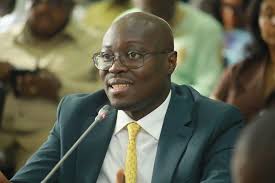
The CEO of National Petroleum Authority (NPA), Mr. Godwin Kudzo Tameklo, has underscored the importance of African-led solutions to the continent’s energy challenges, urging stakeholders to take full ownership of the gas value chain.
Speaking during a panel discussion at the 2025 Africa Energy Technology Conference held in Accra, which focused on the continent’s natural gas potential and its role in the global energy transition, he urged African nations to see natural gas resources as a driver for industrialisation, job creation, and expanded energy access.
“Africa must take charge of its energy destiny,” Mr. Tameklo said. “Our natural gas reserves should be harnessed not only as a transition fuel but also as a driver for industrialisation, job creation, and expanded energy access across the continent.”
The conference served as a platform for energy experts, policymakers, and investors to engage on critical issues surrounding energy security, investment opportunities, and the role of technology in unlocking Africa’s energy future.
This year’s conference, themed “Africa’s Gas Potential: Monetisation and Its Role as a Transition Fuel,” brought together major players across the energy sector to explore strategies for leveraging Africa’s vast gas resources to drive sustainable development.
Mr. Tameklo joined a high-level panel of industry leaders, including Mr. David Pappoe Jnr, President of the African Energy Chamber (Ghana); Mr. Appiah Keyi, Director of Commercial and New Ventures at Kosmos Energy; and Mr. Peter Stuttaford, CEO of Thompson Energy B.V.
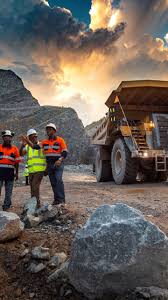
The Ghana Chamber of Mines expects Ghana’s gold production in 2025 to hit over 5 million ounces.
The outlook follows a strong recovery in 2023, when Ghana reclaimed its position as Africa’s top gold producer.
Domestic output rose by 32 % to 3.7 million ounces, up from 2.8 million ounces in 2021.
Acting CEO of the Chamber, Ahmed Dasana Nantogmah, said the Chamber fully supports strategic initiatives aimed at boosting foreign exchange earnings—including the government’s , Goldbod – to enhance macroeconomic stability.
“In terms of function, whatever they said Goldbod will do looks good on paper and we as a chamber even has a representation on the board so we hope to work with them to make mining more sustainable, because a lot of gold comes from the small scale mining sector – about 40% – and it will shore up our foreign exchange earnings,” he said.
“For projections we are looking at in excess of 5 million ounces in 2025” he added.
He was speaking on the sidelines of the 2025 West African Mining and Power Expo in Accra.
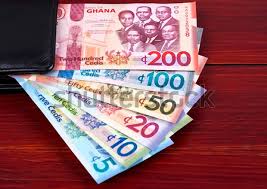
The Government of Ghana has started hoping that a key macroeconomic target for 2028 – that of reaching a public debt sustainability threshold of between 56% and 58% of Gross Domestic Product, could actually be achieved as early as the end of this year. This is coming on the back of the Cedi’s sharp appreciation against the United States dollar which has seen it appreciate more than 40% against the American green back this year – far outperforming its African and emerging market peers – and thus shrinking the cost of the country’s foreign debt and giving it more fiscal breathing room.
“We have reduced our total debt over the last five months by almost GHc150-billion, which is very significant” President John Dramani Mahama revealed at a session during the African Development Bank annual meeting in Abidjan last week, citing the cedi strength.
“If that trajectory continues, the target of reaching 55-58% debt sustainability by 2028 will be reached by the end of this year. And that means that it begins to give us fiscal space to begin to invest in the most productive sectors of the economy.”
The global standard for debt sustainability in emerging market economies, as set by the International Monetary Fund and the World Bank is a public debt to GDP ratio of 60% although some heavily indebted middle income countries outside of an IMF programme tend to regard the threshold as 70% of their GDP.
Ghana’s debt to GDP ratio had fallen to 70.5% of its GDP by the end of 2024, following fundamental restructuring of its public debt, down from an estimated 79.18% in 2021 which however did not include the country’s legacy energy debt and its debt overhang from the funding of a comprehensive financial services industry reform between 2017 and 2020. Indeed, computations that added on those debts put Ghana’s ratio at closer to 90%, persuading the IMF to insist that the country restructure its public debt towards sustainability before assenting to provide a three year Extended Credit Facility programme inclusive of a front-loaded US$3 billion financial bail out in 2023.
In all the cedi had gained 42% against the dollar since January, changing hands near GHc10.20 to the dollar as at mid last week before slipping a little towards the end of the week.
The rally, which has surprised some investors, is another much-needed boost for Ghana as it claws its way back from debt default and a punishing economic crisis.
While the dollar has also been under pressure this year, the cedi’s performance stands in stark contrast to other African currencies.
The cedi’s appreciation has been fueled by several factors, both external and internal one of them being the strategic interventions of the country’s central bank. The Bank of Ghana (BoG) has played a pivotal role through aggressive monetary tightening and forex market interventions
Another pivotal factor has been the commodity revenue windfall arising out of the ongoing price surges in two of Ghana’s main traditional exports, gold and cocoa. Surging gold prices—from US$2,000 per ounce in 2024 to US$3,400/ounce in May 2025— have boosted export revenues with Ghana earning US$2.72 billion from gold exports alone during first four months of 2025 up from US$900 million during the corresponding period of 2024.
Cocoa prices nearing US$10,000 per ton have further bolstered inflows, combining with gold, oil and non- traditional exports to take Ghana’s trade surplus to a long term high of US$4.3 billion in 2024.
Yet another factor has been the impacts of the ongoing three year International Monetary Fund programme, which includes an insistence on a return to demand management economic policies to restore macroeconomic stability after the near-chaos that reigned from late 2022 to late 2023.
Local Ghanaian holders of dollar debt exchanging their money back into cedis are also helping the gains.
There has been a key external factor too in that the dollar’s depreciation, driven by U.S. tariff wars and a falling Dollar Index (DXY) from 108 to 99 in 2025, have amplified the cedi’s relative strength.
However while Ghana now looks to reaping the benefits of a stronger cedi with regards to its debt sustainability it is by no means a given yet as potential headwinds still exist.
Tellimer’s Hasnain Malik, a sovereign country analyst and Lutz Röhmeyer, head of portfolio management at Capitulum Asset Management, have both warned that the cedi’s rally may not last, citing drops in oil and cocoa prices, as well as IMF forecasts that imply a possible coming depreciation.
As the public debate of the imposition of the new Energy Sector Amended Levy continues to rage after Parliament’s approval of the bill earlier this week, Dr Richard Danso, founder and chief executive of the Alliance for Development & Industrialization, (ADI) has waded into the issue, declaring his full support for the new tax in the light of the financial predicament which the President Mahama administration has inherited and its implications if not resolved.
The new levy, passed into law on Tuesday, June 3, introduces a GHc1 levy on every litre of petroleum products sold in Ghana. The aim is to generate an additional targeted GHc5.7 billion in revenues towards retiring the energy sector’s total indebtedness which stood at US$3.1 billion as the March 2025. Finance Minister Dr Cassiel Ato Forson has explained that a minimum of US$3.7 billion is needed to retire the debt which continues to rise, while an additional US$1.2 billion will be needed to ensure the continuous supply of fuel to Ghana’s thermal power plants throughout this year.
Dr Danso points out that paying a GHc1 levy on each litre of petroleum products out of the effective savings of some GHc4 per litre given consumers by the sharp appreciation of the cedi against the dollar over the past two months is an affordable price to pay for the guarantee of sustained 24 hour electricity supply, which would not happen if the debt is not paid off and companies along the power supply chain are unable to remain in operation generating and distributing electricity.
“All the potential economic gains we are now looking forward to as a country are dependent on our having power to drive our economic activities” Dr Danso asserted in Accra in the wake of the new levy’s Parliamentary approval. “ Without stable electrical power, the economy cannot generate the employment that our youth in particular so direly need and the economy as a whole will not be able to increase the productivity that is requisite if Ghana’s economic performance is to improve on a sustainable basis”
He further pointed out that without regular electricity Ghana cannot produce cost competitive exports for the international market, which would jeopardize the cedi’s exchange rate against the dollar, which in turn would ultimately eradicate the cedi’s recent appreciation and the consequent cedi denominated savings consumers are enjoying on the price of petroleum products.
“Really this is common sense” Dr Danso has asserted. “The choice is to pay the GHc1 levy on petroleum products as government asks us to do or allow the electricity sector’s financial unviability to take us back to ‘dumsor’ and then we would end up losing the savings we are enjoying from the cedi’s appreciation which is four times the levy.”
Dr Danso also said that Ghanaians should give their government the benefit of the doubt with regards to its promise to re- fence the revenues generated by the new levy and devote all of them to the stated purpose of paying down the energy sector legacy debt. Indeed, one worry that Ghanaians have expressed relates to the failure of past efforts to defray energy sector financial shortfalls. They point out that ESLA was introduced in 2015 with the promise that it would defray the then energy debt in five years after which the levy would be terminated. A decade later however, it is still being levied but the energy sector debt has risen further rather than fallen.
However, the incumbent government has explained that the predecessor administration imprudently diverted the levy’s proceeds into other purposes, resulting in the current incongruous situation.
Nevertheless Dr Danso agrees that while the new levy will serve to defray the financial gap currently threatening the sustained supply of electricity in Ghana, its critics are correct in their assertion that this is a stop gap measure and a more permanent resolution to the problem of the debt build up needs to be found.
Currently the energy sector is afflicted by several key shortcomings including a costing structure that does not account for the financing of diesel imports for thermal power generation, energy transmission losses of up to 40% of power generated, inefficient billing by the Electricity Company of Ghana and recently unveiled sheer financial and material malfeasance within the state owned electricity retailer as well as dubious procurement processes.
Government intends to address these problems by, among other things, bringing private participation into ECG’s metering and bills collection activities – despite push back by certain vested interest groups – and a greater reliance on cheaper, cleaner gas rather than diesel, for thermal electricity generation.
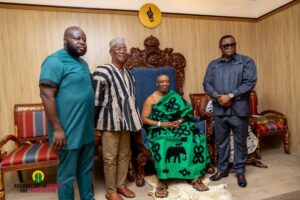
Elvis Afriyie-Ankrah in a pose with Ga Mantse at his Palace
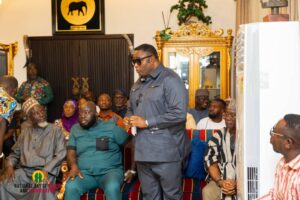
As part of preparations for the maiden celebration of Ghana’s National Day of Prayer and Thanksgiving, the National Planning Committee, led by its Chairman Hon. Elvis Afriyie-Ankrah, paid a courtesy visit to His Royal Majesty, Nii Tackie Teiko Tsuru II, Ga Mantse and President of the Ga Traditional Council.
The visit aimed at officially informing His Royal Majesty about the upcoming national observance scheduled for 1st July, and to seek his royal blessings, guidance, and partnership.
Elvis Afriyie-Ankrah at Ga Mantse Palace
During the engagement, His Royal Majesty welcomed the initiative and commended the Committee for the vision behind the National Day of Prayer and Thanksgiving. He, however, emphasized the importance of ensuring that Ghana’s traditional customs and practices are not left out of the national celebration. According to the Ga Mantse, these traditions play a critical role in preserving the identity and unity of both the Ga State and the nation as a whole, and he felt the Committee may have initially overlooked that.
In response, Hon. Elvis Afriyie-Ankrah expressed his appreciation for the Ga Mantse’s counsel and assured him that the Committee would take the advice in good faith. He noted that since Ghana has diverse traditional practices, and given that chiefs are the custodians of these customs, the Committee has planned to invite traditional leaders from across the country to take part in the observance. Their presence and involvement will serve to represent the full spectrum of Ghana’s cultural and spiritual identity.
Hon. Afriyie-Ankrah further assured that, as a Committee working under a national mandate, all feedback and recommendations from the Ga Mantse will be relayed to the appropriate appointing authorities for consideration and alignment.
The visit forms part of the Committee’s broader stakeholder engagement with key religious and traditional leaders, to ensure inclusiveness, cultural relevance, and nationwide support for the 1st July National Day of Prayer and Thanksgiving.
OFFICIAL ADDRESS BY THE CHIEF EXECUTIVE OFFICER OF THE GHANA GOLD BOARD (GOLDBOD) AT THE MINING IN MOTION SUMMIT, HELD AT THE KEMPINSKI HOTEL, ACCRA – DATED TUESDAY 3RD JUNE 2025.
Your Royal Majesty, Otumfour Osei Tutu II, The Honorable minister for Lands and Natural Resources, Hon. Emmanuel Armah-Kofi Buah, Ministers of States herein seated, Members of Parliament, Your Excellencies, Members of the Diplomatic Corps, Representatives of Government Agencies across the subregion, Captains of Industry, Members of Civil Society Organisations, Nananom, Friends from the Media, Distinguished Guests, Ladies and Gentlemen; good morning to you all.
It is a great privilege to address you at this crucial Summit in our nation’s capital. To our guests from outside Ghana, let me formally say ‘Akwaaba’ to wit “welcome” from the Ghana Gold Board (GoldBod).
Before I proceed, I wish to commend His Royal Highness, Otumfuo Osei Tutu II, for his vision in putting together this historic and transformational event.
I also recognize the hard work and diligence of my brother, Nana Kwaku Duah, and his team of organisers at the Ashanti Green Initiative for being the boots on the ground to make His Majesty’s vision a manifest reality.
Your Highness, ladies, and gentlemen, as you may be aware, Ghana is currently the largest producer of gold in Africa and a key player in the extractive sector of Africa and the world at large.
However, despite its enviable reputation, the country has had challenges in maximising its gold resource for the prosperity of its people.
This disconnect may be likened to a butcher who is starved of protein.
There are a number of factors which have contributed to the disparity between the country’s rich gold prospects and its actual gains.
One of the main reasons for this setback was the fragmented, unstructured and poorly-regulated gold trading sector of the country.
This challenge, among other things, limited market access for the country’s artisanal small scale gold and fueled uncontrolled smuggling over the years. This sad situation led to huge revenue losses to the state and denied our economy of much-needed forex for economic stability and transformation.
For many years, Ghana’s poorly-regulated gold trading sector denied the country from reaping the full benefits of its rich gold resource.
Thankfully, this hurdle is now a thing of the past thanks to the visionary President of our dear nation, His Excellency, John Dramani Mahama, who conceived the novel idea of the Ghana Gold Board (Goldbod) to save a promising sector which has been bleeding from poor regulation and disjointed supervision.
The establishment of the Ghana GoldBod has paved the way for a redefining era of leadership, regulation and transformation of Ghana’s challenged gold trading sector for the optimization of national benefits.
The GoldBod is a product of broad and extensive stakeholder consultations and essentially, THE CENTRAL STATE AGENCY mandated by law to oversee, regulate and undertake the buying, selling, assaying, refining and exportation of gold for the purpose of generating foreign exchange for the country, supporting gold reserve accumulation by the Bank of Ghana and promoting supply chain sustainability.
Thus, the GoldBod and only the GoldBod is the sole buyer and exporter of all artisanal small-scale gold in Ghana.
Additionally, the Goldbod has the right to buy a portion, or all of the gold produced by large scale mining firms in line with the government’s preemption rights, exercised by the Minister for Lands and Natural Resources
Having taken over the rights, obligations, assets and liabilities of the Precious Minerals Marketing Company, we at the Ghana Gold Board have hit the ground running and are already making significant strides
We tightened regulatory controls, launched a ruthless fight against gold smuggling and deployed effective aggregation systems across the country that helps us to mop up over 90% of all ASM gold. These measures have accounted for the unprecedented gold purchases and exports we have recorded this year.
Ladies and gentlemen, from February 2025 to May, 2025, the PMMC, now GoldBod, on its own, has purchased and exported for the Bank of Ghana, gold from the Artisanal Small-scale Mining sector to the tune of 40 billion Ghana cedis, with an export value of approximately $4 billion United States dollars.
Thus, for the first time, gold exports from the Artisanal Small-scale mining sector of Ghana has exceeded gold exports from the large scale sector.
Indeed, the total gross weight of ASM gold exported either by or through the PMMC now GoldBod, from January to May 2025, stands at a whopping 41.5 tonnes.
This, coupled with the prudent monetary and fiscal policies of the government has significantly increased forex liquidity in the market and accelerated foreign reserves accumulation leading to the sustained appreciation of the national currency and a positive impact in the living conditions for our people.
Your Royal Highness, ladies and gentlemen, in the just ended month of May 2025 alone, gold purchases and exports by the GoldBod from the artisanal small-scale sector hit a record high of 11 tonnes with an export value of a staggering $1.172 billion United States dollars.
The data shows the great prospects of the Artisanal Small-scale mining sector to our economy and the general well-being of our dear country if properly harnessed. As the President stated yesterday at this summit, “artisanal miners are not enemies of the state- when properly trained and supported, they can be allies of development”.
The GoldBod is committed to tapping and maximizing the full potential of the Artisanal Small-scale mining sector by supporting sustainable artisanal mining and promoting responsible sourcing by all gold traders in the ASM sector.
To strengthen regulatory oversight and promote responsible sourcing and traceability, the GoldBod has began the licensing of all players in the Gold trading sector of the country.
Our license categories range from aggregation licenses to buying licenses to refining license, smelting license, transportation license, export partnership license, among others.
Your Royal Highness, ladies and gentlemen, licensees of the GoldBod are subject to a strict code of responsible sourcing and continuous due diligence by the GoldBod, working in conjunction with the Bank of Ghana and the Financial Intelligence Center in line with our Anti-Money Laundering and Counter Terrorism Financing policies.
As you may be aware, the GoldBod Act proscribes foreigners from engaging in direct gold purchases from the local market. However, foreigners are allowed and encouraged to apply directly to the GoldBod to purchase or off-take gold from the board. Foreigners may also partner Ghanaian applicants of self-financing aggregation license from the GoldBod. Again, foreigners may apply for a license from the GoldBod to establish refineries, jewelry factories and other forms of value addition enterprises.
I therefore wish to use this opportunity to invite our foreign guests herein gathered and those who are monitoring this program from afar, to take advantage of the numerous opportunities in the mining, trading and value addition space of Ghana for mutual benefits.
Ladies and gentlemen, while we may be glad about the initial successes chalked so far, the GoldBod’s journey of creating a positive and lasting economic impact has just began. Without resting on our laurels in the brief period of our establishment, the Goldbod is determined to fly higher in executing its mandate for the benefit of Ghanaians and our investor partners.
Before the end of this year, the GoldBod will roll out a digital traceability technology for its entire supply chain. This traceability system will enhance market access and value of the country’s ASM gold. In the medium to long term, it will ensure that every gram of gold purchased by the GoldBod is traceable throughout its various custody points, all the way to the mine it was produced. And that mine must be a licensed mine engaged in legal, responsible and sustainable mining in accordance with the mining laws of Ghana and international best practices.
Your Royal Highness, ladies and gentlemen, effective September 2025, the GoldBod shall, in collaboration with the Ministry of Lands and Natural Resources begin the training of artisanal small scale miners in environmentally-friendly mining and mordern recovery optimization techniques.
To further increase Ghana’s ASM gold output, the GoldBod and its investor partners will invest in the cooperative mining program of the Ministry of Lands and Natural Resources.
We will also partner with hard rock small-scale, medium-scale and large scale mining firms to maximize the sustainable production of gold in the country and national revenue for development. Investors who will be partnering the GoldBod in this program, will receive payments for their investment in discounts on gold over a 24-36 months period.
Let me also state, that the GoldBod is committed to spending a significant portion of our trading surplus on land reclamation and other sustainable initiatives such as the Blue Water and Tree for Life programs launched by government.
We will invest in geological investigations to make available accurate geological data for sustainable ASM, medium-scale and large scale mining to bring to an end the phenomenon of lottery mining.
Under our corporate social responsibility policy, a significant chunk of our trade surplus will be invested into the provision of mordern education and health facilities, scholarships for brilliant but needy students, potable water systems and other social-economic projects to alleviate the plight of mining communities, most of whom are victims of the ravages of illegal mining.
Ladies and gentlemen, the days of illegal gold trading and uncontrolled gold smuggling have come to an end. The GodlBod will ensure that Ghana’s gold is traded and exported legally and the forex proceeds thereof, fully repatriated to support our economy and improve the livelihoods of our people. We shall not rest until every gold smuggler is put behind bars.
In the coming weeks, the GoldBod shall in conjunction with the National Security Secretariat launch a standing anti-gold smuggling taskforce, to further strengthen our fight against the illicit menace. All persons who fall foul of the law will be dealt with no matter whose ox is gored. No one will be spared.
Your Royal Highness, ladies and gentlemen, we at the Ghana Gold Board understand, that Value addition is the surest way of maximizing national benefits from the country’s rich mineral deposits.
In this regard, the GoldBod will soon move Ghana away from the export of dore’ to bullion in the short to medium term.
We are currently working with local refineries with clear medium-term paths to LMBA accreditation, to ensure that this dream of moving away from the export of dore’ to bullion becomes a reality.
Let me also say, that the GodlBod is opened to symbiotic partnerships to actualize the vision of President Mahama to establish a “Gold Village” in Ghana to serve as a hub of gold jewelry and ornaments in Africa.
Ladies and gentlemen, in line with our mandate as the National Assayer, we have commenced work for the establishment of an international standard (ISO certified and LBMA compliant) assay laboratory by 2026. A land for this project has been secured. This international standard assay lab will ensure that all gold being exported from Ghana are subjected to fire assay to ensure accurate purity determination and valuation.
Conclusion
Your Royal Highness, ladies and gentlemen, Ghana is strongly committed to sustainable mining, responsible sourcing, supply chain traceability and value addition to maximize benefits.
I wish to extend a warm hand of invitation to the LBMA, the World Gold Council, the OECD, and the global investor community across the entire mining value chain, to partner with Ghana in the area of sustainable mining, responsible sourcing and value addition to attain the best of mutual outcomes.
Ghana is ready! The Goldbod is prepared!! And together, we can all sail to higher realms of dividends in the mining sector where the environment is preserved, lives are bettered, and communities are uplifted!
Prof Gatsi backs Islamic banking to drive inclusive economic growth.
By Adnan Adams Mohammed
In line with the President Mahama’s Government agenda of building a private sector led economy to engineer massive job creation, rapid and sustainable economic growth and improved living standards, the Bank of Ghana is set to push for deeper financial inclusion with Islamic banking.
According to the central bank, operationalisation of Islamic banking is high on its radar, thus, appointmenting Professor John Gatsi as an Advisor to the Bank to spearhead Islamic banking framework development and implementation.
Although there are pockets of critics on the move by the current government to expand access to finance by business and individuals within the framework of Ghana’s constitutional rights and access, Prof Gatsi has thrown more light on the controversies.
The former Dean of the Business School of University of Cape Coast has urged Ghanaians, regardless of religious faith, to eschew pertinence and religious tones in the public discussions of the Islamic banking and finance but rather focus on the varied benefits it brings to all people, irrespective of one’s religious faith.
“Let us focus on the inclusive benefits of trade finance, venture capital, banking, poverty reduction, infrastructure finance and SMEs reengineering to the economy of Ghana”, Prof Gatsi admonished in an interview with the Editor of News Guide Africa. “Non-interest banking and finance is open to Christians, Muslims and other religious groups.”
In a response to some critics of Islamic banking and finance, Prof Gatsi, in a Facebook post expatiate that, “The role of the state in a secular setting is to regulate activities of society. Non- interest banking also called Islamic banking will be regulated and operate within the confines of the constitution and related laws.
“A secular constitution means that all religions are equal, and none can dictate the treatment of another. The state must remain neutral and prevent any one religion from discriminating against another in terms of speech, actions, or treatment. Calling for one religion to rise against another because a financial system with global practice is accepted as complementary to the conventional is unconstitutional and provocative.
“The practice of the constitution advances religious tolerance, as manifested in various public holidays pertaining to Christianity and Islam. Also, the Exemption Act grants exemptions related to these two religions in Ghana, demonstrating our society’s tolerant organization. Avoid instigating unnecessary religious tension and discrimination.”
He noted some benefits Ghana has received from successful Islamic finance regimes. “Ghana has received various development funding from the IsDB even as non- member over years and religious discrimination will not help us in Ghana. Misconceptions exist and a lot have been cleared and engagement will continue for further clarification.”
The Facebook post garnered some applause from commentators. Notable among them was a comment from Mohammed Dankasaa Babangida. He wrote, “Prof, I did my project work in Islamic banking and it’s a serious matter. Whilst doing my project, that was when I realized there was, and there’s a religious and state sponsored total rejection of Islamic banking operationalization in Ghana. Mr Alhassan Andani, Dr Nasiru former BoG governor etc attempted it, and they were nearly lynched through prayers and rebuke. We’re praying for you to do it for Ghana. I think, as you’re trying hard to get it operationalized, if the president does not close his ears and eyes to do it, we will be here next 20 years still unimplemented.”
Another commenter, Jonas Vigbedor, wrote “The greed in our societies coupled with monopoly and stigmatisation are some of the problems hindering Ghana’s economy growth oooo. In Malaysia. Islamic Bank and other banks are operating peacefully so why can’t we do the same over here in Ghana. Something must be done quickly on this ooo before it’s too late.”
Ken Ofori-Atta declared wanted again by OSP over alleged financial misconduct.
By Adnan Adams Mohammed
Embattled Ken Ofori-Atta, former Minister of Finance is being declared as a wanted fugitive for the second time this year by the Office of Special Prosecutor (OSP) for financial misappropriation, causing financial loss to the state and other related crimes under the Ghanaian laws.
Mr Ofori-Atta had earlier requested to be excused for a period up to June 2025 to turn himself in as he was seeking medical attention outside the country in the first OSP declaration of him as a wanted fugitive. However, he failed to turn up on June 2, forcing the OSP to declare him wanted the second time.
As the OSP has refuted reports circulating in sections of the media that, it has received a medical report from a hospital indicating that former Mr Ofori-Atta is unfit to return to Ghana. In a strongly worded public notice issued on Tuesday, June 3, the OSP stated categorically that neither Mr. Ofori-Atta nor his lawyers have submitted any such letter or official medical documentation to the office.
“We wish to place on record that neither Mr. Ofori-Atta nor his lawyers have submitted any such letter to the OSP,” the statement emphasized.
According to the OSP, the only correspondence received from Mr. Ofori-Atta’s legal representatives was a notification of a change in his medical condition—based solely on their own claims.
The office noted that the letter allegedly originating from a hospital had been circulated in the media rather than submitted through the proper legal channels.
“It is notable that this alleged hospital letter has been circulated through the media rather than submitted to the law enforcement agency actively investigating him and responsible for decisions regarding his return to Ghana,” the OSP added.
The office also made it clear that as of the date of the notice, no certified medical records or official documents from any hospital authority have been presented to support claims that Mr. Ofori-Atta is incapacitated or unable to travel.
Meanwhile, as many Ghanaians have come to believe that, Mr Ofori-Atta is only ‘scheming’ to elude investigation, a Private Legal practitioner, Martin Kpebu has also fumed at the conduct of former finance minister failing to appear before the OSP on an agreed date of June 2, 2025.
The OSP has redeclared Ken Ofori-Atta a wanted person and issued an INTERPOL Red notice against him after the Special Prosecutor concluded that Ofori-Atta is only using a medical treatment as an excuse to evade inquiry into alleged corruption-related offenses.
Speaking on TV3 New Day’s The Big Issue, Tuesday, June 3, 2025, Martin Kpebu said Ofori-Atta’s conduct is just “to deceive the OSP.”
According to him, the former finance minister’s conduct is “fraudulent” and commended the OSP for declaring Ofori-Atta a wanted man.
“Ofori-Atta has not shown good faith at all. The way he has behaved in this manner just as he conducted himself as finance minister that he never showed good faith.
“You see how he has stood the OSP up…It’s been a fraudulent conduct to be honest with you because you know you were going to do a surgery that is why you were given June 2, 2025 but by March 21st you knew that the surgery was not coming on. You wait till May 28 five or six days to June 2 then you write to the OSP for an adjournment.
“It is good that OSP has declared him wanted so that he will eventually be caught somewhere and brought back home,” Martin Kpebu said.
Aside from the OSP declaring Mr Ofori-Atta as a fugitive with an INTERPOL Red notice against him, can he be charged under Section 131 of Ghana’s Criminal Offence Act 1960 (Act 29)?
In Ghana, defrauding by false pretences is a second-degree felony, punishable by imprisonment. Specifically, Section 131 of Act 29 outlines that anyone who defrauds another by false pretences commits this offense. The law further defines false pretence in Section 132 of Act 29 as obtaining another person’s consent to part with or transfer ownership of anything through false pretences or personation.
Per the elaboration from Lawyer Kpebu, can law enforcement agencies charge Mr Ofori-Atta for falsely deceiving public officials?
On February 18, 2025, lawyers of Ken Ofori-Atta wrote to the OSP requesting that the former finance minister would undergo a medical treatment and would return to the jurisdiction between May 4 – May 30, 2025, hence, he would only be available for an interview on June 2, 2025.
The OSP subsequently agreed to the scheduled date on June 2, 2025.
However, through his lawyers, in a letter dated May 28, 2025, Mr. Ofori-Atta informed the OSP that a medical expert has diagnosed Mr. Ofori-Atta with cancer and will be unable to meet the June 2, 2025 deadline.
He further requested through his lawyers to undergo a video recorded interview for the purpose of eliciting his caution statement.
But the OSP in responding to the request in a letter dated May 30, 2025 denied the request for a video recorded interview and insisted on Ofori-Atta’s physical appearance.
He explained that “Illness is not a shield from accountability—unless certified as incapacitating.”
The Special Prosecutor further noted that the Office will commence prosecution of Mr Ofori-Atta, “even if in absentia.”
The OSP is investigating Mr. Ofori-Atta in connection with five high-stakes cases linked to his tenure under President Nana Addo Dankwa Akufo-Addo. These include:
Key Issues Under Investigation:
Petroleum and Minerals Revenue Assurance Contractual arrangements between Strategic Mobilisation Ghana Limited and the Ghana Revenue Authority (GRA);
Electricity Company Contract Termination;
The termination of a contract between the Electricity Company of Ghana and Beijing Xiao Cheng Technology (BXC);
National Cathedral Project Procurement procedures and financial transactions related to the National Cathedral;
Ambulance Procurement contract with Service Ghana Auto Group Limited for purchasing and maintaining 307 ambulances; and
GRA Tax P-Fund Management handling and disbursement of funds from the Tax P-Fund Account of the GRA.
The statement reaffirms the OSP’s position in its ongoing investigation and suggests a lack of cooperation from Mr. Ofori-Atta and his legal team regarding formal procedures.
Finance Minister Dr. Ato Forson briefing Parliament on Q1 statutory fund payments.
By Adnan Adams Mohammed
Assuring its commitment to deepened decentralised governance and improving healthcare and education services for all Ghanaians, the NDC government has disbursed all statutory budget allocations to various accounts for the first quarter of 2025.
They include: the District Assembly Common Fund which received GH¢987.965 million; about GH¢2.033 billion disbursed to the National Health Insurance Fund; and the Ghana Education Trust Fund (GETFund) also receiving a total of GH¢2.710 billion.
The Finance Minister, Dr Cassiel Ato Forson, made this known in Parliament on Tuesday, June 3, 2025, when he briefed the House on the payments to statutory funds.
“Rt. Hon Speaker, our effort is driven by President John Dramani Mahama’s unwavering commitment to decentralised development, as articulated in Chapter Twenty (20) of the 1992 Constitution”, Dr Ato Forson said while reading his statement.
“It is well established that the Metropolitan, Municipal and District Assemblies (MMDAs) have gone through severe financial strain over the past eight years due to the unfortunate recentralisation of the District Assembly Common Fund.
“Rt. Hon. Speaker, it is evident that decisions taken in recent years have regrettably undermined the capacity of MMDAs to respond effectively to the pressing needs of our people at the local level.
“Rt. Hon. Speaker, in the past eight years, a paltry 40% to 50% of transfers to the Common Fund were disbursed directly to the District Assemblies, thereby denying MMDAs the ability to spur local economic development.”
Meanwhile, the finance minister assured that the Government under President Mahama is resolute in its determination to reverse this trend.
“We are committed to adequately resourcing MMDAs and ensuring the effective and accountable utilisation of these resources.
“In line with our promise to revitalise the local economy, the Mahama administration has prioritised improving the financial strength of the District Assemblies.”
Read full statement below:
STATEMENT TO PARLIAMENT
BY
DR. CASSIEL ATO FORSON (MP)
MINISTER FOR FINANCE
ON
PAYMENTS TO STATUTORY FUNDS.
3RD JUNE, 2025.
1. Rt. Hon. Speaker, I am grateful for the opportunity to brief this august House on the payments to statutory funds.
2. As a Member of this House, I am fully cognisant of the considerable interest that Honourable Members attach to this important subject, which lies at the heart of fiscal decentralisation.
3. First and foremost, I wish to express my sincere appreciation to colleagues for their continued cooperation.
4. Mr Speaker, I will begin today’s brief with the District Assembly Common Fund (DACF).
5. Rt. Hon Speaker, our effort is driven by President John Dramani Mahama’s unwavering commitment to decentralised development, as articulated in Chapter Twenty (20) of the 1992 Constitution.
6. It is well established that the Metropolitan, Municipal and District Assemblies (MMDAs) have gone through severe financial strain over the past eight years due to the unfortunate recentralisation of the District Assembly Common Fund.
7. Rt. Hon. Speaker, it is evident that decisions taken in recent years have regrettably undermined the capacity of MMDAs to respond effectively to the pressing needs of our people at the local level.
8. Rt. Hon. Speaker, in the past eight years, a paltry 40% to 50% of transfers to the Common Fund were disbursed directly to the District Assemblies, thereby denying MMDAs the ability to spur local economic development.
9. Mr Speaker, the Government under President John Dramani Mahama is resolute in its determination to reverse this trend.
10. We are committed to adequately resourcing MMDAs and ensuring the effective and accountable utilisation of these resources.
11. In line with our promise to revitalise the local economy, the Mahama administration has prioritised improving the financial strength of the District Assemblies.
12. I wish to commend Members of this House for endorsing, as part of the 2025 Budget, Government’s proposal to ensure that a minimum of 80% of allocated DACF resources are transferred directly to the MMDAs.
13. Without doubt, this measure will empower Assemblies to drive economic growth at the local level and deepen the process of decentralisation.
14. Mr Speaker, through this policy initiative, Government is guaranteeing that approximately GH¢6.1 billion of the GH¢7.57 billion earmarked for 2025 will be disbursed directly to spur local economic activities at the district level.
15. Mr Speaker, our focus extends beyond the mere release of funds. We have taken decisive steps to ensure that these resources are utilised in line with government’s economic objectives.
16. Section 126(3) of the Local Governance Act, 2016 (Act 936), mandates Government to determine the categories of expenditure within the approved development budgets of District Assemblies that must be funded through the DACF.
17. In compliance with this, the Cabinet of President Mahama has approved guidelines to ensure the prudent and accountable utilisation of these funds.
18. The guidelines as approved by Cabinet are as follows:
i. 25% of the amount transferred to the District Assemblies is to be utilised for the design and construction of 24-Hour Economy Model Markets.
ii. 10% for the construction of health facilities (minimum of 2 CHPS compounds) per Assembly.
iii. 10% for the construction of educational facilities (1 KG block, 1 primary school block and 1 Junior High School block).
iv. 10% for the provision of potable water (minimum of 10 boreholes for rural Assemblies).
v. 10% for environmental sanitation (solid and liquid waste management).
vi. 10% for the provision of school furniture.
vii. 5% for the administration of the Assemblies, including monitoring and evaluation.
viii. And finally, recognising the need to complete abandoned legacy projects, including the numerous uncompleted structures left behind by the Middle Belt Development Authority, Coastal Development Authority and the Northern Development Authority, we have allocated a whopping 20% to fix the mess.
19. Mr. Speaker, we are steadfast in our resolve to ensure strict adherence to the utilisation guidelines governing funds allocated to the Assemblies.
20. Mr Speaker, we have transferred the sum of Nine Hundred and Eighty-Seven Million, Nine Hundred and Sixty-Five Thousand and Seventy-Three Ghana Cedis (GHS987,965,073.00) from the Consolidated Fund into the District Assembly Common Fund Account, being the first quarter amount due the DACF.
21. The Administrator of the District Assembly Common Fund is required to ensure that 80% of this amount is transferred directly to the Assemblies without fail and expenditure returns submitted to the Ministry of Finance before subsequent releases will be made.
22. Hon. Members are encouraged to monitor the utilisation of these amounts sent to their respective assemblies in line with the approved guidelines by Cabinet.
23. Rt. Hon. Speaker, I am pleased to report that under the leadership of President Mahama and the NDC, for the first time in several years, transfers to all other statutory funds have been made promptly and in full.
24. Notably, all transfers due to the National Health Insurance Fund for the period covering January to March 2025 have been paid.
25. A total amount of Two Billion, Thirty-Three Million, Four Hundred and Sixty-Nine Thousand, Six Hundred and Seven Ghana Cedis (GHS2,033,469,607) has been disbursed to the National Health Insurance Fund.
26. These disbursements have enabled the National Health Insurance Scheme to settle arrears owed to healthcare providers and to implement the Free Primary Healthcare and Ghana Medical Care Trust programme, also known as ‘Mahama Care’.
27. Similarly, Mr Speaker, the Ghana Education Trust Fund (GETFund) has received a total of Two Billion, Seven and Ten Million, Two Hundred and Twenty-Seven Thousand, Nine Hundred and Forty-Seven Ghana Cedis (GHS2,710,227,947.00) for the months of January, February, March and April, 2025.
28. As earlier announced in the 2025 Budget, funding for the Free Senior High School Programme is now fully covered under the GETFund.
29. Consequently, the challenges, including feeding, which previously impeded the smooth implementation of the programme, have been resolved.
30. Rt. Hon. Speaker, these payments are a clear reflection of our commitment to meet all statutory obligations in our priority sectors.
31. I encourage Honourable Members to continue to support our efforts as we chart a new course.
32. Let us work together to strengthen the Metropolitan, Municipal and District Assemblies and position them as engines of local economic development.
The Africa Policy Lens (APL), a new entrant in the policy think-tank space, has cautioned the managers of the economy to avoid complacency as the local currency – the Cedi – is witnessing a short-term appreciation.
The research and policy analysts group, in a press statement issued last week, emphasized the need for continued reforms, urging the government to build on current momentum with permanent policy measures aimed at fiscal discipline, export diversification, and institutional transparency.
The Cedi has appreciated by over 20% against the US dollar so far this year, making it one of the best-performing currencies globally. As of early-May 2025, the Cedi was trading at approximately GH¢13.5 to the dollar, reflecting a 17% gain since January, APL noted.
“Short-term gains should not lull policymakers into inaction,” the group cautioned. “Sustainable growth depends on deep, structural reforms.”
Meanwhile, the group highlighted factors that have accounted for the significant appreciation of the Ghanaian Cedi in recent months, making a notable turnaround after a difficult 2024. It cited a combination of factors including the government’s fiscal consolidation measures like a sharp reduction in public spending, suspension of new projects, and a freeze on the clearance of arrears which have helped reduce pressure on the currency.
“The Ministry of Finance is reported to have held back payments worth about GH¢69 billion pending audit,” APL stated, “effectively curbing excess demand for foreign exchange.”
At the same time, the Bank of Ghana (BoG) has played a central role through strategic interventions. Through the Domestic Gold Purchase Programme (DGPP), the BoG accumulated gold reserves that were later used to support the Cedi via gold-backed foreign exchange operations. Between January and May 2025, the central bank injected nearly US$1 billion into the forex market.
“This included US$490 million in April alone and US$264 million in March,” APL noted, “which helped improve dollar liquidity and ease depreciation pressure.”
“Drawing down reserves and delaying payments are not long-term solutions,” the think tank stressed however.
APL also acknowledges the influence of external factors such as the weakening of the US dollar amid global trade tensions, which have contributed to the Cedi’s recent gains.
APL further pointed out that Ghana has seen similar periods of stability before, particularly between 2017 and 2019 during the IMF Extended Credit Facility program. During that time, the Cedi was relatively stable due to improved fundamentals, disciplined fiscal policy, and external conditions such as rising oil production and commodity prices, thereby suggesting that today’s policymakers can learn from that period by focusing on long-term reforms instead of relying on interventions.
“There are lessons from the past—particularly the 2017–2019 period—that show sustainable stability must be anchored in strong fundamentals, not ad hoc measures,” the organisation stated.
Consequently, it indicated that analysts such as S&P Global Ratings and Fitch Solutions have already warned that the Cedi could face renewed depreciation in the second half of 2025 if structural imbalances resurface.
“Global credit watchers are already flagging risks, and Ghana must act swiftly to insulate itself from renewed pressures,” APL emphasised.
APL calls for stronger policy action, including the completion of debt restructuring, diversification of export revenue sources, and improved fiscal management. It also emphasizes the importance of transparent communication from government institutions to maintain investor confidence.
“To maintain the current momentum, reforms must be bold, and communication must be clear to avoid spooking markets,” the group stated.
In conclusion, APL states that while Ghana’s currency has shown impressive recovery, “the challenge now is to ensure these gains are not only preserved but built upon,” reiterating that “without long-term reforms, the current stability may not hold.”