Category: News

  • 200 SA students to benefit from AngloGold Ashanti Legacy Scholarship Endowment

    AngloGold Ashanti

    September 11, 2024


    Business

    AngloGold Ashanti

    AngloGold Ashanti plc and the University of Witwatersrand (Wits University) have announced a bespoke scholarship project that will benefit about 200 eligible students over the next five to seven years, the first 68 of whom have been selected to begin their studies in 2024.

    The R87.5 million Wits AngloGold Ashanti Legacy Scholarship Endowment will offer comprehensive funding and support over the duration of their studies to eligible students from disadvantaged and rural families with links to the mining industry and AngloGold Ashanti’s former gold mines in South Africa.


    Students can select to complete their undergraduate or postgraduate studies in high-impact areas where critical skills are required, including health and advanced medicine, engineering, education, technology, science, law and the social sciences at Wits University.


    The scholarship is part of a larger investment in legacy projects in education and agriculture that AngloGold Ashanti will carry out over the next five years to recognise the company’s commitment to South Africa, its employees and its communities.


    “We are proud to honour our South African heritage by investing to enhance the future of these communities through our legacy projects,” said AngloGold Ashanti CEO Alberto Calderon. “Education changes lives for the better and the Wits AngloGold Ashanti Legacy Scholarship Endowment reflects our commitment to South Africa and development in the regions that have contributed to our journey.”


    The aim of the scholarship is to build the future for a select cohort of students and more broadly to improve the support available to students to enable their success.


    “Wits University is committed to working with AngloGold Ashanti to advance high-level scholarships, research and innovation in South Africa, in order to address future challenges,” says Prof. Zeblon Vilakazi, the Vice-Chancellor and Principal of Wits University.


    “This partnership will impact on society in multiple ways – it will lay a path to success for young talented students, it will benefit the University and the higher education sector, it will uplift communities and advance society.”


    Funding will be utilised for both undergraduate and postgraduate students and is anticipated to run in parallel with a mentoring programme hosted by AngloGold Ashanti volunteers in certain areas of study.


    AngloGold Ashanti has its roots in South Africa and the company remains committed to supporting communities that have deep links to the country’s mining industry.


    AngloGold Ashanti and Wits University share a deep, intertwined history, jointly playing a major role in the development of South Africa’s mining industry over the past century.


    The Wits AngloGold Ashanti Legacy Scholarship Endowment announcement follows the 21 June announcement by AngloGold Ashanti and the University of Fort Hare about the establishment of the AngloGold Ashanti Chair in Dairy Science and Technology at UFH.



  • Fitch pegs unemployment rate at 4% for the next 3years ahead.

    Unemployment of Ghana


    Adnan Adams Mohammed


    All things being equal, Ghana’s unemployment rate is expected to grow averagely around 4.0 percent this year through to 2026, Fitch Solutions report projected.


    Unemployment conditions in Ghana has been on steady rise since 2017 and is anticipated to continue along this trajectory in the medium term and beyond.


    However, the report highlighted several challenges affecting the country’s labour market. Ghana’s workforce is constrained by a low life expectancy of around 64.3 years, largely due to limited government expenditure on healthcare and the prevalence of water-borne diseases and chronic illnesses such as HIV/AIDS.


    “A shortage of highly skilled workers forces employers to look abroad to fill gaps in the domestic labour market”, Fitch stated in its latest report.


    Also commenting on the economy and standard of living, Fitch Solutions pointed to broader economic challenges stemming from the reopening of global economies following the Covid-19 pandemic.


    It indicated persistent inflationary pressures fuelled by both demand-pull and cost-push factors.


    “In an effort to reduce inflation, central banks have implemented policy rate increases at some of the most rapid paces in history,” the report stated. “This has decreased the value of debt accrued during the historically low-interest rate period from 2015 to 2019.”


    While household wealth has reached historic highs, driven by strong equity market performance and rising house prices, some property markets are beginning to show signs of weakness. Additionally, the outlook for many companies is becoming increasingly negative.


    The report warned that if these trends continue to worsen, a significant decline in consumer wealth could trigger a sharp drop in consumption.


    Economists argues inflation drop disconnected from policy rate impact


    Ghana Statistical Service indicates inflation rate drop to 20.4 percent in August down from 20.9% in July this year.


    Although, the August drop marks the sixth consecutive month of decline since

    March which recorded inflation of 25.8%, an economist alludes that, the decline does not reflect the Bank of Ghana policy rate effect.


    GSS attributed the decrease to a significant drop in food inflation, which fell to 19.1 per cent in August. However, non-food inflation rose to 21.5 per cent.


    “Ghana continues to experience upward changes in prices. Between August 2023 and August 2024, general price levels of goods and services increased by 20.4 percent”, Prof. Samuel Kobina Annim, the government Statistician has said a press conference last week. “Disaggregating this, non-food inflation was 21.5 per cent in August 2024 compared to food inflation at 19.1 per cent.”


  • Half-year trade surplus improved by US$200mn


    Bank of Ghana


    Half-year economic report indicates Ghana’s trade balance recorded a provisional surplus of US$1.81 billion in the first half of the year, higher than the surplus of US$1.60 billion recorded in the corresponding period of 2023.


    According to the Bank of Ghana’s Monetary Policy Report, the improved trade surplus, the central bank explained, resulted from a higher increase in exports relative to imports.


    Total exports increased by US$1.09 billion (13.4%) to US$9.23 billion, mainly on the back of strong growth in gold and crude oil exports.


    The value of gold exports increased by 46.4 percent to US$5.04 billion, driven by both volume and price increases.


    The volume of gold exports increased by 28.9 percent to 2.4 million ounces, driven largely by higher output from small-scale mining, while realised prices of gold increased by 13.6 percent to US$2,094.5 per fine ounce.


    The report noted that earnings from crude oil exports reached US$1.98 billion, from US$1.66 billion in the same period last year.


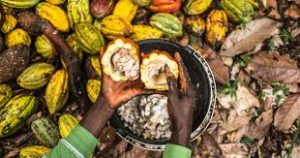
    Meanwhile, receipts from cocoa exports, both beans and products, declined by 47.4 percent, from US$1.454 billion in the first half of 2023 to US$760 million in the first half of 2024.


    “The sharp drop in the value of cocoa exports reflected the challenges in the cocoa sector, including extreme weather conditions, diseases and smuggling,” explained the report.


    It said the value of “other exports” (including non-traditional exports) went down by 8.7 percent to US$1.5 billion.


    The total imports bill rose by 13.5 percent to US$7.42 billion in the first half of the year, driven by both oil and nonoil imports.


    Oil imports increased by 6.1 per cent to US$2.30 billion, with non-oil imports increasing by 17.2 percent to US$5.12 billion.


  • Cocoa farmers to expect price increase by almost 45%


    Cocoa Production

    Adnan Adams Mohammed


    Cocoa farmers in Ghana are to expect quantum leap in farmgate price of their harvest by almost 45 percent for the 2024/25 crop season, sources within government have hinted.


    The government believes this will help better compensate the farmers for their labor while curtailing bean smuggling to neighboring countries, news report by Reuters has indicated.


    This comes after cocoa price was increased by 58%, translating into GH¢33,120 ($2,123.08) per metric ton, or GH¢2,070 per 64 kilogram (kg), in April in this for the rest of the 2023/24 season.


    The mid-season price hike came after top cocoa producer, neighbouring Ivory Coast, raised its farmgate price to 1,500 CFA francs (US$2.55), or around GH¢40 per kg for the April-to-September mid-crop of the 2023/24 season, up from 1,000 CFA francs last season.


    According to the Reuters report, one source said Ghana’s cocoa producer price review committee had pegged the price at 48,000 cedi per ton, translating to ¢3,000 per 64 kg of cocoa, for the 2024/25 season due to begin later in September, an increase just shy of 45%.


    The source said the decision would be sent to the cabinet pending an announcement.


    Both sources asked for anonymity because the decision is not yet public.


    The second source said it was unlikely that the cabinet would change the committee’s decision, saying also the price could not be increased beyond ¢48,000 per ton without pushing Cocobod, Ghana’s cocoa marketing board, into a deficit.


    Ghana’s price will also have to align with Ivory Coast’s 2024/25 farmgate price, which has yet to be announced, the person added.


    The two biggest cocoa-growing countries set up an initiative to coordinate farmgate prices and cocoa supplies to help sustain the sector and boost their farmers’ incomes.


    Cocoa prices have been buoyant this year as disease and adverse weather in Ghana and Ivory Coast, which together supply more than 60% of the world’s cocoa, pushed the market to a third successive deficit.


    The International Cocoa Organization on Thursday raised its global cocoa deficit forecast for the 2023/24 season (October-September) to 462,000 tons from 439,000 tons, saying the market was headed for a 45-year low stocks-to-grindings ratio.


    Cocobod previously planned to launch the 2024/25 season on Sept. 1, earlier than usual, with a reduced production target of 650,000 tons, but both sources said the opening will be later.


    Opening the season earlier was aimed at helping reduce bean smuggling, which has been incentivised by low prices and delayed payments to farmers.


    Some of Ghana’s cocoa farmers and licensed buyers accused both sides of hoarding beans to benefit from the proposed price hike in the new season.


  • Alpha Energy to begin works on Namibia’s largest offshore diamond mines in October

    Dr. Babajide Agunbiade, Founder and CEO of Alpha Energy Resources


    Adnan Adams Mohammed 


    All things being equal, Alpha Energy Resources is set to begin mining operations at its largest diamond mines offshore Namibia in October this year. 


    This milestone comes two years after the Nigerian-based firm won the marine mining contract at a sum of US$200 million from NAMDEB, a joint venture between the Namibian government and De Beers Group.


    The offshore mining will target diamondiferous gravels identified through past prospecting and mining activities. The company’s shallow water mining vessel, equipped with advanced technology, will extract, process, and recover diamonds. The diamonds will be delivered monthly to the Contractors Treatment Facility in Luderitz, Namibia.


    “We’re glad to have emerged winners of the rigorous bid. We’re now ready to commence operations, executing the largest diamond mining project in Namibia, with significant impact on the African continent”, Dr. Babajide Agunbiade, Founder and CEO of Alpha Energy Resources, expressed pride and enthusiasm at the contract. 

    Vessel

    Alpha Petroleum aims to deliver 30,000 to 60,000 carats per annum, solidifying Namibia’s position as a significant diamond-producing nation. 


    This project is expected to have a substantial economic impact on the region, particularly in the Halifax Island and Kerbehuk mining zone.


    This landmark contract underscores Alpha Petroleum’s expertise and commitment to responsible mining practices, cementing Nigeria’s presence in the global mining industry.


    NAMDEB is a wholly owned subsidiary of Namdeb Holdings (Proprietary) Limited, jointly owned by the Government of the Republic of Namibia and De Beers Group. Alpha Energy Resources is a leading EPICC service provider in Africa’s mining and energy sector.


    Alpha Energy Resources specializes in upstream and downstream services, with extensive experience in shallow to deep marine mining.

    Below is the tender document:

    Tender E089-ND-2020 – Tender Notification Alpha Petroluem

  • Macroeconomic indicators to worsen in Ghana, Nigeria through 2024 – Audit firm

    IMF


    Adnan Adams Mohammed


    An international accounting and auditing firm, Deloitte, has indicated that, macroeconomic indicators (inflation, exchange rate, interest rate, and debt to GDP) to remain high throughout the rest of 2024 in Ghana and Nigeria.


    The the two giants and the entire West African macroeconomic environment remain challenging due to several factors, prominent ones being high inflation, a high interest rate environment, currency weakness, and elevated debt levels.


    The worsening economic conditions erodes the purchasing power of consumers while deteriorating standard of living and also increasing cost of doing business in the sub-region. As remarked by Deloitte, both households and businesses are already implementing belt-tightening measures to survive.


    “The resulting effect of these macroeconomic headwinds on productivity and overall aggregate demand is likely to stall the region’s economic growth for the year”, Deloitte said in its West Africa economic outlook, August 2024 report.


    “In July, the International Monetary Fund (IMF) revised its 2024 growth forecast for Nigeria to 3.1% from its April forecast of 3.3%. The IMF also reduced sub-Saharan Africa’s growth forecast to 3.7% from 3.8% in April due to the downward revision in Nigeria’s growth outlook. Meanwhile, the IMF projects Ghana’s economy will grow 2.8% in 2024 and 4.4% in 2025.”


    The report indicated that around 50 countries across the world are heading to the polls this year—or have already done so—including West African countries.


    As Ghanaians gears towards the December polls, the current state of the economy and citizens’ welfare will factor heavily into how voters evaluate campaign promises and determine the next leader of the nation, an economy heavily dependent on cocoa and gold. The election outcome will weigh on policy direction, as well as investor and market sentiment.


    “West Africa’s economic output has been limited by the rising cost of goods and services, leading to an increase in interest rates as monetary authorities attempt to rein in inflation. Nigeria and Ghana have also been facing currency volatility, which has had a severe impact on their ability to import raw materials and equipment required to boost output. In the first six months of the year, the Nigerian naira has lost over 40% of its value, and the Ghanaian cedi over 20% of its value against the US dollar,” it said.


    In the case of Nigeria, it said the oil-rich country’s economy grew by 2.98% year on year in the first quarter of 2024. Although faster than the corresponding period in 2023, when the economy grew 2.31%, it marked a slowdown from an even faster growth rate of nearly 3.5%, seen in the fourth quarter of 2023.


    Major growth drivers in the first quarter of 2024 include the finance and insurance sector, which grew 31.24% year on year, and the water supply, sewage, waste management, and remediation sector, which grew by 6.95%. The oil and gas sector—the country’s economic mainstay—grew by 5.7%, after a year of contraction. The agriculture sector, on the other hand, continued to trudge along with a growth rate of 0.18%.


    The sluggish pace of growth is indicative of multiple factors, including reduced spending and investment. Consumer spending has declined significantly due to rising consumer product prices. Investment spending in the country has also dwindled, primarily due to foreign exchange difficulties that have partly contributed to the exit of several multinational corporations.


    Ghana, compared to Nigeria, appears to have stronger growth prospects, the report said.


    Its economy grew by 4.7% year on year in the first quarter of 2024, driven by rapid 6.8% year-on-year growth in the industrial sector. The agriculture and services sectors grew at a slower pace of 4.1% and 3.3% year on year, respectively. The country is recovering from a debt-induced crisis, following the government’s ongoing restructuring of its US$30 million debt. The implementation of monetary policy measures by the Bank of Ghana has also helped reduce inflation. Ghana has been able to secure approval for two tranches of IMF disbursements so far this year, bringing cumulative disbursements from the IMF to US$1.56 billion since 2023.


  • AfDB to intensify investments in clean cooking across Africa

    AfDB 


    The sprawling informal settlement of Mukuru on the outskirts of Nairobi holds powerful tales of how an innovative gas energy company is providing clean cooking solutions and restoring dignity to households in the Kenyan capital.


    Aurelia Aureh, now boasts of smoke-free cooking, following years of using charcoal, which poses a health hazard because of the emission of potent fumes. She usesM-Gas, for low- income households, which employs a pay-as-you-cook model, allowing them to access the commodity in small amounts.


    “Before I used to cook outside with charcoal, which was very expensive. I would spend about Ksh50 (about $0.38) on charcoal for any one cooking episode,” she said. Now she spends less than half that amount with less hassle and all the benefits.


    Aurelia is elated at the convenience that comes with using M-Gas. “I do not have to go to the gas vendor looking for the gas when it runs out, as M-Gas monitors my usage and replaces my gas before it runs out. I simply continue to pay for my immediate cooking needs from where I am (using M-Pesa mobile money). In addition, it is safe. I don’t have to worry about my children playing with it because it has tight security features.”


    M-Gas provides affordable clean cooking gas for low-income households in Kenya. Initiated in 2019, M-Gas uses smart meter technology to enable users to access liquid petroleum gas (LPG) in quantities they can afford for the moment, for even as low as Ksh10 (about $0.077), payable using mobile money. The technologysimplifies LPG access for consumers who cannot afford the upfront cost of gas and LPG cylinders, thus addressing the highcost- barrier of switching to and purchasing LPG.


    This caught the attention of the African Development Bank’s Vice President for Private Sector, Infrastructure and Industrialisation, Solomon Quaynor, who was in Nairobi at the end of July 2024 to explore opportunities for collaboration in the country’s clean cooking sector.


    He met with Martin Kimani, the CEO of M-Gas. They discussed priority areas of partnership towards advancing Africa’s energy transition. He also met with Circle Gas, the parent company of M-Gas. In particular, Board Chairman Carey Ngini, and Board member Michael Joseph. Circle Gas has strategic partnerships with institutional partners, including Safaricom (connectivity and M-Pesa payment solutions), and Total Energies (LPG cooking cylinders).


    Quaynor visited Mukuru, where he interacted with Aurelia, and other residents.


    Mercy Karimi, another Mukuru resident, tells how before using M-Gas, her three-year-old daughter often got chest infections and breathing problems because of the dangerous fumes from kerosene, which she used for cooking. “But since I started using M-Gas, my child no longer has that problem, and can stay for a long time before visiting the hospital,” she said.


    Clean cooking is one of the Bank’s priority areas. In May this year, the Bank pledged $2 billion over 10 years towards clean cooking solutions in Africa—a move toward saving the lives of 600,000 mainly women and children, lost annually from the effects of secondary smoke from partial combustion of biomass, fuel wood and charcoal.


    Despite improved access to electricity in recent years, there is little progress to adopt clean cooking, with around a billion people across Africa still cooking over open fires and basic stoves. Using charcoal, wood, agricultural waste, and animal dung as fuel affects the lives of millions of people – mostly women and children – as they inhale toxic fumes and smoke while cooking.


    Quaynor also toured the M-Gas depot in Ruaka, a suburb located north-west of Nairobi. Here, he was taken through the paces of how the smart metered innovation works. He interacted with households and even business owners, to seek their views on the M-Gas innovation.


    Stephen Njogu, a resident of Ruaka, has been using M-Gas for two years now.


    “This system is cheaper because I can buy gas even with the little money I have, compared to the normal gas for which I have to buy the whole cylinder of gas. Secondly, M-Gas is clean, no smoke while cooking, unlike before when I used kerosene, which would emit dangerous smoke,” he said.


    Faith Kamau, who runs a small local eatery in Ruaka is another supporter. She is now, able to serve her customers without the fear of gas running out unexpectedly. “I am able to cook many dishes using little energy. I have been able to save some money, which I have diverted to buying more food stock. Besides, in case of any problem with the cooking system, I alert the M-Gas Customer Experience Centre, which responds very fast with advice on how to deal with the problem. I like M-Gas solution so much that I also have it at home”.


    According to Quaynor, such experiences are inspiring the Bank to intensify efforts to increase investments towards affordable clean cooking solutions for millions of Africans who still lack access. “The Bank is working withthe private sector, a key player in the energy transition, to catalyze investments in the sector to address energy povertyin line with Sustainable Development Goal 7 (SDG7) on affordable, reliable, sustainable and modern energy for all,” he emphasised.


    The Bank’s pledge of $200million per year represents an important contribution to the $4billion per year needed to allow more African families to have access to clean cooking by 2030.


    Source: afdb


  • Ghana’s gold reserves hits 65 tonnes

    Gold value


    Adnan Adams Mohammed


    The Bank of Ghana’s Domestic Gold Purchase Programme has so far amass 65.4 tonnes of gold valued at US$5 billion.


    This has significantly improved the country’s gold reserves.


    Base on this success, the Vice President of has announced plans to anchor the value of the Cedi to gold, aiming to shield the country’s currency from depreciation and mitigate ongoing foreign exchange challenges.


    “This approach would not only stabilise the exchange rate but also free up additional forex reserves”, Dr. Mahamudu Bawumia said when speaking at the inauguration of the Royal Ghana Gold Refinery in Accra last week.


    Dr. Bawumia outlined his strategy to ensure the long-term stability of the Cedi through a new foreign exchange management system.


    “I would like to propose a new foreign exchange regime management architecture for Ghana next year, in which the value of the Cedi will be anchored to gold


    “I believe that the best anchor for the Cedi is gold. I want us to anchor the Cedi to gold,” Dr. Bawumia stated.


    He further explained that under this proposed system, the Bank of Ghana’s gold reserves would play a crucial role in managing foreign exchange demand.


    “If you have GHS3 billion and you are looking to buy forex, the Bank of Ghana can take the GHS3 billion, buy gold, and give you your forex. Demand equals supply, and the exchange rate doesn’t move,” he explained.


    Dr. Bawumia stressed that this approach would not only stabilise the exchange rate but also free up additional forex reserves for other critical needs.


    “You will maintain long-term exchange rate stability, which will be anchored on gold, and then we will move forward,” he added.


  • Increasing cost of doing business, labor agitation leading cause of cedi depreciation 

    Forex trading


    Adnan Adams Mohammed


    A research institute has attributed the hiking foreign exchange rates and persistent inflation to high cost of doing business, increasing labor agitation and corruption.


    In its assessment of midyear budget review, the Institute of Statistical, Social and Economic Research (ISSER) at the University of Ghana admitted that, the cedi has experienced significant depreciation against major foreign currencies.


    The Institute therefore wants the government through the Bank of Ghana to reinforce monetary policies and control measure to strengthen the local currency, Cedi.


    “.. the central bank should increase its presence in the exchange rate market,” ISSER admonished.


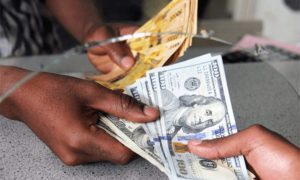
    Data from BoG indicates that, in the first half of 2024, the cedi depreciated by 18.6 percent against the US Dollar, 17.9 percent against the Pound Sterling, and 16.0 percent against the Euro.


    The cedi recorded a depreciation of 27.8% against the U.S Dollar, 31.9 % against the Pound, and 30.3 % against the Euro in 2023. Also, a 30.0 % depreciation against the Dollar, 21.2 % against the Pound, and 25.3 % against the Euro in 2022.


    “This suggests some stabilization of the exchange rate over the past three years,” the report stated.


    However, the cedi was generally more volatile against major foreign currencies in the first half of 2024 compared to the same period last year.


    Despite this volatility, the cumulative depreciation rates were relatively lower, but ISSER urged the government to take additional measures to curb the cedi’s depreciation.


    The report recommended that the government reduce the rate of cedi depreciation, boost exports to lessen foreign exchange demand, and enforce stricter forex regulations.


    On inflation, the Institute noted that June 2024 inflation had decreased to 22.8 %, a significant drop from the peak of 54.6 % in December 2022.


    Despite this reduction, the figure remains high compared to the 12.6 % inflation rate in December 2021.


    ISSER urged the government to address the commodities driving inflation and consider improving infrastructure in key food-producing areas to reduce transportation and fuel costs.


    “For instance, enhancing the road network in areas designated as the food basket of Ghana and reducing foreign exchange rates can help lower transportation and fuel costs, subsequently reducing both food and non-food inflation to single digits,” the report concluded.


  • Parliament approves over US$40mn tax waivers.


    Parliament


    Adnan Adams Mohammed


    Parliament of Ghana has approved a €1.5 million tax waiver for the supply and installation of integrated e-learning laboratories in Senior High Schools.


    Additionally, a US$38.66 million tax waiver was granted for import duties, Import VAT, Import NHIL, Import GETFund Levy, Exim Levy, Special Import Levy, and other fiscal reliefs on materials and equipment imported by the Ghana Bauxite Company (GBC) as a strategic investor.


    This is because government’s stake in GBC increased to over 23.8% due to capital injection and the tax waiver, which has boosted production from 500,000 to over one million tons. This expansion aims to create jobs and ensure the company pays the required taxes.


    The Chairman of Parliament’s Finance Committee, has praised the Minority caucus for supporting recent tax waivers approved by the legislature, describing it as a significant step towards deepening parliamentary collaboration.


    “The beauty of these approvals is that the Minority supported it”, Patrick Yaw Boamah acknowledged. “Sometimes there is some misunderstanding regarding tax waivers, but their position is that when the government takes an interest in some of these entities, they will support it. We commend the Minority for coming on board.”


    Mr. Boamah, who is also the Member of Parliament for Okaikoi Central in the Greater Accra Region, noted that his Committee faced a challenge in approving a US$250 million World Bank facility meant to support the financial sector due to a different approach by the Minority.


    He said, “We are having a little challenge with regards to the US$250 million World Bank facility aimed at supporting the financial sector.


    The banks went through a difficult time during DDEP.


    If you read the budget, the government said they were going to support the financial sector through the Ghana Financial Sector Stabilisation Fund, with a cedi equivalent of US$500 million, and also seek World Bank financing of US$250 million.


    In all, a pool of GH₵15 billion is what the government is seeking to mobilize to support the banking sector.


    The challenge is that the Minority wants a fund legally established through an act of Parliament. However, this is a credit line from the World Bank where the banks would apply, and an analysis would be made before disbursement, different from creating a fund like the Road Fund, Zongo Development Fund, or Special Initiative Funds that we are all used to. So, a decision was taken at the committee by Majority decision.”


    The Finance Committee has outstanding reports expected to be approved before adjournment, including the report of PIAC on the management and use of Petroleum Revenues for the period January to December 2021, the Reconciliation Report on the Petroleum Holding Fund for 2021, and the Semi-Annual Report of the BoG on the Ghana Petroleum Funds for the period July 1 – December 31, 2020