Category: News

  • Gov’t stays committed to fiscal prudence in midyear budget .

    Dr Mohammed Amin Adam


    Adnan Adams Mohammed


    Against the norm, the finance minister has indicated that, government is not seeking additional budget support in a midyear review.


    This comes as the new finance minister has assured Ghanaians of fiscal prudence despite electioneering year.


    Presenting the midyear budget review to Parliament, last week, the minister assured that the government is operating within its budget, emphasizing efforts to control expenditures and stay within the 2024 Budget Appropriation.


    “We are not seeking supplementary funds in this mid-year review. We are determined to be more efficient, strategic, and intentional to entrench fiscal consolidation and strongly promote growth”, Dr. Mohammed Amin Adam declared government’s commitment fiscal responsibility.


    Consequently, the minister noted that government had exceeded its midyear revenue target by 0.2 percent as of the end of June 2024 while highlighting several key financial milestones.


    “In effect, Mr. Speaker, we are living within our means. Indeed, consistent with our programme with the IMF, we are on course to achieving a primary surplus of 0.5 percent of GDP by the end of the year.


    “We have successfully concluded the second review of our Extended Credit Facility with the International Monetary Fund (IMF), which led to the disbursement of the third tranche of 360 million US Dollars, bringing total disbursement to about USD1.6 billion.


    “We have completed the Debt Restructuring programme with the Official Creditor Committee (OCC), covering USD5.1 billion dollars, resulting in approximately 2.8 billion US Dollars of debt relief. This means that we will not service our debt to our official creditors from 2023 to 2026.”


    Dr. Amin Adam further announced the successful conclusion of negotiations with Eurobond holders, securing 13.1 billion US Dollars.


    “This will lead to a cancellation of 4.7 billion US Dollars of our debt and provide debt service relief of 4.4 billion US Dollars between 2023 and 2026,” he explained.


    He also highlighted savings from renegotiated Purchasing Power Agreements (PPAs) with Independent Power Producers, expected to save Ghana USD6.6 billion over the lifetime of the agreements.


    “We have concluded negotiations with five of the seven Independent Power Producers, leading to substantial savings,” he said.


    Dr. Amin Adam also revealed that the government has cleared all outstanding Bank Transfer Advice (BTAs) up to 2022 and is working diligently to address BTAs from 2023.


  • GRA outperformed June collection to exceed mid-year target .

    The Ghana Revenue Authority has reported a significant revenue performance in the month of June to support its total revenue collection for the first half of the year.


    The single-month performance has therefore overtaken the previous losses the Authority recorded in the first three month of the year as a result of uncertainty in the business community.


    Addressing Journalists on the performance in Accra, Commissioner-General of the Ghana Revenue Authority, Julie Essiam attributed the performance to some transformations undertaken by the GRA including changing its enforcement approach to a more collaborative approach and among others.


    Ghana Revenue Authority

    “With the commitment of the outstanding staff of this Authority, I am happy to announce that, as at June this year, the GRA had collected a total of GHC68, 049.33 billion Cedis, against a half-year budget of GHC 67,910.65 billion Cedis, and exceeding the cumulative mid-year target by GHC 138.69 million Cedis, which represents 0.2% increase; therefore exceeding mid-year budget by 0.2%.


    This achievement represents a nominal growth of 37.6% over the same period last year. Specifically, for the month of June, the devoted staff of GRA outperformed and exceeded the revenue target by an exceptional 21.2% – a significant increase in a single month.


    All of this was achieved against the headwinds of a very difficult first quarter, and this, ladies and gentlemen, is a testament to the commitment, resilience, and overall dedication of the staff of GRA” Commissioner-General Julie Essiam told the media.


    To break down the details of the performance to date, Ms Essiam said “The month of January, we fell below target by (12.3%)


    February also showed a shortfall of (6.3%). March suffered a similar trend with an increased negative deviation of (12.7%).


    We started to rebound from April, and exceeded the target by 1.9% that month, then exceeded again in May by 1.4%; and subsequently a significant achievement of a positive increase of 21.2% in June As we can see, the outstanding performance in June supported the turn around to help with a positive half-year performance of 0.2% of the total half-year target”.


    The Commissioner-General praised the Business Community and all stakeholders for their support and urged for more commitment to end the year on a positive note.

  • A GHS8.2bn SME growth and opportunity programme unveiled.


    President Nana Akufo-Addo has unveiled the SME Growth and Opportunity (GO) Programme at the SME Growth and Opportunity Summit held at the Kempinski Hotel, Accra.


    The initiative is aimed at boosting Ghana’s economic landscape.


    The comprehensive programme is backed by a substantial GHS 8.2 billion funding package and aims to support small and medium-sized enterprises (SMEs), which are pivotal to the nation’s economic prosperity.


    President Akufo-Addo emphasized the critical role SMEs play in Ghana’s economy, highlighting that they constitute 92% of businesses and contribute 70% to the GDP. Despite their significant contributions, SMEs face numerous challenges, particularly in accessing finance, which hinders their potential for growth and innovation.


    “The entrepreneurial spirit of Ghanaians has always been a driving force behind our economic transformation. Our SMEs are the backbone of our economy, and it is imperative that we support them to overcome the barriers they face,” President Akufo-Addo stated.


    The SME GO Programme, coordinated by the Ministries of Finance and Trade and Industry, seeks to address these challenges through targeted financing solutions and technical assistance. The programme’s key components include substantial funding allocations and the establishment of supportive infrastructure to bolster SME growth.


    Ghana Exim Bank: Supported with GHS 700 million, the Ghana Exim Bank will offer highly subsidized financial support for both capital and operating expenditures. A dedicated window for the 1-District-1-Factory initiative will also be set up to ensure optimal synergies with this structural project.


    Ghana Enterprises Agency (GEA): Allocated GHS 230 million, the GEA will target high-growth SMEs employing 100 or more people, providing small-scale grants and loans of up to two years at highly subsidized rates. This initiative aims to support businesses with strong potential for expansion and job creation.


    Development Bank Ghana (DBG): Utilizing GHS 1.4 billion, the DBG will provide loans with tailored repayment conditions through financial institutions. These loans, with terms of up to five years, will support SMEs with robust growth prospects.


    Additionally, the programme will see the establishment of a Food Innovation Hub on the University of Ghana campus. This hub will support food industry SMEs with modern processing equipment, warehousing, testing labs, and regulatory assistance. The hub aims to help SMEs that lack sufficient capital to access state-of-the-art processing facilities, thus enabling them to scale up production and meet export standards.


    “The Akufo-Addo Government is being intentional about supporting SMEs that are too large for small business finance yet too small to attract substantial commercial lending. This initiative aims to create ‘SME champions’ capable of taking Ghanaian products and innovations global,” the President said.


    The programme reflects the government’s broader strategy to foster a competitive, innovative, and globally oriented SME sector, which is crucial for Ghana’s long-term economic prosperity. The SME GO Programme is a continuation of the government’s commitment to economic transformation, following previous policies under the post-COVID plan for Economic Growth (PC-PEG).


    President Akufo-Addo reiterated the importance of a collaborative approach involving the government, private sector, and international partners to create a conducive environment for SMEs to thrive. The programme will be coordinated jointly by the Ministry of Finance and the Ministry of Trade and Industry, with the Ghana Enterprises Agency, Ghana EXIM Bank, and Development Bank Ghana serving as the principal implementing agencies.


    The Ministry of Finance has successfully mobilized GHS 8.2 billion from both public and private sector sources, earmarked for disbursement to eligible SMEs under the SME GO Programme. This funding will be disbursed through participating financial institutions, ensuring that SMEs with high-growth potential receive the support they need to expand and create impact across their communities.


    With this bold step, Ghana aims to enhance its long-term competitiveness and ensure sustainable growth by empowering SMEs, which are the backbone of the nation’s economy. President Akufo-Addo concluded his address by emphasizing the need for collective effort to break the barriers hindering SME growth and unleash their full potential for the benefit of all Ghanaians.


    By creating an enabling environment that supports innovation, entrepreneurship, and resilience, the SME GO Programme is set to transform the economic landscape of Ghana, driving inclusive and sustainable growth for years to come.


  • Afenyo-Markin appointed new board chairman of ECG.


    Afenyo-Markin as ECG Board Chair

    President Nana Addo Dankwa Akufo-Addo has appointed Alexander Afenyo-Markin, the Majority Leader and Member of Parliament for Effutu, as the new Board Chairman of the Electricity Company of Ghana (ECG).


    This appointment was confirmed in a letter signed by the President’s Secretary, Ambassador Nana Asante Bediatuo.

    Afenyo-Markin succeeds Herbert Krapa, who has been appointed as the Minister of State at the Energy Ministry.

    Herbert Krapa had replaced Keli Gadzekpo, who resigned from his position on March 26.


  • We currently have a completely unpredictable economy in Ghana – Ishmael Yamson.

    Economists Dr Ismael Yamson 

    The unpredictability of Ghana’s economy serves as a nightmare for businesses, Economist Dr Ishmael Yamson, has said.


    Dr Yamson explains that businesses need a predictable economy to be able to run their operations effectively but the prevailing circumstances in Ghana currently do not create room for businesses to plan properly.


    1. “This period is the most difficult time that Ghanaian businesses have faced. You need a predictable economy, but we currently have a completely unpredictable economy.


    “The most difficult aspect is that there doesn’t seem to be a real effort from the government or anyone else to change direction, and I can’t see anything indicating that the economy is improving,” he said.


    Dr Yamson further observed that businesses are reeling under harsh circumstances..


    “If you are a businessman in this economy today, you probably sleep with nightmares. You wake up the next morning not knowing what will hit you next, and it’s been especially tough for manufacturers.


    “Having spent 30 years with the multinational company Unilever, I can really sense their frustrations in the current crisis. This is because you don’t have control over your costs, absolutely no control.


    “All your costs are determined by factors outside your control as a business. If anybody asks me what keeps me awake at night, I will tell you it is the Ghanaian economy,” he told Joy FM.


  • Oil prices fall as strong dollar, worries over China weigh on sentiment.


    Oil production

    Oil prices fell on Friday as a strong dollar, mixed economic signals and concern over China’s economy weighed on investor sentiment.


    Brent crude prices fell by 41 cents, or 0.5%, to $84.70 a barrel by 0650 GMT. U.S. West Texas Intermediate crude futures fell 49 cents, or 0.6%, to $82.33 a barrel.


    For the week, Brent was down 0.3%, while WTI was trading marginally higher.


    The U.S. dollar index climbed for the second consecutive session after stronger-than-expected data on the U.S. labour market and manufacturing earlier in the week. A stronger greenback dampens demand for dollar-denominated oil from buyers holding other currencies.


    A lack of concrete stimulus measures from top oil importer China has also weighed on commodities overall, ANZ analysts said in a note. China’s economy grew at a slower-than-expected 4.7% pace in the second quarter, official data showed, sparking concerns about the country’s oil demand.


    “Concerns over supply in the short term kept the losses minimal,” ANZ said, however, referring to worsening wildfires threatening production in Canadian oil sands.


    Elsewhere on the economic front, Japan’s core inflationperked up in June, leaving the door open for an interest rate hike in the major oil market.


    Oil prices found some support in the prior two sessions after the U.S. government reported a bigger-than-expected weekly decline in oil stockpiles.


    Analysts at consultancy firm FGE, though, said broader inventory trends look more bearish than expected this month. They noted U.S. crude stocks have drawn at a slower-than-usual pace for this time of the year and global fuel stocks rose last week.


    Meanwhile, the OPEC+ producer group isunlikely to recommendchanging the group’s output policy, including a plan to start unwinding one layer of oil output cuts from October, three sources told Reuters on Thursday.


    Source: Reuters


  • Ghana cocoa output is half of average with harvest almost complete .

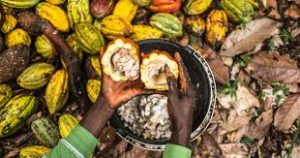
    Cocoa Production


    Ghana cocoa production reached 429,323 metric tons – or less than 55% of the average seasonal output – as harvesting neared completion at the end of June, data from marketing board Cocobod showed on Tuesday.


    Disastrous harvests in Ghana and Ivory Coast – the world’s biggest producer – have driven upglobal cocoa pricessince the start of the year. Together, the countries account for around 60% of global supply.


    The bulk of Ghana’s cocoa harvest is usually completed by the end of June, and the Cocobod data roughly reflects this season’s main crop output for the world’s second largest producer. Both of the leading producers have been hit by adverse weather conditions and tree disease, while Ghana’s cocoa production has also been hobbled the impacts of informal mining andsmuggling.


    The Cocobod data obtained by Reuters does not capture production that may have been trafficked out of the country illegally. On June 21, Cocobod announced the start of Ghana’s light crop – the smaller of its two annual harvests – which typically contributes less than 10% of the full season’s production.


    Ghana’s annual cocoa output averaged 800,000 tons over the last five seasons, according to International Cocoa Organization data, including a 2020/21 peak of over 1 million tons. But the Cocobod data reflects three successive seasons of decline.


    The marketing board declined to provide equivalent production data through June of the two previous seasons. Full season output, however, was 683,269 tons in 2021/22 and 656,140 tons the last season. Ghana’s two leading cocoa growing regions – Ashanti and Western South – have been the biggest contributors to the overall drop in production, the data showed.


    Ashanti produced 103,976 tons of beans by the end of June, compared to a full season figure of 160,855 tons last season. Western South, meanwhile, recorded production of 96,810 tons by end-June, compared to 152,277 tons last season.


    Swollen shoot disease (CSSVD) and artisanal gold mining – known locally as galamsey – are largely responsible for the drop in production in the two regions, said Nana Kwesi Barning, coordinator of the Ghana Civil Society Cocoa Platform. “Galamsey and CSSVD are massive in there, especially the galamsey, per our analysis,” he told Reuters. Nana Johnson Mensah Kagya, a major farmer in the Western South region with around 80 hectares of plantations, said over half of his cocoa had to be cut down and replanted due to swollen shoot.


    And illegal gold mining, he said, is drawing young men away from cocoa farming. “If galamsey continues to exist, cocoa has no future. Because of the galamsey, you will not get anybody to work on the cocoa farm,” Kagya said. The Western North and Western South regions along the border with Ivory Coast and the eastern Volta/Oti region next to Togo are all vulnerable to smuggling and their output has shrunk over the last three seasons. Both Ghana and Ivory Coast sell forward their harvests. And this year’s giant production shortfall has meant Ghana’s Cocobod could not deliver enough cocoa to fulfil its contracts with exporters and traders.


    Sources told Reuters last month that Ghana was looking todelay deliveryof up to 350,000 tons of beans to the next season, though Cocobod denied the scale of the contract roll-overs. Cocobod’s CEO has said he expects cocoa output to bounce back to over 800,000 tons in the next season due to open in October. Industry players and analysts, however, have said the target is too optimistic.


    Source: Reuters


  • Ghanaians to expect mid-year budget review on July 23 .


    Dr Mohammed Amin Adam

    Adnan Adams Mohammed


    All things being equal, the finance minister is to present the 2024 Mid-Year Budget Review to Parliament tomorrow, Tuesday, 23 July 2024.


    This presentation will provide updates on the implementation of the 2024 Budget and insights into the country’s economic and fiscal performance for the first half of the year.


    “The budget review is necessary for introduction of new measures to rejuvenate the economy”, Dr. Mohammed Amin Adam, the Minister for Finance, has said.


    Majority Chief Whip Frank Annoh-Dompreh announced the upcoming presentation while presenting the Business Statement for the week to the House.


    “Hon members, the Minister of Finance is expected to present the Mid-Year Review of the Budget Statement on Economic Policy of the government for the 2024 financial year on Tuesday, July 23,” he stated.


    This mid-year review is highly anticipated as it will shed light on the government’s progress in executing its economic policies and managing fiscal resources.


    It will also outline any necessary adjustments to ensure the country’s financial stability and growth for the remainder of the year.


    Already, Ghana’s economy is being touted by the World Bank in its latest Country Policy and Institutional Assessment (CPIA) report and the Moody’s, and international rating agency.


    Moody’s recently hinted that Ghana’s economy is likely to witness credit ratings upgrade after it successfully restructured its Eurobonds.


    Currently, Ghana’s rating stands at Caa3 for local currency and Ca for foreign currency. These ratings reflect the government’s ongoing debt restructuring efforts under the G20 common framework, initiated in December 2022.


    Moody’s, in a recent report stated that, once the restructuring is complete, all ratings are likely to be aligned at a higher level, though still within the Caa-rating category due to liquidity constraints typically following a default event. The IMF program supports fiscal consolidation and funding access, benefiting from Ghana’s relatively robust institutional capacity.


    “..However, high inflation and tight monetary conditions remain key credit challenges”, New York-based ratings agency has said.


    The restructuring of local currency debt, excluding Treasury Bills, was completed in 2023. Regarding foreign currency debt, which constitutes nearly half of Ghana’s total debt, significant progress has been made.


    Last month, Ghana’s Ministry of Finance announced an agreement in principle with bondholders to restructure $13.1 billion of Eurobond debt, which accounted for 21% of Ghana’s total debt in 2023. Under this agreement, bondholders would forgo around $4.7 billion in principal without state-contingent triggers. This followed a June 12 MoU between the Finance Ministry and the Official Creditor Committee (OCC) to restructure $5.4 billion of official sector external debt. The IMF confirmed on June 28 that both restructurings are consistent with its program parameters, though the OCC has yet to confirm that the bondholder agreement is comparable in debt treatment to the MoU.


    Moody’s assesses Ghana’s economic strength at ‘ba2’, balancing the country’s growth potential in the oil and non-oil sectors against its small size and low wealth levels. The ‘caa2’ rating for institutions and governance strength reflects very weak fiscal and monetary policy effectiveness, which led to unsustainable government debt and the need for restructuring.


    Ghana’s fiscal strength is rated ‘ca’, indicating very weak debt affordability and a very high debt burden. The ongoing debt restructuring is expected to improve these metrics. Moody’s also highlighted Ghana’s susceptibility to event risk at ‘ca’, driven by elevated government liquidity risk due to high gross borrowing requirements and limited borrowing options.


    The outlook for Ghana remains stable, reflecting the ongoing foreign currency debt restructuring. Expected losses for bondholders align with the current ratings’ loss-given-default range. Moody’s indicated that a rating downgrade is unlikely, given the recent progress on foreign currency debt restructuring and the agreement’s terms with bondholders.


    However, if the agreement does not proceed, it could derail the debt restructuring process, potentially leading to downward pressure on both local and foreign currency ratings. Moody’s emphasized that they will likely upgrade the local and foreign currency ratings following the exchange of the Eurobonds.


    The June 24 agreement provides substantial debt relief to the government, complementing earlier local currency debt restructuring. The restructuring of official sector debt will bring additional, yet unknown, liquidity relief. Post-restructuring, Ghana’s ratings are likely to be higher, though still reflecting liquidity constraints.


  • World Bank touts Ghana’s inflation fight mechanism .


    World Bank

    Adnan Adams Mohammed


    Chief Economist at World Bank has touted the Bank of Ghana’s monetary policy implementation in controlling inflation.


    Contained in the World Bank’s latest Country Policy and Institutional Assessment (CPIA) report, titled “CPIA Africa 2024: Structural Reforms for a Vibrant Private Sector”, the report underscored the significant achievements of the Bank of Ghana in maintaining monetary stability and enhancing economic credibility.


    The report, which focused on reforms across policy areas in Sub- Saharan Africa, noted that “Ghana’s authorities committed to policy reforms to strengthen the central bank’s independence”.


    “This contributed to pursuing tight monetary policy, raising reserve ratios, and implementing a fiscal reform program that helped to reduce year- on-year inflation from 54 percent in December 2022 to 23 percent in December 2023”, the report  launched in Accra, Ghana, last week posited.


    Andrew Dabalen, World Bank Chief Economist for Africa, noted at report launch that, “The CPIA review offers a chance to identify areas of relative weakness and engage in a dialogue around policy reforms that can produce better development outcomes.”


    Overall, the report highlights key trends and best practices to guide policymakers and international investors on the policy developments in the region, following the World Bank’s annual CPIA of countries eligible for International Development Association (IDA) assistance.


    The observation made in the report reflects the long-held view of analysts and economists that the central bank’s monetary policy tightening stance has largely contributed to more than 30 percentage points drop in inflation from December 2022 to date.


    To buttress the World Bank’s findings as contained in the report, the Governor of the Bank of Ghana, Dr. Ernest Addison, speaking at the Ministry of Finance-organised SME Growth and Opportunity Summit held in Accra, last week,

    noted that “the Bank of Ghana has stepped up efforts to bring inflation under control, eliminate monetary financing of budget, and rebuild foreign currency buffers”.


    “Just last week, the country successfully went through completion of the Second Review of the IMF programme by the IMF Board.


    The Board reaffirmed the generally strong program performance and clear signs of emerging economic stabilisation.


    However, noting substantial downside external and domestic risks, they underscored the importance of steadfast reform implementation to entrench macroeconomic stability and debt sustainability while fostering sustained growth and poverty reduction. Sustaining macroeconomic stability requires the Bank of Ghana to continue to ensure that the BOG keeps an eye on inflation”, the Governor noted.


    Also, the CPIA report indicated the Central Bank’s independent stance has been instrumental in transitioning from managing global economic shocks to establishing stronger financial policies and transparency. “The region’s strong performance across multiple measures of Central Bank independence is a testament to the Bank of Ghana’s effective strategies,” the report noted.


    “Under the stewardship of the Bank of Ghana, Ghana has witnessed a significant reduction in inflation. The central bank’s commitment to a tight monetary policy, including raising reserve ratios and halting monetary financing of the deficit, has been pivotal. These measures have resulted in a remarkable decrease in year-over-year inflation, from 54% in December 2022 to 23% in December 2023. “Ghana’s reforms around central bank independence played a crucial role in this achievement,” the report emphasised.


    The CPIA report also highlighted that the region’s average score for monetary and exchange rate policy improved to 3.4 in 2023, with Ghana being one of the notable countries showing significant progress.


    In addition to monetary policy, the Bank of Ghana has been a driving force in enhancing fiscal transparency and responsibility.


    It noted that the government’s commitment to reinstating its fiscal rule in the medium term and strengthening the independence of its Fiscal Council reflects the collaborative efforts to bolster economic stability. These initiatives aim to enhance the credibility of the council’s macro-fiscal assumptions and ensure compliance with the fiscal rule.


    The CPIA, an annual diagnostic tool for countries eligible for financing from the International Development Association (IDA), highlights areas of policy reform and economic progress.


  • Newmont cautions public against fraudulent recruitment schemes.

    Newmont


    Newmont Corporation’s (NYSE: NEM, TSX: NGT, ASX: NEM, PNGX: NEM) Africa Business Unit is cautioning the Ghanaian public to beware of fraudulent recruitment schemes targeting job seekers with non-existent employment opportunities with the company’s operations in Ghana.


    The company said it has become aware that there has been an increase in individuals posing as Newmont employees in Ghana and offering fake job opportunities in Ahafo, Akyem and other locations and requesting a fee.


    They usually use the following numbers: 0552015371 or 0538196242, but could be using other numbers as well.


    Newmont in a statement said it has not appointed or mandated any official, individual, company, or group to take payment from job seekers or applicants, in exchange for job opportunities. Newmont vacancies can only be accessed on the careers page of the company’s website: https://www.jobs.newmont.com.


    Newmont said it does not request an upfront payment or application processing fee from candidates at any point during the recruitment process.


    It warned that any such representation is a scam designed to take undue advantage of job seekers.


    Newmont noted that it is working with Ghana’s security agencies to identify and prosecute the perpetrators of such schemes.


    If you become aware of, or have any information about these fraudulent activities, please contact the Ghana Police Service on 191, 18555, or 0302787373.


    Alternatively, you could send an email to Newmont’s talent acquisition team, using the following email address: talentacquisitionafrica@newmont.com.