Tag: Government of Ghana

  • Gov’t backs hybrid funding for mining reforms  …rejects risky 100% resource nationalization

    Gov’t backs hybrid funding for mining reforms …rejects risky 100% resource nationalization

    By News Desk

    The government of Ghana has formally backed a hybrid funding model for the country’s multi-billion dollar extractive sector, firmly rejecting mounting structural calls to move toward 100 percent state ownership of commercial mineral concessions.

    The policy shift forms part of a comprehensive legislative review aimed at aggressively boosting local equity, streamlining mineral rights renewals, and mandating value-addition industrialization within domestic mining contracts without alienating the foreign capital critical to keeping the sector viable.

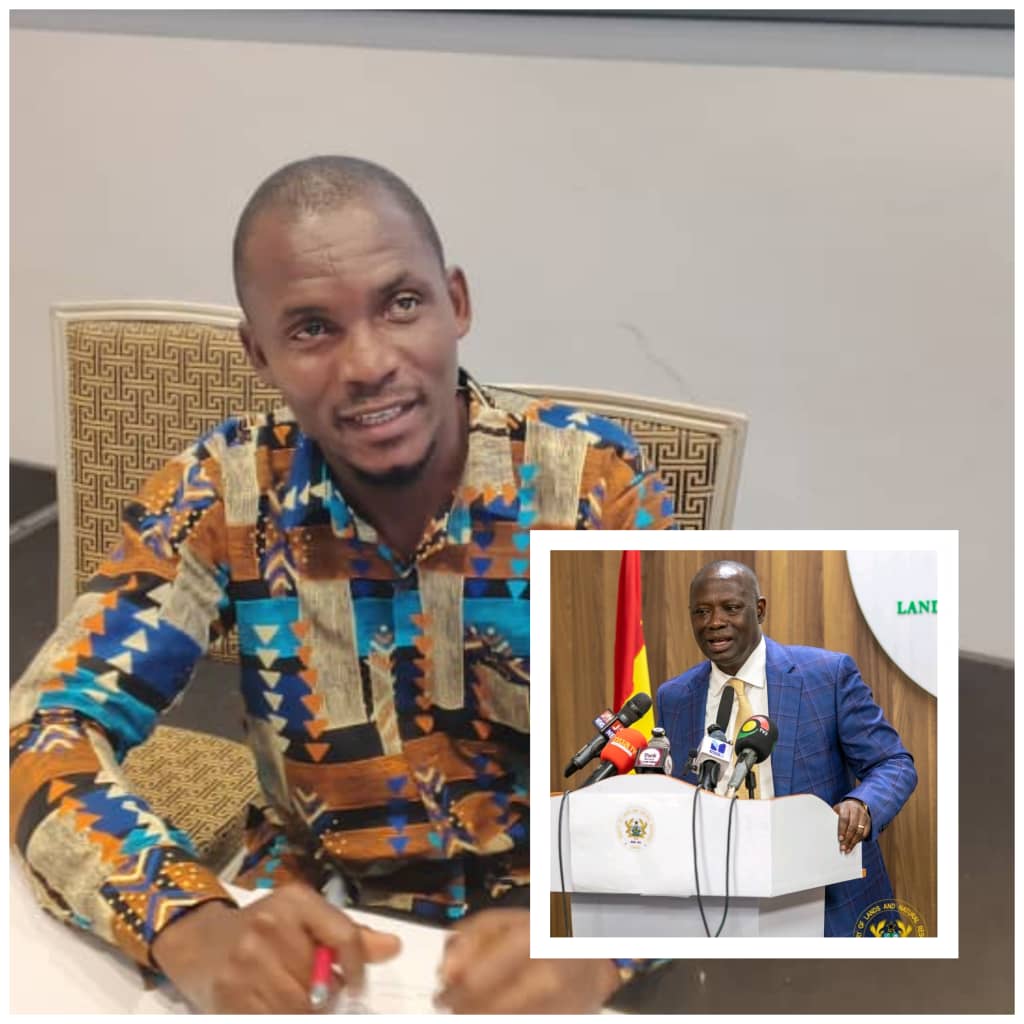
    This comes at the heels of intense advocacy by mining sector stakeholders; including a veteran journalist and a mining health and safety professional, Adnan Adams Mohammed, whose insight on why it is risky for 100% nationalisation of large mining concessions has been captured in a series of published articles while proposing alternatives to optimise nation gains from the mining sector.

    “We must move past this populist sentiment that ignores the reality of global capital,” Mr Adnan Adams stated in one of a series of critiques. He pointed to the historical failure of state-run enterprises, referencing the era of the State Gold Mining Corporation (SGMC) which nearly collapsed the sector before privatization in the 1980s.

    “The calls by the IEA and Sophia Akuffo are not just ill-timed; they are dangerous. They are asking the state to take over complex, capital-intensive operations when we are currently struggling to manage basic public utilities. To suggest GoldFields should be pushed out is a betrayal of the investment stability Ghana has spent decades building.”

    Economic risk: Experts warn against resource nationalization

    Addressing a national extractive forum, economist Dr. Adu Owusu Sarkodie issued a stern caution against complete resource nationalization, warning that total state ownership has historically birthed severe operational inefficiencies, capital starvation, and political patronage.

    “100 percent government ownership is very risky,” Dr. Sarkodie warned. “Our management is questionable because politicians will employ party foot soldiers, so a state ownership and private management model is okay. Public-private participation helps protect operational efficiency, maintain investor confidence, and ensure that the sector remains competitive while still delivering high value to the state.”

    A mineral economist speaking on panel structures expanded on this, outlining why a hybrid capital model represents the most pragmatic economic pathway for the continent’s leading gold producer.

    “A hybrid funding approach is key to strengthening local mining participation because it blends state-led strategic financing with international risk capital,” the specialist argued. “By setting up state-backed equity funds or joint ventures, we can build true domestic wealth without cutting off the foreign direct investment pipelines that absorb the initial, multi-million dollar risks of mineral exploration.”

    The capital bottleneck vs. technical competency

    The call for high-capital private integration was strongly corroborated by energy and governance expert Dr. Boateng, who observed that while the domestic economy possesses the requisite engineering and operational expertise to handle extraction, it lacks the deep fiscal reserves to go it alone.

    “Ghana has the technical capacity, but capital remains our key constraint in the mining sector,” Dr. Boateng emphasized. “We have the geologists, the engineers, and the technical minds capable of managing tier-one assets. What we do not have is the deep financial pool to independently fund deep-level exploration and heavy machinery development. Ghanaian participation in the extractive sector must increase, but it must be driven through structured capital partnerships.”

    Enforcing local content and policy consistency

    For private investors, structural predictability remains the single greatest variable governing project lifecycles. Emphasizing this reality, a senior advisory partner at accounting and consulting firm Deloitte Ghana urged the Ministry of Lands and Natural Resources to codify explicit, immutable guidelines regarding mineral lease extensions and local equity frameworks.

    “The government must provide clear, consistent policies to govern mining license renewals and local content targets,” the Deloitte partner stated. “Regulatory ambiguity is the enemy of long-term investment. If mining companies and financial markets understand the exact timelines, compliance metrics, and equity expectations required for renewals years in out, they will confidently allocate the capital required to expand production and integrate local vendors into their supply chains.”

    Mining as a catalyst for industrialization

    Beyond royalties and corporate taxes, policy advocates are demanding that resource extraction serve as a direct springboard for national manufacturing. Outlining the structural conditions needed to ensure sustainable development, industrial strategist Ayi Owoo argued that extracting raw unrefined ore belongs to a bygone era.

    “Government must make in-country industrialization an absolute condition in all future mining contracts,” Ayi Owoo asserted. “We can no longer tolerate a framework where raw resources are extracted and exported out of our ports in their primary states. If a multinational corporation wants access to Ghana’s gold, lithium, or bauxite, their contract must explicitly commit them to investing in domestic processing plants, local refining infrastructure, and primary fabrication pipelines.”

    The Ministry of Lands and Natural Resources has indicated that these evolving policy pillars comprising the hybrid funding matrix, explicit processing targets, and standardized license rules will form the cornerstone of upcoming mineral bill revisions slated for parliamentary review.


  • Foreign investors react positively to scrapping of minimum capital demands …but local counterparts fret over increased competition

    Foreign investors react positively to scrapping of minimum capital demands …but local counterparts fret over increased competition

    By Toma Imirhe

    The decision of the Government of Ghana, passed into law a fortnight ago, to scrap minimum capital requirements for foreign investors in most sectors is already reshaping sentiment across both domestic and international investment circles, with early reactions ranging from cautious optimism to outright concern about competitive pressures on local firms.

    The reform, contained in the newly passed Ghana Investment Promotion Authority Bill, eliminates longstanding entry thresholds that previously required foreign investors to commit between US$200,000 and US$1 million before operating in the country. Analysts say the move significantly lowers barriers to entry and simplifies the investment process, with only trading activities retaining a reduced capital requirement.

    Early signals from international investors suggest the policy is being welcomed as a pro-business shift. A Lagos-based private equity executive, Olubunmi Otuyemi, has described the reform as “a massive game-changer,” noting that “lowering entry barriers opens the door for diaspora and early-stage investors.”

    Investment advisory firms across West Africa report increased inquiries from smaller foreign firms and diaspora entrepreneurs who were previously priced out of Ghana’s market. “This reform makes Ghana accessible at all scales,” said a representative of the African Diaspora Group last week, adding that the removal of capital thresholds “creates a more open and inclusive investment landscape.”

    For multinational corporations, however, the response has been more measured. While welcoming the liberalisation, several institutional investors note that capital thresholds were rarely a binding constraint for large-scale projects. Instead, they are focused on regulatory clarity and post-entry conditions. “Investors don’t just respond to access they respond to consistency, enforcement, and exit certainty,” Otuyemi added.

    Domestically, reactions have been more mixed, reflecting concerns about the competitive implications for local businesses. Some Ghanaian entrepreneurs fear that the removal of capital requirements could expose small and medium-sized enterprises to intensified competition from foreign firms with cheaper access to capital.

    “This risks opening the floodgates,” said Accra-based entrepreneur Kwame Sowu in a recent commentary, warning that local firms could be “crowded out” if complementary protections or support measures are not implemented.

    Business associations are also calling for safeguards. A senior official at a Ghanaian SME advocacy group, who asked not to be named, told Economy Times that while the reform could boost investment inflows, “it must be matched with policies that strengthen domestic capacity, otherwise the benefits may not be evenly distributed.”

    Economists, however, argue that the reform aligns Ghana more closely with regional competitors and could enhance its attractiveness under the African Continental Free Trade Area framework. By removing bureaucratic hurdles, Ghana is positioning itself as a more flexible destination for capital, particularly in technology, services, and light manufacturing sectors.

    “The key advantage is flexibility,” said an Accra-based investment analyst. “Investors can start small and scale up, which is critical for innovation-driven sectors.”

    Looking ahead, analysts predict a two-phase reaction from the investment community.

    In the short term, Ghana is likely to see a surge in smaller-scale investments, particularly from diaspora entrepreneurs, startups, and regional investors testing the market. This could translate into increased business registrations and early-stage capital inflows over the next 12 to 24 months.

    However, the medium-term outlook will depend heavily on implementation. Investors are expected to closely monitor how the new regulatory framework is enforced, especially provisions requiring ongoing compliance, registration renewals, and alignment with national development priorities.

    “There will be more scrutiny after entry,” noted a legal practitioner involved in investment advisory. “The regime is becoming easier to enter but more structured in operation.”

    Concerns around currency volatility, profit repatriation, and bureaucratic processes are also expected to shape investor sentiment going forward. Without improvements in these areas, some analysts warn that increased entry may not translate into sustained or high-quality investment.

    At the same time, domestic stakeholders are likely to intensify calls for policies that promote joint ventures, local content, and technology transfer to ensure that foreign participation contributes meaningfully to Ghana’s economic transformation.

    Ultimately, the reform marks a decisive shift in Ghana’s investment strategy from gatekeeping capital to facilitating participation. Whether it delivers broad-based economic gains will depend on how effectively the country balances openness with strategic regulation in the months ahead.


  • Ghana returns to long-term debt market with landmark 7-year cedi bond

    Ghana returns to long-term debt market with landmark 7-year cedi bond

    By Adnan Adams Mohammed

    In a significant milestone for the nation’s economic recovery, the Government of Ghana has announced its first medium-to-long-term domestic bond issuance since the 2022 debt default.

    The Ministry of Finance revealed on Thursday that it will open books for a new 7-year cedi-denominated treasury bond starting Monday, March 30, 2026. The move marks the end of a three-year freeze on longer-dated debt following the country’s comprehensive Domestic Debt Exchange Programme (DDEP).

    Market confidence restored

    The issuance is being viewed by analysts as a “litmus test” for investor appetite and a signal that the government is ready to move beyond the era of emergency debt restructuring. According to the Ministry’s issuance calendar, the offer is open to both resident and non-resident investors.

    “The expiration of the DDEP-induced restrictions marks a pivotal moment for Ghana’s financial strategy,” the Ministry stated in an official release. “This auction is aimed at rebuilding a sovereign yield curve, supporting liquidity management, and restoring market confidence for both retail and institutional investors.”

    Since 2022, the government has relied almost exclusively on short-term Treasury bills (91-day to 364-day) to fund its budget. The return to the 7-year market indicates a shift toward more sustainable, long-term financing.

    Economic fundamentals

    The timing of the bond coincides with a period of relative macroeconomic stability. After peaking at over 54% in 2022, inflation has cooled significantly, with recent reports placing it at a near three-decade low. Additionally, the Bank of Ghana has aggressively cut the policy rate dropping 14 percentage points over the last year to the current 14%.

    “With market rates having fallen materially, the yield on this new bond will be closely watched,” said Samir Gadio, Head of Africa Strategy at Standard Chartered Plc. “While yields may not be as high as they once were, Ghana remains an attractive diversification play for overseas investors now that the currency has stabilized.”

    Issuance Details

    ● Opening Date: Monday, March 30, 2026 (9:00 AM)

    ● Closing Date: Wednesday, April 1, 2026 (3:00 PM)

    ● Settlement Date: Tuesday, April 7, 2026

    ● Minimum Bid: GHS 50,000

    ● Bookrunners: Absa, CalBank, Fincap, GCB, Stanbic, and OA.

    The coupon rate will be determined through a book-building process, where bids will be accepted on a yield basis.

    Strategic Outlook

    The administration has expressed gratitude to the Ghanaian people for their patience during the debt crisis. Government officials emphasized that the successful payment of several coupon rounds on restructured bonds since 2025 has been instrumental in clearing the path for this new issuance.

    Proceeds from the bond are expected to be used to refinance maturing obligations and support the government’s 30-billion-cedi development agenda for the 2026 fiscal year.

    As the IMF program nears its conclusion in August 2026, this return to the domestic capital market is seen as a crucial step toward fiscal self-reliance and the normalization of Ghana’s financial landscape.


  • Gov’t to phase out manual cheques by year-end in bold digital payment reform 

    Gov’t to phase out manual cheques by year-end in bold digital payment reform 

    By Adnan Adams Mohammed


    ​In a landmark move to modernize the management of public funds, the Government of Ghana has announced a total transition to digital payments, effectively ending the use of manual cheques across all state institutions by the end of this year.


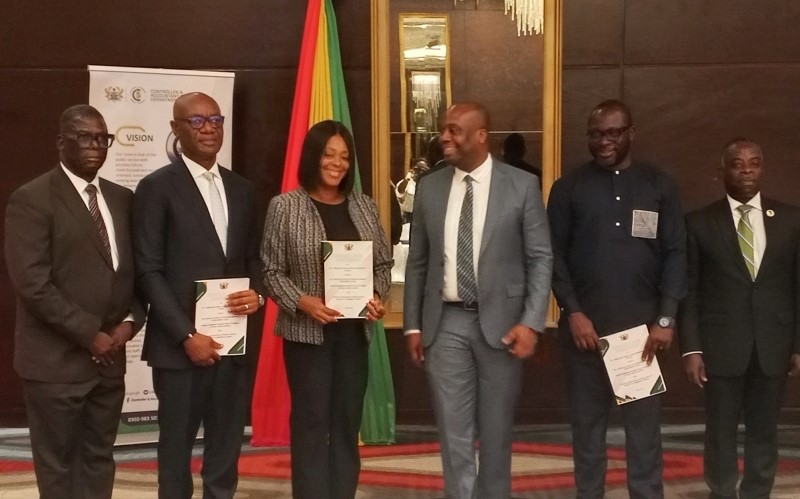
    ​The reform was formalized on Tuesday with the signing of a Service Level Agreement (SLA) designed to integrate the nation’s core financial systems. The agreement links the Ghana Integrated Financial Management Information System (GIFMIS) and the Electronic Funds Transfer (EFT) platform with the Ghana Interbank Payment and Settlement Systems (GhIPSS).


    ​Under this new framework, GhIPSS becomes the sole authorized channel for all government payments, creating a unified and traceable electronic ecosystem. ​Speaking at the signing ceremony in Accra, the Controller and Accountant-General, Mr. Kwasi Agyei, characterized the move as a decisive departure from an era of inefficiency.


    ​“This agreement is not just ceremonial; it signifies a fundamental shift in the handling of public funds,” Mr. Agyei stated. “We are moving decisively from outdated manual systems to a modern, controlled, and fully traceable electronic payment system.”


    ​He highlighted that manual cheques have historically been slow, difficult to reconcile, and susceptible to misuse.


    The new integrated system will allow for secure, real-time electronic transfers to suppliers and third parties across the entire banking sector.


    ​Efficiency and Accountability


    ​The reform is mandatory for all Ministries, Departments, and Agencies (MDAs), as well as Metropolitan, Municipal, and District Assemblies (MMDAs).

    ​Deputy Finance Minister Thomas Ampem Nyarko emphasized that the transition is anchored on three pillars: accountability, efficiency, and control.


    He revealed that the digital system has already proven its worth; existing controls reportedly blocked over one billion Ghana cedis in unauthorized vehicle purchases last year.


    ​“Agencies will be rolled on week by week until the process is complete,” Mr. Nyarko explained. “We are doing this alongside the automatic withdrawal of manual cheques.”


    ​He further hinted that Finance Minister Dr. Cassiel Ato Forson is expected to formally announce the total withdrawal of manual cheques in the upcoming budget statement, cementing the year-end deadline.


    ​Strengthening Fiscal Discipline


    ​The Head of Civil Service, Dr. Aggrey Darko, urged all public servants to embrace the change, noting that better governance is impossible without modernizing transaction methods.


    ​The initiative aligns with recent amendments to the Public Financial Management Act, which introduced stricter commitment controls. By integrating these systems, the government can now monitor expenditures in real-time, ensuring that no public spending is committed without prior approval and available budget.


    ​As the countdown to the December deadline begins, the transition marks one of the most significant steps in Ghana’s broader strategy to enhance fiscal discipline and eliminate leakages in the public sector.

  • ORAL’ Investigations Intensify as GH¢ 1.5bn in assets frozen – Hon Kwakye

    ORAL’ Investigations Intensify as GH¢ 1.5bn in assets frozen – Hon Kwakye

    The Government of Ghana has made significant strides in its anti-corruption drive, with assets valued at approximately GH¢1.5 billion currently frozen as part of ongoing investigations and prosecutions.

    The disclosure was made by a Presidential Spokesperson, who provided an update on the progress of Operation Recover All Loot (ORAL) the administration’s flagship policy aimed at retrieving public funds allegedly misappropriated under previous regimes.

    Significant Financial Recoveries

    Addressing the Speaker of Parliament, the spokesperson highlighted the scale of the current legal and investigative efforts.

    “As far as that goes, Mr. Speaker, I can report to you that 1.5 billion Ghana cedis is in assets that have been frozen by people undergoing investigations and those before the court,” the spokesperson stated.

    The frozen assets include bank accounts, landed properties, and high-value vehicles linked to several high-profile cases currently being handled by the Attorney General and the Office of the Special Prosecutor (OSP). These measures are intended to ensure that suspected “economic saboteurs” do not dissipate their wealth while legal proceedings are active.

    ORAL Committee Findings

    The update follows the recent submission of a report by the ORAL Committee, chaired by Samuel Okudzeto Ablakwa. That report estimated the total value of potential financial leakages across 36 reviewed cases at a staggering $20.49 billion.

    While the GH¢1.5 billion in frozen assets represents only a fraction of the total amount under scrutiny, government officials maintain that it is a clear signal that the state is successfully identifying and securing illegally acquired wealth.

    Prosecutions vs. Performance

    The government’s anti-corruption strategy has not been without its critics. Some opposition members and legal analysts have characterized the ongoing investigations as “performative,” suggesting that the focus has been more on public announcements than on securing swift convictions in court.

    However, the Attorney General’s office has dismissed these claims, asserting that the “ORAL” approach is methodical and focused on building airtight cases. The establishment of special courts to handle these “loot recovery” cases is also expected to expedite the judicial process.

    A Culture of Accountability

    President John Dramani Mahama has repeatedly stated that Ghana will “no longer be a safe haven for corruption.” He has directed the Attorney General to act on the ORAL Committee’s findings with urgency, emphasizing that the recovered funds will be redirected into critical sectors such as education, healthcare, and infrastructure.

    As the investigations continue, the public’s gaze remains fixed on the judiciary to see how many of these frozen assets will eventually be permanently forfeited to the state.


  • Ghana’s Economic Resurgence: Gov’t delivers robust 2025 fiscal performance and broad-based macroeconomic turnaround

    Ghana’s Economic Resurgence: Gov’t delivers robust 2025 fiscal performance and broad-based macroeconomic turnaround

    In what is being hailed as one of the most significant economic recoveries in the nation’s history, the Government of Ghana has announced a sweeping macroeconomic turnaround for the 2025 fiscal year.

    Just over a year ago, the country faced a daunting economic landscape. By the end of 2024, the primary balance sat at a deficit of 3.0% of GDP, the 91-day Treasury bill rate was stifling at 27.7%, and the cedi had plummeted by 19.2% against the US dollar. However, today’s figures tell a vastly different story of recovery and resilience.

    Through a rigorous combination of fiscal discipline, deepened structural reforms, and prudent monetary policy, the Mahama administration has successfully placed public finances back on a sustainable path.

    The 2025 fiscal outcomes have consistently outperformed targets:

    ● Primary Balance: Recorded a surplus of 2.6% of GDP, significantly exceeding the 1.5% target.

    ● Overall Fiscal Balance: The deficit was narrowed to 1.0% of GDP (on a commitment basis), far better than the projected 2.8%.

    1. ● Debt Reduction: In one of the sharpest declines in Ghana’s history, the public debt stock was slashed by GH¢82.1 billion. Debt-to-GDP has fallen from 61.8% in 2024 to 45.3% in 2025.

    A Rebound Across All Indicators

    The turnaround is not limited to government ledgers; it is being felt across the broader economy. Real GDP growth strengthened to a provisional 6.1% in the first three quarters of 2025, with the non-oil sector growing at an even more impressive 7.5%.

    Key Highlights of the Turnaround:

    ● Inflation Crash: Inflation has fallen for thirteen consecutive months, dropping from 23.5% in January 2025 to a mere 3.8% in January 2026.

    ● Currency Strength: The Ghana cedi staged a remarkable comeback, appreciating against the US dollar by 40.7% by the end of 2025.

    ● Interest Rates: The 91-day Treasury bill rate plummeted from 27.7% to 6.5%, drastically reducing the cost of borrowing for both the government and the private sector.

    ● Trade & Reserves: The current account surplus swelled to US$9.1 billion, while gross international reserves reached US$13.8 billion enough to cover 5.7 months of imports.

    Empowering the Private Sector

    The cooling of the economy has provided much-needed oxygen to Ghanaian businesses. Commercial bank lending rates dropped from 30.25% to 20.45% over the past year. This shift saw credit to the private sector expand by GH¢17.1 billion in 2025, a trend the government expects to accelerate through 2026.

    “The macroeconomic turnaround is broad-based and comprehensive,” the government statement noted. “All sectors of the Ghanaian economy have witnessed remarkable improvement.”

    Commitment to Transformation

    President John Dramani Mahama’s administration has reaffirmed its commitment to sustaining these hard-won gains. The focus now shifts toward leveraging this newfound stability to drive job creation and long-term economic transformation.

    With inflation at record lows and the currency stabilizing, the government maintains that the foundation has been laid for a new era of Ghanaian prosperity.


  • GH¢10bn infrastructure bonds in 2026: a boost for BIG PUSH

    GH¢10bn infrastructure bonds in 2026: a boost for BIG PUSH

    By Toma Imirhe

    In a move aimed at addressing the nation’s pressing infrastructure deficit, the Government of Ghana has announced plans to issue GHc10 billion in infrastructure bonds across two tranches in 2026.

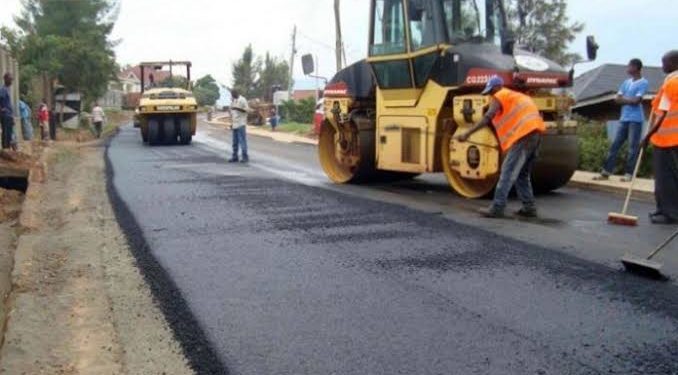
    The bonds are expected to play a pivotal role in financing key infrastructure projects, including road networks, energy generation, and urban housing.

    The bonds will be offered in two tranches of GHc5 billion each, with the first set to be issued in the second quarter of 2026 and the second in the final quarter of the year.

    Details of the offering, along with other domestic bond issuances are expected to be published in an issuance calendar later this month.

    The issuance is designed as an integral source of financing for the President John Dramani Mahama administration’s Big Push initiative which aims to mobilize US$10 billion for major infrastructural projects. The government has already scaled up funding, with the Finance Ministry allocating GHc30 billion for the plan in the 2026 budget more than double the GHc13.8 billion earmarked last year.

    Said a Ministry of Finance official on condition of anonymity: “The GHc10 billion infrastructure bonds will not only address immediate needs but also lay the foundation for sustainable development for future generations. We are particularly focused on projects that will generate long-term returns and boost productivity.”

    It is believed that the funds raised will be directed towards critical sectors such as road construction and energy infrastructure although government has not formally provided a list of projects to be financed with the proceeds of the issuance.. These investments are expected to improve the ease of doing business in Ghana, enhance regional connectivity, and create much-needed jobs.

    However Economy Times learnt that one of the projects would entail the completion of the Eastern Corridor Road Project, which is expected to link northern Ghana with the southern regions.

    The GHc10 billion bonds are expected be structured as 10-year and 15-year instruments, offering attractive returns to institutional investors, including pension funds, insurance companies, and commercial banks. According to (unconfirmed) sources at the Ministry of Finance, the first tranche of GHc5 billion will be offered at a coupon rate of 13.5%, while the second tranche will likely have a slightly higher rate, reflecting market conditions closer to the issuance date.

    The bonds will be tax-exempt for both local and foreign investors, a move designed to attract a broad spectrum of institutional and individual investors. The repayment of the bonds will be backed by the revenue generated from government infrastructure projects, with a strong focus on projects expected to generate significant returns, such as the tolls on new road networks and the revenues from energy production.

    The government has outlined a robust strategy for amortizing the bonds. Payments will be made from a combination of revenues from the infrastructure projects funded by the bonds, as well as government fiscal resources. In particular, tolls and other user fees will be key contributors to the repayment structure. Analysts believe this approach ensures that the burden on taxpayers will be minimal, while also generating a consistent stream of revenue to service the debt.

    The Bank of Ghana and the Ghana Stock Exchange will manage the bond issuance, with the issuance process being overseen by the Securities and Exchange Commission

    Investors have expressed keen interest in the bond issuance, with some analysts optimistically predicting that the bonds will be oversubscribed, given the government’s focus on high-yielding infrastructure projects. Kwame Boadi, an economist at Ghanaian Investments, notes that infrastructure bonds have become increasingly popular in emerging markets due to their long-term stability and the attractive returns they offer.

    “Investors are always looking for instruments that offer stable returns, and with the government’s strong backing and the underlying infrastructure projects expected to generate reliable cash flows, these bonds are highly appealing,” Boadi asserts.

    But Ghana is seeking to leverage investor confidence as it recovers from a debt crisis under the previous administration which culminated in a 2022 default that cut the country off capital markets. Recently however, investor confidence has strengthened with yields on Ghana’s cedi bonds due in 2039 falling more than 10 percentage points to around 16%.

    However most analysts point out that to ensure the success of the Infrastructure Bonds, the government must go beyond high-interest rates and implement robust strategies to fully re-establish confidence:

    The government must provide absolute legal and fiscal assurance that the funds raised will only be used for the stated infrastructure projects and cannot be restructured or accessed for general budget needs. The establishment of a Sinking Fund specifically for these bonds could guarantee timely coupon payments and principal redemption.

    Some analysts argue that continuous and detailed communication about the bond’s performance, the use of the funds, and the progress of the underlying infrastructure projects is vital. Regular, accessible updates will show investors that the government is fully committed to transparency and accountability.

    Crucially, the government must maintain a flawless record of timely coupon payments on all existing debt, particularly the new bonds issued under the Domestic Debt Exchange Programme, DDEP. Recent payments made to DDEP bondholders are already helping to restore market confidence, but this discipline must be sustained over the long term.

    The International Monetary Fund has welcomed Ghana’s efforts to deepen domestic capital markets but cautioned that infrastructure bonds must align with debt-sustainability goals. An IMF spokeswoman, in an emailed response to an enquiry from Bloomberg, said: “The IMF welcomes steps to deepen the domestic capital markets and is engaging with the government on reopening the local bond market in a prudent, carefully calibrated and sequenced manner. If well designed and directed to high-return projects, infrastructure bonds can support growth and private sector activity.”

    The GHc10 billion bond issuance is expected to be a critical step in addressing Ghana’s infrastructure challenges and supporting the country’s long-term economic development.


  • Why Ghana should accept to extend the IMF programme

    Why Ghana should accept to extend the IMF programme

    The news that the International Monetary Fund has recommended a three month extension of its ongoing three year Extended Credit Facility economic recovery and financial bail-out programme with Ghana has unsurprisingly generated circumspection and debate in the country.

    The IMF’s recommendation is to allow additional time for reforms required to complete the sixth and final programme review. If endorsed, the extension will shift the end date of Ghana’s ECF arrangement from May 2026 to August 2026.

    Some Ghanaians are expressing frustration, seeing it as unnecessary given recent strong performance and a desire for self-management. Such critics argue that Ghana is performing well and does not need prolonged IMF supervision,, viewing it as bureaucratic convenience rather than necessity, especially as Ghana has met targets.

    They contend that the IMF is trying to extend its oversight beyond the program’s natural end, suggesting Ghana should reject it.

    On the other hand, government views it as a procedural step for orderly conclusion and continued support, highlighting achievements in meeting targets, though debates persist around specific issues like GoldBod and fiscal discipline. The government sees it as vital for sustained macroeconomic stability, with the IMF’s oversight helping to anchor reforms, more so since Ghana has met key fiscal and growth targets, leading to increased reserves and falling inflation, with the extension seen as ensuring a smooth finish.

    A core tension is between Ghana’s sovereign right to manage its affairs and the IMF’s conditions for financial support; while the government embraces the IMF’s continued engagement as a validator and stabilizer, a segment of the public feels Ghana has outgrown the need for such extensions, citing strong domestic efforts and results

    This newspaper supports government’s inclination to accept the extension. While the proposed extension of just three months would give the Fund a disproportionate amount of leverage in influencing macroeconomic policy for 2026 despite only US$200 million being left for Ghana to receive out of the US$3 billion total it would be prudent to learn invaluable lessons from yester-years.

    Firstly, the rush to exit the previous IMF programme by the immediate past Akufo-Addo administration did not end well, even though excuses such as the arrival of COVID 19 and the outbreak of the Russia Ukraine was have been made for the economic crisis that finally erupted in late 2022.

    Secondly, the replacement of the IMF’s unpopular but prudent demand management policies with populist expansionary supply side policies have repeatedly failed in the past when the transition was attempted to soon.

    The Mahama administration has a four year mandate and this newspaper believes that using the first two years of the mandate to cement macro-economic stability on which sustainable expansionary economic policy can be built is the most prudent way to go.

    The international investment, financial and development communities are all watching Ghana closely as it rebounds from its worst economic crisis in four decades. We cannot afford to put the ongoing recovery at risk like we have done so many times before, in our rush to resume outstanding economic growth.


  • Mould explains Bank of Ghana’s role in government debt payment

    Mould explains Bank of Ghana’s role in government debt payment

    A recent social media post has sparked debate on whether the Bank of Ghana’s (BoG) use of its reserves to pay Government of Ghana (GoG) debt can be classified as market intervention.


    According to Alex Mould, a finance and energy expert, such transactions are not market intervention, but rather a simple lending process.


    “When GoG debt is in US dollars, BoG’s payment of the debt using its reserves is not market intervention,” Mould explains. “However, if GoG debt was in cedis and BoG sold forex to lend cedis to GoG, it could be considered market intervention plus lending.”


    Mould highlights that if GoG used its own cedis from the treasury to buy USD from BoG, it should not be considered market intervention, but a pure forex transaction between a bank and its client. Additionally, mopping up cedis by selling dollars (forex) to the open market is seen as market intervention.


    “BoG’s role in the forex market is to manage its reserves and facilitate international transactions,” Mould notes. “The bank does not create forex, but rather obtains it through exports, international loans/grants, and interbank market participants.”


    In its normal course of operations, BoG exchanges forex from exporters for cedis and sells forex for international current account operations. The bank’s intervention in the forex market occurs when it sells or buys forex to influence the exchange rate outside of its day-to-day needs as a market participant.


    “The circa US$10 billion in question can only be attributed to BoG’s total forex sales over the period, not its interventions,” Mould concludes. “This clarification highlights the importance of understanding BoG’s role in managing the country’s forex reserves and facilitating government transactions.”

  • Ghana Signs Bilateral Debt Restructuring Agreement with Czech Republic

    Ghana Signs Bilateral Debt Restructuring Agreement with Czech Republic

    The Government of Ghana has signed its seventh bilateral debt restructuring agreement, this time with the Czech Republic, as part of its efforts to manage its external debt and promote economic stability.


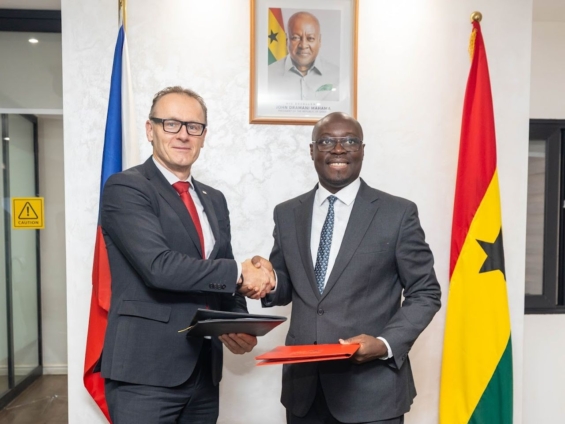
    The agreement was signed earlier today by representatives of the two countries, with Mr. René Jakl, Director of the Claims and Recoveries Department at the Export Guarantee and Insurance Corporation (EGAP), representing the Czech Republic.


    Speaking at the signing ceremony, Ghana’s representative conveyed the country’s deep appreciation for the Czech Republic’s cooperation and support. Mr. Jakl described the agreement as a new chapter in the relationship between the two countries, which will open doors for future support.


    The ceremony was witnessed by Czech Ambassador Mr. Pavel Bílek and officials from the Ministry of Finance, highlighting the strong diplomatic ties between Ghana and the Czech Republic.


    This agreement is part of Ghana’s broader efforts to restructure its external debt and promote economic growth and stability. The government has been engaging with various creditors to secure agreements that will help the country manage its debt and achieve its economic objectives.


    The signing of this agreement is expected to further strengthen the relationship between Ghana and the Czech Republic, and promote future cooperation and support between the two countries.