Category: Technology

  • BoG prepares to export Doré gold next month

    BoG prepares to export Doré gold next month

    By Elorm Desewu

    The Bank of Ghana would in the next month begin to export the 600 kilograms of Doré gold that the central bank has acquired which would become part of the country’s Gross International Reserves.

    “So far, we have bought over 600 kilograms of Doré gold but this gold has to be refined to a very high standard before it can qualify as reserve assets and the Bank is in the process of fulfilling all the due diligence requirements that the certified refineries in the world look out for.

    We are quite sure that, in the next month or two, we would be able to export the Doré gold that we have acquired and once that is refined, it could become part of our gross reserves”, disclosed by the Governor of the BoG, Dr Ernest Addison.

    “We have to export the Doré gold to be refined because the refinery in Ghana is not LBMA certified and so would not qualify the gold as a central bank reserve asset. This is the only reason why we, for now, have to export the gold in that form and refine it outside. I know that the Ministry of Lands and the Ministry of Finance are working at getting this LBMA certification for the refineries in Ghana”, he said.

    The Gross International Reserves at the end of February 2022 was US$9,547.96 million, providing cover for 4.3 months of imports. The reserve level compares with the end-December 2021 position of US$9,695.22 million, equivalent to 4.4 months of import cover.

    The trade account continued to remain in a surplus, albeit declining. For the first two months of 2022, the trade surplus amounted to US$404.9 million, lower than a surplus of US$432.69 million for the corresponding period of 2021.

    The decline in the trade balance was mainly due to a higher import growth relative to exports growth. Imports grew by 7.9 percent year on year to US$2.3 billion. The increase in imports was driven mainly by oil imports that rose by 80.1 percent with non-oil imports decreasing by 5.53 percent. With regard to exports, earnings grew by 5.5 percent to US$2.7 billion. Improved earnings from crude oil, aluminium alloys and other exports, including non-traditional exports, boosted exports performance notwithstanding some decline in gold and cocoa receipts.

  • Standard Bank predicts economic growth of 6.2% in 2022 amidst low Eurobond market access

    Standard Bank predicts economic growth of 6.2% in 2022 amidst low Eurobond market access

    Adnan Adams Mohammed

    The parent company of Stanbic Bank, Standard Bank, has predicted an economic growth of about  6.2% in 2022 and subsequently grow by 6.8% in 2023 amidst tough times for the Ghanaian economy.

    The prediction, in the latest report of the Bank, is in line with the forecast by International Monetary Fund which also pegs the growth rate of the country at 6.2% in 2022. It said the government has made significant progress in vaccinations and the further easing of COVID-19 restrictions will stimulate demand and supply within the economy.

    But, it pointed out that the country’s ability to tap the Eurobond market may further diminish, whilst the foreign exchange reserves could remain under pressure unless the government acquires alternative sources of external financing. 

    “As global risk may worsen further in the first-half of 2022, and Ghana’s ability to tap the Eurobond market may further wane. Foreign exchange reserves could remain under pressure in 2022 — unless the government acquires alternative sources of external bilateral and multilateral funding.”

    Reporting on the performance of past year’s performance, the Bank estimated that, on a quarter-on-quarter basis, the mining and quarrying sub-sector grew by 16.9% in 2021, from an average contraction of 10.7% in the 6 months to June 2021, implying that growth momentum may be recovering.

    “On a quarter-on-quarter basis, the mining and quarrying sub-sector grew by 16.9%, from an average contraction of 10.7% in the 6-m to Jun 21, implying that growth momentum may be recovering. Gold production from underground ore sources should commence from January 22, 2022 at the Obuasi mine. New contracts to conduct mining activities at the Bibiani mine have already been awarded, which should boost investment in the sector over the next few years.”

    “However, ongoing global supply chain challenges could restrain growth in the cocoa and industrial sub-sectors in 2022″, it added.

     Balance of payments – imports likely to be higher

    The report said the Current Account deficit is likely to widen to 5.0% of Gross Domestic Product (GDP) in 2022, from an expected 3.9% for 2021.

    “Whereas we expect a recovery in gold production and exports over the coming year, we simultaneously also see a notable rise in the imports of goods. As the economy continues to recover from the pandemic, non-oil imports may increase further. Also, given the government’s expansionary fiscal policy stance, capital goods imports will likely remain elevated over the next two year. Higher international oil prices too could continue to widen the trade balance.”

    Furthermore, “cocoa production and exports could still be dragged lower due to fertiliser shortages. As of Q2:21, cocoa and gold exports combined accounted for around 55.3% of total merchandise exports.”

  • Govt to borrow GHC24.6b for 2nd quarter

    Govt to borrow GHC24.6b for 2nd quarter

    By Elorm Desewu

    The government plans to borrow a gross amount of GH¢24.696 billion for the second quarter of 2022, through the issuance of Treasury Bills, Notes and Bonds from the domestic money market.

    Of the GH¢24.696 billion, GHȼ20.102 billion would be used to rollover maturities, while the remaining GH¢4.593 billion which is fresh issuance, would be used to meet Government’s financing requirements.

    According to the Bank of Ghana, the debt calendar also takes into consideration the government’s liability management programme, market developments both domestic and international and the Treasury & Debt Management objective of lengthening the maturity profile of the public debt. 

    Per the calendar, Government aims to build benchmark bonds through the issuance of instruments as follows: the 91-day and 182-day will be issued weekly; the 364-day bill will be issued bi-weekly also through the primary auction with settlement being the transaction date plus one working day; securities of 2-year up to 6-year will be issued through the book-building method by the Bond Market Specialists (BMS); and consistent with the MTDS, Government may announce tap-ins/reopening of other existing instruments depending on market conditions.

    Ghana’s total public debt has continued to climb up, recording GHC351.8 billion or US$58.6 billion representing 80.1 percent of Gross Domestic Product, (GDP), at the end of December 2021 compare with GHC341.8 billion recorded at the end of September, 2021.

    The external component of the debt portfolio was US$28.3 billion or GHC170 billion representing 38.7 percent of GDP.

    Of the total debt stock, the domestic debt was GHC181.8billion representing 41.4 percent of GDP.

    The government’s Medium-Term Debt Management Strategy proposes appropriate financing for the period 2022 – 2025 which sets out to achieve the following objectives:  meet Government’s funding needs on a timely basis and at a relatively lower cost subject to prudent levels of risk;  promote the development of efficient primary and secondary markets; and  pursue any other action considered to impact positively on the public debt stock. 

    The financing for 2022 seeks to further develop the domestic market by proposing new instruments to diversify the debt portfolio and increase the debt financing capacity of the domestic market. 

  • Liabilities of most SOEs more than doubled in 4yrs – Mould

    Liabilities of most SOEs more than doubled in 4yrs – Mould

    Adnan Adams Mohammed

    A former Chief Executive Officer of a State Owned Enterprise, Ghana National Petroleum Corporation, has painstakingly shown keen interest in the SIGA 2020 Report.

    The finance and energy expert, Alex Mould has, thus, summarised the liabilities of the major SOEs in the country to help in critical scrutiny of the performance of the SOEs. In the summary, it was clear that, most of the SOEs more than doubled their arrears payments or liabilities. The heavily indebted were GNPC, Ghana Cocoa Board (COCOBOD) and Electricity Company of Ghana (ECG). These companies have their liabilities exceeding GHC10.0 billion within a period of four years from 2016 to 2020.

    Some critics of the performance of GNPC are surprised why the corporation recorded a net loss of GHC1.6 billion in 2020 after recording a net profit of GHC204 million in 2019. Also, its direct cost, which was GHC2.4 billion in 2019 surged to GHC4.3 billion in 2020, a whopping 78% increase. The critics demand for convincing explanation from GNPC on its performance over the years.

    “GNPC must explain this financial performance at a time when it also spent ₵200M on ‘Corporate Social Responsibility’”, Bright Kwashie Dzokoto, a tax expert and a member of Tx Justice Coalition demanded. “This accountability-free regime must end.

    Below are the highlights of the liabilities:

    1. ECG

    Moved from GHC6.0 billion to GHC15.0 billion in 2016 to 2020. ECG’s liabilities are mainly trade creditors payable to Independent Power Producers (IPPs).

    2.  GACL

    Moved from GHC740 million to GHC2.0 billion in 2016 to2020. These arrears are mainly to banks. 

    3.  COCOBOD

    Here, the liabilities which are mainly bank loans, moved from GHC295 million to GHC10 billion within same period (2016-2020).

    4. GRIDCO

    Liabilities mainly owed to VRA/IPPs and PURC, moved from GHC485 million to GHC1.33 billion.

    5. Ghana Gas

    These liabilities mainly trade payables owed to GNPC, moved from GHC4.8 billion to GHC9.7 billion in 2016 to 2020.

    6.  GNPC

    Their liabilities were mainly in three folds; moved from GHC3.5 billion to GHC11.4 billion. The folds were: mainly trade creditors which moved from GHC237 million to GHC5.5 billion; loans of  GHC1.3 billion to GHC3.0 billion; and advance payment by GoG to Eni for unpaid gas amounting to GHC2.3 billion.

    7. Ghana Water

    The liabilities mainly made up of trade creditors and loans of GHC4.2 billion; jumped from GHC745 million to GHC6.2 billion.

    8.  TOR

    The arrears of TOR increased from GHC3.7 billion to GHC4.6 billion. These was made of mainly Trade Creditors of GHC3.0 billion and loans plus ESLA amounted to GHC1.6 billion.

    9. VRA

    The total liabilities moved from GHC7.5 billion to GHC9.7 billion. These were mainly trade payables which grew from GHC4.2 billion to GHC6.8 billion while its borrowings dropped from GHC3.1 billion to GHC1.0 billion.

  • CBG rejects Ghana Card for financial transactions

    CBG rejects Ghana Card for financial transactions

    Adnan Adams Mohammed

    The Consolidated Bank Ghana, (CBG), has continued to reject the Ghana Card as a medium of identity for customers who want to use it for financial transactions.

    CBG has introduced a verification mechanism that verifies all acceptable national identity cards before admitting those cards for any transactions.

    However, the verification software keeps rejecting these cards as not the true identity of the holders after joining long queues.

    Customers who are even account holders are subjected through this vigorous process and finally get their cards rejected by the machine.

    ‘I am frustrated now and don’t know what to do because, according to them their machine cannot verify my card and I told them I am an account holder, so they should verify my identity through that process to enable me complete my financial transaction but that was declined after spending almost two hours at the bank’, a complain from a customer.

    The Bank of Ghana (BoG) has directed licensed and regulated financial institutions to undertake all transactions with the Ghana Card, effective July1, 2022.

    A statement issued in Accra and signed by the Secretary of the BoG, Ms Sandra Thompson, said the directive was in line with the BoG’s objective of ensuring the safety of the financial system, pursuant to Regulation 7 of the National Identity Register, 2012 (L.I. 2111).

    It said the directive covers financial institutions such as banks, specialised deposit-taking institutions, non-deposit-taking institutions; payment service providers and dedicated electronic money issuers and forex bureaus and credit reference bureaus.

    The statement further directed all financial institutions to take the appropriate steps to update customer records with the Ghana Card, in consonance with Section 30 of the Anti-Money Laundering Act, 2020 (Act 1044) and Regulation 12 of the Anti-Money Laundering Regulations, 2011 (L.I. 1987).

    “For Know Your Customer purposes, the National Identification Authority verification transaction platform will be integrated into the Bank of Ghana’s financial monitoring platform,” the statement said.

    It also said the directive was to “ensure that all financial transactions performed within the ecosystem are linked to one identity and information, and unique codes for the transactions shared with the Bank of Ghana (BoG) to facilitate the identification of initiators/beneficiaries for track and trace purposes.”

    The statement said “Notwithstanding, the objective will include but not limited to transactions by Banks, Non-bank Financial Institutions and Mobile Money Operators (MMOs).”

    “The public is to note that no other form of identification will be accepted for financial transactions in all Bank of Ghana regulated financial institutions after the effective date stated above,” the statement said.

  • 4 arrested in GH¢200k SIM swap fraud in joint EOCO and GAB operation

    4 arrested in GH¢200k SIM swap fraud in joint EOCO and GAB operation

    The Economic and Organised Crime Office (EOCO) in collaboration with the Ghana Association of Banks, has arrested four (4) persons engaged in SIM swap fraud.

    Suspects, according to a representative of the Association of Banks, Mr. Ransford Nana Addo Jnr, were picked up at various locations in the country for colluding and illegally accessing the accounts of some Ghanaians from which they stole various amounts.

    It emerged that they managed to withdraw an amount of about GH¢200,000 in their modus operandi before their cover was blown and subsequently apprehended by the security agency which was working closely with the banks.

    SIM swap fraud occurs when fraudsters obtain a new SIM card from a person’s mobile service provider using the person’s registered phone number.

    The Economic and Organised Crime Office (EOCO) in collaboration with the Ghana Association of Banks, has arrested four (4) persons engaged in SIM swap fraud.

    Suspects, according to a representative of the Association of Banks, Mr. Ransford Nana Addo Jnr, were picked up at various locations in the country for colluding and illegally accessing the accounts of some Ghanaians from which they stole various amounts.

    It emerged that they managed to withdraw an amount of about GH¢200,000 in their modus operandi before their cover was blown and subsequently apprehended by the security agency which was working closely with the banks.

    SIM swap fraud occurs when fraudsters obtain a new SIM card from a person’s mobile service provider using the person’s registered phone number.

    The reported value of fraud for 2020 was GH¢1.0 billion, as compared to GH¢115.51 million recorded in 2019.

    The notable increase in the value reported was a result of high values recorded in attempted correspondent banking fraud (forgery of SWIFT advice).

    Even though the banking sector did not suffer any losses from any of the correspondent banking fraud attempts, it posed a reputational risk to some banks, whose staff were found culpable in two of the three reported incidents.

    Losses incurred as a result of fraud for 2020 stand at GH¢25.40 million, as compared to an estimated loss of GH¢33.44 million in 2019, representing a 24.0% decrease.

    Meanwhile, it is gathered that suspects are due for interrogation and will be arraigned before court later this week on various charges.

    The latest arrest comes months after the Executive Director of EOCO, COP Maame Yaa Tiwaa Addo-Danquah (Mrs) met with Mr. John Awuah CEO of the Ghana Association of Banks to collaborate with them in fighting fraud in the sector that is causing revenue leakages.

    Commenting on the successful operation, the CEO of the Ghana Association of Banks, Mr. John Awuah praised the collaborative efforts with EOCO resulting in the arrest of the fraudsters.

    He cautioned miscreants to be warned as banks were sharing intelligence and have enhanced cooperation with all security agencies, especially EOCO to rid the banking sector of fraudsters.

  • Gov’t strives to tame Cedi fall as it tops Africa worst currency table

    Gov’t strives to tame Cedi fall as it tops Africa worst currency table

    Adnan Adams Mohammed

    In spite of government’s recourse to address the loose-break of the local currency exchange rate with the international trading currencies, especially the U.S Dollar, the Cedi ranks the worst currency in Africa.

    According to a Bloomberg report, the Ghana Cedi depreciated by 18.21 percent against the U.S dollar in the first quarter of 2022.  This places the Cedi as the worst-performing currency in Africa while the Angolan Kwanza is the best-performing currency in Africa as it currency appreciated by 24 percent against the dollar.

     According to the Foreign Exchange Forward Auction, a total of US$350 million would be auctioned to authorised dealers by the central bank in the second quarter. Per the auction calendar, the bank will sell $100 million in April, $150 million in May and another $100 million in June.

    “In accordance with the Foreign Exchange Forward Auction Guidelines, bids are invited as per the prescribed format to purchase United States dollars against Ghana cedis, separately on each auction date”, Bank of Ghana has said in a statement that announced the information of all Authorised Foreign Exchange Dealing Banks and the Auction Calendar for Foreign Exchange Auctions for the second quarter of 2022.

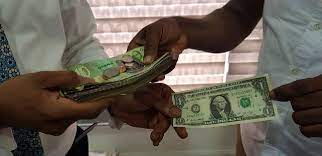
    Also, the Central bank has cautioned the business community and persons pricing goods and services in foreign currencies to desist from such practices or have themselves to blame as it breaches the Foreign Exchange Act, 2006 (Act 723), which prohibits companies and institutions from pricing, advertising, receipting, or making payments in foreign currencies in Ghana.

    The central bank in a statement also said the law prohibits individuals or institutions from engaging in foreign exchange business without a licence issued by the Bank of Ghana.

    “Such violations are punishable on summary conviction by a fine of up to seven hundred (700) penalty units or a term of imprisonment of not more than eighteen months(18) or both,” the Bank of Ghana cautioned.

    The bank also cautioned the public to desist from “black market” transactions.

    The central bank further reiterated in the statement signed by its Secretary, Sandra Thompson, that the only legal tender for transactions in the country is the Ghana Cedi.

    “The Public is hereby notified that the sole legal tender in Ghana is the Ghana Cedi. The Bank of Ghana, in collaboration with the National Security and Law Enforcement Agencies, will clamp down on illegal foreign exchange operations. All offenders shall be dealt with in accordance with the law.’

    Below is the currency performance table:

    CURRENCIES WITH “WORST SPOT RETURNS” AT THE END OF QUARTER 1, 2022

    RANKING   CURRENCY YEAR-TO-DATE

    16th  New Sudanese pound   -2.08%

    17th  Ethiopian Birr      -3.89%

    18th  Liberian dollar     -4.94%

    19th  Sierra Leone leone      -5.10%

    20th  Mauritian rupee   -7.05%

    21st  Zambian kwacha -8.02%

    22nd Egypt pound       -14.27%

    23rd  Ghana cedi -18.21%

    CURRENCIES WITH “BEST SPOT RETURNS” AT THE END OF QUARTER 1, 2022

    RANKING   CURRENCY YEAR-TO-DATE

    1st    Angolan kwanza  24.2%

    2nd   South African rand       9.38%

     3rd   Guinean franc     4.40%

    4th    Botswana pula      2.59%     

    5th    Nigerian naira     1.74%

    6th    Kenya shilling      1.59%

    7th    Rwanda franc     0.66%

    8th Mozambique new metica l0.19%

  • E-Levy implementation: Telcos doubt meeting deadline to reconfigure their system before May

    E-Levy implementation: Telcos doubt meeting deadline to reconfigure their system before May

    Adnan Adams Mohammed

    Telecommunication operators in the country are in doubt over meeting the deadline to configure their systems to allow the smooth implementation of the Electronic Transactions Levy (E-Levy).

    The controversial E-Levy passed by parliament and assented into law by President, Nana Akufo Addo, late last month, is scheduled to take effect next month, May 2022. So the telecomm companies have within a period of one month to reconfigure their system to support the deduction of the tax on the transfers of funds in between mobile money wallets.  

    Although the telcos have assured to do their best to ensure the required systems are put in place to collect the E-levy, they say, the right infrastructure must be put in place, and tested to ensure that they are fit for purpose before going live.

    “I can’t say whether one month will be enough time for all of those systems [necessary] because if there are major variations that have been made, we’ll need to see whether all the things we were looking at, at the beginning could be done within months”, the Chief Executive of the Chamber of Telecommunications, Ing. Dr. Kenneth Ashigbey, said in an interview.

    “From our side, we will do whatever is possible. This is about money, and we don’t want a system where there will be a backlash on it. We need to make sure that we can do the integration with the GRA’s systems and do the user acceptance test and validation to make sure everything is well before we go live. We also know that Parliament has passed the law, and we need to work at that, but those considerations of the practicality of all of that have to be done.”

    After President Akufo-Addo assented into the E-levy bill last week, the various stakeholders are under pressure to put in place all the necessary infrastructure to ensure full implementation of the law.

    Dr. Ashigbey in an earlier interview said the full details of the bill are yet to be presented to the Chamber for studies, and it will only be after that, that they will decide and make public how they will implement the tax.

    “It was only preparatory engagements that were being done and not as if anybody is implementing anything. What Parliament passed is what becomes law. In terms of the engagements we had with GRA, that was the spirit of the fact that the Bill was before Parliament. Since we had those initial conversations, there hasn’t been any implementation.”

    “I have not seen the bill that has been passed, so we have not seen the date in there, so it will depend on what the GRA directs for our members to follow and configure their systems. So, there is still a lot to be done, and we are still waiting”, he said.

  • Inflation returns to target band in March 2023

    Inflation returns to target band in March 2023

    By Elorm Desewu

    Inflation is likely to return to the target band of 8+/-2 percent in March 2023, according to the Bank of Ghana, (BoG). The risks in the outlook for inflation are on the upside and include petroleum price adjustments and transportation costs, and exchange rate depreciation.

    The Bank of Ghana’s latest forecast still depicts an elevated inflation profile in the near term, with inflation falling within the medium-term target band within a year.

    Notwithstanding the sustained growth momentum, rising food prices, upward adjustments in petroleum prices and its effect on transport fares, and exchange rate depreciation pass-through have pushed up inflation to 15.7 percent at the end of February 2022, 5.7 percentage points outside the medium-term target band. Food inflation jumped sharply from 12.8 percent in December 2021 to 17.4 percent in February 2022, while non-food inflation jumped from 12.5 percent to 14.5 percent over the same period.

    According to the BoG, the combination of tighter global financing conditions, sharp pressures on the exchange rate, and elevated inflation pose some policy challenges. Headline inflation has risen sharply to 15.7 percent in February 2022, and both headline and core inflation are significantly above the upper limit of medium-term target band. The uncertainty surrounding price developments and its impact on economic activity is weighing down business and consumer confidence.

    Also, underlying inflationary pressures have increased, signalling broad-based price pressures. The Bank’s core inflation measure defined to exclude energy and utility prices, increased from 11.8 percent in December 2021 to 13.6 percent in January 2022 and further up to 15.4 percent in February 2022. Similarly, weighted inflation expectations comprising consumers, businesses, and financial sector, also picked up significantly over the period.

    Fiscal policy implementation has come under strain, reflecting embedded rigidities in the fiscal framework which requires extensive structural reforms to free fiscal space to restore both fiscal and debt sustainability. Revenue performance has been slow to align with projections, while expenditure remains rigid downwards despite the strong efforts to cut expenditure by 20 percent as announced by the Government.

  • Ghana’s bonds rally as investors react positively to passage of E-Levy

    Ghana’s bonds rally as investors react positively to passage of E-Levy

    Government’s tight fiscal measures targeted at closing the budget-deficit to 7.4% of Gross Domestic Product (GDP) by the end of 2022 is fuelling the longest bond rally in two months.

    According to Bloomberg, the yield on the country’s $1 billion bond maturing in 2026 declined for the sixth consecutive day, as President Nana Akufo-Addo reiterated government’s commitment to get the economy back on track.

    Previously, investors were concerned about the credibility of the country meeting its fiscal targets. They therefore demanded more interest for the nation’s dollar bonds, as a result of the country’s rising debt.

    However, the austerity measures announced by the Finance Minister, Ken Ofori-Atta, coupled with the Electronic Transaction Levy (E-Levy) have reassured investors that the government is bent on reviving the fiscal economy.

    Investors believe the recent bond rally may reflect some of the measures the government has recently put in place.

    In actual fact, Ghana’s dollar bonds sold-off from 85-90 cents on the dollar to around 60 cents.

    Kevin Daly, an investment director at Aberdeen Standard said, “the recent Ghana bond rally may reflect some of the measures the government put in place recently but Ghana risk premiums are also benefiting from the broader risk rally on the back of better headlines on the Russia-Ukraine conflict”.

    The E-Levy is projected to boost revenue to about 15.4% of GDP by the end of 2022, from a forecast of about 13% last year.

    Importantly, the reduction in the yield of the country’s international bonds is a good omen for the Ghanaian economy.

    The foreign exchange market is also expected to benefit immensely, as investors will hold firmly onto their investments.

    This will help reduce the pressure on the cedi as its rate of depreciation continues to slow.