Category: Profile

  • GRA Gets New Acting Commissioner for Domestic Tax Revenue Division

    GRA Gets New Acting Commissioner for Domestic Tax Revenue Division

    President John Dramani Mahama has appointed Dr. Martin Kolbil Yamborigya as the Acting Commissioner of the Domestic Tax Revenue Division (DTRD) of the Ghana Revenue Authority (GRA), effective Monday, 17th November 2025.

    Dr. Yamborigya takes over from Mr. Edward Apenteng Gyambrah, who has retired from the position.


    With over two decades of experience in Ghana’s Revenue Administration, Dr. Yamborigya is a well-respected Tax5 Administrator and Public Finance Expert. He has held several senior management positions within the GRA, including Audit Team Leader, Head of Audit, and Assistant Commissioner.


    Dr. Yamborigya’s appointment is expected to boost tax compliance, drive domestic revenue mobilization, and enhance collaboration with stakeholders.

    The GRA management and staff have congratulated him on his new role and wished him success in his tenure.


    The new Acting Commissioner is expected to leverage digital solutions and stakeholder engagement to drive Ghana’s revenue mobilization efforts forward.

  • ADB Promotes Joseph Abakah Major Market Account Executive Role

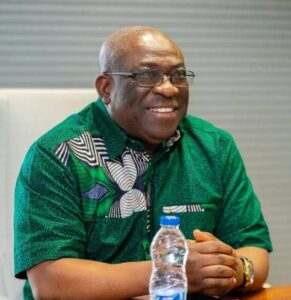
    Joseph Mensah Abakah, Head of Operations MSMEs and Retail Banking Central Zone


    By Adnan Adams Mohammed


    Agricultural Development Bank (ADB) has promoted Joseph Mensah Abakah the position of Major Market Account Executive for the Central Zone. In this new role, will oversee retail banking activities in the region, in addition to his existing responsibilities in MSMEs banking.


    Abakah Mensah’s promotion is a testament to his dedication and expertise in the banking industry. With a background in business accounting and human resources management, he has demonstrated a commitment to supporting micro, small, and medium-sized enterprises (MSMEs) during his tenure at ADB.


    Prior to joining ADB, Abakah Mensah worked as a professional teacher and later served as the Municipal Director for the Awutu Senya East Municipal Assembly under the Youth Employment Agency. He holds a Post-Diploma (Bachelor’s Degree) in Psychological Foundation of Education from the University of Cape Coast and currently pursuing MA in HRM at University of Cape Coast


    Abakah Mensah’s career trajectory is an inspiring example of how education and determination can lead to success.


    In his new role, Abakah Mensah is expected to leverage his skills and experience to drive growth in the Central Zone, supporting both MSMEs and retail banking activities.

  • President Mahama Pays Tribute to Nana Konadu, Pioneer of Women’s Empowerment in Ghana

    President Mahama Pays Tribute to Nana Konadu, Pioneer of Women’s Empowerment in Ghana

    President John Dramani Mahama has expressed deep sorrow over the passing of Ghana’s former First Lady, Nana Konadu Agyeman-Rawlings, describing her as a towering figure in the nation’s political and social history.


    On Thursday, October 23, 2025, the President received a delegation comprising her children and other family members, who officially informed him of her passing.


    Speaking later at the swearing-in ceremony of 37 new High Court judges at the Jubilee House in Accra, President Mahama called for a moment of silence in her memory.


    “May the Almighty God grant her peaceful rest in His bosom. Amen,” he said.


    Nana Konadu Agyeman-Rawlings, aged 76, passed away at the Ridge Hospital in Accra. She was widely recognised for her lifelong dedication to women’s empowerment, gender equality, and national development.


    Born on November 17, 1948, in Cape Coast, she attended Ghana International School and Achimota School, where she met her future husband, the late President Jerry John Rawlings. She later studied Art and Textiles at the University of Science and Technology (now KNUST) and obtained a diploma in Interior Design from the London College of Arts.


    Throughout her life, Nana Konadu pursued further studies in Personnel Management, Development Studies, and completed fellowships in Philanthropy and Nonprofit Leadership in the United States.


    She served as First Lady during two important eras in Ghana’s history first in 1979 under the Armed Forces Revolutionary Council (AFRC) and later from 1981 to 2001 under the Provisional National Defence Council (PNDC) and the Fourth Republic.


    In 1982, Nana Konadu founded the 31st December Women’s Movement, which became one of Ghana’s most influential women’s organisations. The movement empowered over two million women through programmes in education, entrepreneurship, family planning, and leadership development.


    Her advocacy for gender equality and social justice was instrumental in several major national reforms. She played a key role in Ghana’s ratification of the United Nations Convention on the Rights of the Child in 1991 and championed the Intestate Succession Law, which secured inheritance rights for widows and reformed discriminatory customary practices.


    In 2016, Nana Konadu made history as the first woman to contest the presidency of Ghana, running on the ticket of the National Democratic Party (NDP), which she founded after parting ways with the National Democratic Congress (NDC).


    Her enduring legacy lies in the generations of Ghanaian women she inspired to take up leadership roles and participate in governance a movement that significantly enhanced women’s representation in politics and public life across the country.

  • Farmers Group Condemn False Allegations Against NPA CEO …Disown “Pseudo Farmer”  

    Lawyer Edudzi Tamakloe, NPA CEO, and Ibn Lukman Yameen, Executive Farmer Group CEO.


    The Farmer Cooperative Group of Ghana has strongly disassociated itself from a social media user known as “Farmer Wadwen” following what it describes as false and malicious allegations made against the Chief Executive Officer of the National Petroleum Authority (NPA), Mr. Edudzi K. Tamakloe.


    The individual, identified as Raymond Asare Addo, alleged in a Facebook post that the NPA CEO was employing his “girlfriends” at the Authority. The post, which quickly attracted public attention, read: “Your girlfriends you’re employing at NPA make them polling agents next time.”


    In response, Mr. Tamakloe issued a statement on his verified Facebook page firmly denying the claims and expressing disappointment in the actions of the individual. The CEO explained that he had never had any prior interaction with the man except for a message he received from him earlier that morning.


    “The occupational hazards associated with the work we do are grave and dangerous,” Mr. Tamakloe wrote. “My attention was drawn to these and many lies spewed out by Raymond Asare Addo, known by the pseudo account name ‘Farmer Wadwen’ on Facebook. I have never interacted with the said person. The only time he reached out to me is this morning. His reason for the lies against me is that he lost his job in 2024 and therefore is in need of a job.”


    Mr. Tamakloe went on to describe the behavior as an act of treachery and urged Ghanaians to be cautious of individuals who resort to lies and defamation for personal gain.


    “If you are in need of a job, you just decide to peddle falsehoods about me? The level of treachery is beyond my grasp,” he said. “May the good Lord protect us from seen and unseen threats. I pray he gets the job.”


    Following the CEO’s post, farmer groups across the country released a joint statement condemning the false accusations and reaffirming their support for Mr. Tamakloe. “We stand firmly behind Lawyer Edudzi K. Tamakloe,” the statement said. “The individual in question does not speak for farmers in Ghana. He is a pseudo farmer and an ingrate who acted on his own. We completely distance ourselves from his baseless allegations.” Speaking on behalf of the national farmer cooperative group, Farmer Yameen, the CEO of The Executive Farmer, also vehemently condemned the actions of the individual, describing them as disgraceful and a betrayal of the values of genuine farmers.


    “We, the real farmers, know and appreciate what Lawyer Edudzi K. Tamakloe has done quietly for many people,” Farmer Yameen said. “We urge him to remain unfazed and to continue his good work for the benefit of the nation.”


    The Farmer Cooperative Group praised the NPA CEO for his humility, fairness, and integrity in leadership, adding that the false allegations have only served to highlight his long record of service and compassion.


    “This unfortunate episode has become a springboard for your good works and silent service to be recognized,” the statement added. “Many of us continue to draw inspiration from your leadership and generosity.” Mr. Tamakloe’s calm and dignified handling of the matter has since earned him widespread commendation from the public, with many describing him as a model of integrity and restraint in public service.

  • Economic gains impressive, but borrowing costs remain a concern  – Kyei-Mensah-Bonsu

    Economic gains impressive, but borrowing costs remain a concern – Kyei-Mensah-Bonsu

    Former Majority Leader Osei Kyei-Mensah-Bonsu has commended the government for the recent improvement in Ghana’s macroeconomic indicators, describing the strengthening of the Cedi against major currencies and the drop in inflation to 9.4% as a “stupendous achievement.”

    Speaking on Channel One TV’s The Point of View with Bernard Avle on Monday, October 6, 2025, Mr. Kyei-Mensah-Bonsu highlighted the significance of the economic gains but stressed that more work remains to ensure the benefits reach ordinary Ghanaians.

    “What should concern us now is the cost of borrowing because it is not reflecting in that. Is there anything wrong? Because necessarily it should translate into that. If the interest rate is still hanging up there it means some of the fundamentals are not talking to each other and we need to interrogate each other,” he said.

    The former lawmaker also credited part of the current economic stability to the international reserves left by the previous administration, noting that over US$9 billion in reserves helped buoy the country’s financial position.

    While he praised the government for steering the economy in a positive direction, Mr. Kyei-Mensah-Bonsu emphasised the need for continued vigilance and effective coordination between monetary and fiscal policies to sustain the gains.

    The Bank of Ghana’s latest Monetary Policy Report indicates a decline in average lending rates, which have eased from 26.6% to 24.2%.

    Yields on money market instruments are also showing a downward trend. For example, the 91-day Treasury bill rate fell from 13.4% at the end of July 2025 to 10.3% in August.

  • NPA CEO outlines bold strategic vision to drive regulatory efficiency and national energy transformation


    The Chief Executive Officer(CEO) of the National Petroleum Authority (NPA), Mr. Godwin Kudzo Tamakloe, has unveiled an ambitious and transformative vision to enhance regulatory efficiency and position Ghana’s petroleum downstream industry as a model of sustainability, innovation, and inclusiveness across Africa.


    Speaking at the unveiling of the NPA’s new strategic direction, Mr. Tamakloe emphasised that the Authority’s future hinges on eight interconnected themes designed to strengthen infrastructure, empower local participation, and ensure environmental responsibility in the petroleum sector.


    01:Efficient Infrastructure and Operational Standards

    Mr. Tamakloe underscored the need for a modernised regulatory infrastructure that guarantees product quality, safety, and service reliability.


    He noted that the NPA would implement cutting-edge operational standards to streamline licensing, compliance, and monitoring processes.


    02: Green Transition and Industry Sustainability

    In line with global energy trends, the NPA is committing to a green transition that reduces emissions and promotes cleaner fuels.


    “The NPA will champion policies that balance energy access with environmental protection,” Mr. Tamakloe affirmed, emphasising Ghana’s role in Africa’s climate-resilient growth agenda.


    03: Enhanced Ghanaian Content and Ghanaian Participation

    To ensure that Ghanaians play a leading role in the petroleum value chain, the Authority will intensify efforts to increase local ownership, capacity building, and enterprise development.


    “Ghanaian hands must shape Ghana’s energy destiny,” he stressed.


    04: Strengthened Technological Resources

    The CEO announced plans to digitise key NPA operations, deploy advanced monitoring technologies, and leverage data analytics for real-time decision-making.


    This digital transformation, he said, will enhance transparency and regulatory precision.


    05: Empowered and Inclusive Human Resource

    Recognising that people are the backbone of institutional success, the NPA will invest in continuous professional development, inclusion, and gender equity.


    “An empowered workforce drives an empowered nation,” Mr. Tameklo remarked.


    06: Legislative Enhancement

    The NPA will collaborate with Parliament and relevant stakeholders to update existing petroleum legislation, ensuring that it reflects evolving industry realities and strengthens regulatory oversight.


    07: Enhanced Regulatory Image and Reputation

    Mr. Tameklo highlighted the importance of restoring and protecting the NPA’s image as a transparent, fair, and responsive regulator. “Public trust is our license to operate,” he stated.


    08: Financial Sustainability

    Finally, the Authority will implement prudent financial management systems to ensure that the NPA remains self-sustaining while delivering efficient services and supporting national development.


    Mr. Tameklo concluded by reaffirming his commitment to transparency, innovation, and national development.


    “The NPA is entering a new era—one defined by efficiency, sustainability, and Ghanaian leadership in energy regulation,” he declared. “We are building not just an institution, but a legacy of integrity and excellence.


  • The Accra Reset: anchored on sovereignty, workability, and shared value attracts global endorsements


    President John Mahama speaking at the launch of Accra Reset


    By Adnan Adams Mohammed


    Accra Reset, a bold framework aimed at re-engineering global development institutions, financing, and partnerships as the Sustainable Development Goals (SDGs) era nears its close, launched.


    During a side-event at 80th Session of the United Nations General Assembly (UNGA) in New York,co-convened by President John Dramani Mahama and former Nigerian President Olusegun Obasanjo, set the Accra Reset in motion.


    The event was heavily graced and witnessed by other heads of state, multilateral leaders, and private sector partners.


    President Mahama, the African Union Champion for African Financial Institutions, in his opening remarks called the attention of global intelligence leaders to the reality that the current global development architecture is “fraying.” Citing that, COVID-19 wiped out two decades of progress in less than two years, extreme climate shocks have left nearly 735 million people at risk of hunger, and many developing nations now spend more on servicing debt than on health and education. With fewer than half of the 169 SDG targets on track, he stressed that “development-as-usual must end.”

    “The world is only five years from 2030,” Mahama said. “The question is not simply what new targets should replace the SDGs, but how we design institutions and financing systems that actually work. ‘Workability’ is the name of the game now—innovative financing instruments, new business models, and smarter coalitions that multiply resources rather than ration them.”


    The Accra Reset is anchored on sovereignty, workability, and shared value.


    Health will serve as the entry point and proof of concept, shifting from aid dependency to health sovereignty, and building on commitments made at the Africa Health Sovereignty Summit in Accra in August 2025.


    A Club of Accra coalition is expected to initiate pilot financing innovations and “geostrategic dealrooms” for investments in health, climate resilience, food security, and job creation.


    The launch also unveiled the Global Presidential Council, a coalition of Heads of State and Government from Africa, Asia, Latin America, and beyond, tasked with providing political leadership and accountability. In parallel, a Global College of Advisors, comprising leading experts in health, finance, innovation, and business, will be established to design and oversee pilots and financing mechanisms.


    The event drew strong endorsements from political and institutional leaders:

    Olusegun Obasanjo, Co-Patron of AfroChampions, urged solidarity “fit for the new era” and a decisive shift away from aid dependency.


    Gordon Brown described the Reset as “a plan for the future” and endorsed the vision for building health sovereignty.


    President William Ruto (in remarks read on his behalf) emphasized financing national ambitions and holding the Global Presidential Council accountable for universal health coverage.


    Prime Minister Mia Mottley pledged alignment on skills and industrial policy to make pharmaceutical manufacturing viable.


    Aigboje Aig-Imoukhuede, Chairman of Access Bank, committed significant private sector leadership and financing.


    Dr Tedros Adhanom Ghebreyesus (WHO) and Dr Ngozi Okonjo-Iweala (WTO) expressed institutional support for “rewiring” global norms.


    Concluding the launch, President Mahama recalled the Monterrey Consensus of 2001, which paved the way for GAVI and the Global Fund, noting that the world now requires “a new vision of multilateralism—one that moves from wish lists to engines of sustainable value creation.”


  • Akuapem Rural Bank disburses almost half of credit to women …ADB MD commends the financial inclusion drive 

    Dr Ato Sarpong, ADB MD


    The Managing Director of the Agricultural Development Bank (ADB) PLC, Mr. Edward Ato Sarpong, has commended Akuapem Rural Bank PLC for its strong focus on empowering women through credit financing.

    This, he described as a key driver of financial inclusion and sustainable banking.

    In 2024 alone, the Rural Bank advanced GH¢60.33 million, representing 49.93 percent of total loan disbursements, to 5,267 women. This marked a 23 percent increase over the previous year, with an impressively low non-performing loan ratio of 0.13 percent. While speaking as the Guest of Honour at the Bank’s 43rd Annual General Meeting (AGM), Mr. Sarpong praised the institution’s Credit with Education (CwE) programme, which has consistently directed about 50 percent of annual loan disbursements to women.

    “This achievement is not only commendable but also aligns with the Sustainable Development Goal of poverty alleviation, given its direct impact on households and communities”, he mentioned.

    Mr. Sarpong encouraged the Bank to deepen its investment in the CwE programme while also strengthening risk management systems and incorporating technology to expand outreach and enhance financial inclusion.

    He further applauded the overall performance of the Rural Bank, attributing it to strong governance, quality leadership, and the support of shareholders. “The quality of your Board is evident in the results achieved, and I urge shareholders to continue backing them to ensure further growth,” he noted.

    The bank’s post-tax profit increased by 186% from GHS1.35million in 2023 to GHS3.85million in 2024 and total assets growing from GHS156million in 2023 to GHS208million in 2024.

    The Board Chairman of the bank, Dr. Ernest Obuobisa-Darko noted deposit growth of 30.77% (from 137.1million in 2023 to 179.3million in 2024), loan growth of 29.01% and investment growth of 33.15% which all contributed immensely to the overall growth in profitability and assets.

    He expressed gratitude to Management and staff for their hard work in achieving growth in all of its key financial indicators in 2024.

    The 43rd AGM brought together shareholders, board members, management, and invited guests.


  • ADB posts GH₵35m net profit in 2024

    The Agriculture Development Bank (ADB) has declared a remarkable financial turnaround, bouncing back from a significant loss in 2023, to profit in 2024.


    At its Annual General Meeting (AGM) in Accra on September 24, 2025 the bank announced a net profit of GH₵35.06 million in 2024, reversing its GH₵828.8 million loss recorded the previous year.


    Board Chairman, Kenneth Kwamena Thompson, attributed the recovery to solid financial performance and strategic growth initiatives. He highlighted improvements in the bank’s capital adequacy ratio, though he admitted it still falls below regulatory requirements.


    “Key challenges persist in areas of loan book contraction and high non-performing loans, which continue to constrain credit growth and profitability potential,” Mr. Thompson told shareholders.


    The bank reported that its non-performing loans (NPL) ratio worsened, rising from 70.25% in 2023 to 75.26% in 2024. This, Mr. Thompson noted, underscores the difficulties in loan recovery and asset quality, which continue to weigh on profitability and capital.


    Despite these hurdles, ADB’s balance sheet showed strong growth. The bank’s total assets surged by 57%, from GH₵9.31 billion in 2023 to GH₵14.60 billion in 2024. Customer confidence was also reflected in deposit growth, with deposits increasing by 41%, from GH₵8.55 billion to GH₵12.05 billion.


    “On the deposit side, customer deposits also grew strongly highlighting improved customer confidence and stronger mobilization efforts,” Mr. Thompson assured.


    Looking ahead, ADB says it is committed to building a resilient, future-ready institution, with focus on innovation, digital transformation, and customer-centric solutions to sustain profitability and growth.


  • Mahama’s UN address gets a standing ovation  …goes blunt with Western powers on Gaza charade 


    By Adnan Adams Mohammed


    Characterised as one of the bravest speeches at the ongoing 80th United Nations General Assembly in New York, President John Dramani Mahama called the blunt of the reluctance of the global powers (Western powers) for the failure to end the Palestinians suffering.


    The speech, which earned global applauds made a strong call for an end to what he described as ‘crime’ against Palestinians in Gaza, urging world leaders not to shy away from naming the atrocities for what they are.


    “For nearly two years, and for the fear of reprisal, we here in this General Assembly have been playing hide-and-seek with language to find the right words to help us avoid or excuse what we all know is taking place there.


    “But here’s the thing, it doesn’t matter what you call it: if it looks like a duck, swims like a duck, and quacks like a duck, well then… It must be a duck. The crimes in Gaza must stop,” he declared.


    The Ghanaian leader said the suffering of Palestinians could no longer be ignored, stressing that “hundreds of thousands of innocent people” were enduring “collective punishment and forced starvation for no reason other than the fact that they are Palestinian.”


    Reaffirming Ghana’s recognition of Palestine since 1988, President Mahama reiterated his support for a two-state solution, rejecting claims that it would amount to rewarding Hamas.


    Instead, he argued, it offered the best chance of delivering justice and relief to civilians caught in the conflict.


    Mahama also condemned the recent decision to deny visas to Palestinian President Mahmoud Abbas and his delegation, describing it as a “bad precedent” and a direct threat to the integrity of the UN system.


    While he acknowledged broader global challenges—including rising nationalism, economic instability, and the erosion of multilateralism—President Mahama warned that Gaza remained a moral test for the world’s leaders.