Category: News

  • GDP growth to pick up…records 5.4% in 2021

    GDP growth to pick up…records 5.4% in 2021

    By Elorm Desewu

    Ghana’s Gross Domestic Product, (GDP) growth is expected to strengthen in 2022, before slowing in 2023-24, then pick up again in 2025-26, according to the Economic Intelligence Unit report.

    Investment in new oilfields will be slow, delaying a resurgence of real GDP growth to pre-coronavirus levels, despite efforts by the government to facilitate industrialisation under the Covid-19 Alleviation and Revitalisation of Enterprises Support programme, says EIU. 

    Ghana’s economy grew 5.4 per cent in 2021 compared with 0.5 per cent in 2020, the Ghana Statistical Service said last week.

    Professor Samuel Annim, the Government Statistician, said the quarterly GDP growth rate, including oil and gas, was 7.0 per cent (year-on-year) in the fourth quarter of 2021 compared to 4.3 per cent in the same period of 2020.

    He said the GDP growth rate without oil and gas (Non-Oil GDP) for the fourth quarter of 2021 was 7.6 per cent which compares to the same period in 2020 with a growth rate of 5.7 per cent.

     The GDP estimate (including oil) for 2021 was GH₵175,057.3 million, while the estimate for 2020 was GH₵166,157.2 million, meanwhile GDP estimate (excluding oil) for 2021 was GH₵163,430.4 million.

    The value recorded for 2020 was GH₵152,869.2 million.

    He said the real GDP in volume terms was estimated to have increased by 7.0 per cent in the fourth quarter (October to December) of 2021 compared to the same period in 2020.

    The Government Statistician said when seasonally adjusted, the real GDP increased by 1.8 per cent in the fourth quarter (October to December) of 2021; 0.3 percentage point higher than what was recorded in the third quarter (July to September) of the same year.

    The Information & Communication, Manufacturing, and Crops sub-sectors were the main drivers of GDP growth for the fourth quarter of 2021.

    The fourth quarter of 2021 GDP at current prices was estimated at GH₵ 128,623.4 million with a corresponding value recorded for the same period of 2020 was GH₵ 106,536.2 million.

    On the sectors contributions to GDP, the services sector recorded the highest growth of 50 per cent for the quarter at basic prices followed by Industry and Agriculture, which were 29 percent and 21 per cent respectively.

    Growth momentum is expected to moderate in the first half of 2022 due to the rising input costs triggered by the upward adjustments in petroleum prices. Also, the latest Bank of Ghana surveys results indicated softened consumer and business confidence, which may affect private sector production plans and investments. This notwithstanding, the gradual rebound in private sector credit will continue to drive the growth process in the near term.

  • JM fetes needy and the physically challenged in Zangos

    JM fetes needy and the physically challenged in Zangos

    John Mahama fetes orphans and needy in Zongos

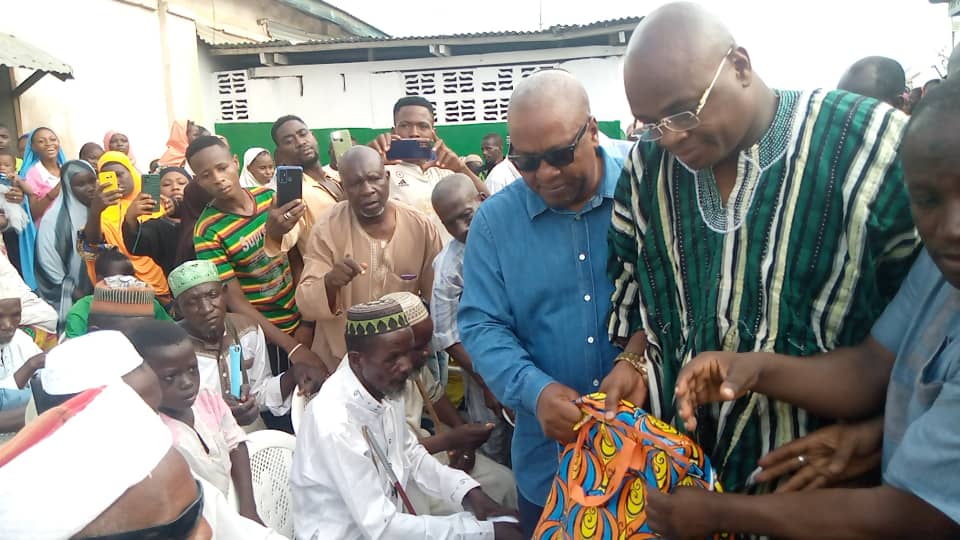
    On Friday, 21st April, 2022, the Ramadan Iftar (breaking of fast) tour of H. E John Dramani Mahama took a little different turn to do community engagement with the aim of putting smiles on the face of the aged and and physically challenged persons within some major Zongo communities in Accra.

    Starting from Mamobi (also known as Alhamdu), the iftar caravan made a whistle stop over at the Ancient Kador Mosque and the Ayawasu East Constituency Office of the NDC, both in Nima, H. E John Dramani Mahama then proceeded to Sabon Zongo in the Ablekuma Central Constituency of the Greater Accra Region where he ended for the day.

    It was all joy when H.E JDM arrived at the fully packed Hamburg Mosque in Mamobi where the Imam (Alhaji Hussein) ask for Allah’s protection and guidance on John Dramani Mahama, in return. The Former President handed over some packages to the Senior Citizens of the Mamobi community gathered at the mosque, prominent among the recipients of the Former President’s package is an NDC stalwart and a long serving party faithful popularly known as Commander.

    At Nima, the Former President, made a brief stop over at the Kardor Mosque and then to the Ayawaso East Constituency Offfice of the NDC where he replicated the same gestures by putting smiles on the faces of the aged and ulama (clerics) with his rich packages to enable them breake the fast.

    The atmosphere was lit when H.E John Dramani Mahama arrived at a suburb of Sabon Zongo, known as Unguwan Makafai (the physically challenged neighborhood). Here, H.E John Dramani Mahama was met with a rousing welcome before his interaction with the Association of Muslim physically challenged persons, where he also replicated his kind gesture and personally handed over packages to the physically challenged persons.

    In a short speach, H.E John Dramani Mahama reiterated that, the harsh economic conditions in the country today has made it neccessary for the haves to support the have nots in other to promote the spirit of unity and National cohesion and assured the teaming crowd of the NDC’s commitment, never to turn their backs on the poor and downtrodden in the society. The former president also reminded the people to remember Ghana in their prayers as we approach the last ten days of the Holy month of Ramadan where muslims expect to encounter the powerful Night of forgiveness and blessings known as lailatu-kadir.

    The leader and chief of the physically challenged persons prayed to Allah to grant the wishes of H.E John Dramani Mahama and thanked him for remembering them in what they termed the most difficult fasting since the 1983 Famine in Ghana.

    Prominent among the former president entourage are Alhaji Muniru Limuna, Alhaji Nasir Shariff (National Executive Committee Member of the NDC) Hon. Yusif Jaja, Hon, Naza Toure and Hon. Dan Lateef.
    Executives of National Zongo Caucus of the NDC like Alhaji Cole Younger (the National Coordinator) Alhaji Yahya Kondow, Alhaji Ashkar, Alhaji Mustapha Ibrahim, Alhaji Mohammed Naziru and the Greater Accra Regional Coordinator of the NDC Zongo Caucus, Ismail Horoya were all present to make the tour a successful one.

  • JM Break Fast ‘Iftar’ With Ahlu Sunna Wal Jamaat Leadership

    JM Break Fast ‘Iftar’ With Ahlu Sunna Wal Jamaat Leadership

    JM break fast with Ahlu Sunna Muslim community

    The Okai Koi Central executives of the NDC and  the National Executives of the  Zango Caucus, among other prominent members of the party including MP’s this evening accompanied the Former President H.E John Dramani Mahama to Pay Courtesy Call and Break Fast ‘Iftar’ with the National Sunna Leader  Sheikh Ummar Ibrahim at his Abeka residence.

    The former President among his key notes used the opportunity to wish the Sunna Leader and Muslims Ramadan Kareem, he also requested for special prayer for our motherland Ghana most especially the current state of our economy which is making life difficult for the ordinary Ghanaian.

    The delegation includes; Alhaji Said Sinari, Alhaji Mohammed Cole Younger, Alhaji Shariff, Alhaji Mustapha Abubakar, Alhaji Naziru, Akhaji Lamuna, Hon William Vinyo, Alhaji Horoya Ali, Hon Yussif Jajah, Hon Naser M Toure, Hon Latif Dan, Hon Rashid Issah, Baba Sadiq Abdullah, Hon Ibrahim Musah etc.

  • JM, NDC Zongo Caucus fraternise with Muslim community with Ramadan iftar

    Credit: Alhaji Naziru Mohammed, National Communication Officer of NDC Zongo Caucus

    In a show of solidarity and commitment to the welfare of the Muslim community in this Holy Month of Ramadan, H.E John Dramani Mahama has embarked on iftar (breaking fast) series to fraternize and and pray with the leadership of the Muslim community in Ghana as the last ten days of Ramadan beckons.

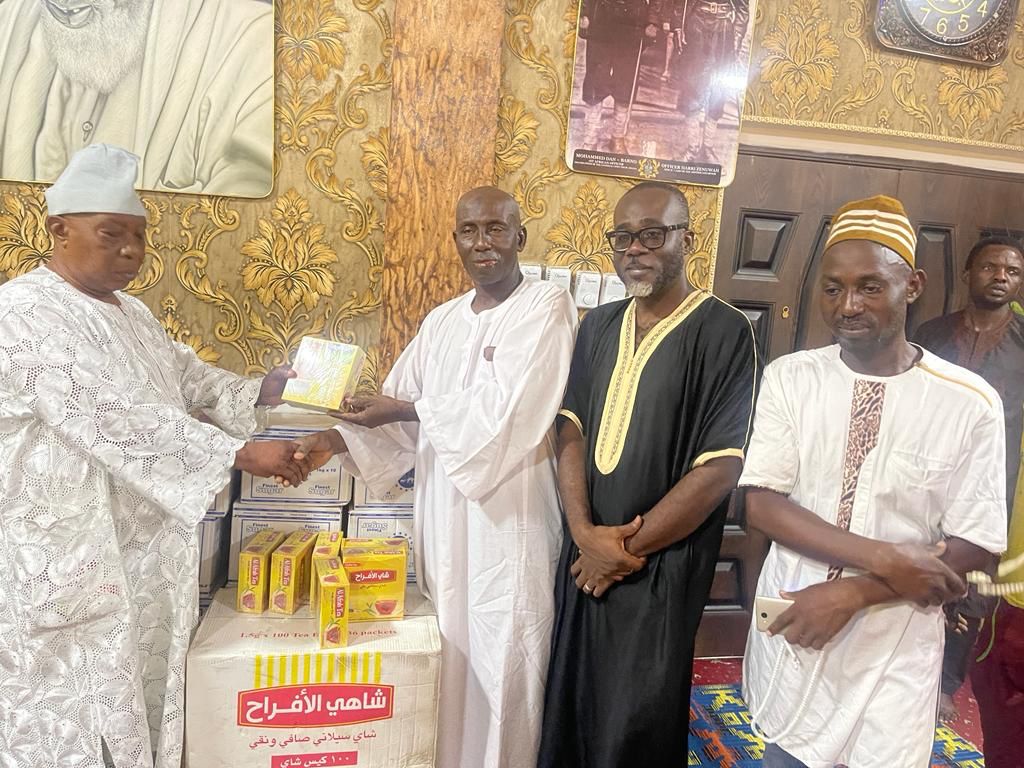
    The first of such series was held on Tuesday, April 19, 2022 at the Residence of the National Chief Imam, Shaikh Dr. Osman Nuhu Sharubutu, New Fadama, Accra.

    Prominent among the delegation of H.E the President are the National Vice Chairman of the NDC and a former Ambassador Alhaji Sinari, Alhaji Muniru Limuna, Imam Omar Sanda, Alhaji Mohammed Mamah Cole Younger (National Zongo Caucus Coordinator of the NDC)

    Others include Alhaji Mustapha Abubakar, Alhaji Yahya Kondow Alhaji Mohammed Naziru, Alhaji Ashkar (all National Executive Members of the NDC Zongo Caucus) Baba Sadiq Abdulai and Alhaji Sumaila Horoya (the Greeter Accra Regional Coordinator of the NDC Zongo Caucus).

    H.E John Mahama used the occasion to ask for special prayers for the country, presented some gift items to the staff of the Chief Imam’s residence and wished the Chief Imam a happy 103 birthday in advance.

  • Debt burden of SOEs…GNPC most indebted

    Debt burden of SOEs…GNPC most indebted

    Adnan Adams Mohammed

    A former Chief Executive Officer of a State Owned Enterprise, Ghana National Petroleum Corporation, has painstakingly shown keen interest in the SIGA 2020 Report focusing on the liabilities of the SOEs. 

    The finance and energy expert, Alex Mould, has, thus, summarised the liabilities of the major SOEs in the country to help in critical scrutiny of the performance of the SOEs. In the summary, it was clear that, most of the SOEs more than doubled their arrears payments or liabilities. 

    The heavily indebted were GNPC, Ghana Cocoa Board (COCOBOD) and Electricity Company of Ghana (ECG). These companies have their liabilities exceeding GHC10.0 billion within a period of four years from 2016 to 2020. Consequently, some critics of the performance of GNPC are surprised why the corporation recorded a net loss of GHC1.6 billion in 2020 after recording a net profit of GHC204 million in 2019. Also, its direct cost, which was GHC2.4 billion in 2019 surged to GHC4.3 billion in 2020, a whopping 78% increase. 

    “GNPC must explain this financial performance at a time when it also spent GH₵200 million on ‘Corporate Social Responsibility’”, Bright Kwashie Dzokoto, a tax expert and a member of Tx Justice Coalition demanded. “This accountability-free regime must end.

    Mr Dzokoto demanded for convincing explanation from GNPC on its performance over the years.

    Below are the highlights of the liabilities as prepared by Mr Mould: 

    1. ECG

    Moved from GHC6.0 billion to GHC15.0 billion in 2016 to 2020. ECG’s liabilities are mainly trade creditors payable to Independent Power Producers (IPPs).

    2.  GACL 

    Moved from GHC740 million to GHC2.0 billion in 2016 to2020. These arrears are mainly to banks. 

    3.  COCOBOD 

    Here, the liabilities which are mainly bank loans, moved from GHC295 million to GHC10 billion within same period (2016-2020).

    4. GRIDCO

    Liabilities mainly owed to VRA/IPPs and PURC, moved from GHC485 million to GHC1.33 billion.

    5. Ghana Gas

    These liabilities mainly trade payables owed to GNPC, moved from GHC4.8 billion to GHC9.7 billion in 2016 to 2020.

    6.  GNPC

    Their liabilities were mainly in three folds; moved from GHC3.5 billion to GHC11.4 billion. The folds were: mainly trade creditors which moved from GHC237 million to GHC5.5 billion; loans of  GHC1.3 billion to GHC3.0 billion; and advance payment by GoG to Eni for unpaid gas amounting to GHC2.3 billion.

    7. Ghana Water 

    The liabilities mainly made up of trade creditors and loans of GHC4.2 billion; jumped from GHC745 million to GHC6.2 billion.

    8.  TOR

    The arrears of TOR increased from GHC3.7 billion to GHC4.6 billion. These was made of mainly Trade Creditors of GHC3.0 billion and loans plus ESLA amounted to GHC1.6 billion.

    9. VRA

    The total liabilities moved from GHC7.5 billion to GHC9.7 billion. These were mainly trade payables which grew from GHC4.2 billion to GHC6.8 billion while its borrowings dropped from GHC3.1 billion to GHC1.0 billion.

  • Standard Bank predicts economic growth of 6.2% in 2022 amidst low Eurobond market access

    Standard Bank predicts economic growth of 6.2% in 2022 amidst low Eurobond market access

    Adnan Adams Mohammed

    The parent company of Stanbic Bank, Standard Bank, has predicted an economic growth of about  6.2% in 2022 and subsequently grow by 6.8% in 2023 amidst tough times for the Ghanaian economy.

    The prediction, in the latest report of the Bank, is in line with the forecast by International Monetary Fund which also pegs the growth rate of the country at 6.2% in 2022. It said the government has made significant progress in vaccinations and the further easing of COVID-19 restrictions will stimulate demand and supply within the economy.

    But, it pointed out that the country’s ability to tap the Eurobond market may further diminish, whilst the foreign exchange reserves could remain under pressure unless the government acquires alternative sources of external financing. 

    “As global risk may worsen further in the first-half of 2022, and Ghana’s ability to tap the Eurobond market may further wane. Foreign exchange reserves could remain under pressure in 2022 — unless the government acquires alternative sources of external bilateral and multilateral funding.”

    Reporting on the performance of past year’s performance, the Bank estimated that, on a quarter-on-quarter basis, the mining and quarrying sub-sector grew by 16.9% in 2021, from an average contraction of 10.7% in the 6 months to June 2021, implying that growth momentum may be recovering.

    “On a quarter-on-quarter basis, the mining and quarrying sub-sector grew by 16.9%, from an average contraction of 10.7% in the 6-m to Jun 21, implying that growth momentum may be recovering. Gold production from underground ore sources should commence from January 22, 2022 at the Obuasi mine. New contracts to conduct mining activities at the Bibiani mine have already been awarded, which should boost investment in the sector over the next few years.”

    “However, ongoing global supply chain challenges could restrain growth in the cocoa and industrial sub-sectors in 2022″, it added.

     Balance of payments – imports likely to be higher

    The report said the Current Account deficit is likely to widen to 5.0% of Gross Domestic Product (GDP) in 2022, from an expected 3.9% for 2021.

    “Whereas we expect a recovery in gold production and exports over the coming year, we simultaneously also see a notable rise in the imports of goods. As the economy continues to recover from the pandemic, non-oil imports may increase further. Also, given the government’s expansionary fiscal policy stance, capital goods imports will likely remain elevated over the next two year. Higher international oil prices too could continue to widen the trade balance.”

    Furthermore, “cocoa production and exports could still be dragged lower due to fertiliser shortages. As of Q2:21, cocoa and gold exports combined accounted for around 55.3% of total merchandise exports.”

  • Govt to borrow GHC24.6b for 2nd quarter

    Govt to borrow GHC24.6b for 2nd quarter

    By Elorm Desewu

    The government plans to borrow a gross amount of GH¢24.696 billion for the second quarter of 2022, through the issuance of Treasury Bills, Notes and Bonds from the domestic money market.

    Of the GH¢24.696 billion, GHȼ20.102 billion would be used to rollover maturities, while the remaining GH¢4.593 billion which is fresh issuance, would be used to meet Government’s financing requirements.

    According to the Bank of Ghana, the debt calendar also takes into consideration the government’s liability management programme, market developments both domestic and international and the Treasury & Debt Management objective of lengthening the maturity profile of the public debt. 

    Per the calendar, Government aims to build benchmark bonds through the issuance of instruments as follows: the 91-day and 182-day will be issued weekly; the 364-day bill will be issued bi-weekly also through the primary auction with settlement being the transaction date plus one working day; securities of 2-year up to 6-year will be issued through the book-building method by the Bond Market Specialists (BMS); and consistent with the MTDS, Government may announce tap-ins/reopening of other existing instruments depending on market conditions.

    Ghana’s total public debt has continued to climb up, recording GHC351.8 billion or US$58.6 billion representing 80.1 percent of Gross Domestic Product, (GDP), at the end of December 2021 compare with GHC341.8 billion recorded at the end of September, 2021.

    The external component of the debt portfolio was US$28.3 billion or GHC170 billion representing 38.7 percent of GDP.

    Of the total debt stock, the domestic debt was GHC181.8billion representing 41.4 percent of GDP.

    The government’s Medium-Term Debt Management Strategy proposes appropriate financing for the period 2022 – 2025 which sets out to achieve the following objectives:  meet Government’s funding needs on a timely basis and at a relatively lower cost subject to prudent levels of risk;  promote the development of efficient primary and secondary markets; and  pursue any other action considered to impact positively on the public debt stock. 

    The financing for 2022 seeks to further develop the domestic market by proposing new instruments to diversify the debt portfolio and increase the debt financing capacity of the domestic market. 

  • NDC Supports Muslim Communities With Items During Ramadan

    NDC Supports Muslim Communities With Items During Ramadan

    The Okaikoi Central Constituency Executive Committee today joined the National Zango Caucus Team under the leadership of the Coordinator Alhaji Mohammed Cole Younger, on behalf of H.E. John Dramani Mahama to present provisions in support of Muslim Communities during this Holy Month of RAMADAN.

    The donation was presented through the National Chief Imam, Sheikh Osmanu Nuhu Sharubutu and the National Ahlu Sunna Leader, Sheikh Ummar Ibrahim.

    The presentation was done separately to the sheikh’s at their residence (New Fadama & Abeka) respectively.

    The delegation includes; Alhaji Yahya Kundow, Alhaji Naziru Mohammed, Alhaji Mohammed Ashka, Chairman Ibrahim Musah etc.

    Credit: Ibrahim Osumanu Samandulgu, OKAIKOI CENTRAL COMMUNICATION OFFICER

  • Energy Transition: NRGI Regional Manager Writes on How Ghana Can Map Its Journey

    Energy Transition: NRGI Regional Manager Writes on How Ghana Can Map Its Journey

    Author: Nafi Chinery

    All countries have a vital role and interest in avoiding catastrophic climate impacts and safeguarding a livable planet. Like the citizens of most developing countries, Ghanaians are increasingly affected by climate change, despite bearing little responsibility for the emissions that have caused it.

    At the COP26 climate conference last year, governments reaffirmed their commitment to the goal of limiting global warming to 1.5°C. Achieving this will require a colossal and unprecedented shift away from fossil fuels to renewable energy sources like wind and solar—as well as provision of clean, affordable and reliable energy for the nearly one billion people currently living without it.

    The wealthiest countries that have polluted the most should hold the primary responsibility for tackling climate change, both in cutting their emissions first and fastest, and in providing climate finance and support to countries like Ghana. Ghana’s President Nana Akufo-Addo emphasized this responsibility during COP26 when he called for a fair and equitable solution that “recognizes the historical imbalances between the high emitters and low emitters.”

    To date, however, wealthy countries have under-promised and underdelivered. They have yet to reduce emissions to the extent necessary to avoid warming beyond 2°C, let alone 1.5°C. And, as President Akufo-Addo also mentioned, they have failed to honor their 2010 promise of USD100 billion per year to support developing countries’ responses to climate change. Tragically, the consequences will be felt by all for decades to come.

    Ghana’s agency in the energy transition

    Despite this compound injustice and these broken promises, Ghana’s future ultimately depends on its own leadership and effective planning. Ghana is still a resource-dependent country, with more than a quarter of its export earnings coming from oil and gas alone. Over the past decade, the oil sector has contributed around $6.5 billion of direct revenue to Ghana’s budget. Without a plan to respond to the global energy transition, a significant decline in oil revenues could plunge Ghana into a deep crisis.

    At a minimum, the government should avoid making bad decisions—those that threaten the country’s economic and fiscal outlook. But Ghana’s record does not inspire confidence. In the last decade, the government has allocated $2 billion to the Ghana National Petroleum Corporation (GNPC). These investments have financed equity stakes in exploration, development and general operations in oil-producing fields. NRGI’s Risky Bet report shows that, globally, oil and gas projects currently in the pipeline worth an estimated $400 billion run the risk of not breaking even. Against the backdrop of the global energy transition, GNPC’s ambitions of becoming an operator are risky.

    In July 2021, Ghana’s Ministry of Energy and GNPC declared their intention to sink an additional $1.65 billion of public money into shares of Aker Energy’s oil project—yet another “risky bet” given the increasing pace of the global energy transition, which would result in poor returns on such a large-scale investment. Furthermore, such a decision would divert precious capital that the government could invest in more socially beneficial programs such as education or cheaper and more diverse energy sources that could power development in Ghana. Thankfully, after severe criticism from civil society organizations, the public and industry oversight bodies in Ghana, the government paused its investment plans in the Aker shares.

    No doubt, Ghana’s economic and fiscal outlook is uncertain. The 2018/19 oil licensing round remains unconcluded and oil production is projected to decline. International companies are redirecting their investments, and projects have been delayed. State oil revenues peaked in 2018, at 10 percent of total government revenue, and dropped to seven percent in 2020 due to the coronavirus pandemic. The ongoing war between Russia and Ukraine and the related global energy crisis now present huge uncertainties for the oil sector, including the prospect of a global recession.

    The good news is that Ghana now has a golden opportunity to develop a comprehensive and context-specific plan for navigating the global energy transition. In response to COP26 and Ghanaian CSOs’ demands for a national energy transition policy, the government launched the National Energy Transition Committee (NETC) in December 2021. The committee is tasked with developing a national policy document on steps the country can take to successfully navigate global energy transition. The NETC is also tasked with conducting a nationwide consultation on Ghana’s energy transition. At the first regional forum organized by the Ministry of Energy on behalf of the NETC, Vice President Dr. Mahamudu Bawumia said the NETC’s nationwide consultations are key to success: “We need to develop plans and implement options that people can relate to.” He also stressed the importance of equal opportunities for all citizens to enjoy the benefits of the energy transition and ensure social justice in the process.

    Essential elements for Ghana’s approach

    The establishment of the NETC is an important and valuable first step. The following recommendations, if adopted, would put the committee on track to deliver a successful energy transition plan:

    Include all voices. Ghana’s plan should be inclusive and leave no citizen behind. The plan should address how government will support local economies with relevant training, technology and finances to take advantage of the new opportunities in the transition.

    Enlist experts. The NETC should engage sector experts working on the energy transition to help ensure that the plan is informed by data and technical analysis.

    Promote open dialogue. Open and honest engagement between all relevant stakeholders will help build consensus and ownership around a transition pathway that is widely considered by citizens as viable and necessary. A shared understanding of the risks and opportunities of the energy transition is critical to agree on a shared strategy.

    Plan in harmony and coordination with existing policies. The energy transition plan should harmonize existing policy objectives and remedy the systemic inefficiencies in existing policy implementation.

    Improve governance of climate finance. The Ministry of Finance should spell out the role of international climate finance in energy transition planning and interrelate the energy transition plan with Ghana’s (conditional) nationally determined contributions under the Paris Agreement. Across the board, this requires building the state’s capacity to receive and deploy international climate finance.

    Take a critical and dynamic approach to energy options. The transition plans must address Ghana’s growing energy needs. Decisions about energy sources and related services should be based on analyzing different solutions over the long term, mindful of the likelihood that many factors (such as the competitiveness of renewables and gas) may change quickly over the coming decade. Accordingly, the NETC should review the role of fossil gas over the course of the transition—not assume from the outset that gas will be a constant.

    Assess implications for existing institutions. Ghana’s energy transition plan should consider the role of existing institutions such as GNPC in light of the long-term, macro pathway, rather than starting with assumptions about their purpose and role. Making the right investment decisions will require transparency and robust risk assessment.

    Nafi Chinery is the West Africa (Anglophone) regional manager at the Natural Resource Governance Institute (NRGI).
  • Assin North Constituents awaits a by-elections as their MP is booted from office

    Assin North Constituents awaits a by-elections as their MP is booted from office

    The Assin North MP, James Gyakye Quayson, can no longer perform Parliamentary duties as the Supreme Court has, in a majority 5-2 decision, ruled him out from office today.

    This is until the determination of the substantive case filed against him at the Supreme Court.

    A Cape Coast High Court in July, 2021 nullified the election of Mr Quayson after it found he owed allegiance to Canada at the time of filing his nomination forms to contest the polls.

    Michael Ankomah Nimfah, a resident of the constituency who filed this election petition in January, 2022, initiated another action at the Supreme Court.

    He urged the Court to give effect to the Cape Coast High Court Judgement and prevent a further breach of the constitution by restraining the MP.

    “If he continues to be in Parliament, he will still be in breach of the constitution. The people of Assin North have been saddled with an unqualified person for far too long“ Lawyer for Mr Nimfah, Frank Davies told the Supreme Court on Tuesday, March 5, 2022.

    Attorney-General Godfred Yeboah Dame took a similar position on the matter. He insisted there cannot be any debate that the continuous stay of the legislator in Parliament is a persisting breach of the constitution that cannot be allowed to fester.

    “On account for the uncontroverted facts of this case. It clearly indicates that the Court is faced with the patent case of unconstitutionality each passing day,” Mr Dame said.

    Lawyers for the MP led by Tsatsu Tsikata disagreed.

    Mr. Tsatsu Tsikata questioned the basis of the application pointing out that it was procedurally improper. He insisted the rules of the Supreme Court do not provide for such an injunction application.

    He argued that a party wanting this remedy ought to instead make a request to the Supreme Court for the Court to decide what steps the party ought to take.

    “The motion purports to be brought under the High Court rules. This is not the High Court. And the Supreme Court rules under rule 5 make provisions for where no express provisions are made for certain rules the Court shall prescribe such practice. A request ought to be made,” Mr Tsikata said.

    The Court adjourned proceedings to April 13, 2022, to deliver its ruling.

    On Wednesday, April 13, the Court said Mr. Quayson should no longer hold himself as MP or present himself in Parliament.

    Justices Dordzie and Nene Amegatcher held the minority view.

    “The application succeeds. The MP is restrained from holding himself as MP for Assin north and restrained from attending Parliament to conduct business on behalf of the people of Assin north.

    “The restriction remains until the final determination of the substantive matter. We direct that the case hearing be expedited,“ Justice Dotse ruled.

    The case was heard by Justices Jones Dotse, Agnes Dordzie, Nene Amegatcher, Mariama Owusu, Gertrude Torkonoo, Prof Henrietta Mensah Bonsu and Emmanuel Y. Kulendi.