Category: News

  • GIPC optimistic of IMF’s role in Ghana’s economic recovery

    Adnan Adams Mohammed


    The Ghana Investment Promotion Centre (GIPC) has expressed optimism regarding Ghana’s economic prospects despite the ongoing cost of living crisis and inflationary pressures.


    The Center has called on the economic managers to leverage on the benefits of the International Monetary Fund (IMF) program to restore, reform, and recalibrate Ghana’s economic fortunes.


    Despite recounting the sluggish rebound of the global economy but remained confident that Ghana could overcome its current challenges. GIPC top official acknowledged that, in the immediate post-IMF era of 2017, Ghana achieved an average annual growth rate of about 7%. During that time, the country was widely recognized for its sound financial management and policy innovation, earning commendation from international observers.


    “While we currently face hurdles in terms of the cost of living crisis and inflationary pressures on food, fuel, and finance, we must not forget that Ghana has demonstrated its resilience before,” Yaw Amoateng Afriyie, the Deputy CEO of GIPC said while addressing audience comprising economists, policymakers, and industry experts, at a recent Financial Economics Seminar held in Accra.


    “The foundations of our economic growth and stability remain intact, and it is crucial that we utilize the benefits of the IMF program to navigate through these challenging times,’ he said


    Mr. Afriyie further emphasized that Ghana, under the leadership of President Nana Akufo-Addo, had taken significant strides to create an enabling environment for business and investment.


    He reiterated the GIPC’s continues to work towards attracting both domestic and foreign investments by streamlining procedures, improving infrastructure, and ensuring policy consistency.


    “We firmly believe that there is no better place to do business than here in Ghana,” Afriyie declared.


  • 24hr company registration to be possible by next year – ORC

    Adnan Adams Mohammed


    The Office of Registrar of Companies has disclosed that, by next year, registrants of new companies can start and finish the process within 24 hours.


    This due to new software the Office is about to introduce, purposely built to fast track the process which is currently described as bureaucratic and cumbersome.


    Although, there is software currently which can as well fast track and make company registration easier, patrons or users of the ORC’s website have described the existing software as not being user friendly. But, the Registrar of Companies is firmed that, by next year a new and better user friendly software will be deployed to fasttrack company registration process.


    “We’re trusting God …early of next year 2024 we’re coming out with a software which would enable you to do everything online”, Registrar of Companies, Jemima Oware assured during an interview last week. “You would not need to walk into our offices with paper as currently people are walking in and queuing at the bank to pay and scan and you know all those things, it will be a thing of the past.”


    “We currently have software in place that can do that online registration, but what happens is people don’t find it being user friendly and also people don’t like to do it online. They like to come and look into somebody’s face and give money to somebody,” she said.


    “The issue in reality though is that the current software has challenges and nobody denies that fact. So you could come in and do everything within a day, but you won’t get it within the day because possibly the system has shut down for one reason or the other or one of the users of the system, maybe the lawyer or the company inspector does not approve it within the time they’re supposed to approve it because there’s so many other things that are being done and that is why we’re now going to move a step further and come out with a new software.


    She also noted that, one of the main challenges with the paper registration affecting the speed of work is that most people come to the premises of the Registrar of Companies without fully complying with the requirements.


    “Some will come and haven’t even filled the forms, some will come and they don’t have a digital address, some will come and they don’t have an NIA card. So the key thing is let’s start counting from the time you complete all the requirements and then we can say confidently that within a day we can give you the business registration certificate,” she said.


    Madam Oware, noted that to ensure a seamless and comfortable experience for business owners in the future, the Registrar of Companies will be coming out with a new software that will hopefully have none of the issues the current software has.


  • NDC’s fate of retaining Akwatia seat hanging

    The party’s expected massive victory in 2024 will only materialised on the shoulders of our youth and women in the country.

    By Adnan Adams…


    It is about time NDC national and regional executives listened to and take advice from it’s grassroot, especially the Youth and Women.


    The party’s expected massive victory in 2024 will only materialised on the shoulders of our youth and women in the country.


    Akwatia politics is a special one that needs critical attention and reference to history on whom to present as a Parliamentary Candidate.


    Being Akwatia boy and starting my childhood politics from 2000 in Akwatia till I matured in 2004….when I started voting


    No NDC candidate has won the seat and retained it.


    The nature of the people in the constituency doesn’t favor incumbent NDC MPs.


    This is why NDC must change its candidate for the 2024 elections, if only NDC wants to retain the seat.


    Besides, the alternative candidate, Erasmus Ali (Asanka Poyoyo) is a fit for the terrain of Akwatia politics.


    Akwatia people always want someone who is like them (down to earth, flow with everyone, semi-literate, mining business minded, play well with both Muslims and Christians and appeals to both NDC and NPP diehards and flouting voters etc..)


    I urge on the regional executives to be cautious in their foot steps in Akwatia….else we will lose the seat.


    The Akwatia primaries is delaying and it is creating unnecessary tension among the grassroot.


    We should be careful we don’t experience growing apathy among party supporters in the constituency.


    We need to retain the seat to increase our MPs in Parliament, but this can be possible only with a new candidate.


    NDC must listen!

  • Miners not happy with agreements signed with government

    The chamber emphasises that these agreements are significantly impacting the operations of its members and hindering sectoral growth.

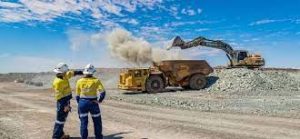
    The Ghana Chamber of Mines has expressed concerns over certain agreements and contracts signed between the government and various entities, describing them as detrimental and unhealthy for the extractive sector.


    The chamber emphasises that these agreements are significantly impacting the operations of its members and hindering sectoral growth.


    Mr Sulemanu Kone, the Chief Executive Officer, highlights the importance of engaging in a roundtable discussion involving the government and other stakeholders to safeguard the sector’s interests and drive economic growth.


    During the launch of the 2023 Ghana Extractive Industries Transparency Initiative (GHEITI) report, Mr Kone emphasised the necessity of implementing robust policies to support the extractive sector.


    He stressed the criticality of upholding the security and sanctity of agreements, stating, “We have a situation where companies have investment agreements that freeze their fiscal terms. These are serious matters. I know we are in a difficult time, but this is what we should be having a conversation about.”


    He further adds, “We are just ignoring all these, which is affecting the extractive sector and making it unhealthy.”


    The GHEITI reports are intended to raise public awareness, stimulate interest, and facilitate debate on issues pertinent to the extractive sector. The initiative encourages collaboration among the government, extractive companies, international agencies, and NGOs to develop a framework that promotes transparency in payment disclosures within the extractive industries.


  • TOR-Torentco Lease: Workers rejoice in fear as ACEP release unknown facts about leasee


    Adnan Adams Mohammed


    The workers of the Tema Oil Refinery (TOR) are expressing mixed feelings over the intending arrangement by government to handover management of TOR to Torentco Asset Management.


    After the news broke out, Senior Staff Union of TOR says the approval of the decision made by the Board would revitalise the refinery, contribute to fuel security in the country, and stabilise the Ghana cedi.


    Although other section of workers of TOR are apprehensive of the deal which is yet to be signed, a statement issued last week by the senior staff union indicated that the strategic partnership will help to revamp the Refinery and bring it back into operation. But, members of the General Transport and Petrol Chemical Workers Union of the Trade Union Congress (TUC) have alarmed that the lease agreement resembles the controversial Power Distribution Services (PDS) deal involving the Electricity Company of Ghana (ECG), where funds were unaccounted for. The workers believe that TORENTCO lacks the capacity to effectively manage TOR.


    “TORENTCO, as a strategic partner, does not offer any guarantee of better management for TOR”, Bernard Owusu, the General Secretary of the General Transport and Petrol Chemical Workers Union of the Trade Union Congress (TUC) emphasized in an interview with Accra based radio station, Accra Fm.


    He argued that the company has no track record in the refinery sector, raising doubts about its ability to revive and operate the refinery successfully.


    Meanwhile, the Senior Staff Union think otherwise as they are confident the deal will produce positive impact.


    “We are confident that this initiative will also ensure job security, improved conditions of service, and bring hope to the struggling workers, many of whom are considering leaving their positions.”


    The union said it considers the yet-to-be-finalised arrangements with the selected partner, TORENTCO, as the only viable option to revive the refinery, given successive governments’ hesitance to invest capital in its operations.


    They find it particularly encouraging that, in addition to the rent payments, the partner will also make a capital expenditure investment of USD 22 million in the refinery’s plants and associated facilities.


    “As far as we are concerned, there is currently no other concrete alternative better than the one being considered now. Therefore, we pledge our support to the board, management, and the government as they work towards finalising this agreement.”


    The private strategic asset management firm, Torentco Asset Management, is selected to partner existing management of TOR.


    Under the agreement, Torentco Asset Management Group will lease the refinery for a period of 6 years, for a fee of $22 million. The refinery is expected to refine up to 8 million barrels annually. Additionally, the group will pay an annual rent of $1 million, along with an additional monthly rent amount of $1.067 million.


    In release by the African Centre for Energy Policy (ACEP) revealed that the TAM is owned by an individual and not a consortium.


    “We all want TOR to work, but, will not sit and watch Management do something that will not benefit the country, because this Torentco Assets Management is one person’s company who does not have any expertise in oil”, Executive Director of ACEP, Benjamin Boakye, in an interview on Adom FM, last week posited.


    “For now, we know who is behind the Torentco company and when you check his background, he has not sold kerosene before; let alone, refining oil that he can use to help turn things around at TOR,’’ he said lat week.


    Touching on the deal, Mr Boakye said the yet-to-be-finalised contract between TOR’s management and Torentco Assets Management did not go through the right process – be it competitive bidding or sole sourcing.


    Subsequently, a Member of Parliament’s Select Committee of Energy, Rashid Pelpuo, said the Committee has not been briefed on the development.


    On the back of that, the Committee will invite the CEO and directors of the company to brief them.


    The discussions regarding the private investor for TOR has initially involved a company called Decimal Capital Limited, owned by former Managing Director of TOR, Mr Asante Berko.


    However, Mr Berko resigned on April 15, 2020, due to allegations of bribery by the US Securities and Exchange Commission. This led to a breakdown in talks with his company.


    Later, Mr Berko transferred his interest to another company named Biege Bridge, which eventually became TORENTCO.


    The frequent transformation of the company throughout the deal raised suspicions among the workers.


    Apparently, Bernard Owusu, General Secretary of the workers union, clarified that the workers at TOR are not against the deal itself but rather the manner and model of the agreement.


    He pointed out that no proper due diligence was conducted before entering into the leasehold arrangement, and the company’s claim to revive TOR lacks any concrete guarantees.


    The workers at TOR are calling on the government to reconsider the lease agreement with TORENTCO and ensure that the best interests of the refinery and its employees are protected.


  • Job creation a priority of gov’t… despite austere measures to reform economy


    Adnan Adams Mohammed


    The government has affirmed that it will not relent on its effort to ensure a prevailing environment to promote job creations.


    As the Ghanaian economy is hooked to an economic reform programme powered by the International Monetary Fund, many fears that job of some existing workers are not secured as well as new job opportunities.


    But, updating Ghanaians on the economy at a news briefing, the Finance Minister promised that government is committed to creating new jobs through promotion of entrepreneurship among the youth.


    “Government is very intentional in ensuring that growth and job creation are not sacrificed in the process of restoring macroeconomic stability and debt sustainability”, Ken Ofori-Atta has said.


    Also, he said the government intends to promote entrepreneurship through initiatives such as the YouStart programme “to create more jobs for the banking sector and faith-based organisations”.


    Apparently, in its latest economic review update, the Bank of Ghana indicated that, availability of jobs in the country as advertised in selected print and online media which partially gauges labour demand in the economy, have dropped marginally in April 2023 relative to what was observed in the same period in 2022.


    In total, 2,581 job adverts were recorded, as compared with 2,777 for the same period in 2022, indicating a year on year decline of 7.1 percent.


    On a month-on-month basis, the number of job vacancies went down by 6.3 percent from the 2,754 jobs advertised in March 2023.


    Cumulatively, for the first four months of 2023, the total number of advertised jobs declined by 2.9 percent to 10,707 from 11,029 recorded during the same period in 2022.


    Also, according to the Central bank’s data,

    consumer spending, proxied by domestic VAT collections and retail sales, posted a strong positive performance in March 2023, compared with the corresponding period in 2022.


    The domestic VAT collections increased by 92.4 percent on a year-on-year basis to GH¢1,250.68 million, from GH¢649.93 million. Cumulatively, total domestic VAT for the first quarter of 2023 went up by 76.8 percent to GH¢3,196.30 million compared to GH¢1,808.04 million for the corresponding period of last year.


    However, retail sales increased by 44.9 percent year-on-year to GH¢165.20 million in March 2023, up from the GH¢114.05 million recorded in the same period in 2022. On a month-on-month basis, retail sales improved by 19.2 percent in March 2023 from GH¢138.60 million in the preceding month. In cumulative terms, retail sales for the first quarter of 2023 went up by 30.3 percent.


    Consequently, the government believes that the economic reforms put in place under the IMF-supported program will yield a desirable impact on the economy.


    “Our commitment to these reforms is matched by our relentless pursuit of innovation and strengthened partnerships”, the finance minister noted. “Backed by the renewed drive for reforms, the government is working towards securing significant support from our multilateral partners”.


    “Altogether, and including the IMF funds, World Bank and AfDB support, we expect multilateral support of about US$2.0 billion for 2023 and US$6.2 billion between 2023 and 2026”, he explained.


    Although, he warned that the US$3-billion-three-year IMF programme secured by Ghana is not the end to the country’s economic woes.


    Rather, he said it marks the beginning for taking tough decisions to reset the economy on track.


    Mr Ofori-Atta said: “We have an ambitious agenda reform”, but caveated: “Let me state clearly that securing an IMF programme is not an end to our current challenges though it has significantly paved the way for the implementation of an ambitious and well-thought-out programme of reform for our economy and country”.


    “In fact”, he noted, “the real work of adjustment, realignment, and the path to steady economic growth has just begun”.


    “Let us brace ourselves for the needed reform, especially in expenditure control, non-arrears accumulation, revenue growth, ECG revenue collection, and energy sector reforms in order to rebuild the walls of the republic with urgency”, Mr Ofori-Atta said.


    He explained that the Post Covid-19 for Economic Growth reform programme now supported by a three-year extended credit facility with the IMF, “is built on clear targets and strong policy and structural measures”.


    “Over the medium term, the economic growth-backed IMF programme seeks to promote a credible fiscal consolidation programme anchored by strong domestic revenue mobilisation and high spending efficiency”, indicated Mr Ofori-Atta.


    Ghana has already received the first tranche of $600 million on 19 May 2023 right after the Fund’s executive board approved the deal.


  • Ghana to get US$6.2bn from multilaterals to rebuild economy


    Adnan Adams Mohammed


    The government is expecting to receive a total of US$6.2 billion from its multilateral agencies to support the rebuilding of the collapsed economy.


    These supports coming from the International Monetary Fund, World Bank and AfDB in the next three years will support the economic reformation programme of the debt-riddened West Africa’s once promising economy.


    The embattled Finance Minister disclosed when he updated Ghanaians on the economy at a news briefing, last weekend.


    “US$2 billion will hit Ghana’s account by the end of 2023”, Ken Ofori-Atta said. “Our commitment to these reforms is matched by our relentless pursuit of innovation and strengthened partnerships.”


    Mr Ofori-Atta said: “Backed by the renewed drive for reforms, the government is working towards securing significant support from our multilateral partners”.


    “Altogether, and including the IMF funds, World Bank and AfDB support, we expect multilateral support of about US$2.0 billion for 2023 and US$6.2 billion between 2023 and 2026”, he explained.


    “We expect the World Bank to provide a total support of US$1.6 billion while the AfDB provides a total support of US$200 million over the programme period”, he added.


    Also, he said: “We expect to mobilise catalytic funding of US$30 million in 2023 and US$330 million between 2023 and 2026 from bilateral creditors”.


    US$3bn IMF deal ‘not end to our current challenges, the real work has just begun’– Ofori-Atta warns


    At the same briefing, Mr Ofori-Atta warned that the US$3-billion-three-year IMF programme secured by Ghana is not the end to the country’s economic woes.


    Rather, he said it marks the beginning for taking tough decisions to reset the economy on track.


    Mr Ofori-Atta said: “We have an ambitious agenda reform”, but caveated: “Let me state clearly that securing an IMF programme is not an end to our current challenges though it has significantly paved the way for the implementation of an ambitious and well-thought-out programme of reform for our economy and country”.


    “In fact”, he noted, “the real work of adjustment, realignment, and the path to steady economic growth has just begun”.


    “Let us brace ourselves for the needed reform, especially in expenditure control, non-arrears accumulation, revenue growth, ECG revenue collection, and energy sector reforms in order to rebuild the walls of the republic with urgency”, Mr Ofori-Atta said.


    He explained that the Post Covid-19 for Economic Growth reform programme now supported by a three-year extended credit facility with the IMF, “is built on clear targets and strong policy and structural measures”.


    “Over the medium term, the economic growth-backed IMF programme seeks to promote a credible fiscal consolidation programme anchored by strong domestic revenue mobilisation and high spending efficiency”, indicated Mr Ofori-Atta.


    Ghana has already received the first tranche of $600 million on 19 May 2023 right after the Fund’s executive board approved the deal.


  • That Opportunist and Immature Guy: The lesson to young ladies on dating or mingling with so-called famous, celebrity, rascal guys

    'I am not Yvonne Nelson'
    ‘I am not Yvonne Nelson’

    Tracy and all ladies he slept with before marriage, also street girls?


    By Adnan Adams (Business Journalist)


    Ordinarily, I will never indulge myself in any kind of these social media ‘madness’ called ‘beef’ by this socalled ‘celebrities’, but it is absurd to listen to the song of the ‘immatured and opportunist guy’ calling a girl you slept with as street girl. 


    I feel sad for his wife, sisters and daughter. 


    Just a sorry could have shown maturity on his side as a matured man calling himself a husband and father.


    Several names some of whom are more prominent than the so-called illuminati fame, but because they are responsible and matured men they know how to handle their part in dignified way.


    Life is full of mystery. You can be fooled by the folly of friends and fans who will advise and push you to commit a regrettable mistakes when the sun is bright and shining, but at the old age when generational taste and attention had shifted, and when the reality of Karma of your past deeds starts to haunt you, then you remember how to seek for forgiveness. 


    The Analysis and Questions


    Is it true he was doubling or (multiply) dating girls anyhow as he feels?


    From the stories, so far, it is clear the guy was opportunist and was only chancing girls because of the chances of their social and economic status becoming bright in the near future.


    Why did you dated her (YN) when you knew you had another girlfriend(Tracy), whom you took serious because of her opportunity to study abroad so has the likelihood of becoming a ‘burger girl’ so you just didn’t want to let go off her?


    Did he play games with her (YN) just to quench his sexual pleasure? Then he didn’t respect women. Then I fear for the him with how he exhibited ‘weak emotions’ as a man on a story he admit as true. 


    How different is his version from what she said. 


    She was a little more sensible than him. From the accounts. 


    Can Tracy boldly say she never had any sexual affair with any other man since her birth, except you? 


    Do you know if she had ever aborted before or not?


    Is she a street girl also?


    I am sad for young girls who also jump to dating this kind of irresponsible and immature and opportunist singers, footballers, artists and rascal guys.


    Girls becareful of those you date today. 


    Becareful when you are obeying your silly emotions and feelings about some guys, it can blindfold you to make BIG TIME LIFE MISTAKES that you will ever regret. 


    A word to the wise is enough.


    **Hey correction.. to weak minds who lack logical common sense .. 

    **A lady can graduate in June, gets pregnant in August and abort in October in the same year (2010)


  • Mahama signed only 3 PPAs not 43– John Jinapor

    A claim by the chairman of the mines and energy committee of parliament, Mr Samuel Atta Akyea, that some power purchase agreements signed by former President John Mahama in the heady days of the erratic power supply period, caused the state to pay $320 million for unused power in 2018 alone, is false and lacks basis, the ranking member of that committee, Mr John Jinapor, has said.


    Mr Atta Akyea had said the take-or-pay power purchase agreements have cost the state $968 million so far, in terms of payments for idle capacity and reserve margins.


    At a press conference in parliament, last week, Mr Atta Akyea referred to the Ghana Integrated Power Sector Master Plan (IPSMP) and the Energy Commission’s work, which, according to him, showed significant overcapacity in the country’s energy sector.


    “Under Generation and Demand of the 2019 IPSMP, the modelling results confirm that there is significant overcapacity in Ghana, that this overcapacity was expected to continue for 5 to 7 years when the power plants under construction are commissioned”, he said.


    1. The report further noted, he added, that “the reserve margin in 2018 and 2019 were significantly higher than the planned reserve margin of 20%”.


    Furthermore, he said “the overcapacity challenge is expected to continue into the mid-2020s”.


    The Abuakwa North MP noted that “between 2017 and 2020, the annual cost of idle capacity ranged between US$ 105.4 million and US$ 373.7million per year”.


    Over the period, he said “a total amount of US$ 368 million had been paid for idle capacities and a further US$ 600 million had been paid for the cost of reserve margins totalling US$968million”.


    Mr Akyea, however, mentioned that some of the terms of the PPAs have been renegotiated.


    For instance, he said: “We note that the AKSA Emergency Power Agreement (EPA), after expiration on 31 July 2022, was renegotiated by ECG with better terms for 15 years, with a dispatch guarantee of 40%. This is far better than the full take-or-pay arrangement under the expired EPA”.


    With the 205MW AKSA PPA, Mr Akyea said the introduction of a dispatch guarantee has helped to beat down the cost incurred by the state, as far as the payment for excess capacity is concerned.


    He explained that it is meant to provide “system reliability in the middle and the northern belts of the country based on a system reliability study by the Ghana Grid Company (GRIDCo)”.


    “To achieve the objective of reliability, there is the need to have a level of guaranteed dispatch of the plant”, he noted.


    He said the dispatch guarantee provided for in the new terms for contracting PPAs “is also a gradual means of reducing the cost of excess capacity payment that has plagued the sector from the numerous take or pay agreements”.


    “The non-dispatch of this plant will save the country 60% of the cost compared to the original contract”, Mr Atta Akyea added.


    In a rebuttal statement, however, Mr Jinapor said the minority caucus has noted “with disappointment”, Mr Atta Akyea’s “very wild” and “baseless” claims.


    He said: “The surprising thing is that Mr Atta Akyea was reported to have been speaking on behalf of the Mines and Energy Committee”.


    “For the avoidance of doubt, the Mines and Energy Committee has never taken such a position”, the opposition MP noted.


    He said “neither has the committee mandated Mr Atta Kyea to speak on its behalf in respect of the Power Purchase Agreements (PPAs) signed under President Mahama which, with all intents and purposes, have proven to be the reason for Ghana’s current stable electricity supply”.


    The statement said the “reported claim that the former administration entered into 43 take-or-pay Power Purchase Agreements resultng in the current government being obligated to pay over 320 million dollars in 2018 for unused power charges is not only false but a clear lack of appreciation of Ghana’s power sector”.


    The records from the Energy Commission’s 2018 Energy Statistics are available for verification, Mr Jinapor added.


    He said from these records, “a total of 13 thermal plants operated in 2018, with only three (3) signed under President Mahama”. “How the New Patriotic Party and its communicators are able to concoct and embellish such unfounded payments for 43 take-or-pay power agreements in 2018 alone is shocking and mind-boggling”.


    “The minority wishes to caution in the strongest terms that it will not allow the name of the Mines and Energy Committee to be used for self-seeking and propaganda-laden political communication”.


  • Strengthening the Capacity for Measuring and Valuing Natural Capital in Ghana


    Ghana, a West African country rich in natural resources, is in the midst of a transition to holistic landscape management to benefit national wealth and the livelihoods of its people.


    Ghana’s wealth and sustainable development is strongly linked to natural capital – the plants, animals, air, soils, water and minerals on which the country and its people depend. Nature has been a major contributor and driver of economic growth and development.


    In the past 40 years, Ghana’s real GDP has quadrupled. Yet, The Changing Wealth of Nations (2021) showed that natural capital per capita peaked at $9,000 in 2014, falling more than 30% to $6,000 in 2018. Likewise, the cost of environmental degradation due to the unsustainable use of land alone was 2.8 percent of 2017 GDP. If this trend continues, it will amplify destruction of the natural resource base, disproportionately impacting the poor and increasing exposure to climate risk.


    Going beyond GDP


    The Government of Ghana (GoG) recognized that, despite impressive GDP growth, the degradation of nature is having an impact on the future they want for their people. As a result, they are taking strategic action, in cooperation with the Global Program on Sustainability (GPS) and the United Nations Statistics Division (UNSD), to implement the System of Environmental-Economic Accounting in order to integrate the value of nature and its services into development and investment planning.


    To successfully mainstream natural capital accounting, GoG found it was not necessary to start from scratch. It was possible to build on existing alliances by first identifying active tools, structures and partnerships that were already working well, like the Cost of Environmental Degradation Working Group. They then boosted collaboration across institutions to help spread best practices and leverage knowledge among ministries. This made it possible to build capacity more quickly among the technical officers inside the different ministries.


    With the right structures in place, the next step will be to improve reliability and timeliness of data. This would provide the basis for indicators required in planning, policy, and implementation programs.


    Preliminary results


    Already there are several promising results. Ghana is developing land and ecosystem extent accounts, ecosystem services accounts and deriving environmentally adjusted macroeconomic indicators. As a result, GoG will be able to better target landscape restoration interventions, inform land-use planning and conservation policies, and derive key indicators for monitoring and reporting.


    Transitioning towards a sustainable future


    As Ghana continues to make steady progress, institutional capacity to generate quantitative and qualitative information is impacting policy decisions at all levels. It is also contributing to the success of other projects like the Ghana Landscape Restoration and Small-Scale Mining Project, financed by the World Bank, with funding from IDA, PROGREEN and EGPS.


    This brings Ghana yet another step closer to its national objective of strengthening the country’s foundation for a more sustainable future.


    Source: https://www.worldbank.org/en/news/feature/2023/06/13/strengthening-the-capacity-for-measuring-and-valuing-natural-capital-in-ghana