The National Petroleum Authority (NPA) has blamed the frequent increase in petroleum products prices on the volatility of Ghana’s local currency, Cedi.
In recent few years, prices of diesel, gasoline, LP gas among others have skyrocketed contributing to heightened cost of living, as higher transportation cost affects many aspect of our daily life, such as, food inflation.
However, NPA has assured Ghanaians that factors contributing to volatile petroleum prices have been largely contained while claiming the Cedi’s current stability is a positive sign for maintaining steady fuel prices.
“The monthly demand of approximately $400 million required by Bulk Oil Distribution Companies (BDCs) to import petroleum products is also a worry”, the Chief Executive Officer of the National Petroleum Authority (NPA), Dr Mustapha Abdul -Hamid said at a gathering with selected editors in Accra.
He, thereby, appealed to the Bank of Ghana to establish a guaranteed exchange rate for petroleum importers, allowing them to avoid speculative pricing models and bring stability to the sector.
To counter the high pricing of Liquified Petroleum Gas (LPG), the NPA has implemented a new tender programme aimed at reducing costs and easing the burden on consumers.
Consequently, the CEO further discussed the ongoing Cylinder Recirculation Model (CRM) initiative, which provides Liquefied Petroleum Gas Marketing Companies (LPGMCs) with a five-year period to recoup their investments as the model is gradually implemented.
This he said will lead to a total ban on gas filling stations in the country
He highlighted that only Ghana and Nigeria currently operate gas filling stations in West Africa, positioning the CRM as a more efficient solution for the LPG sector.
Encouraging bottling companies to promote awareness of CRM collection points, he explained that currently, 30 percent of Ghana’s LPG supply is sourced from Atuabo Gas Company, while the remaining 70 percent is imported from Europe.
All things being equal, Ghana is expected to exit from sovereign default by July 2025, Fitch Ratings has projected.
The projection is based on expectations of the Ghana finalizing its external debt restructuring by the end of June 2025.
Also, the international rating agency is optimistic that Ghana will complete the non-bond debt restructuring by the close of this year as disclosed during a recent webinar on debt restructuring in Ghana, Zambia, and Ethiopia.
“For Ghana, we also expect the completion of the common framework restructuring by the first half of next year”, Thomas Garreau, Associate Director of Europe, Middle East, and Africa Sovereign Ratings at Fitch projected. “There are some elections, and that would delay the completion of the process, hence our forecast of next year.”
Ghana reached an agreement with the Official Creditor Committee (OCC) on the parameters for official debt treatment in January 2024, followed by the completion of a Eurobond exchange in October 2024.
The restructuring process has so far covered approximately US$14.2 billion in Eurobonds, including Principal Debt Instruments (PDIs), with the associated haircut amounting to 6.2% of the country’s Gross Domestic Product (GDP).
The restructuring has already begun easing Ghana’s fiscal pressures. Fitch estimates that interest payments have been reduced by 8% of projected revenue for 2024, 5% in 2025, and 4% in 2026, offering some relief to government finances.
Fitch’s forecast aligns with Ghana’s ongoing efforts to stabilize its economy, even as the country navigates the complexities of election-year dynamics in 2024.
Last week, a stakeholder policy engagement on fisheries governance implications of foreign-owned industrial vessels operating in the domain of Ghana has been held to promote transparency, accountability and local capacity.
The discussions, learning, exchange of ideas and recommendations of the engagement are part of a project, titled “Promoting Transparency, Accountability and Local Capacity to Address the Destabilizing Impacts of Foreign-Owned Distant Water Fishing Vessels in the Gulf of Guinea and the Waters of Mauritania.”
The focus countries for the project are Benin, Cameroon, Cote d’Ivoire, Ghana, Mauritania, Senegal and Sierra Leone and with funding from the Department of State, U.S. Embassy Ghana.
Dr Kamal-Deen Ali of the Centre for Maritime Law and Security (CEMLAWS) Africa, who is also one of the Project Leads, said the engagement focused on draft reports on Ghana’s Monitoring, Control and Surveillance (MCS) Capability & Functionality, and Industrial Fishing Sector Repositioning for Greater National/Regional Ownership.
The draft reports, which were done by CEMLAWS Africa, Centre for Coastal Management (CCM) and Africa Centre of Excellence in Coastal Resilience (ACECoR) and in collaboration with experts and industry stakeholders, also sought to shape policy directions to enhance the government’s efforts in sustainable fisheries management and governance.
It is reported that over 90 per cent of registered fishing vessels in African countries are foreign-owned or have foreign beneficial interests and fly the flags of countries between Gabon and Morocco, with about 60 per cent of them registered in Ghana, Mauritania and Senegal.
Dr Ali said the distant water fishing vessels (DWFVs), though may have legal authorization to fish in the region, they benefit significantly from destabilizing activities, including exploitation in coastal countries with limited institutional and human capacity.
“The destabilizing impacts of these foreign-owned vessels in the Gulf of Guinea, include depleting fish stocks, illegal, unreported, and unregulated (IUU) fishing in some cases and dislocation of the livelihoods of artisanal fishers and others in the value chain,” he said.
Dr Ali said on the average, West Africa alone loses about 790,000 tons of fish yearly to IUU fishing by foreign and domestic industrial fishing vessels. This has resulted in great income losses and economic impacts estimating over $2 billion annually.
“Aside employment and growth, food security is important. Though a lot has been done in fisheries governance, a lot more is still required. It is clear per our discussion that increased Budgetary allocation for fisheries monitoring and enforcement is needed,” he said.
Madam Justine King, Regional Environment Officer, Embassy of the United States, Ghana, said the partnership between Ghana and USA in the project was to promote local capacity.
“We must encourage communities to actively monitor and report illegal, unreported and unregulated (IUU) fishing, create awareness of the harmful impacts. We must also continue to develop robust legal framework to strengthen monitoring, control and surveillance,” she said.
https://newsguideafrica.com/ editorial team sees this as an opportunity for Ghana to exert governance control over crowding of foreign vessels in Ghana waters why taking advantage to monitor activities of the vessels to forestall illicit financial flows in the country
The Sahel and West Africa Commit to Accelerating Livestock Sector Development and Securing Pastoral Systems
Nouakchott, November 8, 2024 – On the third day of the High-Level Forum on Pastoralism in the Sahel and West Africa (‘Nouakchott+10′), participants – including political decision-makers, representatives of pastoral and agro-pastoral organizations, members of the private sector, regional organizations and civil society, from Benin, Burkina Faso, Chad, Côte d’Ivoire, Gambia, Ghana, Guinea, Liberia, Mali, Mauritania, Niger, Nigeria, Senegal, Sierra Leone and Togo – called for an ambitious commitment to building peace and developing rural, pastoral and agro-pastoral territories in the Sahel and West Africa. Collectively, they emphasized the need to enhance the value of different livestock systems and strengthen the complementarity between agriculture and livestock, which together form the foundation for the inclusive and sustainable development of national and regional economies.
This Forum comes ten years after the first Nouakchott Declaration of 2013, which aimed to secure the livelihoods and means of production of pastoral populations and increase the gross product of livestock activities, with a view to significantly boosting pastoralists’ incomes.
“Counting only the regional projects coordinated by our institution, more than a billion dollars have been invested between 2013 and 2024 in infrastructure, improved animal health, and access to services, thanks to the technical and financial support of the World Bank Group and other partners”, said Dr Abdoulaye Mohamadou, Executive Secretary of the Permanent Inter-State Committee for Drought Control in the Sahel (CILSS).
Participants gave a generally positive assessment of the progress made. Over the past decade, more than 13 million hectares of pastoral land have been placed under sustainable management, 559 additional water points have been built, and almost 4,200 km of transhumance corridors have been marked out and secured. In terms of animal health, more than 600 million animals have been vaccinated, 137 veterinarians have been trained, and 415 additional vaccination parks have been built. Market infrastructures have been strengthened with the construction of 362 additional livestock markets, and actions have been taken to promote the economic and social inclusion of nearly 56,000 people, over 86% of whom are women, who have been able to strengthen and diversify their economic activities.
However, persistent challenges, notably linked to climate change, insecurity and land pressure, continue to threaten the viability of these production systems, underlining the need for reinforced collective action at scale, particularly to facilitate mobility.
The Nouakchott+10 Forum marks a decisive step for the future of millions of people who depend directly on the vital sector of pastoralism and agropastoralism. In the face of these challenges, participants agreed to secure agro-pastoral land, improve land governance, and develop sustainable value chains to strengthen the resilience of pastoral and agro-pastoral systems. They also agreed to promote synergies between agriculture and livestock, to strengthen the inclusion of young people and women in pastoral and agricultural activities, and to enhance regional information systems to better inform policy-making. They called for the needs of coastal countries and certain Central African countries to be integrated into development efforts, based on the complementarity between sedentary and mobile livestock systems for the peaceful management of territories.
Participants in the Nouakchott+10 Forum ask the Chairman-in-Office of the CILSS to convey this Declaration to his peers.
“For Mauritania, an agro-pastoral country par excellence, joint African action at all levels is a priority strategic objective. The new Nouakchott Declaration will materialize and reinforce regional solidarity in favor of pastoralism and integrated socio-economic development”, said Moctar Al Housseynou LAM, Minister Secretary General of the Government of the Islamic Republic of Mauritania.
Country representatives pledged to provide the requisite political support, while mobilizing substantial financial and human resources, both internal and external, to enable the implementation of their commitment. In addition, they affirmed their determination to mobilize private investors to encourage the development of animal value chains, particularly in the feed supply, meat production, and local milk collection and processing segments. They asked the current Chairman of CILSS to convey the new Declaration to his peers in the sub-region.
The partners present expressed their support for the Forum’s conclusions, and pledged to continue their technical and financial support for their implementation.
“Our collective mission is to enhance the strategic role of Sahelian territories in the regional economy, and to promote mobile livestock farming not only for milk, meat and other products, but also for the services it provides to Sahelian and West African society as a whole, particularly with regard to climate change”, said Chakib Jenane, Director of Sustainable Development for West and Central Africa at the World Bank. He concluded on the importance of giving pastoralism a prominent place in continental policies: “Nouakchott+10 must send strong messages to the African Union Commission, in order to strengthen the place of pastoralism in regional policies and provide significant support to our pastoral communities”.
President Nana Addo Dankwa Akufo-Addo has emphasized the critical need to build climate-resilient agriculture in Ghana, stressing that climate change poses an imminent threat to food security and agricultural productivity.
He said this during the 40th National Farmers’ Day celebration last week. Under the theme “Building Climate-Resilient Agriculture for Sustainable Food Security,” the President outlined his administration’s proactive approach to address the effects of erratic rainfall, prolonged droughts, and rising temperatures on Ghana’s agricultural sector.
“Climate change is no longer a distant threat; it is a pressing reality that our farmers confront every day,” President Akufo-Addo declared.
He highlighted the vulnerability of Ghana’s agriculture to climate extremes, noting that these changes directly impact not only food production but also the livelihoods of millions of Ghanaians.
Given the urgency of the situation, the President asserted that Ghana’s agricultural sector could not afford to wait for the crisis to worsen.
“We must adopt proactive and innovative approaches to equip our farmers with the knowledge, tools, and resources they need to build resilience,” he stated.
Central to the government’s strategy for climate-resilient agriculture is the second phase of the Programme for Planting for Food and Jobs (PFJ 2.0), launched in August 2023.
This initiative, designed to help farmers adapt to changing climatic conditions, includes comprehensive measures aimed at securing Ghana’s food supply for future generations.
According to the President, one of the most critical components of climate-resilient agriculture is the availability of accurate, timely information.
To this end, the government has introduced the Ghana Agriculture and Agribusiness Platform (GhAAP), a digital tool that provides farmers with real-time updates on weather patterns, pest and disease surveillance, and food security trends.
“This platform is more than just a tool; it is a lifeline for our farmers,” Akufo-Addo said, emphasizing the importance of empowering farmers to make data-driven decisions to reduce crop loss and manage risks.
In addition to information access, water management plays a vital role in building climate-resilient agriculture. Recognizing the limitations of rain-fed agriculture, particularly during prolonged dry spells, the government has made substantial investments in irrigation infrastructure under PFJ 2.0.
This includes the development of irrigation facilities across the Northern, Upper East, Upper West, and Eastern Regions, covering a total area of 4,870 hectares.
These irrigation projects enable farmers to cultivate crops throughout the year, reducing their dependency on seasonal rainfall and stabilizing food production even in adverse weather conditions.
To further enhance water management, President Akufo-Addo announced the construction of 232 solar-powered boreholes, which will irrigate an additional 3,144 hectares of farmland.
By harnessing solar energy, these boreholes offer a sustainable, eco-friendly water source that allows farmers to grow crops year-round, bolstering food security and enabling crop diversification. “This project not only strengthens our food supply but also provides our farmers with the opportunity to diversify and stabilize their incomes,” he added.
The government has also prioritized soil health, recognizing that nutrient-rich soil is essential for productive agriculture, especially under climate stress.
The President outlined soil management programs that promote organic practices, soil testing, and sustainable fertilization methods. By encouraging practices such as crop rotation, cover cropping, and organic amendments, these programs aim to reduce reliance on chemical fertilizers, enhance soil resilience, and allow crops to better withstand adverse weather conditions.
“Healthy soil is the foundation of agriculture, and we are determined to protect it,” he affirmed.
In response to the unpredictable climate, Ghana has also invested in developing and distributing climate-resilient crop varieties. Through partnerships with agricultural research institutions, the government is promoting drought-resistant and heat-tolerant crop varieties, including high-yield maize, cassava, and sorghum strains, as well as pest-resistant vegetables. These climate-resilient varieties are intended to help farmers maintain productivity even as environmental conditions shift. “By making these crop varieties accessible, we are equipping farmers with the tools they need to continue thriving despite climate uncertainties,” President Akufo-Addo noted.
Integrated pest management (IPM) is another key aspect of the government’s climate-resilience strategy. With changing weather patterns increasing the prevalence of pests and diseases, the government has introduced IPM practices that reduce the environmental impact of agriculture.
This approach combines biological, cultural, and mechanical controls, allowing farmers to manage pest populations while preserving ecosystem health. The government is also providing training on using natural predators, crop rotation, and physical barriers as sustainable pest control methods, which reduces dependency on chemical pesticides.
Beyond physical measures, the President emphasized the importance of community resilience and capacity building. Through various training programs, the government is equipping farmers with climate-smart agricultural techniques to adapt their planting schedules, manage water resources, and practice conservation. “Climate resilience goes beyond infrastructure; it requires knowledge and skills,” he stated. The programs aim to create a network of climate-resilient farmers capable of tackling climate-related challenges collectively.
Additionally, agroforestry and reforestation efforts form part of Ghana’s broader climate-resilience strategy. Agroforestry, which integrates trees into farming landscapes, reduces soil erosion, improves soil fertility, and provides shade for crops.
The Planting for Exports and Rural Development (PERD) module under PFJ 1.0 has supported the planting of tree crops such as cashew, rubber, and oil palm, contributing to both the economy and environmental stability.
“Trees act as carbon sinks, absorbing carbon dioxide and helping us combat climate change,” Akufo-Addo explained. Finally, the government has invested in post-harvest infrastructure to address the risk of crop spoilage due to climate fluctuations.
This includes the construction of aggregation centres and packhouses, providing farmers with climate-controlled storage facilities. Additionally, the establishment of a 6,000-metric-ton silo in Hwehwee aims to store staple crops, ensuring that food remains available during off-seasons.
“These facilities reduce post-harvest losses and protect farmers from unpredictable climate conditions,” the President remarked.
President Akufo-Addo concluded by reaffirming Ghana’s commitment to sustainable agriculture, declaring that building climate resilience is a continuous effort necessary to safeguard the nation’s food security. “By investing in water management, soil health, climate-resilient crops, and infrastructure, we are positioning Ghana as a model of climate-smart agriculture on the continent,” he state
As Ghana navigates the challenges of climate change, the government’s initiatives aim to create an agricultural sector that not only endures but thrives, supporting the livelihoods of millions and ensuring a sustainable future
The National Democratic Congress (NDC) Presidential Candidate, John Dramani Mahama, has pledged to establish a gari processing factory in the Asikuma-Odoben-Brakwa district if elected in the upcoming December 7 elections.
Speaking to a crowd in the Brakwa community as part of his Central Region campaign tour, Mr Mahama pointed out the area’s vast land and water resources, which he believes could support a factory to create jobs and stimulate local economic growth.
Mr Mahama emphasized that, under an NDC government, job creation and economic development would be top priorities, while criticizing the ruling New Patriotic Party (NPP) for what he described as economic mismanagement.
“A strong economy is the foundation of a prosperous country.
When the economy thrives, it creates money and jobs,” he remarked, assuring the audience that an NDC administration would focus on restoring stability to the economy.
The former President also criticized the NPP for unfulfilled promises, noting that while in opposition, the NPP had claimed Ghana was not a poor country, yet resources appeared limited under their governance.
He detailed plans to partner with the Ghana Exim Bank to establish the gari factory in Brakwa.
Beyond the gari factory, Mahama outlined plans to develop cocoa and palm oil processing factories, aiming to boost local industries and create further employment opportunities in the region.
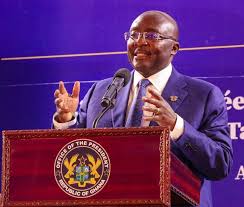
Dr Mahamudu Bawumia, the flagbearer of the New Patriotic Party (NPP), has asserted that his administration has demonstrated significant policy innovation in addressing Ghana’s most pressing challenges.
Speaking at the Ghana CEO Presidential Gala held at the Movenpick Hotel on Thursday, 7 November, Bawumia highlighted the government’s focus on introducing modern solutions to critical issues such as economic growth, digitalisation, and infrastructure development.
Bawumia pointed out that under his leadership as Vice President, Ghana had made notable strides in leveraging digital technology and innovative policies to tackle longstanding problems.
He emphasised that his approach to governance has always been centred around innovation, aiming to make systems more efficient and accessible to all Ghanaians.
The NPP flagbearer also made it clear that he is prepared to lead the country into its next phase of development by further embracing innovation and digitalisation.
He explained that these tools would be essential for advancing sectors such as education, healthcare, and finance, ensuring sustainable growth and improved livelihoods for the population.
Bawumia concluded by reiterating his commitment to bringing transformative change to Ghana.
He emphasised that innovation and digitalisation are key to addressing the country’s future challenges, and under his leadership, Ghana will take significant steps towards becoming a more modern and competitive nation on the global stage.
“This is why I am proposing to upgrade Ghana through innovative BOLD SOLUTIONS. It is important to note that the NPP government has demonstrated policy innovation in tackling some of the most challenging issues in our country in the last few years.”
“In education for example, we implemented a free senior high school and free TVET policy despite the odds. The records show that Ghana has the second highest education quality in Africa.
The Bank of Ghana (BoG) has instructed all financial institutions within the country, including commercial banks and Enhanced Payment Service Providers, to suspend their remittance termination agreements with international remittance provider Taptap Send.
The directive, outlined in a letter to banks, Dedicated Electronic Money Issuers, and the Ghana Interbank Payment and Settlement System (GhIPSS), went into effect on November 8, 2024, and will remain active for one month.
According to BoG, the suspension stems from Taptap Send’s operation of a Cedi Remittance Wallet, a service the central bank contends violates Ghana’s Foreign Exchange Act.
The bank cited the law’s stipulation that foreign currency deposits be made directly into accounts held by Ghanaian financial institutions, with the equivalent amount then credited to recipients in the local currency.
Section 3(1) of the Foreign Exchange Act expressly prohibits engaging in foreign exchange transactions without a licensed permit.
BoG emphasised that it will impose strict penalties on institutions that fail to comply with Ghana’s currency regulations.
“We hope this action will act as a deterrent to any entity considering non-compliance with the Foreign Exchange Act,” the central bank stated.
Taptap Send has gained significant traction among Ghanaians abroad, who favour the app for its mobile-based interface and competitive fees.
Backed by investors such as LinkedIn co-founder Reid Hoffman, the Omidyar Network, and Helios, Taptap Send has rapidly expanded within the mobile remittance market.
Known for its lean pricing and ease of use, the app has been positioned as one of the fastest-growing mobile remittance platforms globally.
Its team includes experienced professionals from top tech and consulting firms, including Twitter, Uber, Amazon, and Deloitte.
As the suspension impacts Ghana’s competitive remittance market, observers await whether the regulatory action will affect Taptap Send’s market position in the region.
Deloitte Africa will mark International Fraud Awareness Week by hosting its 2024 Financial Crime Symposium on November 20, focused on the theme, “Cryptocurrency and Financial Crime: Navigating the New Frontier of Digital Threats.”
The symposium aims to bring together industry thought leaders to offer actionable strategies in the fight against financial crime, with an emphasis on cryptocurrency-related risks.
The event will feature discussions led by experts and provide networking opportunities designed to foster collaboration among industry executives, regulators, and cybersecurity professionals.
Attendees will engage in discussions on emerging threats, sharing best practices for preventing and detecting digital financial crimes.
Following the symposium, Deloitte Ghana’s Financial Advisory Department will host a three-day training on Fundamentals of Digital Forensics and e-Discovery from November 27-29.
The training will cover core topics including digital forensics basics, electronic discovery processes, mobile device forensics, and an overview of forensic tools.
Targeted at legal practitioners, IT auditors, finance managers, and cybersecurity professionals, the training will offer hands-on experience in data acquisition, preservation, and forensic analysis techniques.
“Our program provides practical skills in mobile device forensics and data recovery techniques essential for identifying data theft, unauthorized access, and supporting legal proceedings,” said Nii Asafoatse Abbey, Training Program Lead and Associate Director at Deloitte Ghana.
Digital forensics, he noted, is increasingly crucial in uncovering fraud, cyberattacks, and employee misconduct within corporate and legal contexts.
Deloitte, a global leader in audit, consulting, and financial advisory services, continues to support clients and communities in navigating the complexities of today’s digital landscape, reinforcing its commitment to impactful service.
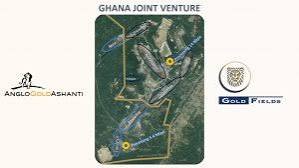
The government of Ghana has still not given Gold Fields and AngloGold Ashanti the needed approval for their proposed joint venture partnership involving the Tarkwa and Iduapriem mines in Ghana.
The miners announced and agreed on key terms for the proposed JV on 16 March 2023 in a press statement but almost nine months since then, the Ghanaian government has not given the required approvals.
In a statement, Anglo Gold said: “Notwithstanding constructive engagement with the Government of Ghana since the announcement of the Proposed Joint Venture on 16 March 2023, the requisite approvals by the Government of Ghana for the Proposed Joint Venture have not yet been obtained.”
It said: “Gold Fields and AngloGold Ashanti have sought to secure the requisite approvals, which include approval of the Proposed Joint Venture by the Parliament of Ghana, ahead of the October 2024 Parliamentary recess before the Ghana national elections to be held in December 2024.”
The statement noted that the “parties continue to believe that a combination of the two neighbouring mines into a single managed entity is compelling, given that it is anticipated to extend the life of the mine, increase production and lower costs, creating value for all stakeholders.”
The release said, “In the absence of the requisite approvals from the Government of Ghana and clear timelines for execution of an agreement, Gold Fields and AngloGold Ashanti will maintain engagement in relation to a potential asset combination while separately continuing to pursue improvements to their respective assets.”
It added: “The parties will keep shareholders appraised of any significant developments pertaining to the Proposed Joint Venture.”