Category: Economy and Finance

  • Gofer Delegators Or Economic Managers – Dr Monfant quizzes

    Gofer Delegators Or Economic Managers – Dr Monfant quizzes

    Adnan Adams Mohammed

    Dr Jerry Monfant, an economist has described the current managers of Ghana’s economy as absolutely clueless about establishing good economic models to forestall the looming economic dangers.

    The international economist has noted that, research indicates that Ghana is not amongst well prepared Central Banks to take the hit on inflation as compared to Nigeria.

    He expatiated that, Ghana joined 13 worse economic performing countries in the World in November, 2021 and as well ranks fourth with a distressed Sovereign US$ Debt behind Argentina, Venezuela, and Lebanon. Also, Ghana ranks third as a worse performing emerging markets hard currency Sovereign Bonds.

    “Meanwhile the government of Ghana is absolutely clueless about establishing good economic models to forestall the looming economic dangers”, Dr Monfant shared his worry about the the Ghanaian economy in his recent post circulated on social media.

    Below is the full statement:

    From Dr . Monfant’s Desk

    Gofer Delegators Or Economic Managers?

    United States inflation is up at 7% as at 13th January, 2022. As part of the prudent measures to subdue the inflation, the US government has asked for more oil reserves to be released and has equally implore on China, Japan and South Korea to follow same in order to suppress the global inflation.

    Poland recorded 7.8 percent inflation during the same period. The busting measures taken by the Polish government includes cutting the VAT on petrol and diesel to 8 percent, and VAT on food, gas and fertiliser to 0 %. Both US and the Polish government are expected to raise interest rate to prevent excess financial transmission in their economies as a means of containing the global rising inflation.

    Our research indicates that Ghana is not amongst well prepared Central Banks to take the hit on inflation as compared to Nigeria.

    Of course, Ghana’s economic profile for the last three months leaves more to  be desired.

    Ghana joined 13 worse economic performing countries in the World in November, 2021.

    Ghana ranks fourth with a distressed Sovereign US$ Debt behind Argentina, Venezuela, and Lebanon.

    Ghana ranks third as a worse performing emerging markets hard currency Sovereign Bonds.

    Ghana is the 5th worse performing emerging economy in the World.

    Meanwhile the government of Ghana is absolutely clueless about establishing good economic models to forestall the looming economic dangers.

    41 percent of average Ghanaian household income is used for food consumption alone. In 2019, Ghana imported US $2bn of agricultural and related products across the World, while the citizens were made to believe that the government policy of “planting for food and jobs” was making headway.

    With the current Global stance, we anticipate 50 percent of an average household income to be used on food consumption alone, as the economy would be importing external inflation into the country through its agricultural import.

     E- levy, which is also billed to cut household incomes to a proportion are all part of the bizarre economic narrative which does not make sense to an economists. It’s clear living conditions could get even more worse, as the country might likely embrace debt default according to our scorecard scenario. This has a potential of raising social tensions.

    The productivity of the citizens are expected to decline by 0.017 percent and  we project this percentage to increase as the months roll-on.

    It’s clear the government of Ghana is no longer in charge of the management of the economy.  The questions economic pundits ask, is whether the Country has Gofer Delegators or a real economic management team? Call me if you find an answer.

  • “Live responsibly” – Pres Akufo-Addo to Ghanaians as he lift all COVID-19 restrictions

    “Live responsibly” – Pres Akufo-Addo to Ghanaians as he lift all COVID-19 restrictions

    Adnan Adams Mohammed

    President Nana Addo Dankwa Akufo-Addo addressed Ghanaians on Sunday, March 27, 2022, giving updates on the country’s fight against COVID-19.

    In his address, he announced the drastic easing of various restrictions including reopening the country’s land and sea borders as well as the no more negative PCR test for fully vaccinated travelers.

    Below is the President’s full address:

    1. I first came to your homes on Wednesday, 11th March 2020, five (5) days after our nation’s 63rd Independence Day celebration, a day before we recorded our first two (2) cases, with news of the measures Government was taking to limit the importation of the COVID-19 virus into the country. Even at that time, it was obvious to me, watching what was happening in Asia, Europe and Latin America, that, if it was not well-managed, it would disrupt our lives and livelihoods.

    2. Since then, we have experienced four (4) waves of the outbreak. One hundred and sixty-thousand, nine hundred and thirty-two (160,932) people have tested positive from the 2.4 million tests conducted, and one thousand, four hundred and forty-five (1,445) people have, sadly, died.

    3. Our comprehensive strategy has entailed living with restrictions that altered our daily routine; we have been restrained from shaking hands and hugging one another; we have had to keep a distance from each other; we have had to put up with the discomfort of wearing face masks every time we left our homes; we have had to endure distress caused by the poking of our nostrils and throats with swab-sticks, each time we underwent a PCR or antigen test; we had to endure, for three weeks, the painful lockdown in the Greater Accra Metropolitan Area and Kasoa and the Greater Kumasi Metropolitan Area and contiguous districts; and we have all borne the brunt of the ravages of the pandemic.

    4. As your President, I saw it as my duty to provide you with regular updates on the situation, the measures government is taking, and to seek your support and co-operation. That is why I have been a constant feature on your screens these past two years, in the addresses that have now become popularly referred to as “Fellow Ghanaians”, and I thank you for welcoming me so warmly into your homes.

    5. You have listened to me, you have co-operated with Government and with the health experts, you have adhered to the enhanced hygiene and mask wearing protocols, and a considerable number of you have taken the vaccine.

    6. I thank you for the opportunity you have given me to be your President in these difficult times. I do not take it lightly. The relative successes we have chalked in winning the fight against COVID-19 have been collective ones, which reinforce my belief that, if we are united, there is no obstacle or hurdle too high to surmount in our quest to build a progressive and prosperous Ghana.

    7. Fellow Ghanaians, undoubtedly, like in every country in the world, the effects of the pandemic have been devastating for us, in Ghana. We have felt the brunt of COVID-19, with every aspect of national life affected.

    8. I did say at the height of the pandemic that “we know what to do to bring the economy back to life; but what we do not know is how to bring people back to life”. We, thus, had to take drastic steps to protect lives and livelihoods by suspending, for the years 2020 and 2021, our pursuit of fiscal responsibility, which had made the Ghanaian economy the poster boy of rapid economic growth in the world in 2017, 2018, and 2019.

    9. You would recall that, in response to the pandemic, I mandated the creation of the Coronavirus Alleviation Programme to support households and micro, small, and medium-size businesses (MSMEs). Its intent was to help minimise job losses, and stimulate economic revitalisation, by mobilising private and public sector finances to expand industrial output for domestic consumption and exports.

    10. To this end, I instituted a GH¢1.1 billion health response package, which was used to procure supplies and equipment, and a relief package for health workers, which included tax waivers, allowances, transportation and COVID-insurance. Government also found the money to recruit, on a permanent basis, twenty-four thousand, two hundred and eighty-five (24,285) more health professionals.

    11. GH¢1.6 billion was made available to support vulnerable households across the country, which went into food packages and hot meals, and the provision of free water for all, free electricity for lifeline consumers, and 50% rebate for all others. Some seven hundred and fifty million cedis (GH¢750 million) in soft loans and grants were also disbursed to micro, small and medium sized businesses to help maintain their economic activity. The Government Statistician tells us that this expenditure has achieved its purpose.

    12. At the height of the pandemic, despite strong opposition in some quarters and the legitimate concern of some parents, we stood firm and were successful in ensuring that the education of our children was not truncated.

    13. We spent some GH¢1.9 billion providing PPEs and hot meals for students, teaching and non-teaching staff, hand washing facilities, training of teachers on COVID, development of content for online classes, and disinfection and fumigation of schools. This made it possible for students to return in conditions of safety, sit for their respective examinations, and achieve successful results. Indeed, the spectacular results of the first and second batches of the Free SHS graduates, whom I proudly call the Akufo-Addo graduates, are testament to this.

    14. I want to state, without any equivocation, that should our nation, God forbid, be confronted by such a pandemic again, and I, Nana Addo Dankwa Akufo-Addo, am, by the grace of God, your President, I will not shy away from taking such essential steps to protect you and your businesses again.

    15. Whilst we count the costs, COVID-19 also inspired our domestic manufacturing capabilities, and deepened our self-reliance. The pharmaceutical industry, at my instigation, responded positively to the need for domestic production of sanitizers, disinfectants, and liquid soaps. Furthermore, Government was able to procure some eighty-one million cedis (GH¢81 million) worth of personal protective equipment, such as face masks, headcovers, medical scrubs and hospital gowns from domestic garment and textiles manufacturing companies for health workers, and for students going back to school to prepare and sit for their final examinations.

    16. COVID-19 also highlighted the unequal distribution of healthcare facilities in the country, as we have tended to focus our healthcare infrastructure in Accra, Kumasi and one or two of our other big cities. As we have seen, epidemics and pandemics, when they emerge, can spread to any part of the country.

    17. Whilst appreciating COVAX and other donors in COVID-19 vaccine supply initiatives, and Government also procuring further vaccine consignments through AU and AVATT initiatives, Ghana, Rwanda and Senegal, in partnership with the German biotechnology company, BioNTech SE, are venturing into vaccine development and manufacturing, with the three countries determined to become vaccine manufacturing hubs in sub-Saharan Africa.

    18. We want to achieve self-sufficiency in vaccine production to meet future national, regional and continental needs for health security. We shall not then, in the future, be at the mercy of foreign vaccine nationalism and geopolitics.

    19. Last year, I set up a Vaccine Manufacturing Committee, under the chairmanship of the world-renowned Ghanaian scientist, Prof. Kwabena Frimpong-Boateng, which will, soon, be transformed by Act of Parliament into the National Vaccine Institute.

    20. We have committed twenty-five million dollars ($25 million) to develop our domestic vaccine production capability, and facilitate the capacity of domestic pharmaceutical companies to fill, finish and package mRNA COVID-19, malaria, tuberculosis and other vaccines, as a first step towards vaccine production.

    21. Fellow Ghanaians, we have reached a critical point in our fight against COVID-19. Government has undertaken a comprehensive review of the raft of measures put in place to help win the fight against the virus.

    22. This review is premised on the background of rapidly declining infections, the relative success of the vaccination campaign being supervised by the Ghana Health Service, and the increased capacity developed in the public and private health sectors over the last two (2) years.

    23. Indeed, as at Friday, 25th March 2022, the total number of active cases stood at seventy-two (72). There are no severely or critically ill persons. Our COVID-19 treatment centres are empty, and the 4th wave appears to be over. In addition to these very low reported cases is the considerable improvement in the availability and uptake of vaccines by the population.

    24. Whilst we have not achieved our national vaccination coverage target, it is significant to note that reasonable vaccination coverages have been achieved in the hotspots of infections, particularly in the urban areas of Greater Accra and Greater Kumasi. Government is determined to use all means to increase the deployment of vaccination across the country to achieve our target of vaccinating some twenty million (20 million) Ghanaians by June.

    25. To my Fellow Ghanaians who have not received the jab, I urge you to take it. To those listening to the propaganda by the conspiracy theorists and those who are still sceptical about the efficacy of the vaccine, it has been a year since my wife and I got vaccinated; it has not disrupted our physical wellbeing, neither has it caused us to be sick. We are, touch wood, hale and hearty, like the other 13.1 million Ghanaians who have been vaccinated.

    26. With countries in the ECOWAS Community, especially in our neighbouring countries, presently, like us, recording very low levels of infections, and having significant numbers of our people vaccinated, and on the advice of the national COVID-19 Taskforce and the health experts, I have taken the decision to revise the COVID-19 Restrictions, enacted under E.I. 64.

    27. At this point, I want to express the great gratitude of the nation to the leadership and membership of the Ghana Health Service, to all other health workers, and to members of the COVID-19 taskforce for the outstanding work they have done in bringing us this far.

    28. So, from tomorrow, Monday, 28th March, the wearing of facemasks is no longer mandatory. I encourage all of you, though, to continue to maintain enhanced hand hygiene practices, and avoid overcrowded gatherings.

    29. All in-person activities, such as those that take place in churches, mosques, conferences, workshops, private parties and events, cinemas and theatres may resume at full capacity, as long as the audience and/or participants are fully vaccinated. Hand washing and hand sanitising points should be made available at these venues.

    30. Outdoor functions at sporting events, entertainment spots, political rallies and funerals may resume at full capacity, again, as long as all persons at these events are fully vaccinated.

    31. From tomorrow, Monday, 28th March, fully vaccinated travellers into Ghana will not take PCR tests from the country of embarkation to allow them entry into the country through the KIA, and will not be tested on arrival.

    32. Citizens and foreign residents in Ghana, who are not fully vaccinated, would, however, need to provide a negative PCR test result of not more than 48-hours, will undergo an antigen test upon arrival at KIA, and will be offered vaccination there.

    33. It is worth noting that the establishment of the COVID-19 testing infrastructure at the Kotoka International Airport by Frontier Healthcare Services Ltd, at its own cost, has been key to our ability to limit successfully the importation of the virus into Ghana through the airport. The efficacy of the testing regime at KIA has won global admiration, and has been applauded by all those who have undergone its testing. It has been one of the reasons why Ghana was not at the receiving end of several of the travel bans imposed by the West at the height of the pandemic, for which many African countries were affected.

    34. As from tomorrow, Monday, 28th March, all land and sea borders will be opened. Fully vaccinated travellers will be allowed entry through the land and sea borders without a negative PCR test result from the country of origin. Citizens and foreign residents in Ghana, who are not fully vaccinated, will have to produce a negative 48-hour PCR test result, and will be offered vaccination on arrival.

    35. Fellow Ghanaians, it has been a difficult two (2) years for all of us, and we are seeing light at the end of a very long tunnel. I appeal to all of us to live responsibly, protect ourselves at all times, and do everything…
  • Gov’t to increase domestic revenue with new approach

    Gov’t to increase domestic revenue with new approach

    Adnan Adams Mohammed

    In the effort to increase domestic revenue collection, the government has announced some seven new measures to help address fiscal challenges.

    The government is of the believed that expenditure cut alone will not be enough to revive the ailing economy and that the government’s focus is two-fold: to control expenditure and to raise more revenues domestically.

    Addressing a press briefing in Accra, last week, the Minister of Finance, Ken Ofori-Atta expressed optimism that the measures will go a long way to cushion the citizenry amid the economic downturn.

    “The government will begin the implementation and collection of the revised property rate by the end of April 2022”, the Minister noted. “This will improve the government’s revenue and help increase the country’s tax-to-Gross Domestic Product (GDP) ratio.”

    Find below the new revenue measures announced by government:

    The government plans to begin the implementation and collection of the revised Property Rate by end of April 2022.

    Government also intends to implement the E-VAT/E-Commerce/E-Gaming initiatives by end of April 2022.

    In addition to that, government will also roll out the simplified tax filing mobile application for all eligible taxpayers by July 2022.

    Government will keep impressing upon Parliament to fast track the passage of the E-Levy Bill, Tax Exemptions Bill, and Fees and Charges Bill.

    Government will prioritise the Revenue Assurance, Compliance, and Enforcement (RACE) Programme to plug revenue leakages especially at the ports and the infamous fuel bunkering and small scale mining exporters cabal.

    The government also intends to partner the private sector to introduce digital systems to monitor quarrying, sand winning and salt winning to get more revenues from natural resources; and immediately enforce the “No Duty – No Exit” policy at the MPS Terminal at the Tema Port to improve revenue collection.

    With immediate effect, government will enforce the “No Duty – No Exit” policy at the MPS Terminal at the Tema Port to improve revenue collection.

  • Rating agencies downgrades put ‘badly affected’ the cedi – BoG

    Rating agencies downgrades put ‘badly affected’ the cedi – BoG

    The Sovereign credit rating downgrades of Ghana by Fitch and Moody’s led to “widened yield spreads on both cedi-denominated government of Ghana bonds and the country’s Eurobonds”, the Bank of Ghana has said.

    “These downgrades reflect market and investor concerns about fiscal and debt sustainability”, Governor Ernest Addison told journalists last week at the Monetary Policy Committee’s 105th meeting.

    Consequently, Dr Addison said, “the Ghana cedi has come under severe pressure, as offshore investors exited positions in domestic securities at a time when domestic demand for forex has increased, reflecting both real and speculative demand”.

    This, he noted, has caused the exchange rate “to overshoot its long-term trend”.

    Dr Addison noted: “The strengthening of the US dollar, liquidity pressures, uncertainties regarding budget implementation, portfolio reversals by nonresidents and some speculative pressures are key contributory factors”.

    Moody’s Investors Service downgraded Ghana’s long-term issuer and senior unsecured debt ratings to Caa1 from B3 and changed the outlook to stable from negative.

    Moody’s said on Friday, 4 February 2022: “The downgrade to Caa1 reflects the increasingly difficult task the government faces addressing its intertwined liquidity and debt challenges”.

    “Weak revenue generation constrains government’s budget flexibility, and tight funding conditions on international markets have forced the government to rely on costly debt with shorter maturity”, Moody’s noted.

    Moody’s said its projection shows that more than half of the country’s revenue will go into the payment of interests for the next few years, and proposals by the government to fix the challenge does not seem to be feasible, especially given the fragile post-pandemic environment.

    “While Ghana’s external buffers and moderate external debt amortisation schedule in the next few years afford the government a window of opportunity to deliver on its strategy, balance of payments pressures will build up the longer government’s large financing requirements have to rely on domestic sources,” it noted.

    Apart from the long-term issuer and senior unsecured debt downgrade, Moody’s also downgraded Ghana’s bond enhanced by a partial guarantee from the International Development Association (IDA, Aaa stable) to B3 from B1, “reflecting a blended expected loss now consistent with a one-notch uplift on the issuer rating.”

    It also lowered Ghana’s local currency (LC) and foreign currency (FC) country ceiling to respectively B1 and B2 from Ba3 and B1.

    “Non-diversifiable risks are appropriately captured in an LC ceiling three notches above the sovereign rating, taking into account relatively predictable institutions and government actions, low domestic political, and geopolitical risk; balanced against a large government footprint in the economy and the financial system and current account deficits,” Moody’s said in its report.

    About a month ago, Fitch also downgraded Ghana’s Long-Term Foreign-Currency Issuer Default Rating (IDR) to ‘B-’ from ‘B’ with a negative outlook.

  • MoMo transactions in value decrease by 8% within two months space of e-levy standoffs

    MoMo transactions in value decrease by 8% within two months space of e-levy standoffs

    Adnan Adams Mohammed

    The Bank of Ghana’s latest figures indicate that the value of mobile money (MOMO) transactions in January this year saw an eight percent decrease, from the GHS82.9 billion recorded in December 2021 to record GHS76.2 billion.

    Also, the number of MoMo transactions also saw a drop from 401 million in December to 372 in January this year. This comes at the time of heated controversy surrounding the introduction of Electronic Transactions Levy which will have every MOMO transactions exceeding GHC300 to be taxed 1.75%.

    Mobile Money Interoperability also saw a 15 percent drop in volume from 12.2 million in December to 10.3 million in January. But, on ear-on-year basis, the Central Bank’s Summary of Macroeconomic and Financial Data report the total number of MoMo transactions increased from 301 million in January last year to 372 million in January this year. MOMO transactions for the first month of this year have risen by 13.6 percent year-on-year to GHS76.2 billion.

    “These reductions seem to be a result of reactions to the proposed electronic transfer levy, as government communications had earlier confirmed a reduction in the volumes if the tax policy is approved”, the Central bank indicated.

    Meanwhile, the value of Mobile Money Interoperability transactions also saw a whooping jump of over 130 percent from GHS906 million to over GHS2.1 billion between January 2021 and January 2022. Although it is observed that on a year-on-year basis, most of these transactions recorded an increase in value and volume between January last year and January this year, the figures decreased on a monthly basis.

    Even Ghana Interbank Payment and Settlement Systems (GHIPPS) Instant Pay, which has constantly seen a rise in volume over the past months saw a 14 percent decrease from 5,375 to 4,620.

    Players in the industry have hence predicted more decreases in the volumes and value of electronic transactions should the government go ahead to implement the electronic transfer levy.

  • SSNIT to pursue aggressive membership drive from the informal sector

    SSNIT to pursue aggressive membership drive from the informal sector

    Adnan Adams Mohammed

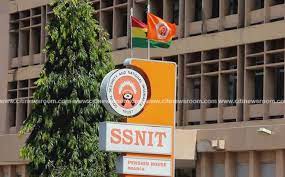
    The Social Security and National Insurance Trust (SSNIT) has indicated plans to rollout an aggressive membership drive to rope in about one million contributors from the informal sector by next year.

    This, will be about two-quarters or more of the existing membership of SSNIT mostly from the formal sectors of the economy. SSNIT, is however, confident of achieving the target while changing the existing narrative.

    Currently, out of the over 11 million workers in the country, less than 2 million of them are active SSNIT contributors, leaving about nine million workers not registered on any pension scheme. Indicating that, the informal sector dominates the yet to be registered fraction.

    “From our own data you find out that out of all the people that are in the informal sector who could have enrolled on our pension scheme, there’s only about some 14,000 who have signed up, which is very, very minimal. So, the terrain is wide open and this program that we are embarking on, my hope is that maybe a year after we have rolled out this campaign, we can get as much as about a million people”, Director-General of SSNIT, Dr Ofori Tenkorang said when he spoke to the media on the sidelines of a stakeholder engagement on the national pension scheme provider’s planned campaign to extend coverage to the informal sector.

    He added that “I know it’s a very aggressive target because people need to buy into the idea that they too can join this scheme. People need to disabuse themselves of the notion that giving your money to SSNIT is a waste, especially people in the informal sector who feel that they need the money now, not for some time later, which for them sometimes they think will never come.”

  • Cedi to gain strength this week… as MPC decisions take full effect – Analyst

    Cedi to gain strength this week… as MPC decisions take full effect – Analyst

    Adnan Adams Mohammed

    The recent monetary measures announced by the Bank of Ghana is expected to impact on the exchange rate this week, thus, giving the local currency a feet stand against the U.S dollar, an economist has said.  

    The senior economist with databank indicated that, checks from some forex bureaus and commercial banks show that the cedi is gaining marginal strength against the dollar as at the time of interview, last week, as the local currency was trading averagely at GH¢7.84 to the dollar on the retail market, compared to about ¢8.06 couple of days before the Central bank’s announcement last week. However, the Bank of Ghana pegs the cedi to the dollar at ¢7.112 (mid-rate).

    The Central bank, last week, announced a significant increase in the policy rate by 2.5 percent to 17% from a previous 14.5%. This is expected to entice investors to acquire cedi denominated instruments because of the attractive yields. Though cost of borrowing will go up, increasing cost of living and doing business, the Bank will in the interim mop up excess liquidity in order to control inflation and reduce interest in the dollar denominated assets. But, the economist said, its early days to predict the fortunes of the cedi, the market will definitely react to the policy decisions by the Central Bank.

     “In the interim, we’ll say its early days yet. In addition to that, the cedi also has a history about its performance so from the weeks ahead, we’ll start to analyse the foreign exchange market to see how the cedi will respond to some of these announcements”, Senior Economic and Currency Analyst at Databank Research, Courage Martey said.  

    “But on the face of it, this appeared to be good measures; aggressive and decisive measures from the Central Bank which we expect to be backed by the fiscal measures, so that going forward, the market – at least sentiments – should start to improve. Once it’s starts to improve, we should start to see it reflecting in the pricing behavior of participants on the market”, he added.

    The MPC’s decision in the interim is expected to mop up excess liquidity in order to control inflation and reduce interest in the dollar denominated assets.

    “When Cedi liquidity finally tightens, what you might see is that, those hoarding dollars in their accounts will not want to go and borrow expensive cedi. They will rather have to sell their dollar holdings to buy cedis and that could increase the supply of dollars on the market and slow down the pace of depreciation”, Mr. Martey stated.

    Beyond the policy rate, the Bank of Ghana announced measures which will take effective from April 1st, 2022,

    The measures in relation to universal banks include an increase in the Cash Reserve Ratio to 12%; the Capital Conservation Buffer reset to the pre-pandemic level of 3%, making the Capital Adequacy Ratio a total of 13% and the provisioning rate for loans in the Other Loans Exceptionally Mentioned (OLEM) category reset to the pre-pandemic level of 10%.

  • TVET major pillar for development – Akufo-Addo

    TVET major pillar for development – Akufo-Addo

    The government has placed emphasis on technical and vocational education as a major pillar of national development.

    President Nana Addo Dankwa Akufo-Addo, who made the declaration, said empowering vocational and technical educational institutions would help produce market-ready graduates.

    He said if key stakeholders paid greater attention to technical and vocational training, where the skills essential for the contemporary economy might be developed, the economy would be radically transformed.

    Speaking at the 92nd Speech and Prize-giving Day of the St Augustine’s College in Cape Coast last Saturday, the President insisted that the government was on course with the necessary investments in technical and vocational education and training (TVET) institutions to provide students with holistic education in their respective fields, well cut for the job market.

    “The strategy is to expand technical and vocational opportunities at both secondary and tertiary levels and thereby strengthen the linkages between education and industry, as well as empower young people to deploy their skills and employ themselves and others,” he stated.

    The event, which was on the theme: “Redefining education delivery in a technological age: The role of St Augustine’s College”, was sponsored by the 1997 Year Group of old students.

    Present was the Minister of Education, Dr Yaw Osei Adutwum, and the Central Regional Minister, Justina Marigold Assan.

    Coordinating TVET activities

    President Akufo-Addo stated that as part of the government’s objective to make TVET a basic pillar of the educational sector, second-cycle technical institutions were being overhauled.

    He emphasised that the government was retooling the whole educational sector, including TVET as a component, and that most second-cycle technical institutes were undergoing renovations.

    “The government, in view of the challenge facing the TVET sector, has initiated a number of policy measures in improving the coordination of the TVET sector and enhancing the effectiveness of the operations of training institutions,” the President said.

    “We have taken concrete steps towards redeeming the misconception that technical and vocational education is inferior and patronised by intellectually and financially less endowed students,” he added.

    He explained that the Ministry of Education was undertaking cutting-edge policies to achieve its objective of the 60-40 science-humanities ratio enrolment in senior high schools (SHSs) for its transformation agenda.

    To that end, he said: “The construction of eight module STEM high schools and 20 STEM centres across the country, all at various stages of completion, together with the construction of the Accra STEM Academy, is one of the pragmatic steps the government is taking to promote the advancement of science and technology education in Ghana.”

    President Akufo-Addo addressing a parade mounted by the Cadet Corps of the St Augustine’s College in Cape Coast last Saturday

    President Akufo-Addo emphasised that practical steps must be taken to guarantee that graduates were not just market ready but also capable of contributing their fair share to Ghana’s progress, as other countries had done.

    “Countries such as Malaysia, Singapore and South Korea, with whom we began the independence journey, have stripped us today by far in terms of development and they did so because they made the fundamental decision to transform their economies from raw material, low productivity agrarian economies to value-added, high productivity industrial economies, and it is the same transformation we must engineer,” he said.

    He stressed that those countries’ strong investment in TVET education had propelled them to their current status as industrial greats.

    Effective supervision

    The President urged heads of schools to do a better job of supervising teaching and learning and developing new strategies to track the success of academic activities, “while the government does its part to provide the necessary tools and atmosphere for modern science learning.”

    Economic challenges

    On the economic challenges, President Akufo-Addo said every country on the face of the planet was going through challenges brought forth largely by the COVID-19 pandemic.

    “Ghana is not the only country faced with extraordinary increases in global freight rates, strong inflationary pressures, dramatically rising fuel prices, unprecedented volatility of stock markets and tighter global financing conditions. These are global phenomena,” he said.

    He said the GH¢100 billion Ghana Coronavirus Alleviation and Revitalisation of Enterprises Support (CARES) programme was sure to turn the fortunes of the country around and enhance prosperity for all.

    “Nonetheless, the government continues to work hard to address these issues, and I am certain that sooner, rather than later, our economy, through the implementation of the government’s GH¢100 billion Ghana CARES Obaatanpa Programme, will rebound from the ravages of the pandemic, bringing in its wake stability, development, progress and prosperity for all Ghanaians,” the President stated.

    ICT learning

    The Chairperson of the Anniversary Celebrations, Kofi Adomako, called on the Ministry of Education and other relevant stakeholders to place greater focus on the teaching and learning of information and communications technology (ICT), which he described as a critical basic skill needed for self actualisation and economic development.

    He emphasised that in order to prepare Ghana’s youth for the global digital shift, schools must provide more practical teaching and learning in computer skills for students in order to train them to become problem solvers.

    “Make the learning and teaching of ICT a priority to ensure that we produce graduates who can become problem solvers to ensure exponential growth in all sectors of our economy,” Mr Adomako stated.

    The Metropolitan Archbishop of Cape Coast and Patron of the college, the Most Rev. Charles Gabriel Palmer-Buckle, advised students to use the Internet to advance their studies, instead of for unrelated pursuits that had little influence on their academic progress.

  • Using net reserves to solve economic crisis will be disasterous – Ato Forson warns gov’t

    Dr. Cassiel Ato Forson, Ranking Member on the Finance Committee in Parliament, has cautioned the Bank of Ghana (BoG) against using the country’s net reserves to salvage the current economic crisis.

    According to him, this would be a “disaster staring in the face of the country”.

    Speaking to some decision taking by the government to hault the cedi depreciation yesterday, Dr. Ato Forson explained that any attempt by the central bank to use the net reserves would lead to a cascading drop in the country’s currency.

    “When the investors are to see that the reserves keep going down, then they would be rushing to exit and if they exit and obviously the currency is going to drop and drop and drop until it falls. That is what I’m worried about,” he said.

    The Monetary Policy Committee of the Bank of Ghana after a meeting on Monday increased the policy rate – the rate at which it lends to commercial banks – by 2.5% per cent to 17%.

    This is the first time since November, 2018 that the rate has gone up so high.

    The decision is due to the current pressures on the economy, the uncertainty about the economic outlook and developments in Russia – Ukraine, which has pushed fuel prices up astronomically.

    The move to adjust the base lending rate of the Central Bank is expected to control the rising inflation and check the rapid depreciation of the cedi.

    This comes in the face of the raging economic challenges which compelled government to hold a crunch cabinet meeting to find solutions to the economic crisis.

    Reacting to the recent intervention by the central bank, Dr. Ato Forson said the BoG’s effort is a bit late.

    Referencing a reduction in the international reserves in December last year by approximately $700 million and another $600million loss in January this year, the former Deputy Finance Minister noted that the central bank should have instituted these interventions earlier.

    “They could have given some hope to investors. Today, we are losing reserves at a very alarming rate. My only concern is that the package that the central bank has actually provided will not be enough in the sense that the problem, the concerns of the investors who are actually repatriating and taking their money away, are actually because of the fiscal situation. So I want to see what the fiscal authorities will do and as to whether that information would be enough for the market to respond appropriately or not,” he added.

    Meanwhile, the Finance Minister, Ken Ofori-Atta, is expected to address the nation this week to communicate key measures taken by the government amid the current challenges.

    A statement issued by the Information Ministry hinted that the update will include the reopening of land borders, the easing of Covid-19 restrictions, and measures to arrest the depreciating cedi.

    “President Akufo-Addo approved a number of far-reaching measures aimed at mitigating the depreciation of the cedi, ensuring expenditure discipline and providing relief in the face of the global fuel price hikes and inflation as well as ensuring that priority programmes meant to grow the economy are protected.

    “Government appreciates the efforts of all who contributed to a successful retreat and looks forward to the support of all Ghanaians in implementing the agreed measures,” the statement added.

  • StanChart okays policy rate tightening amidst resentment for ‘No IMF’ stands

    Adnan Adams Mohammed

    Standard Chartered Bank (StanChart) has said the Monetary Policy Committee of Bank of Ghana acted decisively to front-load its tightening in defence of the local currency (Ghana Cedi).

    The Bank believes that, the combined package of tightening, a policy rate hike that will raise the real policy rate despite accelerating inflation, along with the withdrawal of significant Cedi liquidity from the domestic market, should have a significant impact on the currency, providing a near-term reprieve from Cedi depreciation. A simultaneous announcement that Ghana plans to borrow US$2 billion through the syndicated loan market in order to replenish its foreign exchange (FX) reserves, should further boost sentiment, helping to stabilise the currency.

    Despite the Bank’s hope for better results of MPC’s decision on the economy, it expressed worry and resentment over the economic management team decision that failed investor expectations that Ghana might opt for the external anchor of an IMF programme to boost fiscal consolidation plans proved to be unfounded.

    “Nonetheless, markets will await the announcement of additional fiscal measures, expected later this week. These could yet shore up confidence, despite disappointment over Ghana’s plans not to seek an IMF programme”, StanChart said in a policy response circular it should and sighted on scoail media. “Investor expectations were disappointed, diverting some of the focus from the BoG’s forceful monetary policy response.” 

    While these monetary policy measures are welcome and demonstrate the BoG’s resolve to achieve macroeconomic stabilisation, other issues loom as markets await the announcement of additional fiscal measures, expected later this week. These could yet shore up confidence, despite disappointment over Ghana’s plans not to seek an IMF programme.  

    “Moreover, today’s tightening will – out of necessity – add to domestic debt service costs, further pressuring the fiscal outlook. Failure to pass a much-touted 175bps e-levy to date, as well as the partial reversal of some planned revenue reforms addressing benchmark values for imports, have taken a toll on investor confidence” StanChart noted. 

    The MPC yesterday increased the policy rate by 250 basis points to 17 percent. This is the first time the Central Bank has increased the key rate since November 2021.

    At a press briefing on Monday, March 21, 2022, the Governor of the Bank of Ghana, Dr. Ernest Addison said all is being done to check inflation. He attributed the upward review of the rate to the sharp rise in inflation as well as the upsurge in prices of goods and services as well as petroleum products.

    “Headline inflation has risen sharply to 15.7 percent in February 2022, and both headline and core inflation are significantly above the upper limit of the medium-term target band. The uncertainty surrounding price developments and its impact on economic activity is weighing down business and consumer confidence. The risks in the outlook for inflation are on the upside and include petroleum price adjustments and transportation costs, and exchange rate depreciation.”

    “Under these circumstances, the committee has decided to increase the policy rate by 250 basis points to 17 percent. The Bank’s latest forecast still depicts an elevated inflation profile in the near term, with inflation falling within the medium-term target band within a year”, he revealed.

    At this MPC meeting, the combination of tighter global financing conditions, sharp pressures on the exchange rate, and elevated inflation pose some policy challenges.

    “The Bank of Ghana will, effective, 1st April 2022, enforce the following measures in relation to universal banks: The cash reserve ratio has been increased to 12%, the capital conversation buffer has been reset to the pre-pandemic level of 3% making the capital adequacy ratio a total of 13% and the provisional rate for loans in the other loans exceptionally mentioned category, has been reset to the pre-pandemic level of 3%,” Dr. Addison added.