Category: Economy and Finance

  • Russia-Ukraine war: the likely and unlikely spillovers to affect Ghana and beyond 

    Russia-Ukraine war: the likely and unlikely spillovers to affect Ghana and beyond 

    Adnan Adams Mohammed

    The world at large are keeping their fingers crossed and preparing for spillover from the Ukraine invasion by Russia and the possible sanctions from United States of America and European Union.

    Although, the likely and unlikely spillovers could be felt in the short and medium term, especially in the energy sector, Ghana is told that any increase in oil prices will be in the short term in the $100-110 per bbl range and that the year average will stay between $80-90 per bbl  and as such the world market oil prices will not be the dominant factor in determining our fuel pump prices.

    A finance and energy analyst has assured Ghanaians to lose no sleep as the fallout from the Ukraine invasion will have no immediate effect on prices of our petroleum products. Rather, he advised the managers of the economy and the forex market regulators to put in measures to control the escalating exchange rate as witnessed in the past few weeks.

    “Although Ghana is vulnerable to world oil prices spikes, any such spikes will be temporary as the market players shall adjust for any shortfalls and speculations that could contribute to the spike. Rather, our concerns should be more of the forex exchange of which we have more control”, Alex Mould, former executive director of Standard Chartered Bank and past CEO Ghana National Petroleum Commission has posited. “The untamed and recent runaway Cedi to dollar exchange rate is what is going to be the main contributor of increased fuel prices in Ghana in the short and long term.”

    Although, current price as of yesterday, Tuesday, March 1 2022, at 23:00GMT, the Brent crude price had jumped to US$107, Mr Mould asserted it is an expected temporary situation mainly due to speculators while supply and demand data takes time to surface. Adding that, the global crude price will still fall within the revised forecasted benchmark price of US$85 per barrel for 2022 unless in a situation where NATO joins the conflict which will then prolong the consequence of the crisis.

    Initial forecast for 2022 by analysts prior to invasion was at $75 per bbl

    On the forecasts, there are two schools of thought: a temporary blip and year average remains in 80-90 range, or a permanent new highs over $100.

    Many analysts suggest It will correct itself soon; as soon as some agreement is reached; but the highs we see will only be prolonged if NATO get into the conflict.”

    Consensus by most researchers is that the supply effect is not going to be immediate, although they have expected over supply of crude oil on the market because Iran oil will be available soon.  They have now increased their 2022 forecast for the average price of Brent oil from US$75 to US$85 per barrel.

    The spike we see where price is up over US$100 for the first time since 2014  is just a response by speculators and traders who believe that the Russia-Ukraine crisis is going to cause a supply and demand problem, but there is excess supply in the world.

    While Russia, Saudi and USA each produce about 12 million barrels per day, 

    U.S consumes the most oil in the world and Russia exports about 4 milion barrels a day. Saudi Arabia and other OPEC members have the capacity to increase exports by over 5 million barrels per day enough to augment the more than Russia’s 4 million export.

    Europe’s vulnerability

    Meanwhile, there are issues to do with Russia not supplying gas to Europe, because Europe need that gas badly.

    Europe and U.S are not going to put sanction on gas in the short term. However, Europe is receiving gas and oil supply from other Asian countries just to ensure that Putin will not hoard knowing that we are at the peak of the winter. This is where it will be disaster in Europe. Most people cannot switch from gas to liquid maybe Diesel or Crude Oil to power their plants or for heating in their houses. It is only Germany, really, that the capacity to gear up to do that.

    “Europe is very vulnerable as we speak and Putin and U.S know that; the Biden administration announced that they will not put sanctions on Russia’s oil because that will hurt U.S consumers directly and not Putin. But knowing U.S, and how they are quick to  change their policy, this view could change soon”, Mr Mould juxtaposed.

    The other issue is the corporate concern where there are a lot of companies in Russia own by U.S and Europe citizens.

    Possible collateral damage from sanctions on Russia

    Already, President Biden has announced a “first tranche” of economic sanctions on two Russian banks with about US$80 billion in assets and five Russian oligarchs and their families, and prohibited U.S. entities from purchasing Russian sovereign debt.

    More sanctions are expected to follow in response to what Biden said is a “needless act of aggression against Ukraine and global peace and security.” The forthcoming sanctions could include restrictions on major Russian banks that would dramatically affect Russia’s ability to conduct international business.

    Severe U.S. sanctions could drive up prices for everyday Russians or cause Russia’s currency or markets to crash. Because the U.S. does not rely much on trade with Russia, it is somewhat insulated from direct consequences. Europe is more directly affected. But certain sectors of the U.S. economy rely on highly specific Russian exports, primarily raw commodities.

    “The premise of sanctions is to hurt the other guy more than you hurt your own interests. But that does not mean there will not be some collateral damage,” said Doug Rediker, a partner at International Capital Strategies.

    Global markets could drop

    The invasion rattled investors which sent the prices of traditional investment safe havens higher, with gold up more than 1.5% overnight.

    “Markets are fundamentally not prepared for a land war in Europe in the 21st century,” Rediker said. “It’s something people just have not contemplated.”

    The U.S. stock market has already been unusually volatile in recent weeks, churning over inflation, moves by the Federal Reserve to curb its stimulus programs and the looming conflict in Ukraine.

    “Historically, the market has bounced back relatively quickly after geopolitical events. That’s what’s most likely today too, analysts say, so the effect on people with 401(k) accounts may be short term”, an article by Becky Sullivan on the npr.org said.

    “But if the conflict causes long-lasting disruption of energy markets and other exports, investors could rethink that conventional wisdom.

    “You’re potentially at a point where not only are we looking at Russia potentially invading Ukraine and sanctions and countermeasures, but you are also looking at a rise of China that doesn’t necessarily agree with the American perspective on the world anyway,” Rediker said last week, before the invasion. “Are we looking at a point in which some of the major premises that people take for granted have to be reassessed?”

    Other industries to be affected

    Russia is a major exporter of rare-earth minerals and heavy metals such as; titanium used in airplanes. Russia supplies about a third of the world’s palladium, a rare metal used in catalytic converters, and its price has soared in recent weeks over fears of a conflict.

    Ukrainian economic output and industry will likely be significantly disrupted. The country is a major source of neon, which is used in manufacturing semiconductors.

    As a result, U.S. officials have warned various sectors, including the semiconductor and aerospace industries, to brace for supply chain disruptions.

    Fertilizer is produced in major quantities in both Ukraine and Russia. Disruptions to those exports would mostly affect agriculture in Europe, but food prices around the world could rise as a result.

    Russia could launch disruptive cyberattacks

    Subtlely, Russia could respond to U.S. sanctions through cyberattacks and influence campaigns.

    Already, various federal agencies, including the Treasury and the Department of Homeland Security, have warned of possible cyberattacks on targets like big banks and power grid operators.

    “They have been warning everyone about Russia’s very specific tactics about the possibility of attacks on critical infrastructure,” Katerina Sedova, a researcher at Georgetown University’s Center for Security and Emerging Technology, told NPR.

    Russian cyberattacks have targeted Ukraine relentlessly in recent years, including attacks on the capital city of Kyiv’s power grid in 2015 and 2016. But a major escalation could shift focus to U.S. targets.

    An escalated war  would likely spark a refugee crisis

    The invasion could send 1 million to 5 million refugees fleeing Ukraine, U.S. officials and humanitarian agencies have warned.

    “It will be a continent-wide humanitarian disaster with millions of refugees seeking protection in neighbouring European countries,” Agnès Callamard, secretary-general of Amnesty International, said last month in statement.

    Poland, which shares a border with Ukraine and is already home to more than a million Ukrainians, would likely see the most refugees. Polish Interior Minister Mariusz Kaminski said his country was preparing for an “influx of refugees” from Ukraine.

    At the largest scale, a refugee crisis would not be contained to Europe, the U.S would likely see refugees seeking asylum too.

  • Gov’t direct banks to delay February salaries 

    Gov’t direct banks to delay February salaries 

    News Desk Report

    Information gathered by www.newsguideafrica.com can confirm that, banks have been directed to delay crediting the salary accounts of ‘some government workers’ for the month of February. 

    As at 15:40 GMT on March 1 2022, some nurses and interior ministry workers confirmed this news portal that, though they have been paid on their payslip, but their banks accounts are empty. 

    This confirms a notice being circulated on social media and sighted by this news portal. The notice did not indicate the writer’s institution or authority but copied to the Controller and Accountant General’s Department indicated that, banks have been directed to suspend payment of salaries until further notice.

    “Salary payment for all public sector workers is suspended until further notice”, part of the notice captured. 

    “CAGD has made payment already for the month of february since 25th february 2022 but in response to the directives all banks were asked to suspend disbursment until futher notice.”

    Attempts to speak to Ghana Association of Bankers was not successful as the senior official called on phone told our reporter that he is busy and cannot talk now after the reporter introduced himself as a news editor of this portal. 

    Also, a call to absa bank toll free line to check why the delay in payment of salaries as at yesterday, February 28 2022, the customer representative answered that, her checks reveals the bank has revealed the salaries and processing them . partai togel

    Read full statement below:

    ATTENTION! ATTENTION! ATTENTION! 

    Kindly note that, with orders from the government of the Republic of ghana all salary payment for all public sector workers is suspended until further notice. CAGD has made payment already for the month of february since 25th february 2022 but in response to the directives all banks were asked to suspend disbursment until futher notice.

    We apologise for any inconvenience.

    Cc

    Controller and Accountants General Department.CAGD

    Republic of ghana

  • Adwoa Sarfo E-Levy voting private jet cost almost GHC1.0mn-Okudzeto

    Adwoa Sarfo E-Levy voting private jet cost almost GHC1.0mn-Okudzeto

    Read full article below:

    Hon Sam Okudzeto Ablakwa writes

    It is surprising that the focus of many including Civil Society Organisations in the series of Adwoa Asafo revelations has been on the alleged GHS120,000.00 transfer into her bank account from the Chief of Staff.

    The cost of the private jet used to ferry her from the USA to Ghana which is much higher than the GHS120,000.00 cannot be ignored.

    We now know that a Gulfstream G-550 registered HB-JOE and operated by Premium Jet AG based in Belgium was the executive aircraft chartered to bring in Hon. Adwoa Safo for her vote on the obnoxious E-Levy.

    It cost US$4,800 an hour to rent the HB-JOE.

    With an 11-hour flight distance, payment of reposition fees (as it flew from Belgium to pick her up in the States), payment of one-way fees (as the business jet flies back home empty), crew per diem fees, landing and wait-time fees; it cost a staggering US$140,000.00. At today’s exchange rate, that is GHS948,500.00

    It is most intriguing that an economy which is said to be broke can lavish a fantastic GHS948,500.00 plus GHS120,000.00 (a total of GHS1,068,500.00) just for one E-Levy vote. Imagine what our country can do with 1million Cedis in the midst of our economic challenges, NABCO demonstrations and labour agitations?

    The dubious claim that Adwoa Sarfo’s flight cost was paid for by her friends is most insulting. Who are these friends? What is their motivation? Why do these friends want the unpopular E-Levy passed so badly? What do these friends expect in return? What are the tax records of these friends? Why are these friends being shielded?

    How ironic, that the political tradition that in time past roundly rejected the reported kindness of President Rawlings’ friends will today be boldly canvassing a bizarre kind of friendship support.

    The Office of Special Prosecutor must look into the entire GHS1,068,500.00 expenditure for Adwoa Safo’s E-Vote and not only the GHS120,000.00 deposited in her account.

    The current composition of Ghana’s 8th Parliament should lead us to a patriotic, mature and frugal path of consensus building in the national interest; and not the present embarrassing spectre of opting for an extremely partisan, destructive, wasteful, small-minded and reckless road to perdition.

    May God save us. 🙏🏽🇬🇭🙏🏽

  • Editorial: Beneficial Ownership Transparency: strong stakeholders collaboration needed

    Editorial: Beneficial Ownership Transparency: strong stakeholders collaboration needed


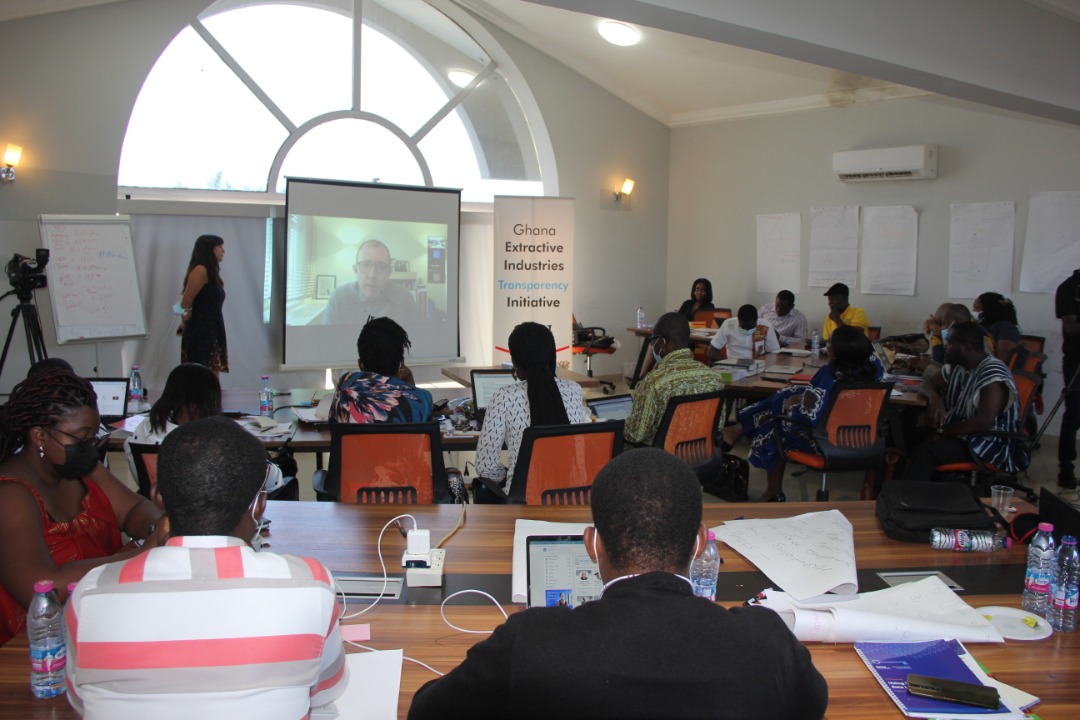
    Last week, some selected Civil Society Organisations and journalists were trained on how to deepen efforts on educating the public and unearthing ‘dubious-minded’ business owners on Beneficial Ownership Transparency (BOT). 

    The four day intensive training was among other intent to raise awareness on the existence and importance of quality and timely Beneficial Ownership (BO) data, and share skills, tools and methodologies to analyse and use these data to improve natural resources advocacy and governance in Ghana.

    The program organised by Opening Extractives (OE), in collaboration with the Registrar General’s Department and the Ghana Opening Extractives National Steering Committee, improved the investigative and data analysis knowledge base of CSOs and journalists through series of capacity building and training sessions. 

    “BO is intended to unveil the true natural persons who have interest and benefit from a company. Over the years that has not been our main target”, Samuel Osei Bekoe, a consultant to the Opening Extractives Programme intuited. “Our target has been legal owners of companies. But for Ghana’s commitment to transparency and accountability under the EITI and European Union charter, we have to do ownership disclosure.”

    The economist and governance expert listed some of the benefit of BOT in the extractive sector will help investors and stakeholders know whom they do business with to avoid potential tax avoidance and transfer pricing situations which has dire consequence on a country’s development agenda as it deprives state of needed revenue. 

    The Opening Extractives (OE) Programme is a global initiative aiming to transform the availability and use of beneficial ownership data for effective governance in the extractive sector. The programme combines political and technical engagement, to support countries implementing beneficial ownership reforms and to enable the use of the data by governments, civil society and companies.

    In September 2021, the Government of Ghana committed to implementing and accelerating beneficial ownership disclosure and data use by joining the OE Programme. The Government’s commitment to improve corporate ownership disclosure is aimed at promoting a transparency and conducive business environment and addressing corruption (particularly tax evasion, avoidance and illicit financial flows) in a bid to increase domestic revenue mobilization.

    To improve the governance of natural resources, Ghana signed onto the Extractives Industries Transparency Initiative (EITI) in 2003 and was admitted as an implementing country in 2007. Since joining the EITI, Ghana has disclosed 10 EITI Reports covering fiscal years between 2004-2018. Ghana EITI reports have included other significant information related to transparency in the extractive industry, such as revenues, contracts, production and crude oil sales.

    In 2020, countries participating in the EITI were required to disclose beneficial owners of mining, oil and gas companies. The government enacted the 2019 Companies (Amended) Act, which mandates the Registrar General’s Department (RGD) to collect and maintain a comprehensive beneficial ownership (BO) register for all sectors, including the extractive industry. Ghana EITI reports have also included ownership information, albeit with limited details and coverage.

    Despite the political commitment and progress to institutionalise disclosure of beneficial owners, existing information is not yet fully publicly available, nor has it been analysed by data users interested in the field. Opportunities therefore remain to maximise the impact of beneficial ownership by improving not only the quality of BO data disclosed but also the accessibility and usability of the information.

    We at Economy Times believes that, for the country to reap the maximum benefit from the Beneficial ownership disclosure, all stakeholders; multilaterals, state institutions, CSOs and journalists must collaborative effectively and resourcefully to pursue the outlined strategies.