By Alice Boadimaa Tandoh
Shariah is one of the most misunderstood terms in Ghana’s public discourse. In simple terms, it refers to the teachings of Islam drawn from the Quran and their interpretation for daily life. In that sense, a Shariah scholar is a scholar of Islamic teachings, just as a Bible scholar is a scholar of biblical teachings.
Both Bible scholars and Shariah scholars help interpret religious texts and principles in ways that are useful to their communities. Islam, Christianity and traditional religions are all recognised and practised in Ghana, and each has scholars, leaders and teachers who provide guidance within their respective traditions.
The practice of Islam therefore includes the practice of Shariah, because Shariah sets out Islamic guidance on matters such as family life, marriage, worship, legal reasoning, commerce, service to society and devotion to God/Allah. This is comparable to the work of Bible scholars, some of whom specialise in areas such as the New Testament, the Old Testament, church history, discipleship and community service.
Similarly, Shariah scholars may specialise in Islamic law, commerce, family life, charitable giving and other areas of social and religious practice.
Religious Scholars and Professional Roles
This comparison makes one point clear: when a Bible scholar, bishop or reverend father is appointed as a board member or chairperson of a bank, the person is expected to work within banking principles, regulations and laws. The role is not to preach to members or make decisions outside the banking mandate.
The same principle applies to a Shariah scholar, sheikh or imam. When such a person serves in a national, public or institutional role, the relevant consideration should be competence, experience, integrity and adherence to the laws and rules governing that institution.
Public discussion on this matter should therefore be guided by facts and present realities. Just as some Old Testament practices would not be accepted in modern society, particularly in light of human rights principles, some aspects historically associated with Shariah law are not practised in modern secular societies. Secular states do not endorse religious excesses. For that reason, equating Shariah solely with such excesses is either misinformed, deliberately distorted or based on limited socialisation.
Non-Interest Banking and Governance
The Bank of Ghana team has done important work on Non-Interest Banking and Finance, including public education and prior stakeholder engagements. Their explanations have helped clarify that non-interest banking is still commercial banking; what differs is the model for generating revenue compared with conventional banking.
They have also explained that this form of banking requires an additional governance structure, one that demands experience, integrity, market knowledge and a sound understanding of the Bank of Ghana’s rules. The appointed members are expected to meet the fit and proper persons requirements and to demonstrate deeper interest and understanding of non-interest banking.
The appointments include both Christians and Muslims. Whether the members are reverend ministers, accountants, Bible scholars or Shariah scholars, their responsibility is to guide the development and supervision of the non-interest banking industry in line with the law, sound governance and industry standards.
Experience, Expertise and Religious Neutrality
The banking sector generally seeks experience in banking, and non-interest banking naturally requires experience in non-interest banking. Religious scholars appointed to educational, financial or other professional institutions are expected to serve according to the specific demands of the industry, not as representatives of religious advocacy.
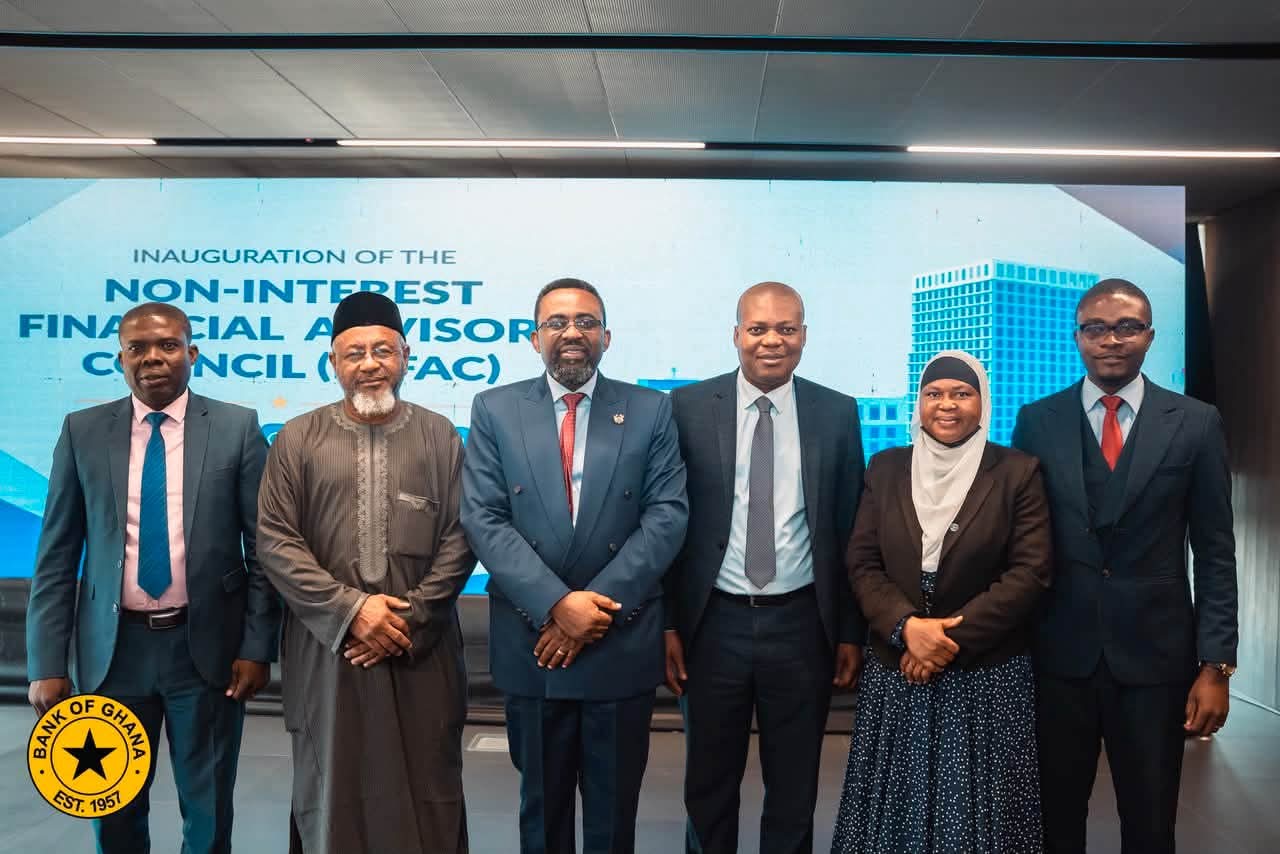
The Bank of Ghana appointed five members to the Non-Interest Financial Advisory Council, four of whom are Ghanaians. The chairperson has been identified as highly experienced and knowledgeable in the global non-interest banking and finance industry.
Developing this market requires people who are experienced, knowledgeable and able to distinguish their religious roles from their professional responsibilities.
In making these appointments, the Bank of Ghana has been guided by local content, cross-border expertise, inclusivity, experience, readiness to learn and religious neutrality. Ayekoo, Bank of Ghana.