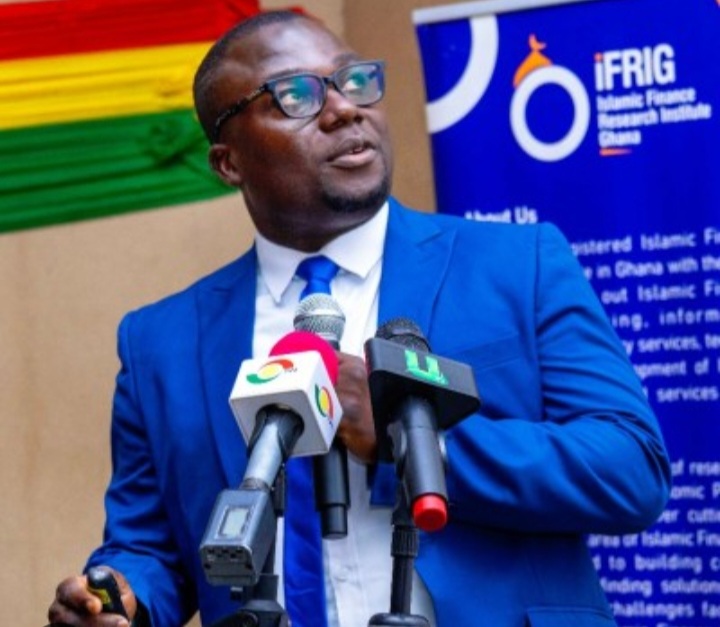
As West African nations seek innovative avenues to bridge widening infrastructure deficits without deepening national debt, the Islamic Finance Research Institute of Ghana (IFRIG) is calling on the government to embrace non-interest, asset-backed bonds as a primary vehicle for public development.
Dr. Shaibu Ali, Director-General of IFRIG, argues that non-interest financial structures often referred to as Sukuk present Ghana with a transformative opportunity to build essential hospitals, schools, and transportation networks through direct asset ownership and shared risk.
“Traditional sovereign debt relies on compound interest that often places an unsustainable burden on public revenues,” Dr. Ali noted. “Non-interest instruments offer a fundamentally different path. They link capital deployment directly to physical assets, ensuring that funds are tied to real-world development rather than speculative debt.”
Unlike conventional borrowing, where debt accumulates regardless of project outcomes, non-interest bonds grant investors partial ownership or usage rights in tangible public infrastructure, distributing returns based on actual economic activity and performance.
“This is about creating built-in transparency and accountability,” Dr. Ali emphasized. “When an investor backs a non-interest bond, they are funding a specific road, hospital, or university expansion. The financial returns flow from the utility and productivity of that asset, which naturally safeguards public resources from misallocation.”
Dr. Ali pointed out that global capital markets have seen a massive rise in ethical and ESG (Environmental, Social, and Governance) investments, leaving a vast pool of global capital untapped by African nations reliant solely on high-interest Eurobonds.
“There is a multi-trillion-dollar global ethical finance pool looking for viable, real-sector opportunities,” Dr. Ali concluded. “By establishing the regulatory frameworks to issue non-interest bonds, Ghana can diversify its sovereign financing options, attract new international and domestic investors, and build the foundation for resilient, long-term national growth.”