Tag: Goldfields Ghana

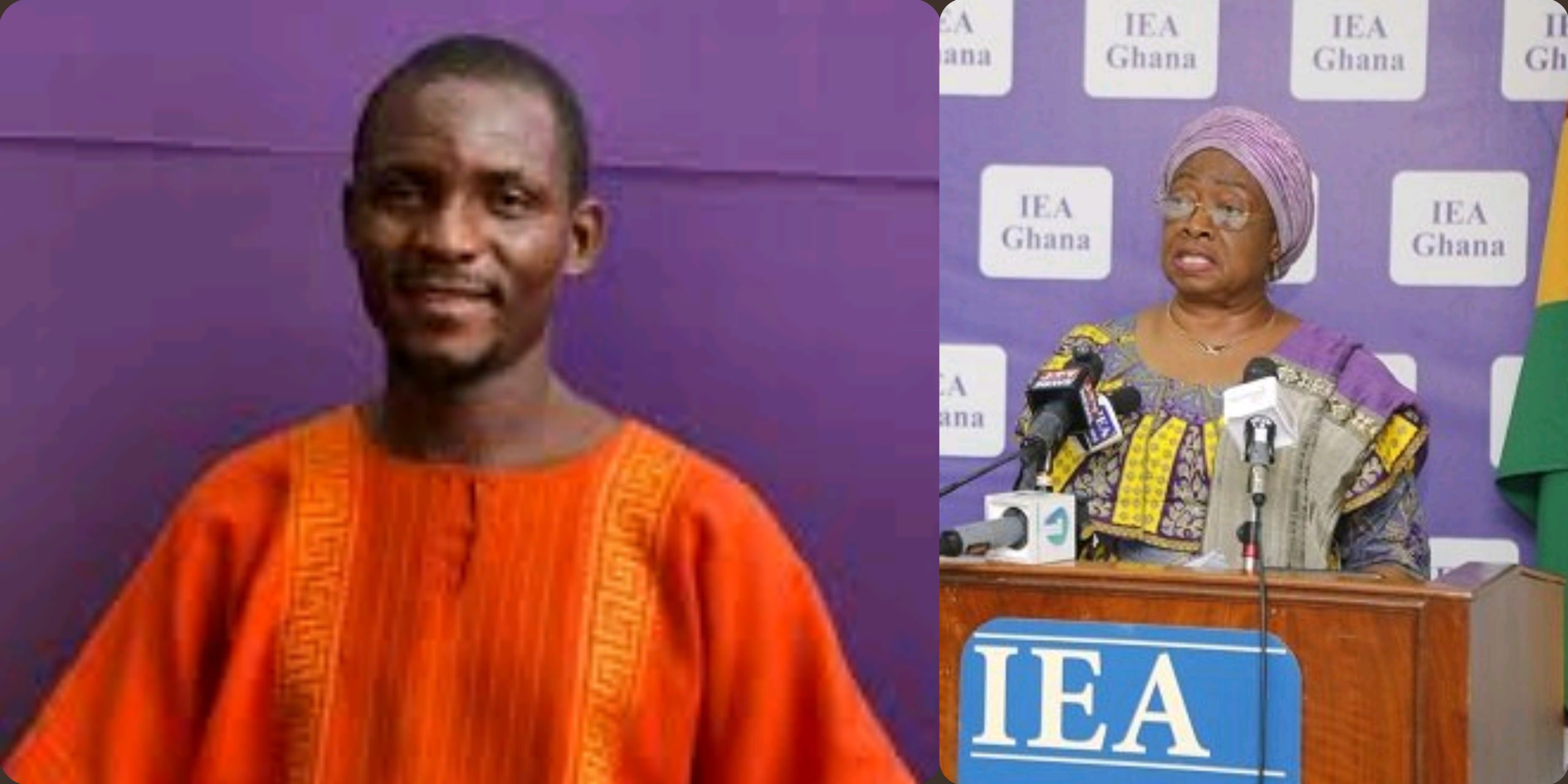
  • GOLDFIELDS LEASE RENEWAL: IEA and Sophia Akufo Must ‘SHUT UP’  …Jean Mensah’s betrayal lingers 


    By Adnan Adams Mohammed; Mining Health and Safety Professional, Finance and Economic Journalist


    The debate over the renewal of Gold Fields’ mining lease for the Tarkwa Mine has reached a fever pitch.

    On one side, the Institute of Economic Affairs (IEA), led by the former Chief Justice Sophia Akufo, is demanding that the government “reclaim” the mine when the lease expires in 2027. They argue for a shift toward 100% state ownership and service contracts, claiming the current royalty-based model is “colonial” and “inimical” to national interests.

    ​However, while the call for “economic sovereignty” is emotionally resonant, it overlooks the brutal realities of the global mining industry. Rebuffing a proven investor like GoldFields in favor of state-run operations isn’t just risky, it’s a recipe for economic instability.

    ​1. The “Resource Nationalism” Trap

    ​The IEA’s proposal suggests that because Ghanaian service providers currently do much of the heavy lifting at Tarkwa, the state can simply step in and take over.

    👉 This is a fundamental misunderstanding of the difference between contracting and capital risk.

    ​Mining is an incredibly capital-intensive industry. Gold Fields recently invested hundreds of millions of dollars into the Tarkwa and Damang operations to extend their life. When a state takes over a mine, it inherits not just the gold, but the massive liability of equipment maintenance, environmental reclamation, and exploration costs. In an era where Ghana is already struggling with debt and fiscal space, where would the billions of dollars in “stay-in-business” capital come from?

    2. Technical Capacity vs. Institutional Integrity

    ​Justice Akuffo argues that Ghana has the expertise.

    👉 She is right; Ghanaian engineers and geologists are world-class. But the problem isn’t technical; it’s institutional.

    ​History is littered with state-owned enterprises (SOEs) in Ghana that have struggled with political interference, lack of reinvestment, and opaque governance. Moving from a regulated private lease to a state-managed operation often results in a “politicization of the pit,” where short-term political needs override long-term mining plans. A private multinational is accountable to shareholders and international regulators; an SOE is often accountable only to the government of the day.

    ​3. Investor Confidence and the “Signaling” Effect

    👉 ​The mining sector is Ghana’s largest source of foreign direct investment (FDI). If the government arbitrarily refuses to renew a lease for a company that has complied with all legal and environmental standards, it sends a chilling message to the global market.

    ​Investors value predictability. If the rules of the game change once a project becomes profitable, future investors will take their capital to more stable jurisdictions like Côte d’Ivoire or Australia. We risk “reclaiming” one mine only to lose the investment needed for the next ten.

    ​4. The Myth of the “Service Contract”

    ​The IEA advocates for “service contracts” (where the state owns the gold and pays a firm to dig it up).

    👉 While this works for oil in some Middle Eastern countries, gold mining is vastly different. The margins are thinner, the geological risks are higher, and the price of gold is volatile. Very few world-class mining companies are willing to take on the massive operational risks of a deep-pit mine for a flat fee. Without a share in the “upside,” top-tier companies won’t bring their best technology or most efficient practices to the table.

    ​The Path Forward: Reform, Not Rejection

    ​Instead of the “all-or-nothing” approach suggested by the IEA, the government should use the 2027 expiration as leverage for a better deal.

    ​Increase Local Equity: Negotiate for a higher carried interest for the state or mandatory listing on the Ghana Stock Exchange.


    ​Stricter Value-Addition: Tie the lease renewal to the construction of local refineries or the sourcing of 100% of inputs from Ghanaian manufacturers.


    ​Infrastructure Bonds: Require the company to front-load infrastructure development in Tarkwa as a condition of the extension.

    ​Sovereignty isn’t just about who owns the dirt; it’s about who benefits from the wealth it generates. We can achieve the “enduring prosperity” the IEA seeks without destroying the very industry that keeps our economy afloat.

    Reclaiming the mine might feel like a victory in a press release, but if the mine collapses under the weight of state inefficiency, it will be a hollow victory for the people of Tarkwa.



  • Goldfields-Anglogold joint venture in limbo – former CEO hints 

    Goldfields Ghana


    Adnan Adams Mohammed 


    Chris Griffith, former Chief Executive Officer of Goldfields, has hinted that, the joint venture proposal between Goldfields Tarkwa and Anglogold Iduaprim he started before quitting has failed. 


    Gold Fields in 2022 announced joint ventures with AngloGold Ashanti in Ghana and another with Osisko Metals in Canada. 


    “All those things didn’t happen one or two months after I left. They were started well into my time,” he said in a recent interview published in the Financial Mail.


    Implementation of the proposed joint venture (JV) between Gold Fields and AngloGold Ashanti, aimed to create Africa’s largest gold mine in Ghana, was to start by the end of 2023 or at least early 2024.


    This is subject to agreement with the Government of Ghana, conclusion of all due diligence processes, and requisite regulatory approvals.


    However, according to Economy Times investigation, Goldfields had stayed back from the deal because the government is demanding an upfront tax payment for five years period. Several phone calls to the Goldfields Ghana Head Office based in Accra to speak to get confirmation on the matter through the official telephone number was not successful. 


    The JV, was to combine Gold Fields’ Tarkwa Mine and AngloGold Ashanti’s Iduapriem Mine, to be incorporated within Gold Fields Ghana. This would be supported by a substantial mineral endowment and an initial life span of almost two decades.


    The Tarkwa Mine is currently 90 percent owned by Gold Fields Ghana, with the Government of Ghana holding the remaining 10 percent. The Iduapriem Mine, meanwhile, is 100 percent owned by AngloGold Ashanti.


    “It’s hard to offer an exact timeline, given that this will involve detailed discussions with the government and requires regulatory approvals, but we hope to be able to implement the transaction by the end of 2023 or early next year at the latest,” a statement issued by the two parties said in part.


    The Executive Vice President and Head of Gold Fields West Africa, Joshua Mortoti, during a press briefing in Accra, said the proposed JV would improve life of mine, ensure business efficiency and operational synergy through combining respective ore bodies and infrastructure for the benefit of shareholders and stakeholders.


    “We are extremely excited about the opportunity to create a mining entity with the potential to become the largest gold mine in Africa, delivering safe, sustainable and profitable production over the long term by combining two parts of the same world-class ore body,” Mr. Mortoti stated.


    “We will do this by leveraging the operating efficiency advantage at Tarkwa, due to its scale, to unlock higher gold grades at lduapriem and maximising production across both processing plants,” he added.


    Excluding the interest held by the Government of Ghana, Gold Fields would have a 66.7 percent interest in the joint venture. AngloGold Ashanti would have a 33.3 percent interest. However, it is proposed that once the requisite approvals are received, the Government of Ghana will have a stake of around 10 percent in the JV, Gold Fields will have 60 percent, and AngloGold will have 30 percent.


    It is not expected that any material additional capital injection will be required by either company to establish the proposed JV as the new venture is anticipated to materially improve its capital intensity once operational.


    The new entity is estimated to have a life of at least 18 years, with an estimated average annual production of almost 900koz over the first five years and average annual production in excess of 600koz over the estimated life of the operation. 


    The ore reserves for the proposed joint venture are expected to exceed the sum of the ore reserves for the stand-alone operations due to anticipated operational synergies and the declaration of additional mineral resources and ore reserves.


    “Gold Fields and AngloGold Ashanti share a long history in Ghana and are committed to working collaboratively to operate a world-class gold mine. This creates a platform to develop the substantial mineral endowment at Tarkwa and lduapriem,” Mr. Mortoti highlighted.


    Also, the Managing Director of AngloGold Ashanti Ghana, Eric Asubonteng, believd through the creation of one of the world’s largest gold operations on the back of the proposed JV – in a pre-eminent mining jurisdiction – there will be a creation of a longer-term value not only for AngloGold Ashanti and Gold Fields, but for the combined stakeholders.


    “This proposed joint venture manages to capture true synergies in a commercially sensible way, by removing the fence between two halves of the same deposit and managing their operations and infrastructure under a single structure,” Mr. Asubonteng said.


    “We expect that reserves of the proposed joint venture will exceed the sum of the reserves for the stand-alone operations, given the extent of the anticipated operational synergies,” he added.


  • Gold Fields sells its 45% shareholding in Asanko mines for $170m

    Joshua Mortoti


    Gold Fields Limited has announced the divestment of its 45% shareholding in the Asanko gold mine in Ghana to TSX-listed joint venture partner Galiano Gold for a total consideration of $170m.


    Gold Fields will also receive a 1% net smelter royalty on future production from the Nkran deposit, the main deposit at the mine.

    Goldfields Ghana 

    The Asanko mine is currently owned 45% each by Gold Fields and Galiano Gold, with Galiano managing the mine. The Government of Ghana holds the remaining 10%.


    The transaction will be settled by Galiano to Gold Fields through a combination of upfront, deferred and contingent consideration as follows:$85m which will be settled with US$65m in cash and US$20m in Galiano shares on completion of the transaction;

    $25m to be paid on December 31,2025;

    $30m to be paid on December 31, 2026; and

    $30m plus a 1% net smelter royalty to be paid once more than 100koz of gold equivalent is produced from the Nkran deposit. The royalty is capped at a volume of 447koz.


    Gold Fields currently has a 9.8% shareholding in Galiano and the share purchase agreement limits the shareholding that Gold Fields can raise this to 19.9%. Should the market value of Galiano shares be less than the requisite $20m, Galiano will make up the difference with an additional cash payment.


    Martin Preece, Gold Fields Interim CEO, commenting on the divestment said “We are pleased to have concluded this agreement with Galiano. It is clear that the committed path forward for the Asanko mine requires consolidated ownership. Gold Fields is pleased to realise value for its holding now, while providing flexibility to Galiano in the recapitalisation of the mine and resuming mining to maximise its prospects of success”. 


    “Divestment of our interest in Asanko is part of our ongoing disciplined portfolio management process and releases capital for deployment by the Company in line with our other capital allocation priorities,” Mr. Preece added.


    The current transaction, which is expected to be completed during quarter 1, 2024, is subject to several conditions, including regulatory approvals.


    Gold Fields is a globally diversified gold producer with eight operating mines in Australia, South Africa, Ghana and Peru and two projects in Canada and Chile.