By Adnan Adams Mohammed, Financial and Economic Journalist and Mining Advocate
Ghana’s extractive sector is undergoing its most radical transformation in decades, driven by a dual strategy of aggressive environmental enforcement and sweeping legislative reforms.
For years, the narrative surrounding the country’s mineral wealth was dominated by the destructive footprint of illegal mining locally known as galamsey.
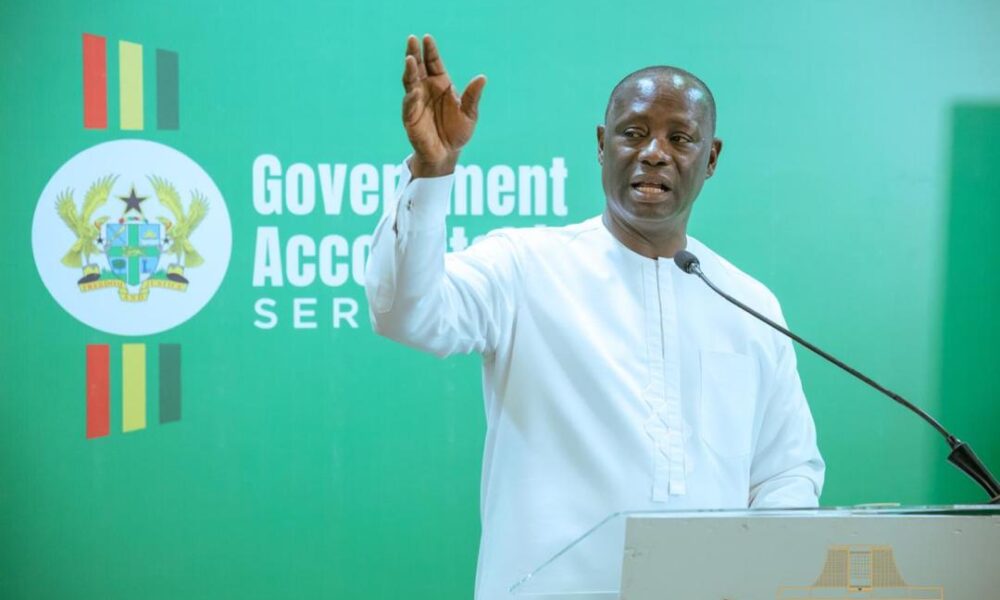
However, recent milestones announced at the Government Accountability Series on July 15, 2026, by the Minister for Lands and Natural Resources, Emmanuel Armah-Kofi Buah, signal a structural shift. The state is transitioning from reactive policing to a comprehensive blueprint aimed at institutionalizing local community gains and pioneering multi-billion-dollar downstream industrialization.
Dismantling the ‘Galamsey’ Empire and Erasing Red Zones
The frontline battle against illegal mining has yielded historic tactical victories over the first half of 2026. In a series of highly coordinated operations involving the Forestry Commission and state military forces, enforcement teams arrested 258 suspects and systematically demobilized the heavy machinery fueling environmental degradation.
The operations resulted in the destruction of 6 heavy-duty excavators, 765 changfan water-dredging machines, and 430 illegal structures erected inside protected ecosystems. Crucially, the government announced the complete eradication of “red zones” areas inside forest reserves previously overtaken by armed mining syndicates and rendered completely inaccessible to forestry officials.
Speaking decisively on the enforcement surge, Minister Armah-Kofi Buah framed the crackdown as a non-negotiable defense of sovereign resources:
“The fight against illegal mining is a defining environmental battle that our generation must fight. Our rivers are not for sale, our forests are not expendable, and our mineral wealth is a sacred national inheritance that we have a duty to protect. Let me be clear, the era of impunity is over.”
Mandating Development: Schools, Water, and Clinics for Host Communities
While security forces clear the forests, Cabinet has moved to fundamentally re-engineer the legal architecture governing legitimate mining. The executive has endorsed an overhaul of the 20-year-old Minerals and Mining Act, 2006 (Act 703), forwarding a revised bill to Parliament that dramatically shifts power back to local communities.
The headline reform is the introduction of mandatory Community Development Agreements (CDAs). Under the previous framework, mining conglomerates could unilaterally dictate corporate social responsibility budgets, often leaving local populations without basic necessities. The new legislation legally caps mining leases at a maximum of 20 years (down from 30) and mandates that no lease will be operationalized without an independently negotiated agreement detailing infrastructure deliverables like clean water systems, schools, and health clinics.
The Minister explained that the era of corporate hand-outs is being replaced by enforceable local rights:
“There are always communities that complain about development. It is no longer going to be the choice of a mining company to decide, ‘I will give them some water.’ The community will negotiate its critical development needs with the mining company, and both parties will agree on those priorities.”
Additionally, the revised law indigenizes the sector by introducing district mining committees as the preliminary gatekeeper for mineral licensing, effectively legalizing a new “medium-scale” mining tier designed exclusively for Ghanaian ownership and participation.
Beyond Raw Exports: Aluminium and Steel Drive Industrialization
The final pillar of Ghana’s extractive evolution aims to break the colonial-era cycle of exporting raw ore. The government is aggressively positioning the state as a processing hub by targeting integrated aluminium and steel manufacturing to anchor national industrial growth.
Through the Ghana Integrated Aluminium Development Corporation (GIADEC), the state is actively engaging global financiers to construct a two-million-metric-tonne-per-year aluminium refinery. Co-located within a newly mapped Tema Industrial Park, the project aims to establish downstream facilities including a massive €300 million aluminium foil plant to eliminate Ghana’s hefty metal import bill and feed regional markets via the African Continental Free Trade Area (AfCFTA). Parallel progress is being recorded by the Ghana Integrated Iron and Steel Development Corporation (GIISDEC), which has finalized a bankable feasibility report confirming high-grade iron ore deposits at the Shieni block in the Oti Region.
Highlighting the economic imperative of value addition, Hon. Buah noted:
“Our vision for Local Content is to ensure that Ghana’s mineral wealth creates lasting prosperity for Ghanaians. We are committed to building a mining industry where our people are not merely participants, but owners, investors, innovators, and manufacturers. The development of Ghana’s aluminium and iron industries will reduce dependence on imported metal products, create jobs, and drive industrial transformation.”
The Author’s Verdict
By simultaneously deploying military deterrence against environmental criminals, legally protecting host communities, and building domestic refineries, Ghana is moving away from purely extractive patterns.
The success of this ambitious policy shift will ultimately depend on Parliament’s swift passage of the revised Act 703 and the continuous, transparent execution of downstream industrial partnerships. If sustained, this strategy could successfully transform Ghana from a mere source of raw materials into a self-reliant, green industrial powerhouse in West Africa.