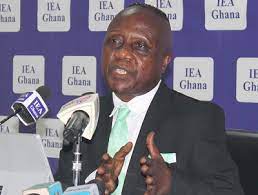
The he Institute of Economic Affairs (IEA) has defended the Bank of Ghana (BoG) against undue blame for its participation in the government’s Domestic Debt Exchange Programme (DDEP), which contributed to the central bank’s financial loss in 2022.
The Director of Research of IEA, Dr John KWAK YEARS, acknowledged the BoG’s responsibility for extending excessive loans to the government, yet he maintained that the central bank cannot be criticised for accepting a “haircut” as part of the DDEP.
In the 2022 fiscal year, the Bank of Ghana reported a substantial loss of GH¢60.8 billion.
Amidst repeated calls from the Minority in Parliament for the resignation of the Governor of the Bank of Ghana, Dr Ernest Addison, and his deputies over perceived recklessness in central bank management, Dr Kwakye elaborated, “As central bankers, financing the government’s deficit is the most inflationary thing to do. That is why the central banks set lending limits to their governments.
“What has happened in our case [BoG] is that it looks like BoG went far beyond the sealing Act of last year’s revenue of 5%.
“We are told that they lent almost GH¢44 billion, and that is the magnitude. Once you do that, you are already getting yourself into serious trouble.”
He said the BoG’s involvement in the DDEP, which qualified Ghana for an IMF programme, the declared GH¢60.8 billion loss, a significant GH¢53.1 billion directly resulted from the DDEP. He emphasized that while fault could be attributed to over-lending to the government, it was essential to acknowledge the compulsion the BoG faced to engage in the DDEP.
“BoG over-lent to government and then you bring in this DDEP which qualifies us for IMF programme. And IMF compels BoG to be part of it. Out of the GH¢60.8 billion loss they have declared, GHC53.1 billion is coming direct from DDEP.
“So the question is will you fault them for that? We can fault them for over-lending to the government that is the problem, but why they were being forced to be part of the DDEP, is also another. That one, you can’t fault them for that”.
Kwakye directed scrutiny towards the IMF, questioning their imposition of the DDEP on the Bank of Ghana in pursuit of a $3 billion bailout.
Furthermore, Kwakye attributed a portion of the responsibility to the government for BoG’s losses, emphasizing their role in creating deficits that necessitate financing.
The African Development Bank’s newest report, the 2023 West Africa Economic Outlook, ranked Ghana’s external debt to GDP of about 39.5 percent recorded in 2022 as 10 percent higher than the West African average of 29.6 percent.
Ghana’s external debt stood at $29.0 billion as at the end of December 2022, ranking sixth highest on the continent.
However, countries such as Cape Verde, Senegal and Niger that have high external debts to GDP are not in distress, but Ghana is the only ECOWAS country, in debt distress.
“West Africa’s external debt increased from an average of 13.8% of GDP in 2014 to 29.6% in 2022. The debt accumulation was facilitated by a rise in the issuance of Eurobonds. Eurobonds have been issued by Côte d’Ivoire, Ghana, Nigeria, and Senegal since 2011, and by Benin since 2019”, the West Africa Economic Outlook 2022 noted.
External debt accounts for the largest proportion of the total public debt portfolio in most countries except Nigeria and Togo in the sub-region.
Meanwhile, the Report explained that, the external debt accumulation was facilitated by a rise in the issuance of Eurobonds. This suggested that exchange rate depreciation as well as the current normalization of monetary policy across the world, were important risks for these countries.
It furthered that the key drivers of external debt dynamics in West Africa were the rapid exchange rate depreciation, especially in commodity-exporting countries as well as high primary fiscal deficits and weak economic growth caused by the COVID-19 pandemic in 2020 and Russia’s invasion of Ukraine in 2022.
“Higher nominal interest rates due to the current tightening of monetary policy in advanced economies have also contributed significantly to higher debt burden in the region. Projected higher economic growth and efforts to reduce the fiscal deficit through domestic resources mobilization, fiscal consolidation and spending restraint are expected to contain external debt accumulation in the region in the medium term”, it added.
Therefore Ghana’s economic challenges may not be only due to the high debt burden, but rather a myriad of issues.
Elections 2024 is not a done deal for the NDC yet for that matter, this is not the time for try and error nor pleasing a region that do not appreciate a favor done unto them. We need to bet with our best cards.
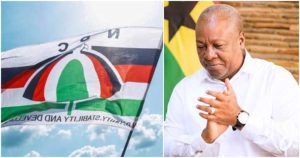
Over the past few weeks, there have been loads of socio-political dialetics about a befitting running mate for the 2024 NDC presidential candidate, His Excellency John Dramani Mahama.
Beyond doubts that, the NDC is poised and better positioned for holding Ghana’s governance mantle come 2025, which the majority of Ghanaians are yearning for and cannot wait to affirm it through the 2024 General Elections.
Although NDC victory is impervious, certain decisions could significantly enhance the outcome. Clearly, the NDC presenting H.E. John Dramani Mahama is a monumental accord, which has already become a dilemma for the NPP in their struggling bid to get any suitable candidate.
To further consolidate the NDC’s brighter position, the choice for a running mate who subsequently becomes the Vice President after the party’s victory is very crucial. This is more so because beyond the conviction that the NDC is winning the elections, other edges have to be pruned in order to ensure a significant percentage for the President as well as securing far greater number of Parliamentary seats.
The persona, background, competence, skills, attributes, connection with the party base and respect by the populace are vital traits that would be assessed prior to one being considered for the pivotal position of a running mate.
Irrevocably, the NDC party have in time passed presented untainted candidates of great repute as running mates among which two had moved on from Vice Presidents to becoming Presidents, with unsurpassed governance output for the 21st century.
Similarly, in the recent turn of events, there are views from some party folks, academics and political analysts alike about deserving persons that they deem favorable to become a possible running mate for H.E. John Dramani Mahama.
In fact, all the names that are popping up simply lends credence to the point that the NDC maintains the finest human resource expertise for the type of governance to deliver Ghanaians out of the current political quagmire and economic abyss.
Julius Debrah
That said, one person that in my candid opinion leads the pack among the rest is Hon. Julius Debrah. I dare to suggest with the strongest conviction that Hon. Julius Debrah (JD) would make the best pair with H.E. John Mahama (JM) for some basic but cogent reasons.
First and foremost, Hon. Julius Debrah is an astute politician and a die-hard member of the NDC who began his political career and party service from the grassroots.
He did not just emerge from the background to get appointed for a higher position but rather, he labored through thick and thin with patience and dedication from the branch level engagements, through which he acquired the requisite experiences as he progressively scaled the political ladder.
At the turn of the 21st century whilst the party was in opposition, he served in various positions in the Eastern Region including a Propaganda Secretary to becoming a Regional Chairman. Around that same period, he pooled and dedicated resources to contesting as the Parliamentary Candidate for the party in the years 2000 and 2004 in the Suhum Constituency. Although he faced one of the stiffest opponents, for all those encounters and later in 2012, his bids significantly popularized the NDC party, consequently contributing in no small means towards the NDC victories in 2008 and 2012.
Irrefutably, Hon. Julius Debrah’s political background and popularity presents a perfect pairing with H.E. John Dramani Mahama to attract support from all spheres of persons and across regional blocs, within the party and beyond.
Second, Hon. Julius Debrah has gained enormous maturity in governance through diverse professional engagements in business, public service and executive positions.
Julius Debrah is celebrated for his success in business and entrepreneurial activities, which has in turn generated employment, provided products and services, and contributed to the economic benefits for individuals and communities.
He is recognized for conglomerate of businesses in Tourism & Hospitality, Automobile Inspectorate, Insurance, Banking, Water & Beverages, Agriculture, Construction, Real Estate and Broadcasting.
Moreover, during his tenure as the Executive Director of the Ghana Tourism Board, he significantly improved the tourism industry.
Specifically, acting in harmony with the Ministry of Tourism, the then Ghana Tourism Board was restructured into the Ghana Tourism Authority, which enhanced tourism infrastructure and promoted tourist activities for the country. His performance attracted attention in the sub-Region and beyond, engaging with many countries across the globe.
Even more, his performance as the Minister for Local Government & Rural Development (2014-2015), albeit for few years, left an indelible ink for the Ministry and the John Mahama regime.
In fact, he effectively used the local government architecture to admirably get connected with institutions, communities, traditional leaders, local government agents as well as the grassroot party members and structures.
Beyond doubt, the outstanding socio-economic programs and projects that he initiated attracted attention and commanded respect from all strata of society.
Distinctively, he promoted pleasing work ethics within the metropolitan, municipal and district assembles (MMDAs), engineered practical sanitation initiatives notably the National Sanitation Exercises across cities, advanced local government legislations, and above all within a broader implementation framework carried through with the countrywide Street Naming Exercise.
Ghanaians would embrace a running mate with such an impeccable performance record devoid of any corruption stains.
Finally, another substantial grounds for holding the view that Hon. Julius Debrah is nominated and approved as the running mate for His Excellency John Mahama is the immutable synergy between JD and JM. The success of the Presidency among other things is greatly connected to how the President harmonizes with the Vice President.
Most well-meaning Ghanaians view JM to be affable, hardworking, patient, virtuous, tolerant and praiseworthy of all other attributes that one could desire of a President. In a similar vein, JD positively exhibits the composure, skills and character that aligns with that of his cherished boss and a friend, JM.
As a matter of fact, John Mahama did not only realize the indestructible competence but felt so comfortable with Julius Debrah that he appointed him as the Chief of Staff during the most crucial times of his Presidency – from 2015 into the heat of the electioneering campaigns and activities of 2016.
He has since remained one of the most attached persons to John Mahama, in promoting the best interests of the NDC party towards a 2024 Victory to Save Ghana.
In conclusion, although any other person currently being suggested for the running mate slot in a way or the other is deserving, Julius Debrah in many respects excels as the most suitable for John Mahama, and eventually becoming the Vice President come 2025.
Therefore, based on the delineation of the suitability of Hon. Julius Debrah for that constitutionally mandated position, I unequivocally proclaim my strongest conviction, which I believe to be akin with the opinions of the masses, in support of JM and JD for NDC 2024.
COMOG means – Coalition of Muslim Organisations Ghana
Adnan Adams Mohammed
One of the most recognized and authoritative Muslims grouping in Ghana, Coalition of Muslim Organisations, Ghana (COMOG) has waded into the Niger governance crisis and ECOWAS proposed solution.
The Muslims group has said it is aware that, in a follow up reaction, ECOWAS Leaders are contemplating to explore a military intervention to restore constitutional regime in the country.
However, in their view as Muslims, the mode of intervention chosen by ECOWAS is a misplaced option, as it would have more catastrophic consequences in the sub-region than anticipated.
The Group believes that, using religious leadership intervention to negotiate for the restoration of democracy in Niger remains the best option.
“We are aware that, Nigerian Muslim Clerics are exploring that window and it will not be out of place for ECOWAS to consider same”, COMOG in press statement issued last week Friday stated.
“It is our hope that, the government of Ghana will also heed to this suggestion.”
Below is the full statement:
COMOG DECRIES THE USE OF MILITARY INTERVENTION BY ECOWAS TO RESOLVE THE NIGERIEN CRISIS
The Coalition of Muslim Organisations, Ghana(COMOG) has taken cognisance of the unrest in Niger as a result of a Coup d’etat. We are also aware that, in a follow up reaction, ECOWAS Leaders are contemplating to explore a military intervention to restore constitutional regime in the country.
In our view as Muslims, the mode of intervention chosen by ECOWAS is a misplaced option, as it would have more catastrophic consequences in the sub-region than anticipated.
We further believe that, using religious leadership intervention to negotiate for the restoration of democracy in Niger remains the best option. We are aware that, Nigerian Muslim Clerics are exploring that window and it will not be out of place for ECOWAS to consider same. It is our hope that, the government of Ghana will also heed to this suggestion.
It is obvious how religion has played a role in resolving issues of conflict of national proportion in Africa. To corroborate our position, it is important to appreciate how His Royal Eminence, Sanusi Lamido Sanusi, the former Emir of Kano who is also a Muslim cleric of international repute was allowed a smooth passage into Niger in a bid to persuade the junta to back down on their perceived extreme position.
As Ghanaians, we are further concerned about the budget that is likely to burden the nation if troops are committed to this exercise, especially at a time when our economic indices are not in the best of shapes.
Furthermore, the levels of unemployment among the youth with it’s security implocations must be of concern to the government at this material time This is because, a military intervention can easily create accessibility to sophisticated weapons by the youth in the sub-region.
Finally, we wish to reiterate our view on the need for a better option in resolving the impasse in Niger other than a military intervention. Thank you.
The Economic Community of West African States (ECOWAS) and the African Union (AU) appeared to disagree on whether a military action should be on the table in the first place.
This is coming at a time ECOWAS military heads are meeting in Accra, Ghana to deliberate on the road map for possible military intervention in Niger starting today, August 17, 2023.
ECOWAS decision to release a “standby force to restore constitutional order” in Niger has met a strong opposition by many stakeholders in the West African region.
The meeting of the top brass comes after fresh violence in the insurgent-hit country, with jihadists killing at least 17 soldiers from an army detachment in a “terrorist ambush” near a border with Burkina Faso, according to the Defense Ministry’s statement. More than 100 “assailants” traveling on motorbikes were “neutralized” during their retreat, the army said.
But after AU’s Peace and Security Council, in a Monday meeting in Addis Ababa, reportedly rejected the ECOWAS proposal to stage a military intervention in Niger, it appears the two regional groupings are at odds over whether the crisis should be resolved by military means.
A diplomat who attended the meeting told the media that many southern and northern African member countries were “fiercely against any military intervention.”
Since the AU Council had not by Wednesday issued a joint statement on the bloc’s stance, the AU is “probably waiting to hear what ECOWAS’ decision is going to be” at the conclusion of the two-day meeting in Ghana, said Andrew Tchie, senior researcher at the Norwegian Institute of International Affairs.
The ECOWAS meeting also comes amid reports from Nigeria’s capital, Niamey, that its residents are calling for the mass recruitment of volunteers to assist the army face possible ECOWAS Intervention.
The Minority in Parliament has called on the Speaker to provide opportunities for the debate of the GNPC/Genser which is currently in the public domain.
The Minority is not in agreement with the misleading information the report has dumped out about the gas sales.
Their grievances was contained in a press statement released today.
Read full statement below:
Press Release
For Immediate Release
17th August, 2023
*REPORT ON GENSER/GNPC GAS SALES AGREEMENT*
My attention has been drawn to a report on some social media platforms allegedly signed by the chairman of the committee on Mines and Energy, Hon. Samuel Atta-Akyea on the Gas Sales Agreement (GSA) between Genser Energy and GNPC.
For the avoidance of doubt, I wish to categorically disassociate myself from the content and intents of the said report as it does not accurately reflect my position and that of the minority in its entirety.
Firstly, it is true that I have consistently maintained that the GSA is not fairly priced and will result in significant losses to the state. It cannot therefore be the case that I disagreed with the position of ACEP/Imani that the GSA in its current form will result in huge losses to the state.
More importantly, it is inaccurate to report that the entire membership of the committee disagreed with my position.
More importantly, the said report contains factual inaccuracies and assumptions that do not address the key issues of value for money.
From the evidence, the current Genser/GNPC gas price of US$2.790/mmBTU is far lower than the actual commodity price of US$4.879/mmBTU as approved by the PURC. The critical question the report fails to address is which entity will eventually pay for the price differential of about US$2mmBTU, which runs into billions of cedis over the contract tenure?
It is my hope that the referral by the speaker to the joint committees of the Finance/Mines and Energy will provide the opportunity to address the critical issues as noted.
Ghanaian economy has started suffering from the governance crisis in Niger as onion prices are witnessing more than doubling of increases days after the coup d’etat and ECOWAS subsequent sanctions.
The commodity mostly imported from Niger is witnessing prices increase, which translates into about 120 percent. This is obviously going to impact negatively on food inflation of August and subsequent months if the crisis lingers on for long.
Ghana heavily depends on Niger and Burkina Faso for onions and tomatoes. Prices sampling in Kumasi in the Ashanti region, a large bag of onions, previously priced at GH¢600, has now skyrocketed to GH¢1,500. Similarly, the smaller bag, once sold for GH¢200, is now being offered at GH¢500. The situation is no different when it comes to smaller quantities: a full rubber of onions, previously trading at GH¢50, has surged to GH¢150, while half of a rubber has seen its price escalate from GH¢30 to GH¢100. Traders blame supply shortage of the food commodity for the astronomical price increases.
“This spike in prices has been triggered by a severe shortage caused by the recent military coup in Niger, which has led to the closure of borders. As a consequence, substantial quantities of onions are currently stranded at the border of Niger”, a trader at Kumasi market said.
Already, Ghana is recording surged inflation for the third consecutive month, reaching a new high of 43.1% in July, up from the previous mark of 42.5% as announced last week by government Statistician, Prof. Samuel Kobina Annim.
Food prices experienced a significant rise, hitting 55.0%, while non-food items saw inflation at 33.8%.
However, Professor Annim, emphasised the necessity of combining monetary assistance with interventions in the real sector to effectively address this inflationary trend.
According to a Food Security Report by the World Bank, the country’s Nominal Food Inflation (year-on-year) of 54% placed the nation at the 8th position.
It Real Food Inflation (year-on-year) of 12%, however, placed it at the 9th position.
For the Nominal Food Inflation category, Venezuela placed first with a year-on-year inflation of 414%. It was followed by Lebanon (280%), Zimbabwe (256%), Argentina (117th), Suriname (71%), Egypt (66%), Sierra Leone (58%) in the 2nd, 3rd, 4th, 5th, 6th and 7th positions respectively.
With regard to Real Food Inflation, Zimbabwe (80%), Egypt (30%), Lebanon (26%), Turkey (16%), Rwanda (15%), Burundi (14%), Lao (14%), Sierra Leone (13%) placed 1st, 2nd, 3rd, 4th, 5th, 6th, 7th and 8th respectively with the highest food inflation.
The report said its latest information between February 2023 and May 2023 for which food price inflation data are available show high inflation in many low-and middle-income countries, with inflation higher than 5% in 63.2% of low-income countries, 79.5% of lower-middle-income countries, and 67.0% of upper-middle-income countries and many experiencing double-digit inflation.
Recognizsng the urgency of the situation, traders who spoke about the situation, urgently appealed for intervention to alleviate the shortage.
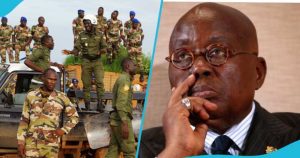
Meanwhile, many anticipate worst situation as ECOWAS, under the leadership of Nigerian President Bola Ahmed Tinubu, has ordered the immediate deployment of the ECOWAS Standby Force to restore constitutional order and stability to Niger, which has been marred by recent events of a coup.
The urgency of the Extraordinary Summit arose due to the unlawful detention of President Mohamed Bazoum by members of the Presidential Guard within Niger.
The ECOWAS deadline given to the coup plotters to reinstate constitutional democracy had lapsed, prompting the leaders to take robust measures to address the crisis.
ECOWAS has announced a range of measures to facilitate the swift restoration of constitutional governance. These include the enforcement of border closures, stringent travel bans, and asset freezes on any individuals or groups obstructing the peaceful efforts aimed at reestablishing constitutional order in Niger. This multifaceted approach underscores the organization’s commitment to resolving the crisis and ensuring a return to democratic norms.
The West African bloc has also called upon the African Union to endorse the collective decisions made by ECOWAS regarding the situation in Niger. This collaborative effort seeks to amplify the regional response and garner broader international support for the restoration of democratic governance.
In a bid to uphold the principles of democracy and the rule of law, ECOWAS had set a deadline for the Nigerien junta to relinquish control and restore the democratically-elected government. Regrettably, this ultimatum was ignored by the coup leaders, prompting the regional body to take stronger action.
In response to the looming intervention, the leaders of the coup have issued a warning, stating their intent to defend themselves against any external intervention. This threat underscores the complexities and challenges that ECOWAS may face in executing its mission to restore constitutional order in Niger.
Economic activities in the country for the first five months of this year have improved considerably.
The Bank of Ghana’s high frequency real sector indicators all showed signs of recovery in economic activity, albeit at a slower pace.
The updated real Composite Index of Economic Activity (CIEA) contracted by 3.7 percent in May 2023, compared to a contraction of 5.4 percent in April 2023, and a growth rate of 1.7 percent in the corresponding period of last year.
The main indicators that weighed down the Index during the period were port activity, cement sales, credit to the private sector and imports. Domestic VAT collections, industrial consumption of electricity and exports, however, improved.
The results from the Bank’s latest confidence surveys conducted in June 2023 reflected mixed sentiments. While consumer confidence softened on account of an uptick in prices of goods and services, which also led to some concerns about future economic conditions, business sentiments, on the other hand, remained largely unchanged.
Businesses’ optimism about the impact of stable macroeconomic conditions on their operations was offset by concerns about the cost implications of recent tax and utility tariff increases.
Similarly, Ghana’s Purchasing Managers’ Index (PMI) dipped to 50.4 in June 2023 from 51.3 in the previous month. The index however remained above the 50.0 mark for the fifth successive month, signalling stable business conditions.
Monetary aggregates for June 2023 showed an increased pace of growth in broad money supply (M2+) on year-on-year basis. Annual growth in M2+ accelerated to 44.4 percent in June 2023 relative to 19.1 percent in June 2022. In terms of components, the growth of M2+ was reflected in both domestic and foreign currency deposits.
The government plans to recapitalize all the state interest banks in the country by the end of September this year.
Cabinet has approved an amount of GH¢22.8 billion or 2.6% of GDP to further strengthen the financial system and rebuild capital buffers to improve resilience. This overall resource envelope will be deployed under the framework of the Ghana Financial Stability Fund (GFSF) in phases with an initial commitment of the Ghana Cedi equivalent of U$750 million.
The initial commitment will consist of a funded portion of US$250 million from the World Bank/IDA and US$500 million to be funded from the issuance of marketable debt to help rebuild capital buffers of affected banks and other eligible financial institutions.
The support for the financial system under the GFSF framework will be based on transparent eligibility criteria for Financial Institutions (FIs) which include full participation in the DDEP, a viable capital restoration plan notwithstanding the GoG debt restructuring impact (discounting regulatory forbearance and other reliefs), and existing GoG/GAT equity participation.
Under the GFSF framework, Government’s direct budget funding will focus on ensuring the recapitalization of state interest banks such as GCB, CBG, ADB and NIB, among others. Specifically, all state interest banks will be capitalised by endSeptember 2023. Government will also streamline the strategic focus of all stateowned banks to ensure that they better support areas of the economy such as agriculture, industry, and key SMEs.
The Bank of Ghana expects banks to submit recapitalization plans with regulatory approval for such plans scheduled for end-September 2023.
For privately owned FIs, a commitment will be required from other shareholders to inject additional capital to complement GoG’s funding support to ensure that dilution of private shareholders is kept to a minimum.
Evidence of strong governance and prudent management is also required to be demonstrated. For example, banks which are to benefit from the arrangement must achieve a minimum of 75 percent implementation rate of the most recent on-site examination prescriptions, and full compliance with the BoG’s Corporate Governance Directive, Cyber Security Directive, and Risk Management Directive.
Government will also strengthen and preserve the resilience of the insurance industry, including the recapitalization of the stateowned SIC Life Insurance Company, and work to restore normalcy in the debt capital market to improve liquidity, especially for capital market institutions. This is important in positioning the country to continue to expand the frontiers of private sector growth.
The Government will also support GAT-assisted banks and other locally controlled privately-owned banks that request assistance from the GFSF in line with the operational framework agreed with the IMF and the World Bank. The World Bank facility under the GFSF will provide a debt only (non-equity dilution) capital support to banks, both foreign-owned and locally-owned to support their strong recovery post the DDEP.
The Ministry of Finance is working with the Bank of Ghana and other regulators to ensure that the framework of the GFSSS is finalised, and its operationalisation commences immediately after the approval of the Mid-year budget.
The Communications Officer of Abuakwa South Constituency for the main opposition National Democratic Congress (NDC) has mentioned that, the Member of Parliament for Abuakwa – South Constituency and a lawyer, Hon. Samuel Atta – Akyea has gone missing over the past years and no where to be found in the constituency ever since he was voted into power, hence regarded as “Anonymous MP”.
According to him, the Constituency has been facing numerous developmental challenges due to his absence and therefore calling on the Electoral Commission (EC) as a matter of urgency to organize bye- elections if the law permits that for development.
Already, some Residents, and concerned Assembly members in the constituency bemoans that, the MP after the general elections has not been found, thus no visitation, he has no special office within the constituency to lodge their complains, he can only be found on general elections day.
There has never been a Single project he has cut – sod, commissioned or inaugurated ever since he became an MP, this has cause several economic – hardships and residents are living – hardly beyond their astronomical limits in some Communities like, Addokwanta, Ntabea, Abesim Yeboah, Bomponso no. 1&2, Kwasi-Komfo, Okanta, Aposs, Apedwa, Odumase, Akooko, Agyapomaa, Kyebi, Adukrom e.t.c.
The said Anonymous MP is a cousin to the President and same as he did during his reign as MP now becoming President and said, they have seen this as a symbol of heredity.
Aikins Ofori further said, it’s time now they voice out for his presence as they can’t sit down idle for things to go on distorted.
He therefore calls on the Parliamentary fraternities to quickly call him to order.