The Institute of Statistical, Social and Economic Research (ISSER) has recommended further research into implementing a flat-rate tax for businesses, marking a potential shift in Ghana’s approach to revenue generation.
In its recently published State of the Ghanaian Economy Report 2023 and Q3 2024 Review, ISSER suggests that a simplified tax structure could streamline compliance, ease administrative burdens on businesses, and potentially improve tax collection.
The recommendation aligns with a broader tax reform proposal from New Patriotic Party presidential candidate Dr Mahamudu Bawumia, who advocates a flat-rate tax as a central component of his vision for a business-friendly tax system.
“There is also a need for research on a flat-rate tax for businesses,” ISSER said in its report, underscoring the potential of a simplified structure to facilitate greater voluntary compliance, especially among small and medium-sized enterprises (SMEs).
The institute contends that Ghana’s complex tax framework may be impeding compliance and hindering revenue generation.
Dr Bawumia’s tax reform strategy goes further, proposing not only a flat-rate tax but also a tax amnesty and the elimination of unpopular levies, including the e-levy and betting tax.
These changes, he argues, would foster a more streamlined tax regime, aimed at stimulating private sector growth and drawing in investment.
ISSER’s call for research highlights its commitment to evidence-based solutions in addressing Ghana’s revenue challenges.
A shift toward a flat-rate tax, the institute suggests, could reduce compliance costs for businesses and improve collection rates, providing a steady and sustainable revenue stream to bolster national development.
Dr Bawumia’s proposal to cut down the number of tax types, which he claims have strained both businesses and citizens, reflects a growing push to reform Ghana’s tax policies to better support economic growth.
The Agricultural Development Bank (ADB) PLC reported a major increase in customer deposits, surging by GH₵3.4 billion year-over-year to reach GH₵11.147 billion in September 2024, up from GH₵7.747 billion a year prior.
According to the bank’s unaudited Q3 2024 financial statements, ADB’s profit after tax also climbed dramatically, hitting GH₵111.827 million compared with GH₵2.040 million for the same period in 2023.
The bank’s liquidity ratio rose significantly, reaching 125.55% from 91.94% the previous year, and its total assets expanded by GH₵4.5 billion.
ADB’s capital adequacy ratio has also increased, moving to 8.26% from 1.35%, positioning the bank within reach of Ghana’s 10% minimum capital adequacy requirement by year’s end.
ADB’s Managing Director, Alhassan Yakubu-Tali, credited the performance to strong stakeholder support and a dedicated team.
“These successes reflect the loyalty of our customers and the hard work of our Board, Management, and Staff, which have strengthened our position as one of the banking industry’s market leaders,” he said.
Mr Yakubu-Tali added that ADB’s resilience under challenging economic conditions highlights the effectiveness of its strategies and commitment to growth.
ADB, holding a universal banking license, has also emphasized loan recovery efforts to improve its balance sheet.
The bank recently earned several five-star ratings from the Chartered Institute of Marketing Ghana’s (CIMG) Customer Satisfaction Survey Index, taking high marks in Customer Satisfaction for both consumer and business banking as well as Service Quality.
As part of a two-year corporate strategy initiated in 2023, ADB has ramped up investments in digital banking and service efficiency to meet evolving customer demands.
Institute of statistical, social and economic research
The Institute of Statistical, Social, and Economic Research (ISSER) projected Ghana’s economy to grow 4.5% by the end of 2024, raising its outlook above the International Monetary Fund’s recent revision from 3% to 4%.
Speaking at the launch of the State of the Ghanaian Economy Report and the third-quarter economic review, ISSER Director Professor Peter Quartey expressed optimism over the country’s trajectory.
“Our growth prospect remains positive,” Prof Quartey said, adding that Ghana could surpass the IMF’s latest 4% forecast with effective fiscal oversight.
To sustain growth, he stressed the need for expenditure rationalisation, particularly in procurement and compensation, advocating for digital payroll systems to streamline these costs.
Prof. Quartey also called for targeted investments in Ghana’s agriculture and industry sectors, which he noted are labour-intensive and capable of driving significant job creation.
“We need to invest in agriculture and industry because they are labour-intensive sectors. If we invest in them, they can create jobs,” he said.
Addressing Ghana’s public debt, Prof Quartey warned of potential fiscal strain, urging a review of the fiscal responsibility law to include a debt ceiling, ensuring deficit and debt levels stay within sustainable limits.
Despite ISSER’s positive growth forecast, the report cautioned that Ghana’s government must improve revenue mobilisation through digitalisation.
To tackle ongoing food inflation, the report recommended aggressive support for agriculture, particularly through the updated Planting for Food and Jobs (PFJ 2.0) initiative, which aims to strengthen the agricultural value chain and reduce food costs.
“Addressing inflation and exchange rate depreciation will help reduce the cost of living,” the report noted, emphasising that sustained government investment in agriculture will be essential to manage food inflation.
Newmont’s Ahafo South operation in Ghana has maintained its position as Ghana’s Best Company and the country’s leading extractive business.
The accolade was presented to Newmont at the 21st edition of the Ghana Club 100, held last week, at the Palms Convention Centre in Accra.
The Ghana Club 100 ranking recognises the top 100 companies in Ghana for their sustainable operations, growth prospects, and social performance.
It is organised by the Ghana Investment Promotion Centre (GIPC), a government agency responsible for facilitating and promoting investment in Ghana as a preferred investment destination in Africa.
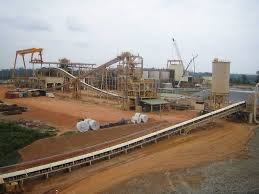
Newmont’s Akyem operation, located in the Birim North District of the Eastern Region, improved on last year’s ranking, placing fourth overall and third in the extractive sector. Newmont’s operations in Ghana have a strong track record in the ranking, frequently placing in the top ten.
The Akyem Mine previously won the top award consecutively in 2015 and 2016, and both mines have also been recognised for their investments in social responsibility.
Newmont’s reputation as a responsible mining business in Ghana is well-established. The mine emphasises safe production, operational excellence, sustainable practices, and values-driven stakeholder management. As the world’s leading gold mining company, Newmont Corporation’s commitment to environmental stewardship, community development, and sustainability is leaving an enduring mark on Ghana’s socio-economic development.
The company’s 2024 half-year fiscal payments to the Government of Ghana, published in August, amounted to GHS 3.176 billion, covering royalties, corporate tax, pay-as-you-earn tax, carried interest, and levies. Newmont also supports local businesses through training, creating opportunities for them to thrive in host communities.
The awards highlight Newmont’s transformative impact on local communities, extending beyond the mines to the surrounding areas.
During the COVID-19 pandemic, the company funded the establishment of two PCR laboratories in partnership with the Kumasi Centre for Collaborative Research into Tropical Diseases (KCCR) and the Ghana Health Service in the Asutifi North and Birim North districts of the Ahafo and Eastern regions, respectively.
Over the years, Newmont has invested over $65 million in its community development foundations in Akyem and Ahafo, transforming lives through scholarships, skills training, healthcare infrastructure, and economic livelihood projects.
Newmont’s recent accolades underscore its role as a global leader committed to reshaping the mining industry’s narrative.
These initiatives demonstrate the company’s dedication to a future where responsible mining practices are the industry standard, not merely an option.
Ghana may soon source petroleum products from Nigeria’s Dangote Oil Refinery, a move expected to reduce reliance on pricier imports from Europe.
Dr. Mustapha Abdul-Hamid, Chief Executive Officer of Ghana’s National Petroleum Authority (NPA), highlighted this potential shift during the OTL Africa Downstream Oil Conference in Lagos on Monday.
With Ghana currently spending around $400 million monthly on fuel imports from Europe, Dr. Hamid expressed optimism that accessing Nigeria’s production could cut costs.
“If the refinery reaches its targeted 650,000 barrels per day (bpd) capacity, that volume would surpass Nigeria’s domestic needs, allowing Ghana to import from Nigeria rather than Rotterdam.
This change could substantially lower our fuel prices,” he stated.
The Dangote Oil Refinery, a $19 billion facility built by Nigerian billionaire Aliko Dangote, is expected to achieve near-full operational capacity by the end of 2024, with full capacity anticipated by early 2025.
Dr. Hamid noted that sourcing fuel closer to home would reduce freight costs and potentially drive down prices of other goods and services across Ghana.
He also suggested that an African common currency could reduce the reliance on the U.S. dollar, which would further help control import costs.
Ghana’s growing economy, which expanded by 6.9% year-on-year in the second quarter of 2024, has seen heightened fuel demand, largely due to a thriving extractive sector.
As the Dangote Oil Refinery ramps up, Ghana’s interest in sourcing from Africa rather than Europe could mark a shift towards more affordable and regionalized energy procurement, he concluded.
The Institute for Energy Securities says Ghana faces renewed threat of power crisis as 560MW Sunon Asogli Power Plant shuts down amid debt dispute.
“In case you are experiencing a low-key dumsor, be prepared to see an extended version of the same, due to the government’s reluctance to act decisively on the root cause,” the Institute said in a statement.
It noted that a new wave of potential extended intermittent power outages reminiscent of the infamous “dumsor” looms over the country following the recent shutdown of the 560 megawatts (MW) Sunon Asogli Power Plant which reliably supplies about 12-15% of the nation’s electricity.
The absence of the plant from the national grid is already evident, the Institute said.
Sunon Asogli, one of Ghana’s largest power producers, suspended operations two weeks ago, citing prolonged delays in payment of US$259 million, for electricity supplied.
According to the owners of the plant, a significant capital injection is required to service its operational debts and resume normal production.
Reports indicate that despite calls from the Ghana Grid Company Limited (GRIDCo) to restore operations and alleviate the growing pressure on the national grid, Sunon Asogli has remained steadfast, pointing at its lack of operational fund.
Subsequently, Benjamin Nsiah, Executive Director of the Center for Environmental Management and Sustainable Energy (CEMSE), in a recent interview also pointed to severe financial constraints in Ghana’s energy sector as the cause of the ongoing intermittent power outages, commonly referred to as “Dumsor.”
According to Mr. Nsiah, the government owes Independent Power Producers (IPPs) and State-Owned Enterprises (SOEs) a substantial $2 billion, impacting the cash flow needed for sustained energy production.
He revealed that despite generating power for distribution by the Electricity Company of Ghana (ECG) and the Northern Distribution Company (NEDCo), payments have not been made, putting a strain on energy suppliers.
Mr. Nsiah explained that many IPPs are now hesitant to continue operations due to inconsistent payments and the government’s lack of transparency regarding revenue sources.
He warned that Ghana could face even more severe power outages in November if the situation persists.
Mr. Nsiah emphasized that the nation’s energy capacity has diminished significantly, with a reported loss of 1,000 megawatts, particularly affecting peak-hour supply.
He highlighted that the IPPs and SOEs lack the necessary funds to procure fuel and natural gas to power generators, further intensifying the power crisis.
Additionally, Mr. Nsiah criticized ECG’s revenue collection, citing that while ECG received $15 billion worth of power supply, only $9 billion was collected as revenue.
He blamed the government for failing to restructure ECG to address these inefficiencies.
Mr. Nsiah concluded by expressing that IPPs have lost confidence in the government and are reluctant to sign any new Memoranda of Understanding regarding payment agreements, posing an even greater threat to the stability of Ghana’s energy supply.
Bank of Ghana’s 2024 Financial Stability Review has indicated a marginal impact of Ghana’s Domestic Debt Exchange Programme (DDEP) on the financial sector.
This is in turn affected various investment portfolios which in the short-term likely to impact on disposable incomes and inflation.
Limited effect was recorded in the banking sector. This was attributed to lower levels of debt holdings among banks and more favourable restructuring terms, with several impairments having already been booked in 2022. Banks also showed a strong recovery in financial performance for 2023.
Meanwhile, insurance firms in Ghana have trimmed their investments in Government of Ghana (GOG) and Bank of Ghana (BoG) bonds reflecting the income pressure from the recent Domestic Debt Exchange Programme (DDEP), the Review report captured.
The non-life insurance sub-sector reported a 13% reduction in GOG and BoG securities, which now account for 27% of its total investment portfolio, down from 38% in 2022.
The sub-sector’s portfolio shows a shift toward fixed deposits at 23%, with listed securities and investment properties at 27% and 19%, respectively.
The life insurance sector also reduced its holdings in GOG and BoG securities, with a 9% decline bringing its allocation down to 40% from 49% the previous year.
This adjustment suggests a cautious pivot by insurers, responding to the DDEP’s financial impact.
The report highlighted that in August 2023, the Ghanaian government restructured bond holdings of pension funds totalling GHS30.01 billion in a separate arrangement.
Consequently, the review cautioned that ongoing external debt restructuring, especially concerning Eurobonds, could lead to additional impairments for banks and other participating financial institutions.
“The regulatory reliefs implemented by financial sector regulators, alongside recapitalisation plans and the establishment of the Ghana Financial Stability Fund, will help cushion the financial sector from the impacts of the government debt operation,” the report noted.
Furthermore, the Financial Sector Strengthening Strategy (FSSS), introduced in 2023, coordinates regulatory interventions to promptly address risks in the financial system.
While the domestic debt restructuring has created fiscal space and lowered the debt-to-GDP ratio, further adjustments loom.
On July 14, 2023, Ghana launched the second phase of its DDEP, which included the restructuring of GH¢8.1 billion in Cocoa Bills and $808.99 million in locally issued U.S. dollar-denominated bonds.
Life insurance firms have slightly increased investments in real estate, now at 23%, and fixed deposits, which rose by 8 percentage points to 21% in 2023.
The report underscores that these reallocations reveal a shift in insurers’ investment strategies, emphasising the importance of diversification in the face of changing economic conditions.
“Achieving optimal returns while managing operational costs is essential for maintaining profitability. The industry’s adaptability to economic shifts highlights the importance of strategic investment decision-making for sustained growth and resilience,” the report noted.
The National Insurance Commission (NIC) remains optimistic about the sector’s future, attributing this confidence to the industry’s demonstrated resilience and forward-looking strategies.
While the adoption of IFRS 17 accounting standards could challenge the industry’s Capital
Adequacy Ratio (CAR), the NIC has implemented strategies to address potential impacts.
The NIC emphasised that its commitment to strategic planning, regular reviews, and regulatory compliance will safeguard the sector’s financial health and stability.
As the Ghanaian currency, Cedi, losses value further edging to GHc17 to a US dollar, the Bank of Ghana Governor has shared his frustrations.
Dr Ernest Addison indicates that, despite the wishes of Ghanaians of seeing a stronger cedi against the international trading currency, the health of the economy is also a concern, that is why the Central tries to manage between the country’s reserves and the exchange rate.
The BoG’s approach this is to balances the need to strengthen reserves with prudent currency management, striving to foster longer-term stability and investor confidence.
“We have $7 billion in foreign exchange reserves. If I want to drive the dollar-cedi rate to GHS 10, I can do that tomorrow. But what about the day after tomorrow? So, we are balancing various factors, trying to build reserves and manage the exchange rate. All is not lost yet; there is some silver lining in the cloud,” Dr. Addison said while speaking at the launch of ‘The Concise Law of Banking,’ a newly published banking law guide.
“These are the problems in our economy. The issues about the exchange rate and financial sector. But I think the good news is that we are making progress because the developments we are seeing are not different from other jurisdictions,”
As the season inches closer, the depreciation of the Cedi is expected to continue at a faster rate. However, the Central Bank plans to slow or maintain the current exchange rate amidst Ghana’s progress under the International Monetary Fund’s (IMF) Extended Credit Facility programme.
The local currency declined against major global currencies last week, fuelled by increasing demand from both domestic and offshore markets.
To address this, Ghana’s Central Bank accepted all bids—amounting to $89.3 million—in its weekly seven-day foreign exchange auction.
However, this intervention did little to bolster the cedi, which fell by 1.06% week-on-week, settling at an average of GH¢16.55 per U.S. dollar.
The currency also slipped 0.23% and 0.28% against the British pound and the euro, respectively.
This week opened with the cedi trading at GH¢16.65 to the dollar, extending its slide.
Since the start of the year, the cedi has lost over 26% of its value against the dollar, ranking it among the three weakest currencies in Sub-Saharan Africa.
Looking ahead, the Central Bank plans an additional $20 million auction directed at Bulk Oil Distribution Companies (BDCs) in a bid to relieve some of the demand pressure.
The Institute for Economic Affairs (IEA) says the planned sale by US-based Newmont Company of its Akyem Gold Mine Project in Ghana to China’s Zijin Mining Group for US$1.0 billion is “flawed in several respects, inimical to Ghana’s interest and unacceptable.”
In a statement, the IEA notes that the project lease was signed between the Ghana Government and Newmont on 19th January 2010 and has an expiry period of 15 years, i.e. valid until 19th January 2025.
According to the terms, the lease is transferable within the duration period, subject to mutual agreement between the Government and Newmont.
The lease is also subject to extension after its expiry date, by mutual agreement.
In the IEA’s assessment, the lease has not yet expired and, therefore, “any decision by Newmont to sell the mine must be on a transfer basis and must be for the unexpired term only and subject to Government agreement.”
“At the end of the expiry period, Newmont is obliged to hand over the mine back to Government, the truthful owner of the gold under the assigned land. Any company that wants to operate the mine after the expiry date of the lease must sign a new agreement with the Government. As far as the IEA is aware, Newmont and the Government have not reached any agreement for the mine to be transferred to Zijin for the unexpired term of the lease, i.e. up to 19th January 2025,” the statement noted.
The IEA said it is also not aware that Newmont has evoked the extension clause and that the Government has agreed to such an extension.
“The IEA wishes to point out that apart from Newmont, no other company has an original locus or right in the extension of the Lease.”
The IEA asserts that selling the company to a foreign interest undermines the local investment drive.
“The IEA has learned that some Ghanaian entities also bid for the mine, but were allegedly outbid by Zijin. Allowing a foreign company to take over the mine would, however, be contrary to the President’s own position as he stated in his State of the Nation Address (SONA) in February this year: ‘We will engage with Newmont to give priority to Ghanaian investors who will want to acquire this mine to ensure that our mineral resources better benefit the Ghanaian people.’”
“The question is: what has changed now for the President to set aside his own principle and reject Ghanaian investors in favour of a foreign company?” it asked, emphasising: “The Akyem Gold Mine Lease itself was flawed at its inception in several respects. In particular, the royalties and taxes payable by Newmont were not appropriately quantified as is expected of such agreements.”
Moreover, the IEA said the agreement “is not materially different from other colonial-type agreements that cede Ghana’s mineral rights to foreign companies on a concession basis, enabling them to keep the lion’s share of the products, while Ghana receives only paltry sums as royalties and taxes.”
“The IEA wishes to state categorically that the purported sale by Newmont of the Akyem Gold Mine to Zijin is unjustified and legally flawed and must, therefore, not be ratified by Parliament. Further, if Newmont wishes to sell the mine, it must sell it to Ghanaian investors so that the wealth generated would remain in Ghana for the development of the country,” the IEA proposed.
It said: “Should it be necessary, the Government should team up with the private sector under a public-private partnership (PPP) programme to purchase it,” adding: “Using the reported annual average production figure of 11.4 tonnes of gold by the Akyem Mine (equivalent to 402,123 ounces) and an average world market price of US$2,600 per ounce for gold, the IEA projects annual average yields of US$1.05 billion.”
“This is the amount that would accrue to prospective Ghanaian owners—and the country—per year. Allowing Zijin to buy the mine for US$1.0 billion, which would accrue to Newmont, and presumably allowing Zijin to pay only royalties and taxes to Ghana, would, therefore substantially short-change the country,” the Institute asserted.
In its analysis, the IEA notes that “the deal cannot, therefore, be said to be in the economic interest of the country, and must, therefore, be rejected.”
“The IEA wants to draw attention to the fact that even Canada, where Zijin is also seeking to invest in the domestic critical minerals sector, and planning initially to buy a 15% stake in Canadian copper company, Solaris Resources, has decided to limit Zijin’s stake in the interest of Canadian national security.”
It pointed out: “Canada is linking its national security interest here to foreign participation in its economy, particularly the critical mining sector. Ghana must take a cue from Canada and similarly protect its national security and economic interest.”
“The IEA wishes to make it clear that it is not against Zijin per se as an investor in the Ghanaian mining sector. The IEA is calling, as a matter of principle, for Ghana to maintain dominant ownership of its critical mining sector—and the economy as a whole— and thereby retain the associated wealth at home for the development of the country.”
Further, the stressed that “Ghana’s natural resources represent the low-hanging fruits for acceleration of the country’s development and eradication of its endemic poverty. To achieve these goals, Ghana should maximise the benefits from these natural resources. This can only be done by jettisoning colonial-type mineral contracts skewed in favour of foreign companies.” “The IEA wishes to reiterate that Ghana cannot afford to continue to sell its birthright cheaply to foreign companies—as it has been doing its entire history—only to descend on the companies’ capitals to beg for aid. President Paul Kagame of Rwanda could not have put it more eloquently when he said: ‘If the owners of natural resources go around begging, then you should know there’s something wrong with their minds.’ Ghana needs a complete paradigm shift in its mineral contracts by taking ownership of the minerals to create job opportunities, wealth and technical capacity development for Ghanaians.”
It said: “The United Nations Charter of Economic Rights and Duties of States (GA res. 3281(xxix), UN GAOR, 29th Sess., Supp. No. 31 (1974) 50 shows the way as it entreats countries to derive maximum benefits from their natural resources for their development. Ghana should not depart from this noble cause, but should rather exploit it fully to its advantage.”
It noted that the “usual excuse given by Ghanaian officials that the country lacks the requisite capital and expertise locally for exploiting its natural resources and, therefore, has to depend on foreign investors and compensate them accordingly is no longer tenable.”
It highlighted that “other countries with similar conditions as Ghana’s have been able to negotiate much better terms for the exploitation of their natural resources. Ghana can do likewise by negotiating more favourable production-sharing or service contracts. Ghana also needs to resource the Geological Survey Department to enable it to map out mineral deposits, which can be used as collateral to raise capital and hire the needed expertise to exploit them.” At the same time, the Institute said “steps must be taken to train local mining engineers so that they can provide the needed expertise to exploit Ghana’s natural resources using environmentally friendly means.”
Finally, the IEA proposed the amendment of Article 257(6) of the Constitution that vests Ghana’s natural resources in the President on behalf of, and in trust for, the people, which, it says, “seems to give him a carte blanche to sign the resources away at will,” insisting: “The natural resources should rather be vested in the state and every contract should require Parliamentary ratification as per Article 268(1) of the Constitution.”
Secondly, the IEA suggested the introduction, in the Constitution or the Minerals and Mining Act, 2006 (Act 703), of a provision that prohibits the Government from signing contracts above a specified monetary value six months to the end of their four-year term. “This will prevent incumbent administrations from signing eleventh-hour contracts in favour of their families, friends or cohorts, or for personal gain.”
Ghana’s Minister of Food and Agriculture, Mr Bryan Acheampong, has praised the formation of a Savings and Loans Association under the four-year Research for Development and Innovation Agriculture and Learning (ReDIAL) project, highlighting its significant contribution to the country’s agricultural sector.
Speaking at the ReDIAL Project Close-out Workshop in Accra on Tuesday, October 22, Mr Harry Bleppony, who delivered the speech on behalf of the Agriculture Minister, stated that more than 7,000 people have benefited from the initiative.
The programme, which provides financial assistance to smallholder farmers at a low interest rate of 5%, has already impacted 11,000 farmers, he said.
Mr Bleppony emphasised the critical role of smallholder farmers, who contribute approximately 80% of Ghana’s agricultural production.
“The Ministry is committed to supporting them in every possible way to enhance their productivity. This includes a shift to a credit-based input system that enables farmers to access necessary inputs with no interest on repayment,” he added.
The ReDIAL project, which aimed to boost agricultural innovation and stakeholder collaboration, has provided smallholder farmers with essential services.
It has also promoted the establishment of Village Savings and Loans Associations, which have been instrumental in improving financial access for farmers.
Massimo Mina, Head of Cooperation at the European Union in Ghana, reiterated the EU’s commitment to partnering with the country to ensure food security.
Funded by the European Union (EU) and implemented under the EU initiative on Climate-relevant Development Smart Innovation through Research in Agriculture (DeSIRA), the ReDIAL project aims to foster innovation in Ghana’s agricultural and food systems.
The project has focused on improving soil fertility, developing innovative technologies for grain threshing, and promoting climate-resilient agricultural practices.
With a strong gender perspective, the ReDIAL project has targeted 10,000 farmers, 60% of whom are women and farmers with disabilities. The initiative has been rolled out in five districts across the Northern, Bono East, Ashanti, Western North, and Eastern regions of Ghana.
ReDIAL was implemented by a consortium of three partners: Friends of the Nation (FoN), Tropenbos Ghana, and the Faculty of Renewable Natural Resources at Kwame Nkrumah University of Science and Technology (KNUST).
The project also collaborated with private companies, SAYeTECH, which produces multi-crop threshing technology, and SESI Technologies, known for its FarmSense soil nutrition testing technology.
The project has contributed to improving the livelihoods of smallholder farmers while promoting sustainable agricultural practices across the country.